Brexit and human rights


Human rights will be diminished if we leave Europe

Human rights have not directly figured much in the vexed debate about whether to remain or leave the European Union.  The arguments seem to have settled on immigration, which has become a toxic topic, with the Brexiters claiming that a leave vote will enable us to regain control of our borders.  The Conservative government has promised to repeal the Human Rights Act but progress has been slow so far.  Reporting on the many issues has been poor with the main focus on the scrapping between the Tory party factions rather than on a measured debate.

The crucial question on how our rights will be affected after a vote to leave – if that should happen on Friday – has received little coverage.  Partly this is because of the complexity of the subject and also detailed discussions of legal judgements does not make for racy copy.  As ever, Rights Info has done an excellent job of discussing the issues with a link through to the Independent newspaper (now only online) which has also done a detailed analysis.

Despite its faults, the European Convention, which in turn led to the Human Rights Act, has been of considerable benefit to ordinary people.  For many this will come as a surprise and for readers of the right wing press in the UK, a statement at variance to the facts as they know them.  And this has been a large part of the problem: a deliberate and sustained attack on the act which has included misreporting, non-reporting and the running of scare stories many of which have no foundation in fact.  For readers of the Daily Mail in particular but also the Sun, the Daily Telegraph and the Daily Express, they are treated to lurid stories of terrorists going free, criminals living the high-life in prison and murderers demanding pornography as their ‘human right’ (they didn’t).

Why the right wing media should be so hostile to the act (as opposed to airing proper criticism of it) is discussed by Francesca Klug in her book A Magna Carta for all Humanity (Routledge, 2015).

As the late, great former Lord Chief Justice Lord Bingham put it: there is ‘inherent in the whole of the ECHR … a search for balance between the rights of the individual and the rights of the wider society.’  For the press to mention this inherent approach would not only spoil a good story, it could draw attention to an inconvenient truth: that Article 10 ECHR, the right to free expression, explicitly states that free speech comes with ‘duties and responsibilities’.  This is not a very popular statement with many journalists.  But, I suppose – with notable exceptions – the press is hardly alone in thinking that responsibilities apply to everyone but themselves.  (p265)

She goes on to explain that there was little legal remedy against press intrusion before the act was passed.  Common law provided no real protection.  An example was Gordon Kaye, the star of the TV series Allo, Allo who was recovering in hospital after a car accident.  Two Sunday Sport journalists entered his hospital room and interviewed and photographed him.  In view of his medical state it is unlikely he knew what was happening.  Under existing English law he had no redress.

Brexiters like to portray English law as some kind of noble construct which has been diminished by Europe and that by leaving, we will be able to get rid of all this interference by ‘unelected European judges’ and get back to the way we were.  Europe is presented in purely negative terms and acting to diminish our rights.  British law is indeed a fine system in many respects, but without the HRA we would never have had the investigation into the activities of the press and phone hacking; no Leveson enquiry and the Murdochs (father and son) being asked to come before a select committee.

The benefits of the act to ordinary people in their struggles for justice against the police or public authorities are seldom mentioned.  The use by the media themselves to defend their sources or to prevent unjust interference by the police or security services is likewise rarely mentioned.  The rights ordinary people enjoy have almost in every case been achieved after a struggle and the current government is keen to erode these rights still further.  Access to the courts and the availability of legal aid has been seriously curtailed; further legislation to diminish the – already limited – rights of trades unions is planned, and the Snooper’s Charter is well on its way to becoming law.

The idea therefore that we will be better protected if we leave is not supported by the evidence.  If we leave Europe and the process begins to abolish the Human Rights Act (which our MP, Mr John Glen is keen to do) and other treaties, it will only result in diminished rights for the ordinary people of this country.


Follow us on Facebook and Twitter


Children from Syria


Tonight!

The problems of Syria and people fleeing that country are seldom out of the news these days and indeed, the issue of immigration – and immigrants from Syria are part of the problem – is high up on the agenda with the debate about Brexit or Remain in the European Union.  Many people are responding in interviews that the reason they want us to leave is to stop the flow of refugees and immigrants coming to the UK.

All the talk about ‘immigrants’ can sometimes cloud the fact that these are people we are talking about and people means children as well.  Children who may have witnessed terrible events and even have lost parents in the conflict.

So a talk being organised by the Romsey group of AI is timely.  They have invited someone from Firefly International to give a talk on Monday 20 June starting at 19:45.  It will be about the conditions in Southern Turkey and their projects for children in that area.  It will be in Abbey Hall, Romsey, SO15 8EL.

All welcome.

Death Penalty Report published


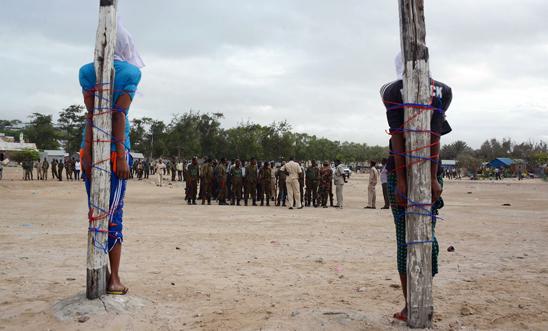
Dramatic rise in executions in 2015: the most in one year for a quarter of a century

To read the full report click here (pdf)


The past year has seen a horrific increase in executions around the world – the most we’ve recorded in a single year since 1989, and an increase of an astonishing 54% from the year before.

A few countries are executing prisoners by the hundreds, sometimes for crimes that aren’t serious, sometimes after trials and treatment that isn’t just or fair, and always violating the individual’s right to life and right to be free from torture.

From Australians Myuran Sukumaran and Andrew Chan shot by firing squad for drugs charges in Indonesia to Shafqat Hussein, hanged in Pakistan for a crime he confessed to after torture, aged just 14, over 1,634 individuals were put to death by state authorities last year.

Huge rise in executions

We recorded a huge increase in the death penalty, an increase of 54% compared with 2014. This is the largest number of state executions for a quarter of a century.

The number of countries that executed people rose – from 22 in 2014 to 25 in 2015. At least six countries resumed executions: Bangladesh, Chad, India, Indonesia, Oman and South Sudan.

Countries continued to flout other aspects of international law, putting to death people with mental or intellectual disabilities, as well as those charged with non-lethal crimes. Apart from drug-related offences, people were executed for crimes such as adultery, blasphemy, corruption, kidnapping and ‘questioning the leader’s policies’.

The death penalty is always a violation of human rights. We oppose it in every case.

The main executioners

A minority of countries are committing the majority of executions. 89% of executions in 2015 took place in just three countries: Iran, Pakistan and Saudi Arabia.

Iran

Iran continued to execute juvenile offenders like Shafqat – aged under 18 at the time of the alleged crime – in violation of international law. Authorities there sentencd juvenile offenders to death last year too.

Pakistan

Pakistan lifted its freeze on civilian executions in December 2014, and in the year that followed killed 326 people – the most we’ve ever recorded for that country in a single year.

An attack on a school in Peshawar prompted the government to start executing again, something it had not done since 2008. Initially, the freeze was lifted for those charged with terrorist-related offences, but in March 2015 the government resumed executions for all capital crimes, such as murder and blasphemy.

In a country where people are routinely denied the right to a fair trial, and evidence extracted through torture is used to seal convictions, hundreds of people are being sent to their deaths under the pretence of justice being served.

Saudi Arabia

Last year saw a huge surge in executions for an already prolific executioner. These figures don’t even include Saudi Arabia’s mass execution of 47 people at the start of this year.

The missing executioners

But these figures exclude China, where numbers remain a state secret, yet where we believe thousands of people are executed every year. We consider China to be the world’s top executioner, although the numbers are missing from this report.

We haven’t published figures for executions in China since 2008; we’re challenging the Chinese government to reveal their own figures and demonstrate that they really are limiting their use of the death penalty – something they have claimed to be doing since the country’s highest court began reviewing all death penalty cases back in 2007.

We also don’t publish figures for North Korea, a state shrouded in secrecy.

Execution sentences in 2015

At least 1,998 people were sentenced to death in 2015 and at least 20,292 prisoners remained on death row at the end of the year.

Some hope

Four countries abolished the death penalty for all crimes – the highest number to do so in the space of one year for almost a decade.

Madagascar, Fiji, Suriname and Congo all did away with the death penalty in the national laws once and for all.

Mongolia adopted a new Criminal Code outlawing the death penalty for all crimes in December which will enter fully into law in September 2016.

There is hope even in the USA, which continued to flout international law by executing people with mental disabilities.  Pennsylvania abolished the death penalty for all crimes in 2015 , bringing the total number of US states that have abolished the death penalty to 18.

We still hope for a world without the death penalty, and today half the world has abolished it for good. Add to this countries which have abolished this punishment in practice, as opposed to law, and the total comes to two-thirds of the world.

The Investigatory Powers Bill


Parliament debates security Bill

The Investigatory Powers Bill was debated in Parliament on 15 March in a lengthy second reading debate and there were many good quality contributions made by Members on all sides of the House.  Only days after the debate we had a terrible reminder of the terrorist threat with the attacks in Brussels on 22 March.  The need to maintain an intelligence system to find potential terrorists before they take action and to track them down afterwards was recognised by all the speakers in the debate.

There were several concerns about the Bill one of which was what Andy Burnham called the ‘point of balance’ between security and privacy (column 824).  This was occasioned by the concerns about mass surveillance and the desire to collect and store Internet Connection Records (ICR) for 12 months.  Dominic Grieve – although supportive of the Bill – said that it did not ‘include a clear statement on overarching privacy protections’ (836).

A similar point was made by the SNP MP Joanna Cherry who felt the Bill did not go far enough to ‘protect civil liberties’ (839).  The powers sought went beyond those of other western democracies and she worried that they set a dangerous precedent to Commonwealth countries in particular.

One concern in particular was the clause about economic well-being which could be used against trade unions (862).  In past eras, the security services had been found to use the powers and techniques they then had to frustrate trade union activity.

There was a lot of debate about the difference between ‘content’ data and ‘contact’ data (855).  Many say that the security services are mostly interested in the latter to help them track movements and contacts between criminals, they are less interested in the content which may be encrypted anyway.  David Davis pointed out that two law lords had expressed incredulity because the government had sanctioned illegal surveillance of discussions between a lawyer and his client (864).  This highlighted the issue of trust: that the Bill proposed that the sanctioning of interception would be by a minister and ultimately, can they be trusted?

To what extent are Ministers accountable?  One MP said that attempts to find out information are refused either because it is a criminal matter or, the information was a matter of national security.  Hence the argument was ‘misconceived’ (845).

One of the beliefs behind this activity is that bulk collection will help with finding intelligence.  Evidence from the USA concerning the activities of the NSA (American equivalent of GCHQ) was that the bulk collection of data had not led to the discovery of previously unknown terrorist plots or the disruption of a terrorist attack.  It was initially claimed that 50 such plots had been prevented but once they were examined in detail only one money laundering case was found.  In other words there is a lot of false claiming of success going on.

The notion that ‘the more privacy we sacrifice the more security we gain’ was challenged by more than one speaker (843).  This concept underpinned several speakers in favour of further intrusion citing cases of abducted children and paedophile activity in support of their case.

It was clear throughout the debate that members are struggling with the rapid increase in technology which is increasing the number of ways to communicate and the ability to store and sort vast amounts of data.  As the technology advances, so the issue of privacy and civil liberties comes into play because it is some much easier today to intrude into someone’s life.  The point was made that this intrusion can include digital cameras, games consoles and baby monitors (846).

A lack of clarity with some of the wording is a key issue.  The need for precision of language about what and how much can be intercepted was stressed (843).  Trust is an issue and it is important to remember that the debate may not have happened had it not been for the revelations by Edward Snowden.  We were blissfully ignorant of the sheer extent of the penetration of phones, emails and so forth and the relevant committee knew little of it either.

So the key issues appear to be the bulk collection of data and whether this is advisable or even achievable; the conflict between security and privacy and the control mechanisms to ensure that there is suitable oversight.  Linked to the latter is the issue of trust especially in the light of actions by previous governments for example intruding into Doreen Lawrence’s phone.

After the terrible events in Brussels, there will be an understandable desire for ‘something to be done’.  Had the debate taken place after that outrage then it might have taken on a different tone.  Politicians have to reflect the media and since much of our media is already ill-disposed towards the Human Rights Act, it is understandable that human rights and the free movement of people around Europe would be questioned.  It is more than ever necessary to keep a cool head.  Terrorism is about an attack on values and one of our key values is respect for individuals and the rule of law which includes basic rights enshrined in the HRA.

The Bill moves onto the committee stage and it will be interesting to see how the debate on control and oversight is played out.  Peter Curbishley


Follow us on Twitter and Facebook

Death penalty report


Attached is the death penalty report compiled with thanks by group member, Lesley.No to the death penalty

Death penalty report


Follow us on Twitter and Facebook


Albert Woodfox freed


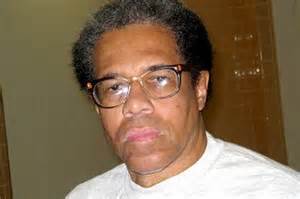
Today, Louisiana prisoner Albert Woodfox walked free, 44 years after he was first put into solitary confinement.

[We are publishing this case from Amnesty USA.  The Salisbury group has campaigned on behalf of this man so we are delighted to see his release after all this time.]

albert woodfoxHe was the United States’ longest serving prisoner held in isolation. Nearly every day for more than half of his life, Albert Woodfox woke up in a cell the size of a parking space, surrounded by concrete and steel. Tomorrow morning, for the first time in more than four decades, he will be able to walk outside and look up into the sky. Over the course of nearly five years working on Albert Woodfox’s case at Amnesty, I heard many times that the odds were insurmountable. But I always knew that Albert Woodfox would go home. I have seen the incredible power of our movement when we work together. I have seen the courage humility, and determination of so many of you who have played big and small roles to help this historic human rights victory come to fruition. I have seen the unbelievable strength of the Angola 3: Robert King, Herman Wallace, and Albert Woodfox himself—all three of whom endured nightmares but persevered with humor, dignity, and resolve to wage a relentless fight against the cruel, inhuman and degrading practice of prolonged solitary confinement in the United States. With the knowledge of his release, Albert had this message for those who have helped him secure his freedom:

I want to thank my brother Michael for sticking with me all these years, and Robert King, who wrongly spent nearly 30 years in solitary. I could not have survived without their courageous support, along with the support of my dear friend Herman Wallace, who passed away in 2013. I also wish to thank the many members of the International Coalition to Free the Angola 3, Amnesty International, and the Roddick Foundation, all of whom supported me through this long struggle. Lastly, I thank William Sothern, Rob McDuff and my lawyers at Squire Patton Boggs and Sanford Heisler Kimpel for never giving up. Although I was looking forward to proving my innocence at a new trial, concerns about my health and my age have caused me to resolve this case now and obtain my release with this no-contest plea to lesser charges. I hope the events of today will bring closure to many.

I’m carrying those words with me today as we celebrate this victory. Today Albert Woodfox walks free—February 19, 2016, his 69th Birthday. In Solidarity, Jasmine Heiss Senior Campaigner, Individuals at Risk Program Amnesty International USA

Cluster weapons used in Yemen


Yemen: New evidence challenges coalition’s denial it used cluster munitions in recent attack
Cluster bombs used in Yemen

Evidence gathered by Amnesty International appears to confirm reports that the Saudi Arabia-led coalition forces dropped US-manufactured cluster munitions on the Yemeni capital, Sana’a, on 6 January 2016.  The attack killed a 16-year-old boy and wounded at least six other civilians, and scattered sub munitions in at least four different residential neighbourhoods.  Amnesty International is calling on the coalition to immediately stop using cluster munitions, which are inherently indiscriminate weapons and are internationally banned.

By Amnesty International, 15 January 2016, Index number: MDE 31/3208/2016

Human Rights Act guide published


A useful guide to the Act has just been published by the British Institute of Human Rights and can be accessed here either in e-book form or as a video.

Sixteen years on death row in Japan


Facebook

Making a Murderer and Matsumoto Kenji: The truth can be stranger than fiction
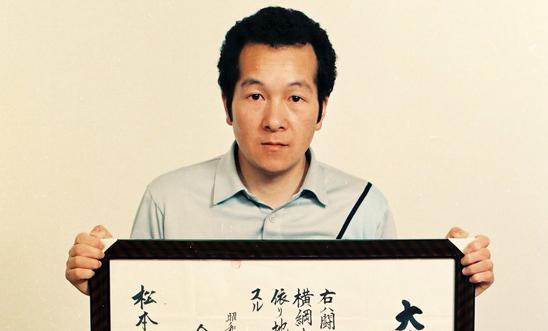
Matsumoto Kenji Matsumoto Kenji © Private
  • A man from a poor background, with an IQ below 70; a score so low that he has difficulty comprehending what is happening to him.
  • His implication in a serious crime, in which a dominant older relative was the prime suspect.
  • A confession extracted by police after hours of intense interrogation, a confession which was subsequently described as ‘coercive’ by the man’s lawyers.

Well, if you’ve been watching the Netflix documentary ‘Making a Murderer’ you may be thinking of the case of Brendan Dassey who, at the age of 16, confessed to assisting his uncle in a rape and murder after hours of intense police questioning.  No lawyer was present during the interrogation, nor was his mother, despite the fact that he was a minor.

Dassey later recanted his confession and one Wisconsin lawyer who assisted on the case on seeing the video of the ‘confession’, described “feeling physically sick as I watched it (sic), he just didn’t understand what was going on”.  No physical evidence linked him to the crime and jurors have stated that his conviction was heavily influenced by the confession.

Brendan Dassey is not the only young man spending a very long time in prison after being convicted of a crime following a confession extracted in contentious circumstances.

In 1993 Matsumoto Kenji – along with his older brother – was arrested and charged with a double murder in Japan. Kenji has an IQ of between 60 and 70, allegedly caused by Minamata disease (mercury poisoning) which was common in the prefecture in which he was born, around the time he was born. As a result of the condition Kenji suffered from seriously hampered cognitive function.

Amnesty has serious concerns about Kenji’s treatment at the hands of the police.  His interrogation has been described at coercive, as officers offered him food if he talked and told him to “be a man” during the interrogation.

Upon learning of a warrant being issued for his arrest, his brother killed himself and Kenji was left to face trial alone.  During his trial it was accepted by the court that he was totally dependent upon his brother and was unable to stand up to him.  Following his conviction he was sentenced to death, a sentence which has been repeatedly upheld in subsequent appeals.

In Japan, death row patients are held in solitary confinement and are not allowed to speak to other inmates, only receiving occasional visits from family or lawyers.  When they are in their cells they are forbidden from moving, being punished severely if they do.  They are also given no prior warning before they are executed, leaving death row patients suspended in an endless state of anxiety.

Unfortunately, Kenji’s mental health has deteriorated significantly on death row, to the point that he has developed a delusional disorder.  His lawyers have argued that he is currently unable to communicate or understand information pertinent to his case and they further believe that his isolation has contributed significantly to his deteriorating mental health condition.

No to the death penaltyThese two cases, so similar, illustrate the vulnerability of individuals with serious learning difficulties in the face of major criminal charges, and the difficulty they face in ensuring their right to fair treatment at the hands of authorities in the criminal justice system.

Under international laws around use of the death penalty, it is illegal to execute someone with serious mental or intellectual disabilities.  At Amnesty, we continue to oppose the death penalty in all instances and in all cases as it’s a violation of the right to life and to be free from torture.

Call for justice for Kenji on his birthday

Today is Kenji’s 65th birthday. It’s the 16th birthday he has spent on death row.Kenji’s case is currently under review for appeal and the Minister of Justice will be the key decision-maker. If you have a moment, please write to him and call for him not to execute Kenji.

What to say

Please write to Justice Minister Matsuhide Iawki, urging him:

  • Not to execute Matsumoto Kenji and to introduce a moratorium on executions in Japan;
  • To commute Matsumoto Kenji and all other prisoners’ death sentences;
  • To Improve the treatment of death row inmates, including an end to solitary confinement;
  • To promote debate on the abolition of the death penalty in Japan.

You can also write to Health Minister Yasuhisa Shiozaki and ask him to:

  • Ensure that Matsumoto Kenji’s health is regularly assessed and he is provided with any necessary treatment.

Whom to contact

Minister of Justice, Matsuhide Iawki
Ministry of Justice
1-1-1 Kasumigaseki
Chiyoda-KU
Tokyo 100-8977
Japan

Twitter: @MOJ_HOUMU

Minister of Health, Yasuhisa Shiozaki
1-2-2 Kasumigaseki
Chiyoda-ku
Tokyo, 100-8916
Japan

Follow us on Twitter and on Facebook


Amnesty petition: Yemen


Over the past few weeks, we have been drawing attention to the situation in Yemen and in particular, the involvement of our government in supplying arms and personnel to the Saudis who are bombing that country.  There is now a petition by Amnesty International asking people to send a message to the UK government asking them to put a stop to this.  It is easy to sign and you can send a text message from your mobile phone to 70505 and the message is HALT1.

petition details

twitter imageFollow us on Twitter and Facebook.  If you would like to become more involved, read the ‘Joining’ tab.

Blog at WordPress.com.

Up ↑