Impact of ECHR on Asylum Seekers in 2025


Immigration and asylum seekers still making waves in UK.

October 2025

This month has been dominated by arguments around the European Convention on Human Rights and the rights of protesters to express their views. Neither of these are directly about refugees, but do have a bearing on the treatment of asylum seekers and dealing with the effects of conflicts. Boat crossings and asylum seekers do feature in the desire to leave the ECHR however.

The government has taken two more actions affecting migrants: making the “leave to remain” decision more difficult by extending the time taken to achieve it, adding more requirements, and blocking family reunions which would previously have been regarded as acceptable. Nando Sigona commented that this “allows policymakers to set shifting and arbitrary standards of belonging.”

One of the areas of complaint by the government has been the “last-minute” stay on deportation of unsuccessful claimants. It has now become clear that this is not gaming the system but the result of the short time available for appeals to be made against the Home Office’s “notice of intent” and the lack of emergency legal aid.

Still in the UK, the “one in, one out” agreement with France has started, but obviously the numbers involved are pretty small. Nevertheless, some commentators, such as Sunder Katwala of British Future take a positive view. At present, the scheme aims to return about 50 people a week; were it to be expanded tenfold, it would make returns “more likely than not”, and at 20 times, “it could operationalise a returns guarantee”. This would effectively destroy the business model of small-boats traffickers, says Katwala. “If you got to the point where there was a guarantee that the irregular route, where you paid a trafficker, wasn’t going to work, and there was a legal scheme to apply to as well, then you would see a three-quarters drop [in numbers arriving by boat].” Eventually, “you could actually eliminate it entirely”. British Future’s polling suggests an intake of 50,000 refugees a year would be supported by 48% of Britons, and opposed by just 18%.

Katwala notes that the US did actually get on top of immigration at the Mexican border in the final year of Joe Biden’s presidency, with a similar “routes and returns” approach by closing off illegal routes to immigration and creating legal ones. The numbers crossing the US border were far greater than those crossing the Channel – 2 million a year – and Biden’s approach reduced them by 77% between December 2023 and August 2024, an achievement that was barely reported at the time.

Also domestically, the government is still planning to phase out hotel accommodation for claimants and is
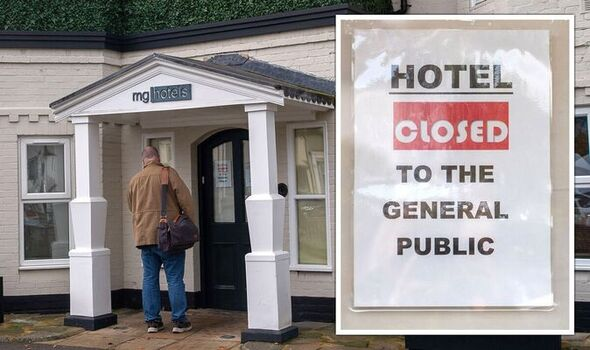
looking at redundant sites (mostly military) away from inhabited areas – the chief problem is that most of these require major repair work before being acceptable. Also noteworthy is the rumour that the imminent budget will take money away from spending in this area to reduce the deficit. Finally, back to the ECHR; the Supreme Court has taken to using the concept of “margin of appreciation” (in the ECHR but not the HRA) which is a bias towards accepting government cases rather than those of the lawyers – this will likely loom large.

Immigrant numbers falling in Europe

In Europe as a whole, the number of migrants has fallen sharply this year, according to Frontex. In 2025 so far, 112,000 have arrived in the continent, 21% down on last year. Similarly, the number of asylum claims is down by 23% to around 400,000 in the first half of the year. One of the main reasons for this is the EU’s policy of paying “transition countries” to cooperate by not allowing potential migrants through. These countries are chiefly Tunisia and Libya. There have been reports of Libyan security staff throwing people off boats into the sea (Libya is, of course, in the midst of civil war so is not likely to be particularly fastidious).

Frontex say that the number of arrivals by the western route through Algeria have, however, gone up. France and Spain have overtaken Germany as the most favoured final destination – the largest group of national arrivals have been from Venezuela, using Spain as a destination for language reasons. Ursula Van der Leyen has noted that only 20% of those with rejected claims have actually left Europe, and this will be on the agenda for the introduction next year of the new migration pact that has been said to “harden border procedures and envisages accelerated deportation.” Talks are continuing especially about the financial aspects. Interestingly, Hungary is being fined 1 million Euros a day for breeching its responsibilities towards asylum seekers – the government is unmoved.

Fergal Keane at the BBC has been touring the border areas and observed that in Greece, Poland and Latvia migrants were being physically pushed back across the border. The hazardous nature of the whole scenario is reflected in the fact that, over the last 10 years 32,000 migrants have died en route.

For the record, the number of arrivals on small boats this year so far is 34,000, up 36% on the same period last year. The weather is probably the main factor.

Compulsory reading!: The truth about the small-boats crisis – New Statesman.

AH

Conservative Party’s Plan to Repeal Human Rights Laws


Speech by the leader of the Conservative party in Manchester

October 2025

These are some extracts from the speech Kemi Badenoch MP gave to the Conservative party conference in Manchester this week. We have selected those parts which focus on human rights issues and in particular the plan to leave the European Convention and to repeal the Human Rights Act.

“[…] It is fundamental, why can’t we control our borders and remove those who need to go? All these

questions boil down to who should make the laws that govern the United Kingdom? Conservatives, believe it should be our sovereign Parliament, accountable to the British people. The reality today, is that this is simply not the case.

“This use of litigation as a political weapon is what I call lawfare. Well-meaning treaties and statutes – like the European Convention on Human Rights and the European Convention on Action against Trafficking drafted with the best of intentions in generations gone by, and more recent additions like the Modern Slavery Act, are now being used in ways never intended by their original authors.

“What should be shields to protect the vulnerable, have instead become swords to attack democratic decisions and frustrate common sense. It is that whole system which we need to reform. And the place to start is the European Convention on Human Rights.

Five tests that a country has to pass to be truly sovereign.

First, can we deport foreign criminals and those who are here illegally?

Second, can we stop our veterans being harassed through the courts?

Third, can we put British citizens first for social housing and public services?

Fourth, can we make sure protests do not intimidate people or stop them living their lives?

And fifth, can we stop endless red tape and legal challenges choking off economic growth?

[Lord Wolfson was commissioned to study the ECHR and our membership of it and produced a report the key conclusion was]

When it comes to control of our sovereign borders, preventing our military veterans from being pursued indefinitely, ensuring prison sentences are applied rigorously for serious crimes, stopping disruptive protests, or placing blanket restrictions on foreign nationals in terms of social housing and benefits, the only way such positions are feasible would be to leave the ECHR.’

Commitment to leave

[Badenoch] “We must leave the ECHR and repeal the Human Rights Act. Conference, I want you to know that the next Conservative manifesto will contain our commitment to leave (our emphasis). Leaving the Convention is a necessary step, but not enough on its own to achieve our goals. If there are other treaties and laws, we need to revise or revisit then we will do so. And we will do so in the same calm and responsible way, working out the detail before we rush to announce.

“The rights we enjoy did not come from the ECHR. They were there for hundreds of years in our common law. Parliament has legislated over centuries to reflect and protect our freedoms. Human Rights in the United Kingdom did not start in 1998 with the Human Rights Act, and will not end with it. As we work through our detailed plan, we are clear that leaving the ECHR and repealing the Human Rights Act will not mean that we lose any of the rights we cherish”. […]

Comment

The statement by the Conservative leader is clear and unequivocal. Even allowing that it is a speech a long way from an election and designed to encourage a party currently scoring badly in the polls, it is part of a worrying trend with more and more voices calling for us to leave the ECHR.

The big claim towards the end of her speech quoted above that ‘Human Rights in the United Kingdom did not start in 1998 with the Human Rights Act, and will not end with it‘.’ Many did start, and some will end if it is repealed. If there will be no difference, then why the desire to end it? She seems to have forgotten that the HRA was introduced because people had to go to Strasbourg to get the justice denied them in the British courts. It is nonsense to claim that the HRA has added nothing of benefit to the rights of the ordinary person.

There are likely to be many who will disagree with Lord Wolfson’s benign conclusion that the proposed departure from the ECHR would be fully compliant with the Belfast Agreement.

Leaving the ECHR will be a retrograde step and have repercussions for our international relations. It is likely to make trade between us and Europe more difficult. We will join Russia and Belarus as the only nations outside its remit. Repealing the HRA – which has been promised several times before by Conservative leaders but never carried out – will seriously damage our rights as citizens. Combined with recent legislation to limit protests for example, it will be a retrograde step.

An Amnesty petition can be accessed here.

Speech accessed from the Conservative website [8 October]

Latest death penalty report


October 2025

We are pleased to attach the latest death penalty report for the period mid-September to mid-October thanks to group member Lesley for the work in compiling it. There has been a lot of activity in America but we must point out as always that China is believed to execute more of its citizens than the rest of the world combined but details are a state secret.

Further restrictions planned on protests


Home Secretary will aim to increase curbs on repeated protests

October 2025

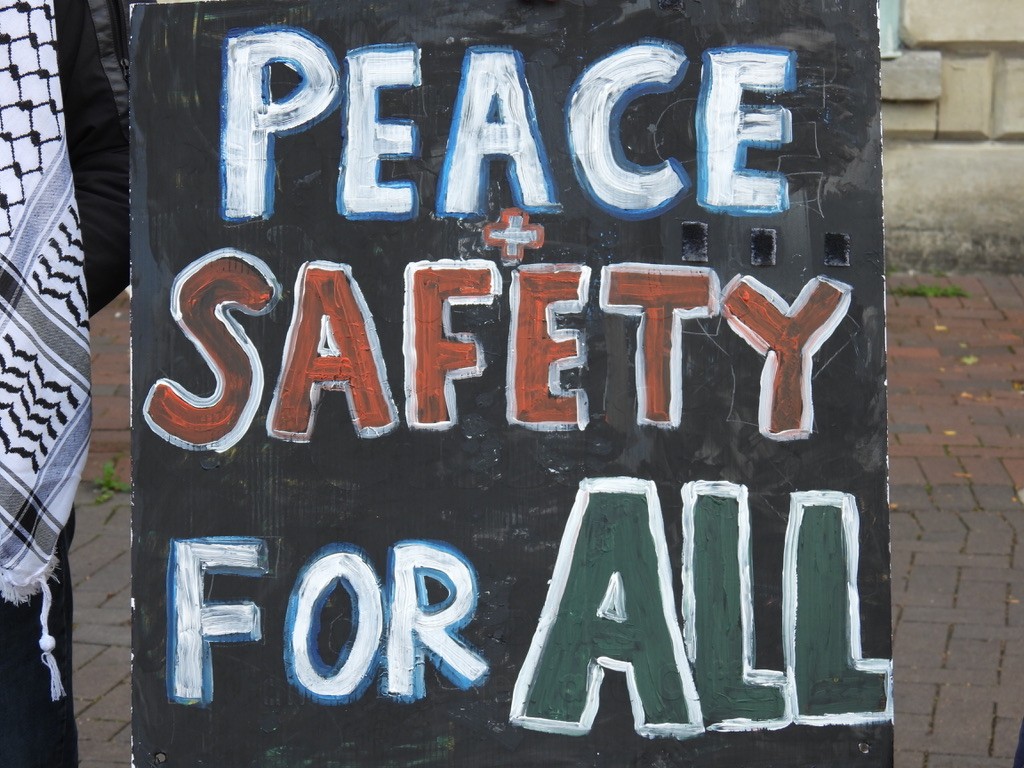
Governments throughout history have disliked protests and demonstrations. Thousands of people marching through the streets of London loudly, or even peacefully, stating their grievance or demanding a right denied to them, has long been part of our national life. Indeed, Sir Ian Gilmour in his book Riot, Risings and Revolution* describes the very many such events which took place in eighteenth-century Britain. Such was the violence that parliament was sometimes unable to sit for fear of MPs being dragged from their carriages. It is important to remind ourselves of this because the impression is sometimes created by present day politicians and some media commentators that this is some kind of new phenomenon. They are disliked because they disturb the current order. They give voice to injustice.

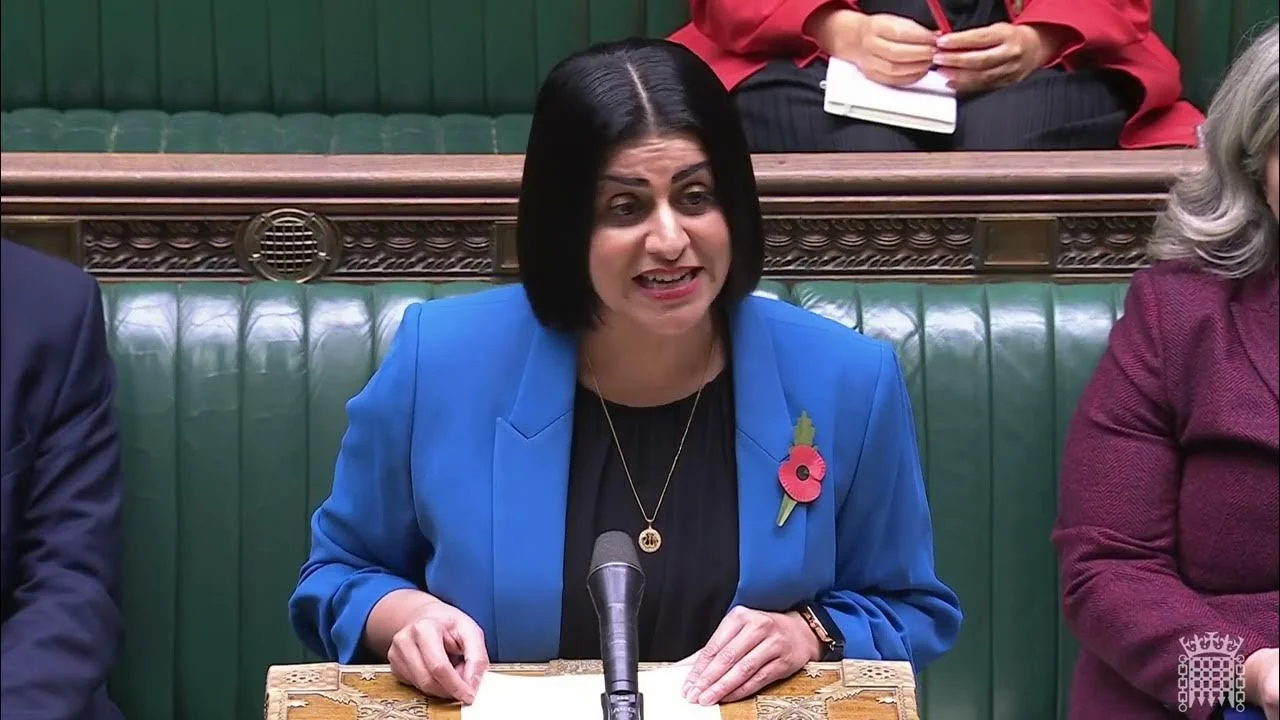
As we have noted before, the current home secretary, Shabana Mahmoud, is a woman as were previous home secretaries viz. Yvette Cooper, Suella Braverman, Amber Rudd, Theresa May and Priti Patel. All have the vote, all were/are MPs and are, or were, in parliament. That this is so is as a result of prolonged protest over many decades. They became violent as a (male) parliament refused to allow female enfranchisement. We could list other protests: to allow non property owners get the vote, for safety in the factories, to stop impressment and many other causes. All have the same or similar causes: people who feel that a government is more interested in satisfying or appeasing the powerful and are not listening to the powerless. Arms companies for example, have no need to spend a Saturday marching through London streets risking arrest and blistered feet, they – or their lobbyists – have direct access to ministers and senior civil servants all too happy to accommodate their wishes.

Frequency the problem

Mahmoud wants to get legislation passed to amend the Public Order Acts to clamp down on frequent protests. ‘Frequency of particular protests in particular places‘ she says ‘is in and of itself a reason for the police to be able to restrict and place conditions’. As a variety of civil rights organisations have pointed out, it is frequency which is the point. A single march or demonstration is unlikely to achieve anything much – the million or so who protested against the calamitous war in Iraq is an example.

She also claims, ludicrously, that they were ‘un-British’ and ‘dishonourable’. Clearly a minister who has only a slender grasp of British history.

There are a number of factors which seem to be at play here. The current ministerial statement came after the dreadful attack on a Synagogue in Greater Manchester. Marches were planned two days later on the Saturday in support of Palestine. There were many calls for the marches to be postponed. The organisers would not and went ahead with 488 arrested in Trafalgar Square. We can get a sense of the tensions at play in a Daily Telegraph article on 2 October Israel blames Starmer after synagogue terror attack which quoted without evidence, an Israeli source claiming the attack may have been ‘directed by Hamas’. Raphi Bloom is quoted in the Jewish Chronicle ‘that the community “will not forget the betrayal” over the UK recognising a Palestinian state, saying: “When you fail to act on constant calls to globalise the intifada, the results are that intifada came to our Manchester Jewish community with horrific consequences”.

It is clear that many people are upset and angry about the continued and wholly disproportionate killing and starvation which is taking place in Gaza. They are angry at the government continuing to allow Israel to be supplied with arms and the covert support by the RAF with their hundreds of overflights of Gaza. UK sales of arms to Israel reached a record high in June this year. They do not accept that there is a connection between the killing in Greater Manchester and Israel’s activities in Gaza and the West Bank. It can be argued that the Israeli government has perpetually conflated criticisms of its actions in Gaza and inaction in the West Bank as ‘anti-Semitic’ or ‘hatred of Israel’ and more recently as being ‘pro Hamas’.

The Home secretary’s plans to add to the legislation passed by the Conservatives is unnecessary and to quote an Amnesty director ‘ludicrous’. They may be part of a plan by government to look tough in the face of the increasing popularity of Reform and Nigel Farage. They represent a further step in increased authoritarian government and a desire to restrict protests generally.

*Pimlico (pub) 1992

Sources: Daily Telegraph, Jewish Chronicle, BBC (factcheck service), Sky News, Guardian, Wikipedia,

Latest vigil: No 96


Vigil took place at a difficult moment

October 2025

The vigil took place two days after the killing of two Jewish men and the injury of three others at the Heaton Park Hebrew Congregation Synagogue at Crumpsell, Greater Manchester. The terrorist act was carried out by Jihad Al-Shamie. The attack shocked the nation and the Prime Minister had to fly back from a security conference in Copenhagen to attend a COBRA* meeting. It has brought to light the degree of anti-Semitism that Jews are experiencing with many receiving threats and abuse. It later emerged that one of the dead was shot by a police marksman when a bullet went through the door of the synagogue. Synagogues have to have considerable security to protect people attending. The levels of abuse have increased since the October 7th attack in Israel.

Here is a video of the vigil.

The attack sparked a debate concerning events such as this vigil and the national demonstration planned in London in support of Palestine and an end to the war in Gaza. There were many who argued that such events should be postponed in view of the Manchester killing. Others argued that the war continues in Gaza and over 50 more were killed on the day of the Manchester attack.

The other key event was a proposed peace plan agreed between Presidents Trump and Netanyahu following the latter’s trip to Washington last week. The plan has 20 points but it was not discussed with any Palestinian present. Hamas are reported to be considering the plan and indirect talks are planned on Sunday 5th in Cairo to discuss it. The plan made no mention of a Palestinian state.

Haaretz reports the death toll in Gaza has reached 67,000. More have died of starvation. Over 30 attended the vigil.

A COBRA meeting is a gathering of senior government officials and other key figures to discuss and respond to a national emergency.  These meetings are convened when there is a situation that requires immediate and coordinated action from multiple government departments and agencies. It stands for Cabinet Office Briefing Room A and refers to the location where the meetings are held.

Will we withdraw from the European Convention?


Increasing number of politicians wanting the UK to leave the human rights convention

October 2025

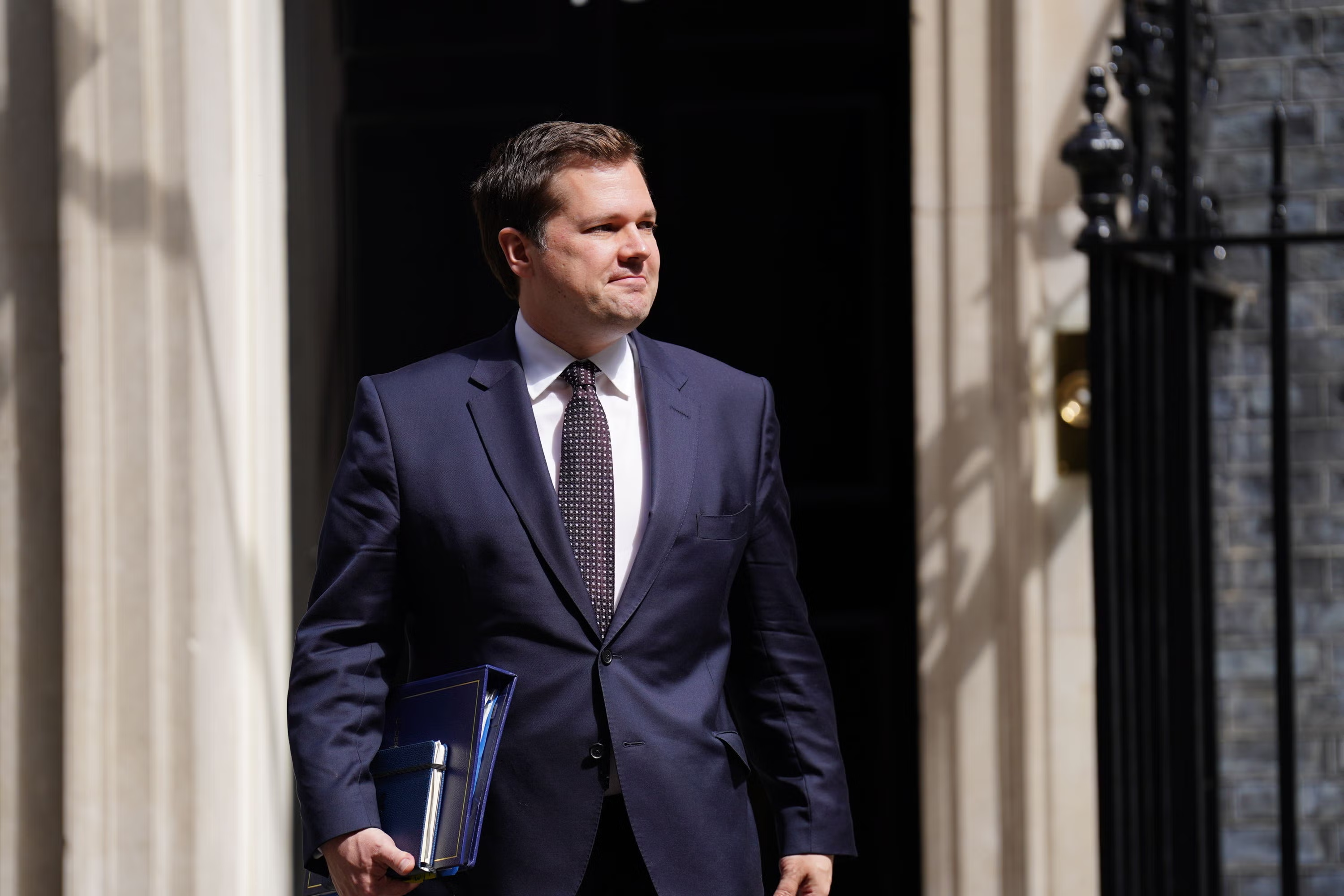
There is almost a chorus now of politicians saying we must leave the European Convention of Human Rights. The latest politician is Robert Jenrick MP (pictured) who in a speech ahead of the Conservative party conference next week, is proposing that all prospective candidates must promise to support leaving the ECHR as a condition of their candidacy. He claims ‘the party will die’ if they do not leave. He claims that the Convention has ‘stymied the removal of dozens of terrorists’. The party leader, Kemi Badenoch does not agree with this policy. However, while preparing this post Kemi Badenoch announced that her party will aim to leave.

Policy Exchange a prominent think tank claims that ‘ECHR distorts parliamentary democracy, disables good government, and departs from the ideal of the rule of law’. PX is regarded as the least transparent of the think tanks and its funding is obscure. It has pursued a programme over many years to weaken the judiciary.

The desire to leave the ECHR has come to the fore recently because of the small boats crossings which still represent a crisis for the government with record crossings. The former justice minister Lord Faulkner is quoted as saying it is ‘inhibiting government’s freedom to what is regarded by many as the emergency of illegal migration’.

Recently, Nigel Farage the leader of Reform has said we must leave ‘no ifs, not buts’.

So leaving the ECHR is essential according to these politicians if we want to solve the small boats ’emergency’. The questions are therefore will it, and what will be its effects on our rights more generally?

The debate around the European Convention is replete with exaggerations and misinformation. The chicken nugget story – widely repeated by many politicians and elements of the press is the latest. A boy could not be deported because of his aversion to chicken nuggets it was claimed. Except it never happened. There was no ruling that the foreign offender should be allowed to stay in Britain because his child could not eat these nuggets. An immigration tribunal did initially decide that it would be “unduly harsh” for the boy to be sent to Albania because of his special educational needs, but this judgment was later overturned. A more senior judge rejected the man’s appeal and made absolutely clear that an aversion to chicken nuggets should never be enough to prevent deportation.

Implications
  1. We would not just be able to leave as it would require a decision in parliament. This could take some months and the House of Lords would object to many of the details.
  2. The ECHR is not the only relevant piece of legislation: the Refugee convention also has implications for the UK.
  3. It will create problems with international relations. Since the UK was a prime mover under Sir Winston Churchill and the UK drafted a lot of the text, if we left it could lead to others deciding to do the same. We would join Belarus and Russia outside the Convention – hardly a good advertisement for the UK. It would seriously weaken the ‘voice’ the nation has on the subject of human rights.
  4. The Trade and Cooperation Agreement with the EU could be threatened.
  5. There would be immense problems with the Good Friday agreement in Northern Ireland.

The focus of the current debate has been on immigration and the boat crossings. This is a side show and a distraction. The ECHR is much more than that and involves fundamental issues concerning our rights as citizens and our relationships with state power. It is no accident that right-wing tanks like the Policy Exchange, and others based in Tufton Street, want us to leave because it inhibits the power and influence of their corporate backers. Human rights are nuisance for them and using the boat crossings is a useful cover to get us to leave. It is small wonder that they do not reveal who funds them.

Our parliament is little better. Recent legislation introduced by the Conservatives has seriously impeded the right to protest and there is little sign of the Labour government repealing those acts. Sir Keir Starmer drew a distinction between someone being deported where there was a risk of execution and sending them to a country with a different level of healthcare or prison conditions. Although he did not mention in his speech the ECHR it was clear that was what he was referring to. It was a less than full throated support.

We thus have sections of the media and political parties, the first pushing exaggerated or even made up stories about the harm the HRA does and second, an increasing number of politicians falling over themselves – in a kind of game of leapfrog – claiming they will leave or amend the ECHR. They claim or infer that by leaving the ECHR, it will enable them to solve the problem of the crossings. They dishonestly do not explain to the public the problems, risks and harms to UK’s interests with their proposed actions.

The HRA, which celebrates its 25th anniversary today, has brought immense benefits to many people in this country. Yet few politicians seem willing or brave enough sing its praises. Courting popularity, they have joined the siren voices of the secretive think tanks and oligarchs who own most of our media, in calling for its abolition (or review without ever spelling out what that means exactly).

Sources: Daily Express, Sky News, The Guardian, BBC, Euro news

25th Anniversary of HRA


Today marks the 25th Anniversary of the Human Rights Act

October 2025

Twenty five years ago this act was signed and ended the need to go to Strasbourg to get justice. It fundamentally changed the law by giving fundamental rights to citizens. It is currently under threat and it, and the European Convention which predates it, are disliked by many of the political and media class. In the next post we shall discuss this in more detail.

But today (2nd) we celebrate.

Recent posts:

Blog at WordPress.com.

Up ↑