Nigeria and Shell Oil: 30 years on


Let us not forget the role of Shell Oil in Nigeria

March 2026

In this world of fast moving actions, invasions, civil wars and genocide, it is easy to lose sight of past concerns which still resonate today. We are reminded in the Spring edition of the Amnesty News (Issue 228) of the events which took place 30 years ago in Nigeria and the activities of the Anglo-Dutch oil giant Shell. Amnesty produced a report last year Extraction Extinction which examines in detail the problems of the extraction industries and their effects on the environment, the climate and human rights.

On p129 of the report is a brief history of Shell’s activities in Nigeria and its complicity in the murder of Ken Saro-Wiwa:

In 1956, Shell first discovered oil in commercially viable quantities in Nigeria, when the country was still under British colonial rule. Before long, Shell operated more than 1,000 wells in 90 oil fields covering an area of 31,000 km2 across the Niger Delta. During the 1990s, Shell reported that its annual profit from oil production in Nigeria averaged USD 220-240 million, some 7% of Shell’s total worldwide profits from exploration and oil production.

Within the Ogoniland region alone, Shell operated 96 wells in five oil fields and was able to produce 28,000 barrels a day. The environmental degradation caused by their operations drove protests by the Ogoni people, led by writer and activist Ken Saro-Wiwa.

In November 1993, General Sani Abacha seized power in a military coup. General Abacha banned all political activity, replaced civilian governors with military administrators, jailed and executed opponents. An Internal Security Task Force was created to “restore and maintain law and order in Ogoniland” and immediately responded to community led protests in the Niger Delta with excessive use of force and other human rights violations.

Amnesty International has documented Shell’s involvement in human rights violations in Nigeria and its close relationship with the Nigerian military. Amnesty International’s research revealed that Shell executives met regularly with top government officials during this period and discussed the government strategy for dealing with protesters in Ogoniland.

In October 1995, nine Ogoni men including Ken Saro-Wiwa were convicted and sentenced to death in relation to trumped up charges of incitement to murder. They were hanged 10 days later; their bodies dumped in an unmarked grave. Five days later, Shell launched a new USD 4 billion natural gas joint venture with the Nigerian government. The
executions of the Ogoni Nine sparked outrage around the world. [Extract from the report]

A study by Durham University discusses the role of Shell in damaging the environment.

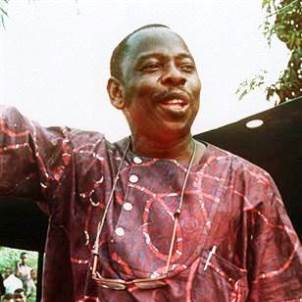
The organisation The Movement of the Survival of the Ogoni People, MOSOP provides further details. They maintain that Shell knowingly provided encouragement and motivation to the military authorities to stop the activities of MOSOP thus contributing to the deaths. There was an international outcry following the murder of Saro-Wiwa (pictured: photo MOSOP).

There does not seem to be any reference we could find on Shell’s website to these events. A relevant policy states: “Shell strives to make a positive impact on people around the world, and this includes providing the energy people need, contributing to local economies and communities, championing inclusion and respecting human rights” [accessed 28 February 2026].

There is some evidence to show that Shell has improved its performance in this area. However, after 30 years, the fight for justice continues. Shell has never fully cleaned up the oil spills and mess they created in the area and court actions continue.

The story of Ken Saro-Wiwa is presented in this piece in Historical Nigeria.

This is a story about a powerful international company which was able to operate in a country with few controls over its activities. When threatened by local people protesting about the severe damage it was doing to the environment, it is alleged they connived with the military authorities of the time who murdered a number of the protestors including Ken Saro-Wiwa. It seems that even after the passage of 30 years and some claims that Shell Oil is behaving more responsibly, they have yet to fully clean up the mess made by their activities. There are issues both about climate, the environment and human rights bound up in the same story.


Recent posts:

Vigil on the day war threatens in Middle East


The 117th vigil took place on the day Israel and Us attack Iran

March 2026

Reports today (March 1st) that Iran’s supreme leader Ayatollah Ali Khamenei is dead killed by an air strike from Israel. President Trump promised to end foreign wars yet here we are with US and Israeli forces engaged in bombing Iran. There have been retaliations by Iran. The UK’s involvement is as yet unclear but RAF jets are reported to be airborne in defence of some Gulf states and no doubt other assistance has been offered.

About 30 attended the 117th vigil in Salisbury in what seems almost a forlorn hope of seeing peace in the region. To engage in yet more military actions with all the tens of thousands already dead, seems an utterly pointless exercise which may bring short-term advantages but has no prospect of longer term stability.

Both Israel and the US are concerned by Iran’s nuclear ambitions. Yet no mention is ever made that Israel is a nuclear state. The Center for Arms Control and Non-Proliferation estimate the country has 90 such weapons and sufficient nuclear material for another 100. Considerable secrecy surrounds this fact and needless to say western media almost never mention it.

Part of the rationale for these recent attacks is to rid Iran of its murderous leadership the head of which appears to have been killed yesterday. The idea that the death of Khamenei is going to lead to some kind of peaceful conclusion and regime change is fanciful. Even if the current regime is deposed in some kind of coup or insurrection, who knows who or what will replace them? There is no obvious successor and the immediate outcome is likely to be instability. This action is more to do with domestic troubles being experienced by Messrs Trump and Netanyahu. And what about the Board of Peace?

Israeli supporting press are supportive. Bringing peace, human rights and stability to a country by dropping bombs on it seems an odd way to go about things. We tried that in Iraq…

Blog at WordPress.com.

Up ↑