Impact of ECHR on Asylum Seekers in 2025


Immigration and asylum seekers still making waves in UK.

October 2025

This month has been dominated by arguments around the European Convention on Human Rights and the rights of protesters to express their views. Neither of these are directly about refugees, but do have a bearing on the treatment of asylum seekers and dealing with the effects of conflicts. Boat crossings and asylum seekers do feature in the desire to leave the ECHR however.

The government has taken two more actions affecting migrants: making the “leave to remain” decision more difficult by extending the time taken to achieve it, adding more requirements, and blocking family reunions which would previously have been regarded as acceptable. Nando Sigona commented that this “allows policymakers to set shifting and arbitrary standards of belonging.”

One of the areas of complaint by the government has been the “last-minute” stay on deportation of unsuccessful claimants. It has now become clear that this is not gaming the system but the result of the short time available for appeals to be made against the Home Office’s “notice of intent” and the lack of emergency legal aid.

Still in the UK, the “one in, one out” agreement with France has started, but obviously the numbers involved are pretty small. Nevertheless, some commentators, such as Sunder Katwala of British Future take a positive view. At present, the scheme aims to return about 50 people a week; were it to be expanded tenfold, it would make returns “more likely than not”, and at 20 times, “it could operationalise a returns guarantee”. This would effectively destroy the business model of small-boats traffickers, says Katwala. “If you got to the point where there was a guarantee that the irregular route, where you paid a trafficker, wasn’t going to work, and there was a legal scheme to apply to as well, then you would see a three-quarters drop [in numbers arriving by boat].” Eventually, “you could actually eliminate it entirely”. British Future’s polling suggests an intake of 50,000 refugees a year would be supported by 48% of Britons, and opposed by just 18%.

Katwala notes that the US did actually get on top of immigration at the Mexican border in the final year of Joe Biden’s presidency, with a similar “routes and returns” approach by closing off illegal routes to immigration and creating legal ones. The numbers crossing the US border were far greater than those crossing the Channel – 2 million a year – and Biden’s approach reduced them by 77% between December 2023 and August 2024, an achievement that was barely reported at the time.

Also domestically, the government is still planning to phase out hotel accommodation for claimants and is

looking at redundant sites (mostly military) away from inhabited areas – the chief problem is that most of these require major repair work before being acceptable. Also noteworthy is the rumour that the imminent budget will take money away from spending in this area to reduce the deficit. Finally, back to the ECHR; the Supreme Court has taken to using the concept of “margin of appreciation” (in the ECHR but not the HRA) which is a bias towards accepting government cases rather than those of the lawyers – this will likely loom large.

Immigrant numbers falling in Europe

In Europe as a whole, the number of migrants has fallen sharply this year, according to Frontex. In 2025 so far, 112,000 have arrived in the continent, 21% down on last year. Similarly, the number of asylum claims is down by 23% to around 400,000 in the first half of the year. One of the main reasons for this is the EU’s policy of paying “transition countries” to cooperate by not allowing potential migrants through. These countries are chiefly Tunisia and Libya. There have been reports of Libyan security staff throwing people off boats into the sea (Libya is, of course, in the midst of civil war so is not likely to be particularly fastidious).

Frontex say that the number of arrivals by the western route through Algeria have, however, gone up. France and Spain have overtaken Germany as the most favoured final destination – the largest group of national arrivals have been from Venezuela, using Spain as a destination for language reasons. Ursula Van der Leyen has noted that only 20% of those with rejected claims have actually left Europe, and this will be on the agenda for the introduction next year of the new migration pact that has been said to “harden border procedures and envisages accelerated deportation.” Talks are continuing especially about the financial aspects. Interestingly, Hungary is being fined 1 million Euros a day for breeching its responsibilities towards asylum seekers – the government is unmoved.

Fergal Keane at the BBC has been touring the border areas and observed that in Greece, Poland and Latvia migrants were being physically pushed back across the border. The hazardous nature of the whole scenario is reflected in the fact that, over the last 10 years 32,000 migrants have died en route.

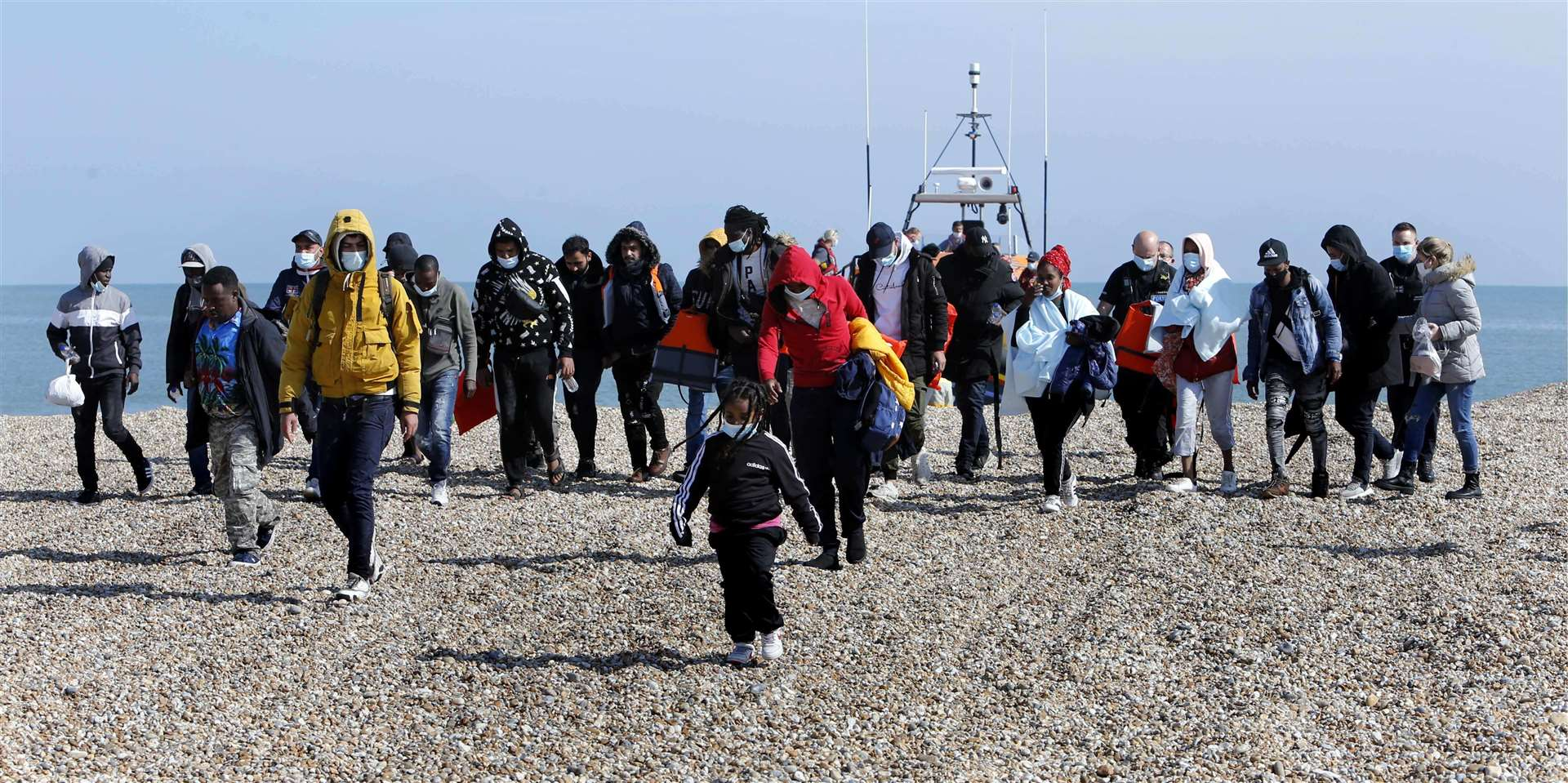
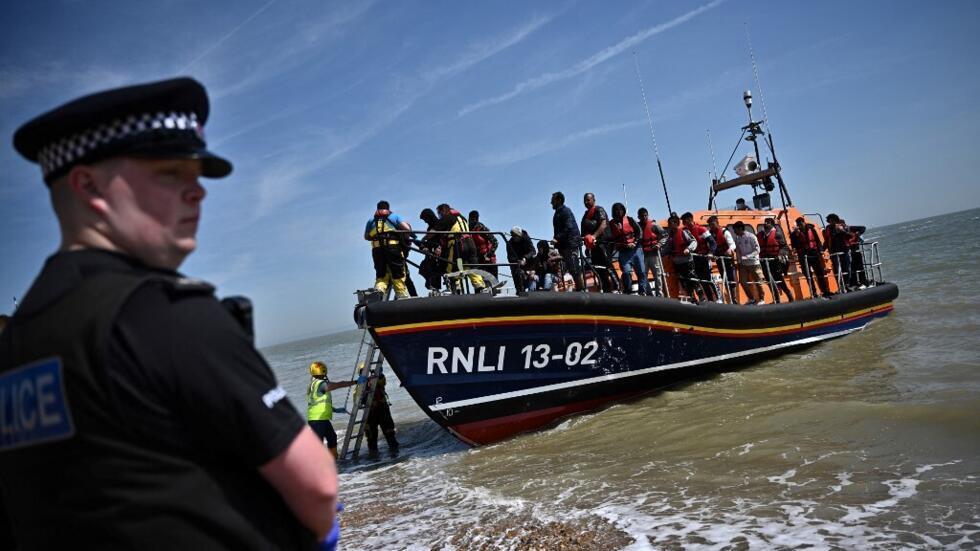
For the record, the number of arrivals on small boats this year so far is 34,000, up 36% on the same period last year. The weather is probably the main factor.

Compulsory reading!: The truth about the small-boats crisis – New Statesman.

AH

Nigel Farage and immigration


The leader of the Reform party sets out his policy for handling immigrants and asylum seekers

August 2025

Nigel Farage made a speech yesterday (26th) setting out his ideas for handling the rising numbers of immigrants and asylum seekers many of whom arrived in boats across the Channel. Often termed ‘illegal’ immigrants although it is not illegal to come via this method if asylum is claimed. The whole issue of asylum seekers, boat crossings and hotels has become headline news in recent months and there have been protests outside some of them most notably in Epping. A case started today (26 August) concerning an Ethiopian man alleged to have sexually assaulted a 14 year old girl and this has added to the widespread sense of outrage.

Mr Farage in his speech promised to fix the problem in quick order if he became prime minister. His speech has made headlines because of his poll lead which if maintained, could conceivably mean he will be a prime minister after the next election. Some polls show a 15 point lead over Labour. He promised to launch ‘Operation Restoring Justice‘ which would involve leaving the European Convention on Human Rights (joining Russia and Belarus), repealing the Human Rights Act and disapplying the Refugee Convention. This is to enable the UK to detain every migrant arriving illegally. Countries will be persuaded by a mixture of ‘carrot and stick’ to take them back. These will include countries with poor human rights records such as Iran, Afghanistan and Sudan where the risk of torture or death is extremely likely. The detentions will include women and children he made clear. They ‘will never be allowed to stay’ he said.

Critical issues arose in the press conference and included the cost and where they will be housed while deportations are arranged. He was not able to answer these questions. By amending or abolishing the legislations and coming out of the ECHR etc, it will frustrate the ability of lawyers to prevent deportations largely because the majority do have asylum claims which are legitimate. Over the coming days, other criticisms will appear. For example, existing English law, upon which the ECHR was largely founded after the war, provides protections despite membership of the Convention. Will foreign countries be willing to accept the large numbers involved?

Human rights

The concern here though is the desire to rid us of the ECHR and to repeal the Human Rights Act. This has popped up as a policy in several Conservative manifestos but has never actually come to pass. Local MP Danny Kruger is an advocate of this policy. Mr Farage’s ideas gained favourable coverage in some of the newspapers with the Daily Mail saying in a headline ‘Finally a politician who gets it’ [26 August, accessed 27 August]. His indifference to those he proposes returning to countries where torture is routine was particularly noteworthy. It is interesting however, looking at the comments from readers many of which were not supportive of his comments despite the uncritical nature of the article. The extent to which Mr Farage and Reform are making the waves was clear from the responses from the two main parties. Kemi Badenoch complaining that Reform had stolen their policies and a No 10 statement merely saying that Labour could not rule out leaving the ECHR. There was strong condemnation from the Liberal Democrats.

Mr Farage couched his speech in terms of a public mood of ‘total despair and rising anger’. It is disappointing to note the feeble and pusillanimous nature of the responses in particular from No 10. Britain was in the lead in promoting a new world order after the war following the Atlantic Conference. The ECHR was based a lot on British principles of justice. We would join only Russia and Belarus if we left – neither country a ringing endorsement of rights and human dignity. It is also disappointing to see newspapers like the Daily Mail, the Daily Express and the Daily Telegraph (How Farage would kick 600,000 migrants out of Britain) seemingly to endorse Mr Farage with little sign of critical analysis. The Telegraph even had a story headed ‘We’re ready to work with Farage on migration says Taliban‘. The human rights situation in Afghanistan is abysmal.

How have we come to a situation where prejudice and a lack of critical reporting about the almost unworkable and hugely expensive proposals put forward by Reform are treated in this way? Instead of a robust response and clear statements of how to tackle problems, the two main parties seem to be falling over themselves to ape Reform policies. Partly it is because they confuse some newspaper reporting as reflective of the wider public’s feelings about immigration which are a lot less black and white. It may also be a reflection of years of negative articles by some newspapers about human rights – and by extension the Human Rights Act – claiming it is a criminal’s charter. It is perhaps not surprising that part of Mr Farage’s speech was about the HRA and he spoke of ‘removing the tools from our judiciary’ to prevent successful asylum claims.

A point he referred to several times was around ‘whose side are you on?’ This was in answer to a question from the BBC concerning the risk of returnees being tortured. His answer was ‘are you on the side of the safety of our women and children on our streets, or on the side of outdated treaties backed up by dubious courts’. Another quote was defending our borders and keeping our people safe. There is no evidence of women and children rendered unsafe on our streets disproportionately by immigrants (illegal or otherwise). The torture question was asked more than once.

The tone of the presentation was that immigrants are a threat to our society. That women and girls are unsafe despite the fact that many asylum seekers and others are in secured accommodation. By extension, many of our problems would be removed in short order if he became prime minister. The HRA and other laws and treaties are part of the problem he claims.

Reflections

Mr Farage, despite being a member of a party with only 4 MPs, is able to command a big audience from a speech and to be the lead item on many news channels.

He enjoys wide and largely uncritical support in chunks of the media.

Mr Farage himself (!) noted an interesting point, namely most of the press questions were about process. There was little of a moral or principled point of view.

A large part of his speech was based on dubious claims and unsubstantiated facts. There are problems surrounding immigration and he is correct that both parties have been ham-fisted in trying to deal with them and failing. But solutions are complex and the nation cannot simply step away from international treaties and agreements.

He does not discuss the reactions from other nations from his set of unilateral proposals to deport all illegal migrants. The question is – what if all countries decided to do the same? He spoke of return agreements and an expert from the Migration Observatory said in an interview that such agreements had a mixed history.

He speaks as though the UK is uniquely affected by these problems. The reality is that the scale of displaced people around the world is massive. There are 36.8m refugees worldwide and 123m displaced people according to UNHCR. The UK’s problems in comparison are miniscule. We are also a rich country better able than most to tackle the problem with capable leadership. Many of the millions are in, or adjacent to, countries which are among the world’s poorest. No part of his speech discussed what could be done to tackle the worldwide problem.

So whose side are we on to pose Mr Farage’s question? Not his.


Tensions around asylum and immigration


The events around the hotel in Epping show deep tensions around asylum

August 2025

It is tempting to say that, in respect of immigration and asylum, little has changed over the past century or so. The arrival of thousands of Polish and Russian Jews fleeing from the pogroms at the end of the 19th Century, was the start of protests and antipathy towards what were then called ‘aliens’. The Aliens Act was passed in 1905 as a response to growing concerns. In subsequent eras there have been other outbreaks particularly with the arrival of Commonwealth citizens in the ’60s as Britain gave up its empire.

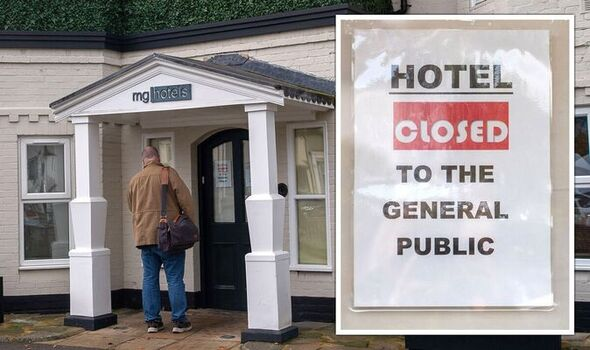
The current anger centred on the Bell Hotel in Epping which is one of many hotels used by the Home Office to house the immigrants awaiting assessment as to whether their asylum claims are valid or not. Recent tensions have been heightened by the increasing numbers of people arriving by boat over the English Channel. Large, angry crowds have assembled outside the hotel stimulated by claims that one of the inhabitants had molested a 14 year old British girl, an allegation he denies. In common with other disturbances – the Southport riots for example – social media has had a role to play in circulating rumours and speculation. The tensions have been an opportunity for politicians of various ilks to promote their views. Nigel Farage of Reform has made statements and Robert Jenrick of the Conservatives has also been voluble. He claimed in an article in the Daily Mail that he feared for the safety of his 3 daughters because of the ‘medieval attitude to women’ of men arriving by boat. The article refers to a ‘spate’ of crimes [alleged] to be committed by asylum seekers.

History

Historically, the fears follow a similar pattern. There is the fear of a loss of jobs by immigrants undercutting local labour. This is not altogether logical since those in these hotels are prohibited from working. Safety fears often surface such as those voiced by Jenrick. Taking up housing is another common reason and it will be galling for people spending years on a waiting list seeing immigrants being housed although the standard of accommodation is not always of the highest. In any event, this is about a hotel being used not houses occupied. A threat to our culture and our way of life is frequently expressed. We can see some of these themes in the Britain First website (described as a far right and fascist organisation by some). The pages contain words such as Britain being ‘overrun’ with mass immigration; the danger of ‘losing our country’ for ever; of our culture and heritage being ‘diluted’ and the risk of ‘erasing our identity’. Words like ‘hoards’ and ‘invasion’ often appear.

“We are not happy with these men in this hotel [Epping] because we fear for our children” A woman interviewed by the BBC

Common to the previous and historical outbreaks of this kind of angst concerning immigrants is a country experiencing stress. Added to that is the great mass of the population who do not feel they are being listened to and certainly not by politicians. Politicians have sometimes praised the contribution that immigrants have brought to our society – and rightly so – since large parts of our economy would grind to a halt without their input. But, they have not given that much attention to the social impacts and providing the resources to integrate people into society.

The problem is that people wishing to seek asylum in this country from places like Afghanistan, Sudan, Eritrea or Iran for example, have almost no legal means to do so. As routes have been closed off and entering on lorries now almost impossible, crossing the Channel is about the only means left. Once here, matters have been made worse by an inept Home Office. Considering how long this issue of immigration and asylum has been a political hot potato, it is astonishing that systems have not been geared up sufficiently to tackle it. Painfully slow assessments and inadequate accommodation have provided fuel to the fire of anger, hostility and a golden opportunity for populist politicians to jump in.

In a statement, Amnesty has said: Thousands of refugees are being refused asylum under flawed criteria that were introduced but not applied by the previous government – criteria this administration has irresponsibly chosen to maintain and enforce. This is a shocking abandonment of people fleeing war, torture and persecution and simply pushes backlogs and costs elsewhere – including into the appeals system.

In interviews, various politicians and others have argued that we should leave the European Convention to enable harsher measures to be introduced. We seem to have arrived at a place where fear and prejudice are defining forces, where media and social media amplify those prejudices, where politicians are too fearful to stand up against them and other politicians see them as an opportunity. Moral and humanitarian arguments are only occasionally heard. It is a great pity that the passions on show outside hotels and mosques could not be directed at some of the causes of the problem. Where is the anger at arms companies who profit and help foment the civil wars? Where are the protests outside City firms who handle the vast fortunes from those arms deals? Instead, anger is directed towards those who fled this unrest to seek sanctuary here.

Previous posts:

Have you thought of becoming a subscriber?

UK Refugee Crisis: Strategies to Address Small Boat Arrivals


Refugees and boat crossings still making political waves

July 2025

With the state visit of President Macron this week, the small boats are back in the headlines. As Macron and Starmer try to thrash out a deal to reduce the numbers arriving in the UK, the UK has been pressuring the French police to use new tactics against the irregular immigrants, allowing them to stop boats from up to 300 meters from the shoreline rather than only dealing with them on land. Presently they can only intervene if there is danger to life. The police are, in any event accused of puncturing inflatable boats as well as more heinously using tear gas and pepper spray on children.

An agreement between the UK and France on a “one in one out” basis, so that any arrival can be sent

back to France if replaced by a candidate deemed more worthy by dint of family connection, has been mooted, but the press conference will be on Thursday afternoon, so we will not know just yet. At all events, other EU nations are complaining about a possible deal which will make it more likely that arrivals in Europe will end up on their shores.

‘we have to make migration boring again’

Meanwhile, Amy Pope, the CEO of the (UN’s) International Organisation for Migration, has suggested any proposed changes will be unlikely to work, bearing in mind the level of commitment the migrants have already put in before reaching the English Channel. She is also in favour of de-politicising the debate. Her comment “We have to make migration boring again” is clearly  the most valuable contribution from anyone so far.

Arrivals

As noted last month, the number of arrivals in the UK on small boats continues to break records (20,000 by the end of June). This has been put down to good weather, smugglers’ new techniques and increasing conflicts around the world (the largest number of hopeful asylum seekers in Calais are from Sudan).

The Government is hoping to save up to £1 billion by speeding up backlog processing. However, the backlog is now 90,000 rather than 50,000 in 2024. In 2024, there were84,000 asylum claims – In the EU as a whole there were nearly a million – 997,000.

With much discussion on what legal routes immigrants can take, here is a summary of the current situation in the UK: there are presently 7 options.

  1. UNHCR can select people it thinks appropriate to send (the places cannot be applied for, and amount to only 1% of all refugees).
  2. UK Resettlement Scheme. The status of this is unclear; it includes community sponsorship and accounts for about 700 arrivals last year.
  3. Mandate Scheme. This is for people with relatives in the UK. 23 cases were reported in 2024.
  4. Family Reunions. Applies after refugee status has been agreed by the UK.

Mostly Syrians , Iranians and Eritreans. 5000 in quarter 1 2025.

  • Hong Kong. Numbers low now as most cases already settled.
  • Afghanistan. ACRS and ARAOP have now been closed, with virtually no explanation. “Further measures…[will be] announced later this year.” More Afghans have been arriving by boats than under these arrangements anyway.
  • Ukraine. Numbers also down now to about 4000 a month. Only 1698 asylum claims since 2022.

The Refugee Council have a new report New Roots, New Futures, arguing for a national integration strategy for refugees in the UK. They are particularly exercised by the need for new arrivals to have access to help in obtaining work and housing once they have been given right to remain.

The Green Party have put forward a plan for the Home Office to be split, with various options for the immigration departments.

By way of context, it should be noted that 73% of the world’s refugees are in Low/Middle Income countries, 67% of them are in countries neighbouring the one they are fleeing. Per head of population the countries with the highest number of refugees are Lebanon (1 in 8 of the population), Aruba and Chad.

The European Convention on Human Rights has become an issue again with questionable claims being made about possible unfair exploitation of loopholes. It should be stated that the Convention does not affect individual countries’ immigration policy, and that it is rare for claimants to a right of “family life” and such to win their case. The ECHR has ruled against the UK twice in the last two years, in neither case about immigration/deportation issues. They have generally prevented removals from the UK about once every 4.5 years since 1980. Leaving the Convention over this issue would seem rather unnecessary.

Andrew Hemming


Recent posts:

Refugee report: March


Government attitudes to immigration still causing problems

March 2025

The Government’s Border Security Asylum and Immigration Bill is in its committee stage this week. Much interest has been shown by MPs in using the occasion to express opposition to the Home Office’s guidance on denying citizenship to “illegal” migrants, however long ago their arrival may have been. This guidance has been put forward as a gloss on the “good character requirement” for naturalisation, deeming those who arrive illegally via “dangerous journeys” to be ineligible. The SNP have put forward an amendment to obviate this ruling and the Home Affairs Select Committee have sought an explanation for the change in policy.

Brian Mathew, the Liberal Democrat MP for Melksham and Devizes, said asylum seekers should be given the ability and support to work “instead of leaving them in administrative limbo in hotels around the country costing the taxpayer millions”.

There has been concern amongst MPs also about the government’s decision to transfer some of the foreign aid budget to pay for increases in defence expenditure. This will obviously have a bearing on the amount of funding available for countries with refugee issues. According to the FT, presently it is believed that half the foreign aid budget will now  go on migrant hotel accommodation.

The Home Secretary has been visiting Northern France, the first Home Secretary to do so in recent years. Yvette Cooper is bringing £172 million to aid the French authorities against people smugglers. The National Crime Agency believes that they now have a better understanding of how the boats and engines arrive on the Channel coast, mainly from Germany. Germany has now made it a crime to facilitate illegal migration to the UK.

At the same time as immigration is being targeted, the Government is increasing its deportation levels. This post by Prof. Mary Bosworth is worth reading.

The small boats continue; this year so far the numbers are 40% down on last year, but better weather will probably change the ratio. 2024 data indicate claims were up 18% on 2023, and grant rates were down from about 67% to about 47%. A particular drop in acceptances has been felt by Afghans: from around 90% agreement to around 50% (with legal routes barely used now); it has been suggested that the Home Office considers the Taliban no threat to a wide range of society now.  The largest influx currently is from Sudan.

Other notes: The Guardian featured the immigration regime in Spain, where a less hostile attitude has brought economic results with arrivals able to work.The Home Office has been accused of failing to correctly assess the ages of child migrants by the Refugee and Migrant Children’s Consortium. And the UK is refusing to pay the £50 million compensation demanded by Rwanda for the collapsed migrant removal policy.

We are grateful to group member Andrew for producing this report.

Refugee report


Events in Syria may see many return

December 2024

To begin with more positive news, the collapse of the regime in Syria has led to a rush among exiles to return to the country. Refugee camps just outside Syria have been particularly active. The down side is that, as a result, European governments (including the UK) have paused processing active asylum claims from Syrians. The UNHCR has calculated that the largest number of refugees from Syria leaving for other countries under Bashar al-Assad were Turkey 3.1 million, Lebanon 774,000, Germany 717,000 and Jordan 628,000.

Statistics released this month indicate that the net migration totals for the UK have dropped to 728,000 for y/e June 2024, but of course most of these are legal. Of the asylum claimants, the backlog of cases was at 97,200 in September, mostly appeals, as the percentage of claims granted by the Home Office has fallen over the last 12 months from 75% to 52%. At the same time, it has been said that only 52% of asylum decisions have met the Home Office’s internal quality assurance requirements. Since the Home Office has imposed a 2 hour limit on interviews with claimants in an attempt to speed thing up, this is perhaps not surprising.

Small boat arrivals have dropped substantially in the last month, due mainly to adverse weather. No boats arrived between the 17th and 30th November, and only 8 since, which means 400 arrivals in the last 3 weeks. Greece, the main point of entry to Europe for many, has received 57,000 arrivals this year so far.

A change in the law means that newly accepted asylum seekers in the UK will now have 56 days to “move on” from asylum accommodation, twice the previous limit. The Home Office is also planning to house asylum seekers in disused care homes and student accommodation. The National Audit Office has concluded that accommodation like military bases and barges do not represent value for money.

Britain has signed a deal with Iraq to tackle people smuggling gangs, particularly in the Kurdistan region. Deals with other front line countries may follow. Meanwhile the UK and Germany have pledged to share intelligence and expertise against the gangs. Germany will make it a specific offence to facilitate smuggling migrants to the UK; many of the rubber dinghies used are stored in Germany.

Andrew Hemming

Pic: NY Times


Recent posts:

Rwanda bill passes


Government succeeds in getting the Rwanda bill passed

April 2024

After what has seemed like a lifetime, the government has finally succeeded today, 23 April 2024, in getting its bill through both houses of parliament. The first flights are due to take off in 10 – 12 weeks that is in July. The airfield is as yet unknown but there is a possibility they will use Boscombe Down near Salisbury again as it is a military airfield surrounded by a high fence. There are some rumours to that effect.

Questions now are whether legal challenges will stand in the way. The government has declared Rwanda to be a safe country despite the evidence to the contrary. We do not know what the reaction of the European court will be. A robust challenge by them will renew calls by some politicians for us to depart from its jurisdiction.

This feels like a pivotal moment. Months have been spent on this problem and no doubt considerable civil service time has been spent on it as well. The cost has been considerable and the government has been reluctant to reveal the figures. An estimate is £370m with another £120m to come. There will be further sums for each asylum seeker despatched. There will be other administration and transport costs as well. The cost per person are difficult to estimate because it does depend on the numbers sent since some costs are fixed. As we move into what might be termed the ‘delivery’ phase of this project, issues of whether civil servants will be comfortable with the work they have to do and the response of the ECtHR are awaited.

The main purpose of the policy is to act as a deterrent. It is hoped – expected even – that news of the departures to Rwanda will deter those seeking to cross the Channel and seriously damage the business model of the smugglers. Whether this happens remains to be seen but with no end to wars and political instability in the world and the ease with which boats and outboard motors can be acquired from Turkey, suggests that this is a low risk, high reward activity unlikely to be deterred by a small percentage being sent to Rwanda.

Both local MPs, John Glen and Danny Kruger, voted for the bill.

Refugee report: January


Latest report on this politically charged problem

January 2024

Refugees and in particular, those arriving via small boats across the Channel, continue to cause considerable concern among the political classes and in the media. Overtaken in the past few days by the Post Office scandal, the matter will burst back into view next week when the Rwanda bill comes back to the Commons.

The total number of “small boats” arrivals in 2023 was 29,437 which was 36% lower than the figure for 2022. Bad weather in the latter part of the year has been a factor. Border Force expect the numbers to rise again in 2024. 20% of the arrivals were from Afghanistan.

On claims, of the 40,000 arrivals between July 2022 and May 2023, 90% applied for asylum. The PM’s claim to have removed the legacy of pre-2022 cases is questionable. The Office for Statistics Regulation is investigating.

The Times reports that Home Office officials can’t clear the rolling asylum backlog, because more than 50,000 claims are for people who are in the U.K. but barred from permanent settlement under new laws passed last year. The paper calls it “indefinite limbo.”

The statistics summary states that of “the 112,138 initial asylum decisions made between January and 28 December 2023, 35,119 were non-substantive decisions”. This includes withdrawals, and it seems reasonable to conclude that the vast majority of those 35,119 decisions were withdrawals given that the statistics to the end of September 2023 showed that 18,709 applications had been withdrawn since June 2022, most of these in 2023. It has been clear since last year that the government was using this as a tool to artificially reduce the number of cases.

This means that over 31% of ‘decisions’ that were made in 2023 were probably withdrawals. These are people who are still here and a large proportion of them are likely to be refugees. All that has been achieved by removing them from the asylum system is an increase in the likelihood of them being subject to exploitation, as people who are left outside the system are far more vulnerable to this.

A report in the i (paywall) shows what has been happening with the withdrawal of asylum claims,  Apparently those decision makers who met targets received gift vouchers and those who didn’t were subjected to performance management. In the meantime, those on the receiving end include people who do not speak English as well as those who were living in Home Office accommodation but have been accused of absconding from it.

In Parliament, the Safety of Rwanda Bill returns to its final debate stage next Tuesday and Wednesday (16th and 17th January), when there will be a large number of amendments, the majority of which will fail. The bill will be considered by a committee of the whole house, meaning all MPs can contribute to the committee stage debates which are normally limited to members of a bill committee, and these are the debates where Tory right-wingers will try to toughen the bill. For example, they may try to remove the clause in the bill allowing individuals to appeal against deportation, or to include provisions saying ministers should ignore European court of human rights injunctions stopping deportations flights. Tory centrists may also try to amend the bill to tighten the requirement on ministers to obey the European convention on human rights.

To end on some good news, the Dorset Echo has a report that some of the asylum seekers on the Bibby Stockholm have started working with local charities, particularly those concerned with the homeless. Being prevented from working has left them with lots of spare time and many of them have experience of charitable work in their former lives.

Andrew Hemming

Refugee report, December


Refugees and Rwanda continue to fill the headlines

December 2023

As the House of Commons debates the Government’s latest attempt to make their Rwanda project fly, this month’s emphasis has been very much on the small boats. On the progress of the Bill over the next few weeks, anything might happen. The government managed to get the second reading of their bill passed on 12th to clear the way for the plan to remove some people to Rwanda. 

As a topline figure, the number of arrivals by small boat this year has reached 29,000; this is about a third down on last year. It has been argued, however, that it’s the number of boats that is down, not people – they are using bigger boats. We have no confirmation of this.

The Government has changed the rules for asylum seekers/refugees following their processing; they now have 28 days to leave the temporary hostels they have been confined in and to find their own accommodation.  As a result the level of homelessness among this community has increased dramatically.  The Evening Standard claims that the numbers of homeless in the migrant community has increased 39% in a month (presumably this is a London figure).

The big increase in the number of claimant withdrawals has been exercising the legal profession.  These are migrants who have claimed refugee or asylum seeker status, but have not turned up for interview.  As a result, 17,000 claimants who have apparently withdrawn their claim are now unaccounted for, though presumably they are still in the UK (the Home Office has no knowledge of their whereabouts).  On a similar topic, of the 154 unaccompanied child asylum seekers who went missing earlier this year, 132 are still missing.

While the number of legacy cases is being reduced, new claims are still keeping the total high.  The Government’s aim of clearing the pre-June 2022 backlog has not yet been achieved (it’s believed to be still about 10,000, and these are among the most complicated cases).  Meanwhile, new applications have amounted to 90,000, leaving the total figure at around 109,000 (less than the peak).  It should be noted that Home Office staff turnover is very high and it may well be that the 17,000 alluded to above include names taken off the backlog to reduce the figures.  Also the Home Affairs Committee this week elicited the information that approval levels went down to 38% in Q2 and back up to 67% in Q3 – the reason is unclear.

Small boats population accounts for around 6.6% of the total

It is worth pointing out, as part of the argument, that the small boats population amounts to about 6.6% of the net immigration numbers for the year (the 700,000 excess of arrivals v departures) figure) and half that for the gross total (incomers only)

Another problem area has been the gap between a claimant being granted leave and receiving a Biometric Residence Permit – the Home Office claim not to know how long the average wait in limbo is.

The apparent suicide of an asylum seeker on the Bibby Stockholm has drawn attention to the cost of the barge, currently estimated at £22 million.  The number of boat people on board is not known, but is believed to be around 200 currently.

On the issue of potential refugees from Gaza, the request in October from various refugee organisations in the UK to the Government to come up with a scheme for taking numbers on, as was done with Ukraine, does not appear to have been acted upon as yet.

Finally, a survey by Labour List this week invited respondents to say how many arrivals had actually been removed to Rwanda.  The percentage saying, correctly, none was 48%.

Andrew Hemming

Plan to block HRA


Plan to disapply the Human Rights Act reported

November 2023

A report in the Guardian suggests the government proposes to disapply the HRA and block its use to enable the deportation of asylum seekers to Rwanda. This follows the Supreme Court’s decision last week that Rwanda is not a safe country and individuals sent there would be at risk of refoulement. The government is under considerable pressure from the right of the party and in particular the ‘New’ Conservatives jointly led by Danny Kruger MP who is the member for Devizes in Wiltshire.

https://www.theguardian.com/uk-news/2023/nov/19/rishi-sunak-could-block-key-human-rights-law-force-through-rwanda-asylum-plan

Blog at WordPress.com.

Up ↑