Conservative Party’s Plan to Repeal Human Rights Laws


Speech by the leader of the Conservative party in Manchester

October 2025

These are some extracts from the speech Kemi Badenoch MP gave to the Conservative party conference in Manchester this week. We have selected those parts which focus on human rights issues and in particular the plan to leave the European Convention and to repeal the Human Rights Act.

“[…] It is fundamental, why can’t we control our borders and remove those who need to go? All these

questions boil down to who should make the laws that govern the United Kingdom? Conservatives, believe it should be our sovereign Parliament, accountable to the British people. The reality today, is that this is simply not the case.

“This use of litigation as a political weapon is what I call lawfare. Well-meaning treaties and statutes – like the European Convention on Human Rights and the European Convention on Action against Trafficking drafted with the best of intentions in generations gone by, and more recent additions like the Modern Slavery Act, are now being used in ways never intended by their original authors.

“What should be shields to protect the vulnerable, have instead become swords to attack democratic decisions and frustrate common sense. It is that whole system which we need to reform. And the place to start is the European Convention on Human Rights.

Five tests that a country has to pass to be truly sovereign.

First, can we deport foreign criminals and those who are here illegally?

Second, can we stop our veterans being harassed through the courts?

Third, can we put British citizens first for social housing and public services?

Fourth, can we make sure protests do not intimidate people or stop them living their lives?

And fifth, can we stop endless red tape and legal challenges choking off economic growth?

[Lord Wolfson was commissioned to study the ECHR and our membership of it and produced a report the key conclusion was]

When it comes to control of our sovereign borders, preventing our military veterans from being pursued indefinitely, ensuring prison sentences are applied rigorously for serious crimes, stopping disruptive protests, or placing blanket restrictions on foreign nationals in terms of social housing and benefits, the only way such positions are feasible would be to leave the ECHR.’

Commitment to leave

[Badenoch] “We must leave the ECHR and repeal the Human Rights Act. Conference, I want you to know that the next Conservative manifesto will contain our commitment to leave (our emphasis). Leaving the Convention is a necessary step, but not enough on its own to achieve our goals. If there are other treaties and laws, we need to revise or revisit then we will do so. And we will do so in the same calm and responsible way, working out the detail before we rush to announce.

“The rights we enjoy did not come from the ECHR. They were there for hundreds of years in our common law. Parliament has legislated over centuries to reflect and protect our freedoms. Human Rights in the United Kingdom did not start in 1998 with the Human Rights Act, and will not end with it. As we work through our detailed plan, we are clear that leaving the ECHR and repealing the Human Rights Act will not mean that we lose any of the rights we cherish”. […]

Comment

The statement by the Conservative leader is clear and unequivocal. Even allowing that it is a speech a long way from an election and designed to encourage a party currently scoring badly in the polls, it is part of a worrying trend with more and more voices calling for us to leave the ECHR.

The big claim towards the end of her speech quoted above that ‘Human Rights in the United Kingdom did not start in 1998 with the Human Rights Act, and will not end with it‘.’ Many did start, and some will end if it is repealed. If there will be no difference, then why the desire to end it? She seems to have forgotten that the HRA was introduced because people had to go to Strasbourg to get the justice denied them in the British courts. It is nonsense to claim that the HRA has added nothing of benefit to the rights of the ordinary person.

There are likely to be many who will disagree with Lord Wolfson’s benign conclusion that the proposed departure from the ECHR would be fully compliant with the Belfast Agreement.

Leaving the ECHR will be a retrograde step and have repercussions for our international relations. It is likely to make trade between us and Europe more difficult. We will join Russia and Belarus as the only nations outside its remit. Repealing the HRA – which has been promised several times before by Conservative leaders but never carried out – will seriously damage our rights as citizens. Combined with recent legislation to limit protests for example, it will be a retrograde step.

An Amnesty petition can be accessed here.

Speech accessed from the Conservative website [8 October]

Court Decisions Impacting Protests and Gender Rights in the UK


Significant number of things happened this month

May 2025

There were a number of interesting events on the human rights front in the UK this month including the Court of Appeal judgement discussed below. There has been a steady ‘nibbling away’ of rights by successive governments which is why we have started this series of reports of which this is the second and why the judgement is good news.

Right to Protest 

This month the Court of Appeal has upheld an earlier ruling of the High Court from May 2024 that then Home Secretary Suella Braverman did not have the power to create a new law that lowered the threshold of when the police can impose conditions on protests from anything that caused ‘serious disruption’ to anything that was deemed as causing ‘more than minor’ disruption. They said that “the term “serious” inherently connotes a high threshold … (and) cannot reasonably encompass anything that is merely ‘more than minor’”.

This was the first time a government had sought to make changes through so-called ‘Henry VIII powers’ of secondary legislation to a law which had been democratically rejected by Parliament when introduced in primary legislation.

Hundreds of protesters have been arrested under these measures since they were created, including the

climate activist Greta Thunberg (pictured: MusikExpress) who was acquitted of all charges in a hearing in February 2024.

Liberty has called for the regulations to be quashed immediately (as per the initial ruling from the High Court, whose decision to scrap them was put on hold until the conclusion of the appeal) and has called for all arrests and prosecutions under the legislation to now be urgently reviewed, alongside a comprehensive review into all protest laws that have been passed in recent years.

The Court will decide in the coming weeks if the legislation is to be quashed.

Gender Recognition Ruling

Five judges from the UK Supreme Court ruled unanimously that the legal definition of a woman in the Equality Act 2010 dealt with biological sex at birth and did not include transgender women who hold gender recognition certificates.

In a significant defeat for the Scottish government, their decision will mean that transgender women can no longer sit on public boards in places set aside for women and it will have far reaching implications for access to protected spaces and services such as the armed service, hospitals, women-only charities and changing rooms and access to sport.

Lord Hodge told the court the Equality Act (EA) was very clear that its provisions dealt with biological sex at birth, and not with a person’s acquired gender, regardless of whether they held a gender recognition certificate.  In a verbal summary of the decision, he said: “Interpreting sex as certificated sex would cut across the definitions of man and woman in the EA and thus the protected characteristic of sex in an incoherent way.”  He stressed that the ruling does not change the protection trans people are afforded under the protected characteristic of ‘gender reassignment’ under the Equality Act.  Amnesty has called the decision ‘disappointing’.

Humanist Rights

Two couples are taking the government to court over its failure to legalise humanist marriage in Wales and England, five years after a ruling that the lack of recognition was discriminatory. Humanist marriages are legal in Scotland and Northern Ireland, and elsewhere in the world including New Zealand, Canada and Australia.  In Scotland in 2022 there were 9,140 humanist wedding ceremonies compared with 8,072 based on faiths or other beliefs.

Activists Detained

Non-violent activists Roger Hallam and Dr Patrick Hart are being refused their right to a Home Detention Curfew.  Days before their scheduled release from prison in March Dr Hart was told that there was ‘no suitable accommodation’ and Hallam that the media’s interest in his case meant that he was deemed unsuitable for HDC (which actually states that non-violent prisoners can only be denied release ‘in exceptional circumstances’). New release dates are respectively June and possibly August. There will be an appeal.

The Counter Terrorism and Border Security Act of 2019

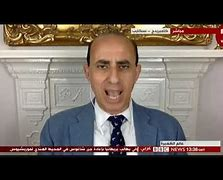
This was invoked by police at St Pancras rail station for detaining a Palestinian-British Christian academic and his 8-year-old son on their return from Paris on Good Friday. Professor Makram Khoury-Machool (pictured: BBC Arabic Service) is a Palestinian-British Christian academic who has lived in the UK since 1999 and taught in Cambridge since 2004.  He is the founder of the Cambridge Centre for Palestine Studies whose board members and patrons include Dr Rowan Williams, Baroness Helena Kennedy, Baroness Sally Morgan, Lord Chris Smith, HE Clare Short, Baroness Warsi and Lord David Steel.  

He and his son were held over 4 hours until after midnight, were given no food while the police took his fingerprints, DNA samples, searched his personal belongings and confiscated his laptop and mobile phone using the threat of force.  Seven days later, the devices were returned but without his SIM card.  He was subjected to an intimate body search, and his son was left traumatised by the experience.  This is perhaps the first time a child as young as eight has been detained in the UK under the 2019 Act; his treatment may breach the UN Convention on the Rights of the Child to which the UK is a signatory.

Economic, Social Cultural Rights

Amnesty reports that in the UK there is no legislatively defined universal social protection floor such as the one recommended by the UN’s International Labour Organisation: this is left to the discretion of the state and is inconsistent across Great Britain and Northern Ireland.  The changes proposed by the Pathways to Work Green Paper 2025 will require new legislation allowing the secretary of state to implement proposed cuts to social security rates for disability and incapacity schemes, and removing some of the legislative protections which are in place to protect against political whims.

If implemented, Amnesty considers the extensive reforms proposed would be a deliberately discriminatory, disproportionate and retrogressive violation of human rights;  The UK’s social security system does not legally guarantee essential social security payments that ensure access to basic needs such as healthcare, housing, food and education and that social security freezes, caps, and deductions, removal of the spare room subsidy (bedroom tax) and two-child limit have deepened poverty and disproportionately harmed children, the disabled and low-income families. Despite increased social security spending, poverty rates remain unacceptably high.

Recent posts:

Twilight of Human Rights Law


Edited: 10 April 20

We have chosen to review the book Twilight of Human Rights Law by Prof. Eric Posner (OUP) as it appeared in an article by Britain’s new Attorney General, Suella Braverman.  She refers to one of his arguments in a newspaper article.  In addition, the many attacks on human rights and the desire to abolish the Human Rights Act is part of current government policy.

The first part of the book is a tour d’horizon of the many failings in human rights around the world.  He instances massive violations in places like Rwanda, the appalling treatment of the Rohingya in Myanmar, the terrible events in Chechnya and many other places around the world.  He rightly points out that although countries have signed up to treaties to abolish the use of torture, it is still widely practised.  He points to bad police practice in countries like India, Brazil and Indonesia.  Slavery is still the curse it ever was but organised in a different way.

International treaties have had little effect he says in improving behaviour.  In a small number of cases it has he concedes.  He discusses the imperialist criticism of western states seeking to impose their moral compass on other countries based on attitudes dating back to colonial days.  He instances the use of torture by the Americans at Guantanomo Bay following 9/11.  This was supported by a majority of Americans and thus challenges their claims of moral leadership.

The argument seized on by the Attorney General is that of a trade-off as far as the use of torture is concerned.  The argument here is that many countries have limited resources.  They have a choice between spending money on improving the police and stopping torture or, investing in health care or education.  Since better health care and education is likely to be of greater benefit to more people, it is a preferred option.

THE book is flawed in many important respects.  Although the arguments he provides and examples of failure and continuing violations and bad behaviour by many states around the world are true enough, it is not true to say that there have been no improvements in the human rights everywhere.  One of the problems is that transgressions are news: steady improvements aren’t.  So we read or see TV programmes about violations or genocide for example, but not small improvements in say, Russia.

The argument about torture assumes that there is an economic equivalence between improving police behaviour and education spend.  The two are likely to be vastly different.  Improving police behaviour and that of the judiciary would cost millions, education costs significantly more than that.  Moreover, education is a continuing cost, sorting out the police is more likely to be a one-off cost.  Getting rid of torture is likely to have benefits to society.  The police are trusted then they will get more support from the public.  He gives no credence to the fact that torture is ineffective.  People will say anything to get it to stop.

Another unconsidered factor is the very cost of running a police state.  To run a state like China where human rights are flouted on a massive scale, is immensely costly.  The Chinese monitor movements of its people, they have a vast system of tracking the worldwide web to ensure its citizens do not read what the state doesn’t want them to, and they employ a huge army of police and informers.  They have invested heavily in cameras and systems to watch its people’s movements.  It is not true to assume therefore that improving human rights is somehow automatically more costly than the politics of repression.

As AC Grayling puts it in his book Ideas that Matter (Weidenfeld & Nicholson, 2009);

The ideas embodied in all these human rights instruments have a powerful influence on thinking and behaviour, even if violation of them continues: hope has to lie in the future as these ideas become more widespread and more influential still.  (p179)

Although Posner gives a good summary of human rights, especially since the war, he does not discuss the longer history since Magna Carta. There has been a trend over centuries of citizens gradually acquiring more rights.  The European Court has, slowly but surely, done a lot to raise standards as has the International Criminal Court.  Nor does he credit the fact that the presence of treaties is an important support for people pressing for better rights in those countries where they are poor.  The many human rights organisations are able to pursue their arguments and press for changes precisely because there is a corpus of treaties and law to base their actions on.  The point overlooked by the professor is that the treaties enable action within the country itself.

He also makes great play of the numbers of treaties and long list of rights, which he says, renders them less effective.  He lists them all in an appendix but upon examination, many are restating the same points.  He seems to overlook the vast number of laws which govern most states.  These are constantly added to as new problems emerge or old problems need solutions, the Children Act for example.  The number of laws do not make improving society less effective – quite the opposite it could be argued.

Perhaps because Prof. Posner is a lawyer but he sees progress purely through the lens of law and treaties.  He does not take into account that laws are just one part of the equation.  A considerable amount is done by persuasion, human rights activists, diplomats and others (including Amnesty members) beyond pure legal action.

Overall, despite the long list of problems and failures, he does not convince that it is twilight for human rights.

Human Rights tableau, France

Citizenship at Shaftesbury


Group members presented their Citizenship roadshow in Shaftesbury

citzenshipLast week, fresh from attending the Citizenship Conference at South Wilts, group members took the Amnesty presentation on the road to a new venue to us, St. Mary’s Girls School at Shaftesbury, as part of their series of talks by local and national organisations.  Despite an attendance of some 90 sixth-formers, it was possible to encourage interactivity, and the students proved very knowledgeable and interested in our work, and showed an encouraging level of social awareness.  Nearly all signed greetings cards for prisoners, and some stayed to continue conversations with us about Amnesty after the event.  Thanks are due to the school for an event we hope we can repeat in the future.


If any secondary school in the South Wiltshire area would like the team to do a presentation on the work of Amnesty and human rights, please get in touch via this site.

Note: St Mary’s School is in Wiltshire


Blog at WordPress.com.

Up ↑