The award winning film Timbuktu was shown at the Salisbury Arts Centre tonight and it was a gripping and powerful film. If you did not see it here try and catch it somewhere else. Most of the people attending signed the cards to Cameroon – thank you for those that did.
Timbuktu film

The film, Timbuktu, is to be shown in the Salisbury Arts Centre 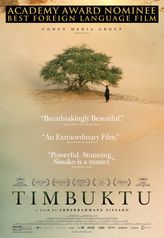 this Thursday evening 3 December. The film is extremely topical both because of the horrific activities of jihadists in Paris and today’s news of a terrorist attack in Mali which is where Timbuktu is. This is the latest in our joint presentations with the Arts Centre. The film has received many favourable reviews and mostly 4 stars.
Timbuktu has entered the English language as a place which is remote and unknown yet recent events have brought the country and the town into the limelight.
There will be a short presentation by an Amnesty director before the film starts and afterwards, an opportunity for people to sign a petition or some cards.
Tickets from the Arts Centre via the link above or by phoning 01722 321744.
Rightsinfo video on the Human Rights Act
The Human Rights Act is under threat and we await the current government’s plans for its replacement which must be due very soon. Rights Info has produced a short video which is worth a look which you can access from their web site or from this link.
October minutes
The minutes of the October meeting are now available. The group discussed the forthcoming Vigil at St Thomas’s; the tapestry and where that could be displayed; social media statistics; the death penalty; the forthcoming film at the Arts Centre and a report on the correspondence with John Glen concerning the government’s changes to its human rights policies.
#Morocco film

UPDATE 25TH MARCH
The film Bastards (12A) was shown this Wednesday 25 March starting at 7.30 and the audience reaction was very positive indeed. There were many questions to the producer Deborah Perkin.
This is a fascinating and highly-acclaimed documentary about one Moroccan woman’s struggle to legitimise her daughter and the director, Deborah Perkin will be there to answer questions. The film follows an illiterate young woman who took on her own family and the Moroccan justice system for the sake of her illegitimate child. It is a gripping, moving and uplifting documentary from the cutting edge of Islam.
Deborah Perkin is the first person to film in a court in Morocco, a country which leads the world in its legal efforts to give women and children more rights under Sharia law.
In Morocco, as in all Muslim countries, sex outside marriage is illegal and women bear the brunt of society’s disapproval. But what is the fate of the children of those single mothers? They cannot attend the better schools, are turned away from infant immunisation clinics and refused government posts. Jobs, housing and a huge range of social advantages are denied them. They are despised outcasts, condemned to a life of discrimination. Bastards is the first film to tell this story from a mother’s point of view.
 We shall have a petition to sign about torture in Morocco. Morocco is one of the five countries highlighted by Amnesty International in its #StopTorture campaign. We are pleased to say many people signed our petitions at the end of the showing. Thanks to the Arts Centre.
Afghanistan

Britain’s role in Afghanistan is coming to an after over a decade of bloodshed and war. It is doubtful that the country is in a fit state to function effectively since the Taliban and the warlords are still very much in evidence and there are reports of ISIS being present in the country as well. After all this time it is easy to forget some of the original aims which were defeating terrorism and the Taliban. We can also forget that it was the CIA who helped establish, arm and train the Taliban in order to assist them in their fight with the Russians.
One of the major victims of the years of war is women. It has turned thousand of Afghan women into refugees and widows – or both – and made it dangerous for them to seek schooling, go out to work, get healthcare or secure paid employment. Before the arrival of the Taliban in 1996, women’s rights had steadily improved and indeed, there are many photographs from that era women and girls in schools and university with not a burqa or veil in sight. Improving the rights of women became one of the additional aims of the invasion and it will be recalled that Cherie Blair – wife of the then Prime Minister, Tony Blair – hosted an event in 10, Downing Street in 2001 with this aim in mind. Kofi Annan said:
There cannot be true peace and recovery in Afghanistan without a restoration of the rights of women.
Similar sentiments were expressed by the then secretary of state Colin Powell:
The recovery of Afghanistan must entail a restoration of the rights of women, indeed it will not be possible without them.
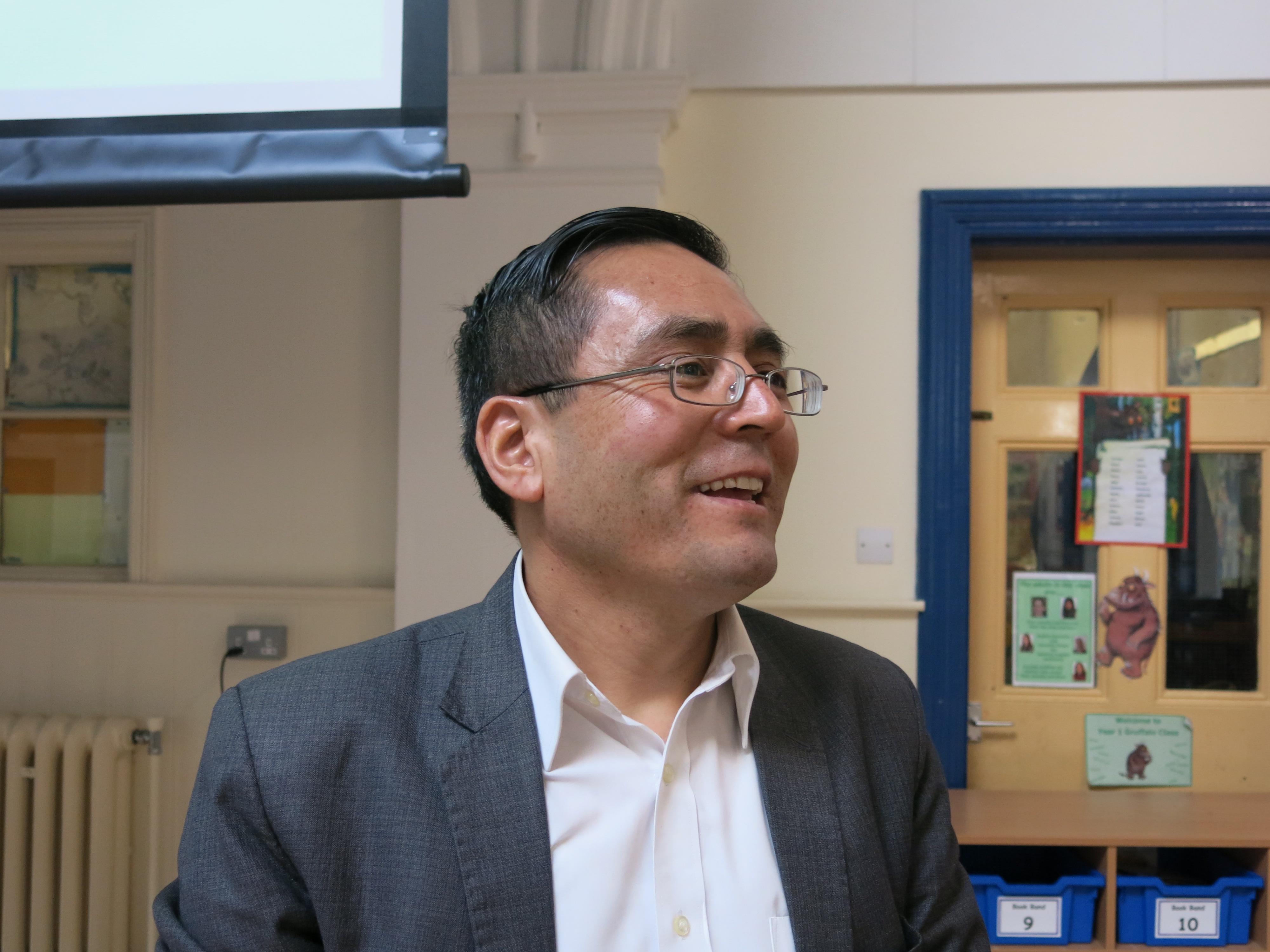
At the South West regional conference of Amnesty International it was heartening to hear from someone who has worked to improve the status of women through theatre and artistic groups in the countryside. The speaker was Abdul Hakim Hashemi Hamidi who set up the Simorgh Film Association of Culture and Art, SFACA. Unlike many aid programmes which tend to stay in Kabul or the main cities, SFACA goes out into the countryside and to the villages.
He has organised educational theatre workshops in prisons, juvenile correction centres, drug addiction rehabilitation centres, in schools and with the police. He has produced films with an emphasis on human rights and the role of women.
Not all the problems faced by women are solely to do with the Taliban. Another factor is honour killings which are at a very high rate in the country. 57% are identified as the responsibility of a family member and 21% by the husband. The perpetrator of 43% killings is unclear however. A telling quote from the PowerPoint display was:
A problem with women [is] because men don’t accept women have rights
He went on to discuss the problems of human rights defenders in Afghanistan. These included difficulty in
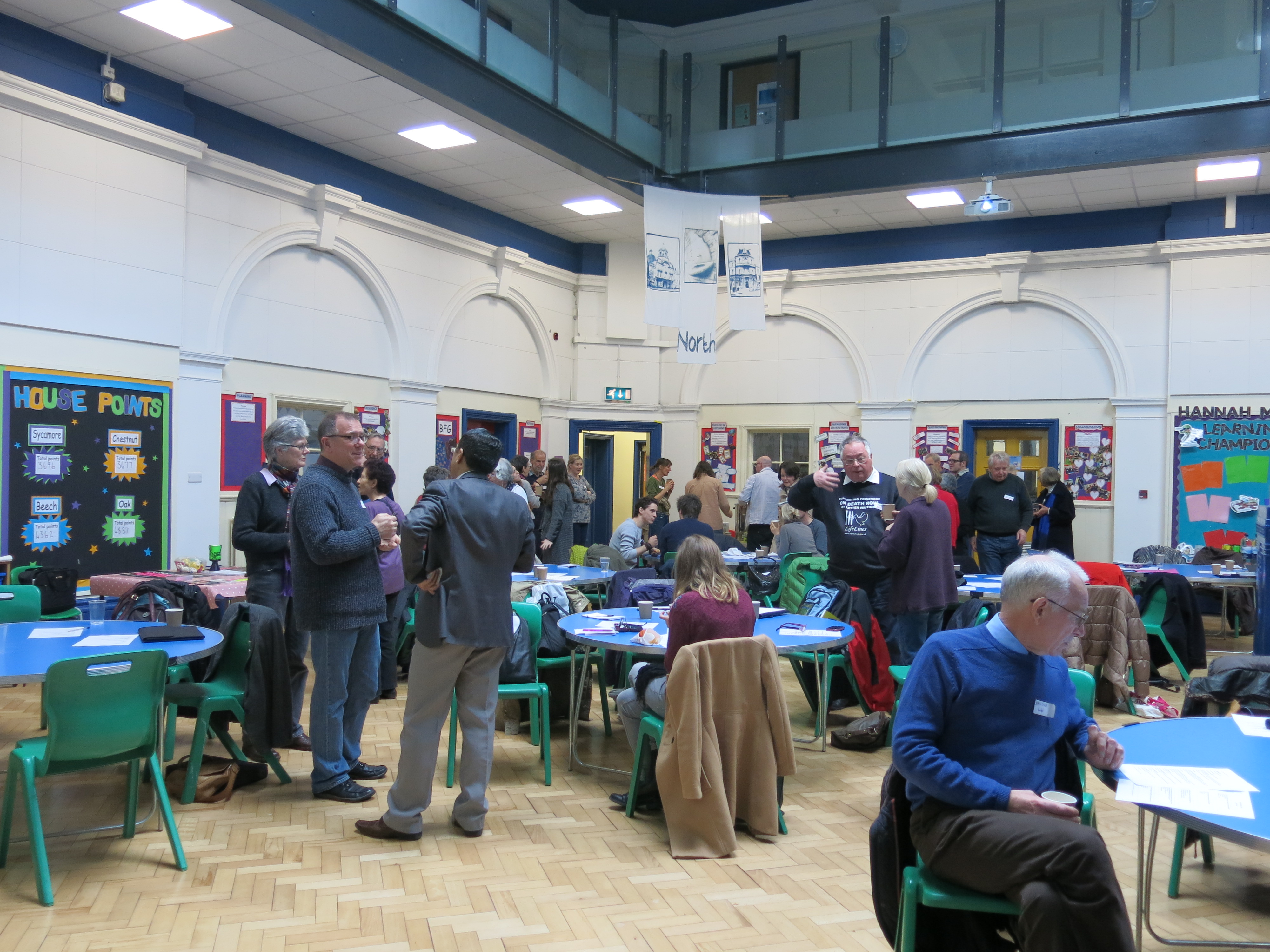
travelling to some areas combined with a lack of government control in some parts of the country, traditional beliefs and illiteracy. Religion was a main cause he said and human rights are seen as a western construct. He urged that the UK government consider the role of human rights defenders in their discussions with the Afghans.
It was an interesting and uplifting talk by someone who has taken risks to go into the Afghanistan countryside to promote the rights of women. Abdul is a visiting fellow on the Protective Fellowship Scheme for Human Rights Defenders at York University. There is a permanent link to the York University Centre for Applied Human Rights at the bottom of the main page.
Sources:
Watson Institute
Global Research
Amnesty International
February minutes

 The February minutes are below thanks to Karen. A full agenda as you see with a lot going on.
#Palestine film
A documentary film is being shown at the Studio Theatre in Salisbury called Open Bethlehem. It is on Friday 13 March and details are on the attached flyer. The phone number for tickets is 01722 349740 and they can be purchased in the tourism office in Fish Row, Salisbury.
North Korean film

#northkorea

Sony Picture’s film The Interview, which was not screened due to the alleged hacking attack by North Korea, attracted considerable publicity at the end of last year. It represented a flagrant attempt by North Korea – if indeed they are the culprits – to silence the screening of a film about the fictional attempt to assassinate the leader of that country, Kim Jong-un.
Amnesty International has released The Other Interview which features the story of Park Ji-hyu who fled starvation in North Korea and was then trafficked into China and sold as a slave to a farmer. She was reported to the Chinese authorities as a defector and was forcibly returned to North Korea. She was sent to one of their hellish prison camps where she faced starvation and torture. She eventually managed to escape.
Amnesty International’s UK Director Kate Allen said ‘Sony has every right to make a comedy about North Korea. We should all be worried when blackmail, threats to cinemas, and the hacking of private data are being used to censor and silence.
‘In reality, many people in North Korea are subjected to an existence beyond nightmares. The population is ruled by fear with a network of prison camps a constant spectre for those who dare step out of line.
‘Thousands of people in the camps are worked to death, starved to death [or] beaten to death. Some are sent there just for knowing someone who has fallen out of favour.
‘Amnesty is releasing The Other Interview so that people all over the world can hear first-hand how people in North Korea are suffering appallingly at the hands of Kim Jong-un and his officials.
‘They don’t want you to see it which is precisely why you should.’
A preview can be seen on YouTube. We do not know if this film will be shown in Salisbury but we will see if we can arrange a viewing somewhere.
This is being written while the dreadful events are playing out in France following the assassination of journalists and cartoonists in the offices of Charlie Hebdo magazine in Paris. This is another attempt – this time by violent means – to silence criticism and the particular kind of satire that this magazine goes in for.
The Salisbury group’s North Korean YouTube video clip can be see here.

 Amnesty in Salisbury & South Wiltshire