Conservative Party’s Plan to Repeal Human Rights Laws


Speech by the leader of the Conservative party in Manchester

October 2025

These are some extracts from the speech Kemi Badenoch MP gave to the Conservative party conference in Manchester this week. We have selected those parts which focus on human rights issues and in particular the plan to leave the European Convention and to repeal the Human Rights Act.

“[…] It is fundamental, why can’t we control our borders and remove those who need to go? All these

questions boil down to who should make the laws that govern the United Kingdom? Conservatives, believe it should be our sovereign Parliament, accountable to the British people. The reality today, is that this is simply not the case.

“This use of litigation as a political weapon is what I call lawfare. Well-meaning treaties and statutes – like the European Convention on Human Rights and the European Convention on Action against Trafficking drafted with the best of intentions in generations gone by, and more recent additions like the Modern Slavery Act, are now being used in ways never intended by their original authors.

“What should be shields to protect the vulnerable, have instead become swords to attack democratic decisions and frustrate common sense. It is that whole system which we need to reform. And the place to start is the European Convention on Human Rights.

Five tests that a country has to pass to be truly sovereign.

First, can we deport foreign criminals and those who are here illegally?

Second, can we stop our veterans being harassed through the courts?

Third, can we put British citizens first for social housing and public services?

Fourth, can we make sure protests do not intimidate people or stop them living their lives?

And fifth, can we stop endless red tape and legal challenges choking off economic growth?

[Lord Wolfson was commissioned to study the ECHR and our membership of it and produced a report the key conclusion was]

When it comes to control of our sovereign borders, preventing our military veterans from being pursued indefinitely, ensuring prison sentences are applied rigorously for serious crimes, stopping disruptive protests, or placing blanket restrictions on foreign nationals in terms of social housing and benefits, the only way such positions are feasible would be to leave the ECHR.’

Commitment to leave

[Badenoch] “We must leave the ECHR and repeal the Human Rights Act. Conference, I want you to know that the next Conservative manifesto will contain our commitment to leave (our emphasis). Leaving the Convention is a necessary step, but not enough on its own to achieve our goals. If there are other treaties and laws, we need to revise or revisit then we will do so. And we will do so in the same calm and responsible way, working out the detail before we rush to announce.

“The rights we enjoy did not come from the ECHR. They were there for hundreds of years in our common law. Parliament has legislated over centuries to reflect and protect our freedoms. Human Rights in the United Kingdom did not start in 1998 with the Human Rights Act, and will not end with it. As we work through our detailed plan, we are clear that leaving the ECHR and repealing the Human Rights Act will not mean that we lose any of the rights we cherish”. […]

Comment

The statement by the Conservative leader is clear and unequivocal. Even allowing that it is a speech a long way from an election and designed to encourage a party currently scoring badly in the polls, it is part of a worrying trend with more and more voices calling for us to leave the ECHR.

The big claim towards the end of her speech quoted above that ‘Human Rights in the United Kingdom did not start in 1998 with the Human Rights Act, and will not end with it‘.’ Many did start, and some will end if it is repealed. If there will be no difference, then why the desire to end it? She seems to have forgotten that the HRA was introduced because people had to go to Strasbourg to get the justice denied them in the British courts. It is nonsense to claim that the HRA has added nothing of benefit to the rights of the ordinary person.

There are likely to be many who will disagree with Lord Wolfson’s benign conclusion that the proposed departure from the ECHR would be fully compliant with the Belfast Agreement.

Leaving the ECHR will be a retrograde step and have repercussions for our international relations. It is likely to make trade between us and Europe more difficult. We will join Russia and Belarus as the only nations outside its remit. Repealing the HRA – which has been promised several times before by Conservative leaders but never carried out – will seriously damage our rights as citizens. Combined with recent legislation to limit protests for example, it will be a retrograde step.

An Amnesty petition can be accessed here.

Speech accessed from the Conservative website [8 October]

Will we withdraw from the European Convention?


Increasing number of politicians wanting the UK to leave the human rights convention

October 2025

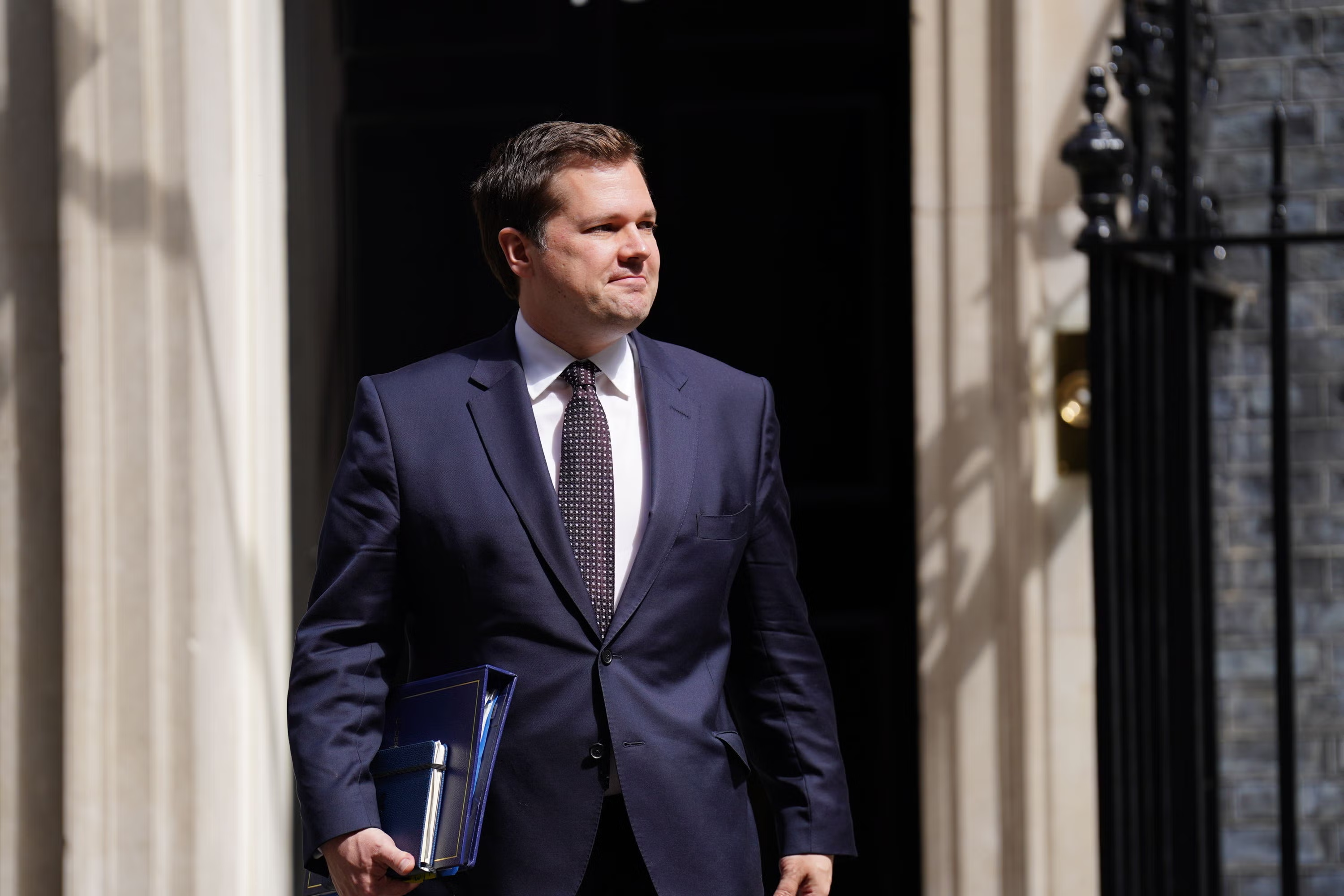
There is almost a chorus now of politicians saying we must leave the European Convention of Human Rights. The latest politician is Robert Jenrick MP (pictured) who in a speech ahead of the Conservative party conference next week, is proposing that all prospective candidates must promise to support leaving the ECHR as a condition of their candidacy. He claims ‘the party will die’ if they do not leave. He claims that the Convention has ‘stymied the removal of dozens of terrorists’. The party leader, Kemi Badenoch does not agree with this policy. However, while preparing this post Kemi Badenoch announced that her party will aim to leave.

Policy Exchange a prominent think tank claims that ‘ECHR distorts parliamentary democracy, disables good government, and departs from the ideal of the rule of law’. PX is regarded as the least transparent of the think tanks and its funding is obscure. It has pursued a programme over many years to weaken the judiciary.

The desire to leave the ECHR has come to the fore recently because of the small boats crossings which still represent a crisis for the government with record crossings. The former justice minister Lord Faulkner is quoted as saying it is ‘inhibiting government’s freedom to what is regarded by many as the emergency of illegal migration’.

Recently, Nigel Farage the leader of Reform has said we must leave ‘no ifs, not buts’.

So leaving the ECHR is essential according to these politicians if we want to solve the small boats ’emergency’. The questions are therefore will it, and what will be its effects on our rights more generally?

The debate around the European Convention is replete with exaggerations and misinformation. The chicken nugget story – widely repeated by many politicians and elements of the press is the latest. A boy could not be deported because of his aversion to chicken nuggets it was claimed. Except it never happened. There was no ruling that the foreign offender should be allowed to stay in Britain because his child could not eat these nuggets. An immigration tribunal did initially decide that it would be “unduly harsh” for the boy to be sent to Albania because of his special educational needs, but this judgment was later overturned. A more senior judge rejected the man’s appeal and made absolutely clear that an aversion to chicken nuggets should never be enough to prevent deportation.

Implications
  1. We would not just be able to leave as it would require a decision in parliament. This could take some months and the House of Lords would object to many of the details.
  2. The ECHR is not the only relevant piece of legislation: the Refugee convention also has implications for the UK.
  3. It will create problems with international relations. Since the UK was a prime mover under Sir Winston Churchill and the UK drafted a lot of the text, if we left it could lead to others deciding to do the same. We would join Belarus and Russia outside the Convention – hardly a good advertisement for the UK. It would seriously weaken the ‘voice’ the nation has on the subject of human rights.
  4. The Trade and Cooperation Agreement with the EU could be threatened.
  5. There would be immense problems with the Good Friday agreement in Northern Ireland.

The focus of the current debate has been on immigration and the boat crossings. This is a side show and a distraction. The ECHR is much more than that and involves fundamental issues concerning our rights as citizens and our relationships with state power. It is no accident that right-wing tanks like the Policy Exchange, and others based in Tufton Street, want us to leave because it inhibits the power and influence of their corporate backers. Human rights are nuisance for them and using the boat crossings is a useful cover to get us to leave. It is small wonder that they do not reveal who funds them.

Our parliament is little better. Recent legislation introduced by the Conservatives has seriously impeded the right to protest and there is little sign of the Labour government repealing those acts. Sir Keir Starmer drew a distinction between someone being deported where there was a risk of execution and sending them to a country with a different level of healthcare or prison conditions. Although he did not mention in his speech the ECHR it was clear that was what he was referring to. It was a less than full throated support.

We thus have sections of the media and political parties, the first pushing exaggerated or even made up stories about the harm the HRA does and second, an increasing number of politicians falling over themselves – in a kind of game of leapfrog – claiming they will leave or amend the ECHR. They claim or infer that by leaving the ECHR, it will enable them to solve the problem of the crossings. They dishonestly do not explain to the public the problems, risks and harms to UK’s interests with their proposed actions.

The HRA, which celebrates its 25th anniversary today, has brought immense benefits to many people in this country. Yet few politicians seem willing or brave enough sing its praises. Courting popularity, they have joined the siren voices of the secretive think tanks and oligarchs who own most of our media, in calling for its abolition (or review without ever spelling out what that means exactly).

Sources: Daily Express, Sky News, The Guardian, BBC, Euro news

25th Anniversary of HRA


Today marks the 25th Anniversary of the Human Rights Act

October 2025

Twenty five years ago this act was signed and ended the need to go to Strasbourg to get justice. It fundamentally changed the law by giving fundamental rights to citizens. It is currently under threat and it, and the European Convention which predates it, are disliked by many of the political and media class. In the next post we shall discuss this in more detail.

But today (2nd) we celebrate.

Recent posts:

Salisbury group at 50


The Salisbury group was established 50 years ago: did the founders think we’d still be needed half a century later?

May 2024, amended in September

Following the Observer article by Peter Benenson in 1961 which led to the formation of Amnesty International, local groups formed around the country and the Salisbury group came into being in 1974. It is the only surviving group in Wiltshire which is disappointing to report. Did the founders, it might be asked, think we would still be campaigning all these years later? It might not have been a question they asked themselves at the time but there was a feeling following the horrors of the war and the signing of the Universal Declaration of Human Rights in 1948, that we were on some kind of improving path towards better treatment for people wherever they lived. There was some kind of belief in a new future.

To an extent, the history of the UDHR and the true commitment of nations to the cause of universal rights, has been overstated. There was considerable resistance by the colonial powers, in particular the UK, to the ‘universal’ element because of the likely effect of such rights in the subject peoples of the colonies. Many were seeking independence from the Empire and this was not always achieved peacefully. America was fearful of the effects in the southern states in particular because of the treatment of the black population and the Jim Crow laws.

The human rights situation in the world today is dire. Entire peoples have been oppressed or driven from their homes, the Rohingya in Burma for example. China has oppressed Tibet and is currently detaining around a million Uyghurs in what almost amounts to genocide. Russia has invaded the Ukraine and committed many human rights violations. Wars rage in sub-Sahara Africa with millions displaced from their homes and villages – those who have not been killed that is. The Israeli response to the October 7th massacre by indiscriminate bombing in Gaza is causing widespread international concern. Around 36,000 have now been killed.

Flaws

One of the flaws of the post-war agreement was the reliance on countries to be the ‘policemen’ so to speak. The US in particular did not want to grant powers to the newly created UN to enforce rules in countries not obeying them. Since it is countries which are heavily involved in committing the crimes this is a serious weakness.

Another flaw was the rise of corporate power and the ability of major corporations to operate in ways making control extremely difficult. These companies, and the banking system which supports them, engage in arms sales, mineral exploitation, tax evasion and abuse of people in sweat shops almost with impunity. Millions suffer impoverishment and almost non-existent rights as a result of their activities yet little is done to control them.

The Declaration grew out of the European tradition since it was Britain, France and the US who were the key players after the war. Power has slowly drifted away in the last few decades however, with the rise of China, a re-emergent post-Soviet Russia and the rise of new southern hemisphere countries such as South Africa and Brazil not all of whom share all these traditions. The freedom of the individual is not something they are concerned with. The Gulf states are another group of powers where free speech, religious freedom and human rights are not supported. Women enjoy few rights in these states. The world has changed therefore and the comfortable assumptions of European Emancipation is no longer the only game in town.

UK

The international order has changed, so has the climate in the UK. Over the past two decades or so, there has been a concerted move to abolish the Human Rights Act and by some, to leave the European Convention (see the last post). Sections of the media have characterised human rights as a threat not a protection. It is claimed that they enable terrorists and criminals to escape justice because their human rights will be infringed. Stories abound of the act being used to enable pornography in prisons or hostage takers to demand a burger of their choice. Infamously, the then home secretary Theresa May, claimed someone could not be deported because they had a cat. These and other stories provide background music for a variety of MPs to demand that the act be abolished or seriously modified. Local Wiltshire MPs generally vote against human rights measures according the They Work for You website.

Too negative?

Is the above too negative? It is and it isn’t. Millions have human rights but many of those millions do not enjoy them. They live in countries which have signed up to this and that convention – against the use of torture for example – but where police and security services use it routinely and with impunity. They live in countries where free speech is part of the country’s constitution but where the media is controlled, shut down or where journalists are arrested or even gunned down outside their apartment block (Russia).

But it also true to say that human rights have entered people’s consciousness. They know they should have them and they know they are being infringed which induces a tension in society and a deep sense of anger. It has put pressure on countries in their dealings with other countries to be aware of the human rights issue even if they proceed to ignore it in the interests of their economy and jobs. Most of all, it has articulated what rights should be and it is a genie which has escaped the bottle of power and oppression. It has provided campaigners around the world with a cause.

So, fifty years on, sadly the need for a human rights group in Salisbury is still present. With several Wiltshire MPs wishing to see those rights limited, curtailed or even abolished, it is a long way from ‘job done’. Those who are in positions of power and privilege and who consort with other power holders – corporate, City and media for example – there is a natural desire to hold on to that power, and demands by ordinary people are seen as some kind of threat to the natural order of things. Human rights groups, trade unions and protest organisations are seen as a threat to that natural order. Fifty years ago it was other countries which were the subject of campaigning and it is regrettable that we now spend part of our time defending rights in this country, such has been the regression. More and more legislation, ever increasing police powers and a sometimes supine judiciary together conspire to form a pincer movement against the rights of ordinary people. So we embark on the next 50 years …

Salisbury Group at 50!


Group is 50 this year!

February 2024

The Salisbury group was established in 1974 and has been going strong for 50 years. It took us a bit by surprise today when we realised this so we haven’t thought of any celebrations yet. But as the last active group in Wiltshire we can allow ourselves a bit of pride that we are still here and still trying to promote the human rights cause in the county.

It probably seems a little different today from 50 years ago. Human rights then were regarded as a good thing and support was largely unquestioning. The war was a living memory for many and a desire never to see a repeat of the death and destruction of the war and the horrors of the Holocaust was deeply felt. 

A long time has passed however and today, we see successive Conservative governments seeking to end or curtail the Human Rights Act. Laws have been passed making protest more difficult and the police have been given more powers to arrest those protesting. Much of the media keeps up a steady campaign denigrating human rights and suggesting they are a means for terrorists and serious criminals to escape justice because their ‘rights’ have been infringed. We are made less safe they claim because of the act rather than the precise opposite. The benefits the act has brought is seldom mentioned. The success of the Hillsborough families in overturning the various coroner and court decisions and the false narrative put out by the police was a major example. 

Some sections of the media do not like the act since it provides some protection from press intrusion and this has led them to carry on a relentless campaign often supported by exaggerated stories.

In the past few years the issue of immigration has come to the fore and immigrants crossing the Channel by boat has become a political hot potato. The government is seeking to send some immigrants to Rwanda in an attempt to discourage smugglers from sending them over from France. There has always been hostility to immigrants as each wave has come over, the Jews from Russia for example at the beginning of the last century. But the notion that we would become more sympathetic and welcoming has not worked out. The question therefore is how embedded are human rights norms and beliefs in our society? The occasional desire for a return of the death penalty, hostility to refugees as just mentioned and evidence of the UK government’s involvement in torture, clampdowns on protest suggest that human rights and human dignity is only shakily rooted in our society.


If you live in the South Wilshire area, we would welcome you joining us. Follow this site for details of what we are doing.

Attacks on UK human rights


Human Rights Watch warn of risk of authoritarianism in the UK

November 2023

The latest Daily Brief from HRW warns of a deteriorating situation with regard to human rights in the UK which they say is ‘worsening’. The right to protest peacefully is under threat as we saw recently with the Palestinian march which the then Home Secretary was keen to ban. She attempted to force the police to ban the march which they declined to do.

They say that we are beginning to move towards a place where the government feels it can undermine the integrity of the judiciary, undermine or scrap human rights laws that don’t serve the current political agenda and to create new laws that do. It is ‘beginning to look very much like authoritarianism’.

A lot of this activity has been driven by two forces: the arrival of the ‘boat people’ across the Channel and the activities of climate protestors. The Palestine marches have recently reinforced this. In all cases, there has been a major outcry from the right wing media joined recently by Talk TV and GB News and this may have led the government to respond the way they have. There is an inherent dislike of protest and the publicity it is able to generate. Despite the march being largely peaceful, it did not stop them being described as ‘hate marchers’ by some. Members of the governing party, including the deputy chair, and soon Boris Johnson, have their own programmes on these channels to promote their views.

Danny Kruger, MP for Devizes in Wiltshire, is joint leader of the ‘New’ Conservatives pressing for the abolition of the HRA and for our departure from the European Convention.

Reform of Human Rights Act scrapped


Government confirms plans to scrap the HRA will not now go ahead

June 2023

It seems to have been a permanent fixture of Conservative party manifestos and in ministerial statements, a desire to rid the country of the Human Rights Act, an act brought into being as a result of cross-party consensus. It is also a fixture of tabloid rage with hundreds, possibly even thousands of articles, referring to the act as a ‘terrorists’ charter’ and a means for criminals of all kinds to escape their just deserts.

But when it came to it, defining quite what was to be abolished and, more particularly, what it would be replaced with, seemed to defeat party legislators and the announcement that it was to be shelved appeared almost to put them out of their self-imposed agony. The Justice Minister, Alex Chalk, said “[it] was committed to a human rights framework which is up to date and fit for purpose and works for the British people“. The implication is that the current act does not work for the British people yet little or no evidence is put forward to this effect. It is also interesting to note that the government itself relied on the act when it came to the matter of releasing information to the Covid enquiry. Another organisation which routinely rails against the Act, the Daily Mail, relied on its provisions to prevent its journalists being identified in the Prince Harry libel trial.

The core problem is the people crossing the channel in small boats. Only this week, a report has been published which estimates that the cost of sending one individual to Rwanda could be in the region of £170,000 and hardly shows value for money. They also doubt the claim that it would have a deterrent effect.

It is good to note that the plan to abolish the act is now no longer an immediate threat. But the thinking behind it and the ceaseless criticism of it as being a cause of problems in our society is regrettable. The Act gives protections to ordinary people and enables them to seek justice from the state’s actions. Without it the victims of the Hillsborough disaster for example would not have succeeded against the state, the police and the media who all in their various ways, blamed the victims for the tragedy.

Reforming the Human rights Act


Will the proposed ‘reforms’ lessen our rights?

April 2022

For some considerable time, the Conservatives have nagged at the Human Rights Act (HRA) and reforming it has been a standard feature of all recent election manifestos. Abolition has been promised but not delivered. Paradoxically, it was a Conservative government which played a key role in achieving the Universal Declaration and the HRA itself was a cross party bill (despite modern claims that it was ‘Labour’s Human Rights Act’).

Attitudes to the Act have in part been shaped by media stories particularly at the tabloid end of the market. There have many stories criticising the act and particular decisions. Some of the stories are just plain wrong and the HRA was not the crucial issue which decided a case. According to the UN rapporteur Prof. Philip Alston, visiting the country to look at poverty and human rights issues, tabloid news papers ‘fundamentally distorted and successfully stigmatised’ the act. The general theme is that the legislation allows criminals to go free, prevents foreign criminals from being deported and generally act against the best interests of the population at large. It is to be regretted that when these stories are published, the relevant minister does not point out the facts and correct the wilful errors or plainly tendentious reporting. Worse, some politicians know they can get favourable media coverage by joining in making erroneous or exaggerated claims.

To an extent therefore, the government is hoist by its own petard. There is also the link to Brexit and all things European such as the European Court of Human Rights. Having cast human rights as essentially negative in their impact, that they are contrary to common sense, and that we are subject to legal diktact from Strasbourg, it is only a short step to propose abolition or reform.

In the Spring 2022 addition of the Amnesty magazine (No: 212), the matter is discussed in an article entitled The Great Rights Robbery by Tom Southerden. One of the fundamental points – one which we have made here – is that the act applies to everyone, equally. Of course, the problem with this is that it undermines privilege. Those, through public schooling, inherited privilege, money or other means do not welcome challenges to their status and superiority. There is also the assumption that our rights are ancient and have evolved over centuries since the time of Magna Carta. So we do not need this act they argue. This ignores much of our history: slavery for example which was enthusiastically promoted for nearly two centuries and which we are only now slowly coming to terms with (although the crass royal visits to the Caribbean might argue against that assumption). Students of nineteenth century social history will know of the desperate struggles by workers and citizens to get safe working conditions, sanitation and any kind of justice or fairness.

It appears that the plan is to downgrade the act so that it is no longer more important than any other piece of legislation. The ability to challenge the ‘mighty state machinery’ as Southerden puts it will be weakened.

The last few months have seen the monstrous scandal of the Post Office unfurl. Honest postmasters were variously ruined, shamed or imprisoned not for anything they did but for failings in the IT system. Failings that were known. Some committed suicide. Yet achieving justice has been a very long and desperate struggle. Although the legal battle was won, the money lost has not been recovered. The point is that ordinary people need all the help they can get to stand a chance in fighting overweening state power. The comforting idea that evoking Magna Carta and chuntering on about ‘common sense’ will do the job is pie in the sky.

As we have discussed in an earlier post, the Justice Secretary, Dominic Raab, dislikes the act and we have his book discussing at length the reasons why. We must not allow prejudice, fantasy thinking and an aggressive tabloid media promoting misleading stories to reduce our basic rights.

Dominic Raab MP


Dominic Raab appointed Justice Secretary last month: should we be worried?

It is not often that we can read the thinking of a cabinet minister and rarer still for an MP to write about a topic which becomes central to his ministerial appointment. Dominic Raab, the new Justice Secretary after the recent reshuffle, has written about human rights in a book The Assault on Liberty: What Went Wrong with Rights, (Harper Collins, 2009) and was co-author with Kwasi Kwateng, Priti Patel, Chris Skidmore and Elizabeth Truss of Britannia Unchained: Global Lessons for Growth and Prosperity (Palgrave Macmillan, 2012).

The latter book became famous (infamous?) for the much quoted passage accusing British workers for ‘being among the worst idlers in the world’ and for Britain being what they termed a ‘bloated state with high taxes and excessive regulation’. The book was criticised for its slipshod research. Four of the authors have achieved senior positions in the Johnson cabinet.

Raab’s book is devoted to a demolition of human rights as expressed in the Human Rights Act. There are several key themes in the book the main one being that it is an attack on British Liberties. The act he claims has led to a proliferation of rights beyond the original intention caused by the court in Strasbourg widening the net with each new case.

This has led to confusion by those dealing with the law, police and local authorities he claims. Teachers can no longer keep control in class because of the act. Professionals have ‘their judgement trumped by being fettered by the diverse and onerous burdens dictated by human rights’.

Claims by individuals can now ‘select from an arsenal of new rights’ by which the individual can ‘force the state to prioritise the interest of the individual claimant over the claims of other individuals and the rest of society’.

There are interesting passages on torture. He says ‘[A] whole range of comparatively minor mistreatment is now covered by the wide ban on torture and inhuman treatment, well beyond the original intention of the convention’. No evidence is given to support this.

Significantly, a number of references are quotes from the Daily Mail which has maintained a steady stream of stories critical of the act and of human rights generally. Curiously, Raab quotes one concerning a man under siege who demanded Kentucky fried chicken as it was his ‘human right’. This made headlines in the tabloids but it turned out not to be true. Police routinely accede to reasonable requests in these circumstances in an effort to diffuse the situation and has nothing to do with human rights. Raab acknowledges this but explains that ‘if officials got it wrong it only serves to demonstrate the pervasive confusion’.

His history is not on sure ground either. He claims that the huge rise in prosperity between 1800 and 2000 was due to liberty. The argument seems to be that liberty is under threat from human rights and hence it will harm our prosperity. He rather ignores the influence of slavery and the slave trade which provide enormous wealth enabling the financing of the industrial revolution: hardly an example of liberty at work.

The entire book is a kind of peon of times past. We lived in a country which enjoyed liberty, trial by jury and a parliamentary system which is now threatened by a proliferation of rights ‘conjured up by human rights lawyers and campaigners’ he states. Conor Gearty refers to the ‘myth of the glorious past’ in his book On Fantasy Island (Oxford University Press, 2016). There was no glorious past. Women for example, then as now, could not look to the law for much in the way of protection. Ferocious laws were enforced against ordinary people to protect the interests of the wealthy and the landowners. Working conditions were atrocious for millions who died early deaths from industrial accidents or from the conditions they worked under. People were deported for the merest offence. It took decades of struggle to achieve basic sanitation and clean water in our towns and cities. And let us not forget that the judiciary are drawn from an extremely narrow section of society with 70% of them educated in just a handful of public* schools.

Raab’s book is thus based on the dubious proposition that we all enjoyed halcyon days of liberty and then along came the Human Rights Act which is slowly and surely destroying it. We can ask ‘liberty for whom?’ The wealthy, the elite, the well connected and the products of elite schools did enjoy the fruits of liberty. But the vast majority of citizens (actually subjects, we are not citizens) had little recourse to the law even if they could afford it. They were unlikely to get a fair hearing even if they did.

Perhaps one of the facts about the Human Rights Act is that it gives every person a list of basic rights. Everyone can in principle at least, use these rights to achieve justice, something they could not do before.

Dominic Raab’s book is worrying since it reveals reasoning which is feeble, flawed and far from historically accurate. Together with his contribution to Britannia Unchained it also reveals someone who seems to have both a low opinion of his fellow citizens and a somewhat disdainful attitude to their rights.

He is now our Justice Secretary.


American readers. Since we have many USA readers we should explain that ‘public’ schools are not public at all. They are extremely expensive private schools.

Podcast

Is the Human Rights Act doomed?


The Conservatives have had a long-standing dislike of the HRA and a review of it has appeared in its last two or three manifestos. It has not always been so and indeed it was Conservative politicians who were instrumental in setting up the European Convention which preceded the HRA.

The government is making various claims in a bid to justify its desire to amend the act and by inference, to weaken it. Recently we have had claims about alleged vexatious claims against British soldier’s mistreatment of prisoners in conflict areas such as Iraq. They have also, erroneously claimed that the act prevents them tracking potential terrorists.

The various reasons put forward by the government combined with a steady stream of stories in the right wing press suggest deeper reasons at play. The current home secretary, Priti Patel and Michael Gove MP have both been reported as being keen to reintroduce the death penalty although the home secretary has resiled from that claim. Her proposed draconian measures for handling asylum seekers and immigrants however, reveal an illiberal attitude of mind. We have reported on this site, the shameful views of the Attorney General, Suella Braverman, concerning torture about which practice she seemed quite ‘relaxed’.

The HRA has perhaps shaken the establishment more than has been realised. It has led to a shift in power and enabled ordinary people to pursue injustice through the courts. We have seen in the Covid-19 crisis a government which has been reluctant to involve local government, much preferring to award contracts – without tender – to private firms who have shown a dazzling array of ineptitude. It seems to indicate a firm desire to retain the levers of power in Whitehall.  Challenge by private citizens is not welcome. 

The attempt to prorogue parliament and the proposed Internal Market and the Overseas Operations bills all show a government willing to break international treaties if it deems it necessary. We should be extremely concerned if the act gets abolished or its protections seriously watered down.  


Blog at WordPress.com.

Up ↑