Will we withdraw from the European Convention?


Increasing number of politicians wanting the UK to leave the human rights convention

October 2025

There is almost a chorus now of politicians saying we must leave the European Convention of Human Rights. The latest politician is Robert Jenrick MP (pictured) who in a speech ahead of the Conservative party conference next week, is proposing that all prospective candidates must promise to support leaving the ECHR as a condition of their candidacy. He claims ‘the party will die’ if they do not leave. He claims that the Convention has ‘stymied the removal of dozens of terrorists’. The party leader, Kemi Badenoch does not agree with this policy. However, while preparing this post Kemi Badenoch announced that her party will aim to leave.

Policy Exchange a prominent think tank claims that ‘ECHR distorts parliamentary democracy, disables good government, and departs from the ideal of the rule of law’. PX is regarded as the least transparent of the think tanks and its funding is obscure. It has pursued a programme over many years to weaken the judiciary.
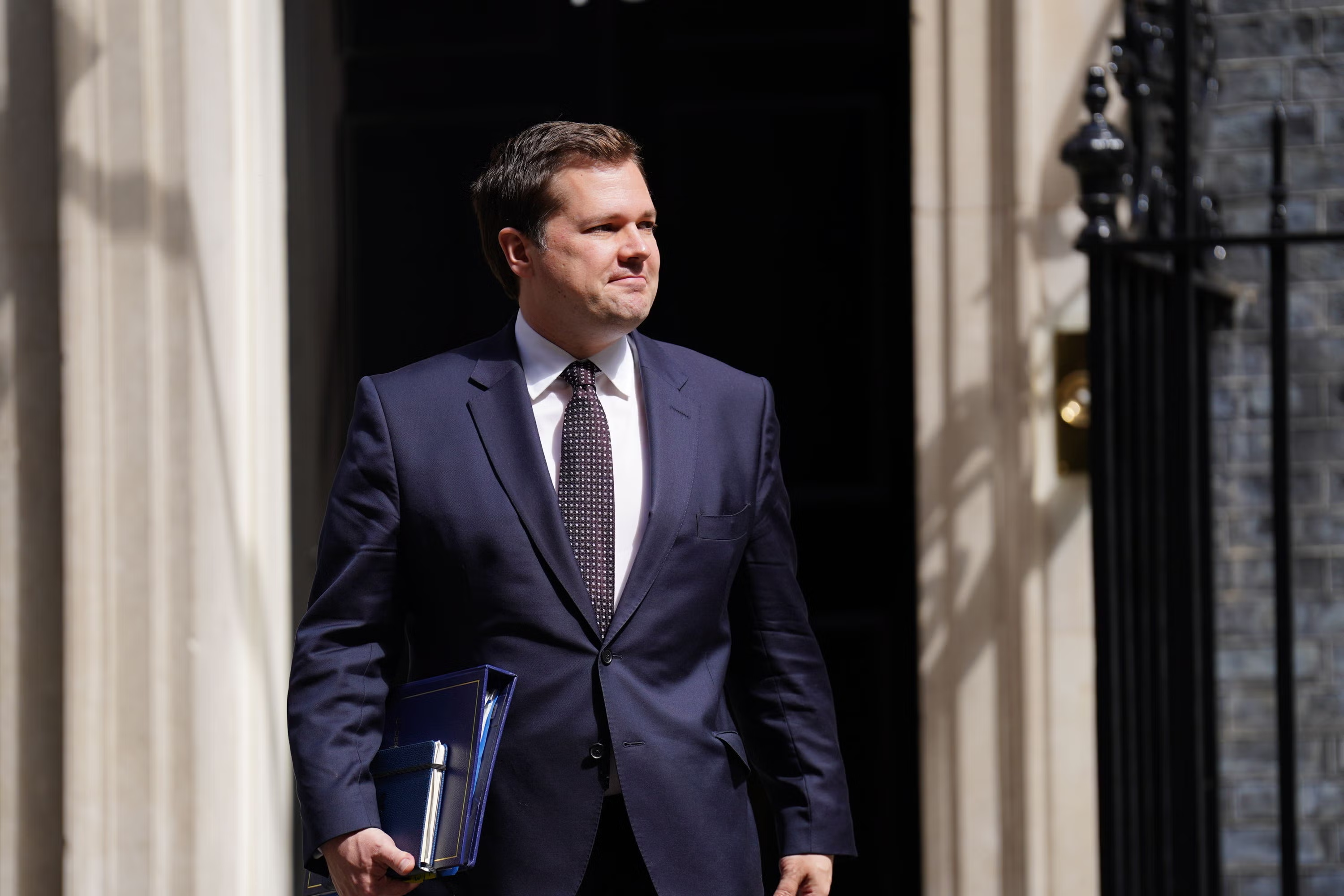
The desire to leave the ECHR has come to the fore recently because of the small boats crossings which still represent a crisis for the government with record crossings. The former justice minister Lord Faulkner is quoted as saying it is ‘inhibiting government’s freedom to what is regarded by many as the emergency of illegal migration’.

Recently, Nigel Farage the leader of Reform has said we must leave ‘no ifs, not buts’.

So leaving the ECHR is essential according to these politicians if we want to solve the small boats ’emergency’. The questions are therefore will it, and what will be its effects on our rights more generally?

The debate around the European Convention is replete with exaggerations and misinformation. The chicken nugget story – widely repeated by many politicians and elements of the press is the latest. A boy could not be deported because of his aversion to chicken nuggets it was claimed. Except it never happened. There was no ruling that the foreign offender should be allowed to stay in Britain because his child could not eat these nuggets. An immigration tribunal did initially decide that it would be “unduly harsh” for the boy to be sent to Albania because of his special educational needs, but this judgment was later overturned. A more senior judge rejected the man’s appeal and made absolutely clear that an aversion to chicken nuggets should never be enough to prevent deportation.

Implications
  1. We would not just be able to leave as it would require a decision in parliament. This could take some months and the House of Lords would object to many of the details.
  2. The ECHR is not the only relevant piece of legislation: the Refugee convention also has implications for the UK.
  3. It will create problems with international relations. Since the UK was a prime mover under Sir Winston Churchill and the UK drafted a lot of the text, if we left it could lead to others deciding to do the same. We would join Belarus and Russia outside the Convention – hardly a good advertisement for the UK. It would seriously weaken the ‘voice’ the nation has on the subject of human rights.
  4. The Trade and Cooperation Agreement with the EU could be threatened.
  5. There would be immense problems with the Good Friday agreement in Northern Ireland.

The focus of the current debate has been on immigration and the boat crossings. This is a side show and a distraction. The ECHR is much more than that and involves fundamental issues concerning our rights as citizens and our relationships with state power. It is no accident that right-wing tanks like the Policy Exchange, and others based in Tufton Street, want us to leave because it inhibits the power and influence of their corporate backers. Human rights are nuisance for them and using the boat crossings is a useful cover to get us to leave. It is small wonder that they do not reveal who funds them.

Our parliament is little better. Recent legislation introduced by the Conservatives has seriously impeded the right to protest and there is little sign of the Labour government repealing those acts. Sir Keir Starmer drew a distinction between someone being deported where there was a risk of execution and sending them to a country with a different level of healthcare or prison conditions. Although he did not mention in his speech the ECHR it was clear that was what he was referring to. It was a less than full throated support.

We thus have sections of the media and political parties, the first pushing exaggerated or even made up stories about the harm the HRA does and second, an increasing number of politicians falling over themselves – in a kind of game of leapfrog – claiming they will leave or amend the ECHR. They claim or infer that by leaving the ECHR, it will enable them to solve the problem of the crossings. They dishonestly do not explain to the public the problems, risks and harms to UK’s interests with their proposed actions.

The HRA, which celebrates its 25th anniversary today, has brought immense benefits to many people in this country. Yet few politicians seem willing or brave enough sing its praises. Courting popularity, they have joined the siren voices of the secretive think tanks and oligarchs who own most of our media, in calling for its abolition (or review without ever spelling out what that means exactly).

Sources: Daily Express, Sky News, The Guardian, BBC, Euro news

25th Anniversary of HRA


Today marks the 25th Anniversary of the Human Rights Act

October 2025

Twenty five years ago this act was signed and ended the need to go to Strasbourg to get justice. It fundamentally changed the law by giving fundamental rights to citizens. It is currently under threat and it, and the European Convention which predates it, are disliked by many of the political and media class. In the next post we shall discuss this in more detail.

But today (2nd) we celebrate.

Recent posts:

Human rights under threat


Many politicians lining up to weaken rights

September 2025

We have posted over the years of this site’s existence the near constant attacks on human rights, the act itself and more recently, the European Convention (ECHR) which is generating a lot of anger at present. Many of the attacks came from news outlets who were concerned about privacy issues in the light of their various hacking* activities. The attacks have morphed in recent years with greater emphasis on the ECHR and a widespread desire among politicians to leave it. The impetus for this latest surge follows the attempt to deport immigrants to Rwanda which was stopped at the last minute by the European Court from flying from an airfield a mile or two from where this is being typed. The policy was abandoned by Labour when it came into power.

This post draws heavily on an article in the Observer (14 September) by Rachel Sylvester entitled: Misinformation and myth: the UK’s phoney war on human rights. The article begins with the well worn disinformation stories the latest being the chicken nugget debacle. Immigration, asylum seekers, hotels and the boat crossings are making the political waves at present and a wide range of politicians are seizing on the unrest to make political hay. They include Nigel Farage (Reform), Robert Jenrick and Kemi Badenoch (Conservative). Locally, Danny Kruger MP for East Wiltshire, is a vocal opponent [Kruger switched from Conservative to Reform while this post was being written].

Chicken nuggets debacle

Chicken nuggets? The story was that an Albanian criminal could not be deported because his son disliked eating chicken nuggets. There was no such ruling. A senior judge made it abundantly clear that an aversion to chicken nuggets could never be enough to avoid deportation. The false story was latched onto by the politicians mentioned above. Since two are members of their political parties and one wants to become one, it is disappointing to observe that they keen to perpetuate myths.

The fury over the boat crossings has led to many politicians wanting to leave the ECHR despite the fact, the article notes, Strasbourg has only ruled against the UK three times in 45 years. In all the invective against the ECHR, its positive effects are seldom reported: Hillsborough being a prime example [Correction: 20 September. It was the HRA which was significant with this inquiry]. But in areas of the country where immigration is a particular problem, leaving the ECHR is a ‘test of ideological purity’ (ibid). It is also part of the Brexit story since many believed that when we left the EU we would leave the European Court as well.

Few friends

The court seems to have few friends however. Politicians who should know better, such as Richard Hermer the Attorney General, are talking in terms of ‘reform’. Reform might be all right but when reform = weaken it’s not all right. There seems to be a lack of stout defence of the act by politicians. Such is the ascendancy of Nigel Farage that it appears politicians of all stripes are desperate to ape his remarks or even try and outdo him. The Human Rights Act has made a significant difference to people’s lives in way many may not be aware of. It would be a huge loss to the country if as a result of hysteria over immigration, we were to lose some important rights.

*There is an ITV drama on this to air shortly.

Previous posts

Human Rights report


New report the group is launching

April 2025

Amnesty began by focusing on human rights in other countries. This was probably based on the belief that rights in the UK were secure, we had after all, the Magna Carta, a justice system and things like torture ended several centuries ago. The UK was a key player in introducing the Universal Declaration in 1948. With the arrival of the European Court, it soon became clear that not everything in the UK human rights garden was rosy. The Birmingham Six case was a classic example of a failure to treat the six defendants fairly. The police fabricated evidence, the six were badly beaten in custody, the courts and judges manifestly failed, the forensic evidence was a nonsense. Eventually they were released – not because the justice system worked to correct its mistakes – but because of the dogged work of Chris Mullins, an MP and journalist.

In the recent decade and a half, there has been a long-lasting campaign, largely led by some newspaper groups, to denigrate the Human Rights Act and to claim that it is a ‘terrorist’s charter’ and allows serious criminals to escape justice because of allegedly spurious arguments provided by their human rights. This has been echoed by the Conservative party who have variously claimed to want to abolish or reform the act. We can remember the nonsense claim by Theresa May that a Chilean man could not be deported because of his cat.

Human rights therefore are by no means secure in the UK. Legislation introduced by the last Conservative government limiting the right to protest and increasing police powers, together with the remorseless increase in the use of surveillance technology, shows no sign of being annulled by the current Labour government.

Hence we feel the need to focus on our rights here in the UK and the slow but steady attempts to limit or curtail them.


Funding for victims of trafficking

The High Court has declared that denial of Exceptional Case Funding to four victims of trafficking to access legal advice to prepare an application for criminal injuries compensation breached their rights under Article 6 ECHR.

Military Misogyny 

A coroner has concluded that the UK government may have breached a young soldier’s right to life by failing to protect Jaysley Beck from a sexual assault by a more senior colleague and from sustained unwelcome sexual attention from her line manager.

Deaths in custody

More than 100 relatives of people who have died after contact with the police in the UK since 1971 have joined plans for a class action lawsuit in pursuit of compensation and justice.  At the People’s Tribunal on Police Killings, bereaved families presented evidence to a panel of international experts on how their relatives died and the long-term impact this has had on them.  The findings and conclusions of the event will form the basis of a first-of-its-kind legal action directed at police officers, police chiefs and government departments involved in the deaths.         

Economic, Social, Cultural Rights

Claims by Amnesty and Human Rights Watch state that the UK faces a cost-of-living crisis which has yet to be addressed by policies that safeguard the economic, social and cultural rights of people from low-income households, particularly their rights to food, housing and social security.

Freedom of Expression 

Following last year’s criticism of the UK by the UN special rapporteur on environmental defenders, the High Court concluded that anti-protest measures introduced in 2023 – allowing authorities to clamp down on any protests deemed ‘more than minor’ disruptions – unlawfully restricted protest.  The Labour Government has yet to repeal these repressive laws and is choosing to continue the legal challenge against the High Court ruling brought by the previous government.

Environmental Protest Sentencing 

Gaie Delap (pictured), retired teacher, Quaker and climate protester has finally finished her sentence. 

Her detention was notoriously extended when prison authorities could not equip her with a curfew tag bracelet.  She said: “I think around 80% of the women I met should not have been in prison.  Help with problems such as mental health, addiction and housing would have been more useful.” 

This week the Court announced its ruling to uphold most of the harsh sentences of the ‘Walney 16’, jailing the group for a combined total of 35 years (originally 41) for peaceful protest.  Global Witness say that the UK is at risk of becoming one of the world’s most repressive governments when it comes to policing climate protest, arresting campaigners at three times the global average. Lawyers for the protesters, backed by campaign groups Greenpeace and Friends of the Earth, argued that the sentences were disproportionate and violate the UK’s obligations under human rights law, including articles 10 and 11 of the European Convention on Human Rights and article 3(8) of the Aarhus Convention.

On 25 March prescriptive policing led to the arrest of six Youth Demand members as they met in a London Quaker House.  The civil disobedience group has protested new oil expansion and UK arms to Israel.  Quakers (not allied with the group) have protested at the police raid on their premises. 

Open Justice 

Apple is taking the unprecedented step of removing its highest level data security tool from customers in the UK, after the government demanded access to user data, citing powers given to it under the Investigatory Powers Act.  After reluctantly pulling ADP from the UK, Apple has now launched legal proceedings against the government who argued it would damage national security if the nature of the legal action and the parties to it were made public.  However a judge has sided with a coalition of civil liberties groups and news organisations – including the BBC – and ruled a legal row between the UK government and Apple over data privacy cannot be held in secret. 

Sources: BBC News; The Guardian; Global Witness News; Doughty Street Chambers; Human Rights Watch; Amnesty.

Hugh Grant settles


Hugh Grant settles his privacy action against NGN

April 2024

The actor Hugh Grant has finally agreed to settle his case against NGN, the Murdoch owned group and publishers of the Sun newspaper. The accusations involved phone hacking, unlawful information gathering, landline phone tapping, bugging his phone, burgling his home and office and blagging medical records. This activity, carried on on an industrial scale not just against Hugh Grant but a host of other celebrities, sports stars and politicians, is described in detail in Nick Davies’ book Hack Attack (Chatto & Windus, 2014) following years of investigation by him. The book describes in detail the failure of the media, parliament and the police to tackle the flagrant abuse of power by a media baron in the pursuit of newspaper sales.

The need to settle is another example of the failure of the British Judicial system to achieve justice and a hearing of the allegations in open court. The potential risk to Grant, even if he won his case, would be around £10m because if the damages were less than what NGN have paid into court, he would be liable to both side’s costs. He has won substantial damages which go along the £51m already paid in 2023 in settlements to keep the activity from being aired in court. The group is thought to have paid around £1bn to keep this out of the courts.

The interest from a human rights perspective, apart from the lack of justice and the abuse of power, is the light it shines on the right wing press and their campaigns to end the Human Rights Act and to come out of the ECHR. This is discussed in detail in Francesca Klug’s book A Magna Carta for all Humanity (Routledge, 2015, chapter 5). She points out that prior to the HRA coming into force, ‘our only remedy against press intrusion were torts such as breach of confidence, libel or malicious falsehood, none of which protected us from long-lens cameras or door-stepping journalists’ (p265). The ‘somewhat inflated’ boasts about the wonders of common law, privacy was not a principle it recognised.

Nick Davies was a journalist on the Guardian and it was that newspaper which the Metropolitan Police – senior officers of which has accepted large sums from the Sun for articles that were never published and whose officers revealed and sold confidential information to the hackers – attempted to prosecute the newspaper to get them to reveal their sources. Despite the scale of the wrongdoing, unbelievably, this was the only attempted prosecution. It was the HRA which played a part in stymying that attempt because again, the common law does not protect journalists and their sources.

As we pointed out in a previous post concerning anniversary of the Hillsborough tragedy, and the current arguments concerning Rwanda and the proposed deportation of the boat people, there are still politicians who wax lyrical about the Common law despite its many defects and the sometimes egregious failings of our judicial system to protect the innocent, the powerless and the victims. They argue, with plentiful support from sections of the media, that we do not need a foreign court to protect our rights and secure justice. Yet this case is yet another example where, despite the payment of a massive sum to Hugh Grant, the justice system failed and continues to fail and that it was and is the HRA and ECHR which are crucial weapons victims can use to achieve at least a smidgeon of justice.

The Salisbury group was established 50 years ago this year

Write for Rights


This Sunday, 10 December at the Cathedral

December 2023

Past event

Members of the Salisbury Group will be at the Cathedral cloisters from around 10 o’clock on Sunday for our annual Write for Rights and people in Salisbury are invited to come and sign. We must not forget that many people are in prison or at risk of execution often for no more than disagreeing with the powers that be in their country. They have committed no crime but have may said something disobliging or critical of a president, king or other leader and frequently without trial, can end up in prison for many years. Human Rights defenders, lawyers or journalists are all caught up in this activity.

United Kingdom

The situation in the UK is fast approaching a kind of crisis concerning the issue of deporting people to Rwanda. The government will be tabling a bill next week to disapply sections of the Human Rights Act to enable the deportation of immigrants to Rwanda. Previous plans were blocked by the Supreme Court because the human rights situation in Rwanda is unsatisfactory. Refugees sent there were at risk of refoulement that is being sent back to a country where they would be at risk of bad treatment of some kind. A plan last June to despatch a plane load from Boscombe Down, an airfield a mile or so from where this is being written, was halted by the European Court.

The issue of the ‘boat people’ has become a major issue for the government being one of the Prime Minister’s 5 objectives. Although only a small part of the overall level of immigration, it has assumed huge significance to the point where there might be a confidence vote next week if the bill is not passed. Ostensibly, it is partly due to anger around the gangs involved in organising the crossings. The hope is that if the Rwanda deportations can get underway, this will act as a disincentive to people wishing to cross the Channel. There are many who view this as wishful thinking.

Critics, including Conservative politicians, point out that the bill – even if it becomes law – will not prevent claimants appealing to Strasbourg thus delaying the deportation process until way beyond the likely date of the General Election. This is leading some politicians to demand that we leave the European Court as well.

A leading proponent of this is Danny Kruger the MP for Devizes in Wiltshire, who is co-founder of the ‘New Conservatives’ whose ten point plan is built around immigration matters.

The whole matter has reached almost absurd levels. The Supreme Court looked carefully at the evidence and concluded that Rwanda is not a safe country. Critics and journalists are frequently detained and tortured in detention. Opposition is effectively banned. There are disappearances. A new treaty has been signed between the UK and Rwanda a few days ago which claims to overcome these human rights problems identified by the Supreme Court and clear the way for deportations to take place.

It is almost an example of national hysteria combined with false promises coming home to roost. It was claimed that Brexit would enable the UK to regain its sovereignty a benefit of which was to stop boat crossings and reduce immigration generally. Yet recent figures show immigration at a record 745,000. The vast majority are here legitimately and are needed in a range of sectors such as health, horticulture and care homes. These organisations would find operating without them almost impossible. Yet hysteria has been ratcheted up by the media with its focus on the boat crossings. New proposals will prevent family members joining those already here which will cause great anguish in many, many cases.

We have now arrived at a situation where the government wished to disapply parts of the Human Rights Act and even contemplate departing from the European Convention to join Russia which was ejected in 2022. The statements around this matter by local MP Danny Kruger are to be regretted.

Suella Braverman’s speech


Home Secretary, Suella Braverman’s speech to the Tory party conference in Manchester

October 2023

Suella Braverman made a speech on the fringe of the Conservative Party conference on 3 October in which she said the Human Rights Act should be renamed the ‘Criminal’s Rights Act’. The speech as a whole – covering areas such as immigration and the threat that Britain will ‘go properly woke’ under Labour – received a standing ovation by a packed auditorium. She said that Britain was ‘enmeshed in a dense of set of rules designed for another era’ and that these rules acted against the interests of the country. The speech was dubbed a ‘red meat address’ by the Daily Mail.

Hostility to the HRA has a long history in the Conservative Party and many of its members would like to see it abolished and for us to come out of the European Convention. Plans to reform the act seem to have been shelved for the moment but may well reappear in the manifesto for the next election.

Commentators have seen the speech, together with one given in Washington on 26 September, as part of her leadership campaign ahead of a possible Conservative defeat and an election for a new party leader. But an attack on the HRA and the reception given to her remarks on this and other topics are of concern. A standing ovation suggests an element of the party still wish to see the legislation abolished. In some ways it is hardly surprising such has been the remorseless denigration of the act and its supposed iniquities by the right wing press. The impression has been firmly planted that the act is a criminal’s charter and enables such people to escape justice. This despite our gaols being crammed full to bursting and news that foreign prisons may have to be rented to house yet more.

People’s rights need protection like never before. We have witnessed example after example of wrong convictions, unarmed people shot by the police, criminal activities by the police themselves and a steady trail of mistrials and overturned convictions that to argue that we need less protection by abolishing our rights is perverse. The positive effects of the act seldom gain a hearing. In the coverage of the Hillsborough disaster for example, that it was the Human Rights Act which enabled families to gain justice scarcely got a mention in reporting by the right wing press.

Miscarriages of justice, police errors and overturned convictions, all weaken the public’s faith in the justice system. It is therefore depressing to see the Home Secretary make these remarks and receive a standing ovation for them. She seems to ignore the fact that terrorists and criminals are only alleged terrorists and alleged criminals until due process has found them guilty (or not) a fact which, as a barrister, she well knows.

Sources: APnews, Times, Guardian, Daily Mail, Evening Standard

Human rights laws ‘protecting terrorists’


Previous minister of Defence Ben Wallace protests at the ‘lunacy’ of rules such as ECHR
September 2023

Ben Wallace, the former Defence Secretary, has a piece on the front page of today’s Daily Telegraph (13 September 2023) under the headline “Wallace: Human rights laws protecting terrorists” written by Isabel Oakeshott and Daniel Martin.  The sub heading is “Ex-minister attacks ‘lunacy’ of rules such as the ECHR that block rendition of suspects’. 

He claims that human rights laws including the ECHR have become a serious risk to national security and are thwarting efforts to stop terrorists.  The two main reasons the ex-minister gives are that one, they are unable to kill individuals, usually by drone and two, we are unable to render people across borders or arrest people in countries whose police forces are unacceptable, means that we are more often than not forced into taking lethal action than actually raiding and detaining.  He says we are unable to carry out raids such as the US did to kill Osama bin Laden. 

It is an extraordinary article for a senior politician to have agreed to appear in a national newspaper.  Firstly, it is of a piece with a decade of fairly relentless attacks on the Human Rights Act (HRA) and the various promises to abolish or rewrite it which never seem to appear.  The benefits of the act for ordinary people in their quest of justice against the state does not get a mention. 

But the truly extraordinary part of it is the clear statement about wanting to murder people in a foreign country as a form of foreign policy.  We are quick to condemn foreign states such as Russia who attempted to murder a man in Salisbury for example, but seemingly, it is perfectly OK for us to murder a suspected terrorist in a foreign land.  In any event, how certain are we that the proposed victim is a terrorist and is plotting to carry out an attack here?  Last week, a suspected terrorist escaped Wandsworth prison and stayed away for 4 days with the finest of our security and police forces combing the country for him and with his photo on the front pages of our newspapers. In the events leading up to the Iraq war, our government and their security advisers were telling us that Sadam Hussein was developing nuclear weapons evidence of which was never found.

How certain can we be therefore that an attempt to murder a suspected terrorist in a foreign land would be successful in finding and killing the right person? Terrorist take great pains not to carry mobile phones and regularly move around. What about deaths of family members and possibly children?

There is also the moral point.  We are a member of the UN’s Security Council and as such, we should be promoting the law abiding behaviour in our and other’s international relations.  It is true that this is frequently ignored by a variety of nations, nevertheless, it would be difficult for us to adopt the high moral ground if we go around the world killing suspected terrorists ‘plotting against Briton’.

The article is full of dubious reasoning and bellicosity.  “Somalia may say you can blow up al-Shabab” he writes “because they’re our enemy as well, but if we go in and they surrender, we get told their detention pathway isn’t compliant [with ECHR law]. It’s a ridiculous catch-22 position, which doesn’t reflect the threat”.     

Reform of Human Rights Act scrapped


Government confirms plans to scrap the HRA will not now go ahead

June 2023

It seems to have been a permanent fixture of Conservative party manifestos and in ministerial statements, a desire to rid the country of the Human Rights Act, an act brought into being as a result of cross-party consensus. It is also a fixture of tabloid rage with hundreds, possibly even thousands of articles, referring to the act as a ‘terrorists’ charter’ and a means for criminals of all kinds to escape their just deserts.

But when it came to it, defining quite what was to be abolished and, more particularly, what it would be replaced with, seemed to defeat party legislators and the announcement that it was to be shelved appeared almost to put them out of their self-imposed agony. The Justice Minister, Alex Chalk, said “[it] was committed to a human rights framework which is up to date and fit for purpose and works for the British people“. The implication is that the current act does not work for the British people yet little or no evidence is put forward to this effect. It is also interesting to note that the government itself relied on the act when it came to the matter of releasing information to the Covid enquiry. Another organisation which routinely rails against the Act, the Daily Mail, relied on its provisions to prevent its journalists being identified in the Prince Harry libel trial.

The core problem is the people crossing the channel in small boats. Only this week, a report has been published which estimates that the cost of sending one individual to Rwanda could be in the region of £170,000 and hardly shows value for money. They also doubt the claim that it would have a deterrent effect.

It is good to note that the plan to abolish the act is now no longer an immediate threat. But the thinking behind it and the ceaseless criticism of it as being a cause of problems in our society is regrettable. The Act gives protections to ordinary people and enables them to seek justice from the state’s actions. Without it the victims of the Hillsborough disaster for example would not have succeeded against the state, the police and the media who all in their various ways, blamed the victims for the tragedy.

Conservatives and the ECHR


Suella Braverman, the Home Secretary, wants to take the UK out of the ECHR

December 2022

This post is based on an interesting article in yesterday’s Guardian newspaper, written by Martin Kettle, concerning the Home Secretary, Suella Braverman’s desire to take the UK out of the European Court of Human Rights. Some of the piece concerned his thoughts of the future of Rishi Sunak which is a political discussion upon which we do not comment. Our concerns focus on human rights implications of Braverman’s wishes to take the UK out of the purview of the ECHR.

Kettle notes that the proposed withdrawal is not Conservative Party policy, nor was is it in the latest manifesto in 2019. This indicates that Ms Braverman is operating on her own. The Home Secretary is one of a number of Conservatives (but by no means all) who see the ECHR as a kind of constraint to their ability to manage the nation’s affairs most particularly in connection with refugees and immigration.

This erupted a few months ago with the last minute abandonment of the flight to Rwanda (which was to take place a stones throw from where this post is written), in which the European Court played a key part. Immigrants crossing the Channel in small boats has been a regular news feature over many months and has caused considerable anger among many. As was noted in our last post, by denying safe and legal means to apply to come here, those desperate to escape war or persecution are more or less forced to use these means. When Suella Braverman was questioned about this last week in front of a select committee, neither she nor her PPS, were able to able to provide a convincing answer.

Kettle goes on to say that the arguments around human rights law “encapsulates and stimulates the Tory party’s haphazard retreat into a bubble of English exceptionalism. Whether it is expressed by Braverman or Dominic Raab, the common threads of this are a bogus sense of victimhood (exemplified by the delusion that Britain is uniquely affected by migration) and belief in greatness frustrated (the lies of Brexit) and an impatience with conventional wisdom in favour of reckless contrarianism”.

One of the party’s electoral strengths over many decades was that it claimed to be the party of law and order. Tougher and longer sentencing, crackdowns on this or that crime, support for the police and other actions enabled it to claim that they were the party to vote for if you wanted to sleep safely in your bed at night. Dominic Grieve, the former Attorney General, has noted that today’s ministers seem to display ‘a persistent and almost endemic frustration with legal constraints‘. A combination of rage by some sections of the media about the Channel crossings, combined with their large majority, seems to lead them to believe they can ignore domestic law, international laws and treaties. Laws which stand in the way of ministers pursuing a particular goal are fit only to be ignored or discarded.

In his recent talk to the Judicial Institute (6 December 2022) he refers to the ‘novel constitutional position: that governments are enjoying the confidence of a parliamentary majority have essentially a popular mandate to do whatever they like and that any obstruction of this is unacceptable’ (p10). He points out that this is not the monopoly of the Conservatives – Labour when in power went cold on the HRA and secretly aided American renditions post 9/11. This idea that the law is of value only if it suits the policy position of the government in power is a dangerous one. It goes against the Common Law principle which is key our unwritten constitution. Combined with a belief that a large majority means the public at large are at one with this is also an assumption too far. When there was a Daily Mail assault on the judges putting their photos on the front page under a headline ‘Enemies of the People’ (4 December 2016), because they took a decision their editor did not like, it was noticeable that the then Attorney General, Liz Truss, did not condemn this.

Blog at WordPress.com.

Up ↑
