Россия запрещает Амнистию


Russia bans Amnesty International

May 2025

The Prosecutor General’s Office announced on 19 May that Amnesty would be closed in Russia. It claimed it was ‘promoting Russophobic projects’ and that it was an ‘undesirable organisation’. Amnesty thus joins many other organisations both within Russia and outside which have been banned, marginalised or forced to toe the party line.

“You must be doing something right if the Kremlin bans you,” Amnesty International Secretary General

Agnès Callamard said in a statement. “This decision is part of the Russian government’s broader effort to silence dissent and isolate civil society.” Scores of activists and dissidents have been imprisoned, killed or exiled, where independent media has been smeared, blocked or forced to self-censor, and where civil society organizations have been outlawed or liquidated. Navalny was just one of many who tried to highlight the corruption which is rampant in the state and who died in questionable circumstances in a remote prison camp in February last year.

The closure will not hinder efforts to highlight the civil and human rights issues in Russia.

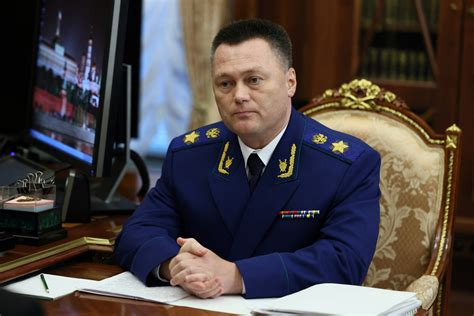
Picture – Prosecutor General, Moscow, kremlin.ru

People in the Park


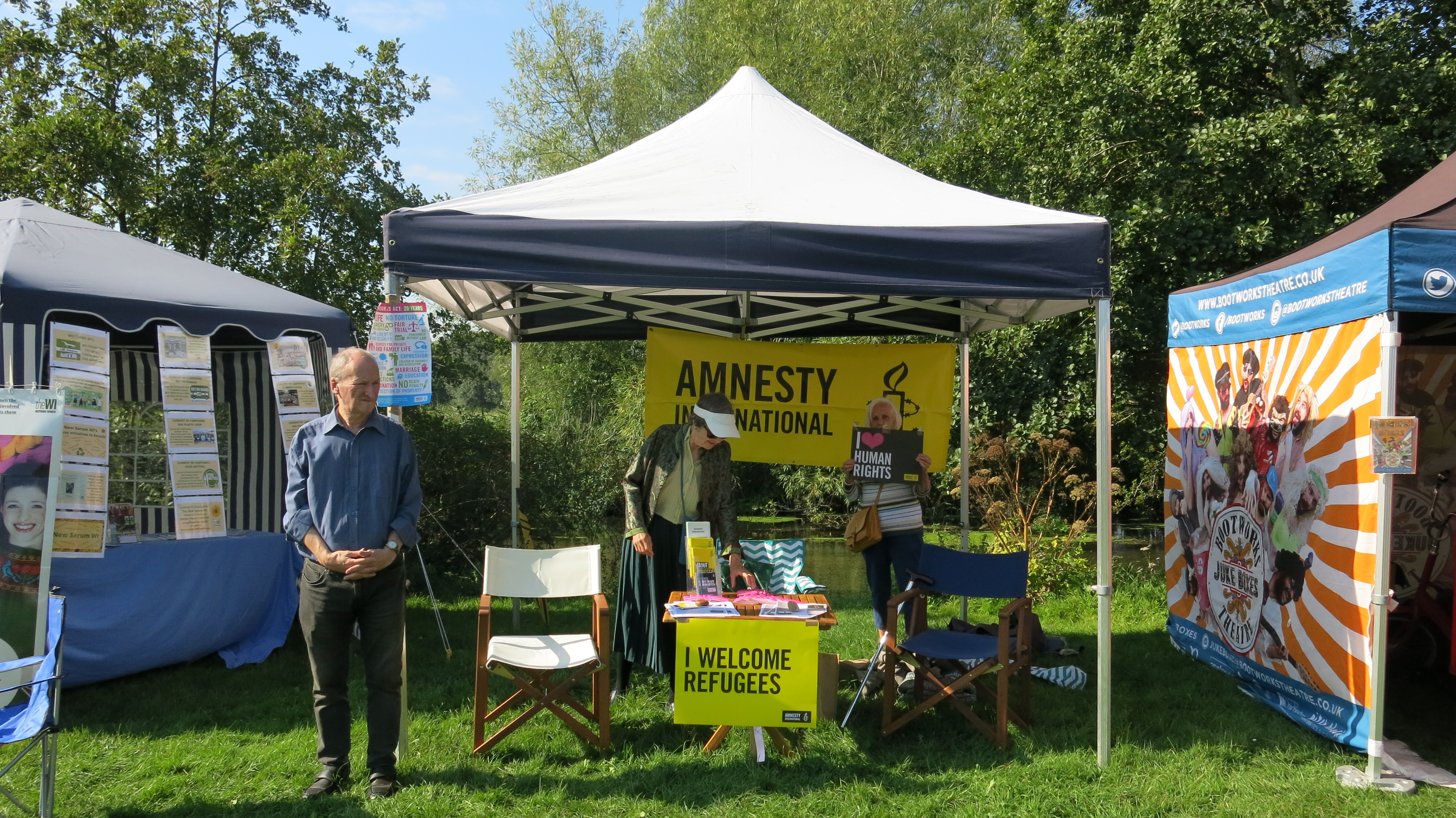
Members of the group will be there on Saturday

May 2025

Members of the Salisbury group will be at the People in the Park event this Saturday 17th from around 10:00 and we would be delighted to see you. It would be a good opportunity to say hello if you are interested in joining us. To get an idea of what we are doing, have a glance at our last set of minutes and news. Look forward to seeing you there.

The following handout will be available.

Court Decisions Impacting Protests and Gender Rights in the UK


Significant number of things happened this month

May 2025

There were a number of interesting events on the human rights front in the UK this month including the Court of Appeal judgement discussed below. There has been a steady ‘nibbling away’ of rights by successive governments which is why we have started this series of reports of which this is the second and why the judgement is good news.

Right to Protest 

This month the Court of Appeal has upheld an earlier ruling of the High Court from May 2024 that then Home Secretary Suella Braverman did not have the power to create a new law that lowered the threshold of when the police can impose conditions on protests from anything that caused ‘serious disruption’ to anything that was deemed as causing ‘more than minor’ disruption. They said that “the term “serious” inherently connotes a high threshold … (and) cannot reasonably encompass anything that is merely ‘more than minor’”.

This was the first time a government had sought to make changes through so-called ‘Henry VIII powers’ of secondary legislation to a law which had been democratically rejected by Parliament when introduced in primary legislation.

Hundreds of protesters have been arrested under these measures since they were created, including the

climate activist Greta Thunberg (pictured: MusikExpress) who was acquitted of all charges in a hearing in February 2024.

Liberty has called for the regulations to be quashed immediately (as per the initial ruling from the High Court, whose decision to scrap them was put on hold until the conclusion of the appeal) and has called for all arrests and prosecutions under the legislation to now be urgently reviewed, alongside a comprehensive review into all protest laws that have been passed in recent years.

The Court will decide in the coming weeks if the legislation is to be quashed.

Gender Recognition Ruling

Five judges from the UK Supreme Court ruled unanimously that the legal definition of a woman in the Equality Act 2010 dealt with biological sex at birth and did not include transgender women who hold gender recognition certificates.

In a significant defeat for the Scottish government, their decision will mean that transgender women can no longer sit on public boards in places set aside for women and it will have far reaching implications for access to protected spaces and services such as the armed service, hospitals, women-only charities and changing rooms and access to sport.

Lord Hodge told the court the Equality Act (EA) was very clear that its provisions dealt with biological sex at birth, and not with a person’s acquired gender, regardless of whether they held a gender recognition certificate.  In a verbal summary of the decision, he said: “Interpreting sex as certificated sex would cut across the definitions of man and woman in the EA and thus the protected characteristic of sex in an incoherent way.”  He stressed that the ruling does not change the protection trans people are afforded under the protected characteristic of ‘gender reassignment’ under the Equality Act.  Amnesty has called the decision ‘disappointing’.

Humanist Rights

Two couples are taking the government to court over its failure to legalise humanist marriage in Wales and England, five years after a ruling that the lack of recognition was discriminatory. Humanist marriages are legal in Scotland and Northern Ireland, and elsewhere in the world including New Zealand, Canada and Australia.  In Scotland in 2022 there were 9,140 humanist wedding ceremonies compared with 8,072 based on faiths or other beliefs.

Activists Detained

Non-violent activists Roger Hallam and Dr Patrick Hart are being refused their right to a Home Detention Curfew.  Days before their scheduled release from prison in March Dr Hart was told that there was ‘no suitable accommodation’ and Hallam that the media’s interest in his case meant that he was deemed unsuitable for HDC (which actually states that non-violent prisoners can only be denied release ‘in exceptional circumstances’). New release dates are respectively June and possibly August. There will be an appeal.

The Counter Terrorism and Border Security Act of 2019

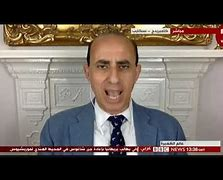
This was invoked by police at St Pancras rail station for detaining a Palestinian-British Christian academic and his 8-year-old son on their return from Paris on Good Friday. Professor Makram Khoury-Machool (pictured: BBC Arabic Service) is a Palestinian-British Christian academic who has lived in the UK since 1999 and taught in Cambridge since 2004.  He is the founder of the Cambridge Centre for Palestine Studies whose board members and patrons include Dr Rowan Williams, Baroness Helena Kennedy, Baroness Sally Morgan, Lord Chris Smith, HE Clare Short, Baroness Warsi and Lord David Steel.  

He and his son were held over 4 hours until after midnight, were given no food while the police took his fingerprints, DNA samples, searched his personal belongings and confiscated his laptop and mobile phone using the threat of force.  Seven days later, the devices were returned but without his SIM card.  He was subjected to an intimate body search, and his son was left traumatised by the experience.  This is perhaps the first time a child as young as eight has been detained in the UK under the 2019 Act; his treatment may breach the UN Convention on the Rights of the Child to which the UK is a signatory.

Economic, Social Cultural Rights

Amnesty reports that in the UK there is no legislatively defined universal social protection floor such as the one recommended by the UN’s International Labour Organisation: this is left to the discretion of the state and is inconsistent across Great Britain and Northern Ireland.  The changes proposed by the Pathways to Work Green Paper 2025 will require new legislation allowing the secretary of state to implement proposed cuts to social security rates for disability and incapacity schemes, and removing some of the legislative protections which are in place to protect against political whims.

If implemented, Amnesty considers the extensive reforms proposed would be a deliberately discriminatory, disproportionate and retrogressive violation of human rights;  The UK’s social security system does not legally guarantee essential social security payments that ensure access to basic needs such as healthcare, housing, food and education and that social security freezes, caps, and deductions, removal of the spare room subsidy (bedroom tax) and two-child limit have deepened poverty and disproportionately harmed children, the disabled and low-income families. Despite increased social security spending, poverty rates remain unacceptably high.

Recent posts:

Forthcoming group activities


These are the activities planned for the coming months

April 2025

This is a list of forthcoming events the Salisbury group will be engaged in over the coming months. Each of them would be a good opportunity to approach us if you were thinking of joining. To join us is free but to become a member of Amnesty International UK there is a membership fee. The group, as well as campaigning for prisoners of conscience, is increasingly concerned with the erosion of rights in the UK. Britain has a proud history of protest and such activity has led to a number of reforms: a look at this list will give you a taste of the numbers that have taken place over the centuries. The essential truth is that those who have power do not like relinquishing it. Recent governments have introduced legislation making it harder to protest and have given the Police even more powers to arrest or interrupt demonstrations. It is more than ever important to be part of organisations like ours to stand firm against governments and their paymasters who want to clamp down on opposition.

Several of our local MPs are reported in They Work for You website as ‘generally voting against’ human rights matters. Danny Kruger, the MP for the newly created East Wiltshire constituency (which starts about a mile north of Salisbury), would like to see the Human Right Act abolished. Protecting our rights is therefore truly important as we cannot rely on our elected representatives to do it for us.

Events

  • Market stall in the Market place, Salisbury on 3 May starting at 9am and finishing at 1pm. If you have any items for the stall, please bring them along on the day.
  • People in the Park where we will have a stand on 17 May for most of the day. This would be an ideal opportunity to make contact.
  • We are continuing with our school visits (this won’t be an opportunity to drop by of course) and something we see as important*. The last one of the current programme is in June.
  • A presence on the EcoHub stall in the Market place on a Tuesday. Dates to be confirmed but likely to be late summer/autumn. Dates will be posted on here, on Facebook (@Salisburyai) and on Bluesky once agreed .
  • A coffee morning at St Thomas’s Church Salisbury on 5 July from around 10am. Home made cakes available and in the centre of the City.
  • Don’t forget that we take place – with other groups in Salisbury – in the vigils which take place in the Market place by the Library every Saturday. They are for peace in the Middle East and in particular Gaza where over 50,000 have now died, the majority of whom were women and children. Thousands more are unaccounted for under the rubble. We have just held our 70th such event. They start at 5pm for half an hour.

Later in the year we will be holding:

  • Death penalty action on the World Day Against the Death Penalty – see Amnesty’s recently published report for 2024 – on 10 October. See also our monthly reports on the death penalty the latest of which has just been posted.
  • Write for Rights will be on 30 November.

Other events which are not yet settled are:

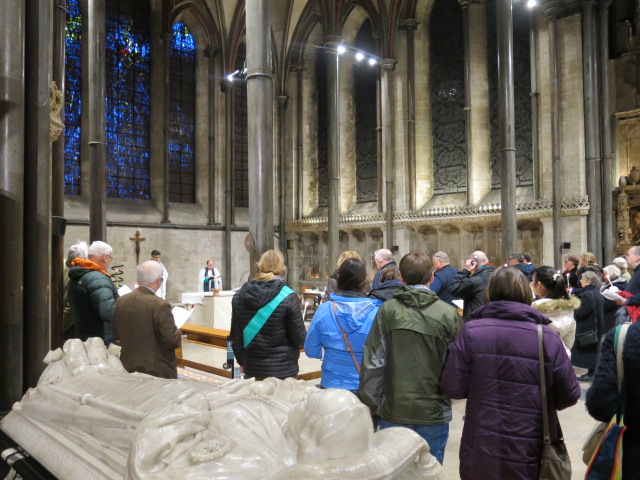
  • Evensong at the Cathedral. The Cathedral has the Prisoner of Conscience window and the Amnesty candle on display. Agreed date under discussion.
  • Refugee Week. Details not known yet. See our latest Refugee report.
The current image has no alternative text. The file name is: human-rights-uk.png

*If by chance you are a teacher reading this at a school in South Wiltshire and would like to discuss a visit as part of your school’s citizenship programme, please get in touch.

Group’s reports


Good attendance at vigil


December 2025 UPDATED A good attendance at the 106th vigil in Salisbury with around 40 of us there. We were joined by some by some passers-by which is always encouraging. News about Gaza has been eclipsed by the continuing war in Ukraine and the appalling attack on Jews on Bondi Beach killing 15 people on…

Minutes and Newsletter, December


Minutes of our December meeting December 2025 We are pleased to attach our minutes and newsletter for the December group meeting thanks to group member Lesley for compiling them. They include several reports some of which appear elsewhere on this site with links to other sites of interest. Item 12 refers to upcoming events which…

UK Human Rights Report: Current Threats and Government Actions


Monthly report on human rights in the UK December 2025 Amnesty has for many years, focused its efforts on human rights issues overseas. Recent actions by governments of both persuasions have meant a greater focus on the threats to rights here in the UK. Only this very week, the prime minister and other ministers are…

March minutes


Minutes of our meeting in March

March 2025

We are pleased to attach our minutes (and almost a newsletter) from the March meeting of the group thanks to group member Lesley for compiling them. They contain details of future events (towards the end) as well as items on the death penalty, refugees and other items of interest. The meeting took place on 12 March.

UN expresses deep doubts about human rights


UN High Commissioner Volker Türk expresses widespread concerns about threats to human rights

March 2024

Volker Türk, addressing the 58th Human Rights Council, has expressed a range of concerns about the state of human rights today. As we said in our last post celebrating the 50th year since the formation of the Salisbury group, any idea that we were on a slow path to a better future with wider and deeper respect for rights in countries and communities around the world, is no longer believed. Not only are old threats still in existence, but new threats are appearing and gaining ground.

He begins by something of a tour d’horizon of conflicts around the world of which there are now 130

according to the Red Cross. In addition to the familiar which appear on our screens most days, there are conflicts in the Congo, Yemen (which has dropped out of the news recently), Myanmar and Haiti. He is concerned that in each of these wars, civilians are deliberately attacked and subject to sexual violence, and famine used as weapons of war.

Health care workers have suffered grievously and in 2023, 480 were killed, double the number of the previous year. Humanitarian workers are also being killed with 356 dying in 2024.

The new threat comes from individuals and corporations which have never had so much control and influence over our lives as they do today. This is something of a new phenomenon which has emerged in the last two decades or so. “A handful of unelected tech oligarchs have our data: they know where we live, what we do, our genes and our health conditions, our thoughts, our habits, our desires and our fears. They know us better than we know ourselves“. Several of these ‘techbros’ as they are called played a significant role in the recent US presidential election. Either by manipulating their algorithms, by direct financial aid or in the case of Jeff Bezos, his control over the Washington Post, they were able to play a hugely influential part in the result.

Unregulated power

Türk says that any form of unregulated power can lead to oppression, subjugation, and even tyranny – the playbook of the autocrat. We should be very concerned at the activities of the tech companies. Virtually all are American based and as we have seen in the last few days, the post-war consensus has been shattered by the new administration’s statements and policy changes.

President Putin of Russia, a demonstrable tyrant, who’s regime has murdered journalists and sent Navalny to a remote Siberian camp where he subsequently died for reasons unknown, is now being courted by the US president Donald Trump even having invaded Ukraine.

Governments seem unwilling or unable to control the companies’ activities. One by one, the companies have dropped their internal controls used to moderate content. A prime example of the effects – the murderous effects – of the tech companies was Myanmar. Hate speech and posts against religious minorities was widely spread on Facebook leading to considerable violence. Facebook was slow to remove posts and did so only after much damage was done.

Speed and scale of mis and disinformation can have dramatic and far reaching effects on people’s lives and rights. The tech companies have shown a remarkable lack of concern to control the content on their sites. They exhibit an almost mystical belief in their platforms and with the current belief in America in liberty and free speech absolutism, the risks for ordinary people are considerable. They cannot be voted out except by shareholders whose concern is profits not the effects their platforms might have.

We should be very concerned that a group of American companies, closely aligned to the politics of the White House, are able to have profound influence over the lives of millions yet are subject to almost no controls, certainly not from outside the US.

Report critical of human rights


Report published by Policy Exchange claiming the HRA has curtailed the rights of Parliament

November 2024

Slightly amended 13 November

An article appeared in the Daily Mail on 11 November under the headline ‘Rights Act ‘curtailed power of Parliament ”. It said ’eminent lawyers have compiled a dossier of 25 cases where the Human Rights Act was applied and have shown how its use removed power from Parliament’. It continued that ‘power once held in Westminster is increasingly being transferred to the European Court of Human Rights in Strasbourg’ and quotes the example of the government’s wish to deport ‘illegal’ immigrants to Rwanda which was frustrated at the last minute by the Court.

The Mail did not tell its readers however, who produced this report and a reference does not appear in the online version either. It was in fact written by the Policy Exchange and published on 11th. The organisation promotes itself ‘as an educational charity [and] our mission is to develop and promote new policy ideas which deliver better public services, a stronger society and a more dynamic economy‘.

The problem is that the Exchange is an opaque organisation and does not reveal who funds it, does not reveal funding on its website nor tells us the amounts given by funders. Open Democracy is very critical about the secretiveness of this organisation, its ‘dark money’ and its influence in government both with the Conservatives and now, it alleges, Labour.

It was revealed by Rishi Sunak who admitted that Policy Exchange received funding from US oil giant ExxonMobil who helped the government write its draconian anti-protest laws. It serves as confirmation by the then prime minister of Open Democracy’s revelations that last year’s controversial policing bill, which became the Police, Crime, Sentencing and Courts (PCSC) Act, may have originated in a briefing from Policy Exchange. The organisation has form therefore in being hostile to rights and protests. It is curious that the Daily Mail, in the vanguard in promoting parliamentary sovereignty and a powerful force in the Brexit debate, failed to mention the influence of American money believed to be behind several of this and other think tanks. Quite where is this ‘sovereignty’ they are keen on?

The limited information provided to Daily Mail readers meant they are unaware of who funds these reports or the motives of the assumed funders (if indeed ExxonMobil are one of the funders). The report’s arguments are thin and present the reader with the notion that human rights were amply protected by our common law and there is no need for this ‘foreign’ court. Were that so and the victims of Hillsborough for example might disagree having been let down by the courts, the police and elements of the media in their search for justice. They finally achieved justice partly with the aid of the Human Rights Act so despised by the Mail. There are many victims of injustice who have found our institutions to be less than favourable to their interests – the Post Office scandal anyone?

Group celebrates 50 years!


Salisbury Group was established half a century ago

October 2024

The Salisbury Amnesty group was established 50 years ago this year and some of the current members met briefly for a photo in the Market Square. It was probably not imagined in those distant days that we would still be active. After all, the purpose of a charity is to work itself out of existence. Unfortunately, human rights are in a fairly parlous state in many parts of the world. Almost wherever you look, people are imprisoned for their political beliefs. Media organisations are tightly restricted or banned. Journalists are murdered, with three quarters of recent murders in Gaza alone. Terrible events are taking place in the Middle East. Atrocities continue in Burma, almost completely unreported. Individuals are tortured and justice is denied for millions. The post-war hope ushered in by the Universal Declaration has had only mixed results.

Depressingly, it is not just foreign countries where human rights are under threat. In the UK there has been a prolonged campaign to repeal the Human Rights Act led by a vocal section of the press. Several acts have been passed making protest harder and reducing access to judicial review. Police powers have been increased. Facial recognition technology does not seem to be far away. One of the leadership contenders for the Conservative party wants the UK to leave the European Convention of Human Rights.

Sadly, we are the only extant group in Wiltshire. So the next 50 years begins …

Members and supporters outside the Guildhall on 3 October. We were particularly pleased that one of the founder members from 50 years ago was able to attend. (Picture: Salisbury Amnesty)

Salisbury group at 50


The Salisbury group was established 50 years ago: did the founders think we’d still be needed half a century later?

May 2024, amended in September

Following the Observer article by Peter Benenson in 1961 which led to the formation of Amnesty International, local groups formed around the country and the Salisbury group came into being in 1974. It is the only surviving group in Wiltshire which is disappointing to report. Did the founders, it might be asked, think we would still be campaigning all these years later? It might not have been a question they asked themselves at the time but there was a feeling following the horrors of the war and the signing of the Universal Declaration of Human Rights in 1948, that we were on some kind of improving path towards better treatment for people wherever they lived. There was some kind of belief in a new future.

To an extent, the history of the UDHR and the true commitment of nations to the cause of universal rights, has been overstated. There was considerable resistance by the colonial powers, in particular the UK, to the ‘universal’ element because of the likely effect of such rights in the subject peoples of the colonies. Many were seeking independence from the Empire and this was not always achieved peacefully. America was fearful of the effects in the southern states in particular because of the treatment of the black population and the Jim Crow laws.

The human rights situation in the world today is dire. Entire peoples have been oppressed or driven from their homes, the Rohingya in Burma for example. China has oppressed Tibet and is currently detaining around a million Uyghurs in what almost amounts to genocide. Russia has invaded the Ukraine and committed many human rights violations. Wars rage in sub-Sahara Africa with millions displaced from their homes and villages – those who have not been killed that is. The Israeli response to the October 7th massacre by indiscriminate bombing in Gaza is causing widespread international concern. Around 36,000 have now been killed.

Flaws

One of the flaws of the post-war agreement was the reliance on countries to be the ‘policemen’ so to speak. The US in particular did not want to grant powers to the newly created UN to enforce rules in countries not obeying them. Since it is countries which are heavily involved in committing the crimes this is a serious weakness.

Another flaw was the rise of corporate power and the ability of major corporations to operate in ways making control extremely difficult. These companies, and the banking system which supports them, engage in arms sales, mineral exploitation, tax evasion and abuse of people in sweat shops almost with impunity. Millions suffer impoverishment and almost non-existent rights as a result of their activities yet little is done to control them.

The Declaration grew out of the European tradition since it was Britain, France and the US who were the key players after the war. Power has slowly drifted away in the last few decades however, with the rise of China, a re-emergent post-Soviet Russia and the rise of new southern hemisphere countries such as South Africa and Brazil not all of whom share all these traditions. The freedom of the individual is not something they are concerned with. The Gulf states are another group of powers where free speech, religious freedom and human rights are not supported. Women enjoy few rights in these states. The world has changed therefore and the comfortable assumptions of European Emancipation is no longer the only game in town.

UK

The international order has changed, so has the climate in the UK. Over the past two decades or so, there has been a concerted move to abolish the Human Rights Act and by some, to leave the European Convention (see the last post). Sections of the media have characterised human rights as a threat not a protection. It is claimed that they enable terrorists and criminals to escape justice because their human rights will be infringed. Stories abound of the act being used to enable pornography in prisons or hostage takers to demand a burger of their choice. Infamously, the then home secretary Theresa May, claimed someone could not be deported because they had a cat. These and other stories provide background music for a variety of MPs to demand that the act be abolished or seriously modified. Local Wiltshire MPs generally vote against human rights measures according the They Work for You website.

Too negative?

Is the above too negative? It is and it isn’t. Millions have human rights but many of those millions do not enjoy them. They live in countries which have signed up to this and that convention – against the use of torture for example – but where police and security services use it routinely and with impunity. They live in countries where free speech is part of the country’s constitution but where the media is controlled, shut down or where journalists are arrested or even gunned down outside their apartment block (Russia).

But it also true to say that human rights have entered people’s consciousness. They know they should have them and they know they are being infringed which induces a tension in society and a deep sense of anger. It has put pressure on countries in their dealings with other countries to be aware of the human rights issue even if they proceed to ignore it in the interests of their economy and jobs. Most of all, it has articulated what rights should be and it is a genie which has escaped the bottle of power and oppression. It has provided campaigners around the world with a cause.

So, fifty years on, sadly the need for a human rights group in Salisbury is still present. With several Wiltshire MPs wishing to see those rights limited, curtailed or even abolished, it is a long way from ‘job done’. Those who are in positions of power and privilege and who consort with other power holders – corporate, City and media for example – there is a natural desire to hold on to that power, and demands by ordinary people are seen as some kind of threat to the natural order of things. Human rights groups, trade unions and protest organisations are seen as a threat to that natural order. Fifty years ago it was other countries which were the subject of campaigning and it is regrettable that we now spend part of our time defending rights in this country, such has been the regression. More and more legislation, ever increasing police powers and a sometimes supine judiciary together conspire to form a pincer movement against the rights of ordinary people. So we embark on the next 50 years …

Blog at WordPress.com.

Up ↑