Political Friends of Israel


Remarkable video discusses the extent of influence over political parties by Friends of Israel groups

September 2026

In many of our posts about vigils and the events taking place in the Middle East, Gaza, the West Bank and Lebanon, we have mentioned the role and influence of the various Friends of Israel groups in Parliament and Westminster generally. There is no inherent crime in lobbying: it is quite possible that UK citizens reading this will have lobbied their MP over a matter of concern to them. This is part of the political process and can be a way of informing an MP about an issue and the depth of feeling there is among their constituents.

We are currently in the middle of a major row concerning two massive donations of ยฃ36 million each to the Reform party which have the potential to be a game changer. What is concerning is the degree of organisation, funding and influence that some lobbyists are able to deploy. Arms firms, fossil fuel companies and as we shall see, the Israeli lobbying operation are sufficiently funded to exert considerable influence over policy. The real risk is that they can distort the democratic process to suit their agendas.

Video

YouTube Video

This remarkable video takes the viewer through the history and organisation behind the various Friends of Israel groups. It points out the differences of approach towards each party noting that the only one which seems untainted by this activity is the Greens. It shows how the lobbying is able to stay hidden and undeclared because of how the groups are structured.

A lot of the activity is not direct funding but it enables MPs to link up with other funders useful to them at election time. It is thought to be the best funded lobby group in Westminster.

They explain how new MPs arrive often having few opinions on the Middle East, are quickly invited to a trip to Israel. On return they are to be seen in debates echoing the Israeli line. It shows how although leaders come and go, the apparatus behind them remains stable. Nearly all of the Cabinet are members.
It is hard not to come away from viewing it without feeling troubled at how our governments and democracy are compromised by this well-funded and highly organised activity. There is no harm in Israel – or any state or organisation – putting their arguments to MPs and to government. But this activity goes well beyond that and clearly distorts our democracy.

The effects

It is not just of academic interest. The result is a Labour prime minister shamefully saying Israel had every right to cut off water and power to Gaza. It’s successive governments allowing arms sales to proceed despite the disproportionate destruction of Gaza. It’s the covert support by the RAF for example overflying Gaza in hundreds of missions allegedly to help in the search for hostages (completely unsuccessfully so what were they doing?). The staggering death toll of over 73,000 including around 20,000 children is a stain historians will find hard to explain. The hemming in of 2 million Palestinians into a smaller and smaller area by the yellow line. It has been a gross violation of the rights of Palestinians.

Many senior Israeli parliamentarians are open about their desire to expel all Palestinians and to destroy any idea of a separate Palestinian state. It is not some kind of hidden side effect of conflict – it is its purpose.

Despite the killing, massive destruction, wilful starvation and ethnic cleansing, only in past week has the UK government finally seen fit to take some action.

We have noted that the local MP for Salisbury, Mr John Glen, is a member of the Conservative Friends of Israel. He has never attended the 145 vigils held by some of his constituents. He has never mentioned them in his weekly column in the Salisbury Journal. He has never spoken in parliament on this issue.

As we have asked before – who are they representing? The British public or a bloodthirsty regime? It is not as though the activity is in the long term interests of Israel. A policy of violence, destruction, ignoring international humanitarian law and mistreatment of Palestinian prisoners has only one end. Members of parliament would do well to remember whom they represent.

Please view the video.


Numbers swell at vigil


Higher numbers still at 90th vigil in Salisbury

August 2025

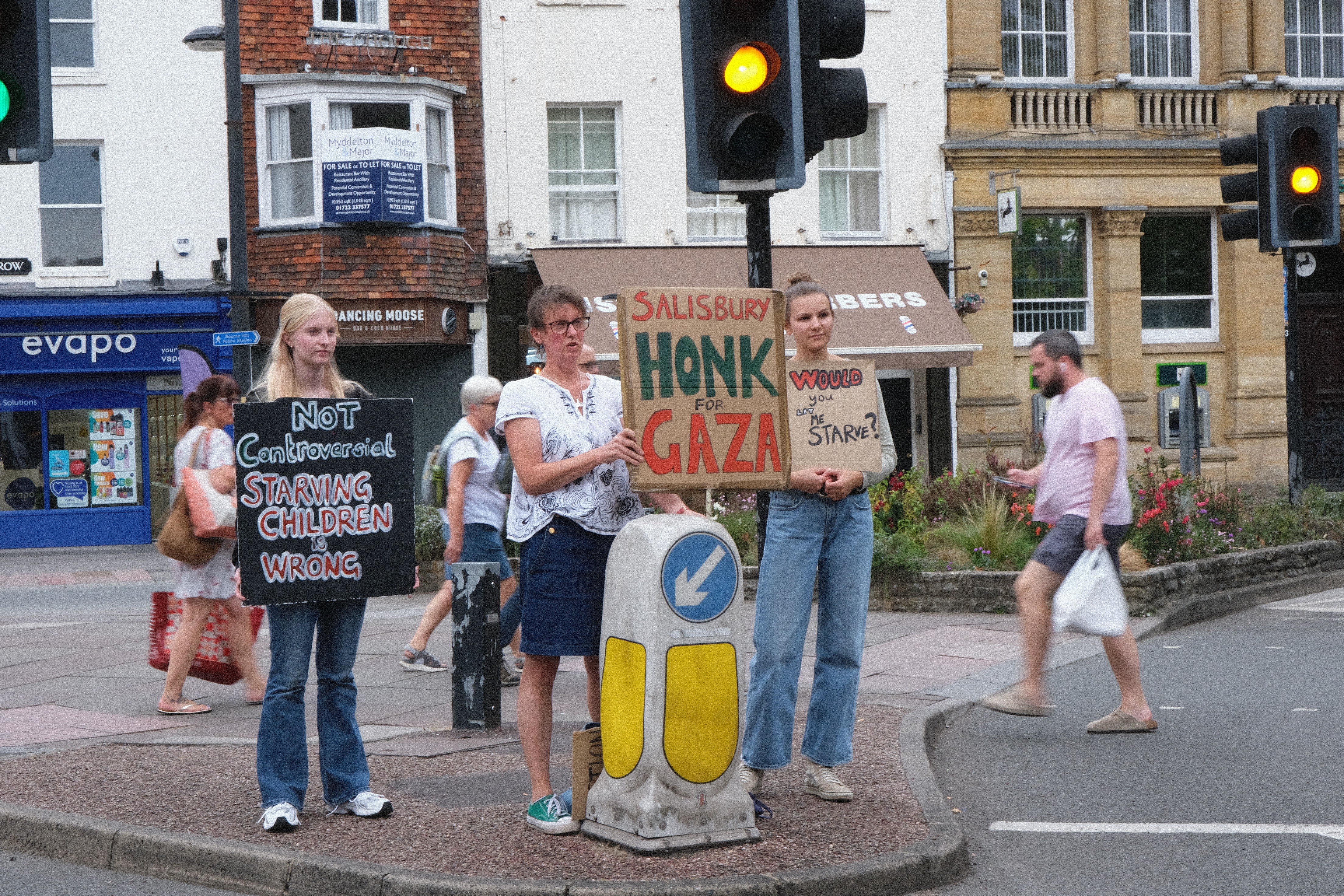
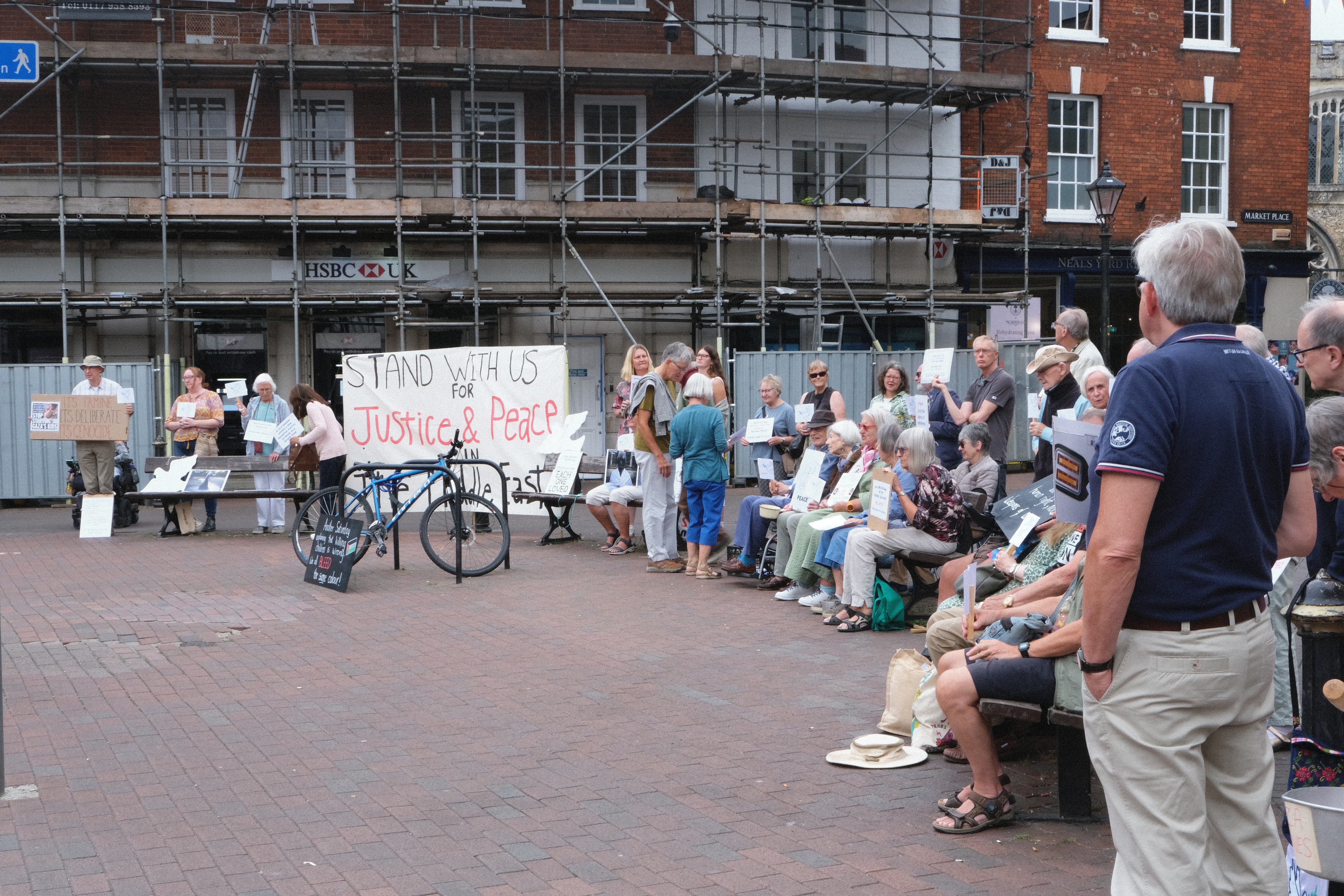
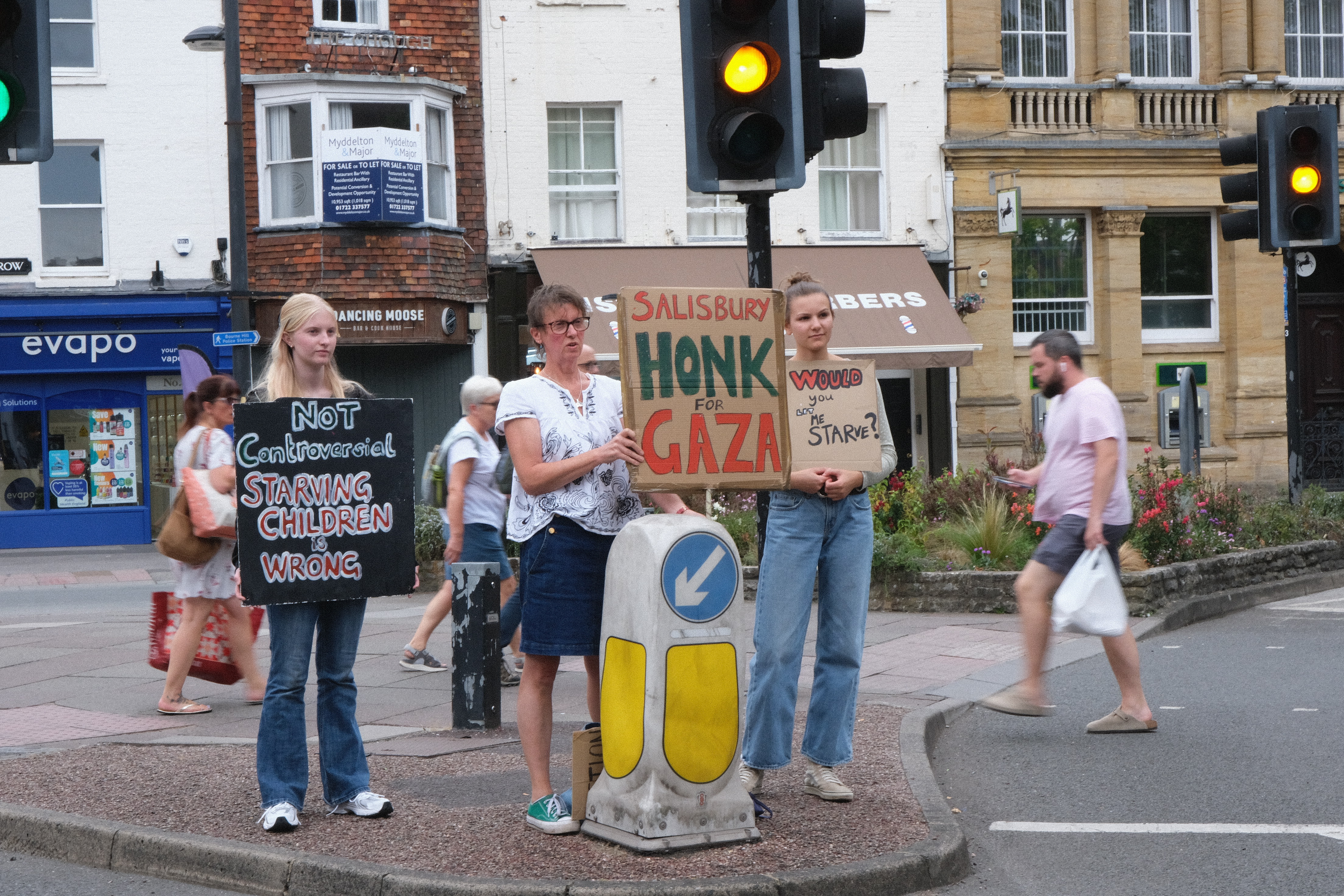
Around 55 attended this week’s vigil exceeding last weeks total. More stood and took notice and many photos were taken by passers by. The ‘Honk for Gaza’ sign attracted 32 honks. Several new faces attended which is encouraging. An excellent video of the vigil is available here courtesy of Peter Gloyns. A feature of the vigils is the range of posters and signs that people bring.

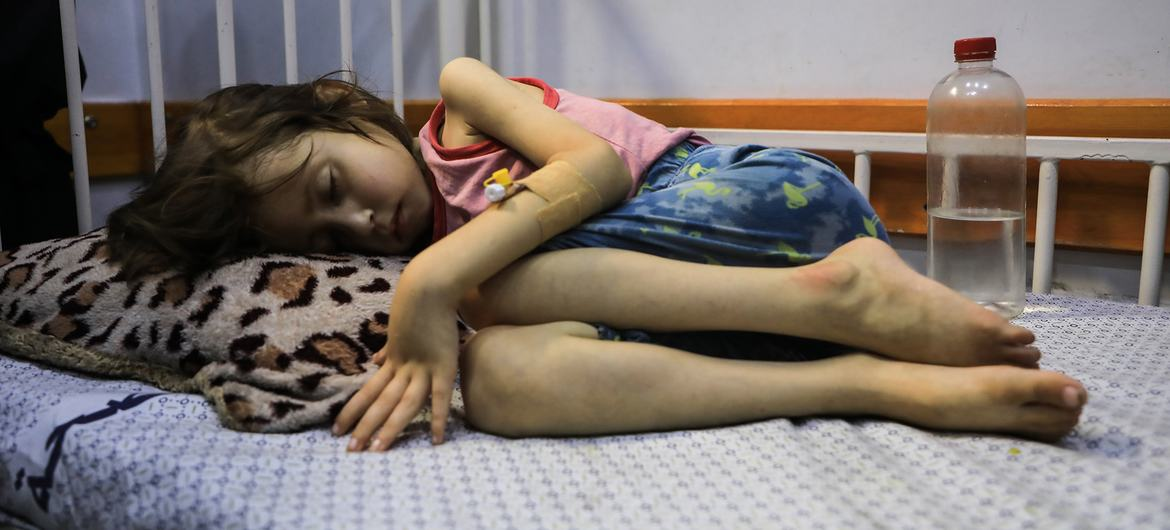
Israel is now preparing to launch an offensive to capture Gaza City. Bombing has started already causing many casualties: the total known is now 62,000. Many thousands more lie under the rubble unaccounted for. Over a 1,000 have been shot by IDF soldiers and US mercenaries at the limited food distribution sites fun by the Gaza Humanitarian Foundation GHF. What is upsetting many are the scenes of starving children, especially infants below the age of 5, for whom proper food is vital. Interviews with Israeli officials are met with denial. They claim there is no famine and that there is plenty of food available. According to Haaretz, the majority of Israelis are not aware of the famine in Gaza.

The UN declared a famine in part of Gaza this week: it is unable to do so for other areas as it cannot get sufficient data. Antรณnio Guterres. the UN Secretary General said it was a ‘man made disaster, a moral indictment – and a failure of humanity itself’. Image: UN

Images: Salisbury Amnesty

Previous posts:

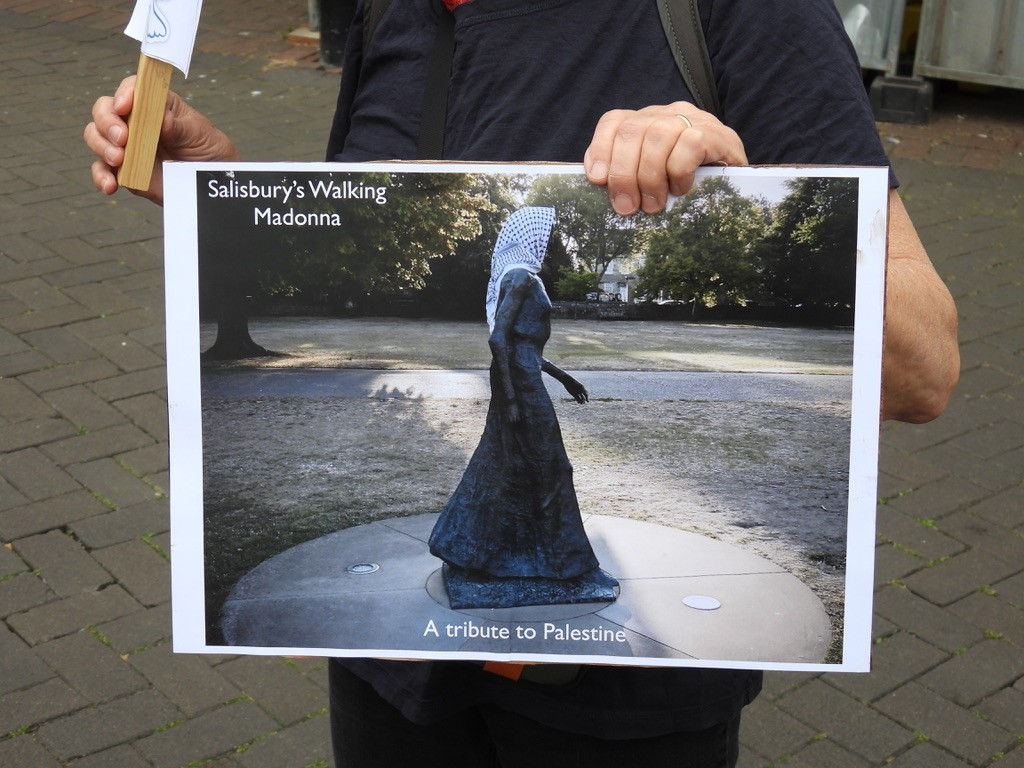
Walking Madonna is in the Cathedral Close in Salisbury.

Image: Peter Gloyns

Anti-protest law modified


High Court loosens restrictions on demonstrations

May 2025

No government likes protests. They demonstrate, all too visibly, that the public – or a part of them at least – is not happy with them or the status quo. Depending on the degree of despotism, demonstrations are controlled or in the worst of countries, banned altogether. China has an extremely restrictive policy backed up by a massive and all pervasive surveillance system making protests all but impossible. Gulf states are also highly restrictive.

Demonstrations are often how change happens. Britain has many examples throughout its history of protest bringing change. Wat Tyler and the plight of the poor (serfs); the Poll Tax riots in 1381 and 1970; the Prayer Book rebellion; the Iraq War protest and of course the Suffragettes. There are many more examples. They do not necessarily bring about immediate change. They do show to politicians and others the depth of feeling that people have about their cause.

The last Conservative government was no different to others in disliking protests. What upset them the most were the climate protests. Just Stop Oil and other groups such as Extinction Rebellion, engaged in a series of eye-catching protests which shone a light on the government’s failure (in their eyes) to do enough to stop fossil fuel extraction.

Suella Braverman, then the Home Secretary resented these protests and introduced the Police, Crime, Sentencing and Courts Act in 2022 in an attempt to seriously curtail them. Controversially they introduced a change in the threshold wording from ‘serious disruption’ to ‘more than minor’. This was done by using a statutory instrument not after proper debate in the House of Commons. This had the effect of almost banning all protests.

Successful challenge

Liberty and other groups successfully challenged this in the courts and the new Labour government decided to appeal. This seems to demonstrate that the dislike of protest is not a party political matter: governments just do not like challenge. Last week (May 2) the Appeal Court ruled that ‘serious’ is not ‘more than minor’ and said that the anti-protest laws were introduced unlawfully. The regulations gave police almost unlimited powers to prevent protests taking place. Many were arrested using these powers.

The protests which so upset the previous government concerned fossil fuels. The fossil fuel industry is extremely powerful and well-funded. Several of the various think tanks based in and around 55 Tufton Street are thought to be funded by them. These include: The Tax Payers Alliance; Civitas; Adam Smith Institute; Global Warming Policy Foundation; Centre for Policy Studies and the Institute of Economic Affairs. Their funding is opaque but is thought to be mainly from fossil fuel companies such as the Koch corporation in the USA among others. They have frequent access to the media being interviewed on various BBC and commercial stations without ever being asked ‘who funds you?’ Their opinions often appear in newspaper columns. They employ large numbers of lobbyists and enjoy close contact with ministers and civil servants. They claim to be influential in forming policies to suit their interests. It was admitted by Rishi Sunak when he was prime minister that the Policy Exchange – another of these think tanks funded by Exxon Mobil – had drafted the anti-protest legislation.

Protest is crucial to enable the ordinary person to make their voice heard. As with the arms industry we highlighted in a previous post, governments are dominated by commercial concerns, the need for growth and the enormous power and influence of companies and their army of lobbyists. Around ยฃ2bn per annum is spent by firms on this activity. It is welcome news that the Appeal Court has ruled against the government and its ‘draconian’ anti-protest legislation.

The State v. Trudi Warner


Interesting and troubling webinar by the Good Law Project on the case of Trudi Warner

June 2024

Readers will recall that earlier in the year, Trudi Warner stood outside the Inner London Criminal Court and held up a placard telling passers by that juries had the right to vote on their conscience. The trial was taking place of several climate activists and a key issue was that the judge in the case, Judge Silas Reid, prevented the defendants from mentioning that they were campaigning for action on the climate. The worry was that if the jury realised that this was what the defendants were doing, there was a probability that they would acquit. Many websites commenting on this case allege that the judge is against people protesting (which we cannot verify) hence his aggressive threats to defendants and others.

Trudi Warner was then arrested for contempt of court by displaying her placard which states a fact, long established in English law, that juries can indeed vote on their consciences. This was established in the Bushell (sometimes Bushel) case of 1670, where a judge locked up a jury and deprived them of food and water for disobeying his directions.

Jolyon Maugham of the Good Law Project, said that people had a ‘sweet notion’ of the law which this case cast into doubt. It was one of the factors in the Brexit debate where people often spoke of sovereignty and an aspect of that was hostility to Brussels (actually Strasbourg) telling us what to do. ‘We should have our own laws’ was a frequent refrain. This has re-emerged with the proposed Rwanda flights and a desire by some politicians to come out of the European Convention. There is a deep belief in the primacy of British Justice with its ancient traditions going back to Magna Carta. This and other cases demonstrate that this sanguine view of our justice system is misplaced.

Climate protests

The state has the power to lock people up and juries are a means of tempering this power he said. The plain fact was that the fossil fuel companies mounted well-funded campaigns to promote their activities and frustrate governments trying curb fossil fuel use. There is a close association between government, Big Oil and the media. Sections of the media refer to protestors as an ‘eco-mob’, ‘zealots’ or a ‘rabble’ among other epithets. Fossil fuel companies fund several Tufton Street think tanks with millions, yet TV companies, including the BBC and Channel 4, fail to ask interviewees from them, ‘who funds you?’

The various protest organisations including XR and Just Stop Oil angered government ministers by highlighting the shortcomings of government actions in dealing with the climate crisis. Their activities had also angered members of the public who were sometimes inconvenienced. As ever, a totally peaceful protest is ignored but glue yourself to the pavement and you achieve some publicity.

Arrest

So Trudi Warner was arrested for contempt of court and ended up in the Old Bailey for trial 8 days later. At a permission hearing which establishes whether there is an arguable case, it was thrown out by the judge who said that the ‘government had mischaracterised the evidence‘ and that it was ‘fanciful to suggest that Ms Warner’s actions fall into the category of contempt‘. The government said it is to appeal the decision [before the election was called]. It is ironic to note that a plaque celebrating the seventeenth century Bushell case is fixed to a wall in โ€ฆ the Old Bailey. To remind ourselves – the placard merely pointed out the plain fact that a jury has the right to decide a matter according to its conscience and to disagree with the judge’s direction.

Conclusion

The government has introduced a range of bills which all have an effect of making protest more difficult and risky. Police have been given more powers which they have used in preventing protests from taking place including, for example, at the Coronation. There is a kind of cosy alliance between Big Oil with its range of well-funded lobbyists; a government all too keen to restrict protest, and some media organisations who eagerly demonise protestors and deny climate science. In the process, rights and justice are trampled on. If, as is being predicted, a Labour government comes into power on 5th July, it will be interesting to see if they pursue the appeal. It will a quick test on whether they will follow in the authoritarian footsteps of their predecessors or adopt a more permissive regime. Early signs are not promising as they do not have plans to annul any of the existing legislation.


During the webinar, we saw clips of film of the protests prepared by Page 75 Productions who will be hosting a showing of the full film in September. A video can be accessed here.

Sources: Good Law Project; The Guardian; The Canary; Christian Climate Actions

Meeting with Mr Glen MP


Members of the Salisbury group will be meeting the MP for Salisbury on Friday

In common with well over a hundred organisations, Amnesty is extremely concerned about several of the bills currently on their way through parliament. These are the enormous Police, Crime and Sentencing bill, the Justice and Courts bill and the Nationality and Borders bill. Together with the expected review of the Human Rights Act, they amount to a concerted attack on our freedoms. The group wishes to express our concerns to the MP. We will report on his reactions after the meeting.

The views of the Justice Secretary Dominic Raab were discussed in our last post.

Podcast

Lobbying – the hidden scandal


Lobbying and business influence inย government at a high level.ย  MPs receive millions for lobbying

We have frequently drawn attention to the issue of corporate influence on our political process and in particular, the role of oil and arms companies.ย  We have recently seen three leaders from China, Egypt and India, visit the UK and be given the red carpet treatment.ย  Each has – to put it mildly – a poor human rights record.

In the case of China it includes the use of torture, shutting down the freedom of speech and more executions than the rest of the world put together.ย  Egypt has been involved in mass arrests and torture and President Modi of India has a dubious record in terms of the treatment of Muslims.

It seems as though the ‘prosperity agenda’ is eclipsing all else and the only thing that matters seemingly, is the pursuit of business and contracts.ย  No one is arguing for boycotts but that the issue of human rights be brought up in discussion with these leaders.

A factor in this is the role of lobbyists and a recent analysis by Transparency International is worrying and should receive wider coverage.

Analysing the new UK Register of Lobbyists and data from Parliamentary registers of interests, their new research has found:

  • Less than 4% of lobbyists are covered by the Governmentโ€™s new lobbying register โ€“ almost all lobbyists are completely unaccountable.
  • 8/10 of the most frequent lobbyists are from FTSE 100 companies โ€“ lobbying is dominated by the corporate world.
  • ยฃ3.4 million paid to 73 MPโ€™s last year for external advisory roles โ€“ a significant risk of conflicts of interest.
  • Payments for Parliamentary advice is still allowed in the House of Commons, but prohibited in the House of Lords, Scotland and Wales โ€“ a major loophole in the rules (TI’s emphasis)

The findings come after detailed analysis of research across Westminster, Scotland, Wales and Northern Ireland.ย  The report can be read on their web site or can be accessed here.ย  [There is also a permanent link to their site at the bottom of our page under ‘Links‘]

With such a high level of corporate lobbying and with theย substantial level of fees MPs are earning, it is perhaps not surprising that business interests get such a high profile and human rights issues so low.

It appears from the report that the situation has got worse under the new government.ย  There were some publications of meetings with lobbyists concerning the previous year but that now seems to have stopped.ย  Most of the lobbying it seems is around domestic matters for example, firms trying to get a slice of the health service.

Business is important and of course companies should be free to lobby.ย  But it should be transparent and registered.ย  More importantly, business interests should not trump all else.ย  The government is not after all some kind of selling operation for FTSE 100 companies.

UPDATE: 16 NOVEMBER

It’s not about human rights but as if to illustrate the point, it’s just been reported the ex Health Minister, Lordย Lansley, is to takeย up posts with firms hoping to profit from the NHS.ย 

Andrew Lansley and the revolving door

Blog at WordPress.com.

Up ↑