The case against human rights


December 2014

This was the title of a piece in the Journal section of the Guardian newspaper on 4 December by Eric Posner who is a professor at the University of Chicago Law School.  This is a thoughtful piece, not written by some demagogue, but by someone with a background in the subject and who has made significant contributions to the debate on the issue of human rights.  The points he makes are cogent and need addressing seriously.  The arguments he puts forward seem to come from his book The Twilight of International Human Rights Law (Oxford University Press, 2014).

His article starts with a review of the history of the subject, especially since 1948, with the adoption of the Universal Declaration of Human Rights by the UN which he correctly points out is not a treaty in the usual sense.  He might have added the European Convention of Human Rights came into being at about the same time and for broadly the same reasons.

The essential problem from the beginning he says was the different outlook by the key players when writing the UNDHR.  America had in mind their constitution which was largely based on ‘political’ rights which have developed under their constitution.  Even so, they did not want racial equality to be included: the effects we see today with the recent shooting in the USA of two black people by police and the lack of a legal follow through.  The then Soviet Union wanted more social rights and the need to provide jobs – hence a right to work.  The colonial powers – chiefly Britain and France – did not want the emancipation of their colonies to be included within it.  Hence the result was a partial framework not a coherent, legally binding treaty.

His argument is based on the following main points:

  • Human rights campaigning has failed to achieve its fundamental objectives.  Despite countries signing up to various agreements, torture is still widely practised, almost routinely, around the world; women’s rights are widely neglected especially in the middle east, and children are still working in mines and sweatshops
  • The notion of human rights is hopelessly ambiguous with over 400 listed, which can provide no guidance to governments on how to incorporate them.  For example, eliminating torture would require major changes to the police forces and reform of corrupt judiciaries.  It is still practised he argues, because the police have no other way in the light of crime and corrupt courts.  Governments would prefer to build schools and hospitals rather than spend on the police and reforming the court system
  • Things like free speech have little practical value where religious issues prevail.  Many western countries limit it, for example for defamation or obscenity
  • But his main argument centres around the ‘top down’ nature of human rights.  It is reminiscent of old colonial ways where primitive cultures had reforms foisted upon them by white occupiers who thought themselves superior.
  • Another factor is the post 9/11 use of torture by the United States.  This seriously undermined their moral standing and since they were the country most active in pursuing human rights, this was a serious blow to the cause.

This is only a flavour of his arguments but the essential point remains that six human rights treaties have been signed by over 150 countries around the world yet torture is still widespread, free speech is absent from many parts of the world (for example Russia where many journalists have been murdered), and democracy is a tenuous concept in countries like China – witness the recent events in Hong Kong where the communists only want their people to be on the ballot list.  Western countries are guilty of hubris and ‘forcing other countries to adopt western institutions, modes of governance, dispute resolutions systems and rights.’

It is indeed a gloomy picture.  His proposal is for human rights practitioners to follow the example of development economists who he says are changing from their top-down, coercive approaches and adopting more pragmatic ones better aligned to the countries own ways of doing things.  These arguments appear weak however since the west still imposes western style conditions on its funding and support for developing countries.  They are required to open up their markets and to privatise their industries, usually to their financial detriment.  Elsewhere from the Guardian article he has argued for open borders as far as migration is concerned – not something likely to make him popular for a European audience or even some US states.

So we must look at the failings he spells out and examine how true they are.

Firstly, the ambiguity he speaks of seems a weak reason why some rights are so cavalierly ignored.  One is tempted to ask ‘what is there not to understand?’ about such issues as torture or lack of due legal process.  These are not sophisticated or complex issues that countries are wrestling with.  Inflicting violence on individuals, in all its various forms, is abhorrent and since nearly all the countries of the world have signed up not to use it, it is odd to argue that there is some conceptual blockage to its continued use.

On the subject of torture, the suggestion that it is used by police forces because they are frustrated by the judicial process is also shaky.  Torture is never effective since people say anything to get it to stop.  It brutalises both the torturer and the tortured.  People are unlikely to wish to engage with police forces if they fear what might happen to them.

The ‘top down’ argument and that western governments seek to impose their morals on the west has merit.  On the other hand, this thinking has evolved from over a thousand years of strife, wars, revolutions and upheaval and, however imperfectly, has resulted in prosperity for these countries.  As a way of doing things they seem worth sharing with less well developed countries.  Doing it sensitively is of course desirable.

He discusses how China is admired today and the fact that they have opted for economic development in return for a lack of political freedom.  There is a kind of Faustian pact: we will provide the shopping malls if you allow us to carry on as a one-party state.  But for how long will this last?  Events in Hong Kong seem to demonstrate that for some Chinese, the ‘human right’ of being able to chose one’s leaders is quite strong.  It is that which worries the leaders in Beijing.  It is not that there is a lack of understanding of the human rights issues involved, it is a straightforward desire to hold on to power.  It is not a struggle to understand the concepts or the treaties.

Finally, professor Posner seems to overlook the influence of social media and travel.  Individuals are now able to exchange information in all sorts of forms at the press of a button.  Even in China, which works hard to shut out the web, information gets through and of course millions of Chinese travel the world.  So the diffusion of these ideas and aspirations are not just through treaties and international agreements.  There is pressure from the ground up for better standards.  People are aware of poor treatment and corruption and recognise it to be wrong, not necessarily because of a clause in a UN treaty but because they know it to be so.  This ‘bottom-up’ pressure is a significant force and the article does not give it sufficient credence.

On the one hand it is possible to be pessimistic about the lack of progress over the last six or seven decades, but there have been improvements.  Imperfect though it has proved to be, the Arab Spring for example, sent a shockwave through a range of undemocratic nations in north Africa and a key issue was human rights.  At base it is an issue about power and who has it.  However imperfectly, human rights express that power and give more of it to ordinary people.  It is that aspect which those who hold power do not like, not some puzzlement over the precise meaning of the UN Declaration or European Convention of Human Rights.

Court of Appeal victory #stoptorture


October 2014

stop_torture

Update: See this Human Rights Watch blog: http://www.hrw.org/news/2014/10/31/dispatches-rare-victory-justice

A victory was achieved today in the long running battle by Abdul-Hakim Belhaj and Fatima Boudchar to get justice and redress for being tortured in Libya.

Belhaj was a Libyan politician who was allegedly abducted and secretly flown to Libya where he was tortured by General Gaddafi’s security forces.  He has brought the case against the former foreign secretary, Jack Straw and Sir Mark Allen, the former head of counter terrorism at MI6.  After the collapse of the Gaddafi regime, papers were discovered in Libya which implicated the British security services in the torture of Belhaj and his wife.

In December 2013, the High Court struck out the civil lawsuit brought by the claimants, holding that since the claim called into question activities of a foreign state on its own territory the act of state doctrine precluded the court from hearing the case.  The Court rejected the UK Government’s argument that state immunity (a principle of international law by which a state is protected from being sued in the courts of other states) operated as a bar to the claim.

Judge Mr Justice Simon found “with hesitation” that the case could not go ahead and expressed his concern that “what appears to be a potentially well-founded claim that the UK authorities were directly implicated in the extraordinary rendition of the claimants, will not be determined in any domestic court; and that Parliamentary oversight and criminal investigations are not adequate substitutes for access to, and a decision by, the Court.”

In February 2014, the claimants were given permission to appeal the ruling on the act of state doctrine and the UK Government cross-appealed contesting that, in addition to the act of state doctrine, state immunity also precluded the claims from being heard.

On Monday 30 June, the NGOs Amnesty International, the International Commission of Jurists, JUSTICE and REDRESS filed written interventions jointly in this case, which may set an important precedent for future claims brought by torture victims.

In the Court of Appeal’s decision it noted, among other things, the changed nature of public international law which has expanded to include the regulation of human rights …  It went on to observe that ‘unless the English Courts are able to exercise jurisdiction in this case, these very grave allegations against the executive will never be subjected to judicial investigation.’ 

Andrea Coomber of Justice said that the Government’s case would fundamentally undercut the international rule of law and undermine the global commitment to remedies for victims of human rights violations.

Part of the Government’s case was a fear of embarrassing the United States who had colluded with MI6 in the alleged abduction.

It is frequently stated that the British Government does not carry out torture and we have signed the relevant treaties to that effect.  Rendering people to countries to, in effect, subcontract this evil process is unacceptable.

The government is considering whether to appeal.

Sources

Brick Court Chambers, http://www.brickcourt.co.uk

The Guardian http://www.guardian.co.uk

Redress (see link at bottom of this blog)

Reprieve (ditto)

Amnesty International (ditto)

#deathpenalty report


This is the monthly death penalty report thanks to Lesley.

General

  • UK
  • 19th Sept – A Death Row Pop Up Restaurant offering a ‘last meal without the nasty execution bit’ was due to open in No to the death penaltyHoxton, London.  Condemned by Amnesty as ‘in appallingly bad taste’, the owners initially issued an apology but later withdrew it, saying ‘all over the world there are attractions that have the potential to offend’
  • LC spoke with Kate Allen at the recent Stop Torture Campaign Skills Day and raised the Group’s concern that the Death Penalty was no longer a distinct campaign.   Kate noted our concern, but said AI needed to look more to local groups to take the campaign forward. 
  • Pakistan – Mohammed Asghar, the British Pakistani 70 year old with paranoid schizophrenia, sentenced to death for ‘blasphemy’ was shot and badly injured in his prison cell by a prison guard. There is an on-line 38 Degrees Petition calling on David Cameron to press his case with the Pakistan Government.
  • USA
  • 21st September – the third anniversary of the execution of the execution of Troy Davis.  An excerpt from the statement issued by the National Coalition for the Abolition of the Death Penalty reads: ‘……. I am Troy Davis. And we are 90 million strong. You, Xxxxx, are Troy Davis, and we are 90 million stronger – because of you. Together we are building the ground-game state by state and nationwide to fulfil Troy’s wishes: to keep fighting this battle until we end the death penalty once and for all.’
  • Texas – News today (9 October) that Manuel Velez was released from prison following 6 years on Death Row and 9 years in prison. Convicted and sentenced to death in 2008 for the killing of his girlfriend’s child, in 2012 his death sentence was thrown out because of false testimony during the sentencing phase.  A new trial was ordered because of inadequate legal assistance in his original trial.  The DA’s office continue to maintain, however, that he contributed to the child’s death.  See a separate post on this subject. 
  • Afghanistan – Despite attempts by AI and other Human Rights Organisations to persuade the new President, Ashraf Ghani, to stop the execution of 5 men convicted of rape, they were hanged on 8th October.  There were accusations of a lack of evidence and forced confessions. 

Death Penalty Statistics for 2013

  • 778 executions were known to have been carried out in 22 countries
  • 1,925 people in 57 countries were known to have been sentenced to death
  • 23,392 people were known to have been on death row world-wide
  • These figures do not include the thousands of executions likely to have taken place in China where they are a state secret.

Urgent Actions

  • Iran – UA 85/14 – (update) Reyhaneh Jabbari – her execution date of 30th September was deferred, but she remains at risk as the family of the man killed (who Reyhaneh claims sexually assaulted her) could request her execution at any time.  David Cameron has spoken out on her behalf to President Rouhani, and been criticised for ‘unacceptable remarks’.  Circulated to DPLWG; posted on the Group’s blog – 1.10.14. This month’s Group Urgent Action.
  • Bahrain – UA 252/14 – Maher Abbas Ahmad – sentenced to death in February for the premeditated murder of a policeman at a ‘gathering’, has lodged his final appeal and could be at risk of execution. He told his lawyer he was tortured into making a confession. Circulated to DPLWG 9.10.14.

Campaigning

  • World Day Against the Death Penalty – 10th October.   The Group are asked to sign cards to be sent to Reggie Clemons
  • Death Penalty Stall – A signing event will take place on Saturday ll1th October from 9.00-12..00 mid-day in the Library Covered Way. We will be asking the public to sign cards calling for justice for Moses Akatugba, the young Nigerian tortured and sentenced to death for the alleged theft of three mobile phones.


Texas man released from death row


#deathpenalty

On Wednesday, Manuel Velez was released from prison having served 9 years in prison, 5 of them on death row.  The case reveals yet again the biased and unsatisfactory nature of the justice system in the , and in particular the southern states such as #Texas.  He was sentenced to death for allegedly killing a 1 year old who was partially in his care.

No to the death penaltyThe case against him collapsed when the blood clot was found to have been established around 2 weeks before the child’s death but the jury was told that it occurred hours before thus putting Velez at the scene.  The case has all the familiar signs of previous miscarriages in the USA namely: partial evidence put to the court; evidence demonstrating innocence withheld by the police, and a plea bargain by the person likely to have committed the crime which incriminates the wrong person.  Also Velez is Hispanic and is described as ‘intellectually disabled’.  Finally, he was poorly served by his defence team who the court said ‘provided inadequate assistance to Velez’.

Governor Rick Perry is a strong believer in the death penalty and the following extract from an interview in Texas gives a flavour of that belief;

Like the vast majority of Texans, I believe the death penalty is an appropriate response for the most violent of crimes against our fellow human beings.  In fact, I believe capital punishment affirms the high value we place on innocent life because it tells those who would prey on our citizens that you will pay the ultimate price for their unthinkable acts of violence.

For those who head our criminal courts, serve on appellate bodies and the board of pardons and parole, and for the individual who occupies the office of governor, the power to make life and death decisions is the most sobering responsibility imaginable.

Both as acting governor and in my current capacity, I have always exercised this power with the gravity due such a life and death decision.    And I will continue to review each capital punishment case brought before me to ensure that due process has been served.

This presents a comforting picture not supported by the facts of this and other cases.  Once the deed is done of course, it cannot be undone.  If you are poor and black in states like Texas you will not be able to hire a top team of lawyers or any lawyer with trial skills.  Juries may be stacked.

Death penalty


No to the death penaltyEach month we prepare notes on the latest situation on the #deathpenalty around the world and these are appended, thanks to Lesley.

Death penalty notes: August/September

Meeting: update


UPDATE: The full minutes are now available here

September minutes

We held our monthly meeting on 11 September and a number of items were discussed some of which will be separately posted [P].

  • the treasurer reported we had around £334 in the bank.  The funds promised from one of the school groups have not arrived

    Amnesty logo
    Amnesty logo

    however and he will chase this up

  • North Korea.  We have a speaker – Bona Shin – for the November meeting so we will hold it in Sarum College [P].
  • Lesley presented the death penalty report which will be separately posted.  Executions continue apace in Saudi Arabia, Florida and Texas [P].
  • Peter gave an update on progress with the Magna Carta celebrations next year and said that we have held our third meeting with Seif at the Cathedral and arrangements were proceeding well.  Caroline was hoping to prepare tapestry with all the regional groups contributing a panel each to illustrate an aspect of the Human Rights Act.  Fiona is working with S Wilts on the idea of a film.
  • Cathedral service.  Jonathan will liaise with the Praecentor about dates and a speaker.
  • there is to be a coffee morning on Saturday 20 September in St Thomas’s starting at 09:30.
  • the second Citizenship day is to be held next month on 23 October run on similar lines to last year.  There is to be a repeat of the competition with 3 prizes totalling £100 from a supporter.  Peter is to contact the sixth form colleges and schools in the area [P].
  • the forthcoming campaign against torture stall was discussed and will take place on 15 October in the Cheese Market [P].
  • the film will take place again on 4 December at the Arts Centre and will be on the subject of Palestine.  The speaker is Samiha Abdeljebar [P].

Full minutes will be posted soon.

#Saudi executions


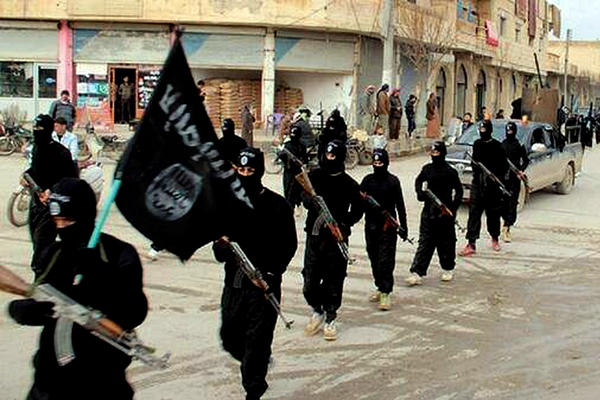
Over the last two weeks there has been considerable outrage over the gruesome execution of the American #JamesFoley by beheading allegedly by a jihadist from the UK, possibly London.  That someone nurtured on these shores should go to another country and commit such a crime horrifies people in this country and of course the USA.  The execution has added to the degree of urgency in the government and there are plans to bring in legislation to confiscate passports and monitor the movement back to this country of jihadists from ISIS areas of Iraq.

ISIS forces
ISIS forces

The barbaric and medieval nature of the crime has shocked many in the west.

In the last three weeks – between 4 and 22 August – 23 people in Saudi Arabia have been executed by beheadings. These executions take place in public and frequently, the bodies are left on public display as some kind of deterrent. Around 2000 have been executed in this fashion since 1985.  Around half are foreign nationals.

The executions follow trials where confessions are read out.  Many or even most of the confessions are extracted following torture.  Defendants often do not have legal representation and may not be able to follow the trials such as they are.  You will have to look long and hard to find much about these executions in western newspapers.

How are the two connected?

Saudi Arabia, along with Qatar, are in receipt of considerable quantities of arms from western countries including the UK.  David Cameron visited the country to promote trade and arms sales.  The Campaign Against the Arms Trade has found out that we exported £113 million of arms to Saudi in 2013.

With American support, both countries were arming the Syrian rebels of which the Islamic State is one.  So we support and provide arms to countries which are in turn supporting the Islamic State and which carry out barbaric executions in public.  Almost nothing is said about this and it receives very little coverage.

We need to be more balanced in our policies and attitudes to some of these despotic regimes.  If we are going to say nothing about barbaric behaviour because it might upset an arms deal to Saudi or Qatar, it is then inconsistent to start making speeches when no arms deals are in the offing.


#Gaza letter


We attach a letter published in the Guardian newspaper on 15th of August from survivors of the Holocaust.  It is an extremely moving letter, particularly bearing in mind the people who signed it.  It is unequivocal in its criticism of the violence by the IDF in GazaIt is worthy of a wider audience.

“As Jewish survivors and descendants of survivors and victims of the Nazi genocide, we unequivocally condemn the massacre of Palestinians in Gaza and the ongoing occupation and colonisation of historic Palestine.  We further condemn the United States for providing Israel with the funding to carry out the attack, and western states more generally for using their diplomatic muscle to protect Israel from condemnation.  Genocide begins with the silence of the world.

We are alarmed by the extreme, racist dehumanisation of Palestinians in Israeli society, which has reached fever-pitch.  Politicians and pundits in the Times of Israel and the Jerusalem Post have called openly for genocide of Palestinians and rightwing Israelis are adopting neo-Nazi insignia.

Furthermore, we are disgusted and outraged by Elie Wiesel’s abuse of our history in these pages (advertisement, 11 August; Report, 11 August) to promote blatant falsehoods used to justify the unjustifiable: Israel’s wholesale effort to destroy Gaza and the murder of nearly 2,000 Palestinians, including many hundreds of children.  Nothing can justify bombing UN shelters, homes, hospitals and universities. Nothing can justify depriving people of electricity and water.

We must raise our collective voices and use our collective power to bring about an end to all forms of racism, including the ongoing genocide of Palestinian people.  We call for an immediate end to the blockade of Gaza.  We call for the full economic, cultural and academic boycott of Israel. “Never again” must mean “Never again for anyone”. ”
Hajo Meyer survivor of Auschwitz; The Netherlands, Henri Wajnblum survivor and son of an Auschwitz victim from Lodz, Poland; Belgium, Norbert Hirschhorn refugee of Nazi genocide and grandson of three people who died in the Shoah; London, Suzanne Weiss survived in hiding in France, whose mother died in Auschwitz; Canada, Felicia and Moshe Langer survivors from Germany, Moshe survived five concentration camps, family members were exterminated; Germany, Michael Rice child survivor, son and grandson of survivor; United States and 30 Jewish survivors of the Nazi genocide and 260 children, grandchildren, great-grandchildren and other relatives of survivors
See full list at ijsn.net/gaza/survivors-and-descendants-letter/


Gaza


The world has been horrified by the films, reports and photographs coming out of since the latest violence started.  Amnesty teams – along with other organisations – have been in Gaza to assess the damage and have found evidence of war crimes by both sides in the conflict.  There have been serious violations by both parties but since the Israel Defence Force is the best equipped army and air force in the region by far, the damage and destruction has been predominantly on the Palestinian side.

Hamas continues to fire rockets into Israel but with the protection of Iron Dome, few have resulted in casualties.  The casualties on the Palestinian side have now passed 2000 (12 August, Sky News) with 67 Israeli deaths.  Many of the Palestinian casualties are women and children, killed in strikes on schools, mosques and hospitals.

Israel is able to carry on its attacks secure in the knowledge that it has, and continues to have, the support of the United States.  Indeed, the USA has continued to supply weapons to replace those lost in the latest fighting.  The United Kingdom supplied £6.3m in weapons to Israel last year.

It seems clear to most outside observers that whatever the provocation Israel has suffered, the scale of destruction in Gaza has been disproportionate.  This latest incursion follows hard on operation Cast Lead which also wrought terrible destruction in the territory.

Nor is the suffering imposed limited to the fighting but comes on top of the relentless expansion of settlements and the blockade of Gaza which has now lasted over seven years.  Gaza is in effect a prison surrounded by a stifling regime of checkpoints, barriers and walls.  They are not allowed to catch fish in the sea.  Inhabitants also have to endure power and water cuts for no apparent reason.

Protest in the south of France

Is there any hope in all this?  Surprisingly, there may be.  It will not come from the ceasefires and feeble political statements wishing peace while at the same time continuing to sell arms.  The key difference this time is that Israel is losing the propaganda war.  Such is the volume of evidence emerging from Gaza, the harrowing footage of injured children and pictures of the scale of destruction, that people around the world have been moved to protest (see picture).

British Ministers are forbidden to use the word ‘disproportionate’ in their various statements.  But the public can see that it is.  Nick Clegg described the attacks on schools as ‘outrageous’.  Israel is desperate to avoid its actions going to the International Criminal Court and will no doubt succeed with US help in so doing.

With Cast Lead, the Israelis were able to keep journalists out of Gaza so that very little was seen on our TV screens.  This time, with a range of devices, images are coming through loud and clear.  This is another example of the public seeing things for what they are and politicians being behind the curve.  Support for Israel is still strong in the United States certainly among Senators and Congressmen, but younger people are not so supportive.  This is likely to be the key difference this time.

Visit the South Region site of Amnesty

Amnesty International comments on Gaza

Stop arming Israel

July meeting minutes


The minutes of the July meeting are available, with thanks to Karen.  Remember all recent minutes are posted on the About us tab.

Blog at WordPress.com.

Up ↑