Death penalty report


March/April report now available

STOP PRESS

Since this item was posted we have received notification that Californian Dept. of Corrections and Rehabilitation has extended its written public comment period to 15 MayFull details can be found on another post.

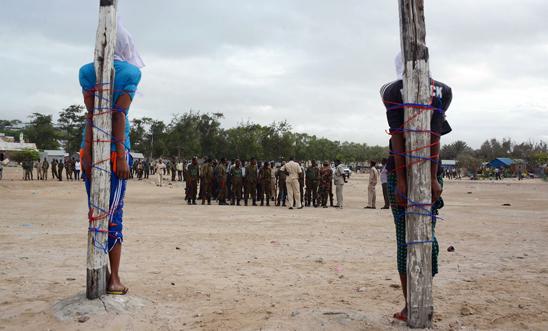
The death penalty report for March/April 2016 is now available thanks to group member Lesley for compiling it.  It has been a grim period with rises in executions in Iran and Pakistan and several executions in USA following dubious trials.  Iran is coming under increasing scrutiny worldwide for its practice of executing people who were juveniles at the time of their alleged offences.

China continues to lead the world with more executions than all other countries put together.

March – April report

No to the death penalty


Kenneth Fults executed


WE are sad to report that on 12th April, Kenneth Fults was executed by lethal injection in Georgia texas executionUSA.  The United States is the only country in the Americas which still has the death penalty.  The case revealed the usual catalogue of dubious legal practice that is so common in these cases: a black defendant poorly represented by lawyers one of whom was allegedly asleep during part of the proceedings; a plea bargain and a juror who made derogatory racial remarks about Fults.  Other factors are set out in a previous blog.

Amnesty International’s senior death penalty campaigner Jason Clark said:

Those troubling factors are typical of Georgia’s use of the death penalty.

Virtually every execution that’s happened in Georgia has been emblematic of problems with the death penalty.

He noted that the 28 executions in the U.S. last year were carried out by just six states.

In states like Georgia that are still carrying on a lot of executions, it’s because they’re not implementing issues of fairness.

Amnesty is opposed to the death penalty in all cases.

A sad day…

No to the death penalty


Nineteen years on death row in Georgia USA


Has now been executed (12th)

Neglect, racial prejudice and a sleeping lawyer leaves a man on death row.  Execution imminent
Kenneth Fults and son

In May 1997, Kenneth Fults pleaded guilty to the murder of Cathy Bounds – shot at her home on 30 January 1996. After a three-day sentencing hearing, the jury voted to sentence Kenneth to death.

Eight years later, one of the jurors from the sentencing signed a sworn statement admitting that he voted for the death penalty out of racial prejudice:

I don’t know if he ever killed anybody, but that n***** got just what should have happened. Once he pled guilty, I knew I would vote for the death penalty because that’s what the n***** deserved.

When evidence of racist motivation among the jury was raised at an appeal hearing, the state argued that it was too late to review the issue and Kenneth’s death sentence should stand.  After 19 excruciating years on death row, Kenneth’s execution is now imminent. He is due to be executed on 12 April 2016.

Lawyer asleep during court

Former jurors on the case have since signed affidavits saying that Kenneth’s trial lawyer made little effort to save his client from the death penalty, and shockingly was seen to be asleep during the proceedings.

Mr Fults’s lawyer… was uninterested in what was happening, and it seemed like something was wrong with him. I saw him fall asleep repeatedly during the trial, and he would wake up, startled, when it was his turn to examine witnesses. I saw him sleeping off and on throughout the whole trial.   Former juror on Kenneth Fult’s case

A childhood of neglect

The jury heard some mitigating evidence – that Kenneth was a man with a very low IQ who suffered from depression and an inability to always understand the consequences of his actions – but not they did not get the full story.  His lawyer, Mr Mostiler, failed to give any background on Kenneth’s childhood of neglect and abandonment – born to a 16-year-old mother who later became addicted to crack cocaine.

I don’t believe he had a fair trial. Mr Fults’s current lawyers have told me about how Mr Fults was neglected and abandoned as a child and that he is mentally retarded. Mostiler didn’t bring this up at trial and he should have, so that we would have known more about Mr Fults before we talked about whether to give him the death penalty.

Another former juror on Kenneth Fult’s case In 2006 – a clinical psychologist assessed Kenneth as having an intellectual disability – with a low IQ.  International law bans use of the death penalty on people with mental or intellectual disabilities.

What we’re calling for

We are completely opposed to the death penalty – in all cases, with no exception. The death penalty violates the right to life and is the ultimate cruel, inhuman and degrading punishment.  We’re asking the State of Georgia authorities to stop the execution of Kenneth Fults and for his death sentence to be commuted.

Send your own appeal

If you would like to write your own appeal, please send via fax or email to ensure it reaches the Chairman of the Board of Pardons and Paroles by 12 April 2016.

Contact details:

Terry Barnard
Chairman, Georgia Board of Pardons and Paroles
Fax: +1 404-651-6670
Email: laqsmith@pap.state.ga.us
Salutation: Dear Chairman Barnard

And please send copies to:

Governor Nathan Deal
Office of the Governor
Fax: +1 404-657-7332
Email: Complete the form at http://gov.georgia.gov/webform/contact-governor-international-form or http://gov.georgia.gov/webform/contact-governor-domestic-form

Execution in the USA

Last year saw a dramatic rise in executions globally, with the highest number recorded in more than 25 few years.  However, the Americas is becoming a virtually death penalty-free region.

The USA is the only country in the region to still execute – and consistently one of the world’s top five executioners, behind only Saudi Arabia, Pakistan, Iran and China.

Last year 28 people were executed in the USA and almost 3,000 people remained on death row.

Racial inequality

In June 2015, US Supreme Court Justice Stephen Breyer noted that multiple studies have concluded that ‘individuals accused of murdering white victims, as opposed to black or other minority victims, are more likely to receive the death penalty’ in the USA.

African-American defendants receive the death penalty at three times the rate of white defendants in cases where the victims are white, according to a 2007 study in Connecticut conducted by Yale University School of Law.

From initial charging decisions to plea bargaining to jury sentencing, African-Americans are treated more harshly when they are defendants, and their lives are accorded less value when they are victims.

An irrevocable punishment

It may be an obvious point, but once somebody has been executed – there is no going back. And the risk of ending the life of an innocent person can never be overcome.  Over the last 46 years, 150 prisoners sent to death row in the USA have later been exonerated due to evidence of wrongful convictions.  The key factors leading to wrongful conviction include inadequate legal representation, police misconduct, racial prejudice and suppression of mitigating evidence.

China executes more people than all countries put together but the figures are a state secret.


Follow us on Twitter and Facebook

UK government soft-pedalling over the death penalty


Amnesty sets out facts of government’s reluctance to press for an end to the death penalty in some countries

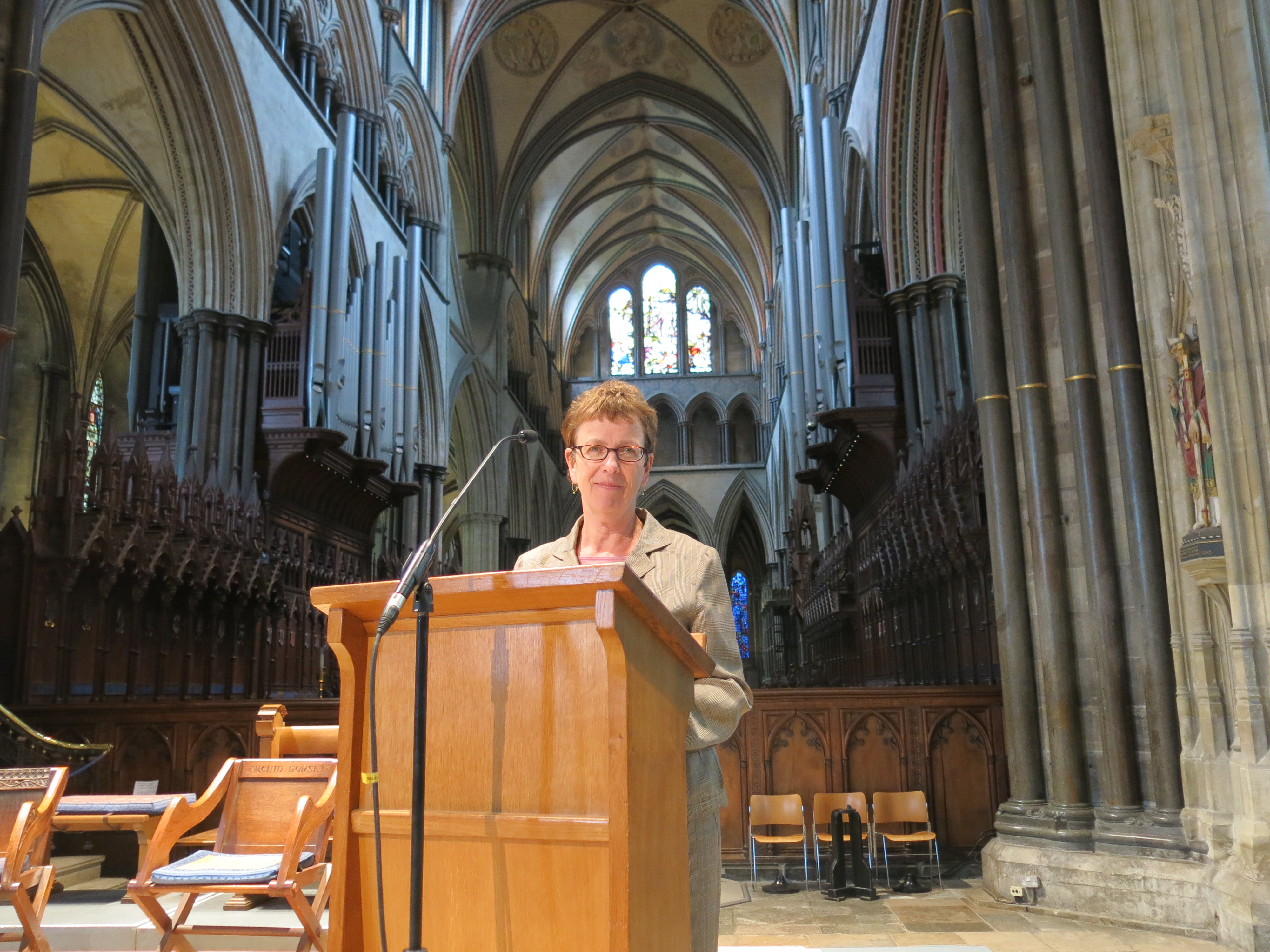
The Government has been accused of “soft-pedalling” over the death penalty and seeming to make trade more important than human rights.  The charge by Amnesty International UK’s director Kate Allen (pictured in Salisbury Cathedral last year) comes as the human rights organisation released figures showing that at least 1,634 people were executed in 2015, a rise of 54% on the year before.  Despite being the highest number Amnesty has recorded since 1989, this total does not include China, where thousands were likely to have been executed but where the death penalty is a state secret.

The figures – contained in the report Death Sentences and Executions in 2015 – show that the top five executioners in the world in 2015 were China, Iran, Pakistan, Saudi Arabia and the USA.

This “profoundly disturbing” surge in executions was largely fuelled by big increases in Iran, Pakistan and Saudi Arabia, Amnesty International reported.  Amnesty International’s fears have been raised just hours after MPs on the Commons Foreign Affairs Select Committee said there is “plainly a perception” the Government is prioritising trade and security with China, Saudi Arabia and Bahrain above human rights.

Ms Allen said:

Like the Foreign Affairs Committee yesterday, we’re worried that the Government has started soft-pedalling over foreign countries’ use of the death penalty, preferring to prioritise trade with countries like China, Saudi Arabia or Pakistan.

Until recently the UK’s policy of seeking global abolition of capital punishment had a clear focus and strategy.  Now the death penalty’s been thrown into the pot with other concerns and it’s much harder to tell whether the Government is prioritising this life-and-death matter.

If governments in Beijing, Tehran, Islamabad and Riyadh aren’t hearing about our outrage at executions after torture and unfair trials, then the executioners are going to think they’ve got a green light to carry on killing.

We want to see the Foreign Office publishing a clear strategy for its anti-death penalty work at the earliest opportunity.”

Amnesty International’s secretary general Salil Shetty said: “Iran, Pakistan and Saudi Arabia have all put people to death at unprecedented levels, often after grossly unfair trials.”

Last year, the Foreign and Commonweatth Office’s most senior civil servant made a frank admission to MPs that human rights “is not one of our top priorities” and that the “prosperity agenda is further up the list”.

Ministers deny the issue has been downgraded but a string of trade-focused, red carpet visits to the UK by the leaders of countries with some of the worst records of rights abuses has reinforced the perception of a shift of diplomatic emphasis.  Readers of this blog will know we have been following the twists and turns of this story for some months.  We wrote to our local MP Mr John Glen last year on Saudi Arabia and the rising toll of executions by beheading or crucifixion and we received a bland reply from the FCO minister Tobias Ellwood.  Since that time more evidence has emerged of policy changes designed it seems to scale down the human rights aspects.  We noted that when George Osborne visited China to the surprise of his hosts he failed to raise the question of human rights and executions at all.  Tobias Ellwood was reported by local media as congratulating the Saudis on the progress they were making with human rights.

Human rights minister Baroness Anelay said:

I am deeply troubled by the increase in the number of reported executions in 2015, which was driven by concerning increases in Pakistan, Iran and Saudi Arabia.

The UK opposes the death penalty in all circumstances and we make our opposition well known at the highest levels to countries which continue to apply it. Our message to them is clear, the death penalty is unjust, outdated and ineffective. It also risks fuelling extremism.

Despite these concerning figures there has been progress in many countries.  It is welcome that in 2015 Fiji, the Republic of Congo, Madagascar and Suriname all abolished the death penalty.

The Foreign Office will continue to use its diplomatic network to push for progress towards the global abolition of the death penalty.

Maya Foa, of Reprieve, described the rise in executions as “extremely troubling” adding: “It is all the more disturbing, therefore, to see what the Foreign Affairs Select Committee this week described as an ‘apparent deprioritisation’ of human rights by the UK government.

Now more than ever, Britain needs to be speaking out against the grave abuses – including mass trials, torture and death sentences handed down to juveniles and political protesters – being committed by its allies.

It is hard not to come to the conclusion that the primary aim of the government is trade and business with human rights coming a poor second if at all.  This overlooks the nature of ‘soft power’ and the fact that as a nation, we could be influential in humanising world affairs.  Instead, we chose to push out the red carpet for the most frightful regimes and, as the Panama papers are revealing, allow dubious individuals to buy up large parts of London using off shore tax havens.

Follow us on Twitter and Facebook

Death Penalty Report published


Dramatic rise in executions in 2015: the most in one year for a quarter of a century

To read the full report click here (pdf)


The past year has seen a horrific increase in executions around the world – the most we’ve recorded in a single year since 1989, and an increase of an astonishing 54% from the year before.

A few countries are executing prisoners by the hundreds, sometimes for crimes that aren’t serious, sometimes after trials and treatment that isn’t just or fair, and always violating the individual’s right to life and right to be free from torture.

From Australians Myuran Sukumaran and Andrew Chan shot by firing squad for drugs charges in Indonesia to Shafqat Hussein, hanged in Pakistan for a crime he confessed to after torture, aged just 14, over 1,634 individuals were put to death by state authorities last year.

Huge rise in executions

We recorded a huge increase in the death penalty, an increase of 54% compared with 2014. This is the largest number of state executions for a quarter of a century.

The number of countries that executed people rose – from 22 in 2014 to 25 in 2015. At least six countries resumed executions: Bangladesh, Chad, India, Indonesia, Oman and South Sudan.

Countries continued to flout other aspects of international law, putting to death people with mental or intellectual disabilities, as well as those charged with non-lethal crimes. Apart from drug-related offences, people were executed for crimes such as adultery, blasphemy, corruption, kidnapping and ‘questioning the leader’s policies’.

The death penalty is always a violation of human rights. We oppose it in every case.

The main executioners

A minority of countries are committing the majority of executions. 89% of executions in 2015 took place in just three countries: Iran, Pakistan and Saudi Arabia.

Iran

Iran continued to execute juvenile offenders like Shafqat – aged under 18 at the time of the alleged crime – in violation of international law. Authorities there sentencd juvenile offenders to death last year too.

Pakistan

Pakistan lifted its freeze on civilian executions in December 2014, and in the year that followed killed 326 people – the most we’ve ever recorded for that country in a single year.

An attack on a school in Peshawar prompted the government to start executing again, something it had not done since 2008. Initially, the freeze was lifted for those charged with terrorist-related offences, but in March 2015 the government resumed executions for all capital crimes, such as murder and blasphemy.

In a country where people are routinely denied the right to a fair trial, and evidence extracted through torture is used to seal convictions, hundreds of people are being sent to their deaths under the pretence of justice being served.

Saudi Arabia

Last year saw a huge surge in executions for an already prolific executioner. These figures don’t even include Saudi Arabia’s mass execution of 47 people at the start of this year.

The missing executioners

But these figures exclude China, where numbers remain a state secret, yet where we believe thousands of people are executed every year. We consider China to be the world’s top executioner, although the numbers are missing from this report.

We haven’t published figures for executions in China since 2008; we’re challenging the Chinese government to reveal their own figures and demonstrate that they really are limiting their use of the death penalty – something they have claimed to be doing since the country’s highest court began reviewing all death penalty cases back in 2007.

We also don’t publish figures for North Korea, a state shrouded in secrecy.

Execution sentences in 2015

At least 1,998 people were sentenced to death in 2015 and at least 20,292 prisoners remained on death row at the end of the year.

Some hope

Four countries abolished the death penalty for all crimes – the highest number to do so in the space of one year for almost a decade.

Madagascar, Fiji, Suriname and Congo all did away with the death penalty in the national laws once and for all.

Mongolia adopted a new Criminal Code outlawing the death penalty for all crimes in December which will enter fully into law in September 2016.

There is hope even in the USA, which continued to flout international law by executing people with mental disabilities.  Pennsylvania abolished the death penalty for all crimes in 2015 , bringing the total number of US states that have abolished the death penalty to 18.

We still hope for a world without the death penalty, and today half the world has abolished it for good. Add to this countries which have abolished this punishment in practice, as opposed to law, and the total comes to two-thirds of the world.

China: lawyer released


Prominent lawyer released from house arrest
Zhang Kai

We are pleased to announce that a lawyer who has been active in defending the attacks on churches, has been released although the reasons for his release are unknown.  It is good news however.  Many lawyers have been harassed or detained in China under the current crackdown.

Full details from the Amnesty factsheet:

Lawyer release


The Investigatory Powers Bill


Parliament debates security Bill

The Investigatory Powers Bill was debated in Parliament on 15 March in a lengthy second reading debate and there were many good quality contributions made by Members on all sides of the House.  Only days after the debate we had a terrible reminder of the terrorist threat with the attacks in Brussels on 22 March.  The need to maintain an intelligence system to find potential terrorists before they take action and to track them down afterwards was recognised by all the speakers in the debate.

There were several concerns about the Bill one of which was what Andy Burnham called the ‘point of balance’ between security and privacy (column 824).  This was occasioned by the concerns about mass surveillance and the desire to collect and store Internet Connection Records (ICR) for 12 months.  Dominic Grieve – although supportive of the Bill – said that it did not ‘include a clear statement on overarching privacy protections’ (836).

A similar point was made by the SNP MP Joanna Cherry who felt the Bill did not go far enough to ‘protect civil liberties’ (839).  The powers sought went beyond those of other western democracies and she worried that they set a dangerous precedent to Commonwealth countries in particular.

One concern in particular was the clause about economic well-being which could be used against trade unions (862).  In past eras, the security services had been found to use the powers and techniques they then had to frustrate trade union activity.

There was a lot of debate about the difference between ‘content’ data and ‘contact’ data (855).  Many say that the security services are mostly interested in the latter to help them track movements and contacts between criminals, they are less interested in the content which may be encrypted anyway.  David Davis pointed out that two law lords had expressed incredulity because the government had sanctioned illegal surveillance of discussions between a lawyer and his client (864).  This highlighted the issue of trust: that the Bill proposed that the sanctioning of interception would be by a minister and ultimately, can they be trusted?

To what extent are Ministers accountable?  One MP said that attempts to find out information are refused either because it is a criminal matter or, the information was a matter of national security.  Hence the argument was ‘misconceived’ (845).

One of the beliefs behind this activity is that bulk collection will help with finding intelligence.  Evidence from the USA concerning the activities of the NSA (American equivalent of GCHQ) was that the bulk collection of data had not led to the discovery of previously unknown terrorist plots or the disruption of a terrorist attack.  It was initially claimed that 50 such plots had been prevented but once they were examined in detail only one money laundering case was found.  In other words there is a lot of false claiming of success going on.

The notion that ‘the more privacy we sacrifice the more security we gain’ was challenged by more than one speaker (843).  This concept underpinned several speakers in favour of further intrusion citing cases of abducted children and paedophile activity in support of their case.

It was clear throughout the debate that members are struggling with the rapid increase in technology which is increasing the number of ways to communicate and the ability to store and sort vast amounts of data.  As the technology advances, so the issue of privacy and civil liberties comes into play because it is some much easier today to intrude into someone’s life.  The point was made that this intrusion can include digital cameras, games consoles and baby monitors (846).

A lack of clarity with some of the wording is a key issue.  The need for precision of language about what and how much can be intercepted was stressed (843).  Trust is an issue and it is important to remember that the debate may not have happened had it not been for the revelations by Edward Snowden.  We were blissfully ignorant of the sheer extent of the penetration of phones, emails and so forth and the relevant committee knew little of it either.

So the key issues appear to be the bulk collection of data and whether this is advisable or even achievable; the conflict between security and privacy and the control mechanisms to ensure that there is suitable oversight.  Linked to the latter is the issue of trust especially in the light of actions by previous governments for example intruding into Doreen Lawrence’s phone.

After the terrible events in Brussels, there will be an understandable desire for ‘something to be done’.  Had the debate taken place after that outrage then it might have taken on a different tone.  Politicians have to reflect the media and since much of our media is already ill-disposed towards the Human Rights Act, it is understandable that human rights and the free movement of people around Europe would be questioned.  It is more than ever necessary to keep a cool head.  Terrorism is about an attack on values and one of our key values is respect for individuals and the rule of law which includes basic rights enshrined in the HRA.

The Bill moves onto the committee stage and it will be interesting to see how the debate on control and oversight is played out.  Peter Curbishley


Follow us on Twitter and Facebook

Violence against women in North Korea


We reproduce a piece written by Fiona Bruce MP on the subject of violence against women and the denial of human rights in North Korea [DPRK]

As we mark International Women’s Day, I am minded to reflect upon the recent conference in the House of Commons hosted by the All-Party Parliamentary Group on North Korea, of which I am Co-Chair.  Titled Addressing Violence against Women and Girls in the Democratic People’s Republic of Korea, the conference looked to a forgotten corner of Asia and a forgotten group of people: North Korea’s women and girls.

Notorious for its diplomatic belligerence, its disregard for international law and its nuclear programme, the DPRK (or North Korea) successfully concealed its widespread human rights violations from the world for decades.  An era of silence ended in 2014 when a United Nations Commission of Inquiry reported:

The gravity, scale and nature of [North Korea’s human rights] violations reveal a State that does not have any parallel in the contemporary world.

The severity of this UN statement is worth repeating: North Korea’s human rights situation has no parallel in the contemporary world.

Violence against women

As the international community slowly awakened from its slumber, it was no longer farfetched to recognise North Korea as the largest concentration camp the world had ever known or to rank the horrors of Yodok, Hoeryong, and Pukch’ang alongside Auschwitz, Belsen, and Dachau.  It became a fact that North Korean women have and continue to experience sexual violence, including rape, sexual assault and harassment in public and private spheres of life; human trafficking; forced abortions; slavery; sexual exploitation; psychological violence; religious and gender discrimination; and institutional and economic violence.

This violence in North Korea is neither occasional nor confined to certain quarters — it is endemic; it is state sanctioned; and it is perpetrated against women precisely because they are women.  In every sense of the term, North Korea’s abuses are ‘gendered’.

Why has the international community been silent on this issue?  We can look to many factors, but first and foremost is the discourse that surrounds North Korea.  Dominated by talk of nuclear weapons, regional security, engagement, unification, and humanitarian aid, there has been little room for North Korean women.  And, if truth be told, advocates have simply not been loud enough on this issue.

This year’s International Women’s Day marks an important phase for women’s rights.  Just months after the twentieth anniversary of the Beijing Conference on Women, and fifteen years since the pioneering UN Security Council Resolution 1325 on Women, Peace and Security, this is the year that the world is developing the Agenda for Sustainable Development looking to 2030.  The Sustainable Development Goals include a stand-alone goal to achieve gender equality and empowerment for women and girls.

North Korea’s female population should not be forgotten on March 8th.  Gendered violence and discrimination are destroying lives and ruining families in North Korea.  Women are enduring unimaginable suffering and the UK must use what engagement it has with the DPRK to push for real change.  The APPG’s conference on VAWG in North Korea brought together North Korean victims, exiled DPRK Government officials and experts on gender and the rights of women and girls.  Women’s and girls’ human rights is an area in which the UK exhibits international leadership. Let us draw from our knowledge and set out to challenge gendered violence in the DPRK just as we do in so many other countries in the world.

Fiona Bruce, MP for Congleton, is Co-Chair of the APPG on North Korea jointly with Geoffrey Clifton-Brown MP and Lord Alton of Liverpool.


Follow us on Twitter and Facebook

Committee to look into Yemen arms sales


A back bench committee is to probe arms sales to Yemen

Readers of this blog, other human rights sites as well the Campaign Against the Arms Trade, will be familiar with the story of Yemen.  There is a war going on there and civilians are being killed.  Médécins sans Frontières facilities are being bombed.  The UK is busy supplying the Saudis with arms and British military personnel are present in the command centre.  £2.8bn of weapons have been supplied since the war began.

At long last the cross party committee on arms exports controls is to look into the matter.  We await their report with interest.

Follow us on Facebook

Group minutes


The minutes of the last meeting are here thanks to group member Lesley for writing them up.  We discussed North Korea and the forthcoming video planned with Clare Moody; the Death Penalty report which highlights the events in Saudi, Pakistan and elsewhere; plans for the Human Rights Act, forthcoming events such as the stall in the market, and social media statistics including the success of the post about the war in Yemen and our role in arming and supporting the carnage, and several other topics.  The next meeting is on 14 April.

March


We have just added a link to an organisation, based in the USA, which campaigns for human rights of those who work in sometimes appalling factories for a pittance to bring us cheap clothes.  Called The Institute for Global Labour (sic) and Human Rights, it came to light in an article on the German retailer Lidl and its latest offering of a pair of jeans called ‘jeggings’ for the princely sum of £5.99 ($8.62).  The article alleges that the factories that make them in Bangladesh do so by paying a pittance to their workforce.  Source: The Observer 13 March 16

It’s sometimes easy to forget that human rights can be infringed in clothing factories as well.

Follow us on Twitter

Blog at WordPress.com.

Up ↑