Saudi executions imminent


“Saudi Arabia’s use of the death penalty to silence dissent sends a chilling message to anybody who dares to speak out against the authorities.” James Lynch
The families of three young men arrested for their involvement in anti-government protests while under the age of 18, fear their sons are among four people reported to be facing execution tomorrow, Amnesty International said today.
The family of Ali al-Nimr expressed fears on social media that he, along with Dawood Hussein al-Marhoon and Abdullah Hasan al-Zaher, is among the prisoners referred to in a government-run newspaper article published today. The article said the scheduled executions will complete a wave of punishments for terrorism offences that saw 47 people executed on the same day in January.

See the full story:

Executions

Death penalty report


Attached is the death penalty report compiled with thanks by group member, Lesley.No to the death penalty

Death penalty report


Follow us on Twitter and Facebook


Violence against women: Latin America


Video highlighting violence against women in Latin America and the Caribbean

This is a must-see video produced in Venezuela by Amnesty which describes the range of attitudes and policies which need to change if violence against women is to cease.  No, it is not about women being beaten up but the wide range of policies concerning rape, reproductive rights and the treatment of ethnic groups which amount in some cases to torture and to the violation of human rights.  Only 2 minutes.

YouTube Video

Security and Policing Exhibition


Secretive Security and Policing Exhibition this week

This week, in Farnborough, the secretive Security and Policing Exhibition takes place behind closed doors.  On the face of it, the event, organised by the Home Office, is innocent enough.  It brings together firms providing security equipment with police and other security personnel who might have an interest in purchasing it.   The UK has a high-profile in this industry.

The first puzzle however, is why the taxpayer is funding this exhibition?  The current government is extremely keen on the private sector and in promoting free enterprise.  It has a distaste for the public sector and seeks every opportunity to outsource or privatise services previously provided by them.  So why, may one ask, is the Home Office organising and sponsoring this event?  Surely since these are profit-making enterprises – some hugely so – can they not organise their own event without subsidy from the taxpayer?

But the bigger concern is the use some of this equipment is put to and the customers being invited to the exhibition.  The list of countries include many well-known abusers of human rights and include Brunei; Indonesia, Saudi Arabia; Bahrain, Egypt, Israel and UAE.  The equipment being sold is likely to be used to violently and brutally repress individuals or groups of protestors who may be carrying out perfectly lawful demonstrations.  Once arrested, many will be tortured, mistreated and in some cases ‘disappeared.’  The UK will be complicit in this activity.

There is clearly some sensitivity around this exhibition – which as we’ve noted, is not open to the public – and its website says:

Established as one of the most important events in the security calendar, this unique event is aimed at police, law enforcement and offender management professionals who are tasked with security, civil protection and national resilience.
Security & Policing enables those with operational needs to meet companies with the relevant solutions. Exhibitors get the opportunity to display products that would be too sensitive to show in a more open environment. Visitors get to see the very latest products, services and technologies available – all within a secure environment. (emphasis added)

Reading some of the exhibitors’ websites is quite chilling with descriptions of real-time interception, harvesting millions of communications a minute and access to the ‘dark web.’  Clearly, if the public were to see some of the equipment it would be alarming so making the exhibition closed gets over that.

In addition to the Home Office, the Department for Business, Innovation and Skills will be attendance to show the delegates round and make them welcome.  John Glen MP is PPS to the Minister and will no doubt be taking part.  We look forward to his piece in the Salisbury Journal telling us about this.  UPDATE 17 March – no mention in the Salisbury Journal (17th March) so perhaps he didn’t attend.

We have previously commented on Britain’s role is supplying weapons and service personnel in various countries and in particular Yemen, where civilians and hospitals are being bombed using our equipment.  In addition to selling weapons, we sell repressive regimes the means to crack down on their citizens and we seem to be quite proud to do so as well.  Claims by the Prime Minister, other ministers and Mr Glen to be promoting human rights seem quite hollow in the light of these activities.


Follow us on Facebook and Twitter


The hidden war …


British involvement in the war in the Yemen

News programmes and newspapers generally are currently filled with arguments over Brexit, the American primaries, Syria and immigration.  Only occasionally does the war in Yemen and our involvement in it get a mention.  An exception was an interview by Frank Gardner [FG], the BBC’s Security correspondent, with Michael Fallon [MF] the Defence Secretary on Wednesday 2 March on the BBC’s Today programme.  It is worth reproducing most of it as it lays bare the thinness of the arguments deployed by Mr Fallon and also its inconsistencies.

Gardner introduces the piece by referring to the ‘unseen war’ which has waged for 5 years and the involvement by western powers in supplying the munitions to enable it to be carried on.  Indeed, Mr Cameron recently backed what he termed the ‘brilliant’ arms sales to Saudi Arabia only a matter of hours after the European Union voted to ban further supplies.  More arms firms are cashing in on the Yemen conflict and sales have surged to £2.8bn since the conflict began.

Michael Fallon said ‘British officers are offering training and advice to the Saudi armed forces, they are not involved in advising selection or the approval of targets in the war in Yemen.  On the contrary [they] are there to support the equipment we have supplied.’

FG: ‘You must be feeling a bit uneasy that some of that equipment, or the aircraft used to deliver it, is the Saudis have admitted, hitting hospitals and civilian targets?’

MF: We have some of the strictest arms control criteria in the world.  Before we supply equipment to anyone including obviously our key allies such as Saudi Arabia, we insist that they not only comply with international humanitarian law and the law of armed conflict …’ [interview ends]

FG said that he had spoken to a senior Saudi spokesman who denied that civilian targets were being bombed.  He then spoke to a Yemeni researcher about what ordinary Yemeni’s think of western, and in particular US and UK involvement, in this war.  She said that people on the ground are definitely aware of the involvement of the US and UK in the bombing.  What, asked Gardner, was the likely long-term effects of this?  She said:

The long-term effect is not only civilians dying and that the country is at a standstill, [but] what we are seeing is youth joining al-Qaeda in the Arabian peninsular and the Islamic State.

Gardner wound up by saying that the longer this war goes on without a result and the continued absence of the rule of law then the greater the risks that terrorist groups will profit from the chaos and build a ‘mini-state.’

Conclusions

There is no doubt that we are helping to fuel this conflict.  If our service personnel are there to ‘support the equipment we have supplied’ why was it all kept a secret until blurted out by a Saudi spokesman?  And what does ‘supporting equipment we have supplied’ mean anyway?  If weapons are being used to kill civilians does our ‘support’ make it better or worse?  The statement is meaningless.

But the big political error is to be involved at all and it could be laying the foundation stones of the next stage of ISIS’s development.  His statement that we have some of the ‘strictest arms control criteria in the world’ verges on the bizarre if the criteria are not being applied.

Our passion for arms sales has blinded politicians to the risks being run.  It’s all very well for the Prime Minister to be praising aircraft builders for their ‘brilliant’ achievements but if those planes are used to kill civilians, where does it take us?

In 2011, the then Foreign Secretary William Hague made a speech on human rights in which he said:

and how we are seen to uphold our values is a crucial component of our influence in the world.

He went on to say:

If change can be achieved peacefully in the Middle East it will be the biggest advance of democratic freedoms since the collapse of communism in Eastern Europe.  If it cannot, we are likely to see turmoil and unrest which sets hack the cause of democracy and human rights

It would seem these ideas have been forgotten.


Follow us on Twitter and Facebook

Our next meeting is on10 March at 7.30


Urgent action: Iran


Possible execution of someone a juvenile when offence committed

We enclose an urgent action concerning a man who was a juvenile when the alleged offence was committed.  If you are able to write this would be appreciated.

Urgent action (pdf)

twitter imageFollow us on Facebook and Twitter

Amnesty’s Annual Report


Amnesty publishes annual review of human rights around the world

Amnesty’s annual report contains elements which will be very familiar to readers of this blog.  Overall the picture is bleak.  The use of torture and other forms of ill-treatment is still used in 122 countries around the world many of which will have signed the UN convention against its use.

Countries are using the threat of terrorism to clamp down on free speech and to arrest those who disagree or oppose them.  A culture of impunity is developing where human rights infringements go unpunished and have no effects on trade or government dealings.

Grim reading.


Excellent debate on the HRA


A debate on the Human Rights Act was held in Southampton

UPDATE: 12 March

A fuller version of the talk is now to hand and can be accessed here:

soton talk (pdf)

On Friday 19 February, the Southampton and Romsey groups of Amnesty hosted a debate on the HRA.  The speakers were Dr Clare Lougarre of Southampton University and Dr Alan Whitehead, the MP for Southampton Test.  A representative from the Conservatives was invited but did not take up the invitation.

Clare began by placing the HRA in its context as a natural consequence of the Euroean Convention on Human Rights [1950].  In the context of the debate on the current government’s manifesto commitment to annul the HRA, articles 2, 3 and 4 were significant.

  • art 2 says that court’s decisions must take into account the decisions, declarations or advisory opinion of the European Court
  • art 3 UK laws are compatible with the European Convention
  • art 4 says that if our laws are not in accordance with the convention they may issue a declaration of incompatibility.

She said there were two options for the government: they repealed the act but we stayed within the convention or, it withdraws its signature from the convention altogether.  In the first case, there would be little difference as we would ultimately be bound by the European Court.  In the second instance however there would be no recourse to the EC and the most likely affected by this are the vulnerable in society.

Dr Whitehead said he was puzzled by what the government wanted to do.  The animus against the HRA was based on myth, semi-truths and half truths he said.  One myth was that it was ‘Labour’s Human Rights Act.’  This was a frequent phrase used by conservative critics.   It simply wasn’t true he said, it was a cross party bill supported by many conservatives.  He was moved to ask ‘what part of the act don’t you like?’  He reminded the audience that it was a conservative – Winston Churchill – who was one of the prime movers in creating the ECHR in 1950.

One of the charges against it was that the court had ruled on areas which were never intended by the original convention, in other words there was ‘mission creep.’  This was inevitable since the articles were widely drawn and also, attitudes had changed over time with, for example, our approach to abortion.

The case that is frequently brought up is Abu Qatada.  This was presented as a failing of the HRA.  It was not.  The Home Office had made mistakes in its original paperwork and the reason he could not be sent back [to Jordan] was because either he, or the witnesses, would be subject to torture.  [He might have added that abolition of torture was subject to another treaty altogether.]

A further point made by Dr Whitehead was that it should not be for a single government to make law on something as important as this.  He did not think we would see anything before the end of the parliament and what would emerge would be a ‘mouse’ of a bill.

It was a lively and informed debate and all credit to the two Amnesty groups for organising it.  For further information on the HRA go to (among other sites) British Institute for Human Rights and Rights Info.  Now that the movement to come out of the EU is getting underway, the HRA will be a whipping boy for those that want us to leave the union.  Both these sites help counter the frequent flow of misinformation by some sections of the media and some politicians.


twitter imageFollow us on Twitter and Facebook

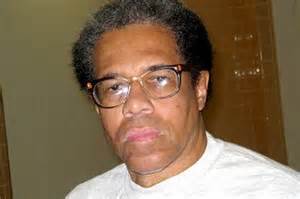
Albert Woodfox freed


Today, Louisiana prisoner Albert Woodfox walked free, 44 years after he was first put into solitary confinement.

[We are publishing this case from Amnesty USA.  The Salisbury group has campaigned on behalf of this man so we are delighted to see his release after all this time.]

albert woodfoxHe was the United States’ longest serving prisoner held in isolation. Nearly every day for more than half of his life, Albert Woodfox woke up in a cell the size of a parking space, surrounded by concrete and steel. Tomorrow morning, for the first time in more than four decades, he will be able to walk outside and look up into the sky. Over the course of nearly five years working on Albert Woodfox’s case at Amnesty, I heard many times that the odds were insurmountable. But I always knew that Albert Woodfox would go home. I have seen the incredible power of our movement when we work together. I have seen the courage humility, and determination of so many of you who have played big and small roles to help this historic human rights victory come to fruition. I have seen the unbelievable strength of the Angola 3: Robert King, Herman Wallace, and Albert Woodfox himself—all three of whom endured nightmares but persevered with humor, dignity, and resolve to wage a relentless fight against the cruel, inhuman and degrading practice of prolonged solitary confinement in the United States. With the knowledge of his release, Albert had this message for those who have helped him secure his freedom:

I want to thank my brother Michael for sticking with me all these years, and Robert King, who wrongly spent nearly 30 years in solitary. I could not have survived without their courageous support, along with the support of my dear friend Herman Wallace, who passed away in 2013. I also wish to thank the many members of the International Coalition to Free the Angola 3, Amnesty International, and the Roddick Foundation, all of whom supported me through this long struggle. Lastly, I thank William Sothern, Rob McDuff and my lawyers at Squire Patton Boggs and Sanford Heisler Kimpel for never giving up. Although I was looking forward to proving my innocence at a new trial, concerns about my health and my age have caused me to resolve this case now and obtain my release with this no-contest plea to lesser charges. I hope the events of today will bring closure to many.

I’m carrying those words with me today as we celebrate this victory. Today Albert Woodfox walks free—February 19, 2016, his 69th Birthday. In Solidarity, Jasmine Heiss Senior Campaigner, Individuals at Risk Program Amnesty International USA

February meeting minutes


The minutes of the meeting held on Thursday 11th February are available thanks to Lesley.

February (pdf)

twitter image Follow us on Twitter and Facebook


Blog at WordPress.com.

Up ↑