Glossip execution deferred


Oklahoma

glossipRichard Glossip’s execution has been deferred by two weeks only hours before he was due to killed.  This was an urgent action by Amnesty International and members of our group have written to the Oklahoma authorities.  You can read the full report in the New York Times here.

There is no physical evidence linking Glossip to the scene and a major part of the evidence is a plea bargain by Sneed who admitted to the murder but escaped execution by implicating Glossip.

No to the death penaltyAmnesty is opposed to the death penalty and this case reveals one of the reasons: flimsy evidence combined with a plea bargain means the likelihood of a wrongful conviction leading to a man’s death with no prospect of putting it right in future if fresh evidence appears.

The group is holding a vigil against the death penalty on 17 October in Salisbury starting at 12.45.  Further details here and on Twitter soon.

London Arms Fair


Will torture equipment be on display this week in London?

The London Arms fair, DSEI, opens on 15th September at the ExCel centre at which – in addition to the range of arms large and small – torture equipment has been displayed in past years.  No doubt drones will be on display which enable executions to be carried out from thousands of miles away.  The exhibition runs under conditions of great security and in the past, the comedian Mark Thomas was able to set up a fake stall and interest various passing visitors with his torture equipment.

Arms-Fair---share-assets-email-Sep-2015

The four day exhibition is supported by the government and is an exclusive expo of deadly weapons and arms with a history of companies advertising illegal torture equipment.  Britain has sold arms to 19 of the 23 countries listed by the UN for grave violations against children.

There is a kind of irony that two weeks ago the country was shaken by the death of Aylan Kurdi which prompted a volte face by our government and has seen Mr Cameron in the Lebanon visiting the camps.  The Chancellor, George Osborne spoke of the need to tackle the refugee crisis at source yet we host an event which supplies deadly equipment to countries like Saudi Arabia; Turkmenistan; Pakistan; Libya and Colombia where respect for human rights is almost non-existent.

We want to see the government to stop illegal torture equipment being advertised in the UK.

Poster by Amnesty International

Eritrea


Why Eritrea?

In all the discussion about the relative merits of refugees from the various war-torn parts of the world, the Syrians are presently claiming most attention.  We all understand how dreadful their plight is, and so too those fleeing wars in Iraq, Afghanistan, Libya and the Sudan.  But Eritrea?  Eritrea is not actually at war with anyone (well, it’s in a face-off with Ethiopia, but wouldn’t dare to take on its bigger neighbor in a full-scale war), and the regime is in total control of the country.  So why the desperation of people to escape to Europe?  Indeed the British government has changed its view of the country in recent months to say that it is safe for asylum seekers to be returned home. The Home Office said:

its guidance on Eritrea is based on a careful and objective assessment of the situation in Eritrea using evidence taken from a range of sources including media outlets; local, national and international organisations, including human rights organisations; and information from the Foreign and Commonwealth Office.

However they have relied largely on a Danish report, the authors of which have disowned for its misinterpretation, and Eritrean government sources, rather than the reports of human rights groups.

The UK’s position is totally confused, as they are supposedly taking account also of a recent UN report, which would also give a somewhat different picture.  The report, by the UN Commission of Inquiry on Human Rights in Eritrea, cites a raft of human rights violations – some, it says, which may constitute crimes against humanity – of a ‘scope and scale seldom witnessed elsewhere’. The report strongly urges continued international protection for Eritrean refugees fleeing human rights violations, and warns against sending them back to danger in a country that punishes anyone who tries to leave without permission

President Aferworki
President Afeworki

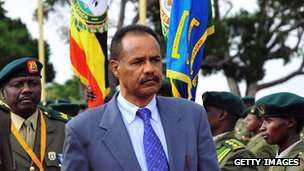
Following its independence in 1991, the country has lapsed into a total disregard for the rule of law.  Elections have been regularly postponed – President Isaias Afeworki has never faced the electorate – arbitrary detention is rife; torture is so common that the Commission concluded that it was government policy, and mass surveillance and neighbourhood spying is the norm.  Justice is arbitrary, detention conditions are appalling, and complete disappearance not unusual.  So far, so typical dictatorship but in Eritrea it is egregiously appalling.

The speciality of the state is that, under the pretext of defending the integrity of the State and ensuring national self-sufficiency, much of the population is subjected to open-ended national service, either in the army or through the civil service.  When they turn 18 or even before, all Eritreans are conscripted.  While national service is supposed to last 18 months, in reality conscripts end up serving for an indefinite period, up to 20 years in extreme cases.  Thousands of conscripts are subjected to forced labour that effectively abuses, exploits and enslaves them for years.  Women conscripts are at extreme risk of sexual violence during national service.

Many others – detainees, students, members of the militia – are also subjected to forced labour.  The report says

The use of forced labour is so prevalent in Eritrea that all sectors of the economy rely on it and all Eritreans are likely to be subject to it at one point in their lives.  The commission concludes that forced labour in this context is a practice similar to slavery in its effects and, as such, is prohibited under international human rights law.

The Eritrean Foreign Ministry inevitably claimed the Commission’s report contained ‘wild allegations’ which were ‘totally unfounded and devoid of all merit’ and charged the UNHRC of ‘vile slanders and false accusations’, without addressing any of the issues.  The British government have since modified their stance based on Eritrean assertions that military service will be limited to 18 months to 4 years, which would render it legal, but there is no evidence of this happening.

These widespread abuses have prompted thousands of Eritreans to flee their home country in search of asylum in Europe.  According to the latest estimates produced by Italian authorities, 32,000 Eritreans were rescued in 2014 as they attempted to traverse the Mediterranean – the majority of all migrants rescued by Italy’s comprehensive Mare Nostrum operation.  Meanwhile, the UN refugee agency has placed the number of Eritreans under its concern outside the country at more than 357,400.

This is the country we are intending to return refugees to as being “safe”.  The Government needs to think again.

Group has Tumblr page


We now have a tumblr site which can be found at salisburyai.tumblr.com.  There isn’t much there at present but give it time …

September minutes


The minutes of the September meeting are now available thanks to Lesley.  We discussed North Korea, the death penalty (see separate post on this), the forthcoming vigil on 17 October and agreeing to write to John Glen concerning his failure to reply to our letter of 5 August.

September minutes

#Deathpenalty report for September now available


No to the death penaltyThe death penalty report for September is now available thanks to Lesley for compiling it.  Links to other blog posts and in particular the continuing correspondence with John Glen MP concerning the government’s policy change on the death penalty.

Death penalty report, September

Report on possible reductions in the use of the death penalty by India and China.  This is to be welcomed although we cannot verify the situation in the latter country because the numbers executed are a state secret.

Rights Group asks #government to release legal advice following #drone attack in #Syria


UPDATE 17 September

Government declines to release the evidence.  Echoes of Iraq?

The rights organisation Rights Watch UK has begun legal action onA Reaper drone the government to release the advice of the Attorney General following the drone strike which killed a jihadi in Syria.  The killing was announced by David Cameron in parliament on 8 September.  The killing took place in Syria with which we are not at war.

This is a story the true facts of which are likely to unfold over the coming months.  Questions have been asked about the legality and how real the threat to the people of Britain was to justify an execution by drone attack.

Rights Watch is in the list of links at the bottom of this site.  Amnesty International post.

Urgent Action: #Oklahoma #USA #deathpenalty


No to the death penaltyWe attach an urgent action on behalf of a man called Glossip (52) who is due to be executed on 16th of this month.  The case against him is circumstantial and seems quite flimsy.  He has been on death row since 1998 – around 17 years.  If you can find time to write or email, that would be appreciated.  Full details are here: Case file (pdf)

There is also a web site the accuracy of which we cannot warrant:

Richard Glossip

See also USA death penalty site with further information and a petition  [You will find it on their Facebook page and there is a wealth of statistical information on the site as well.  There is a permanent link to the site at the bottom of this site]

Richard Glossip

#FCO #armssales and #humanrights


UPDATE: 8 September

Letter in today’s Guardian (8 September):

The government would do much better to raid the export credit guarantee scheme [rather than the overseas aid budget] and other subsidies to the arms trade. This would raise funds for refugee provision and reduce arms sales to Middle Eastern states, impacting directly on the latter’s ability to wage war on their and other populations in the region.

Benjamin Selwyn, Director, Centre for Global Political Economy, University of Sussex

Saudi Arabia

Last month, we wrote to John Glen MP asking that his government take a more robust line with the Saudi Arabian government in view of the large increase in executions and floggings, many of which are carried out in public.  We noted that the French president Francois Holland had spoken publicly against the practice despite large arms sales in the offing.  The British government has said it prefers to lobby in private and to pursue a policy of quiet diplomacy.  By contrast, the Swedish government has ended arms exports to the country.  As policies go, it is one which is conspicuous by its failure to achieve anything at all and in other contexts would be declared ‘not fit for purpose’.

No to the death penaltyA recently published report by Amnesty shows that Saudi Arabia is one the top three world executioners after China (which executes thousands but the statistics are a state secret) and Iran.  Between January 1985 and June 2015, 2,208 were put to death.  102 have been executed in the first 6 months of 2015.  Crimes include ‘witchcraft,’ ‘sorcery’ and ‘apostasy’.   In some cases relatives are often not notified of the execution.

The FCO’s July in-year update on Saudi says:

We remain concerned about the continued use of the death penalty in Saudi Arabia, including the fact that trials and executions do not meet the minimum standards which the EU advocates in countries where the death penalty is applied. We regularly raise the issue with the Saudi authorities, bilaterally and through the EU, and will continue to do so. There has been a significant rise in the number of executions this year. While no official figures are published, according to statistics reported by NGOs over 100 people have been executed since 1 January. NGOs report that the majority of executions were for murder and drug-related offences

In response to our letter to Mr Glen, we received a letter from a FCO minister, Mr Tobias Ellwood, which assured us that the Foreign Office was doing all it could to end the practice and that ‘the abolition of the death penalty is a human rights priority for the UK’.  The HMG Strategy for Abolition of the Death Penalty (2010 – 2015) states:

Promoting human rights and democracy is a priority for the UK.  It is a long standing policy of the UK to oppose the death penalty in all circumstances as a matter of principle (p2)

Within days of receiving this letter however, we discovered that it is no longer an explicit FCO policy.  The new policy has dropped any reference to abolishing the death penalty.  We also noted that Private Eye had a piece on the very same Mr Ellwood who had been a guest of the Saudi Government on a £6,000 fact-finding visit sponsored by a defence forum.

It’s hard not to come to the conclusion that defence sales matter far more than the dreadful human rights situation in countries like Saudi Arabia which – apart from public floggings and beheadings – tortures its citizens and has severe restrictions on the lives of its women.  Saudi Arabia is the leading destination for UK arms sales amounting to £1.6bn in 2014.

Nicholas Gilby of the Campaign Against the Arms Trade (CAAT) reported on the high level of corruption in this industry:

This paper examines the Government’s approach to corruption within the UK arms industry and shows it has very dirty hands …

… civil servants told to ‘look the other way’ and not ask awkward questions.

Chemring, which has one of its factories just outside Salisbury, had sales to Saudi Arabia of £47.8m last year and £97.6m in 2013 (source: annual report).

UK governments have invested a lot into the arms trade.  Support includes marketing support via DESO (Defence Exports Services Organisation); export credit guarantees; around £26m in R&D costs and something called ‘launch customer support’ which is buying weapons from a UK supplier even though overseas suppliers are cheaper.  There are also missions by ministers and members of the Royal family to foreign countries like Saudi.

Could it be that the Foreign Office was embarrassed by such an explicit policy in the face of a rising tide of executions in countries such as Saudi Arabia; Pakistan and India, all countries where arms sales are important?

Successive governments have claimed a devotion to human rights and a commitment to end the death penalty.  The reality it seems is that arms sales trump this commitment and in dropping the express statement of policy, the FCO is at least being honest.

Following the change of wording by the FCO which seemed to be in contradiction to the assurances given to us by the minister and Mr Glen, we wrote again asking why the policy had changed.  We await a reply…

CAAT report

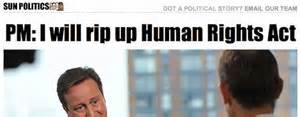
Scrapping the Human Rights Act HRA


The government is proposing to issue a public consultation on scrapping the Human Rights Act sometime in the autumn.

abolish hra

Blog at WordPress.com.

Up ↑