Violence against women in North Korea


We reproduce a piece written by Fiona Bruce MP on the subject of violence against women and the denial of human rights in North Korea [DPRK]

As we mark International Women’s Day, I am minded to reflect upon the recent conference in the House of Commons hosted by the All-Party Parliamentary Group on North Korea, of which I am Co-Chair.  Titled Addressing Violence against Women and Girls in the Democratic People’s Republic of Korea, the conference looked to a forgotten corner of Asia and a forgotten group of people: North Korea’s women and girls.

Notorious for its diplomatic belligerence, its disregard for international law and its nuclear programme, the DPRK (or North Korea) successfully concealed its widespread human rights violations from the world for decades.  An era of silence ended in 2014 when a United Nations Commission of Inquiry reported:

The gravity, scale and nature of [North Korea’s human rights] violations reveal a State that does not have any parallel in the contemporary world.

The severity of this UN statement is worth repeating: North Korea’s human rights situation has no parallel in the contemporary world.

Violence against women

As the international community slowly awakened from its slumber, it was no longer farfetched to recognise North Korea as the largest concentration camp the world had ever known or to rank the horrors of Yodok, Hoeryong, and Pukch’ang alongside Auschwitz, Belsen, and Dachau.  It became a fact that North Korean women have and continue to experience sexual violence, including rape, sexual assault and harassment in public and private spheres of life; human trafficking; forced abortions; slavery; sexual exploitation; psychological violence; religious and gender discrimination; and institutional and economic violence.

This violence in North Korea is neither occasional nor confined to certain quarters — it is endemic; it is state sanctioned; and it is perpetrated against women precisely because they are women.  In every sense of the term, North Korea’s abuses are ‘gendered’.

Why has the international community been silent on this issue?  We can look to many factors, but first and foremost is the discourse that surrounds North Korea.  Dominated by talk of nuclear weapons, regional security, engagement, unification, and humanitarian aid, there has been little room for North Korean women.  And, if truth be told, advocates have simply not been loud enough on this issue.

This year’s International Women’s Day marks an important phase for women’s rights.  Just months after the twentieth anniversary of the Beijing Conference on Women, and fifteen years since the pioneering UN Security Council Resolution 1325 on Women, Peace and Security, this is the year that the world is developing the Agenda for Sustainable Development looking to 2030.  The Sustainable Development Goals include a stand-alone goal to achieve gender equality and empowerment for women and girls.

North Korea’s female population should not be forgotten on March 8th.  Gendered violence and discrimination are destroying lives and ruining families in North Korea.  Women are enduring unimaginable suffering and the UK must use what engagement it has with the DPRK to push for real change.  The APPG’s conference on VAWG in North Korea brought together North Korean victims, exiled DPRK Government officials and experts on gender and the rights of women and girls.  Women’s and girls’ human rights is an area in which the UK exhibits international leadership. Let us draw from our knowledge and set out to challenge gendered violence in the DPRK just as we do in so many other countries in the world.

Fiona Bruce, MP for Congleton, is Co-Chair of the APPG on North Korea jointly with Geoffrey Clifton-Brown MP and Lord Alton of Liverpool.


Follow us on Twitter and Facebook

Committee to look into Yemen arms sales


A back bench committee is to probe arms sales to Yemen

Readers of this blog, other human rights sites as well the Campaign Against the Arms Trade, will be familiar with the story of Yemen.  There is a war going on there and civilians are being killed.  Médécins sans Frontières facilities are being bombed.  The UK is busy supplying the Saudis with arms and British military personnel are present in the command centre.  £2.8bn of weapons have been supplied since the war began.

At long last the cross party committee on arms exports controls is to look into the matter.  We await their report with interest.

Follow us on Facebook

Group minutes


The minutes of the last meeting are here thanks to group member Lesley for writing them up.  We discussed North Korea and the forthcoming video planned with Clare Moody; the Death Penalty report which highlights the events in Saudi, Pakistan and elsewhere; plans for the Human Rights Act, forthcoming events such as the stall in the market, and social media statistics including the success of the post about the war in Yemen and our role in arming and supporting the carnage, and several other topics.  The next meeting is on 14 April.

March


We have just added a link to an organisation, based in the USA, which campaigns for human rights of those who work in sometimes appalling factories for a pittance to bring us cheap clothes.  Called The Institute for Global Labour (sic) and Human Rights, it came to light in an article on the German retailer Lidl and its latest offering of a pair of jeans called ‘jeggings’ for the princely sum of £5.99 ($8.62).  The article alleges that the factories that make them in Bangladesh do so by paying a pittance to their workforce.  Source: The Observer 13 March 16

It’s sometimes easy to forget that human rights can be infringed in clothing factories as well.

Follow us on Twitter

Saudi executions imminent


“Saudi Arabia’s use of the death penalty to silence dissent sends a chilling message to anybody who dares to speak out against the authorities.” James Lynch
The families of three young men arrested for their involvement in anti-government protests while under the age of 18, fear their sons are among four people reported to be facing execution tomorrow, Amnesty International said today.
The family of Ali al-Nimr expressed fears on social media that he, along with Dawood Hussein al-Marhoon and Abdullah Hasan al-Zaher, is among the prisoners referred to in a government-run newspaper article published today. The article said the scheduled executions will complete a wave of punishments for terrorism offences that saw 47 people executed on the same day in January.

See the full story:

Executions

Death penalty report


Attached is the death penalty report compiled with thanks by group member, Lesley.No to the death penalty

Death penalty report


Follow us on Twitter and Facebook


Violence against women: Latin America


Video highlighting violence against women in Latin America and the Caribbean

This is a must-see video produced in Venezuela by Amnesty which describes the range of attitudes and policies which need to change if violence against women is to cease.  No, it is not about women being beaten up but the wide range of policies concerning rape, reproductive rights and the treatment of ethnic groups which amount in some cases to torture and to the violation of human rights.  Only 2 minutes.

YouTube Video

Amnesty’s Annual Report


Amnesty publishes annual review of human rights around the world

Amnesty’s annual report contains elements which will be very familiar to readers of this blog.  Overall the picture is bleak.  The use of torture and other forms of ill-treatment is still used in 122 countries around the world many of which will have signed the UN convention against its use.

Countries are using the threat of terrorism to clamp down on free speech and to arrest those who disagree or oppose them.  A culture of impunity is developing where human rights infringements go unpunished and have no effects on trade or government dealings.

Grim reading.


Excellent debate on the HRA


A debate on the Human Rights Act was held in Southampton

UPDATE: 12 March

A fuller version of the talk is now to hand and can be accessed here:

soton talk (pdf)

On Friday 19 February, the Southampton and Romsey groups of Amnesty hosted a debate on the HRA.  The speakers were Dr Clare Lougarre of Southampton University and Dr Alan Whitehead, the MP for Southampton Test.  A representative from the Conservatives was invited but did not take up the invitation.

Clare began by placing the HRA in its context as a natural consequence of the Euroean Convention on Human Rights [1950].  In the context of the debate on the current government’s manifesto commitment to annul the HRA, articles 2, 3 and 4 were significant.

  • art 2 says that court’s decisions must take into account the decisions, declarations or advisory opinion of the European Court
  • art 3 UK laws are compatible with the European Convention
  • art 4 says that if our laws are not in accordance with the convention they may issue a declaration of incompatibility.

She said there were two options for the government: they repealed the act but we stayed within the convention or, it withdraws its signature from the convention altogether.  In the first case, there would be little difference as we would ultimately be bound by the European Court.  In the second instance however there would be no recourse to the EC and the most likely affected by this are the vulnerable in society.

Dr Whitehead said he was puzzled by what the government wanted to do.  The animus against the HRA was based on myth, semi-truths and half truths he said.  One myth was that it was ‘Labour’s Human Rights Act.’  This was a frequent phrase used by conservative critics.   It simply wasn’t true he said, it was a cross party bill supported by many conservatives.  He was moved to ask ‘what part of the act don’t you like?’  He reminded the audience that it was a conservative – Winston Churchill – who was one of the prime movers in creating the ECHR in 1950.

One of the charges against it was that the court had ruled on areas which were never intended by the original convention, in other words there was ‘mission creep.’  This was inevitable since the articles were widely drawn and also, attitudes had changed over time with, for example, our approach to abortion.

The case that is frequently brought up is Abu Qatada.  This was presented as a failing of the HRA.  It was not.  The Home Office had made mistakes in its original paperwork and the reason he could not be sent back [to Jordan] was because either he, or the witnesses, would be subject to torture.  [He might have added that abolition of torture was subject to another treaty altogether.]

A further point made by Dr Whitehead was that it should not be for a single government to make law on something as important as this.  He did not think we would see anything before the end of the parliament and what would emerge would be a ‘mouse’ of a bill.

It was a lively and informed debate and all credit to the two Amnesty groups for organising it.  For further information on the HRA go to (among other sites) British Institute for Human Rights and Rights Info.  Now that the movement to come out of the EU is getting underway, the HRA will be a whipping boy for those that want us to leave the union.  Both these sites help counter the frequent flow of misinformation by some sections of the media and some politicians.


twitter imageFollow us on Twitter and Facebook

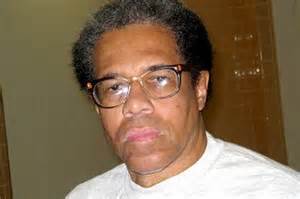
Albert Woodfox freed


Today, Louisiana prisoner Albert Woodfox walked free, 44 years after he was first put into solitary confinement.

[We are publishing this case from Amnesty USA.  The Salisbury group has campaigned on behalf of this man so we are delighted to see his release after all this time.]

albert woodfoxHe was the United States’ longest serving prisoner held in isolation. Nearly every day for more than half of his life, Albert Woodfox woke up in a cell the size of a parking space, surrounded by concrete and steel. Tomorrow morning, for the first time in more than four decades, he will be able to walk outside and look up into the sky. Over the course of nearly five years working on Albert Woodfox’s case at Amnesty, I heard many times that the odds were insurmountable. But I always knew that Albert Woodfox would go home. I have seen the incredible power of our movement when we work together. I have seen the courage humility, and determination of so many of you who have played big and small roles to help this historic human rights victory come to fruition. I have seen the unbelievable strength of the Angola 3: Robert King, Herman Wallace, and Albert Woodfox himself—all three of whom endured nightmares but persevered with humor, dignity, and resolve to wage a relentless fight against the cruel, inhuman and degrading practice of prolonged solitary confinement in the United States. With the knowledge of his release, Albert had this message for those who have helped him secure his freedom:

I want to thank my brother Michael for sticking with me all these years, and Robert King, who wrongly spent nearly 30 years in solitary. I could not have survived without their courageous support, along with the support of my dear friend Herman Wallace, who passed away in 2013. I also wish to thank the many members of the International Coalition to Free the Angola 3, Amnesty International, and the Roddick Foundation, all of whom supported me through this long struggle. Lastly, I thank William Sothern, Rob McDuff and my lawyers at Squire Patton Boggs and Sanford Heisler Kimpel for never giving up. Although I was looking forward to proving my innocence at a new trial, concerns about my health and my age have caused me to resolve this case now and obtain my release with this no-contest plea to lesser charges. I hope the events of today will bring closure to many.

I’m carrying those words with me today as we celebrate this victory. Today Albert Woodfox walks free—February 19, 2016, his 69th Birthday. In Solidarity, Jasmine Heiss Senior Campaigner, Individuals at Risk Program Amnesty International USA

February meeting minutes


The minutes of the meeting held on Thursday 11th February are available thanks to Lesley.

February (pdf)

twitter image Follow us on Twitter and Facebook


Blog at WordPress.com.

Up ↑