Foreign Office drops reference to the abolition of the death penalty


In a previous post (20 July) we reported on the correspondence we had with Mr Glen MP concerning the government’s policy towards Saudi Arabia.  This was prompted by the increasing number of executions and public floggings taking place in that country.  Both are at high levels and are greater than the previous year.  We noted that the president of France had made public statements condemning this practice.  We might also have noted that Sweden has suspended arms sales to Saudi Arabia.

Mr Glen forwarded a letter from a FCO minister Mr Tobias Ellwood saying that these matters were raised with the Saudi authorities and that it was a ‘human rights priority for the UK government’.  Because it was part of Sharia law they did not anticipate change in the near future however.

There the matter might have rested.  But on 3 August it was reported widely in the press that the FCO has dropped any explicit reference to the abolition of the death penalty.  In response to the cuts, they are relabelling its six global thematic priorities of which the abolition of the death penalty world wide was one.  There are now to be three, relating to human rights; democratic values and the rule of law. Reference to the death penalty has gone. The ‘human rights countries of priority’ is to be replaced with the more anodyne ‘human rights priority countries’.

We noted at the end of the last blog that the reason for the lack of open criticism by the government was almost certainly connected with arms sales to Saudi.

Then, in the current issue of Private Eye (6 August No 1397) they report that Tobias Ellwood had accepted Saudi hospitality to a attend a £6,000 a head fact-finding visit organised by the arms industry lobby group UK Defence Forum.   This took place in 2013 when there were bribery allegations concerning Saudi defence deals and the defence giant EADS.  The Private Eye  piece was in connection with Mr Tobias’s complaint at having to ‘watch the pennies’ on his MP and ministerial salary.

So in just over a week after sending us the letter, the FCO seems to have downgraded its policy on the death penalty.  This is deeply disappointing and it seems strange that Mr. Ellwood appeared unaware that the policy was to change only days after sending his reply to us.  We shall be raising these matters with Mr. Glen.

Robust reponse to Saudi Arabia rejected by FCO


UPDATE: 3 August

At the end of this blog we wrote ‘it seems therefore that nothing will change’.  How wrong can you be as it has just been announced that the FCO will no longer be specifically campaigning for the abolition of the death penalty.  The FCO message to us was dated 6 July and Mr Glen’s covering letter dated 14 July.  So in the space of a few weeks abolishing the death penalty world wide has gone from ‘a human rights priority for the UK’ to being no longer a policy.  The group plans to write to Mr Glen again to seek clarification.


July 2015

No to the death penalty

The Salisbury Group wrote to the local MP, Mr John Glen to ask for a more robust response by our government to the barbaric activities of the Saudi government in particular the increasing number of executions which are taking place.  In our letter we said:

[we are writing] to you in connection with the increasing level of executions currently taking place in Saudi Arabia.  (Over the course of the first five months of this year, the number of executions has equalled that of the whole of 2014).

You will no doubt be aware that on his recent visit to the country, President Francois Hollande made a public statement to the effect that all executions, not just those of his own nationals, should be banned, and called for the abolition of the death penalty in Saudi Arabia.

M. Hollande was prepared to do this, despite the fact that France – as does the United Kingdom – has significant financial interests in the its dealings with Saudi Arabia. The British government, however, has never seen fit to raise the issue in public, preferring to pursue a policy of ‘quiet diplomacy’.  This policy has manifestly had no effect.  Numbers continue to rise, and the Saudi Government have now advertised for eight additional executioners – ‘no particular skills required.’

As a group, we are asking that your government should take a much more robust line over the issue with the Saudi government.

Whereas the government – including the Prime Minister – has been vocal in its criticisms of the Islamic State for its appalling behaviour and of Russia for its activities in Ukraine, they seem strangely silent when it comes to Saudi Arabia.  This contrasts with France which has openly criticised them and Sweden which has decided no longer to sell them arms.

Mr Glen replied, enclosing a letter from the FCO minister, and said:

“I enclose correspondence from the FCO minister Tobius Ellwood in reply to your recent letter about the UK’s apparent reticence when it comes to condemning the use of the death penalty in Saudi Arabia.

“As you can see, the approach taken by the government is not in any way indicative of an equivocal view on this practice, which is as barbaric as it is ineffective.

“However, the government recognises that its abolition is not a matter of mere legal reform but would require a seismic societal shift.  It has therefore taken an approach which it feels is most constructive – engaging behind the scenes rather than inflaming the situation and triggering a backlash through outspoken public critique”.

The letter from the Foreign and Colonial Office is as follows:

“[…] The abolition of the death penalty is a human rights priority for the UK.  The UK opposes the death penalty around the world because we believe it undermines human dignity and there is no evidence that it works as a deterrent.

“Saudi Arabia remains a country of concern on human rights, because of its use of the death penalty as well as the restricted access to justice, women’s rights, and the restrictions of the freedom of expression, freedom of assembly and freedom of religion or belief.

“Ministers, our Ambassador, and the Embassy team in Riyadh frequently raise the issue of the death penalty with the Saudi authorities, bilaterally and through the European Union.  As it is part of Sharia Law, we must recognise that total abolition of the death penalty is unlikely in Saudi Arabia in the near future.  For now, our focus is on the introduction of EU minimum standards for the death penalty as a first step, and supporting access to justice and the rule of law.

“The British Government’s position on human rights is a matter of public record.  We regularly make our views well known including the UN Universal Periodic Review process and the Foreign and Colonial Office’s  annual Human Rights and Democracy Report.  We also raise our human rights concerns with Saudi Arabian authorities at the highest level.  But we have to recognise that the human rights situation in Saudi Arabia reflects widely held conservative social values and that our human rights concerns are best raised in private rather than in public”.

It seems therefore that nothing will change.  It is important to recognise that behind the scenes lobbying can be constructive.  However, the policy of raising matters ‘in private rather than in public’ does not appear to be working.  Successive governments have courted the regime and Saudis are free to invest in London and elsewhere in the UK.

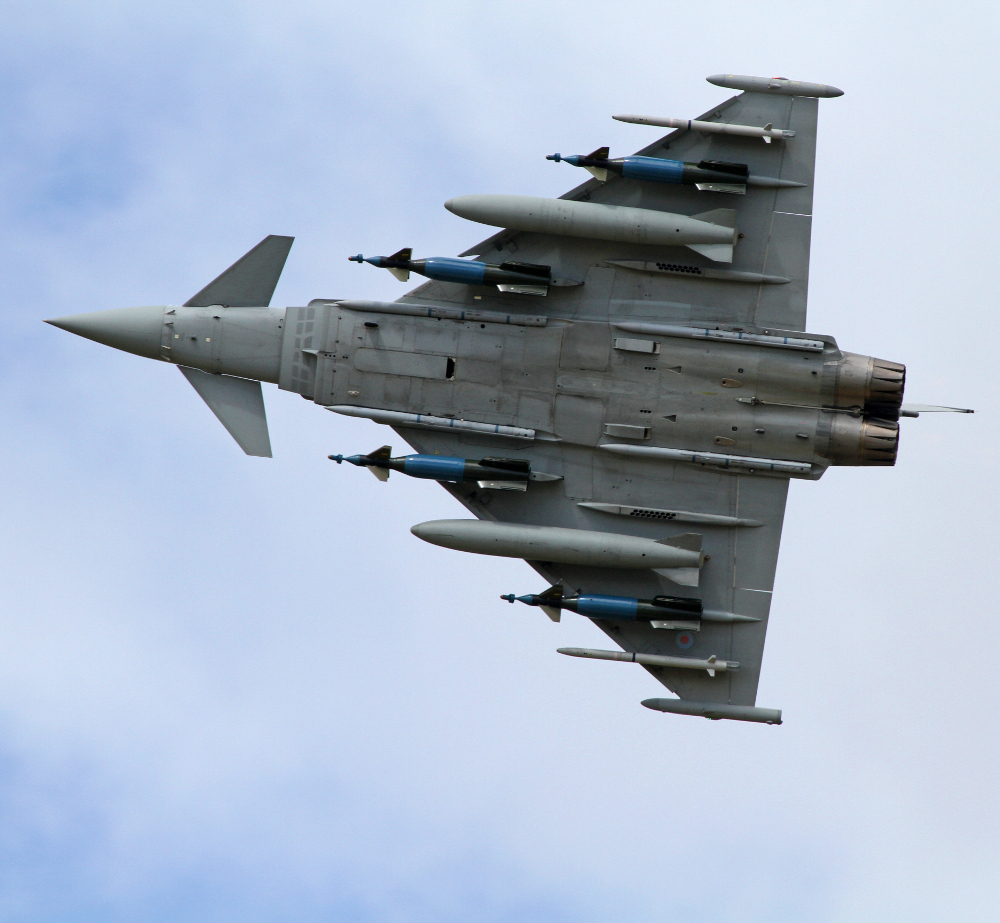
Eurofighter of the type sold to Saudi Arabia

It would be naïve not to recognise the reality behind this reluctance to criticise the Saudis and the importance to the government of the sale of arms and the supply of oil.  Saudi Arabia is a key market for the UK and much effort is put into promoting sales including by members of the royal family – see the Guardian article:  Human rights are of secondary concern.

As long as these interests are paramount, it is difficult to see how the toll of executions can be checked in the near future.


French President in #Saudi Arabia calls for death penalty ban


On a visit to Saudi Arabia, the French President #FrancoisHollande, called for a ban in the use of the death penalty AFP reports.  This is significant because Saudi is in the top three countries in the world to use the penalty often carried out in public.  It is also significant because it was done reasonably publicly.  Our own UK government is shy of making public statements about the barbaric activities in Saudi and the reason is likely to be trade and in particular weapons sales which are huge.  France is equally a big supplier of weapons and yet feels able to speak out.

Human rights issues are not confined to the use of the death penalty.  Torture is routine.  Many are arrested arbitrarily and No to the death penaltyheld incommunicado for months and in some cases years.  There is no free press and there are many, many restrictions on women who are not able to travel unaccompanied or to drive for example.

The issue of what goes on in Saudi exploded earlier this year surrounding the case of Raif Badawi who was to receive 1000 lashes and fined a million Riyalls for the crime of insulting Islam.  Thousand lashes is effectively a death sentence.  Following an international outcry after the first 50 lashes – given in front of a cheering crowd – the sentence was suspended, reportedly on medical grounds, and he languishes in prison.

The second event that caused an outcry was the wish to lower our flags to half-mast following the death of King Abdullah.  This caused widespread concern – revulsion even – and put our government in a spot.  The Independent newspaper in the UK reported a meeting David Cameron, the Prime Minister, had with some young people who questioned him about this.  He is reported to have said:

We have a long-standing relationship between the Kingdom of Saudi Arabia and our United Kingdom here, a relationship between our two monarchs and between our governments.  We don’t agree with a lot of things that the Saudi do – we don’t agree with the way they treat people for instance criminals – and we make it very clear [what] those differences [are].  Independent February 2015

Interesting the use of the phrase ‘the way they treat criminals’ here implying that the justice regime is too harsh on them and moreover, is just limited to criminals.  Since torture is routine, arrests are arbitrary, people are not allowed access to lawyers, and people are flogged and executed publicly, it does seem a bit limp .

The close relationship with the royal families is also a sensitive one.  Prince Charles went to the funeral of King Abdullah and the issue of the sentence on Badawi was a live one.  Amnesty International said in a statement in February:

From the various briefings from the Palace this week, we’re cautiously optimistic the Prince Charles would raise Mr Badawi’s outrageous case.’ 

saudi floggingThat was three months ago and no doubt the optimism was real.  However, Mr Badawi is still in prison even though he hasn’t been flogged since.  The contrast between the French President’s statement and our own government’s statements – or lack of them – is marked.  When ISIS carried out beheadings, our politicians were falling over themselves in outrage.  So far this year Saudi has executed 78 people in comparison with 87 in the whole of 2014.

Arms sales destabilise many parts of the world


The arms trade is deadly corrupt business.  It supports conflict and human rights abusing regimes while squandering vital resources.  It does this with the full support of governments around the world.’  Campaign Against the Arms Trade [see link at the bottom of the home page]

A fuss broke out today in the UK election campaign about who said what and who did what concerning the invasion of Libya.  The argument is that by attacking Libya and not sorting out a stable regime after the fall of Gadhafi, we laid the foundations for the thousands of refugees who attempt to reach Italy from its shores.

Not for the first time in this election, the arguments seems to swirl around everything other than the real one.  We have commented before in the role arms have to play in the Middle East and elsewhere.  Figures from Janes reveal that the trade is now worth $64bn up from $54bn in 2013.  Total Global military expenditure is said to worth around $1,776bn (SIPRI).

UPDATE: May 2015.  Transparency International has produced a new anti-corruption index for defence companies.  Local companies like Chemring and QinetiQ feature in it.

Articles about the defence industry tend to discuss sales of helicopters, aircraft, ships, tanks and the like – that is big items of military hardware.  While these weapons can be deadly, in fact most people suffer from the sale of small arms.  It is guns and grenades that are the biggest killers of ordinary people.

The plain fact is that the biggest sellers of arms are 1. USA, 2. Russian Federation; 3. France; 4. UK; 5. Germany (2014).  The first four are permanent members of the UN security council.  The arms trade supplies the arms which fuels the many wars and conflicts in the Middle East and elsewhere.  When thousands are displaced from these wars and attempt to flee to somewhere where they can lead a peaceful life, we then refuse to deal with the problem.  There is a kind of disconnect between the causes of these conflicts and the inevitable results.  We get excited and argue over images of laden vessels in the Mediterranean, and we get upset when one capsizes and hundreds die, but we do not seem to get at all upset over the role of arms companies, dealers and brokers who provide the means for the conflict in the first place.

#Saudi executions


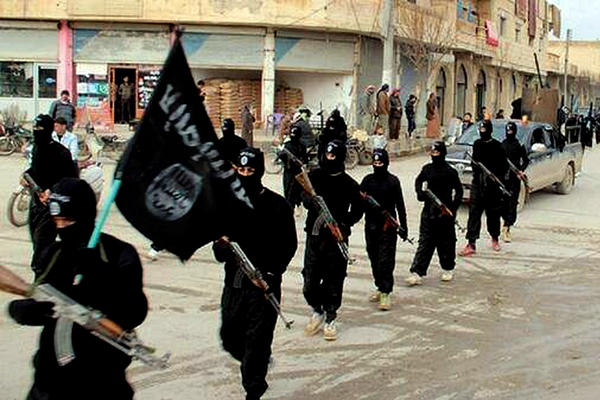
Over the last two weeks there has been considerable outrage over the gruesome execution of the American #JamesFoley by beheading allegedly by a jihadist from the UK, possibly London.  That someone nurtured on these shores should go to another country and commit such a crime horrifies people in this country and of course the USA.  The execution has added to the degree of urgency in the government and there are plans to bring in legislation to confiscate passports and monitor the movement back to this country of jihadists from ISIS areas of Iraq.

ISIS forces
ISIS forces

The barbaric and medieval nature of the crime has shocked many in the west.

In the last three weeks – between 4 and 22 August – 23 people in Saudi Arabia have been executed by beheadings. These executions take place in public and frequently, the bodies are left on public display as some kind of deterrent. Around 2000 have been executed in this fashion since 1985.  Around half are foreign nationals.

The executions follow trials where confessions are read out.  Many or even most of the confessions are extracted following torture.  Defendants often do not have legal representation and may not be able to follow the trials such as they are.  You will have to look long and hard to find much about these executions in western newspapers.

How are the two connected?

Saudi Arabia, along with Qatar, are in receipt of considerable quantities of arms from western countries including the UK.  David Cameron visited the country to promote trade and arms sales.  The Campaign Against the Arms Trade #CATT has found out that we exported £113 million of arms to Saudi in 2013.

With American support, both countries were arming the Syrian rebels of which the Islamic State is one.  So we support and provide arms to countries which are in turn supporting the Islamic State and which carry out barbaric executions in public.  Almost nothing is said about this and it receives very little coverage.

We need to be more balanced in our policies and attitudes to some of these despotic regimes.  If we are going to say nothing about barbaric behaviour because it might upset an arms deal to Saudi or Qatar, it is then inconsistent to start making speeches when no arms deals are in the offing.


Blog at WordPress.com.

Up ↑