Controversial UK Immigration Policies: Public Reaction


Public reactions to immigration not straighforward

November 2025

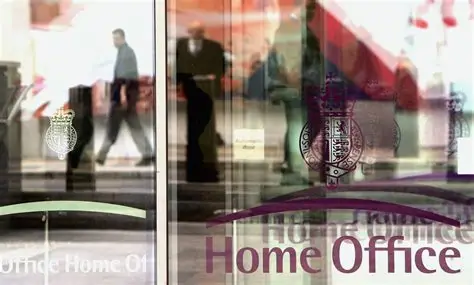
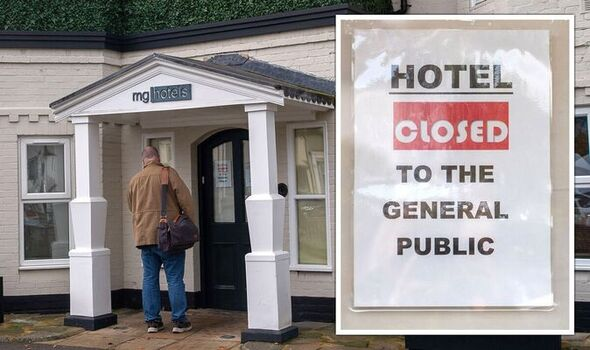
The main news topic in the UK this month has been accommodation for asylum seekers, and the public reaction to the Government’s move to place claimants in military establishments following the furore over the use of hotels. Although such sites are expensive to run, the Home Office’s view is that ”quelling public disquiet was worth any extra cost.” Current plans include places for 900 claimants near Inverness, and 600 at Crowborough, East Sussex. Needless to say protests are already taking place. The Home Affairs Select Committee has expressed disapproval of the plans as unsuitable and requiring vast expenditure making the sites liveable. Figures for the numbers in hotel accommodation have fallen from 50,000 in June 20203 to 31,000 in June 2025.

A YouGov poll in 2022 revealed that the British public were split on whether or not immigration was good

for the country 29% for, 29% against. By 2025 the equivalent figures were 20% and 43%, and three quarters of responders thought immigration too high. The change in view has been put down to “imagined immigration”, whereby the population has acquired an incorrect understanding of the reality. For example, 47% of respondents believe that there is more illegal than legal immigration (small boat arrivals are actually 4% of the total).

The Government’s decision to end the family reunion process continues to cause concern. It has been suggested that this was an idea taken up from Denmark’s current hardline policy on immigration, and that the Home Secretary is minded to follow more Danish policies, such as allowing in only claimants who are known targets of their home government. The Home Secretary’s plan for a “major shake-up of the immigration and asylum system later this month” will probably take account of other aspects of the Danish system, possibly including its policy of “parallel societies” (removing people from integrated areas to encourage homogeneous neighbourhoods in a two-tier system: catch Iain Watson’s Radio 4 programme “Immigration: the Danish Way” for the story.) [limited time].

In Parliament, the Border Safety, Asylum and Immigration Bill is still in the Lords, where Lord Dubs has an amendment to counter the removal of family reunion by allowing the entry of children lost on the way to this country. This may pass.

Another controversial area of  policy has been Afghanistan, where people who worked for the previous government are being refused asylum as the Home Office claims they are not vulnerable to the Taliban. The organisation Asylos has a paper that has a different view, based on information from on the ground.

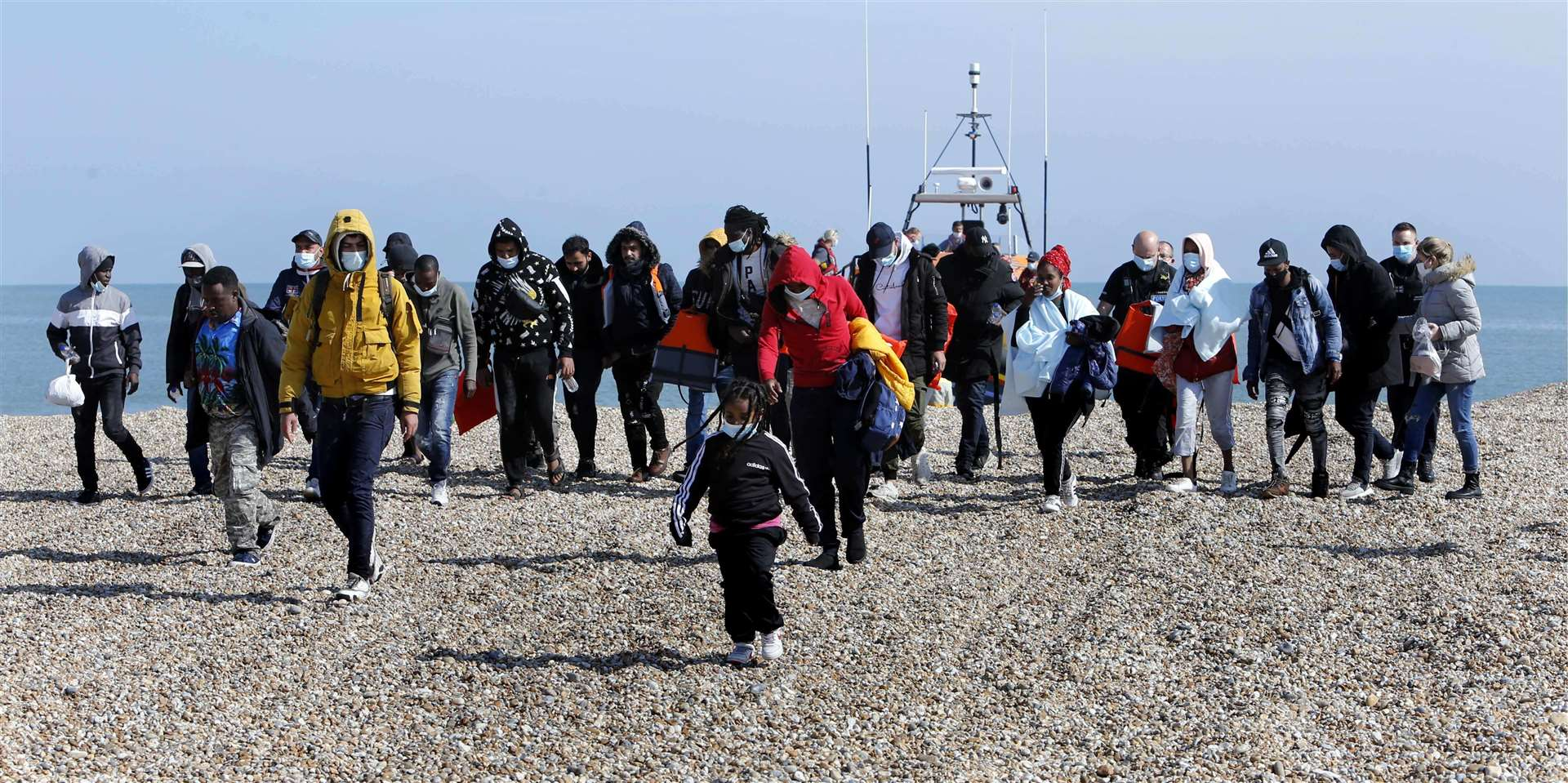
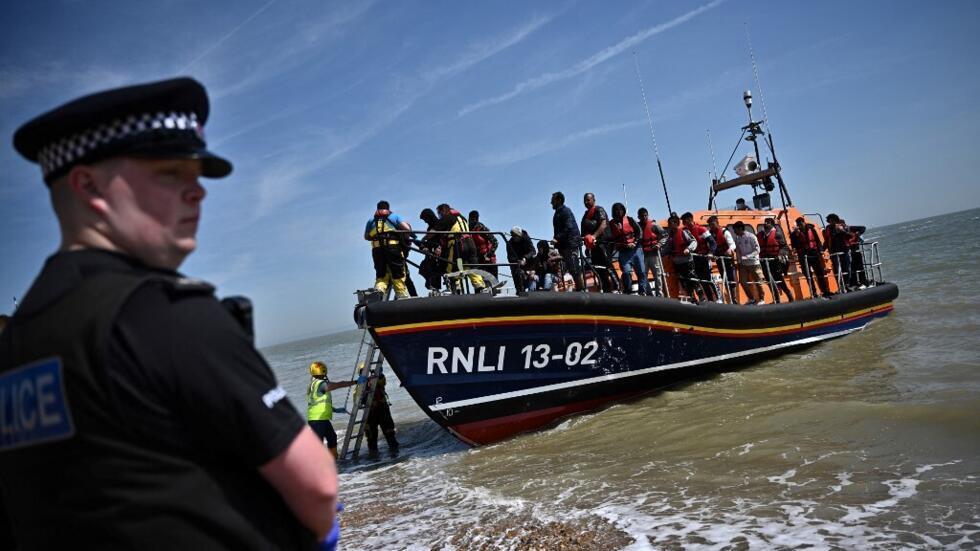
On the small boats front, there were 14 consecutive days in late October/early November when no boats crossed the Channel, since when a 1200 arrivals came in two days with better weather. The “one-in, one-out” arrangement with France continues in existence as a pilot scheme, but no assessment has yet been offered.

An interesting view of the prospects for migration comes from Britain in a Changing Europe’s James Bowes, who thinks that migration levels to the UK will fall dramatically. Most of this will be among legal migrants being denied visas, but lower numbers from Ukraine and Hong Kong will also have an effect; total net migration, he predicts, will fall to 70-170,000 in 2026 (the figure was 431,000 in 2024).

The journal Border Criminologies has noted that European governments have been using migrants’ mobile phone data to criminalise them rather than doing proper assessments. This story may get bigger.

There are numerous ongoing campaigns around. Next year’s Refugee Week (15th – 21st June) has as its theme “Courage”; Safe Passage are running a campaign against the family reunion policy under the title “Together Not Torn” “and Refugee Action are encouraging fundraising activities in the pre-Christmas period. Details can be found at https://www.refugee-action.org.uk/campaigns/

AH

Impact of ECHR on Asylum Seekers in 2025


Immigration and asylum seekers still making waves in UK.

October 2025

This month has been dominated by arguments around the European Convention on Human Rights and the rights of protesters to express their views. Neither of these are directly about refugees, but do have a bearing on the treatment of asylum seekers and dealing with the effects of conflicts. Boat crossings and asylum seekers do feature in the desire to leave the ECHR however.

The government has taken two more actions affecting migrants: making the “leave to remain” decision more difficult by extending the time taken to achieve it, adding more requirements, and blocking family reunions which would previously have been regarded as acceptable. Nando Sigona commented that this “allows policymakers to set shifting and arbitrary standards of belonging.”

One of the areas of complaint by the government has been the “last-minute” stay on deportation of unsuccessful claimants. It has now become clear that this is not gaming the system but the result of the short time available for appeals to be made against the Home Office’s “notice of intent” and the lack of emergency legal aid.

Still in the UK, the “one in, one out” agreement with France has started, but obviously the numbers involved are pretty small. Nevertheless, some commentators, such as Sunder Katwala of British Future take a positive view. At present, the scheme aims to return about 50 people a week; were it to be expanded tenfold, it would make returns “more likely than not”, and at 20 times, “it could operationalise a returns guarantee”. This would effectively destroy the business model of small-boats traffickers, says Katwala. “If you got to the point where there was a guarantee that the irregular route, where you paid a trafficker, wasn’t going to work, and there was a legal scheme to apply to as well, then you would see a three-quarters drop [in numbers arriving by boat].” Eventually, “you could actually eliminate it entirely”. British Future’s polling suggests an intake of 50,000 refugees a year would be supported by 48% of Britons, and opposed by just 18%.

Katwala notes that the US did actually get on top of immigration at the Mexican border in the final year of Joe Biden’s presidency, with a similar “routes and returns” approach by closing off illegal routes to immigration and creating legal ones. The numbers crossing the US border were far greater than those crossing the Channel – 2 million a year – and Biden’s approach reduced them by 77% between December 2023 and August 2024, an achievement that was barely reported at the time.

Also domestically, the government is still planning to phase out hotel accommodation for claimants and is

looking at redundant sites (mostly military) away from inhabited areas – the chief problem is that most of these require major repair work before being acceptable. Also noteworthy is the rumour that the imminent budget will take money away from spending in this area to reduce the deficit. Finally, back to the ECHR; the Supreme Court has taken to using the concept of “margin of appreciation” (in the ECHR but not the HRA) which is a bias towards accepting government cases rather than those of the lawyers – this will likely loom large.

Immigrant numbers falling in Europe

In Europe as a whole, the number of migrants has fallen sharply this year, according to Frontex. In 2025 so far, 112,000 have arrived in the continent, 21% down on last year. Similarly, the number of asylum claims is down by 23% to around 400,000 in the first half of the year. One of the main reasons for this is the EU’s policy of paying “transition countries” to cooperate by not allowing potential migrants through. These countries are chiefly Tunisia and Libya. There have been reports of Libyan security staff throwing people off boats into the sea (Libya is, of course, in the midst of civil war so is not likely to be particularly fastidious).

Frontex say that the number of arrivals by the western route through Algeria have, however, gone up. France and Spain have overtaken Germany as the most favoured final destination – the largest group of national arrivals have been from Venezuela, using Spain as a destination for language reasons. Ursula Van der Leyen has noted that only 20% of those with rejected claims have actually left Europe, and this will be on the agenda for the introduction next year of the new migration pact that has been said to “harden border procedures and envisages accelerated deportation.” Talks are continuing especially about the financial aspects. Interestingly, Hungary is being fined 1 million Euros a day for breeching its responsibilities towards asylum seekers – the government is unmoved.

Fergal Keane at the BBC has been touring the border areas and observed that in Greece, Poland and Latvia migrants were being physically pushed back across the border. The hazardous nature of the whole scenario is reflected in the fact that, over the last 10 years 32,000 migrants have died en route.

For the record, the number of arrivals on small boats this year so far is 34,000, up 36% on the same period last year. The weather is probably the main factor.

Compulsory reading!: The truth about the small-boats crisis – New Statesman.

AH

Nigel Farage and immigration


The leader of the Reform party sets out his policy for handling immigrants and asylum seekers

August 2025

Nigel Farage made a speech yesterday (26th) setting out his ideas for handling the rising numbers of immigrants and asylum seekers many of whom arrived in boats across the Channel. Often termed ‘illegal’ immigrants although it is not illegal to come via this method if asylum is claimed. The whole issue of asylum seekers, boat crossings and hotels has become headline news in recent months and there have been protests outside some of them most notably in Epping. A case started today (26 August) concerning an Ethiopian man alleged to have sexually assaulted a 14 year old girl and this has added to the widespread sense of outrage.

Mr Farage in his speech promised to fix the problem in quick order if he became prime minister. His speech has made headlines because of his poll lead which if maintained, could conceivably mean he will be a prime minister after the next election. Some polls show a 15 point lead over Labour. He promised to launch ‘Operation Restoring Justice‘ which would involve leaving the European Convention on Human Rights (joining Russia and Belarus), repealing the Human Rights Act and disapplying the Refugee Convention. This is to enable the UK to detain every migrant arriving illegally. Countries will be persuaded by a mixture of ‘carrot and stick’ to take them back. These will include countries with poor human rights records such as Iran, Afghanistan and Sudan where the risk of torture or death is extremely likely. The detentions will include women and children he made clear. They ‘will never be allowed to stay’ he said.

Critical issues arose in the press conference and included the cost and where they will be housed while deportations are arranged. He was not able to answer these questions. By amending or abolishing the legislations and coming out of the ECHR etc, it will frustrate the ability of lawyers to prevent deportations largely because the majority do have asylum claims which are legitimate. Over the coming days, other criticisms will appear. For example, existing English law, upon which the ECHR was largely founded after the war, provides protections despite membership of the Convention. Will foreign countries be willing to accept the large numbers involved?

Human rights

The concern here though is the desire to rid us of the ECHR and to repeal the Human Rights Act. This has popped up as a policy in several Conservative manifestos but has never actually come to pass. Local MP Danny Kruger is an advocate of this policy. Mr Farage’s ideas gained favourable coverage in some of the newspapers with the Daily Mail saying in a headline ‘Finally a politician who gets it’ [26 August, accessed 27 August]. His indifference to those he proposes returning to countries where torture is routine was particularly noteworthy. It is interesting however, looking at the comments from readers many of which were not supportive of his comments despite the uncritical nature of the article. The extent to which Mr Farage and Reform are making the waves was clear from the responses from the two main parties. Kemi Badenoch complaining that Reform had stolen their policies and a No 10 statement merely saying that Labour could not rule out leaving the ECHR. There was strong condemnation from the Liberal Democrats.

Mr Farage couched his speech in terms of a public mood of ‘total despair and rising anger’. It is disappointing to note the feeble and pusillanimous nature of the responses in particular from No 10. Britain was in the lead in promoting a new world order after the war following the Atlantic Conference. The ECHR was based a lot on British principles of justice. We would join only Russia and Belarus if we left – neither country a ringing endorsement of rights and human dignity. It is also disappointing to see newspapers like the Daily Mail, the Daily Express and the Daily Telegraph (How Farage would kick 600,000 migrants out of Britain) seemingly to endorse Mr Farage with little sign of critical analysis. The Telegraph even had a story headed ‘We’re ready to work with Farage on migration says Taliban‘. The human rights situation in Afghanistan is abysmal.

How have we come to a situation where prejudice and a lack of critical reporting about the almost unworkable and hugely expensive proposals put forward by Reform are treated in this way? Instead of a robust response and clear statements of how to tackle problems, the two main parties seem to be falling over themselves to ape Reform policies. Partly it is because they confuse some newspaper reporting as reflective of the wider public’s feelings about immigration which are a lot less black and white. It may also be a reflection of years of negative articles by some newspapers about human rights – and by extension the Human Rights Act – claiming it is a criminal’s charter. It is perhaps not surprising that part of Mr Farage’s speech was about the HRA and he spoke of ‘removing the tools from our judiciary’ to prevent successful asylum claims.

A point he referred to several times was around ‘whose side are you on?’ This was in answer to a question from the BBC concerning the risk of returnees being tortured. His answer was ‘are you on the side of the safety of our women and children on our streets, or on the side of outdated treaties backed up by dubious courts’. Another quote was defending our borders and keeping our people safe. There is no evidence of women and children rendered unsafe on our streets disproportionately by immigrants (illegal or otherwise). The torture question was asked more than once.

The tone of the presentation was that immigrants are a threat to our society. That women and girls are unsafe despite the fact that many asylum seekers and others are in secured accommodation. By extension, many of our problems would be removed in short order if he became prime minister. The HRA and other laws and treaties are part of the problem he claims.

Reflections

Mr Farage, despite being a member of a party with only 4 MPs, is able to command a big audience from a speech and to be the lead item on many news channels.

He enjoys wide and largely uncritical support in chunks of the media.

Mr Farage himself (!) noted an interesting point, namely most of the press questions were about process. There was little of a moral or principled point of view.

A large part of his speech was based on dubious claims and unsubstantiated facts. There are problems surrounding immigration and he is correct that both parties have been ham-fisted in trying to deal with them and failing. But solutions are complex and the nation cannot simply step away from international treaties and agreements.

He does not discuss the reactions from other nations from his set of unilateral proposals to deport all illegal migrants. The question is – what if all countries decided to do the same? He spoke of return agreements and an expert from the Migration Observatory said in an interview that such agreements had a mixed history.

He speaks as though the UK is uniquely affected by these problems. The reality is that the scale of displaced people around the world is massive. There are 36.8m refugees worldwide and 123m displaced people according to UNHCR. The UK’s problems in comparison are miniscule. We are also a rich country better able than most to tackle the problem with capable leadership. Many of the millions are in, or adjacent to, countries which are among the world’s poorest. No part of his speech discussed what could be done to tackle the worldwide problem.

So whose side are we on to pose Mr Farage’s question? Not his.


Tensions around asylum and immigration


The events around the hotel in Epping show deep tensions around asylum

August 2025

It is tempting to say that, in respect of immigration and asylum, little has changed over the past century or so. The arrival of thousands of Polish and Russian Jews fleeing from the pogroms at the end of the 19th Century, was the start of protests and antipathy towards what were then called ‘aliens’. The Aliens Act was passed in 1905 as a response to growing concerns. In subsequent eras there have been other outbreaks particularly with the arrival of Commonwealth citizens in the ’60s as Britain gave up its empire.

The current anger centred on the Bell Hotel in Epping which is one of many hotels used by the Home Office to house the immigrants awaiting assessment as to whether their asylum claims are valid or not. Recent tensions have been heightened by the increasing numbers of people arriving by boat over the English Channel. Large, angry crowds have assembled outside the hotel stimulated by claims that one of the inhabitants had molested a 14 year old British girl, an allegation he denies. In common with other disturbances – the Southport riots for example – social media has had a role to play in circulating rumours and speculation. The tensions have been an opportunity for politicians of various ilks to promote their views. Nigel Farage of Reform has made statements and Robert Jenrick of the Conservatives has also been voluble. He claimed in an article in the Daily Mail that he feared for the safety of his 3 daughters because of the ‘medieval attitude to women’ of men arriving by boat. The article refers to a ‘spate’ of crimes [alleged] to be committed by asylum seekers.

History

Historically, the fears follow a similar pattern. There is the fear of a loss of jobs by immigrants undercutting local labour. This is not altogether logical since those in these hotels are prohibited from working. Safety fears often surface such as those voiced by Jenrick. Taking up housing is another common reason and it will be galling for people spending years on a waiting list seeing immigrants being housed although the standard of accommodation is not always of the highest. In any event, this is about a hotel being used not houses occupied. A threat to our culture and our way of life is frequently expressed. We can see some of these themes in the Britain First website (described as a far right and fascist organisation by some). The pages contain words such as Britain being ‘overrun’ with mass immigration; the danger of ‘losing our country’ for ever; of our culture and heritage being ‘diluted’ and the risk of ‘erasing our identity’. Words like ‘hoards’ and ‘invasion’ often appear.

“We are not happy with these men in this hotel [Epping] because we fear for our children” A woman interviewed by the BBC

Common to the previous and historical outbreaks of this kind of angst concerning immigrants is a country experiencing stress. Added to that is the great mass of the population who do not feel they are being listened to and certainly not by politicians. Politicians have sometimes praised the contribution that immigrants have brought to our society – and rightly so – since large parts of our economy would grind to a halt without their input. But, they have not given that much attention to the social impacts and providing the resources to integrate people into society.

The problem is that people wishing to seek asylum in this country from places like Afghanistan, Sudan, Eritrea or Iran for example, have almost no legal means to do so. As routes have been closed off and entering on lorries now almost impossible, crossing the Channel is about the only means left. Once here, matters have been made worse by an inept Home Office. Considering how long this issue of immigration and asylum has been a political hot potato, it is astonishing that systems have not been geared up sufficiently to tackle it. Painfully slow assessments and inadequate accommodation have provided fuel to the fire of anger, hostility and a golden opportunity for populist politicians to jump in.

In a statement, Amnesty has said: Thousands of refugees are being refused asylum under flawed criteria that were introduced but not applied by the previous government – criteria this administration has irresponsibly chosen to maintain and enforce. This is a shocking abandonment of people fleeing war, torture and persecution and simply pushes backlogs and costs elsewhere – including into the appeals system.

In interviews, various politicians and others have argued that we should leave the European Convention to enable harsher measures to be introduced. We seem to have arrived at a place where fear and prejudice are defining forces, where media and social media amplify those prejudices, where politicians are too fearful to stand up against them and other politicians see them as an opportunity. Moral and humanitarian arguments are only occasionally heard. It is a great pity that the passions on show outside hotels and mosques could not be directed at some of the causes of the problem. Where is the anger at arms companies who profit and help foment the civil wars? Where are the protests outside City firms who handle the vast fortunes from those arms deals? Instead, anger is directed towards those who fled this unrest to seek sanctuary here.

Previous posts:

Have you thought of becoming a subscriber?

UK Refugee Crisis: Strategies to Address Small Boat Arrivals


Refugees and boat crossings still making political waves

July 2025

With the state visit of President Macron this week, the small boats are back in the headlines. As Macron and Starmer try to thrash out a deal to reduce the numbers arriving in the UK, the UK has been pressuring the French police to use new tactics against the irregular immigrants, allowing them to stop boats from up to 300 meters from the shoreline rather than only dealing with them on land. Presently they can only intervene if there is danger to life. The police are, in any event accused of puncturing inflatable boats as well as more heinously using tear gas and pepper spray on children.

An agreement between the UK and France on a “one in one out” basis, so that any arrival can be sent

back to France if replaced by a candidate deemed more worthy by dint of family connection, has been mooted, but the press conference will be on Thursday afternoon, so we will not know just yet. At all events, other EU nations are complaining about a possible deal which will make it more likely that arrivals in Europe will end up on their shores.

‘we have to make migration boring again’

Meanwhile, Amy Pope, the CEO of the (UN’s) International Organisation for Migration, has suggested any proposed changes will be unlikely to work, bearing in mind the level of commitment the migrants have already put in before reaching the English Channel. She is also in favour of de-politicising the debate. Her comment “We have to make migration boring again” is clearly  the most valuable contribution from anyone so far.

Arrivals

As noted last month, the number of arrivals in the UK on small boats continues to break records (20,000 by the end of June). This has been put down to good weather, smugglers’ new techniques and increasing conflicts around the world (the largest number of hopeful asylum seekers in Calais are from Sudan).

The Government is hoping to save up to £1 billion by speeding up backlog processing. However, the backlog is now 90,000 rather than 50,000 in 2024. In 2024, there were84,000 asylum claims – In the EU as a whole there were nearly a million – 997,000.

With much discussion on what legal routes immigrants can take, here is a summary of the current situation in the UK: there are presently 7 options.

  1. UNHCR can select people it thinks appropriate to send (the places cannot be applied for, and amount to only 1% of all refugees).
  2. UK Resettlement Scheme. The status of this is unclear; it includes community sponsorship and accounts for about 700 arrivals last year.
  3. Mandate Scheme. This is for people with relatives in the UK. 23 cases were reported in 2024.
  4. Family Reunions. Applies after refugee status has been agreed by the UK.

Mostly Syrians , Iranians and Eritreans. 5000 in quarter 1 2025.

  • Hong Kong. Numbers low now as most cases already settled.
  • Afghanistan. ACRS and ARAOP have now been closed, with virtually no explanation. “Further measures…[will be] announced later this year.” More Afghans have been arriving by boats than under these arrangements anyway.
  • Ukraine. Numbers also down now to about 4000 a month. Only 1698 asylum claims since 2022.

The Refugee Council have a new report New Roots, New Futures, arguing for a national integration strategy for refugees in the UK. They are particularly exercised by the need for new arrivals to have access to help in obtaining work and housing once they have been given right to remain.

The Green Party have put forward a plan for the Home Office to be split, with various options for the immigration departments.

By way of context, it should be noted that 73% of the world’s refugees are in Low/Middle Income countries, 67% of them are in countries neighbouring the one they are fleeing. Per head of population the countries with the highest number of refugees are Lebanon (1 in 8 of the population), Aruba and Chad.

The European Convention on Human Rights has become an issue again with questionable claims being made about possible unfair exploitation of loopholes. It should be stated that the Convention does not affect individual countries’ immigration policy, and that it is rare for claimants to a right of “family life” and such to win their case. The ECHR has ruled against the UK twice in the last two years, in neither case about immigration/deportation issues. They have generally prevented removals from the UK about once every 4.5 years since 1980. Leaving the Convention over this issue would seem rather unnecessary.

Andrew Hemming


Recent posts:

Refugee report


Monthly report on this politically toxic topic

April 2025

The Government’s Border Security Asylum and Immigration Bill has now completed its report stage and will next go to the Lords.  While this is going on, an update on the numbers shows that the number of small boat arrivals this year so far has exceeded 6000, the highest yet.  Meanwhile the backlog of pending asylum cases has increased to 41,000 in December.

The PM has drawn together 40 nations for his Organised Immigration Crime summit last week.  A press release went without much comment, containing the usual statements about agreeing to enhance border security and dismantle the criminal networks.  One item which did emerge was an agreement with Serbia to exchange intelligence about what is now known as the Western Balkans route into Europe.

Following this event, some 136 organisations under the umbrella of Together with Refugees wrote to the Government, unhappy about the language used by the Prime Minister, which they described as “demonising.”  The PM had claimed: “There is little that strikes working people as more unfair than watching illegal migration drive down their wages, their terms and their conditions through illegal work in their community.”

New research from the European University has suggested that attitudes in Europe to irregular migration are more nuanced and varied than previously supposed.  This was from a survey which covered 20,000 people across Austria, Italy, Poland, Sweden, and the UK designed to understand their preferences on policies regarding access to healthcare, social welfare and labour protections, as well as the obtainment of regular legal status or “regularisation” for irregular migrants. The results challenge the idea that public attitudes toward irregular migrants’ rights are simply “for” or “against”.  Instead, they found that variations in policy design matter – and when policies include both migration controls and protections for migrants, public support often increases.

Unusually, there is some emphasis this month about campaigning.  Refugee Week (third week in June) is this year under the theme of Community as a Superpower with its customary emphasis on small actions. The group might consider an action (s) which might include:

Following our action against denying asylum seekers the right to work pushing for a change in the law. Refugee Action have a petition to sign here and, for more information, you can Read the coalition’s report here. We could arrange our own petition using the Lift the Ban coalition’s resources.

  • Pressing for Salisbury to be a City of Sanctuary (Winchester and Swindon are)
  • A letter writing workshop for supporting asylum seekers (maybe using the Salisbury Ecohub)
  • A vigil for small boat arrivals (as we did a few years ago)
  • Safe Passage want us to write to our MPs about government  policy and the new bill

(They have a standard email, but this could be enhanced).

Also Refugee Action are offering speakers for local groups – they admit they would mostly be online, but they can make visits.

Finally, a recommended read is Labour’s Immigration Policy by Daniel Trilling (who many will remember gave a talk to us some years ago) in the London Review of Books for March.

Andrew Hemming

Refugee report


Refugee report for June. Rwanda policy abandoned

July 2024

Following the General Election, a new approach to the issue of immigration and asylum seeking has been promised. Straight away the new government declared the policy to deport irregular immigrants to Rwanda would no longer be pursued. It is not known whether Rwanda will return the £270 million received in advance. The new Home Secretary, Yvette Cooper, will review the position by 1st October following complaints from asylum seekers rounded up in preparation for flights to Rwanda. It was also intimated that changes would be made to the Illegal Migration Act of 2023.

Also quickly out of the blocks was a group of some 300 refugee and human rights organisations who jointly wrote to the prime minister with a proposal for a new approach to the issue. And the IPPR have produced a plan for the first 100 days under the new government.

The letter writers set out nine key demands including:

  • Restoring the right to seek asylum by repealing the Illegal Migration and Nationality and Borders Acts
  • Safe routes including visa routes enabling families to reunite.
  • Housing applicants in communities rather than camps.
  • Restoring the right to work within six months of arrival.

The IPPR report notes the new government’s plan to create a Border Security Command, essentially to deal with the people smugglers, but the Institute is looking for a more holistic approach to all aspects of boat crossings and border control. They also point out that the UK will be hosting the European Political Community meeting this month where, among other issues, the new Europe-wide Asylum and Migration Management Regulation will be on the agenda (the aim is to spread the application requirements more fairly.

The Institute also urges the government to expedite removing the backlog of applications (the new backlog, not the one the previous government claimed to have eliminated), offering various suggestions as to ways of doing this.

As a matter of record, the number of claimants crossing the Channel this year is, at over 13,000, a record for the equivalent period. The backlog is now at 120,000, and the number of cases gone to appeal is 27,000.

Andrew Hemming

Refugee report


April 2024

This month, the report starts with the EU. The Freedom United charity note that so far this year more than 200 people have died trying to leave Libya, many shot by the Libyan Coast Guard. The EU continues to help fund the LCG, and the Institute of Migration say that 600,000 people are trapped in Libya seeking to get to Europe. Needless to say, there are many allegations of breaking international law in this crisis.

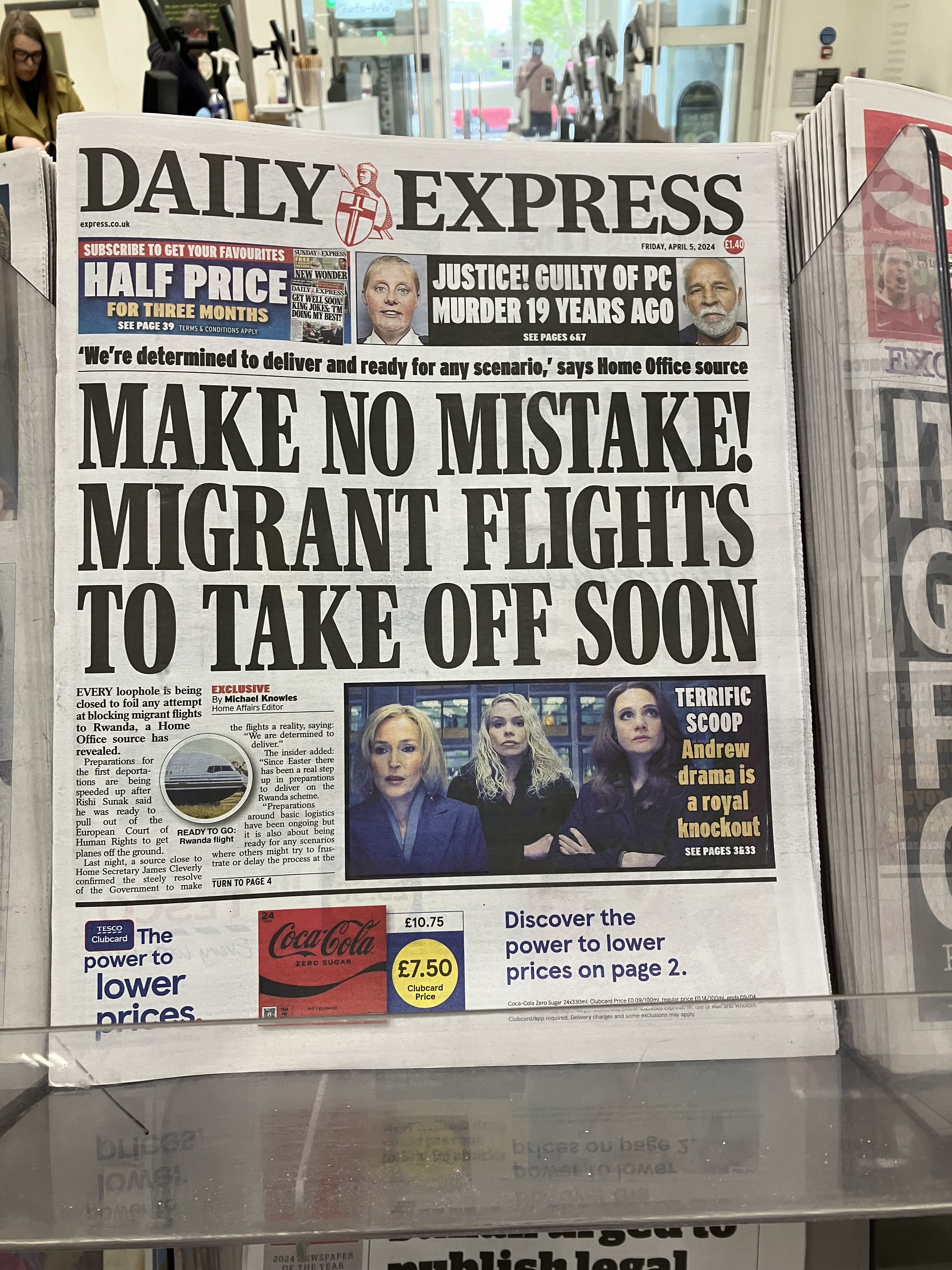
Also beyond the UK, the latest news from Rwanda is that, following the lack of progress in deportations, 70% of the properties allocated to receive deportees have now been sold to local buyers. On this topic, the Rwanda Bill returns next week for more ping pong – it could yet go for the Royal Assent within a few weeks. Judges are being given “special training” to ensure speedy delivery of those to be deported to Rwanda, according to the Daily Express. The airline Air Tanker is reported to be in discussions with the government about providing the transport, although they withdrew from previous similar discussions. RwandAir has already declined for fear of reputational damage.

The Prime Minister has claimed that 24,000 irregular migrants were deported last year. Full Fact have checked this and argue that only about 25% were enforced returns, the rest being voluntary. The number of arrivals in small boats this year stands at 4,644 at the end of March – bad weather has reduced the number in the last few days, but the figure is still higher than last year.

Charities and law firms have sent a letter to the Home Secretary seeking a Ukraine-style visa scheme for Palestinians who have family in the UK. The Home Office has also refused to decide on whether to drop the need for biometric data for reuniting family

arrivals from Gaza, although obtaining such data is virtually impossible in the crisis; the Upper Tribunal ruled against the Home Office in two test cases.

In their annual report, the Office of the Immigration Services Commissioner note that the number of immigration advisers at the Home Office is growing, but not fast enough to keep up (and large numbers are leaving).

Finally, back to Europe, where the European Parliament has passed the Pact on Migration and Asylum today (Wednesday 10 April) against votes from the extreme right and extreme left. The 10 provisions of the pact cover issues like relocating from over-immigrated countries, financial allocation, fast-track routes and exchange of data.

A group of 22 NGOs has issued a statement arguing that “while the adoption … is likely to lead to a detrimental degradation of people’s access to protection in Europe, the new Union Resettlement Framework (URF) adopted alongside the Pact offers a glimmer of hope.

“The URF signals the EU’s political support for global resettlement efforts and has the potential to be a step towards advancing solidarity, capacity-building and responsibility sharing. It must now be operationalised effectively to ensure that more people reach safety and find long-term solutions,” the groups, which include the International Rescue Committee and Oxfam, said.

Andrew Hemming

Refugee News


March 2024

As usual, we lead with Rwanda. The Lords have been inflicting a number of defeats on the government over the provisions of the Bill, and the “ping pong” between the two Houses will reach a climax next week, when we will know which, if any, amendments the government will accept. Further issues have arisen over the role of the civil service in the planned scheme, with the FDA union threatening legal action against the government in the event of a clash with the European Court.

The National Audit Office has calculated the cost of the first (total?) 300 deportees to Rwanda to be £541 million, at £1.8 million per person. Indeed, the cost to date is £20 million with no flights. Ian Dunt has calculated that the cost per asylum seeker generally in 2015/6 was £7062, whereas in 2022/3 it was £20921.

The latest wheeze, as revealed in The Times today (Wednesday) is simply to pay failed claimants £3000 for a  “voluntary return” – to Rwanda.

Figures released this month show that, as of 23 December 2023 the number of asylum seekers waiting for an initial decision was 128,000. The Government, of course, has claimed to have removed most of the legacy backlog, so most of these are new.

The sacking of the Independent Chief Inspector of Borders and Immigration has resulted in the sudden release of the plethora of reports he wrote, which had not previously been published. They mostly concern the implementation of the Nationality and Borders Act 2022 and are generally critical of the Home Office’s performance. It is unlikely that a replacement for Mr Neal will be found before the end of this parliament.

Refusal rates for asylum seekers went up in the last quarter of 2023, with a  third of applications refused. This is unusual, as most applications end up being accepted.

The rules on Ukrainian refugees’ visas changed last week (with 4 hours notice of implementation) – The Family Scheme was closed though the Homes for Ukraine scheme is extended, but will not be processed until 2025.

This week the Council of Europe Commissioner for Human Rights, Dunja Mijatovic, criticised the Rwanda scheme along with certain French actions as acting above the law. She was concerned that two large European nations were giving a bad lead to the rest.

A small boat arrival, Ibrahima Bah, was sentenced this month to 9 ½ years in jail for “facilitating illegal entry, gross negligence and manslaughter “ following the deaths of fellow passengers. He is the first shipwreck survivor in the UK to face such charges and was not a people smuggler, but a refugee left in charge of the boat. The court concluded his age was 20, but he claimed to be 17.

Andrew Hemming


The Salisbury Group was established 50 years ago this year

Human Rights Watch on UK events


HRW comments on the extraordinary events yesterday in the UK

November 2023

This is a piece from today’s (16 November) from HRW.

A Welcome Decision in the UK Regular Daily Brief readers may recall our story on the UK government’s obsession with cruelty, shown by its intention to ship asylum seekers to Rwanda, a country with a terrible rights record. I’m happy to report a good-news update to this story: yesterday, the UK Supreme Court said Rwanda is not a safe country for the government’s plans.

As my UK colleague Emilie McDonnell writes, the decision was “a huge victory that will protect the rights of countless people who have come to the UK seeking safety.” In a unanimous judgment, the UK’s highest court drew attention to Rwanda’s poor human rights record, including threats to Rwandans living in the UK, alongside extrajudicial killings, deaths in custody, enforced disappearances, torture, and restrictions on media and political freedoms.

The Prime Minister Rishi Sunak has responded by vowing to introduce emergency legislation “to confirm Rwanda is safe. ”Instead of arguing with reality, he would be wiser to ditch the government’s unlawful Rwanda deal.

Blog at WordPress.com.

Up ↑