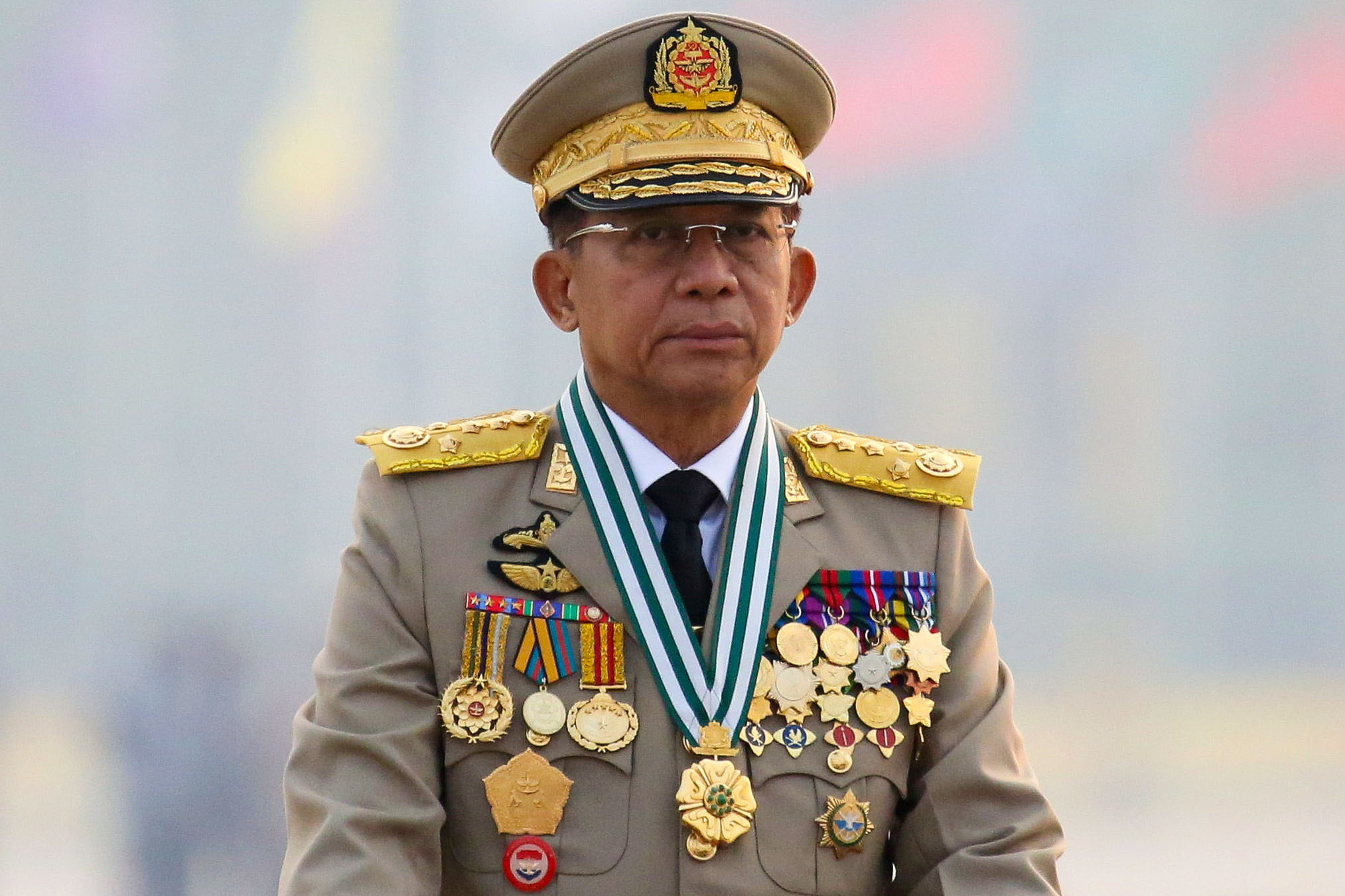
Burma, or Myanmar, has slipped out of the news in recent months but the brutal activities of the military Junta continue. Violence has lasted for 6 decades now during which massacres have been carried out and around 800,000 have been forced to flee. Elections are promised which will be sham. There is considerable resistance, both peaceful and armed to the regime. As part of the election process some of the 20,000 political prisoners will be released according to the latest edition of the Burma Campaign News (Issue 49, 2026). Political prisoners are subject to horrific treatment, held in appalling conditions, subjected to torture and denied medical care. Children as young as 2 years old are held as proxies for their parents.
Amnesty reports that the military Junta has committed widespread repression and abuse in every facet of life in the country since seizing power on February 1, 2021, Amnesty International, Fortify Rights, and Human Rights Watch said last month. The military’s atrocities since the coup, which include war crimes and crimes against humanity, escalated over the past year as the Junta sought to entrench its rule through abusive military operations and stage-managed elections.
The UN Special Rapporteur said in London in December:
“The people of Myanmar have shown extraordinary courage. They deserve an international response that matches their determination the United Kingdom can play a decisive role and now is the moment to act”.
Following a submission by Gambia, the International Court of Justice has in January, commenced hearing evidence of genocide against the Rohingya people many of whom fled the country. The ICJ issued provisional measures to protect the Rohingya which have been ignored by the Junta.
The UK government is criticized for not having made any new, targeted sanctions since 2024 and there is also a concern that the Junta is allowed to host a military attaché in London.
China’s role
The role of the Chinese is significant in the future of the country. Currently, it is reported by Foreign Affairs that China is ‘supporting both sides but with the hope that the Junta will win through in the end’ despite its appalling record of human rights abuses. It can tolerate a divided Myanmar as long the the main power holders remain dependant on China for trade and energy. It is also reported that China has provided $3bn of aid to the Junta.
Although it is true that the UK can play a role, the resource rich country is attractive to China which exhibits little interest in human rights within its borders or in foreign countries. It is their role which is probably crucial and as long as it continues to support the military then the current path of violence will likely continue.
As well as the Burma Campaign, another organisation of note is Advance Myanmar.
Proposed elections are a sham. Sanctions are patchy and ineffective
August 2025
Myanmar, Sudan, Ukraine, Gaza: what links these current conflicts where thousands of women, children and the elderly die or have their homes destroyed? All are conflicts where the warring parties are equipped and supported by outside countries many of which are on the UN Security Council. Myanmar is armed and supported by Russia and China together with India and Austria with Singapore often acting as the go-between. Russia’s invasion of Ukraine is supported by China, Sudan by the UAE and Israel’s genocidal actions by America principally with other western countres in the frame including the UK.
It is unlikely these conflicts would be as deadly or last as long if it was not for this outside influence and support. The support takes different forms. The straightforward supply of weapons and military materiel. Providing the financial pathways to enable the regimes to engage in trade and pay for the weapons. Allowing western countries to trade with the regimes and buy their exports. And frustrating efforts by the UN to broker peace efforts or reign in the activities of the outside countries. The Security Council supporters of the regimes frustrate these efforts by vetoing motions and allow the carnage to continue. The noble aims of the post war era when the UN was formed and there was meant to be a new world order is in tatters.
The latest edition of Burma Campaign News (Edition 48) is to hand and contains updates on the long running conflict in that country with 50,000 dead in the last four years. The country has slipped out of the news due largely to conflicts close to home and the difficulty and danger of reporting from there. After six decades of conflict, killings and attacks on minorities, the only good news is that the military is not having it all their own way. A combination of resistance, strikes, and economic boycotts, the military is slowly losing ground. The bombing of schools, hospitals and homes continues with around 5 million forced to flee. Elections are planned which will be a sham.
Many countries, including the UK, impose sanctions on the country. Unfortunately, as Office of the High Commission for Human Rights (OHCHR) points out in a report, these sanctions are not coordinated. This means there are gaps and what is sanctioned by one country may not be by another.
“There were 165 distinct entities sanctioned by the United States, European Union, and United Kingdom in response to the military coup in 2021.69 The report concluded that while the US, EU, and UK state that they are coordinating sanctions, there are significant missed opportunities to implement sanctions regimes in a coordinated manner. The report stressed that as of 1 February 2023, a mere 13 percent of the 165 entities were targeted by all three sanctions regimes, 20 percent by two, and 67 percent by only one. The report concluded that the gaps in the existing sanctions regime make it easier for the Myanmar military to evade sanctions. The report also noted that Member States seem reluctant to sanction high-impact targets such as Myanma Oil and Gas Enterprise (MOGE), which is sanctioned only by European Union, and aviation fuel, for which Canada has imposed wide ranging sanctions as of March 2023 and the UK has imposed targeted sanctions. 110. While these sanctions have been welcomed by the National Unity Government, Myanmar civil society, and international NGOs, they primarily regulate the engagement of persons under the jurisdiction of the Member State.70 As such, in the absence of economic sanctions imposed by the UN Security Council, third country actors are not legally prohibited from doing business with the sanctioned regime, person, or organization”. (Para 109)
A key source of revenue for the regime is the telecoms company Mytel described as the ‘jewel in the crown’ of the Burmese military and is highly profitable. The US sanctioned the company in January this year ‘for providing surveillance services and financial support to Burma’s military regime, enabling the regime to carry out human rights abuses through the tracking and identification of target individuals and groups’. The UK by contrast has not sanctioned them. Burma Campaign suggests contacting the Foreign Secretary asking for sanctions to be imposed: action.burmacampaign.org.uk/tell-british-government-sanction-mytel where there is a link.
A BBC report features the role of global arms firms in Burma.
Violence continues in Burma while the West does little
August 2024
One thing which helps a tyranny to survive and prosper is for people to look the other way. In Burma, the military has held sway for many years now and there was a belief that they were invincible and would eventually win. Three million have been displaced according to the Burma Campaign although the UN calculates the figure to be 2.3 million. Burma seldom makes the news and certainly not in comparison with Gaza and Ukraine. This relative obscurity has enabled the military, the Tatmadaw, to continue its murderous campaign and the assumption of their eventual victory meant countries and companies kept their powder dry in terms of its relations with them.
The previous UK government’s responses ‘slowed to a standstill’ according to the Burma Campaign in their latest campaign news (Issue 46, 2024). A crucial issue was the supply of jet fuel and there has been a campaign to stop the supply of this fuel which is used by the military to bomb schools, hospitals and villages. At a meeting of the UN Security Council in April, the USA and Malta called on the Council to take action to stop the supply of this fuel. In itself this was a huge step. The UK government did not support this move and unfortunately, Britain leads on Burma in the Security Council (ibid).
The lack of attention by the British media meant little pressure was put on the Conservative government to take an active role. We now have a new government and Burma News asks ‘What does the new government mean for UK Burma policy?’ It is of course early days but it does not look promising. Sir Keir is focused on the domestic agenda but has spoken on the plight of the Rohingya in the past. Disappointingly, the Foreign Secretary, David Lammy has shown no interest both recently and while he was in opposition. Other Labour politicians have offered some support but they do highlight Rushanara Ali MP who was very active and was chair of the All-Party Parliamentary group on Burma and Rohingya. She is now a housing minister so cannot continue in that role.
Aung San Suu Kyi became a hero and her time under house arrest attracted considerable international attention and sympathy. It was a huge disappointment to discover upon release that the party she led, the National Lead for Democracy, was vigorously in favour of the Rohingya genocide. She defended the military at the Hague. Although the situation is complex the basic point is that there is no desire by the NLD for Burma to be a multi-ethnic state. They believe the Bamar to be superior and there is a desire is for it to be exclusively Buddhist. The West’s image of Buddhists also came in for a knock. She is however, a popular figure still in the country.
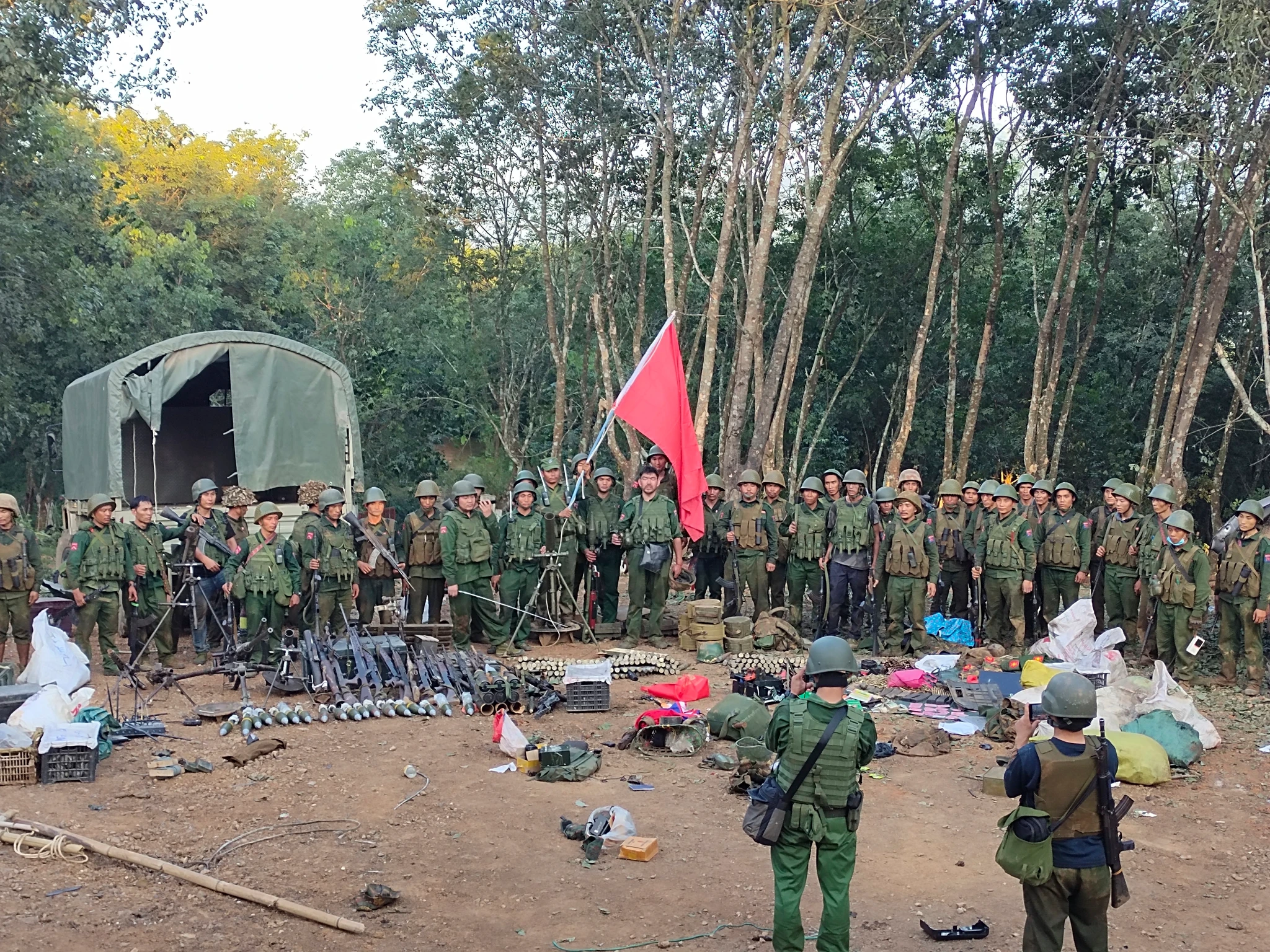
Attitudes and policies may need a rethink however because the military it now appears is losing ground. Far from being invincible, the People’s Defence Forces have been winning back territory in many parts of the country. The UK government’s softly, softly approach and the Foreign Secretary’s lack of interest may need to change.
The news at present focuses on the terrible events in Gaza with over 33,000 dead and many thousands injured or missing. Even today, there is news of the death of aid workers three of whom are Britons. Russia’s invasion of Ukraine continues and there are problems in Sudan with thousands fleeing for their lives. News today seems to focus on one crisis at a time partly because of resources and partly because there is what some call ‘compassion fatigue’.
Burma and the terrible activities of the Burmese military has slipped off the radar somewhat but the latest news from the Burma Campaign has a hint of encouragement in it which is good news.
The situation up to now has been dire. The military, known as the Tatmadaw, have waged war on many of its own citizens and has run an apartheid state. Thousands have been driven from their homes, villages have been bombed and burned. Tens of thousands have fled to Bangladesh to escape the violence. Some of the methods used by the military are vicious beyond belief and include burning people alive.
The British government has not done enough to make life difficult for the regime. For example, the bombing is carried out by jets which need jet fuel to fly. The ships bringing in the fuel are insured in London and there seems little chance that this will cease. Recently, Lord Cameron headed a deputation of people to the far east, including Burma, and was accompanied by several representatives of arms companies. A big source of income for the regime is the export of gems by state owned companies and little has been done to restrict this.
But it seems there is hope. It appears the military is losing more territory as people fight to free their country from military occupation. The Economist has reported that more and more soldiers are deserting the army. There is real hope that the country could be free of the military. The Burma Campaign recently joined others outside the Foreign Office and showed placards with David Cameron’s head on an image of a snail. It was urging the government to act more quickly.
Sources: Burma Campaign, Amnesty UK, The Economist, CAAT.
The Salisbury group was established 50 years ago this year
Problems in Burma get overlooked because of events elsewhere in the world
August 2023
Burma crops up from time time in the news and this week (w/c 31 July) the partial release of Aung San Suu Kyi into house arrest briefly made it into news bulletins. These notes are taken mainly from Issue 44 of Burma Campaign News published by the Burma Campaign. The country remains subject to some of the worst treatment of people in the world with multiple examples of human rights infringements. Following a massive defeat of the military in elections in 2020, after half a century of control, they staged a coup the day after the newly elected government was due to take office and arrested Aung San Suu Kyi.
The effects of military control have been atrocious. Nearly 2 million have had to flee their homes. There are around 2000 political prisoners. The treatment of the Rohingya amounts to genocide. The military have been able to retain control because they can still acquire arms mostly from the Russian Federation but also from China, Singapore with smaller amounts from India and Thailand. The total amounts to around $1bn according to a UN report.
The Burma campaign has identified a ‘Dirty List’ of suppliers and have recently added 5 insurers who provide vital insurance cover without which the junta would not be able to acquire aviation fuel. They name the companies as UK P&I; Steamship Mutual; Britannia P&I and North Standard and Shipowners Club. The role of these companies was exposed by Amnesty in a report ‘Deadly Cargo‘. The UK government has so far failed to impose sanctions preventing British companies supplying aviation fuel.
While the situation in Burma is dire, the supply of arms and materiel from western countries is thought to have largely stopped according to the Campaign Against the Arms Trade. A major jewellery company has stopped sourcing rubies from the country. There have been two debates in the House of Commons and one in the House of Lords.
Little can be done to alter the situation especially while China, Russia and Singapore – the major conduit for arms – continue to supply the junta and enable them to stay in power. Singapore claims it has a policy to prohibit the transfer of arms to Myanmar, however, the UN report uncovered $253m of supplies shipped to the military between February 2021 and December 2023.
Cyclone Mocha hit the country in May and the military blocked aid to the Rohingya who were particularly badly hit as part of its genocidal policies towards them. An unknown number of people have died and many have lost homes, livestock and fields have been destroyed.
Attention on the country has often focused on Aung San Suu Kyi who was awarded the Nobel Peace Prize in 1991 and was admired in the West for her heroic stand against the generals. Her reputation suffered a precipitate slide during the Rohingya crisis where she seemed unwilling to condemn the military actions and even seemed to support them at the Hague. She was perhaps endowed with qualities which were unreal and her failure to condemn the brutality against a minority population was a truer indication of who she was. The decline in her heroic status is possibly a reason why attention has shifted away from the country and the continuing activities of the military.
We attach the death penalty report for April – May 2021. Note the report does not include China which is believed to execute thousands of its citizens but the statistics for which are a state secret.
Hundreds of Rohingya refugees left stranded at sea
The British media is understandably filled with the effects of the pandemic on people’s lives in the UK at present and there are many who are suffering from its effects. Being in lockdown whilst living in cramped flat with no garden is extremely difficult and distressing. Those who are in insecure employement in the gig economy are also suffering financial stress. Care home and medical staff with insufficient or no PPE are daily risking their lives. Recession is inevitable the effects of which will hurt the poorest the hardest.
While there are many in the country who are suffering these things, there are those in other countries who are suffering more. In particular the Rohingya. They suffered cruelly under the Burmese military regime and had their villages burned down and were subjected to mass rape and murder at the hands of the Burmese. Hundreds of thousands fled to neighbouring Bangladesh and live in one of the largest refugee camps in the world.
There are now reports of boatloads of refugees refused entry into Burma because the Covid-19. Amnesty has received information concerning up to five boats thought to be carrying Rohingya refugees seen off the coasts of Malaysia and southern Thailand in recent days, with hundreds of people believed to be on board the vessels. Those in the boats are likely to be fleeing persecution in Myanmar or from overcrowded refugee camps in Bangladesh.
An Amnesty press release said:
On Wednesday, the Bangladesh Coast Guard rescued 396 Rohingya people from a large boat which had been turned back by the Malaysian authorities and is believed to have been at sea for two months. According to early reports, 32 people on the boat died at sea, but the figure is now thought to be almost double that. UNHCR – the UN refugee agency – has said that the survivors are severely malnourished and dehydrated.
On 5 April, another boat carrying 202 Rohingya people was intercepted by the Malaysian Maritime Enforcement Agency. Its passengers were brought to safety and are now in COVID-19 quarantine. 18 April 2020
Over 800,000 Rohingya Muslims are currently living in overcrowded camps in Bangladesh, the bulk of whom were driven out of Myanmar by a military campaign of ethnic cleansing and crimes against humanity that began in August 2017. As a result of that campaign, the Myanmar government and military now face accusations of genocide before the International Court of Justice (ICJ). The estimated 600,000 Rohingya who remain in Rakhine State in Myanmar are subject to government persecution and violence, confined to camps and villages without freedom of movement, and cut off from access to adequate food, health care, education, and livelihoods. 18 April 2020
The genocidal policies by the Burmese have already inflicted misery on these people. Added to that, they are now subjected to further stress and misery as a result of the pandemic.
Sources: Amnesty; Human Rights Watch; The Burma Campaign; Arakan Project; Guardian
January 27th was International Holocaust Day where we remember the terrible events of the Second World War. That war and the appalling treatment of gypsies, gay people and Jews by the Nazi regime, led to the creation of the crime of genocide to recognise the intention to get rid of an entire race of people. People said ‘never again’ and shortly after the war the UN Declaration of Human Rights was declared as a common standard on how states should behave towards their citizens.
Regrettably, it has not seen an end to massacres and genocide. Since the war, we have seen massacres in Cambodia, Darfur, Rwanda, Bosnia and Uganda. The total annihilated in these and other similar events exceeds the death toll in WWII.
In our last post we reported on a talk given at Southampton University on the latest example of genocide currently taking place in Burma/Myanmar. The UN Human rights Chef describes this as a ‘textbook example of ethnic cleansing’ which has been taking place since 1978. It is ethnic in origin. He draws a parallel between the events in Burma and those in Nazi occupied Europe in the ’30s and ’40s. An Amnesty article on the situation there can be found here.
The latest post by Rights Info discusses these issues and goes into a lot more detail. The Holocaust is remembered and we are, rightly, reminded of it on 27th. There is however a sense in which we have become used to these events and our powerlessness to prevent them. We do not have specific memorial days for the more recent genocides although these are included in the Holocaust memorial.
In a recent debate in the House of Commons, Mark Field a Foreign and Colonial Office Minister said:
[…] In my role as FCO Minister for Asia, I remain persistent in our lobbying the Government of Burma to allow the Rohingya back to their homeland with sufficient guarantees on security and, importantly, on citizenship that they will be able to rebuild their lives. As I have said before, that can begin only when conditions allow for a safe, voluntary and dignified return. My hon. Friend the Member for St Albans [Anne Main] spoke passionately about the importance of Rohingya representation in that process. If the returns are to be genuinely voluntary, there must a consultative process to establish the refugees’ intentions and concerns. 24 January 2018
At the event in Southampton, in answer to a question, one of the problems the Rohingya have is a lack of representation. This is partly because they do not have a leader able to speak for them which in turn is because of the lack of spoken English.
We must not forget the genocides which are taking place now when we remember the events of 80 or so years ago. Although the Holocaust was an historical event, genocide is still being practised today.
Genocide in Burma was the title of a fascinating lecture by Prof. Penny Green of Queen Mary University, London given in Southampton University organised by our Amnesty colleagues in that city. We tend to think that genocide is something that doesn’t happen today yet instances of it occur in places as diverse as the Balkans and Rwanda. It is in fact quite a recent crime and was identified as such during the Second World War by Raphael Lemkin who coined the word itself. While a lot of attention is rightly paid to the Holocaust – the genocidal act that prompted the identification – modern examples seem to get overlooked.
Prof Penny started her talk by tracing the history of the genocide in Burma. It concerns the Rohingya people who live in the north-west of the country. The first the west became aware of it was went a boat full of refugees were found floating in the Andaman Sea in 2015. This prompted some international protests at the time. Subsequently, there has been considerable research by Penny and her team and a large number of interviews were conducted, a total of 176 in all, to try to find out what has been happening. There is no doubt from all the evidence and testimonies that we are in the final stages of a genocidal act in Burma. Further details can be found on the Burma Campaign Website.
Following Lemkin’s work in getting genocide recognised as a crime, others have added further details. One such is the Argentinian Daniel Feierestein and another is Claudia Card. All in their various ways are keen to stress that genocide is not a single act but involves a series of stages. Nor does it have to involve just death but is about the destruction of social relationships and the denial of identity. It also involves a series of stages. That is, it is not a single event but a process.
The systematic, planned and targeted weakening of the Rohingya through mass violence and other measures, as well as the regime’s successive implementation of discriminatory and persecutory policies against them, amounts to a process of genocide. This process emerged in the 1970s, and has accelerated during Myanmar’s faltering transition to democracy Countdown to Annihilation (link below)
The stages of genocide
The substance of Prof. Penny’s talk was working through the six stages of genocide as they applied to the Rohingya.
Stage 1: This involves stigmatisation and dehumanisation. In Burma this involved refusing to give birth certificates to the new-born. The Rohingya were not included in the census. Civil rights were removed and movement restrictions applied. The use of language is important and the people were described as ‘Kalar’ which is equivalent in its derogatory meaning to ‘nigger’.
The role of Buddhist monks was also important and shocking. We tend to have a view of Buddhists as a pious and peaceful and we conjure up pictures of men praying in saffron robes. By contrast, Ashin Wirathu is a racist monk who has a fine line in anti-Muslim hatred. He and other racist monks play an important role in the demonization of the Rohingya. One particular campaign – labelled the 969 Movement – was designed to crush all Muslim businesses. Its origins are not altogether clear but it is based on the notion that Muslims are ‘breeding’ faster than native Burmese and so there is a risk of them overrunning the country. The campaigns bear some similarity to the Nazis she said.
Stage 2: This stage involves harassment. This really got underway in 2012 when there were 200 murders and 38 mosques were destroyed. An important part of the story is that in some cases the police are present when murders take place but they do nothing and there are no investigations. Reports of violence are censored and the UN rapporteur was attacked. Nazi memorabilia is present and many are sent to concentration camps.
Stage 3: It is now important to isolate and segregate the Rohingya and this comprises the third stage. Food aid is denied and the people live in squalid conditions. Hunger is prevalent.
Stage 4: Systematic weakening.A series of actions are involved here: no food aid; medical help is denied; freedom of movement is denied; there is no education and no access to livelihoods. MSF were expelled for reporting on the situation. Other charities such as Oxfam are attacked and this creates a problem for them. If they speak out and report on the brutality, they are banned from the country, if they stay silent they can continue to help. They become ‘inadvertently complicit’ she said.
Stage 5: This is annihilation and seriously got underway in 2016/17 when 354 villages were destroyed. Thousands are killed and 800,000 are forced to flee. It was at this stage that the world began to notice and we saw some news footage of burning villages and distressing scenes of fleeing Rohingya. There was mass rape by uniformed Myanmar men. The result is nearly one million Rohingya – almost the entire population – are now living in Bangladesh.
Current issue of Without Borders, the house magazine of Médecins Sans Frontières, leads on the Rohingya crisis and has a description of a camp in Bangladesh:
Some patients are literally struck dumb by the horror of what they have witnessed or what has been done to them. What really sticks in my mind are the drawing the children do in the clinic’s mental health unit. Helicopters firing on people, homes on fire, people being killed.
What these children must have witnessed is horrendous. One young boy has deformed feet. He couldn’t run away from the soldiers because of this. He told me a soldier shot him in the foot. Why would anyone do such a thing?
People’s living conditions are unbelievably squalid. Filthy streams, polluted by human waste, are crossed by rickety bamboo bridges. […] when it rains it becomes a quagmire. Dr Ian Cross working with MSF
This brings us to the final stage of the genocidal process:
Stage 6: This is termed ‘symbolic enactment’ which is where we are now with Burma. This final stage involves the total destruction of buildings and the eradication of the Rohingya from history. The state discourse is one of denial: it didn’t happen; the victims were responsible i.e. they set fire to their own villages, or that it was a matter of self-defence. Any other account is a conspiracy by international human rights groups. It cannot be long before they will be claiming it is ‘fake news’.
A fuller account of what is happening in Burma and the treatment of the Rohingya can be found in penny Green’s report Countdown to Annihilation (pdf).
Aung San Suu Kyi
Aung San Suu Kyi
There can be few in world who have fallen from grace so far as Aung San Suu Kyi. She received a Nobel prize for her heroic resistance to the military and endured many years of house arrest. Yet now she stands passively by while genocide is committed in her country. She declines to engage in discussions about the topic. It seems the very stubbornness which stood her in good stead all those years is now preventing her seeing or accepting the horror which is going on in the Rakhine.
This was a fascinating talk made particularly interesting because it was anchored both in evidence and photographs from the areas affected but also because it emphasised that genocide is a process not just an event. If there is a tiny crumb of comfort from the events described it is that if the process is interdicted at an early enough stage then it can be prevented. Waiting until it reaches the end stage is too late. Not only has enormous suffering been endured by the victims of the oppression, but attitudes have become hardened and state actions have become institutionalised.
Courtlye Musick are presenting a concert of vocal and instrumental music from Tudor and Elizabethan times performed in costume on Saturday 10 March at 7:30 at Christ church, Waterloo Rd, Freemantle SO15 3BT. Tickets are £8 at the door and the concert is in aid of Amnesty International
The events in Burma have been particularly shocking and the plight of the Rohingya people particularly dire. Thousands have fled their homes into neighbouring Bangladesh and many thousands have been shot, drowned, tortured, raped or burned alive in their homes as the Burmese army seems to be conducting a programme of what amounts to a crime against humanity. The violence appears to be indiscriminate and has been condemned by the UN and human rights agencies. Amnesty has published details giving background to the conflict.
Rakhine state is on the precipice of a humanitarian disaster. Nothing can justify denying life-saving aid to desperate people. By blocking access for humanitarian organisations, Myanmar’s authorities have put tens of thousands of people at risk and shown a callous disregard for human life. Tirana Hassan, Amnesty International’s Director for Crisis Response.
A representative from Crisis Response said:
The Myanmar authorities are obliged under international law to treat all those living in Rakhine State, including the Rohingya, without discrimination. Instead they have chosen to treat a whole population as an enemy which may be attacked, killed, deprived of homes and uprooted indiscriminately. The Daily Star (5 September)
Of particular sadness is the role of the Nobel Peace laureate Aung San Suu Kyi who has been silent up to now while these appalling events have taken place and is now claiming that there is a ‘huge iceberg of misinformation’ and that the army are responding to terrorist attacks. There have been some attacks but the scale and ferocity of the army response is far beyond what is reasonable.
Many of us remember the years we followed the imprisonment and house arrest of Aung San Suu Kyi and were cheered when she was released. Her peace prize was well merited but there are calls now that it should be withdrawn. Many Amnesty members would have written letters urging her release. It is heartbreaking to see her at the head of the government making unsupported claims about what is going on in Rakhine State and not speaking out about the terrible actions against the Rohingya.
As ever the British government seems less than energetic in its approach to this crisis in a former colony.
For far too long, British policy toward Burma has deferred heavily to the views of its de facto leader, Aung San Suu Kyi. UK Foreign Secretary Boris Johnson was at it again at the weekend, suggesting she use her “remarkable qualities” to unite her country and stop the violence in Burma’s western Rakhine State, which, he said, afflicts “both Muslims and other communities.” This after a fortnight in which hundreds of Rohingya Muslims have been reported killed, their homes burnt to the ground, and more than 120,000 desperate people have fled for their lives to neighbouring Bangladesh to escape the vicious brutality of the Burmese security forces. This followed a coordinated attack by Rohingya militants on two dozen police and border posts in late August. Security force operations in response to the attacks last year were described by the United Nations as very likely crimes against humanity. Human Rights Watch (6 September)
The British government could do a lot more including pressing the Burmese to make the Rohingya citizens of the country. They should also press them to allow aid agencies unrestricted access. Religious freedom should be allowed.
The Burmese government is hoping to persuade the Russians and Chinese to frustrate any sanctions by the UN and Aung San Suu Kyi was quoted to be in conversation with President Erdogan of Turkey – hardly an exemplar of good behaviour.
If you live in the Salisbury area and would like to join us then a good time would be on Monday 18th at Sarum College where Ice and Fire are performing free.










 Amnesty in Salisbury & South Wiltshire