Scandal of Saudi World Cup


Saudi has won bid for 2034 World Cup despite massive human rights failings

December 2024

The football World Cup is the most watched sporting event on earth. Millions will will watch and many thousands will travel to see matches. The sports pages of magazines and newspapers will be full of excited articles, photos and interviews with star players. The progress of the home teams will be a matter of much debate. Pubs will be full to the brim with cheering supporters watching massive TV screens. What’s not to like?

The award FIFA made this Wednesday (11 December) has attracted considerable controversy. Human rights are clearly a major issue in the Kingdom. Amnesty has identified a range of serious issues of concern:

  • Labour exploitation. The people employed to work on construction sites in Saudi die in large numbers. A combination of unsafe working conditions and high heat levels has resulted in the deaths of 21,000 Indian, Bangladeshi and Nepalese workers since 2016. The massive level of construction needed for the competition is likely to see many more die. Trade unions are prohibited and there is forced labour.
  • Women’s rights. Women have few rights. They can be imprisoned for wearing the wrong clothing. The guardianship restricts their freedom of movement and what they can study. Same-sex relations are banned. They are not free to play sports.
  • Repression. There is no freedom of speech. The media is highly restricted. Human rights organisations, trade unions and opposition parties are banned. Journalists face censorship and imprisonment.
  • Death penalty. The Kingdom is one of the world’s biggest users of the death penalty usually by beheading and often in public. Confessions are often gained by the use of torture.
  • Evictions. Mass evictions have taken place to enable the facilities to be built. Protesters have been imprisoned for up to 50 years. Over half a million people are affected by these evictions.

To satisfy the requirements – such as they are – for decent human rights, a report was commissioned from Clifford Chance, an apparently respected London law firm with an office in Riyadh. The report was a whitewash and the response in the London HQ was reported to be a ‘shitstorm’. FIFA’s assessment of the human rights situation in Saudi as ‘medium’. It has to be wondered quite what they would have to do to be regarded as ‘high’.

FIFA’s Charter

So what has FIFA’s Charter go to say? Two elements are relevant:

  • To improve the game of football constantly and promote it globally in the light of its unifying, educational, cultural and humanitarian values, particularly through youth and development programmes. (para 2a)
  • Discrimination of any kind against a Country, private person or group of people on account of race, skin colour, ethnic, national or social origin, gender, language, religion, political opinion or any other opinion, wealth, birth or any other status, sexual orientation or any other reason is strictly prohibited and punishable by suspension or expulsion (para 4). (our italics)

How then does a country that discriminates against women, does not have religious tolerance, does not allow any political opposition, bans homosexual activity and does little in the way of promoting humanitarian programmes, get to host the World Cup? Amnesty describes the situation in Saudi as ‘dire’. ‘Mohammed bin Salman has presided over a soaring number of mass executions, torture, enforced disappearance, severe restrictions on free expression, repression of women’s rights under the male guardian system LGBTI+ discrimination and the killing of hundreds of migrants at the Saudi Arabia – Yemen border’.

Sport can be used to alleviate misery and wretchedness. “Sport can unite the world” Jules Rimet

It is of course impossible to marry the two. Any notion or suggestion that sport, and in particular football, can be used to unite the world is nonsense on stilts.

Sportswashing

This is pure and simple an example of Saudi Arabia using its immense wealth to acquire the rights to another sporting event as a means to enhance its reputation through sport. It will be interesting to see as we draw near to the event itself, whether the media and the sporting press pays any attention to the human rights situation – the dire human rights situation – in the country. Or will they focus almost entirely on the competition itself with endless vacuous interviews with managers and players? Will the thousands who will pour into pubs to watch the event be concerned or even know? Are we all complicit in this monstrous example of corruption both of sport and any sense of human values?

In view of the thousands who will die building the stadia and infrastructure, will FIFA be open to corporate manslaughter charges?

Main sources: FIFA; Observer; Guardian; Amnesty; European Sport Management Quarterly;

Updated 11 December with actual FIFA decision

The World Cup and sportswashing


Major law firm heavily criticised for a whitewash report on Saudi Arabia

November 2024

The 2034 World Cup is to take place in Saudi Arabia a country with a huge range of human rights issues. Women have restricted rights both in law and in practice. They are prevented from participation in sporting activities. Human Rights defenders are routinely intimidated or arrested on spurious charges. There is no religious freedom. There is a heavy toll of death sentences usually by beheading in public. By September 2024, 198 had been executed. Torture is common and suspects are kept for long periods often in solitary confinement without legal representation. Altogether a Kingdom where few freedoms or human rights exist.

FIFA, the world governing body, has been racked by years of controversy and corruption allegations. It would hardly be surprising therefore if the decision to host the 2034 competition in Saudi – following the massive scandal of the Qatar competition – was not accompanied by some corruption or other shady activities.

Enter Clifford Chance, a major London law firm with apparently a good reputation. They have produced a 39 page report in support of the Kingdom which somehow misses the key issues and the multiple human rights infringements. Clifford Chance, along with many other organisations, has a range of fine words praising their high principles. ‘[We] are committed to the highest ethical and professional standards’ they claim. ‘[We act] with integrity, professionalism and fairness.As a firm ‘we have agreed to support and respect internationally recognised human rights both as part of our own commitment to the UN Global Compact and consistent with the UN Guiding Principles.’

So how, it might be asked, does a law firm with such principles and policy statements come to write a report which seems to overlook the massive infringements taking place in the Kingdom? It helps if you do not ask those in a position to know such as the many human rights organisations who have produced report after report detailing the dreadful state of human rights. Instead, you ask the Saudi sports authority itself, SAFF, who helpfully identified the five human rights ‘focal points’ for the (allegedly) ‘independent’ assessment. Reading the 39 pages there is no mention of the multiple human rights infringements which regularly take place in the Kingdom.

The report has produced a ‘shitstorm’ in the Clifford Chance headquarters

The report is nothing short of a disgrace. It is reported that it has produced an ‘internal shitstorm’ in the London headquarters. Eleven human rights organisations have condemned it. A common response to criticisms such as these is that sport enable a better understanding of human rights through sport. Global Citizen is a champion of this view. The difficulty with this idea, noble though it is, is that sport is being used by the likes of Saudi to promote – not human rights and brotherhood – but its own interests.

Another issue is the kafala system which immigrant labour works in desperate conditions for 16 hours a day sometimes in searing heat. The death toll is enormous and it is reported that 21,000 Nepali, Bangladeshi and Indian workers who have died in Saudi since the Vision 30 plan was launched in 2016. The Clifford Chance report dances around this issue with a host of weasel words.

And we must not forget the murder and dismemberment of Jamal Khashoggi almost certainly on MBS’s orders.

But should we be surprised? The Kingdom has enormous wealth and company after company is happy to do business there and hold their noses whilst doing so. Why should Clifford Chance be any different? It is alleged that the firm facilitated the removal of fortunes from 400 citizens who were locked in a hotel by Mohammed bin Salman. It is claimed £100bn was removed from them. The enormous wealth of the Gulf states has profited many European and American corporations eager to benefit from the largesse. Any moral scruples seem all too easily to be set aside. That a major law firms should join this jamboree is deeply disappointing. Thousands will die during the course of construction. Hundreds more will be detained without trial. Hundreds will continue to be beheaded. Whatever happened to those ‘highest ethical and professional standards?’

All this in aid of football. The ‘beautiful game’ has become mired in sleaze, corruption and graft. It has now dragged down a respected law firm in its quest to earn big fees.

Sources: Amnesty, FIFA, Clifford Chance, The Guardian, New York Times, The Observer, Inside World Football.

Qatar, world cup and human rights


Things have not gone all Qatar’s way in the World Cup

November 2022

Qatar has spent huge sums of money on building stadia and in attempts to promote its image around the world. It was perhaps the most expensive example of sports washing there has been. How successful is it?

Not going to plan

What is obvious is that it has not gone according to plan. Previous nation’s attempts to sanitise their image using sport have, from their point of view, been reasonably successful, one thinks of China. This has been because the sporting community: the sports people themselves, the managers and promoters, the media and many of the supporters – have cared little for the human rights of the countries where competition has taken place. So tennis, golf, boxing, cycling, horse racing, motor sport and other competitions have happily taken place in countries where torture is still practised, opposition is repressed, women have few rights and the death penalty is still a fact of life. Why let a stoning or public amputation spoil a game of tennis? No matter, the money is good and the sports pages of our media do not sully their pages with the sordid goings on outside the field of play. Sport has existed in a kind of bubble making it supremely suitable to be used by autocratic regimes to launder their image.

Qatar has been different. People have noticed and suddenly, some of the sports pages have moved away from sports reporting and are talking about arm bands, protests and footballers not singing the national anthem. The wearing of arm bands has become politically charged. There are pictures of people holding up posters particularly about women’s rights (or should we say, the absence of them). Yesterday, it was the German team covering their mouths. David Beckham who, up till now, has been able to promote himself as the honest Essex boy done good, is now seen in as a somewhat dubious light having accepted a reported £120m fee to be an ambassador for the Qataris. It is said he will not now get his knighthood. When reporters approach him for interview, he is silent. Not yet hero to zero but certainly a damaged brand.

FIFA want us to focus just on the football. Never mind the 6,500 worker deaths, the near absence of women’s rights, the silencing of opposition people and the anti LGBQI+ actions and laws. Where once football was to be the means by which nations came together and mutual understanding increased, now we are enjoined not to look outside the stadium itself. FIFA’s Infantino tells us that he understands prejudice because he has freckles and red hair which was a problem for him at school.

Sports washing may not be the same again

One positive thing may emerge from this World Cup and that is the days of sports washing may not be numbered but it will make countries and despots think twice in future. Instead of hundreds of thousands of supporters and spectators arriving to marvel at the spectacle no questions asked, some of them are asking questions. Some might even be a little uncomfortable at being there at all. The sports pages now mention the uncomfortable truths about the regime where the event is held and do not simply report on the sport as though wearing blinkers. Sport has been a willing captive, happy to take the millions and all too ready to claim ignorance of what happens outside the stadium or arena. The media has also followed the money. Perhaps those days are over and future events will bring a greater readiness to question and take account of the human rights situation in the host country.

FIFA and the World Cup


FIFA writes to all contestants urging them to ‘focus on the football’

November 2022

The decision to hold the World Cup in Qatar was always controversial and as the competition approaches, temperatures have risen concerning the state’s human rights record and treatment of the migrant workers who built the stadiums and facilities, around 6,500 of whom have reportedly died. The FIFA president Gianni Infantino has written to the 32 competing nations asking them to ‘focus on the football’. He suggests further that they need ‘to respect all opinions and beliefs without handing out moral lessons.’ The FIFA General Secretary Fatma Samoura goes further and tells us that the food is great and ‘the tea is beautiful!’ She suggests, absurdly, that Qatar can be used as a ‘role model for other countries in the Gulf’.

The essential dispute is whether sport is a useful pressure point to improve the human rights of the host nations where events take place, or whether sport is simply being used to sanitise the reputations of dire regimes, in other words, sports washing. There is an argument for sporting events going to a country where the combination of visibility, media attention and the need to ‘put on a good face’ can have a positive effect on how individuals are treated. While this may be true in principle, it was hard to find such positive examples on a search through a range of sport-based campaign organisations who promote this idea such as the Centre for Sports and Human Rights. The IOC claimed to insert requirements into their contracts but the extent to which they outlast the actual competition has to be questioned.

Qatar has a range of problems on the human rights front. They include the kafala system which ties workers to their employers. We have mentioned the claim that around 6,500 have died building the facilities. The workers are barred from forming a trade union. FIFA has claimed that reforms have been introduced but there seems little sign of them in practice and enforcement seems minimal. Wage theft is common.

Women are treated poorly. The suffer under the guardianship system which means the permission of a male member of the family is needed to marry, travel or study abroad and divorced women are not permitted to be their children’s guardian.

Same sex relations are banned and are a crime. There is no freedom of expression.

FIFA’s statements seem to be at variance to the idea of sport having some kind of ambassadorial role. If the footballers are being asked not to wear armbands, nor to ‘hand out moral lessons’ as they put it and generally keep a low profile, where then is the pressure on the Qataris going to come from? They were joined by the UK’s foreign secretary James Cleverly MP who was quoted at saying, in connection with LGBT football fans heading for the competition, that they should be ‘respectful of the host nation’. Downing Street distanced themselves from this crass comment.

Another factor is how the competition will be reported. Sports reporting lives largely in a world of its own. The narrative is around how the home country is progressing, who is the favourite to win and facile interviews with the various participants about their performances on the field past and future. Life outside the stadium and hotel rooms are unlikely to get a mention. Will any of the sports reporters visit the squalid accommodation that the men who built the stadiums live in? Will the subservient status of women be mentioned? Since freedom of expression is substantially curtailed, none of this is likely to see the light of day. The reporters might reasonably argue we are here to comment on football not on social or human rights conditions.

There seems no escape from the fact that sport is being used by repressive or abusive regimes to enhance their reputations and the sports people are only too willing to play along. It’s not just football of course: tennis; boxing; golf; motorsport; cycling and athletics have all quite happily taken the money. The notion that sporting events are a force for good and the publicity they generate helps those abused by the regimes is fanciful at best. There seems little evidence of sustained benefit deriving from these major international sporting events. Claims are made but the power of money seems to trump any moral considerations and those with the power to make a difference are only too content to look the other way.

Sources: ITV News; HRW; Amnesty; Mirror; Daily Mail; UNSW Sidney

Qatar World Cup


October 2022

The World Cup, soon to start in Qatar, brings together in one place, sports washing, corruption and human rights abuses in a kind of symbolic statement of how to understand the modern world. FIFA itself is in a league all of its own in terms of corruption. It is reported that 16 of its voting members have been implicated in corruption or bad practice since Qatar was awarded the tournament. The list of enquiries investigations, legal actions and the like would take thousands of words to describe.

States like Qatar, with its enormous wealth derived from its massive reserves of natural gas, can afford to spend huge sums on supporting or sponsoring sporting events to green wash their dubious political activities. They are safe in the knowledge that simply by waving large cheques at sporting entities, they can secure these events with no sign of sportsmen or women, their managers or coaches, showing the least concern about the activities going on in those countries.

To build the stadiums has caused a large number of deaths, either from safety failures or from heat exhaustion. The labourers, recruited under the infamous kafala system, are unable to change employers, are not allowed to join a trade union, and live in appalling squalor often sleeping in shifts in the same bed. Their wages are often stolen and despite investigations and promises, there seems no end to the abuses. Various statements have been made by FIFA representatives expressing concern at the deaths and Qatar has made promises to improve their practices. It seems however, that nothing was actually done.

Women are still second-class citizens suffering under a range of gender-based restrictions. They must seek permission from a male guardian to study or travel abroad, marry, or work in some government jobs. Some hotels will not allow single women under the age of 35 to stay.

Some of the footballers have expressed concern but seemed to say there was nothing they could do, and it was all too late anyway since the stadiums were built. A boycott would serve no purpose one England team person said.

So, a tournament takes place soon, in a country where an unknown number of workers – with few rights – have died building the stadiums, where corruption on a massive scale has taken place and where women enjoy few rights. Nothing political will be said because we depend on their gas following Russia cutting off their supplies. Our sports pages will be full of the results and eager reportage of England’s progress in the tournament and will show scant attention to events beyond the pitch. A neat encapsulation of where human rights are today perhaps.

Sources used in this post: HRW; al Jazeera, Amnesty; The Guardian

Readers may also like to link to FairSquare human rights organisation, based in London, which has published reports on abusive labour practices in Qatar.

Football and human rights


Contrasting positions by footballers and supporters

Following the death of George Floyd in Minneapolis last week, there have been several photos in the sports pages of groups of kneeling footballers forming either circles (Liverpool) or an H (Chelsea) in support of black rights in the USA.  They are expressing their outrage at the killing of a black American by allegedly over aggressive policing and restraint, which led to Floyd’s death, the latest in a series of black people who have died at the hands of the police.

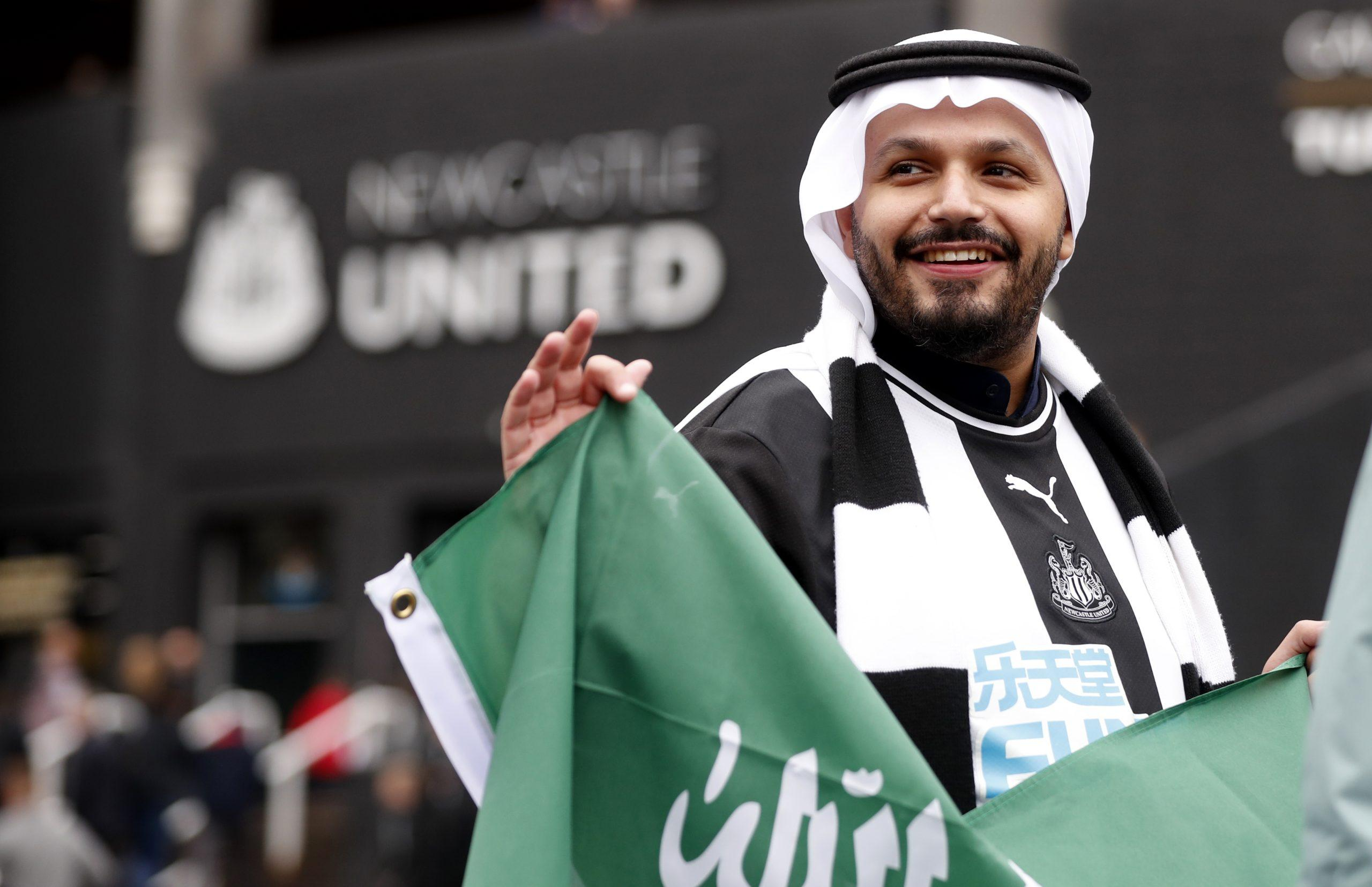
At the same time – as we have written before – the Premier League is currently debating the sale of Newcastle United Football Club to a consortium funded by Saudi interests to the tune of £300 million.  The litany of human rights abuses in that country are many: torture is common; women’s rights are highly restricted; the death penalty is frequently used, often in public and by beheading, and amputation is practised as a punishment for certain crimes.  There is no free speech and religious persecution is carried out.  Whatever one may think of heavy-handed policing in the USA and the problems over race in that country, it comes no way near the grim state of affairs in Saudi Arabia.  In addition to the human rights abuses there is the war being waged by Saudi in Yemen which is causing immense misery and suffering.

Despite this, supporters of NUFC are overwhelmingly in favour of the transaction taking place.  A poll showed 97% in favour of the sale.  This partly because the current owner – Mike Ashley – has failed to adequately invest in the club and the supporters want the club to do better.  The Premier League is currently debating the sale of the club and the sole consideration, as far as their statements are concerned, is whether broadcasting rights have been infringed:

Qatar broadcaster beIN Sports has also accused the Saudi Arabian government of facilitating the piracy of Premier League football rights in the Middle East through broadcaster beoutQ, although there is a long-running diplomatic row between the two countries.

Saudi broadcaster Arabsat has always denied that beoutQ uses its frequencies to broadcast illegally and has accused beIN of being behind “defamation attempts and misleading campaigns”.  Source: BBC

Newcastle fans bristle at the suggestion that they should not accept such tainted money.  They argue that the issues has only achieved this degree of salience because football is in the public eye.  They point to the sale of arms by the UK and USA governments with little concern for the use they are put or the misery and destruction caused.  They also point to other investments by the Saudi regime in the UK – Uber taxis, or the Independent newspaper – which haven’t received similar negative publicity.

When the widow of Adnam Kashoggi, who was murdered by the regime in Turkey, asked Newcastle to reflect on the funding and not to take it, she was rewarded with some unpleasant trolling on Twitter.

But the contrast is quite stark.  On the one hand an outpouring of sympathy and support for the death of an innocent man in the USA, and on the other, avid support for a takeover by a terrible regime committing far worse acts on its citizens who seek to purchase a football club as part of its sports wash programme.  Quite why there should be this disparity of interest is hard to say.  Possibly sharing the same language so that information from America flows around the world quickly.  The presence of a free press there will be another factor.

If we in the UK – including football fans – could see what is going on in Saudi, if the women were allowed to speak and mobile phone footage of public executions widely circulated, then it is to be hoped their views might be different.

Jonathan Lieu, writing in the New Statesman (22 – 28 May 2020) argues that fans have craved the departure of Mike Ashley and not prepared to get too squeamish about who might replace him.  He says the dissatisfaction with Ashley is not to do with his zero-hours contracts or compromised labour rights, but more to do with his parsimony and failure to splash out some of his wealth on the club.  He argues that the fan’s behaviour and attitudes to the deal –

… is an admission of where the fans sit in the order of things.  Shorn of any real influence, deprived of any meaningful stake in their club, shut out of their stadiums for the foreseeable future, perhaps it is no wonder that some many have simply plumped for the path of least resistance and maximum gratification.  New Statesman p40

This may be so.  But just as important is the power of money in this sport.  Success – other than a fleeting cup run – is almost entirely dependant on huge investment to enable the purchase of top players.  Since investment in football is a risky venture from a financial point of view, the big money comes from people with big egos to support or who are using the sport to launder a reputation.  The desire for success and the need for big money feed on themselves.  Any moral qualms are trampled under foot.  In that, the supporters share with the UK government – whose desire for money from weapons sales – lack any consideration for human rights or the plight of those in Yemen.

Sources: BBC; Premier League; Guardian; New Statesman; aljazeera

Newcastle United and sports wash


Plans by a consortium funded by Saudi Arabia to purchase Newcastle United come under attack

Anyone who has followed the Yemen conflict or is the least bit aware of human rights around the world, will know of Saudi Arabia’s dismal record on this front.  For five years they have waged a brutal war in Yemen leaving the country a wreck and many thousands dead.  We have frequently described their activities in previous blogs on this site. Their bombing of civilian targets is a disgrace as is the process of what is called ‘double tapping’ that is, circulating round after an attack on a hospital, school or wedding, and returning for a second round of bombing to kill the rescue workers.  That the RAF is involved in this activity – supposedly ‘advising’ the Saudis – is a stain on the UK’s international reputation.

Their human rights record is appalling.  Torture is common and confessions extracted using the process used to justify executions.  Death by beheading in public displays are the norm.  Women’s rights are severely restricted despite the promised reforms.  Human rights activists are regularly targeted and of course there is the murder of Adnam Kashoggi who was almost certainly dismembered after his death by Saudi personnel.

Now they want to purchase Newcastle United football club via the Public Investment Fund chaired by Crown Prince Mohammed bin Salman and the sum of £500m is mentioned in a deal.

Kate Allen, Amnesty’s Director said:

Amnesty UK director Kate Allen said in a separate letter to Masters [chief executive of the Premier League]: “So long as these questions [about Saudi Arabia’s human rights record] remain unaddressed, the Premier League is putting itself at risk of becoming a patsy of those who want to use the glamour and prestige of Premier League football to cover up actions that are deeply immoral, in breach of international law and at odds with the values of the Premier League and the global footballing community”.

She suggests that Newcastle fans to familiarise themselves with the human rights situation in Saudi Arabia before the deal goes ahead.  For many fans, their chief desire is to see a new owner to replace Mike Ashley, the current one.

Saudi Arabia has been trying, unsuccessfully so far, to improve its image and using ‘sports wash’ is part of that plan.  The sums of money are huge and it appears that sports people are unconcerned at the source of the money or how tainted it is before accepting and cashing in the cheques.

The country is the major overseas purchaser of our arms exports.  Royalty have been frequently pressed into service as part of the charm offensive.  Unsurprisingly, the culture secretary, Oliver Dowden MP said it was a ‘matter for the Premier League’ and the government is unlikely to intervene.

Football is big business and the sums paid to players and their transfer fees can be stratospheric.  Players are hugely influential and many young people see them as heroes.  Although players are not involved in this transaction directly, they will ultimately benefit from it financially.

To quote Jonathan Lieu writing in the Guardian:

And so, welcome to the new orthodoxies of English football.  Saudi Arabia is good.  Amnesty International is bad.  New signings are more important than murder, broadcast rights more important than women’s rights, and a basic sense of humanity is ultimately expendable if you can scrape into next season’s Europa League.  It’s a manifesto, to be sure.  Just don’t expect anyone with a scintilla of decency to feel warmly about it.  (23 April 2020)

Sources: Guardian, BBC, CNN


Arsenal and human rights


Arsenal football club embroiled in an embarrassing human rights dispute

The UK’s Arsenal football club became embroiled in an embarrassing and potentially expensive dispute with the Chinese authorities this week concerning the statement made by one of its footballers, Mesut Özil. The problem arose because Mesut, a Muslim, said on Instagram, concerning the plight of the Uighurs in China:

East Turkestan, the bleeding wound of the Ummah, resisting against the persecutors trying to separate them from their religion. They burn their Qurans. They shut down their mosques. They ban their schools. They kill their holy men. The men are forced into camps and their families are forced to live with Chinese men. The women are forced to marry Chinese men. But Muslims are silent. They won’t make a noise. They have abandoned them. Don’t they know that giving consent for persecution is persecution itself?

Sport, money, human rights, politics brought together in one place

Blog at WordPress.com.

Up ↑