Political Waves: The Crisis of Refugee Boat Crossings in 2025


Refugees and the boat crossings still making political waves

June 2025

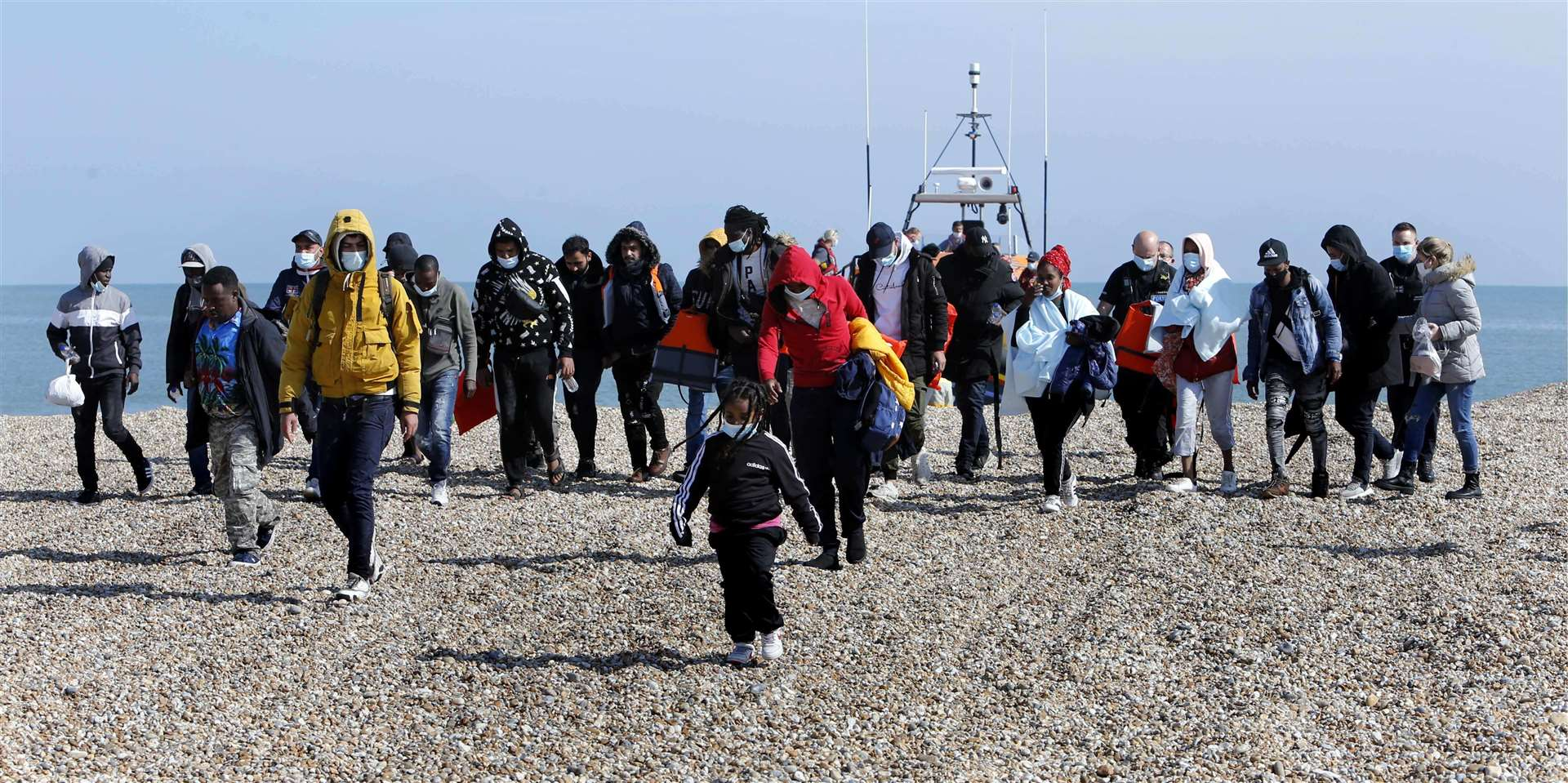
This month we are back to the small boats.  So far in 2025 some 15,000 arrivals have been recorded (1,100 on one day).  The Home Office say this is due to better weather and more people crammed in to boats.  In quarter 1 numbers were up by 20% on last year – mainly from the usual places – Eritrea, Afghanistan, Sudan.

The asylum backlog is down to 78,000, but with a lower grant rate (49% over the last year) the improvement may not be maintained.  The number of claimants jailed for “illegal arrival” has doubled in the last year.  Between 2022 and 2024, 556 arrivals were prosecuted under the Illegal Migration Act and 455 convicted (half of them were said to be piloting the boats, willingly or otherwise, and were therefore “facilitators”). In the latter half of last year, 53 people were arrested for people smuggling including many who happened to be steering the boats and many of them children.

Plans for removing arrivals to third countries for processing have made little progress ; Albania said no, North Macedonia & Kosovo have not been asked  but say they are open to discussion.

3,800 Afghans are currently awaiting homes (who came under the ARS scheme and were left unsupported). Also it has been claimed that an unnamed Special Forces officer blocked the entry of 1585 Afghans (it has been suggested this might be related to potential war crimes revelations).

Mary Bosworth (Oxford Professor of Criminology) has an interesting piece on the outsourced immigration detainee escorting system Mary Bosworth (@mfbosworth.bsky.social) — Bluesky

7000 Syrians are still in limbo awaiting a UK decision on processing their claims after a pause (the new regime is still being monitored, though presumably it will eventually be possible for many to return there).

The US has taken on “refugees” from South Africa, white residents supposedly under threat.  So far there have been 50,000 enquiries and 68 actual moves.

The Home Secretary has said she is working on a “fast-tracking” removal system for migrants from “safe” countries; these have not yet been named.

Of the 108,000 claimants for asylum status in the last year 16,000 were from holders of student visas. The government is likely to address this question soon.

Immigrant-focused group British Future have polled the public on attitudes to the word “immigrant”.  For 70% of respondents this conjured up people on small boats, while 46% thought of imported workers.  Of those who wanted to see a reduction in immigration, 49% prioritised the boats, very few mentioning worker or student arrivals.  The research also finds that 59% of the public, and 64% of 2024 Labour voters, agree that migrants living in the UK and paying taxes should be eligible to apply for citizenship after five years or less.

Polling organisation More in Common found that 51% thought a fall in immigration a good thing, 57% opining that the level was still too high.

One of the more interesting ideas for Refugee Week is that of Lancaster, where an exhibition, Escape to Safety, will give visitors an interactive view of the refugee experience.  More on that here

Finally, the Government’s Spending Review this week had a couple of points on the immigration/asylum seekers question.  Chancellor Rachel Reeves says the new Border Security Command will receive up to £280m more a year by the end of the spending-review period.  She also promises that all spending on hotels for asylum seekers waiting for their cases to be heard will stop by the end of this parliament.

Andrew Hemming

Refugee report


Monthly report on this politically toxic topic

April 2025

The Government’s Border Security Asylum and Immigration Bill has now completed its report stage and will next go to the Lords.  While this is going on, an update on the numbers shows that the number of small boat arrivals this year so far has exceeded 6000, the highest yet.  Meanwhile the backlog of pending asylum cases has increased to 41,000 in December.

The PM has drawn together 40 nations for his Organised Immigration Crime summit last week.  A press release went without much comment, containing the usual statements about agreeing to enhance border security and dismantle the criminal networks.  One item which did emerge was an agreement with Serbia to exchange intelligence about what is now known as the Western Balkans route into Europe.

Following this event, some 136 organisations under the umbrella of Together with Refugees wrote to the Government, unhappy about the language used by the Prime Minister, which they described as “demonising.”  The PM had claimed: “There is little that strikes working people as more unfair than watching illegal migration drive down their wages, their terms and their conditions through illegal work in their community.”

New research from the European University has suggested that attitudes in Europe to irregular migration are more nuanced and varied than previously supposed.  This was from a survey which covered 20,000 people across Austria, Italy, Poland, Sweden, and the UK designed to understand their preferences on policies regarding access to healthcare, social welfare and labour protections, as well as the obtainment of regular legal status or “regularisation” for irregular migrants. The results challenge the idea that public attitudes toward irregular migrants’ rights are simply “for” or “against”.  Instead, they found that variations in policy design matter – and when policies include both migration controls and protections for migrants, public support often increases.

Unusually, there is some emphasis this month about campaigning.  Refugee Week (third week in June) is this year under the theme of Community as a Superpower with its customary emphasis on small actions. The group might consider an action (s) which might include:

Following our action against denying asylum seekers the right to work pushing for a change in the law. Refugee Action have a petition to sign here and, for more information, you can Read the coalition’s report here. We could arrange our own petition using the Lift the Ban coalition’s resources.

  • Pressing for Salisbury to be a City of Sanctuary (Winchester and Swindon are)
  • A letter writing workshop for supporting asylum seekers (maybe using the Salisbury Ecohub)
  • A vigil for small boat arrivals (as we did a few years ago)
  • Safe Passage want us to write to our MPs about government  policy and the new bill

(They have a standard email, but this could be enhanced).

Also Refugee Action are offering speakers for local groups – they admit they would mostly be online, but they can make visits.

Finally, a recommended read is Labour’s Immigration Policy by Daniel Trilling (who many will remember gave a talk to us some years ago) in the London Review of Books for March.

Andrew Hemming

UK Refugee Report: Political Issues and Policy Changes


This month’s refugee report on this vexed problem focuses on political issues in the UK

February 2025                                                        

This month the concentration will be on the continuing situation in the UK, with legislation going through and much pressure from certain political parties on the issue.

The Government’s Border Security Asylum and Immigration Bill passed its second reading this month. This Bill repeals the previous government’s Safety of Rwanda Act and some of its Illegal Migration Act. As presented, the Bill has received a cautious response from refugee and asylum organisations, most taking the view that it could have been worse.  The new offence of “supplying or handling ‘articles for use in immigration crime’” is expected to only be rarely used, despite the draconian punishment.  The other main provision concerns applying anti-terrorist legislation to smuggling gang leaders when caught.  Most organisations in the field point out that gang leaders rarely have assets in the UK and the National Crime Agency have said that most crime gangs are based in France, Belgium, Germany or Turkey, the success of this initiative is therefore to be doubted.

Blanket denial of citizenship

As of this week, the Home Office has been accused of a policy of denying citizenship to anyone who arrived by irregular means, however long ago, and despite being given leave to remain.  This would appear to be in breach of Article 34 of the Refugee Convention.  The issue is continuing.

Among the boat arrivals, the number of deaths recorded in transit was 78 in 2024, three times higher than the previous year. Pressure on the boat suppliers has led to more overcrowding, among other causes.

Within the European Union, irregular migration figures are down by 38% from 2023 to 2024, according to Frontex.  Migration routes from Tunisia, Libya and the Western Balkans have been made more difficult, but the policy of the government of Belarus in pushing migrants to the west has added to the numbers from that source.  Frontex are developing the use of AI on the borders.

The UK government has been publicising its deportation programme for unsuccessful claimants. Between 5 July 2024 and 31 January 2025, a total of 18,987 returns were recorded – an increase of 24%, the Home Office said.  Removals of foreign national offenders were up by 21% and illegal working raids – on such places as nail bars and car washes – are up by 38% compared with the same period 12 months previously.  Videos of people being put on planes* (for unknown destinations) have been put in the public arena.  Of the total returns since 5 July 2024, 2,925 were of foreign national offenders – an increase of 21%.

The backlog of asylum cases continues to be a concern.  In the last year, the proportion of asylum claims that have been accepted has dropped from 75% to 52% with a resulting increase in the number of appeals.  So, although the initial backlog built up over years has fallen, it is constantly being topped up. The last available figure, for September, was 97,000, but the Home Office say it is reducing.

Criticism of language used

A report by the Runnymede Trust has noted the language of the immigration debate, particularly the widespread use of the word “illegal”, although governments have tended to avoid the word as immigration is not illegal, though it may be “irregular”.  It blames media reporting for encouraging hostility towards migrants. In parliamentary debates and media reporting, negative terms like “illegal”, “flood” and “influx” are persistently used in association with migrants, posing them as a threat, dangerous and outsiders. The word “illegal” is in the top five most strongly associated words with ‘migrant’.

The pause in accepting Syrian refugees since the revolution is continuing despite urging from Damascus to process ongoing claims.

The Migration Advisory Committee has called for a change in the rules on working, asking for claimants to have the right to work after six months in the country.

The All-Party Parliamentary Group on Refugees issued a report this month on the working of the immigration system, and made some recommendations for improvement. Overall, the inquiry found that the current processes for safe and legal routes are overly complex, restrictive, and slow, leading to prolonged family separations and increased irregular migration. The report says UK governments since 2019 have adopted a “scattergun” approach to safe and legal routes.

“They have failed to effectively utilise the UK Resettlement Scheme (UKRS) and cooperate with the UNHCR to provide quotas for arrivals on this scheme. Instead, nationality specific schemes, each conferring differing entitlements, have been adopted, meaning that access to family reunion, immigration status and integration prospects are dependent on the scheme you arrived on which is unfair and inefficient.

“The refugee family reunion route was also highlighted as not operating effectively. Despite the number of visas issued increasing significantly in 2024, two-thirds of cases are failing to meet the Home Office’s own service standard of processing within 60 days. A backlog of family reunion cases has risen to at least 11,000 cases. The UK also operates one of the most restrictive refugee family reunion policies in Europe.“

The APPG makes three main recommendations. Firstly, it calls for improvements to refugee family reunion by processing cases within 60 days, allowing refugee children to sponsor their family members, and removing financial restrictions on UK-based sponsors. Secondly, it recommends restoring the UK Resettlement Scheme as the primary resettlement route and reaffirming the commitment to resettle 20,000 Afghans under the Afghan Citizens Resettlement Scheme. Thirdly, the report proposes introducing a pilot refugee visa scheme targeted at high grant rate countries, with a cap of 10,000 visas during the pilot period.

Finally, Amnesty are offering small grants for actions during Refugee Week in June details are available on the Local Groups email (but the final date is Monday!)

*the video is embedded in this LBC post.

AH

Refugee report


Events in Syria may see many return

December 2024

To begin with more positive news, the collapse of the regime in Syria has led to a rush among exiles to return to the country. Refugee camps just outside Syria have been particularly active. The down side is that, as a result, European governments (including the UK) have paused processing active asylum claims from Syrians. The UNHCR has calculated that the largest number of refugees from Syria leaving for other countries under Bashar al-Assad were Turkey 3.1 million, Lebanon 774,000, Germany 717,000 and Jordan 628,000.

Statistics released this month indicate that the net migration totals for the UK have dropped to 728,000 for y/e June 2024, but of course most of these are legal. Of the asylum claimants, the backlog of cases was at 97,200 in September, mostly appeals, as the percentage of claims granted by the Home Office has fallen over the last 12 months from 75% to 52%. At the same time, it has been said that only 52% of asylum decisions have met the Home Office’s internal quality assurance requirements. Since the Home Office has imposed a 2 hour limit on interviews with claimants in an attempt to speed thing up, this is perhaps not surprising.

Small boat arrivals have dropped substantially in the last month, due mainly to adverse weather. No boats arrived between the 17th and 30th November, and only 8 since, which means 400 arrivals in the last 3 weeks. Greece, the main point of entry to Europe for many, has received 57,000 arrivals this year so far.

A change in the law means that newly accepted asylum seekers in the UK will now have 56 days to “move on” from asylum accommodation, twice the previous limit. The Home Office is also planning to house asylum seekers in disused care homes and student accommodation. The National Audit Office has concluded that accommodation like military bases and barges do not represent value for money.

Britain has signed a deal with Iraq to tackle people smuggling gangs, particularly in the Kurdistan region. Deals with other front line countries may follow. Meanwhile the UK and Germany have pledged to share intelligence and expertise against the gangs. Germany will make it a specific offence to facilitate smuggling migrants to the UK; many of the rubber dinghies used are stored in Germany.

Andrew Hemming

Pic: NY Times


Recent posts:

Refugee report


April 2024

This month, the report starts with the EU. The Freedom United charity note that so far this year more than 200 people have died trying to leave Libya, many shot by the Libyan Coast Guard. The EU continues to help fund the LCG, and the Institute of Migration say that 600,000 people are trapped in Libya seeking to get to Europe. Needless to say, there are many allegations of breaking international law in this crisis.

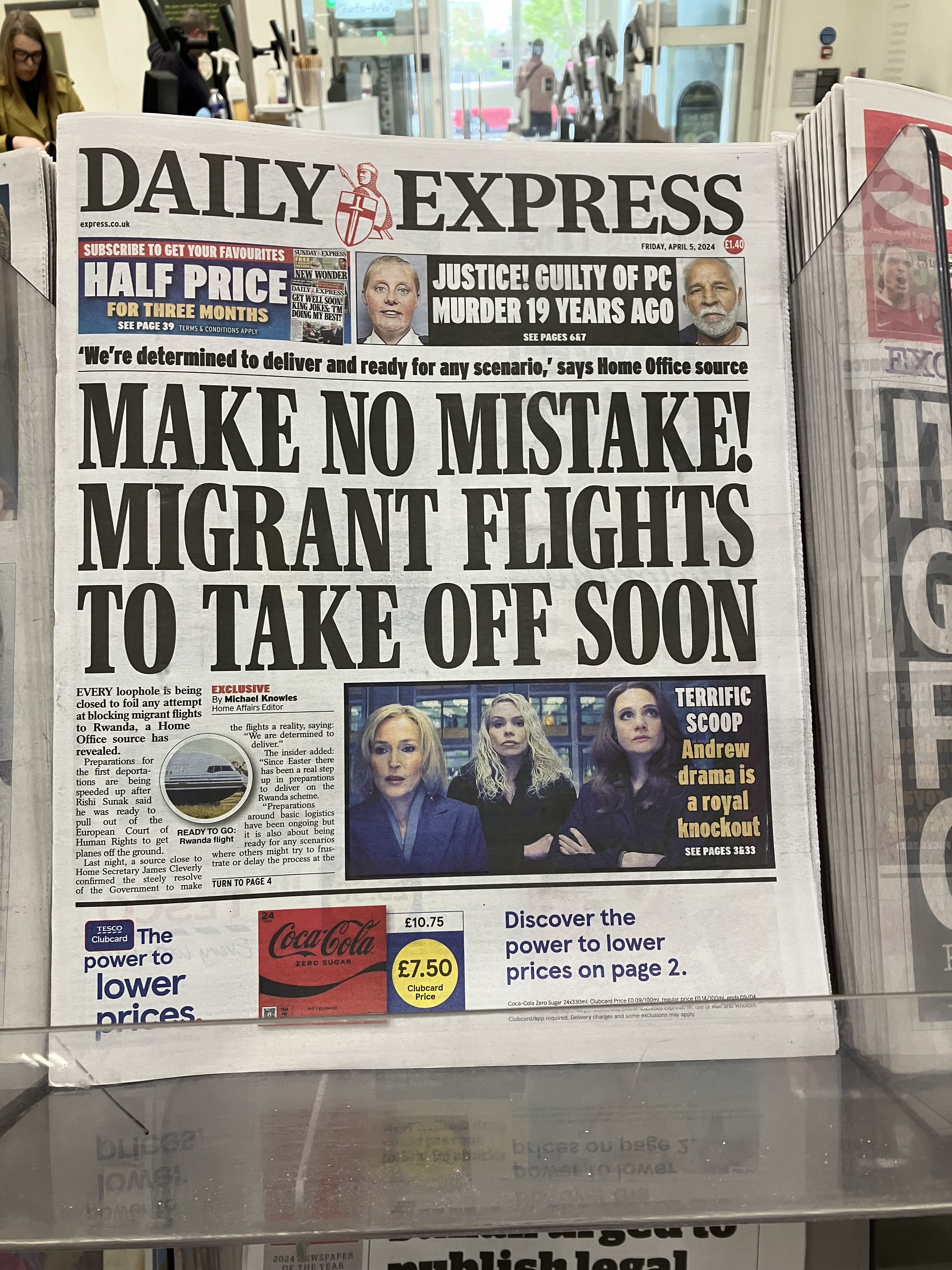
Also beyond the UK, the latest news from Rwanda is that, following the lack of progress in deportations, 70% of the properties allocated to receive deportees have now been sold to local buyers. On this topic, the Rwanda Bill returns next week for more ping pong – it could yet go for the Royal Assent within a few weeks. Judges are being given “special training” to ensure speedy delivery of those to be deported to Rwanda, according to the Daily Express. The airline Air Tanker is reported to be in discussions with the government about providing the transport, although they withdrew from previous similar discussions. RwandAir has already declined for fear of reputational damage.

The Prime Minister has claimed that 24,000 irregular migrants were deported last year. Full Fact have checked this and argue that only about 25% were enforced returns, the rest being voluntary. The number of arrivals in small boats this year stands at 4,644 at the end of March – bad weather has reduced the number in the last few days, but the figure is still higher than last year.

Charities and law firms have sent a letter to the Home Secretary seeking a Ukraine-style visa scheme for Palestinians who have family in the UK. The Home Office has also refused to decide on whether to drop the need for biometric data for reuniting family

arrivals from Gaza, although obtaining such data is virtually impossible in the crisis; the Upper Tribunal ruled against the Home Office in two test cases.

In their annual report, the Office of the Immigration Services Commissioner note that the number of immigration advisers at the Home Office is growing, but not fast enough to keep up (and large numbers are leaving).

Finally, back to Europe, where the European Parliament has passed the Pact on Migration and Asylum today (Wednesday 10 April) against votes from the extreme right and extreme left. The 10 provisions of the pact cover issues like relocating from over-immigrated countries, financial allocation, fast-track routes and exchange of data.

A group of 22 NGOs has issued a statement arguing that “while the adoption … is likely to lead to a detrimental degradation of people’s access to protection in Europe, the new Union Resettlement Framework (URF) adopted alongside the Pact offers a glimmer of hope.

“The URF signals the EU’s political support for global resettlement efforts and has the potential to be a step towards advancing solidarity, capacity-building and responsibility sharing. It must now be operationalised effectively to ensure that more people reach safety and find long-term solutions,” the groups, which include the International Rescue Committee and Oxfam, said.

Andrew Hemming

Refugee News


March 2024

As usual, we lead with Rwanda. The Lords have been inflicting a number of defeats on the government over the provisions of the Bill, and the “ping pong” between the two Houses will reach a climax next week, when we will know which, if any, amendments the government will accept. Further issues have arisen over the role of the civil service in the planned scheme, with the FDA union threatening legal action against the government in the event of a clash with the European Court.

The National Audit Office has calculated the cost of the first (total?) 300 deportees to Rwanda to be £541 million, at £1.8 million per person. Indeed, the cost to date is £20 million with no flights. Ian Dunt has calculated that the cost per asylum seeker generally in 2015/6 was £7062, whereas in 2022/3 it was £20921.

The latest wheeze, as revealed in The Times today (Wednesday) is simply to pay failed claimants £3000 for a  “voluntary return” – to Rwanda.

Figures released this month show that, as of 23 December 2023 the number of asylum seekers waiting for an initial decision was 128,000. The Government, of course, has claimed to have removed most of the legacy backlog, so most of these are new.

The sacking of the Independent Chief Inspector of Borders and Immigration has resulted in the sudden release of the plethora of reports he wrote, which had not previously been published. They mostly concern the implementation of the Nationality and Borders Act 2022 and are generally critical of the Home Office’s performance. It is unlikely that a replacement for Mr Neal will be found before the end of this parliament.

Refusal rates for asylum seekers went up in the last quarter of 2023, with a  third of applications refused. This is unusual, as most applications end up being accepted.

The rules on Ukrainian refugees’ visas changed last week (with 4 hours notice of implementation) – The Family Scheme was closed though the Homes for Ukraine scheme is extended, but will not be processed until 2025.

This week the Council of Europe Commissioner for Human Rights, Dunja Mijatovic, criticised the Rwanda scheme along with certain French actions as acting above the law. She was concerned that two large European nations were giving a bad lead to the rest.

A small boat arrival, Ibrahima Bah, was sentenced this month to 9 ½ years in jail for “facilitating illegal entry, gross negligence and manslaughter “ following the deaths of fellow passengers. He is the first shipwreck survivor in the UK to face such charges and was not a people smuggler, but a refugee left in charge of the boat. The court concluded his age was 20, but he claimed to be 17.

Andrew Hemming


The Salisbury Group was established 50 years ago this year

UN Rapporteur ‘seriously concerned’ at crackdown in UK


UN Rapporteur on environment matters expressed ‘alarm’ ‘distress’ and ‘serious concern’ at the crackdown on environmental activists in UK

January 2024

Between 10 – 12 January 2024, David Forst, made his first visit to the United Kingdom since he was elected as UN Special Rapporteur on Environmental Defenders under the Aarhus Convention in June 2022.

On 23 January he issued a statement in the light of the extremely worrying information he received in the course of meetings regarding the increasingly severe crackdowns on environmental defenders in the United Kingdom, including in relation to the exercise of the right to peaceful protest.

These developments are a matter of concern for any member of the public in the UK who may wish to take action for the climate or environmental protection. The right to peaceful protest is a basic human right. It is also an essential part of a healthy democracy. Protests, which aim to express dissent and to draw attention to a particular issue, are by their nature disruptive. The fact that they cause disruption or involve civil disobedience do not mean they are not peaceful. As the UN Human Rights Committee has made clear, States have a duty to facilitate the right to protest, and private entities and broader society may be expected to accept some level of disruption as a result of the exercise of this right“.

Peaceful protests

During his visit, however, he learned that, in the UK, peaceful protesters are being prosecuted and convicted under the Police, Crime, Sentencing and Courts Act 2022, for the criminal offence of “public nuisance”, which is punishable by up to 10 years imprisonment. He was also informed that the Public Order Act 2023 is being used to further criminalize peaceful protest. In December 2023, a peaceful climate protester who took part for approximately 30 minutes in a slow march on a public road was sentenced to six months imprisonment under the 2023 law. That case is currently on appeal, but it is important to highlight that, prior to these legislative developments, it had been almost unheard of since the 1930s for members of the public to be imprisoned for peaceful protest in the UK.

He also expressed alarm to learn that, in some recent cases, presiding judges have forbidden environmental defenders from explaining to the jury their motivation for participating in a given protest or from mentioning climate change at all. It is very difficult to understand what could justify denying the jury the opportunity to hear the reason for the defendant’s action, and how a jury could reach a properly informed decision without hearing it, in particular at the time of environmental defenders’ peaceful but ever more urgent calls for the government to take pressing action for the climate.

He also received highly concerning information regarding the harsh bail conditions being imposed on peaceful environmental defenders while awaiting their criminal trial. These have included prohibitions on engaging in any protest, from having contact with others involved in their environmental movement or from going to particular areas. Some environmental defenders have also been required to wear electronic ankle tags, some including a 10pm – 7am curfew, and others, GPS tracking. Under the current timeframes of the criminal justice system, environmental defenders may be on bail for up to 2 years from the date of arrest to their eventual criminal trial. 

Such severe bail conditions have significant impacts on the environmental defenders’ personal lives and mental health and he seriously questioned the necessity and proportionality of such conditions for persons engaging in peaceful protest. In addition to the new criminal offences, he was deeply troubled at the use of civil injunctions to ban protest in certain areas, including on public roadways. Anyone who breaches these injunctions is liable for up to 2 years imprisonment and an unlimited fine. Even persons who have been named on one of these injunctions without first 2 being informed about it – which, to date, has largely been the case – can be held liable for the legal costs incurred to obtain the injunction and face an unlimited fine and imprisonment for breaching it. The fact that a significant number of environmental defenders are currently facing both a criminal trial and civil injunction proceedings for their involvement in a climate protest on a UK public road or motorway, and hence are being punished twice for the same action, is also a matter of grave concern to him.

Media derision

He was also distressed to see how environmental defenders are derided by some of the mainstream UK media and in the political sphere. By deriding environmental defenders, the media and political figures put them at risk of threats, abuse and even physical attacks from unscrupulous persons who rely on the toxic discourse to justify their own aggression. The toxic discourse may also be used by the State as justification for adopting increasingly severe and draconian measures against environmental defenders. In the course of his visit, he witnessed first hand that this is precisely what is taking place in the UK right now. This has a significant chilling effect on civil society and the exercise of fundamental freedoms.

As a final note, during his visit, UK environmental defenders told him that, despite the personal risks they face, they will continue to protest for urgent and effective action to address climate change. For them, the threat of climate change and its devastating impacts are far too serious and significant not to continue raising their voice, even when faced with imprisonment. We are in the midst of a triple planetary crisis of climate change, biodiversity loss and pollution. Environmental defenders are acting for the benefit of us all. It is therefore imperative that we ensure that they are protected.

A spokesperson for the UK Home Office, the government department that tackles policing and other elements of national security, said that “while decisions on custodial sentences are a matter for the independent judiciary, the Public Order Act brings in new criminal offences and proper penalties for selfish, guerrilla protest tactics.”

Sacha Deshmukh, Amnesty International UK’s chief executive, said: “The UN special rapporteur offers a damning indictment of the repressive crackdown climate activists in the UK face for exercising their right to peacefully protest.”

“The UK Government seems more intent on creating a climate of fear than tackling the climate crisis.“

The full report can be accessed here: Aarhus_SR_Env_Defenders_statement_following_visit_to_UK_10-12_Jan_2024.pdf (unece.org)

Sources: CNN; Guardian; UN, Mail on Line. [There does not seem to be a report on this in the Daily Telegraph]. All accessed 25 January 2024

Refugee report: January


Latest report on this politically charged problem

January 2024

Refugees and in particular, those arriving via small boats across the Channel, continue to cause considerable concern among the political classes and in the media. Overtaken in the past few days by the Post Office scandal, the matter will burst back into view next week when the Rwanda bill comes back to the Commons.

The total number of “small boats” arrivals in 2023 was 29,437 which was 36% lower than the figure for 2022. Bad weather in the latter part of the year has been a factor. Border Force expect the numbers to rise again in 2024. 20% of the arrivals were from Afghanistan.

On claims, of the 40,000 arrivals between July 2022 and May 2023, 90% applied for asylum. The PM’s claim to have removed the legacy of pre-2022 cases is questionable. The Office for Statistics Regulation is investigating.

The Times reports that Home Office officials can’t clear the rolling asylum backlog, because more than 50,000 claims are for people who are in the U.K. but barred from permanent settlement under new laws passed last year. The paper calls it “indefinite limbo.”

The statistics summary states that of “the 112,138 initial asylum decisions made between January and 28 December 2023, 35,119 were non-substantive decisions”. This includes withdrawals, and it seems reasonable to conclude that the vast majority of those 35,119 decisions were withdrawals given that the statistics to the end of September 2023 showed that 18,709 applications had been withdrawn since June 2022, most of these in 2023. It has been clear since last year that the government was using this as a tool to artificially reduce the number of cases.

This means that over 31% of ‘decisions’ that were made in 2023 were probably withdrawals. These are people who are still here and a large proportion of them are likely to be refugees. All that has been achieved by removing them from the asylum system is an increase in the likelihood of them being subject to exploitation, as people who are left outside the system are far more vulnerable to this.

A report in the i (paywall) shows what has been happening with the withdrawal of asylum claims,  Apparently those decision makers who met targets received gift vouchers and those who didn’t were subjected to performance management. In the meantime, those on the receiving end include people who do not speak English as well as those who were living in Home Office accommodation but have been accused of absconding from it.

In Parliament, the Safety of Rwanda Bill returns to its final debate stage next Tuesday and Wednesday (16th and 17th January), when there will be a large number of amendments, the majority of which will fail. The bill will be considered by a committee of the whole house, meaning all MPs can contribute to the committee stage debates which are normally limited to members of a bill committee, and these are the debates where Tory right-wingers will try to toughen the bill. For example, they may try to remove the clause in the bill allowing individuals to appeal against deportation, or to include provisions saying ministers should ignore European court of human rights injunctions stopping deportations flights. Tory centrists may also try to amend the bill to tighten the requirement on ministers to obey the European convention on human rights.

To end on some good news, the Dorset Echo has a report that some of the asylum seekers on the Bibby Stockholm have started working with local charities, particularly those concerned with the homeless. Being prevented from working has left them with lots of spare time and many of them have experience of charitable work in their former lives.

Andrew Hemming

Refugee summary


The October update on the current state of refugees into the UK
October 2023

The week’s big event has been the start of the Supreme Court’s review of the legality of the Rwanda deportation plan. They are expected to take 3 days to come to a conclusion, but this will not be made known for some weeks. Also, the Mayor of Portland’s planning permission protest against the Bibby Stockholm ship was heard this week (she lost) and the Home Office have reported that claimants will be sent back to the barge from 19th October. In passing, the Home Office is refusing to state the cost of the barge, as it would not be “in the public interest”.

The government’s Illegal Migration Act is facing a court challenge from the Northern Ireland Human Rights Commission (NIHRC) on the ground that it breaches the Windsor Framework. The framework is the revised post-Brexit deal for Northern Ireland, which was agreed by the UK and EU earlier this year. It deals mostly with trade issues but also includes a human rights element. It commits the UK not to water down the human rights provisions that flow from the Good Friday Agreement.

Opening up the UN Refugee Convention to reform would cause the world to “go backwards” on refugee rights, a UN leader has said. Gillian Triggs, UN Assistant Secretary-General, told the One Young World Summit in Belfast that there is a “global environment of populist rhetoric” that is damaging to refugees. The 1951 UN Refugee Convention outlines a number of protections for refugees, including basic minimum standards, and asserts they should not be returned to a country where they face serious threats to their life or freedom.

Suella Braverman

In a trip to Washington DC last month, the Home Secretary, Suella Braverman, said it should be questioned whether the application of the UN’s Refugee Convention is “fit for our modern age”.

Channel crossings

The mild Autumn has kept the small boats coming, the total people arriving for the year so far being just over 25,000. This is down by about 20% on last year, mostly because of the absence of arrivals from Albania. There have been two major reports this month: Safe Passage has been looking at safe routes for prospective refugees and the Refugee Council have looked at the data on arrivals, and discuss the impact of the new Illegal Migration Act. The Refugee Council’s analysis of new Home Office statistics shows that three in every four of the people who have crossed the channel so far this year would be recognised as refugees if the UK Government processed their asylum applications. This is higher than the Refugee’s Council previous analysis of those who made the journey in 2022, which found it was almost two-thirds. The statistics also show that:

More than half (54 per cent) of those who have made the perilous crossing come from just five countries – Afghanistan, Iran, Eritrea, Syria and Sudan.

With the exception of Albanians, the number of people crossing the channel is higher in 2023 compared to 2022.

Analysis based on the data shows that once the Illegal Migration Act 2023 comes into force:

 • Each year, over 27,000 refugees who cross the channel will be denied status in the UK.

 • As few as 3.5 per cent of those people arriving by small boat, 1,297 people, will be removed from the UK to their own country.

 • 35,409 people who arrive in the UK by small boat could be left in limbo each year, having had their asylum claim deemed permanently inadmissible but not having been removed.

• Even with a safe third country agreement in place with Rwanda which allows for up to 10,000 people to be removed there annually at least 25,409 people will be left in a state of permanent limbo each year.

(The Illegal Migration Act The Illegal Migration Act became law on 20 July. The main elements of the Act include the creation of a duty for the Home Secretary to arrange for the removal of anyone who arrives irregularly into the UK – including, but not limited to, those who arrive by small boat. Anyone who is covered by the duty to remove will also have any asylum application or relevant human rights claim deemed automatically inadmissible. )

The Safe Passage report concentrates on devising a better system of dealing with new arrivals. It recommends developing safe routes, not least to end the control of the smugglers, an organized Europe-wide system to share the responsibility, and a recommitment to the UN-based regulations under international law.

The Migration Advisory Committee has recommended that the shortage occupation list is abolished and that people in the asylum system with permission to work are allowed to work in any role. These are some of the recommendations in the full review of the shortage occupation list, published this week.

With thanks to group member Andrew for the work in producing this report.

AH

Refugee report: July


Refugee report with an update on the current state of play with legislation

July 2023

The Illegal Migration Bill continues its dizzying route to completion, despite 20 defeats in the House of Lords. The Commons has rejected all the amendments, and the Bill will return one more time to the Lords and, presumably, back to the Commons next week before the recess in a process called ‘ping pong’. Despite the enormous interest in this subject and its high political salience, it was reported that fewer than 40 MPs turned up for the debate and only 20 or so stayed to the end.

We are grateful for group member Andrew for this report.

The latest situation update:

All of the Lords’ amendments were overturned by the Commons, but several had some support from the Conservative benches (Tim Lough-ton complained that they had not had enough time to mull over the government’s changes). The Home Office offered several concessions on Monday evening, The bill’s provisions will no longer apply retrospectively to anyone deemed to have arrived illegally from March 7 (10,000 people will escape the legislation’s measures, according to the Daily Mail) … the detention of unaccompanied children will be limited to eight days (significantly longer than the 24 hours backed by peers) … and the detention of pregnant women will be limited to 72 hours (extendable to seven days by ministers). Other issues still in play from the Lords debates include:

• Removing unaccompanied children from within the scope of the Bill
• Allowing anyone not removed within 6 months to re-enter our asylum system and have their claims heard
• Ensuring Local Authorities maintain care of unaccompanied children and that children are protected during the age assessment process
• Ensuring LGBT+ people are not removed to countries where they risk persecution, and that victims of trafficking are not included within scope of the Bill (as sought by Theresa May). These will presumably come up again in the next Lords session.

Elsewhere

The highest number of small boat arrivals on a single day this year occurred last week at 686. The total for the year to last weekend was 12,119, slightly down on last year.

UNHCR report says the worldwide figure for refugees is now 29.4 million excluding Palestine. 76% in low/middle income countries 70% in a neighbouring country. 339,300 refugees returned home and only 114,300 refugees were resettled out of camps last year. UNHCR estimates that 1.5 million people globally are in need of resettlement because they are in a protracted refugee situation, meaning they had been refugees for longer than five years. For each refugee that was returned or resettled in 2022, there were 16 new refugees.

Free Movement have picked up on a story that the Home Office is planning to reintroduce the concept of “reasonable force” to remove families with children. Watch this space.

Small boats

The government does not know how much its new small boats bill will cost or if it will achieve its core aim of deterring Channel crossings, an official assessment has found. Documents published over three months after the Illegal Migration Bill was presented to parliament estimated that it will cost £169,000 to deport each asylum seeker – but it is unclear how many will be removed and what “third countries” will receive them. The only existing deal is with Rwanda and the Home Office refused to publish the actual payments agreed, citing “commercial sensitivities” as a Court of Appeal ruling on the scheme looms.
A report from the Migrant and Refugee Children’s Unit argues that Albania is not a “safe country”, as the Government maintains.

Controversial plans to house asylum seekers on a barge to reduce reliance on expensive hotels will save less than £10 a person a day, according to a report. The report, Bibby Stockholm – At What Cost? from the NGOs Reclaim The Seas and One Life To Live, provides the first detailed estimated costings of the Bibby Stockholm, the barge the Home Of-fice is planning to use in Dorset to accommodate asylum seekers.

On statistics, in correspondence between the head of the UK Statistics Authority, Sir Robert Chote and Immigration Minister Robert Jenrick, Chote commented: “concerns have been raised with us about your statement in the House of Commons on 20 March that :“Today, a majority of the cases being considered for modern slavery are people who are coming into the country – for example, on small boats. We are seeing flagrant abuse, which is making it impossible for us to deal appropriately with the genuine victims, to the point that 71% of foreign national offenders in the detained estate, whom we are trying to remove from the country, are claiming to be modern slaves.”

Minister accused of using the wrong statistics

“The Home Office advised us that the quoted figure comes from a recent report about modern slavery referrals for people detained for return after arriving in the UK in small boats and that your statement was intended to refer to the proportion of foreign national offenders (FNOs) that are referred to the National Referral Mechanism (NRM) as potential victims of modern slavery. The report explains that while an increasing proportion of all those in detention after arriving by small boat are referred to the NRM up from 52% in 2020 to 73% in 2021 (and subsequently falling to 65% between January and September 2022), the proportion among foreign national offenders is much lower (at around 20% between January and September 2022)”. This argument came up again in the Commons when Theresa May claimed Jenrick was using the wrong statistics.

Beyond Europe, it seems that the UN estimates that more than 31 mil-lion Africans live outside the country of their birth, mostly within the continent (only a quarter head for Europe). AlJazeera is running a se-ries of articles on this subject.

The BBC’s More or Less programme presented a special episode on immigration, featuring Colin Yeo as well as several other experts, which is recommended.


Migrant Help runs a guidance and advice helpline to assist asylum seekers in the UK as they move through the process. The charity is not part of the Home Office but is the advice by The Independent, a Migrant Help adviser said: “I am afraid Migrant Help are not contracted to respond to MPs correspondence and have forwarded the attached to the MP correspondence team. Our call handlers will reach out to the service user to see if there is any further support they can provide.
I would like to clarify that not responding to MP enquiries is not a Migrant Help policy but a directive given to us by the Home Office as part of our work under the advice, issue reporting and eligibility (AIRE) contract. I have expressed con-cerns regarding this process

Blog at WordPress.com.

Up ↑