Further restrictions planned on protests


Home Secretary will aim to increase curbs on repeated protests

October 2025

Governments throughout history have disliked protests and demonstrations. Thousands of people marching through the streets of London loudly, or even peacefully, stating their grievance or demanding a right denied to them, has long been part of our national life. Indeed, Sir Ian Gilmour in his book Riot, Risings and Revolution* describes the very many such events which took place in eighteenth-century Britain. Such was the violence that parliament was sometimes unable to sit for fear of MPs being dragged from their carriages. It is important to remind ourselves of this because the impression is sometimes created by present day politicians and some media commentators that this is some kind of new phenomenon. They are disliked because they disturb the current order. They give voice to injustice.
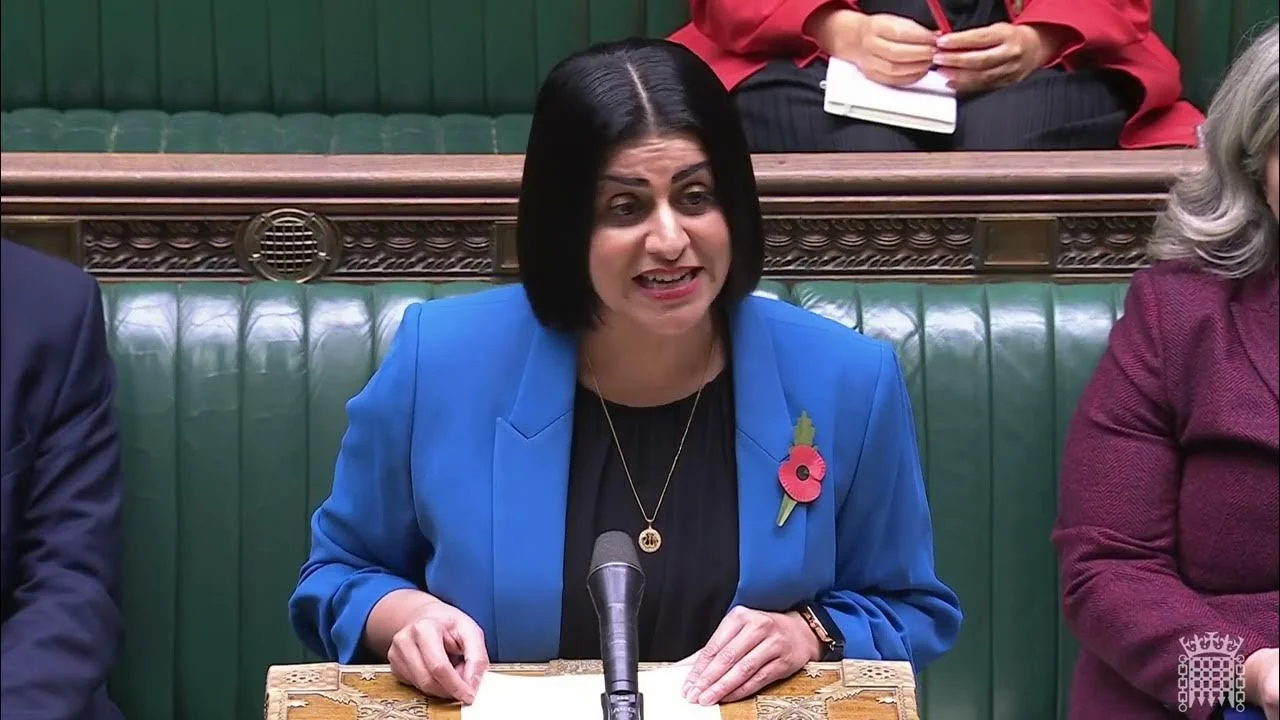
As we have noted before, the current home secretary, Shabana Mahmoud, is a woman as were previous home secretaries viz. Yvette Cooper, Suella Braverman, Amber Rudd, Theresa May and Priti Patel. All have the vote, all were/are MPs and are, or were, in parliament. That this is so is as a result of prolonged protest over many decades. They became violent as a (male) parliament refused to allow female enfranchisement. We could list other protests: to allow non property owners get the vote, for safety in the factories, to stop impressment and many other causes. All have the same or similar causes: people who feel that a government is more interested in satisfying or appeasing the powerful and are not listening to the powerless. Arms companies for example, have no need to spend a Saturday marching through London streets risking arrest and blistered feet, they – or their lobbyists – have direct access to ministers and senior civil servants all too happy to accommodate their wishes.

Frequency the problem

Mahmoud wants to get legislation passed to amend the Public Order Acts to clamp down on frequent protests. ‘Frequency of particular protests in particular places‘ she says ‘is in and of itself a reason for the police to be able to restrict and place conditions’. As a variety of civil rights organisations have pointed out, it is frequency which is the point. A single march or demonstration is unlikely to achieve anything much – the million or so who protested against the calamitous war in Iraq is an example.

She also claims, ludicrously, that they were ‘un-British’ and ‘dishonourable’. Clearly a minister who has only a slender grasp of British history.

There are a number of factors which seem to be at play here. The current ministerial statement came after the dreadful attack on a Synagogue in Greater Manchester. Marches were planned two days later on the Saturday in support of Palestine. There were many calls for the marches to be postponed. The organisers would not and went ahead with 488 arrested in Trafalgar Square. We can get a sense of the tensions at play in a Daily Telegraph article on 2 October Israel blames Starmer after synagogue terror attack which quoted without evidence, an Israeli source claiming the attack may have been ‘directed by Hamas’. Raphi Bloom is quoted in the Jewish Chronicle ‘that the community “will not forget the betrayal” over the UK recognising a Palestinian state, saying: “When you fail to act on constant calls to globalise the intifada, the results are that intifada came to our Manchester Jewish community with horrific consequences”.

It is clear that many people are upset and angry about the continued and wholly disproportionate killing and starvation which is taking place in Gaza. They are angry at the government continuing to allow Israel to be supplied with arms and the covert support by the RAF with their hundreds of overflights of Gaza. UK sales of arms to Israel reached a record high in June this year. They do not accept that there is a connection between the killing in Greater Manchester and Israel’s activities in Gaza and the West Bank. It can be argued that the Israeli government has perpetually conflated criticisms of its actions in Gaza and inaction in the West Bank as ‘anti-Semitic’ or ‘hatred of Israel’ and more recently as being ‘pro Hamas’.

The Home secretary’s plans to add to the legislation passed by the Conservatives is unnecessary and to quote an Amnesty director ‘ludicrous’. They may be part of a plan by government to look tough in the face of the increasing popularity of Reform and Nigel Farage. They represent a further step in increased authoritarian government and a desire to restrict protests generally.

*Pimlico (pub) 1992

Sources: Daily Telegraph, Jewish Chronicle, BBC (factcheck service), Sky News, Guardian, Wikipedia,

Refugee report: March


Government attitudes to immigration still causing problems

March 2025

The Government’s Border Security Asylum and Immigration Bill is in its committee stage this week. Much interest has been shown by MPs in using the occasion to express opposition to the Home Office’s guidance on denying citizenship to “illegal” migrants, however long ago their arrival may have been. This guidance has been put forward as a gloss on the “good character requirement” for naturalisation, deeming those who arrive illegally via “dangerous journeys” to be ineligible. The SNP have put forward an amendment to obviate this ruling and the Home Affairs Select Committee have sought an explanation for the change in policy.

Brian Mathew, the Liberal Democrat MP for Melksham and Devizes, said asylum seekers should be given the ability and support to work “instead of leaving them in administrative limbo in hotels around the country costing the taxpayer millions”.

There has been concern amongst MPs also about the government’s decision to transfer some of the foreign aid budget to pay for increases in defence expenditure. This will obviously have a bearing on the amount of funding available for countries with refugee issues. According to the FT, presently it is believed that half the foreign aid budget will now  go on migrant hotel accommodation.

The Home Secretary has been visiting Northern France, the first Home Secretary to do so in recent years. Yvette Cooper is bringing £172 million to aid the French authorities against people smugglers. The National Crime Agency believes that they now have a better understanding of how the boats and engines arrive on the Channel coast, mainly from Germany. Germany has now made it a crime to facilitate illegal migration to the UK.

At the same time as immigration is being targeted, the Government is increasing its deportation levels. This post by Prof. Mary Bosworth is worth reading.

The small boats continue; this year so far the numbers are 40% down on last year, but better weather will probably change the ratio. 2024 data indicate claims were up 18% on 2023, and grant rates were down from about 67% to about 47%. A particular drop in acceptances has been felt by Afghans: from around 90% agreement to around 50% (with legal routes barely used now); it has been suggested that the Home Office considers the Taliban no threat to a wide range of society now.  The largest influx currently is from Sudan.

Other notes: The Guardian featured the immigration regime in Spain, where a less hostile attitude has brought economic results with arrivals able to work.The Home Office has been accused of failing to correctly assess the ages of child migrants by the Refugee and Migrant Children’s Consortium. And the UK is refusing to pay the £50 million compensation demanded by Rwanda for the collapsed migrant removal policy.

We are grateful to group member Andrew for producing this report.

Refugee report, March


March 2023

The temperature surrounding immigration and asylum has risen this month with yet more legislation is proposed. We are grateful for group member Andrew for the preparation of this report.

Now we have the detail of the new legislation proposed by the Prime Minister and the Home Secretary designed to deal with the small boats issue “once and for all”, and we can also review some of the latest figures on immigration to emerge.

As expected, the main thrust of the new Illegal (sic) Migration Bill is to state that migrants arriving by small boats will be detained and deported to their home country (though there appear to be no return agreements in place), or, if not safe, to a third country e.g. Rwanda, to be processed.  There will also be a cap on the numbers to be taken in by “safe and legal” routes.  Those removed after processing will not be allowed to re-enter, resettle, or seek British citizenship at any future date.

The issue of the legality of the proposed legislation is based around the UK’s being a signatory to the European Convention on Human Rights (and a member of the court thereof).  The Home Secretary believes that Article 19(1(b)) of the Human Rights Act allows a level of circumvention:

The Home Secretary, the Rt Hon Suella Braverman KC MP, has made the following statement under section 19(1)(b) of the Human Rights Act 1998: “I am unable to make a statement that, in my view, the provisions of the Illegal Migration Bill are compatible with Convention rights, but the Government nevertheless wishes the House to proceed with the Bill.”  A statement under section 19(1)(b) of the Human Rights Act 1998 does not mean that the provisions in the Bill are incompatible with the Convention rights.  The Government is satisfied that the provisions of the Bill are capable of being applied compatibly with those rights.”

Responses

Comments from organisations with an interest in the area have mostly been hostile.  For example, this is from Amnesty International UK’s refugee and migrant rights director, Steve Valdez-Symonds:

Attempting to disqualify people’s asylum claims en masse regardless of the strength of their case is a shocking new low for the government.

There is nothing fair, humane or even practical in this plan, and it’s frankly chilling to see ministers trying to remove human rights protections for group of people whom they’ve chosen to scapegoat for their own failures …

Ministers need to focus on the real issue – which is the urgent need to fairly and efficiently decide asylum claims while urgently introducing accessible schemes, so people seeking asylum do not have to rely on people smugglers and dangerous journeys.

“Clearly we do not know how this will proceed, either through parliament or the courts, although previous attempts along similar lines have not got very far. It seems likely that the proposed act will not come into force for many months or even years.

“It is worth noting, though, that the government frequently refers to “abuses“ of the human rights law by lawyers representing asylum seekers, which may result in further legislation.  Immigration Minister Robert Jenrick has suggested that some such lawyers are being “monitored.””

It is also worth noting that in 2021, 12,838 Rwandans applied for asylum in other countries.

Arrivals

Arrivals by boat last year included more Albanians and Afghans and fewer Iranians than previously.

On Afghanistan, 22 people were settled in the UK under Pathway 2, and 38 by other means (Pathway 1 appears to be non-functioning).  Of those arriving by boats most have been granted leave to stay (Afghanistan, Syria, Eritrea and Sudan all have acceptance rates over 95%).

Backlog of asylum cases now 160,000

The backlog of asylum cases waiting for decisions has now reached 160,000, despite increased numbers of staff at the Home Office.  The total number of decisions made in 2022 was 19,000.

As a comparison with other European states, up to September 2022, the UK had received 80,000 applications for asylum status; Spain had received 130,000, France 180,000 and Germany 300,000.

Europe as a whole had its highest level of immigration since the crisis year of 2016.  Some states have responded by increasing the numbers of staff processing claims (Germany by 5 times) and by reducing the backlog (France by a third).  In the UK, not only is the backlog increasing but the productivity of staff is going down.

In the case of Shamima Begum, the Upper Tribunal has stated that she was a victim of trafficking, but that it is still legal to remove her British nationality.

It is interesting to note that only 6% of small boat arrivals are referred for trafficking checks.

It was noted this month that up to a third of the Overseas Aid budget has been reallocated to housing refugees.

Finally – somewhat under the radar – the Court of Appeal has upheld the ruling that asylum seekers can be prosecuted for arriving in the UK without valid entry clearance or assisting unlawful immigration.  This follows last years’ Nationality and Immigration Act and will clearly have major repercussions.

AH


Recent post on the subject by EachOther

Refugee report: February


February 2023

The report for February/January 2023 thanks to group member Andrew for the work on this post.

As we await yet another immigration bill (this time designed to send anyone arriving here “illegally” on their way immediately) let us consider what legal means of arrival still exist.

The Johnson government committed the government to providing safe and legal routes of entry as part of a broader programme of asylum reforms outlined in its New Plan for Immigration policy statement (March 2021).  It wanted fewer people to come to the UK as asylum seekers and more to come through safe and legal routes.

December 2022 statement by the Prime Minister went further.  Rishi Sunak announced that the Government now intends to make further legislative changes so that “the only way to come to the UK for asylum will be though safe and legal routes”.  He said that the Government would create additional legal routes “as we get a grip on illegal migration” and would introduce an annual quota for refugee resettlement.

Refugee rights campaigners have previously called for an annual target for refugee resettlement.  But they have also cautioned that safe and legal routes are not available to everyone who needs protection.  Consequently, they want them to be provided alongside an accessible in-country asylum system.

The other continuing issue about immigration is the endeavour by the government to prevent legal stays to the proposed deportation policy.  Much of the debate has centred on possible appeals to the European Court of Human Rights, which is referred to as a “foreign court”, but is actually an international body on which the UK is represented.  The Home Secretary is keen to leave the ECHR in the event of dispute, putting the UK in a class with Russia and Belarus.  There is opposition to the possibility of this happening, not only in the legal profession but also in the Conservative Party.  Also, the High Court has now allowed appeals against their finding in favour of the government over the legality of the Rwanda plan to go ahead.

Elsewhere, the head of the Windrush inquiry has expressed disappointment after the home secretary confirmed the government was dropping three key commitments made in the wake of the scandal.  The Home Secretary Suella Braverman, told MPs she would not proceed with the changes, including establishing a migrants’ commissioner. They were put forward in the report into the wrongful deportation of UK citizens of Caribbean descent. Wendy Williams said “crucial” recommendations had been scrapped.

Ms Williams’s formal inquiry examined how the Windrush scandal unfolded at the Home Office – when British residents, many of whom had arrived in their youth from Caribbean countries in the 1950s and 60s, – were erroneously classified as immigrants living in the UK illegally.  In a written statement in the House of Commons, Ms Braverman insisted the Home Office was looking to “shift culture and subject ourselves to scrutiny”.  But she confirmed that plans to beef up the powers of the immigration watchdog; set up a new national migrants advocate; and run reconciliation events with Windrush families would be axed.

The government plans to end providing accommodation for Afghan refugees by the end of the year. Currently, 9000 Afghans are living in hotels.

The stories above have contributed to Human Rights Watch, in its annual report, declaring that the actions of the UK government breach domestic human rights obligations and undermine international human rights standards.

Debate about the right to work for asylum seekers has become more prominent lately. Canada allows claimants to work straight away, Germany after 3 months, compared to the UK’s 1 year if the claimant is still waiting a decision.

Asylum support cost in 2022 was £898 million; £5.6 million a day was spent on hotel accommodation.

Final fact: for those applying for visas for partners to come to the UK the cost of the process has been calculated at £8,110 over 5 years and £13,326 over 10 years, not counting lawyers’ fees.  It has been suggested that this money could have been spent into the economy rather than the government’s coffers.

AH

Conservatives and the ECHR


Suella Braverman, the Home Secretary, wants to take the UK out of the ECHR

December 2022

This post is based on an interesting article in yesterday’s Guardian newspaper, written by Martin Kettle, concerning the Home Secretary, Suella Braverman’s desire to take the UK out of the European Court of Human Rights. Some of the piece concerned his thoughts of the future of Rishi Sunak which is a political discussion upon which we do not comment. Our concerns focus on human rights implications of Braverman’s wishes to take the UK out of the purview of the ECHR.

Kettle notes that the proposed withdrawal is not Conservative Party policy, nor was is it in the latest manifesto in 2019. This indicates that Ms Braverman is operating on her own. The Home Secretary is one of a number of Conservatives (but by no means all) who see the ECHR as a kind of constraint to their ability to manage the nation’s affairs most particularly in connection with refugees and immigration.

This erupted a few months ago with the last minute abandonment of the flight to Rwanda (which was to take place a stones throw from where this post is written), in which the European Court played a key part. Immigrants crossing the Channel in small boats has been a regular news feature over many months and has caused considerable anger among many. As was noted in our last post, by denying safe and legal means to apply to come here, those desperate to escape war or persecution are more or less forced to use these means. When Suella Braverman was questioned about this last week in front of a select committee, neither she nor her PPS, were able to able to provide a convincing answer.

Kettle goes on to say that the arguments around human rights law “encapsulates and stimulates the Tory party’s haphazard retreat into a bubble of English exceptionalism. Whether it is expressed by Braverman or Dominic Raab, the common threads of this are a bogus sense of victimhood (exemplified by the delusion that Britain is uniquely affected by migration) and belief in greatness frustrated (the lies of Brexit) and an impatience with conventional wisdom in favour of reckless contrarianism”.

One of the party’s electoral strengths over many decades was that it claimed to be the party of law and order. Tougher and longer sentencing, crackdowns on this or that crime, support for the police and other actions enabled it to claim that they were the party to vote for if you wanted to sleep safely in your bed at night. Dominic Grieve, the former Attorney General, has noted that today’s ministers seem to display ‘a persistent and almost endemic frustration with legal constraints‘. A combination of rage by some sections of the media about the Channel crossings, combined with their large majority, seems to lead them to believe they can ignore domestic law, international laws and treaties. Laws which stand in the way of ministers pursuing a particular goal are fit only to be ignored or discarded.

In his recent talk to the Judicial Institute (6 December 2022) he refers to the ‘novel constitutional position: that governments are enjoying the confidence of a parliamentary majority have essentially a popular mandate to do whatever they like and that any obstruction of this is unacceptable’ (p10). He points out that this is not the monopoly of the Conservatives – Labour when in power went cold on the HRA and secretly aided American renditions post 9/11. This idea that the law is of value only if it suits the policy position of the government in power is a dangerous one. It goes against the Common Law principle which is key our unwritten constitution. Combined with a belief that a large majority means the public at large are at one with this is also an assumption too far. When there was a Daily Mail assault on the judges putting their photos on the front page under a headline ‘Enemies of the People’ (4 December 2016), because they took a decision their editor did not like, it was noticeable that the then Attorney General, Liz Truss, did not condemn this.

Refugees, monthly report


Monthly report on the month’s developments in the UK – October 2022

With Parliament in recess over the period under review, little movement in the legal position of asylum seekers and refugees has taken place, but this will change from here on. The legality of the contentious plan to deport “failed” asylum seekers to Rwanda (notoriously a “dream” for the new Home Secretary) should be decided by the end of this month. The last batch of evidence is being heard today (12 October). The issue is expected to go to appeal, whichever way it is decided. A good summary of the position can be read here.

Much ink has been spilt on trying to figure out Ms Braverman’s plans, though her speech to the Conservative Party conference was not strong on detail. She has declared an interest in doing a deal with the French on boats (this may not be as easy as it sounds, but she has claimed that talks with the French have reduced the numbers by half. This is disputed). She is also keen to leave the European Convention on Human Rights (though the PM evidently isn’t).

The Home Secretary is also much exercised by Albania, as the numbers of Albanian asylum seekers has increased dramatically, and Albanians are known to be among the traffickers of migrants. However, more applicants from that country are being accepted than used to be the case, which suggests that Braverman’s claim that a lot of them are criminals pretending to be trafficking victims may not be true. For trafficking victims generally, more are being detained than was the case, but most are then found to be genuine.

Indeed, as noted previously, the rate of acceptance of asylum seekers’ claims is ever higher, from 4% in 1997 (plus 4% of the rest on appeal) to 76% now (plus 50% of the rest on appeal). Technical factors may account for some of this, but the change is remarkable.

Meanwhile, new refugees (now apparently termed “arriving passengers”) continue to land from small boats. This year so far (to 3rd October) 33,573 people have arrived here. Last year’s total figure was 28,526. The three biggest originating countries have been Albania, Afghanistan and Iran.

On the Ukrainian front, as of 4th October, 134,200 refugees had arrived here. A report from the Work Rights Centre has indicated difficulties with the support they are given; the housing scheme has seen a quarter of hosts withdraw after the 6 month initial period, due mainly to cost causing a big increase in homelessness among the community. Following the resignation some weeks ago of the minister in charge of government support for the Ukrainian arrivals, there has been no one in authority, it seems.

On a related topic, Russian men escaping the draft, although few in number, have raised issues of the extent to which refusing to fight is a refugee matter. The EU has a right to be a conscientious objector, but the debate is likely to range around the right to refuse to participate in war crimes.

AH

Sajid Javid breaches death penalty policy


Sajid Javid proposes allowing ISIL individuals to be sent to the USA with the risk of torture and execution

UPDATE: 1 August.  Article by Bharat Malkani in British Politics and Policy published by LSE which goes into the wider aspects of British policy in connection with executions on foreign soil. 

UPDATE: 26 July.  Following considerable protest over this decision, the government today announced a temporary suspension of the cooperation with the US over the case.

It has been widely reported today that the Home Secretary, Sajid Javid, is withdrawing the long-standing objections the UK has had to sending people to the USA where they risk being executed. The USA is the only country in the Americas which still has the death penalty. We continue to document cases in our monthly reports.

The two individuals who are involved are Alexanda Kotey and El Shafee Elsheikh, both from West London.  They were part of a group of individuals from the UK who joined ISIS and allegedly perpetrated some dreadful crimes including beheadings.  They allegedly murdered two US journalists James Foley and Steven Sotloff, British aid workers David Haines and Alan Henning and aid worker and Iraq war veteran Peter Kassig.  Investigations have been continuing for 4 years and the question has arisen of where they should be tried.

The UK government has a long-standing policy of opposing the death penalty abroad in all circumstances.  It has also been active in trying to persuade those countries which continue to use it, to stop.  Amnesty is opposed to the practice as it has a number of serious flaws.  It is ineffective in preventing crime and it is not a deterrent.  Mistakes cannot be put right.  In the case of terrorists, it risks creating martyrs and spawning others who want to avenge the executions.

It is therefore particularly depressing to see our home secretary acceding to the request.  The full text shows that it is because he believes a successful federal prosecution in the US is more likely to be possible because of differences in their statute book and the restrictions on challenges to the route by which defendants appear in US courts.  In his leaked letter to Jeff Sessions, the US Attorney General, he says on the matter of sending them to the States:

[…] All assistance and material will be provided on the condition that it may only be used for the purpose sought in that request, namely a federal criminal investigation or prosecution.

Furthermore, I am of the view that there are strong reasons for not requiring a death penalty assurance in this specific case, so no such assurances will be sought.  From the letter published in the Mail Online [accessed 23 July 2018]

The decision has received widespread criticism.  Alan Howarth, the head of advocacy and programmes, at Amnesty International said:

This is a deeply worrying development.  The home secretary must unequivocally insist that Britain’s longstanding position on the death penalty has not changed and seek cast-iron assurances from the US that it will not be used.

A failure to seek assurances on this case seriously jeopardises the UK’s position as a strong advocate for the abolition of the death penalty and its work encouraging others to abolish the cruel, inhuman and degrading practice.

Other criticisms have come from Shami Chakrabarti, Labour’s shadow Attorney General and Lord Carlile who said on the BBC the decision was extraordinary and:

It is a dramatic change of policy by a minister, secretly, without any discussion in parliament.  It flies in the face of what has been said repeatedly and recently by the Home Office – including when Theresa May was home secretary – and very recently by the highly respected security minister, Ben Wallace.

Britain has always said that it will pass information and intelligence, in appropriate cases, provided there is no death penalty.  That is a decades-old policy and it is not for the home secretary to change that policy.  BBC Today programme 23 July 2018

There is also the question of the use of torture.  Will either or both of them be sent to Guantanamo Bay to receive abusive treatment including water boarding?  Coming so soon after a select committee roundly criticized the government for its role in torture and rendition, this is a surprising and disappointing development.

The full text of the letter can be seen here.

Sources: Amnesty; BBC; the Guardian; Mail on line


If you live in the Salisbury area and are interested in human rights issues please feel free to join us.  Keep and eye on this site and Facebook for events and come along and make yourself known.  It is free to join the local group but there is a joining fee to join AIUK.


Snooper’s charter becomes law


Dark day for democracy and free speech.  Government gets ‘the most extreme powers ever’

The Investigatory Powers Bill became law this week and it is a dark day for democracy, not just in the UK, but the signal it gives to the rest of the world.  That one of the oldest democracies in the world should want to garner for itself, a whole set of powers to pry into peoples communications and to find out journalists’ sources is a matter of shame.  It will provide increased encouragement to regimes around the world to clamp down further on their citizens.

The wonder of it is that so many people are so relaxed about it.  Although over 130,000 people protested, the government took little notice.

Picture: 5pillarsuk.com

The state needs to have a security apparatus. When the nation is under threat either in the time of war or by terror groups, it must have the means to investigate.  This is likely to mean eavesdropping in some form or other.

There is also the issue of secrecy and confidentiality.  People in government should have the means to discuss ideas and float policy ideas without it being published in the media – to start with at least.

Technology has provided a means now to invade individual’s private space with ease.  Technology has surpassed the law in this regard.  Nearly all the key technologies are operated out of Silicon Valley in the USA over which we have no control.  Is it not interesting that Britain voted to come out of the European Union and one of the key reasons was sovereignty.  Yet in this regard, sovereignty is in California.

The Guardian reports:

The new surveillance law requires web and phone companies to store everyone’s web browsing histories for 12 months and give the police, security services and official agencies unprecedented access to the data.

It also provides the security services and police with new powers to hack into computers and phones and to collect communications data in bulk. The law requires judges to sign off police requests to view journalists’ call and web records, but the measure has been described as “a death sentence for investigative journalism” in the UK.  (29 November 2016)

The increasing ability to intercept communications has and is having an effect on free speech.  It is described as having a ‘chilling effect’.  Journalists working on these topics have to go to extraordinary lengths to cover their tracks.  Material has to be hidden abroad for protection from the security services.  Some other issues are more open to debate.

In case of war and terrorist attacks, the media quickly falls into line and the normal business of tackling government ministers is forgotten.  It quickly becomes a matter of supporting ‘our boys’ and even questions of the quality of kit for example do not get asked.

The crucial issue is one of power and control.  The very business of being able to pry into anyone’s private affairs gives the state enormous powers.  As citizens we should expect that these powers are used when necessary; are subject to control wherever possible (like the controls on searches); are subject to close scrutiny, and are in accord with properly laid down laws.  Controls on operational matters should not be in the hands of politicians who cannot on the whole be trusted with secrets of this nature.  The level of intrusion should be matched by the degree of scrutiny.

As usual, supporters of snoopery will trot out the old adage that if you have nothing to hide you have nothing to fear.  This is, in its most fundamental way, true.  But the trouble is that as with all these moves what we are seeing is only the thin end of a very long and dangerous wedge.  Most law-abiding people have no reason to worry about other people knowing what websites they have visited.  But once you give the authorities the ability to do this history tells us that this ability will, inevitably, end up being abused.  (Daily Mail)

In the 3 or so years that the ‘Snooper’s Charter’ has been debated, it is often stated by members of the public that they are not concerned and if the security services want to listen in to their conversations with their auntie they are free to do so – ‘I’ve got nothing to hide’ is the frequent refrain.  Yet if police and security services arrived at their front door and searched their house and computer without a warrant or reason to do so, they would be outraged.  Is the difference just that one is visible and the other isn’t?

Likewise, if you asked these same members of the public ‘do you trust our politicians?’ they would think you were a little mad. Yet they are happy to allow them or their agents to intrude into their affairs.  The current Home Secretary is Amber Rudd and readers of Private Eye and the Daily Mirror will have read several revelations about her less than honest business affairs involving dodgy companies and diamond mines.  Questions have also been asked about her tax affairs.   To her, the nation entrusts its secrets.

To come of course is the promised withdrawal from the European Court and the threatened repeal of the Human Rights Act.

We have not lived in a state such as existed in East Germany, Romania or the Soviet Union where the degree of control was extreme. Thus people in the UK are not aware of the harmful effects of giving too much power to those in power.

Finally, is it even sensible in its own terms?  Someone once said that hunting for terrorists was like ‘hunting for a needle in a haystack’.  Is it wise then to increase the size of the haystack?

Chilling.


Follow us on Twitter and Facebook – salisburyai


Blog at WordPress.com.

Up ↑