The minutes of the December meeting are available thanks to group member Lesley for preparing them. We discussed the recent activities we have been engaged in together with future events such as carol singing on Tuesday night.
Sportswash

Use of sport to promote interests of unsavoury regimes on the rise
The latest example is the heavyweight fight in Saudi Arabia involving Anthony Joshua. The fight was approved by the WBA, the World Boxing Organisation and International Boxing Federation.
Readers of this site need no introduction into the unpleasantness of the Saudi Regime. Its activities in Yemen we have featured many times on these pages. With British and American support

and armaments, it has carried out a bombing campaign in that country with little regard to international human rights law. Schools, hospitals, wedding ceremonies and civilian areas generally have been bombed sometimes using what is called ‘double tap’ that is, going in for a second time when the aid workers arrive causing extra mayhem.
Human rights are low on the agenda with floggings, torture, amputations and executions the norm. There have been 148 executions so far this year. Women’s rights activists, lawyers and members of the Shia minority have all been targeted. But never mind, there’s money to be made in them there dunes so lets go for it.
There has been a wide range of criticism of the boxer himself and the promoters, Matchroom Sport for taking the Saudi shilling for this event thus taking part in an attempt to sanitise the regime. They denied the charge that they were sportswashing.
Never mind the stonings, public executions, or human rights, Eddie Hearn is more than happy to follow the money
Daily Telegraph, 16 August (Eddie Hearn is Joshua’s promoter)
What does Anthony Joshua himself say? He is reported not to have known who Amnesty International was saying in a BBC interview that he spent most of his time in Finchley training.
I appreciate them [Amnesty] voicing an opinion. And it’s good to talk about issues in the world. But I’m there to fight. If I want to put on my cape where I’m going to save the world, we all have to do it together. The questions and the things that are happening in the world in general can’t be left to one man to solve. We all have to make a difference.”
I’ve actually been to Saudi Arabia and I’m building a relationship, Some of the questions that the world has to ask, maybe I could be a spokesman? It’s a blessing and they can speak back. And that’s relationship building, rather than just accusing, pointing fingers and shouting from Great Britain. In order to ask questions, and people that may want to make change, you have to go and get involved. Daily Telegraph 6 September 2019
Matchroom’s site makes only scant mention of the human rights aspect. “We are an independent company of passionate individuals” it tells us on its site: presumably the passion is confined to sport.
Of course, Joshua is not the first and certainly not the last to be involved in the process of sportwashing regimes such as Saudi Arabia. His ‘crime’ of agreeing to fight in the kingdom does not compare with the UK government’s support and agreeing to the supply of arms to this regime over many years. Members of the Royal Family have been happy to get engaged with a fellow royal family.
The difference is that this fight will have been seen by millions hence the purse of £40 million that Joshua will earn (there are other higher figures). Those millions of viewers are likely to be left with an impression that it is all right to engage with such a regime. But they have been willing stooges in the process of trying to sanitise them and its attempts to make a comeback after the murder of Khashoggi.
Sport has had its fair share of scandals. Doping, cheating, bribery: a seemingly endless stream of less than salubrious behaviour. FIFA and the Olympics are replete with corruption. To many, Joshua is a hero and on the sporting front he no doubt is. But as a hero he has a responsibility, as do those behind him, to recognise the influence he has on followers. Some day, the sporting fraternity are going to have to recognise the role they play in shaping people’s – particularly young people’s – minds and the influence they have. And that may mean saying ‘no’ to performing in a country where women have few rights and are imprisoned for seeking them, where torture is a way of life, and hacking off heads and limbs part of the legal system. Good way to earn £40 million.
Last word to Matchroom:
We got criticized for coming here but these people have been amazing. The vision they have for boxing in this region is incredible and they delivered. [Accessed 8 December]
Sources: Guardian, Daily Telegraph, Amnesty
Human Rights Act
November 2019
The Salisbury Amnesty group is politically neutral. We have an interest in the Human rights Act passed with all party consensus in 1998. The Conservative Party’s manifesto for the 2019 general election says:
Once we get Brexit done, Britain will take back control of its laws. As we end the supremacy of European law, we will be free to craft legislation and regulations that maintain high standards but which work best for the UK. We want a balance of rights, rules and entitlements that benefits all the people and all the parts of our United Kingdom.
After Brexit we also need to look at the broader aspects of our constitution: the relationship between the Government, Parliament and the courts; the functioning of the Royal Prerogative; the role of the House of Lords; and access to justice for ordinary people. The ability of our security services to defend us against terrorism and organised crime is critical. We will update the Human Rights Act and administrative law to ensure that there is a proper balance between the rights of individuals, our vital national security and effective government. We will ensure that judicial review is available to protect the rights of the individuals against an overbearing state, while ensuring that it is not abused to conduct politics by another means or to create needless delays. In our first year we will set up a Constitution, Democracy & Rights Commission that will examine these issues in depth, and come up with proposals to restore trust in our institutions and in how our democracy operates. Page 48 in the section: Protect our Democracy (our italics)
We can find no similar pledge in the other two main party’s manifesto. To some extent this is a familiar promise. In the past, the party has promised to repeal the act and to introduce a bill on rights and responsibilities. Probably because of the pressure on parliamentary time with Brexit, such a bill has never emerged. Promises to abolish the act also have never emerged. We have asked what part of the act they want to abolish but this has never been answered. The Party does seem to have a problem with the act as it is currently drafted.
The words themselves tell you little and may even seem on the face of it, benign. What does ‘update the act’ mean? Seeking a balance between the rights of individuals and our vital national security and effective government is a bit of a clue. A regular theme of the right wing press is the threat posed by the act to our national security. This for example from the Daily Mail in 2015:
Another day, another insult to common sense courtesy of the Human Rights Act and the lawyers enriched by this toxic piece of legislation, which allows them so profitably to ride roughshod over the wishes of Parliament and the British public. Editorial, 1 August 2015
We shall be keeping a watching brief on Conservative party plans if they assume power on 13 December 2019.
Visitors to this site may like to visit Rights Info where this manifesto promise is also discussed.
November minutes

We are pleased to post our minutes of the November meeting which discusses the things we have done recently and forthcoming activities. If you are interested in joining the group, then the events list at the end is a good place to start. You would be very welcome to come along and make yourself known.
November meeting minutes (Word)

Nae Pasaran
This moving film shown at the Arts Centre on 13 November
The film is about a group of workers at the Rolls Royce factory in East Kilbride who in 1972, having seen footage of the brutal coup in Chile and its aftermath, decided to ‘black’ the engines which were being repaired for the Chilean Airforce. The engines were fitted into the Hunter Hawker jets which were used to bomb the presidential palace in Santiago in which President Allende died. Some witnesses say the president killed himself.
The coup against Allende was inspired by the USA who were concerned about a socialist government successfully establishing itself in South America which they regarded as their backyard. Copper was the country’s main export and American firms were said to be extracting excessive profits. Allende’s predecessor had started the process of nationalisation which angered the American companies concerned.
The film – documentary by Filipe Bustos Sierra – plots the story of the Scottish shop stewards and the arguments and repercussions which followed the blacking. The three key players who were quite elderly by the time the film was made never really knew the effects of their actions. They knew of course that the engines were sitting in crates at the back of the factory but they did not know that they were the planes which actually bombed the palace. The engines quickly became useless because of deterioration.
The Pinochet regime became notorious for the scale of its atrocities against its own people. Thousands were simply shot, others were thrown from helicopters into the Pacific, torture was practised extensively. Eventually, Pinochet was arrested in London under a Spanish warrant which caused enormous political upset. He had many supporters in the UK and a YouTube video of a speech by Mrs Thatcher is quite shocking in the light of this film.
The director quite amazingly, managed to track down the engines which are lying in a field about an hour from Santiago. The particular engine was shipped back to East Kilbride.
We were pleased to see that Amnesty had several mentions during the film for their part in documenting the outrages perpetrated by the regime. We are grateful for the Arts Centre in showing it and to enable us to give a short presentation and collect signatures afterwards.
Today
The question of course is what about today? We have for several years now described the horrors of the war in Yemen and in particular, the role of British companies in supplying weaponry to the Saudis. Not only do we supply the weapons, but British and RAF personnel are involved in the bombing by helping the Saudis. British weapons are used to bomb schools, mosques and medical facilities. So are the workers at BAE Systems and other arms companies ‘blacking’ their products destined for the Saudi Air Force. It seems not. One reason is the trade union laws are such that actions of this nature are illegal. Arms sales have become so normalised now that the idea of protesting at the effects of their use seems pointless.
This was an absorbing film and a moving story of a handful of shop stewards in Scotland who felt they had to do something and even risk the sack, to help stop the terrible events in Chile.
Film
Nae Pasaran this week
The film Nae Pasaran is on this Wednesday 13th at the Arts Centre in Salisbury starting at 7:30 and tickets are available at £8.00 each. The film is set in Scotland. Details about the film can be seen here.
Group meeting minutes
The minutes of the September meeting are now available thanks to group member Lesley for compiling them. A full meeting with a number of future events in hand.
Brexit: threat to human rights
Amnesty issues warning on the threat to human rights with Brexit
September 2019
Amnesty has issued a press release setting out serious concerns with respect to Brexit. Amnesty has no position on Brexit itself but it is pointing out some of the implications if we leave. The issue of the border in Ireland is receiving a great deal of attention at present and the threat to the Good Friday Agreement is a concern.
An additional worry is that the attitudes of most of the cabinet and our prime minister concerning human rights is to say the least, ambivalent.
For example, the Prime Minister Boris Johnson, the Chancellor Sajid Javid and the Salisbury MP John Glen have all, according to the ‘They Work for You‘ web site, generally voted against laws to promote equality and human rights. They have voted against largely retaining the EU ‘Charter of Fundamental Rights’ and the Chancellor and Mr Glen have voted for the abolition of the Human Rights Act. Being part of the EU combined with all the attention being devoted to the arguments about leaving, has limited the government’s ability to repeal the Act. If and when we leave, one of these constraints will largely disappear.
Coffee morning

UPDATE: very successful morning and we were kept busy from before 10 till noon. Sold lots of cakes. Thanks to all those who came or helped or provided cakes.
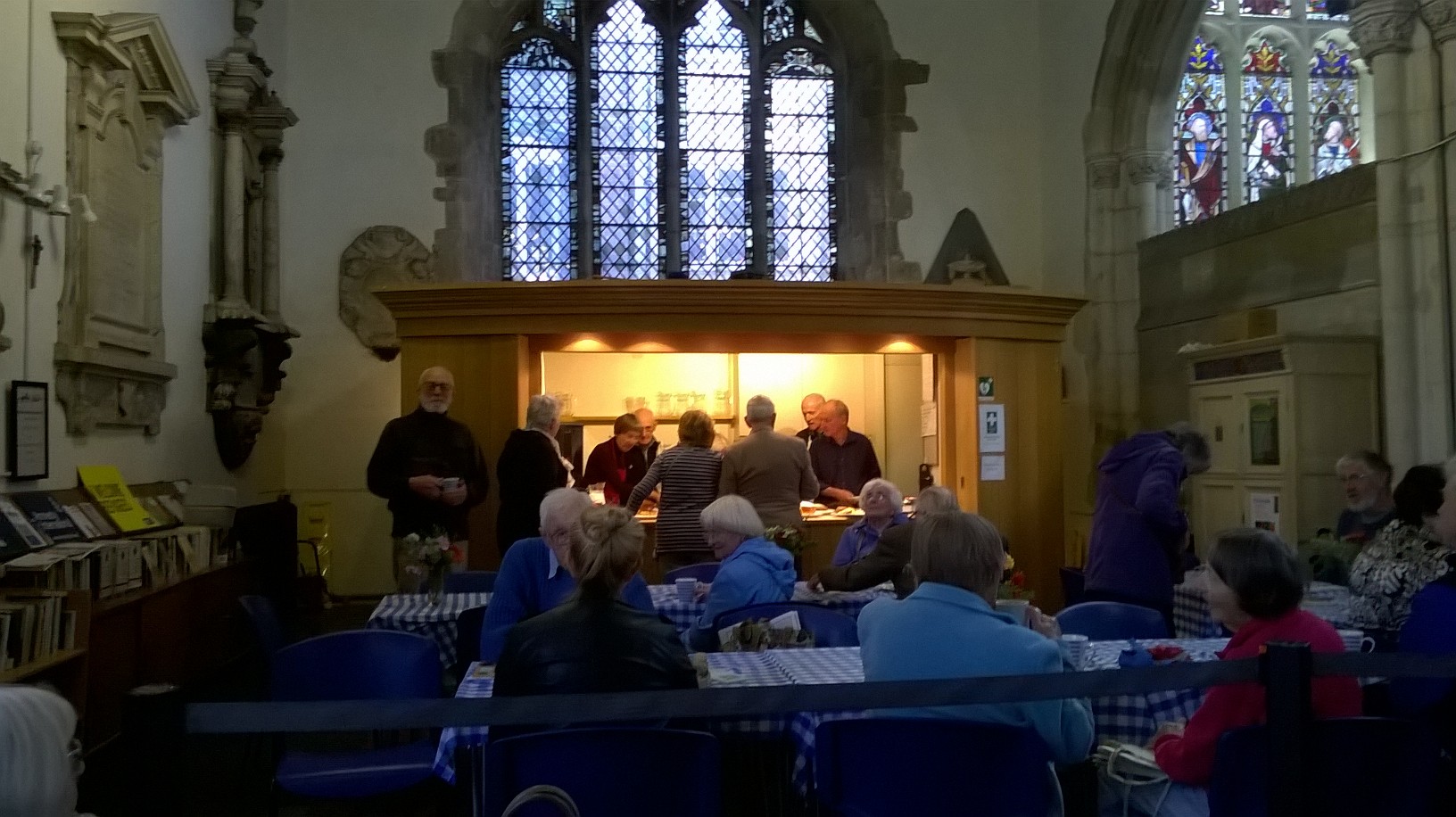
There is a coffee morning today – Saturday – in St Thomas’s church in Salisbury. There will be lots of home made cakes (and some bought ones) and if you were thinking of joining the local group or wanted to know more, this would be a golden opportunity.
The future of human rights

Are human rights more under threat now than ever?
In this blog we look at the current state of human rights. We discuss some of the grim examples around the world and the influence of the arms trade and the continuing strength of slavery. We also look at climate change and how that is impacting on human rights together with new technologies and the activities of corporations.
The future of human rights around the world looks increasingly bleak. The gradual shift in power eastwards is just one of the slow drip of factors changing the landscape. We have also seen the rise in nationalism and far right organisations in Europe with their anti-immigrant mindset. There are a large and growing number of authoritarian governments including China, Turkey, Russia, Oman, Bahrain and many others.
In the Middle East, nation after nation is ignoring the rights of its citizens. Executions after cursory trials, the use of torture, disappearances and the denial of free speech and freedom of the press are common throughout the area. The promise of the Arab Spring has come to naught. The monarchies and dictators quickly regained power largely because the grass roots uprisings could not organise or find a voice. In Egypt for example, the protests were violently put down and all that has happened is one dictator has been replaced by another.
Major affronts to the cause of human rights have occurred in Burma with the ethnic cleansing of the Rohingya people. This with a country led by Aung San Suu Kyi, the recipient of the Nobel Peace Prize and in whom so much hope was placed. The hatred of Rohingya minority is so deep that it has led to these terrible events. See also a talk on this subject given in Southampton.
China’s treatment of the Uighurs has also caused considerable alarm. Around one million are detained in various camps for ‘re-education’. This allegation came to light in 2018 and is denied by the Chinese authorities. In August of that year, a UN committee heard that up to one million Uighur Muslims and other Muslim groups could be detained in the western Xinjiang region. At the same time, there’s growing evidence of oppressive surveillance against people living in Xinjiang.
It seems a long time since the optimism of the UN Declaration of Human Rights agreed in 1948. It was declared at the time as a ‘milestone document’ and in many respects it was. It set down in 30 articles how human beings were to be treated. The motivation was the horrific events of the second world war and in particular, the systematic murder of Jewish people in Europe. There was a clear sense of never again should these things be allowed to happen. Significantly, it was agreed by a wide range of countries and it led ultimately to the European Convention and the Human Rights Act in the UK. The word ‘genocide’ was created at this time.

Unfortunately, declarations and other fine words matter little if they are ignored in practice. To take one article, article 5 on the prohibition of torture. According to an Amnesty report in 2015, 122 countries in the world still use this practice, often routinely.
Another example is slavery, prohibited under article 4 of the UHDHR. According to Antislavery the practice is live and well and takes many forms including selling women and girls into prostitution, forced marriage and bonded labour. Many people in the UK believe that slavery was abolished in the nineteenth century with the banning of the triangular trade and do not realise that it is greater today than it was then.
So although the articles of the Declaration set out how states should behave and it is indeed true that many countries adhere to these principles, it is also true that a significant number of countries do not and it could argued that the situation is getting worse and not better.
It is also depressing to note that a number of UK MPs are lukewarm over the issue of human rights in this country. The website They Work for You reveals that the new prime minister Boris Johnson, the new home secretary Priti Patel and our own MP John Glen are all listed as ‘generally voting against equality and human rights.’
Causes
One significant factor in the decline in human rights is the arms trade. A key factor here is that the top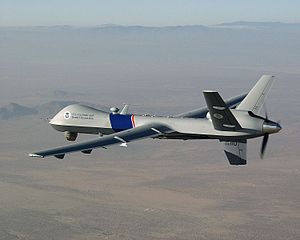 sellers of arms to the world are also the five permanent members of the UN Security Council namely, Russia, China, USA, France and the UK. Two other prominent arms exporting countries are Israel and Germany. One would expect that holding such an exalted position in the UN – as a result of being on the winning side of WW2 – would result in responsible behaviour and the setting of an example to the rest of the world. The opposite is the case and as we look at conflicts and wars around the world, weapons made by or brokered by these nations are usually to be found. In all the wars, it is ordinary people, women and children who suffer either from wounds, lost limbs or sight, lost education or displacement to join the 25.4 million or so who live in camps outside their own country (UNHCR figures).
Human rights possess inherent preventive power. The international human rights system was created in response to conflict to help prevent future conflict. It has a special role in averting the escalation of violence. Just as war, conflicts and insecurity increase the incidence of human rights violations, societies that respect human rights experience less violence and insecurity: they are more resilient, and they are more inclusive. The Secretary-General has acknowledged this, identifying human rights as the “critical foundation for sustaining peace”
A vivid current example is Yemen. Not only do we supply weapons to the Saudis who use them to bomb a wide range of civilian targets, but we also supply RAF personnel to advise them. This was a secret spilled by a Saudi prince at a London conference about 2 years ago much to the embarrassment of HMG. What is astonishing is that the former Foreign Secretary travelled around the middle east seeking to promote peace. Yemen is all but wrecked and our arms companies have played a significant part in the destruction.
The Court of Appeal has recently ruled against the government in the case of Yemen in a case brought by the Campaign Against the Arms Trade. The government is to appeal this judgement. Recently, missile parts made in Brighton have been discovered in Yemen in contravention of international human rights law.
Climate and human rights
 Increasingly, climate and the future of life on the planet is a concern. As temperatures rise, it has an effect on hydrologic conditions, ecosystem functioning and agricultural productivity. These effects are discussed in some detail in a United Nations report and in many other publications including the IPCC report.
A feature of these reports is the issue of human rights most particularly among those most affected by climate issues. These are often women, children and indigenous populations who get in the way of forest clearances, dam projects or other major activities which threaten their environment and livelihoods.
A major fear – arguably a selfish one – concerning the effect of climate change is immigration. The war in Syria and to a lesser extent conflicts in Mali and Somalia, resulted in huge movements of peoples, mostly into Europe, which gave us a taste of what major migrations of peoples will look like. This had signifcant political implications in most EU countries, indeed the immigration issue was an influential feature of the Brexit debate in the UK. It is curious to note in passing that worries about immigration at the political level do not seem to flow through into a desire to take resolute action on climate change which will be a key driver of people emigrating. Climate will have a destabilising effect on many regimes as their agriculture is affected. The previous prime minister Theresa May’s hostile immigration policy was (is?) almost ironic since the ‘hostility’ referred only to people.
Corporate changes
A significant difference since the war concerning human rights is corporate power and influence. Although corporations have wielded great power in the past, controlling them was handled by states, for example anti-trust actions in the USA against the oil companies and other monopolies. Modern internet companies pose an altogether different threat. Firms such as Google, Facebook and Twitter operate across the world and seem to answer to no one. They extract enormous quantities of data about individuals and Facebook was alleged to be influential in elections. The thrust of the UN Declaration was the individual and his or her relationship with the state. Today, people are almost threatened as much by the activities of international corporations who are seemingly uncontrolled and uncontrollable. They have also shown themselves all to ready to adjust their policies to suit despotic regimes such as China and seek to do business there.
Another looming technological threat is face recognition which is just beginning to become noticed as such in the UK. Although it has benefits – finding missing persons or lost children, as well as an anti crime tool – it has enormous implications for civil liberties and individual rights. The right to privacy will be substantially lost as the technology develops. The influence of technology and the increasing influence of AI has been termed ‘digital feudalism.’ The crucial issue with these technological issues is control. We have recently introduced GDPR legislation into the UK to protect citizens from unwarranted intrusion. Yet the tech giants are outside this regime: it is not possible to find out from Facebook what information they have on you.
And we do not have to go far to see a more sinister aspect of the technology problem. A firm based just outside Salisbury in the village of Porton, makes and supplies equipment which enables regimes to intercept and monitor phone calls and internet traffic. They supply some well known countries with grim human rights records enabling them to find and arrest lawyers, opposition politicians and human rights activists.
Both these factors shows the individual to be threatened by corporate and state actors which both operate outside proper – or indeed any – democratic controls. Mr Zuckerberg, the boss of Facebook, declined to attend the house of commons select committee on his company’s alleged role in the Referendum.
So the nature of human rights has changed since the post war days and the foundation of the current human rights climate. The hope after the war that a new rules based international order with the UN as some kind of controlling force has all but ended. Despots around the world are increasingly ignoring treaties and international obligations and acting with impunity. The Palestinians live in an open prison in the Gaza strip while Israel relentlessly take more and more of their land ignoring numerous UN resolutions. New threats have appeared with the giant internet companies and with climate change.
There are however, some major changes in the current concerns and the beliefs behind those who promoted a better world after the second world war. Gone is the sense of optimism and a desire that by acting together in a rules based world order, we could see a brighter future for ordinary people in the world. ‘Never again’ was the clear desire amongst many people who had experienced two terrible wars and the holocaust.
That optimism for the future has all but disappeared and we have become used to horrific events in places like Syria, Chechnya, Burma, Libya and many other places around the world. Yemen has already been mentioned but there are countless other wars around the world which only scarcely get a mention. Wikipedia provides a list and there are 4 current conflicts with a death toll of 10,000 or more and 6 where the death toll is between 1,000 to 10,000. There is a very long list of smaller conflicts. In all these, it is the vulnerable who suffer and the children who are either sucked into the conflict or whose education is halted.
The UK was one of the early signatories to the UN Declaration although it has to be admitted that, along with France, there were worries at the about our activities in the colonies. We as a nation have been active in promoting human rights – we once had an ethical foreign policy – although less so in recent years. Yet we are host to the City of London which is the worlds leading centre for money laundering and tax evasion. It handles vast quantities of ‘dark money’ and some its banks have been fined billions of pounds for illicit money transfers on behalf of arms dealers, drug smugglers and other criminal elements. This weakens our moral position, a fact which is not lost on some foreign autocrats. It is difficult for us to adopt a high moral position when our financial institutions are helping Putin loot the Russian state, a fact revealed in the Panama papers.
Are there any positive signs? There has been a significant rise in activity and interest in climate issues with the Extinction Rebellion and Greta Thunberg. However, this has not spilled over into concerns about human rights. There has been a dramatic attitudinal shift concerning the internet companies which have gone from hero to zero in the matter of a few years. More people are concerned about their activities for example with Facebook and Cambridge Analytica. Nevertheless, many people remain unconcerned about privacy or civil liberties issues.
Overall one must remain gloomy. The spirit of optimism has gone and it is difficult to find any commentators expressing a positive view of the future. Concerns about climate are essentially parochial and climate stress in other parts of the world achieve little more than passing interest. Commercial interests remain entrenched and powerful and are still able to sow confusion and doubt about the real impact of climate change. They are still able to claim that human actions are not necessarily to blame and that there has always been climate change. Politicians show little urgency or real interest in these matters. Revelation after revelation emerges about Yemen and the destruction there, partly supported by our arms sales, yet nothing changes.
The problem in the modern era is that human rights issues are more diffuse and threats come from several different directions. After the war it seemed simple enough to set up a system to prevent a repeat of the horrors of the Second World War. Now, it is authoritarian regimes, corporate power, the rise of AI and its effects, climate destabilisation, the arms trade and political indifference. The media’s role is also a factor with some outlets either not covering some of these issues or diminishing their significance. All play a part in threatening the wellbeing of millions of people.
There still remains a need for human rights organisations to promote the cause. Perhaps one optimistic sign is the number of organisations engaged in this work some of which are listed at the bottom of our site. There are many others.

 Amnesty in Salisbury & South Wiltshire