Conservative Party’s Plan to Repeal Human Rights Laws


Speech by the leader of the Conservative party in Manchester

October 2025

These are some extracts from the speech Kemi Badenoch MP gave to the Conservative party conference in Manchester this week. We have selected those parts which focus on human rights issues and in particular the plan to leave the European Convention and to repeal the Human Rights Act.

“[…] It is fundamental, why can’t we control our borders and remove those who need to go? All these

questions boil down to who should make the laws that govern the United Kingdom? Conservatives, believe it should be our sovereign Parliament, accountable to the British people. The reality today, is that this is simply not the case.

“This use of litigation as a political weapon is what I call lawfare. Well-meaning treaties and statutes – like the European Convention on Human Rights and the European Convention on Action against Trafficking drafted with the best of intentions in generations gone by, and more recent additions like the Modern Slavery Act, are now being used in ways never intended by their original authors.

“What should be shields to protect the vulnerable, have instead become swords to attack democratic decisions and frustrate common sense. It is that whole system which we need to reform. And the place to start is the European Convention on Human Rights.

Five tests that a country has to pass to be truly sovereign.

First, can we deport foreign criminals and those who are here illegally?

Second, can we stop our veterans being harassed through the courts?

Third, can we put British citizens first for social housing and public services?

Fourth, can we make sure protests do not intimidate people or stop them living their lives?

And fifth, can we stop endless red tape and legal challenges choking off economic growth?

[Lord Wolfson was commissioned to study the ECHR and our membership of it and produced a report the key conclusion was]

When it comes to control of our sovereign borders, preventing our military veterans from being pursued indefinitely, ensuring prison sentences are applied rigorously for serious crimes, stopping disruptive protests, or placing blanket restrictions on foreign nationals in terms of social housing and benefits, the only way such positions are feasible would be to leave the ECHR.’

Commitment to leave

[Badenoch] “We must leave the ECHR and repeal the Human Rights Act. Conference, I want you to know that the next Conservative manifesto will contain our commitment to leave (our emphasis). Leaving the Convention is a necessary step, but not enough on its own to achieve our goals. If there are other treaties and laws, we need to revise or revisit then we will do so. And we will do so in the same calm and responsible way, working out the detail before we rush to announce.

“The rights we enjoy did not come from the ECHR. They were there for hundreds of years in our common law. Parliament has legislated over centuries to reflect and protect our freedoms. Human Rights in the United Kingdom did not start in 1998 with the Human Rights Act, and will not end with it. As we work through our detailed plan, we are clear that leaving the ECHR and repealing the Human Rights Act will not mean that we lose any of the rights we cherish”. […]

Comment

The statement by the Conservative leader is clear and unequivocal. Even allowing that it is a speech a long way from an election and designed to encourage a party currently scoring badly in the polls, it is part of a worrying trend with more and more voices calling for us to leave the ECHR.

The big claim towards the end of her speech quoted above that ‘Human Rights in the United Kingdom did not start in 1998 with the Human Rights Act, and will not end with it‘.’ Many did start, and some will end if it is repealed. If there will be no difference, then why the desire to end it? She seems to have forgotten that the HRA was introduced because people had to go to Strasbourg to get the justice denied them in the British courts. It is nonsense to claim that the HRA has added nothing of benefit to the rights of the ordinary person.

There are likely to be many who will disagree with Lord Wolfson’s benign conclusion that the proposed departure from the ECHR would be fully compliant with the Belfast Agreement.

Leaving the ECHR will be a retrograde step and have repercussions for our international relations. It is likely to make trade between us and Europe more difficult. We will join Russia and Belarus as the only nations outside its remit. Repealing the HRA – which has been promised several times before by Conservative leaders but never carried out – will seriously damage our rights as citizens. Combined with recent legislation to limit protests for example, it will be a retrograde step.

An Amnesty petition can be accessed here.

Speech accessed from the Conservative website [8 October]

Will we withdraw from the European Convention?


Increasing number of politicians wanting the UK to leave the human rights convention

October 2025

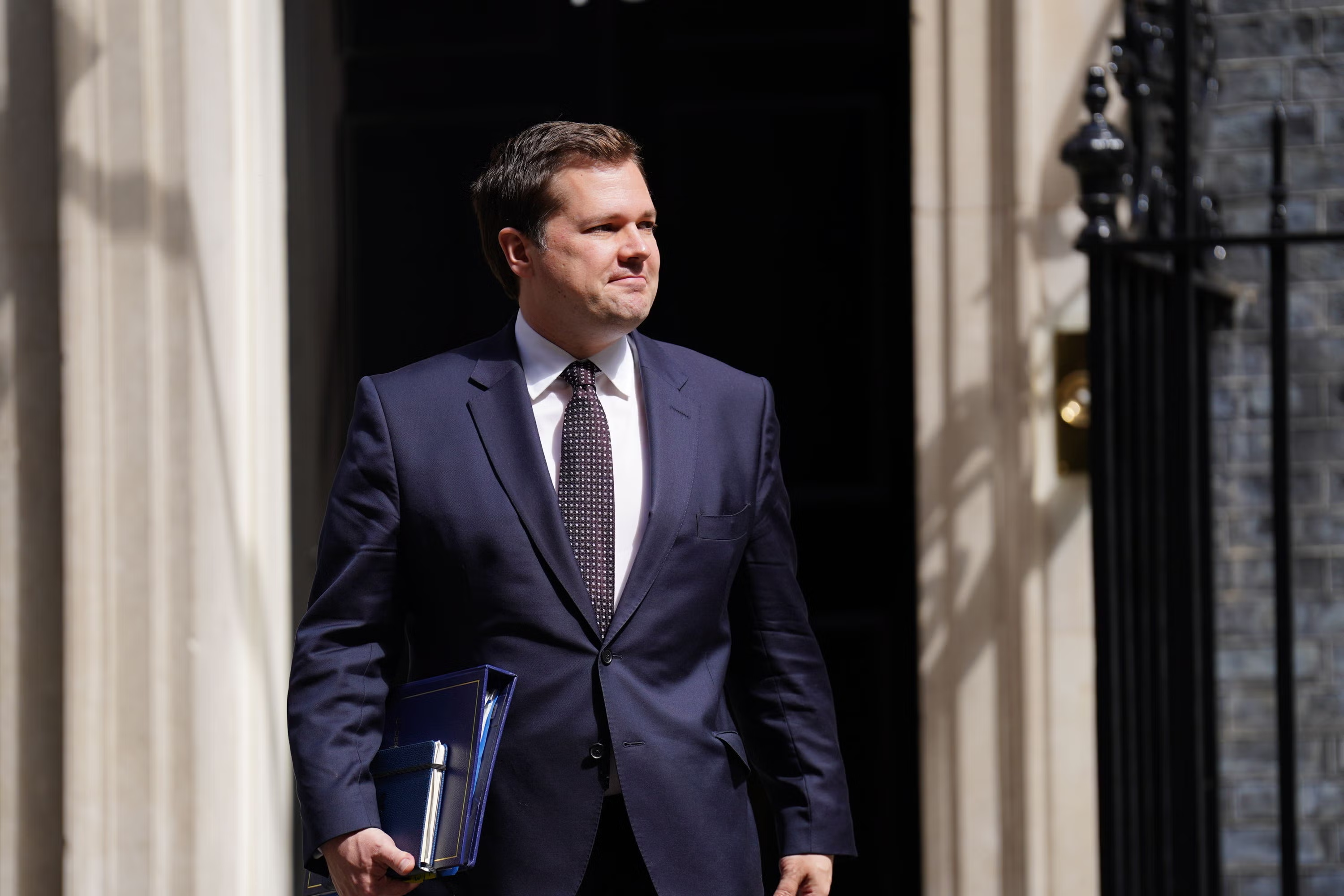
There is almost a chorus now of politicians saying we must leave the European Convention of Human Rights. The latest politician is Robert Jenrick MP (pictured) who in a speech ahead of the Conservative party conference next week, is proposing that all prospective candidates must promise to support leaving the ECHR as a condition of their candidacy. He claims ‘the party will die’ if they do not leave. He claims that the Convention has ‘stymied the removal of dozens of terrorists’. The party leader, Kemi Badenoch does not agree with this policy. However, while preparing this post Kemi Badenoch announced that her party will aim to leave.

Policy Exchange a prominent think tank claims that ‘ECHR distorts parliamentary democracy, disables good government, and departs from the ideal of the rule of law’. PX is regarded as the least transparent of the think tanks and its funding is obscure. It has pursued a programme over many years to weaken the judiciary.

The desire to leave the ECHR has come to the fore recently because of the small boats crossings which still represent a crisis for the government with record crossings. The former justice minister Lord Faulkner is quoted as saying it is ‘inhibiting government’s freedom to what is regarded by many as the emergency of illegal migration’.

Recently, Nigel Farage the leader of Reform has said we must leave ‘no ifs, not buts’.

So leaving the ECHR is essential according to these politicians if we want to solve the small boats ’emergency’. The questions are therefore will it, and what will be its effects on our rights more generally?

The debate around the European Convention is replete with exaggerations and misinformation. The chicken nugget story – widely repeated by many politicians and elements of the press is the latest. A boy could not be deported because of his aversion to chicken nuggets it was claimed. Except it never happened. There was no ruling that the foreign offender should be allowed to stay in Britain because his child could not eat these nuggets. An immigration tribunal did initially decide that it would be “unduly harsh” for the boy to be sent to Albania because of his special educational needs, but this judgment was later overturned. A more senior judge rejected the man’s appeal and made absolutely clear that an aversion to chicken nuggets should never be enough to prevent deportation.

Implications
  1. We would not just be able to leave as it would require a decision in parliament. This could take some months and the House of Lords would object to many of the details.
  2. The ECHR is not the only relevant piece of legislation: the Refugee convention also has implications for the UK.
  3. It will create problems with international relations. Since the UK was a prime mover under Sir Winston Churchill and the UK drafted a lot of the text, if we left it could lead to others deciding to do the same. We would join Belarus and Russia outside the Convention – hardly a good advertisement for the UK. It would seriously weaken the ‘voice’ the nation has on the subject of human rights.
  4. The Trade and Cooperation Agreement with the EU could be threatened.
  5. There would be immense problems with the Good Friday agreement in Northern Ireland.

The focus of the current debate has been on immigration and the boat crossings. This is a side show and a distraction. The ECHR is much more than that and involves fundamental issues concerning our rights as citizens and our relationships with state power. It is no accident that right-wing tanks like the Policy Exchange, and others based in Tufton Street, want us to leave because it inhibits the power and influence of their corporate backers. Human rights are nuisance for them and using the boat crossings is a useful cover to get us to leave. It is small wonder that they do not reveal who funds them.

Our parliament is little better. Recent legislation introduced by the Conservatives has seriously impeded the right to protest and there is little sign of the Labour government repealing those acts. Sir Keir Starmer drew a distinction between someone being deported where there was a risk of execution and sending them to a country with a different level of healthcare or prison conditions. Although he did not mention in his speech the ECHR it was clear that was what he was referring to. It was a less than full throated support.

We thus have sections of the media and political parties, the first pushing exaggerated or even made up stories about the harm the HRA does and second, an increasing number of politicians falling over themselves – in a kind of game of leapfrog – claiming they will leave or amend the ECHR. They claim or infer that by leaving the ECHR, it will enable them to solve the problem of the crossings. They dishonestly do not explain to the public the problems, risks and harms to UK’s interests with their proposed actions.

The HRA, which celebrates its 25th anniversary today, has brought immense benefits to many people in this country. Yet few politicians seem willing or brave enough sing its praises. Courting popularity, they have joined the siren voices of the secretive think tanks and oligarchs who own most of our media, in calling for its abolition (or review without ever spelling out what that means exactly).

Sources: Daily Express, Sky News, The Guardian, BBC, Euro news

Blog at WordPress.com.

Up ↑