Importance of Human Rights: UK Support for the ECHR


November 2025

Nigel Farage’s proposal for the UK to leave the European Convention on Human Rights was defeated on 29 October by 154 votes to 96, a majority of 58. The vote was largely symbolic: a ten-minute bill without government backing is often used simply to air an issue. The Liberal Democrats led the opposition to the bill, a number of Conservatives joined Reform UK in supporting it and many Labour backbenchers chose not to abstain but voted against it, fearing that were it to pass even symbolically, it would send a negative message to European allies.

The position of the Government remains that while it may pursue some changes to the interpretation of the Convention it would under no circumstances seek to abolish it.

75th  Anniversary 

A statement of support for the ECHR was signed by almost 300 organisations to mark the 75th anniversary of the Convention. Organised by Liberty, the statement highlighted the many ways the Convention has helped ordinary people from victims of sexual violence to LGBT+ service personnel, public interest journalists to mental health patients and victims of grave miscarriages of justice, as with the Hillsborough and Windrush cases.

It calls on the government to make the positive case for the UK’s human rights protections and claims that the way the Convention has been scapegoated in recent years has had devastating real world consequences. 

Meanwhile a survey for Amnesty by the widely respected agency Savanta concluded that more than 8 in 10 UK adults say that human rights protections are as important – or more important – today than when the ECHR was created after the Second World War. When asked which rights matter most to them, UK adults chose: the right to a fair trial (42%); the right to life (41%); the right to privacy, family life and respect for your home (40%).   

Support for staying in the ECHR is almost twice as high as support for leaving.  48% want the UK to remain part of the ECHR.  Only 26% want to leave.  

People believe rights should be universal, permanent, and protected from political interference:   87% agree that rights and laws must apply equally to everyone, 85% agree we need a legal safety net to hold the Government accountable in cases like the infected blood scandal and Grenfell and 78% agree rights should be permanent, not something the Government of the day can reduce. 

Respondents were shown a list of major UK scandals or institutional failings and asked which made them feel the importance of strong legal protections and accountability. The top five were: 

Grenfell Tower – 46%; Hillsborough disaster and cover up – 42%;   Infected blood scandal & the COVID inquiry – 37%; The murder of Sarah Everard – 36%;   Windrush scandal – 29%.   

ECHR and Immigration

In response to critics attributing the real problems of the UK’s immigration system to the ECHR, the Good Law Project set out some basic facts about the Convention, namely that it does not provide a right for people to enter or remain in a country of which they are not a national; that the Court rarely rules against the UK on immigration issues at all  – since 1980 only on 13 of the 29 cases concerning either deportation or extradition. And while the Human Rights Act of 1998 incorporating ECHR rights into UK law makes it unnecessary to go to Strasbourg, successful claims to stay in the UK are rare. Last year out of a total inward immigration of 948,000 only 3,790 cases related to the Human Rights Act were won at immigration tribunals.

Protect the Protest: Palestine Action and Judicial Review

Amnesty and Liberty will be making the case to lift the ban on the proscribed activist group Palestine Action in the Judicial Review scheduled for 25 – 27 November.

Defend Our Juries are urging the police not to bow to pressure from the Government but to allow the

peaceful protests organised throughout November at the continuing crisis in Gaza, the West Bank and Israel. They say that police are struggling to enforce the law in the face of peaceful protesters, many of them elderly. Some police forces are refusing outright to make arrests. International and national human rights groups, politicians and United Nations representatives have condemned both the ban and the subsequent attacks on civil liberties. Unions are declaring that they will not recognise the ban, with over 2,100 now arrested under ‘terror charges’ related to this peaceful sign-holding campaign.

Sacha Deshmukh, Amnesty’s Director, criticised the Home Secretary for statements “that create a chilling effect by dissuading people from exercising their fundamental right to peaceful protest. At any time, any interference with freedom of expression must be strictly necessary, proportionate and in full accordance with the law.” 

In a further incident of Transnational repression Sheffield Hallam University terminated a staff member’s project about Uyghur forced labour after Chinese security officers interrogated a staff member in Beijing and a Chinese company named in the report filed a defamation lawsuit in the UK. The university retracted the ban but only after  Professor Laura Murphy, specialising in human rights and modern slavery, began legal action against it for violating her academic freedom.

Latest posts:

All our posts are free to use by other Amnesty or human rights sites.

The State v. Trudi Warner


Interesting and troubling webinar by the Good Law Project on the case of Trudi Warner

June 2024

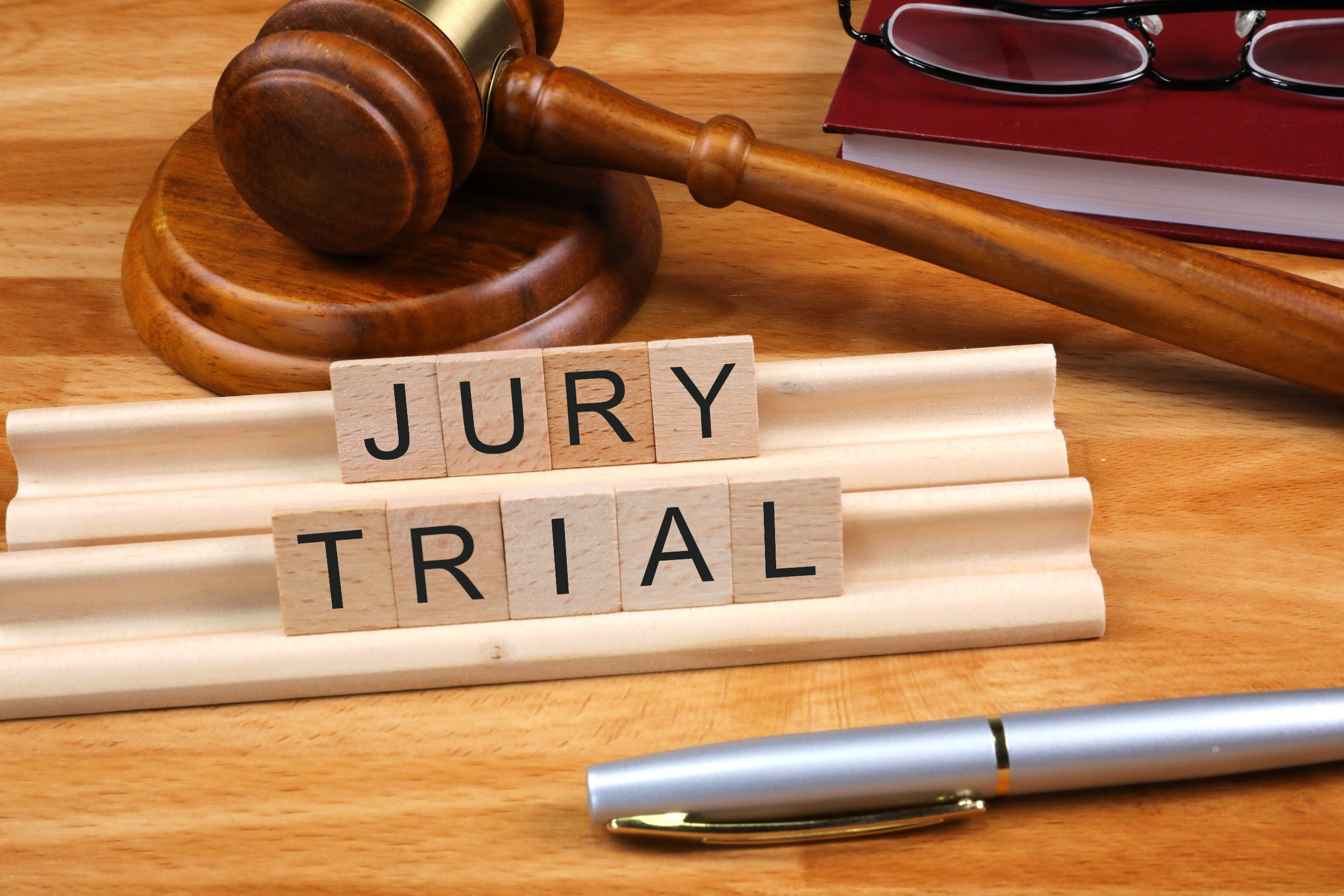
Readers will recall that earlier in the year, Trudi Warner stood outside the Inner London Criminal Court and held up a placard telling passers by that juries had the right to vote on their conscience. The trial was taking place of several climate activists and a key issue was that the judge in the case, Judge Silas Reid, prevented the defendants from mentioning that they were campaigning for action on the climate. The worry was that if the jury realised that this was what the defendants were doing, there was a probability that they would acquit. Many websites commenting on this case allege that the judge is against people protesting (which we cannot verify) hence his aggressive threats to defendants and others.

Trudi Warner was then arrested for contempt of court by displaying her placard which states a fact, long established in English law, that juries can indeed vote on their consciences. This was established in the Bushell (sometimes Bushel) case of 1670, where a judge locked up a jury and deprived them of food and water for disobeying his directions.

Jolyon Maugham of the Good Law Project, said that people had a ‘sweet notion’ of the law which this case cast into doubt. It was one of the factors in the Brexit debate where people often spoke of sovereignty and an aspect of that was hostility to Brussels (actually Strasbourg) telling us what to do. ‘We should have our own laws’ was a frequent refrain. This has re-emerged with the proposed Rwanda flights and a desire by some politicians to come out of the European Convention. There is a deep belief in the primacy of British Justice with its ancient traditions going back to Magna Carta. This and other cases demonstrate that this sanguine view of our justice system is misplaced.

Climate protests

The state has the power to lock people up and juries are a means of tempering this power he said. The plain fact was that the fossil fuel companies mounted well-funded campaigns to promote their activities and frustrate governments trying curb fossil fuel use. There is a close association between government, Big Oil and the media. Sections of the media refer to protestors as an ‘eco-mob’, ‘zealots’ or a ‘rabble’ among other epithets. Fossil fuel companies fund several Tufton Street think tanks with millions, yet TV companies, including the BBC and Channel 4, fail to ask interviewees from them, ‘who funds you?’

The various protest organisations including XR and Just Stop Oil angered government ministers by highlighting the shortcomings of government actions in dealing with the climate crisis. Their activities had also angered members of the public who were sometimes inconvenienced. As ever, a totally peaceful protest is ignored but glue yourself to the pavement and you achieve some publicity.

Arrest

So Trudi Warner was arrested for contempt of court and ended up in the Old Bailey for trial 8 days later. At a permission hearing which establishes whether there is an arguable case, it was thrown out by the judge who said that the ‘government had mischaracterised the evidence‘ and that it was ‘fanciful to suggest that Ms Warner’s actions fall into the category of contempt‘. The government said it is to appeal the decision [before the election was called]. It is ironic to note that a plaque celebrating the seventeenth century Bushell case is fixed to a wall in … the Old Bailey. To remind ourselves – the placard merely pointed out the plain fact that a jury has the right to decide a matter according to its conscience and to disagree with the judge’s direction.

Conclusion

The government has introduced a range of bills which all have an effect of making protest more difficult and risky. Police have been given more powers which they have used in preventing protests from taking place including, for example, at the Coronation. There is a kind of cosy alliance between Big Oil with its range of well-funded lobbyists; a government all too keen to restrict protest, and some media organisations who eagerly demonise protestors and deny climate science. In the process, rights and justice are trampled on. If, as is being predicted, a Labour government comes into power on 5th July, it will be interesting to see if they pursue the appeal. It will a quick test on whether they will follow in the authoritarian footsteps of their predecessors or adopt a more permissive regime. Early signs are not promising as they do not have plans to annul any of the existing legislation.


During the webinar, we saw clips of film of the protests prepared by Page 75 Productions who will be hosting a showing of the full film in September. A video can be accessed here.

Sources: Good Law Project; The Guardian; The Canary; Christian Climate Actions

Hillsborough


Today, 15 April 2024, is the 35th anniversary of the tragedy

April 2024

Thirty five years ago today, 97 people died at the Leppings Lane end of Hillsborough stadium during an FA Cup semi-final between Liverpool and Nottingham Forest. Once the immediate shock of the death toll had passed, much of the media and South Yorkshire police put the blame on the supporters and in particular those from Liverpool for the tragedy. This blame became the standard narrative and was part of the judicial narrative as well. Plentiful lies were told and a headline in the Sun newspaper has meant the paper is no longer sold in Liverpool to this day.

The copious lies told by the police meant inquests were thoroughly unsatisfactory and the families of those who died spent decades in an attempt to get justice. Why it has appeared on this site is because justice was not achieved until the right to life provisions in the European Convention on Human Rights, now part of UK law, came into force. That, together with funding support, meant the police could be cross questioned and a jury returned a verdict of unlawful killing. Previous poor decisions by judges and a coroner were overturned. A report by the Hillsborough Independent Panel said:

The disclosed documents show that multiple factors were responsible for the deaths of the
96 victims of the Hillsborough tragedy and that the fans were not the cause of the disaster.
The disclosed documents show that the bereaved families met a series of obstacles in their
search for justice
“.

Today, in the light of the government’s desire to deport refugees to Rwanda – a final decision on which might be made in parliament this very week – will find that it is in direct conflict with ECHR. The Conservatives are divided on this and some, like local Devizes MP Danny Kruger, do not believe we need the court and object to Strasbourg effectively overriding our judicial system. He and others believe our system of justice based on the Common Law is sufficient protection. The prime minister Rishi Sunak in a recent statement believes that controlling immigration is more important than ‘membership of a foreign court’.

Common law, or indeed any law at all, did not save the Hillsborough families the decades of distress, dire judicial decisions, police lies and media denigration they have had to endure. The judicial system also failed to make anyone accountable for the wrongdoing and bad decisions which led to the disaster. It is interesting in researching this post and looking at the reports of the anniversary, how little or no mention is made of the ECHR in the the right-wing papers. Yet it was crucial in achieving justice for the families. Mr Kruger and others have a rosy view of our justice system despite what Conor Gearty refers to in a discussion of a succession of miscarriages of justice in his book On Fantasy Island*,The role of judges in all this was either passive legitimisers of state abuse or – more scandalously – as drivers of wrong convictions in the first place’ (p40). He goes on to refer to how they seem somewhat impervious to ‘a succession of judicial debacles’ (ibid).

Hillsborough showed conclusively that we need the protections of the ECHR since our own legal system so often fails to offer protection to the ordinary citizen.

*Oxford University Press, 2016

Dangerous new bill


Dangerous new bill proposed by the government

The right to protest is fundamental to a free and fair society.  It’s a right we have fought long and hard for.  Without the right to protest, accountability and freedom suffers.

A New Policing Bill

The Government’s new policing Bill gets the balance dangerously wrong.  Such an enormous and unprecedented extension of policing powers will put too much power in the hands of the state, to effectively ban protests – including peaceful ones – should they see fit.

Vigil for Sarah Everard

Worse still, this Bill alongside other efforts by the UK Government to threaten and dilute other fundamental rights and freedoms.  The claims of excessive force used by Metropolitan police against women attending a vigil for Sarah Everard on 13 March, beggars belief, and is a stark and timely warning about precisely why Parliament must not grant police further powers to stop peaceful protest.

Racism and discrimination

As well as preventing peaceful protest, sections of this Bill will most likely disproportionately impact  people who are in the minority and increase the racism and discrimination that is experienced by many of them.  For example, measures to enhance stop & search and restrict the right to roam, precisely at a time when the UK Government should be working to address these issues.

This is not the path to a free and just society.  This is the path to a clampdown on our centuries old rights of freedom of movement, expression and assembly.  This is entirely incompatible with the UK’s self-image as a place of liberty.

We cannot allow this clampdown to happen.  Take action and call on our Prime Minister to put the brakes on the Bill and stop the assault on our freedoms.

Text taken from Amnesty International

Blog at WordPress.com.

Up ↑