UK Human Rights Report: Current Threats and Government Actions


Monthly report on human rights in the UK

December 2025

Amnesty has for many years, focused its efforts on human rights issues overseas. Recent actions by governments of both persuasions have meant a greater focus on the threats to rights here in the UK. Only this very week, the prime minister and other ministers are in Europe trying to seek agreement to a ‘modernisation’ of the ECHR arguing it is necessary to tackle the immigration ‘crisis’. In this post, we review aspects of our rights which are current or under threat.

Freedom of Expression

The outcome of November’s High Court hearing of the legal challenge mounted by Liberty and Amnesty to the ban on Palestine Action is still pending.  Amnesty’s Director of Communications claims that ‘the Government’s ban is a disproportionate misuse of the UK’s terrorism powers and breaches articles 10 and 11 of the European Convention on Human Rights – which protect freedom of expression and freedom of assembly and association.

We have seen the chilling consequences of this decision across the country – with thousands of arrests in recent months.  These mass arrests, and the silencing that organisations and individuals have felt, is a clear and frightening example of how the UK is misusing overly-broad terrorism laws to suppress free speech. Terrorism powers have never been used against what was previously direct-action protest and if this precedent is allowed to stand, it opens up a bleak future for protest rights in the UK.” 

Amnesty is seriously concerned at reports of the worsening condition of members of the Filton 24 who are on hunger strike after the damage to two aircraft at Brize Norton last year as protest against the Israeli Elbit Systems’ involvement in Gaza. None of the prisoners have been charged under the Terrorism Act but prosecutors have said both offences had a “terrorism connection”.  Amnesty has consistently opposed the use of anti-terrorism powers in these cases claiming they have been used to justify excessively lengthy pre-trial detention and draconian prison conditions.   

Arrest of Britons overseas

Amnesty International is urging the UK Government to develop a clear and consistent approach to the unjust imprisonment of British people overseas, including a new strategy that should include as a minimum:

  • the Government calling for an arbitrarily-detained person’s immediate release (including publicity where requested by the family)
  • pressing for access to a lawyer, a fair trial and medical care where relevant
  • demanding consular access insisting that UK officials be able to attend trials
  • regularly meeting with family members to outline the Government’s overall approach in the case.

The UK Government’s failures on this issue, highlighted in a recent BBC drama and documentary on the case of Nazanin Zaghari Ratcliffe, continue today.  British nationals, including Ahmed al-Doush, are not receiving the level of diplomatic support required to secure their release.  Ahmed was arrested while on a family holiday in Saudi Arabia in 2024 for social media posts.  The Manchester-based father of four was convicted under terrorism legislation and sentenced to 10 years in prison, later reduced to eight.

The UK Government has failed to advocate for Ahmed, not taking a position on his case, despite being provided by information indicating that his detention is a freedom of expression case.  Amnesty International continue to campaign so that Ahmed can be reunited with his family and urges the UK Government to advocate for his release if he is being held solely for exercising his right to freedom of expression.

Use of Facial Recognition by police

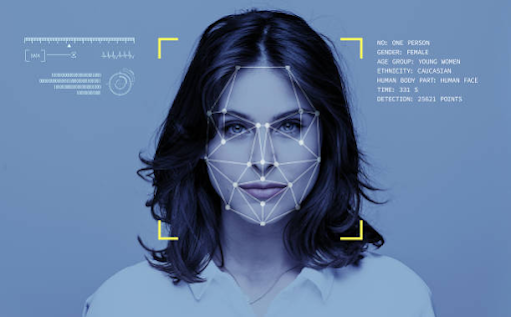
A Government consultation into police use of facial recognition is set to launch imminently.

Liberty has been calling on the Government to follow the example of other countries which have introduced laws around police use of facial recognition technology – and has urged Ministers and police forces to stop expanding its use until those laws are in place.  Alarm has been raised at the finding that faces of children are included on the records of some police forces.

Liberty wants the inclusion of the following safeguards:

  • The independent sign off before facial recognition is used
  • Police to only use facial recognition technology to search for missing persons or victims of abduction, human trafficking and sexual exploitation; to prevent an imminent threat to life or people’s safety; to search for people suspected of committing a serious criminal offence;
  • Watchlists to contain only images strictly relevant to the purposes above;
  • However, Amnesty International wants a global ban on this technology on the grounds that it violates the human right to privacy, it inaccurately targets minorities, especially people of colour and women; it intimidates people from free expression of views;
  • It cites racist bias in examples of the use of mass surveillance technology by US policing of black communities, and also Israeli policing of Palestinians.

Change declared to European Convention on Human Rights

After the UK recently joined Denmark and Italy in pressing for a rethink of aspects of the European Convention on Human Rights (ECHR), especially in relation to migration law, the Council have now taken the first steps to reshape how European courts interpret human rights.  Amid fierce debate over the balance between ECHR and national migration controls, ministers made a joint declaration which will now task 46 foreign ministers with drafting a political declaration to be adopted at the next meeting in May 2026.

The Council oversees the ECHR while its court enforces those rights across 46 member states including all 27 EC countries.  Greater national flexibility is demanded in response to human smuggling, border security and the expulsion of offenders.

Sir Keir Starmer and other heads of state have restated that, while wishing to see some ‘modernisation’ of the Convention, there is no intention of abolishing it.  The move is seen as a response to protest from far-right groups across Europe and ‘uncontrolled’ immigration and the perception that the right to family life inhibits states from deporting convicted foreign criminals.

Human rights groups are raising concerns at the dilution of the original Declaration of Human Rights as non-negotiable, universal and inclusive of all minorities. 

Court Decisions Impacting Protests and Gender Rights in the UK


Significant number of things happened this month

May 2025

There were a number of interesting events on the human rights front in the UK this month including the Court of Appeal judgement discussed below. There has been a steady ‘nibbling away’ of rights by successive governments which is why we have started this series of reports of which this is the second and why the judgement is good news.

Right to Protest 

This month the Court of Appeal has upheld an earlier ruling of the High Court from May 2024 that then Home Secretary Suella Braverman did not have the power to create a new law that lowered the threshold of when the police can impose conditions on protests from anything that caused ‘serious disruption’ to anything that was deemed as causing ‘more than minor’ disruption. They said that “the term “serious” inherently connotes a high threshold … (and) cannot reasonably encompass anything that is merely ‘more than minor’”.

This was the first time a government had sought to make changes through so-called ‘Henry VIII powers’ of secondary legislation to a law which had been democratically rejected by Parliament when introduced in primary legislation.

Hundreds of protesters have been arrested under these measures since they were created, including the

climate activist Greta Thunberg (pictured: MusikExpress) who was acquitted of all charges in a hearing in February 2024.

Liberty has called for the regulations to be quashed immediately (as per the initial ruling from the High Court, whose decision to scrap them was put on hold until the conclusion of the appeal) and has called for all arrests and prosecutions under the legislation to now be urgently reviewed, alongside a comprehensive review into all protest laws that have been passed in recent years.

The Court will decide in the coming weeks if the legislation is to be quashed.

Gender Recognition Ruling

Five judges from the UK Supreme Court ruled unanimously that the legal definition of a woman in the Equality Act 2010 dealt with biological sex at birth and did not include transgender women who hold gender recognition certificates.

In a significant defeat for the Scottish government, their decision will mean that transgender women can no longer sit on public boards in places set aside for women and it will have far reaching implications for access to protected spaces and services such as the armed service, hospitals, women-only charities and changing rooms and access to sport.

Lord Hodge told the court the Equality Act (EA) was very clear that its provisions dealt with biological sex at birth, and not with a person’s acquired gender, regardless of whether they held a gender recognition certificate.  In a verbal summary of the decision, he said: “Interpreting sex as certificated sex would cut across the definitions of man and woman in the EA and thus the protected characteristic of sex in an incoherent way.”  He stressed that the ruling does not change the protection trans people are afforded under the protected characteristic of ‘gender reassignment’ under the Equality Act.  Amnesty has called the decision ‘disappointing’.

Humanist Rights

Two couples are taking the government to court over its failure to legalise humanist marriage in Wales and England, five years after a ruling that the lack of recognition was discriminatory. Humanist marriages are legal in Scotland and Northern Ireland, and elsewhere in the world including New Zealand, Canada and Australia.  In Scotland in 2022 there were 9,140 humanist wedding ceremonies compared with 8,072 based on faiths or other beliefs.

Activists Detained

Non-violent activists Roger Hallam and Dr Patrick Hart are being refused their right to a Home Detention Curfew.  Days before their scheduled release from prison in March Dr Hart was told that there was ‘no suitable accommodation’ and Hallam that the media’s interest in his case meant that he was deemed unsuitable for HDC (which actually states that non-violent prisoners can only be denied release ‘in exceptional circumstances’). New release dates are respectively June and possibly August. There will be an appeal.

The Counter Terrorism and Border Security Act of 2019

This was invoked by police at St Pancras rail station for detaining a Palestinian-British Christian academic and his 8-year-old son on their return from Paris on Good Friday. Professor Makram Khoury-Machool (pictured: BBC Arabic Service) is a Palestinian-British Christian academic who has lived in the UK since 1999 and taught in Cambridge since 2004.  He is the founder of the Cambridge Centre for Palestine Studies whose board members and patrons include Dr Rowan Williams, Baroness Helena Kennedy, Baroness Sally Morgan, Lord Chris Smith, HE Clare Short, Baroness Warsi and Lord David Steel.  

He and his son were held over 4 hours until after midnight, were given no food while the police took his fingerprints, DNA samples, searched his personal belongings and confiscated his laptop and mobile phone using the threat of force.  Seven days later, the devices were returned but without his SIM card.  He was subjected to an intimate body search, and his son was left traumatised by the experience.  This is perhaps the first time a child as young as eight has been detained in the UK under the 2019 Act; his treatment may breach the UN Convention on the Rights of the Child to which the UK is a signatory.

Economic, Social Cultural Rights

Amnesty reports that in the UK there is no legislatively defined universal social protection floor such as the one recommended by the UN’s International Labour Organisation: this is left to the discretion of the state and is inconsistent across Great Britain and Northern Ireland.  The changes proposed by the Pathways to Work Green Paper 2025 will require new legislation allowing the secretary of state to implement proposed cuts to social security rates for disability and incapacity schemes, and removing some of the legislative protections which are in place to protect against political whims.

If implemented, Amnesty considers the extensive reforms proposed would be a deliberately discriminatory, disproportionate and retrogressive violation of human rights;  The UK’s social security system does not legally guarantee essential social security payments that ensure access to basic needs such as healthcare, housing, food and education and that social security freezes, caps, and deductions, removal of the spare room subsidy (bedroom tax) and two-child limit have deepened poverty and disproportionately harmed children, the disabled and low-income families. Despite increased social security spending, poverty rates remain unacceptably high.

Recent posts:

Regulatory Powers bill


Why we should be concerned

The revised Regulatory Powers bill has now been published and has been debated in parliament.  It is better known as the ‘snoopers’ charter’ and tries to put the interception activities of the security services on a sound legal footing.  The previous act, RIPA, was clearly inadequate and revelations by Edward Snowden revealed that it was being widely circumvented and ignored.

It has to noted that the public at large is mostly relaxed about the degree of intrusion into their electronic activity.  The wholesale interception of emails, phone calls, Skype, Facebook and the like arouses no great passions.  The general view can be summed up as ‘I’ve got nothing to hide so they’re welcome to look at my emails if they want to.’

The line put across by politicians is that these powers are needed to defeat the activities of terrorists; international criminals; people smugglers and the like is widely accepted and seen as a price worth paying if we are to remain safe and such people are to be put behind bars.  The paradox however is that if you ask people the question ‘do you trust politicians?’ you are likely – indeed almost certain – to receive a very dusty or robust answer.  They are seen  – often unfairly – as untrustworthy, interested in their own careers, acting as lobby fodder or simply being out of touch.  So allowing these individuals additional powers does seem to be something of a contradiction.

So what are the arguments about the Regulatory Powers Bill and why does it all matter?  First is the issue of trust to which we have already alluded.  Before Snowden, many of the same politicians were telling us that matters were under control and that warrants and searches were only used when strictly necessary.  It was then revealed that comprehensive snooping was underway and that the ministers concerned – including those on the select committee – had little or no idea of the scope of the activity.  GCHQ was hoovering up large quantities of information seemingly without any oversight.

David Davis MP with Kate Allen, Salisbury Cathedral
David Davis MP, 3rd from left

… and they still don’t.  Only a very few individuals get to see the core information since most of it is presented in terms of briefings.  This goes back to the war when the JIC was set up to look at all the information and then put it together to inform the cabinet committee.  Very few MPs have any serious experience of intelligence matters and the nature and sensitivity of the information they receive makes it difficult for them to find out.  David Davies MP says we have a ‘comforting illusion’ about our intelligence services which leads to complacency.

There is a natural tendency for all organisations to talk up the issues they deal with.  By highlighting risks it enables them to win resources in Whitehall battles and in battles with sister agencies.  This needs to be remembered when blood-curdling threat assessments are issued.

There is a belief that more is better.  By simply amassing more and more information using ever more powerful computers it is argued this will enable the intelligence services to protect us better.  The only problem is that time after time it has been found to be wanting.  The 45 minute claim is the most famous but there are others.  Only this week we read of the death of Ahmed Chalabi who misled the USA in many different ways over Iraq.  So despite the massive scale of the American intelligence system, the billions of dollars spent on the CIA and NSA, one man comprehensively fooled the State Dept. over a period of several years.

A fundamental issue at stake is one of power.  It was not so long ago, following the collapse of East Germany, that the scale of their intelligence activities by the Stasi were revealed.  Miles and miles of underground corridors existed with hundreds of thousands of files on almost every citizen in the state.  Children informed on their parents; brother informed on brother; neighbour on neighbour.  All typewriter fonts were recorded so that any typed samizdat could be traced.  It was a nightmare world of paranoia and poisoned a generation.  People in the West were horrified when this was revealed.  That was clumsy by comparison to what the agencies can do today in the internet era.  Yet we seem relaxed, not horrified.

The issue of power and who has it is central to the debate.  Our society is based on division of powers in part going back to Magna Carta.  For one group to have too much power is recognised as dangerous.  We have the Lords (however imperfect) and the Commons.  We have a separate judiciary.  We have a reasonably independent media.  These divisions prevent despotism or at least make it exceedingly hard to achieve.  In addition there are elections every 5 years.

By allowing the intelligence agencies, to pry into every communication, to intercept communications between lawyer and client; to intercept emails of human rights groups such as Amnesty and to tap into the phones of journalists, is extremely dangerous and alters the balance of power significantly.  All these things have happened.

It is also dangerous because of the frailty of the people in power.  Lord David Owen in his books has investigated the mental capacity of various leaders in times of stress particularly war.  In both The Hubris Syndrome (Politico) and in In Sickness and In Power (Methuen) he shows that senior politicians can be unstable and suffer from hubris.  This led for example, Tony Blair and George W Bush to ignore or manipulate intelligence to fit their beliefs and with disastrous results.

The thirst for power can itself be dangerous.  Obtaining it, holding on to it, fighting off those who want to take it from them, and wielding it, can be the all consuming passion for a politician.  It is for these very reasons we should be extremely wary of granting them the advantage of even more intrusion.

It might reasonably be asked however, what about terrorist activity and especially a group like ISIS (or whatever we agree to call them)?  They are undoubtedly a cruel and dangerous organisation.  But they are not an existential threat to the UK.  Even if they manage to pull off some outrage in this country, it cannot be argued that they will change our way of life.  Giving up our liberties and our right to privacy is a heavy price to pay on the uncertain promise of greater security.

Our freedoms and liberties have been acquired over many centuries and we should be extremely wary at giving them up.  Vague promises of judicial oversight – which are empty since they will only oversee the process not the actual decision – should not blind us to the fundamental risk this bill will pose if it gets enacted.  Combined with the intention of scrapping the Human Rights Act, this is something to be worried about.

Draft_Investigatory_Powers_Bill


Sources

Guardian, 9 Nov 2015 ‘We haven’t had a Stasi or Gestapo, so we are intellectually lazy about surveillance‘  Interview with David Davis MP

Shami Chakrabarti, On Liberty Penguin Politics 2015.  Discusses threats to liberty generally.

FH Hinsley British Intelligence in the Second World War HMSO 1979.  Discusses how intelligence was organised and presented during the war.

Snoopers’ charter now in prospect with increased #surveillance for all


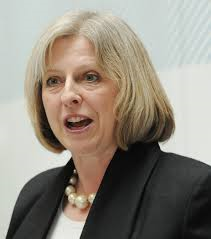
Teresa May, Home Secretary

The government announced its fifth attempt to introduce the snooper’s charter in the Queen’s Speech a few weeks ago.  Called the Investigatory Powers Bill, it looks to be more wide ranging than was previously expected.  Most people seem to be quite relaxed about this.  There few signs of a grass roots campaign taking place and there do not seem to many letters to national papers on the subject.

In conversation people will say things like ‘if they want to listen in to me chatting to a friend they are welcome’ and ‘I’ve got nothing to hide’ is a popular refrain or they accept that it is a price we have to pay for increased surveillance of terrorist threats.  Some do not believe it possible with the millions, nay billions of emails; phone calls; Skype sessions; tweets and so forth, that it would ever be possible for the security services to do this, perhaps not understanding that it is metadata they are after.

There are few who would disagree with the need for our security services to look out for possible terrorist threats or indeed other major crime activities such as people or drug smuggling.  The justification by ministers for the need for increased surveillance has been based on the fear of terrorist activity especially after the terrible outrage on 7/7 almost 10 years ago.

At the heart of the debate is the issue of trust.  We cannot know much of what the security services do for fairly obvious reasons and this means the notion of transparency does not have much relevance.  We want to trust however that the intelligence services do the right thing to protect us.  We want to trust them to be concerned with terrorists and serious crime.  We would like to be reassured that someone is in overall control who is able to ask the relevant questions.  It is here that there is a problem: namely if you ask people ‘do you trust politicians?’ you are likely to receive a dusty answer.  The sweeping powers demanded by ministers and in turn the intelligence agencies, gives them considerably increased powers to pry into our lives.  The powers are sweeping in nature and in effect treat everyone as a suspect.

The report by David Anderson QC published this month is entitled ‘A Question of Trust’ tackles this issue head on.  There have been a succession of scandals over the years which mean trust in politicians and those at the top of our society is extremely low.  The Leveson enquiry revealed an unholy alliance between senior Metropolitan Police officers and sections of the media.  Anderson proposes that oversight shall not be by politicians but by senior judges.  Many would agree with this.

No one shall be subjected to arbitrary interference with his privacy, family, home or correspondence.  UN Declaration of Human Rights

The whole issue of trust emerged on 15 June with the results of the investigatory powers tribunal into

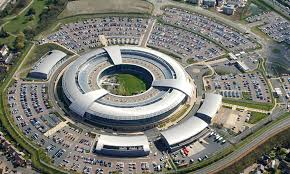
GCHQ
GCHQ

GCHQ.  It emerged that this agency has been covertly monitoring two human rights organisations, one in South Africa and one in Egypt.  The case was brought by Privacy International, Amnesty International, the American Civil Liberties Union and Liberty.  It made ‘no determination’ on whether GCHQ intercepted these latter organisations illegally.  It is left open therefore whether they (we) are being monitored and their messages being intercepted.

So while ministers talk of terrorist threats to gain support for ever widening intrusion, their agencies intercept and monitor journalists, whistleblowers, human rights groups and defence lawyers in what has been termed a ‘scandalous misuse of terrorism legislation’*.  Sir Tim Berners-Lee has observed that ‘the UK has lost the high moral ground and is doing things even the NSA weren’t’.  We need to be extremely concerned at the government’s proposals.

Sources:

Liberty; Amnesty International; The Spectator*; The Guardian

Security


A significant step forward was made today against the excessive and arguably illegal interception of messages by the secret services and in particular, GCHQ. The hoovering of email, Skype, Facebook and other electronic messaging services was indiscriminate and is likely to have been illegal. Assurances that this surveillance is tightly controlled have been shown to be untrue.

wire tap imageThe ruling by the Investigatory Powers Tribunal (IPT) – a secretive legal body responsible for monitoring the shadowy world of the UK secret services – said that GCHQ’s access to (and use of) private communications swept up in bulk by the National Security Agency (NSA) breached human rights laws. This is the first time in its 15-year history that the IPT has ruled against an intelligence agency. The landmark verdict proves that mass surveillance sharing on such an industrial scale was unlawful, and a violation of our rights to privacy and to free expression.

Liberty, Privacy International and Amnesty, brought the case against the agencies, following the disclosures about mass surveillance made by whistleblower Edward Snowden in 2013. Thanks to Snowden’s revelations, the world is now aware of the extraordinary scale on which US and UK security services intercept and store our digital communications, including emails, messages on social networks and internet histories.

That includes not just the UK getting hold of what the US has picked up in its ‘Upstream’ and ‘PRISM’ programmes (which can cover Google, Facebook and other US-based internet platforms), but the UK’s very own ‘full-take’ Tempora system, which scoops up every single communication that passes through the UK. It’s very possible that highly sensitive communications between activists around the world have been monitored as part of these programmes. It also seems that journalists have been monitored as well as lawyers’ communications with their clients.

The IPT’s ruling acknowledged that the sharing of these communications between the US and UK governments violated human rights law until the end of last year. But even now the UK government will not publicly accept that these mass surveillance programs even exist.

The government has been playing a cat and mouse game over surveillance – talking about ‘national security’ while trying to cover up unlawful behaviour in its use of private data.

Secret rules about secret practices

Before this case was brought, there was simply no public information whatsoever about how and when the UK thought it could handle the data which the US had obtained. We had to force them to disclose what turned out to be a puny two-paragraph public summary of those rules during the case.  Due to that disclosure, the IPT ruled in December that the sharing of surveillance date between the UK and US is now lawful because there is supposedly enough ‘signposting’ in public about what is going on ‘below the waterline’.

So, that means up until that disclosure, the spying programme broke the law – but because they revealed a few vague details of how they gather and store that information – it’s now legal for them to continue doing so.

 Amnesty International strongly disagree with this decision.

Those forced disclosures made by the government are insufficient and fall far short of making its activities lawful.  We won’t stop here – we are planning to challenge the earlier ruling at the European Court of Human Rights.  But until then, while we’re pleased to see it acknowledged the programme has been unlawful up until very recently, the ruling means that the two spy agencies will retain unrestricted access to global communications with minimal safeguards in place.

We have argued before on this site that we accept that intelligence agencies have to intercept messages in their fight against terrorists and others bent on doing us harm. This interception must be under political control and scrutiny and done on a needs must basis. We also expect the media to keep a close eye on the politicians not least because trust in them is so low.

But what seems to have happened is that scrutiny consists of chats between the Security Commission and the security agencies and that there is a failure by the parliamentary committee to ask searching questions. The press have been largely silent and ineffective. It is no surprise therefore that the general public remain unconcerned about the activities of the security services. ‘I’ve got nothing to hide’ is a popular response. People seemed relaxed to see a reduction in their privacy to secure an imaginary increase in their security. Stories are frequently told of terrorist plots being uncovered by the use of such methods.

The bizarre thing is that if one asks the question of someone ‘do you trust politicians?’ you are likely to receive a ribald answer (or a black eye). Yet we seem to.

Blog at WordPress.com.

Up ↑