Impact of Middle East Conflicts on Refugees in Turkey


War in Middle East and its effects

March 2026

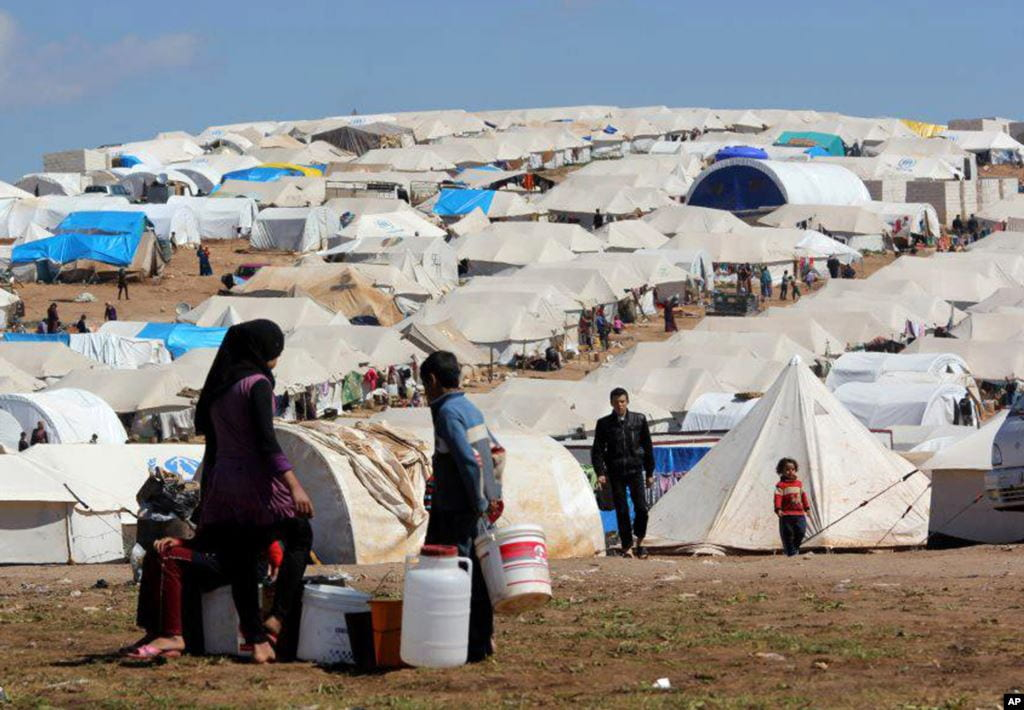
Although war reporting generates a lot of commentary on the deaths of those caught up in the conflicts, the effects on refugees and those displaced receives much less attention. With the new war(s) in the Middle East, refugees are again in the news. So far, most displaced people have been moved within the countries of Iran and Lebanon, but Turkey in particular is being readied for an influx of refugees.  The European Union Agency for Asylum thinks here will possibly be large numbers of displaced persons as a result of the conflict, many of them heading for Turkey. The Institute for Migration estimates that as of now there are 19 million internally displaced in the region; the UNHCR have calculated in the last few days that 667,000 Lebanese have registered as displaced.

Home Secretary’s refugee plans

At home, the big story is the Home Secretary, Shabana Mahmood’s plan to reduce the length of protected stay of refugees from 5 years to half of that, during which time they will only have temporary refugee status.  This will be subject to review every 30 months for up to 20 years. During this period claimants may be deported if, in the opinion of the Home Office, their country of origin has become deemed “safe”.  A large number of Labour backbenchers are opposing the move, and the Law Society has observed that it might not comply with international law. Other objections have been that the plan will be costly (£872 million over a decade, according to the Refugee Council) and impractical. On 5th March, the Home Secretary revoked the legal duty to provide destitute asylum seekers with support and accommodation while their claims are processed, often for months or years.  The Home Office have been influenced by the so-called “Danish model”, which takes a hard line on immigration.
Among the latest statistics to be released, the Home Office received up to 23,000 referrals of alleged human trafficking in 2025 (the main sources were Eritrea and Vietnam).  The backlog of cases has reduced, but there has been an increase in the number of reconsiderations.  In 2025 about 100,000 claims for asylum were made in the UK. Of these, 41% were from small boat arrivals, 11% other irregular means, while 40% already had some form of leave before claiming.  The level of grants continues to drop, at 42% in 2025 (it used to be over 80%).  Syria has suffered particularly with levels of asylum grants down year-on-year from 88% to 9%.  Claims from Eritrea and Somalia are mostly accepted.

The ban on family reunions instigated last autumn is being challenged in the courts by Safe Passage International.  A High Court ruling is expected later this year.

Small boats in the Channel are now starting from further north, in Belgium, according to a BBC report.

The UN Missing Migrants Project, which records the number of deaths among attempted migrants globally, has designated three routes as particularly dangerous: from North Africa to the Central Mediterranean (esp. Libya); from Afghanistan to Iran (this was before the current conflict), and from West Africa to the Canaries (they note that migrants are coming from further south than they used to, with more risks attached).

Those politicians who seem keen on war and wanted the UK to adopt a more interventionist stance with the Israeli and US actions, seem not to be quite so aware of the knock-on effects. Many of those same politicians are to be heard railing against refugees. Wars generate refugees. A proportion end up at Calais.

AH


Recent posts:

“Amnesty a worthless sham”


Fierce criticism of Amnesty International by the editor at large of the Jewish Chronicle

April 2024

“Amnesty is an indecent, morally bankrupt sham that has nothing of value to contribute”. These are just two comments in a Times column under the ‘Thunderer’ heading in its edition of April 11th. After first saying that the organisation was once a remarkable one which campaigned on behalf of prisoners of conscience, today it has become “just another partisan NGO, with all the dreary hard-left obsessions – including the customary fixation on Israel”. There then follows a damning description of current prisoners of conscience saying that far from being law abiding citizens and writers, they were in fact dreadful terrorists who committed fearful crimes against Israeli men.

This site has referred, in several posts, to the system of Apartheid being operated in Israel against Palestinians. Many of the processes used in South Africa against the Blacks are present in the country and severely limit the movement and livelihoods of non Jewish citizens. Three detailed reports have been published: Human Rights Watch, Amnesty and B’Tselem an Israel based human rights organisation. The HRW report has received a detailed rebuttal essentially denying that Apartheid exists in any form.

The invasion of Gaza following the horrific attack by Hamas on 7 October has seen around 33,000 Palestinians killed, many of whom were women and children with thousands more buried in demolished buildings. The sympathy for Israel after the Hamas attack, has begun to dissipate following the actions of the IDF. As famine begins to set in, the blocking of aid trucks by one means or another has attracted criticism from international friends of Israel. The killing of 7 aid workers recently drew widespread criticism and renewed attention to how IDF were conducting the war in the territory.

It is not true to say that Amnesty is ‘fixated’ on Israel. It has campaigns on a wide range of issues around the world. It has argued that the root causes of the conflict in Israel and Gaza need to be addressed and has called on all parties to adhere to International Humanitarian law. Israel is by far the most sophisticated country in the area with massive resources courtesy of the USA, a powerful military and is a sophisticated society.

Stephen Pollard’s Times’ article verges on being a diatribe. It is of a piece with normal Israeli practice to demonise critics as being anti-Israel. While Israel continues its Apartheid actions in the West Bank, there is unlikely to be a satisfactory long-term peaceful solution. Using ‘dumb’ bombs to destroy entire blocks because there is (it is believed) a Hamas operative within it is not consistent with International law. Writing tirades against those who draw attention to Israeli failings are unlikely to succeed either. It is in contrast to a rather prescient article of his in the New Statesman six years ago in which he notes that the violent putting down of protests will lose the country empathy.

The Salisbury Vigil


Strong presence for the Vigil continues in the cause of peace in Gaza

February 2024

A YouTube video composite of the twelve vigils so far held has been made and can be accessed here. We are grateful to Peter Gloyns for this.

A vigil is held every Saturday in the market square in Salisbury which receives a continuing high level of support. The twelfth one was held on 24th February, starting at 5:45 pm and lasting half an hour. Just over 50 attended. The aim is to promote the cause of peace in Gaza and Israel generally. Violence continues in Gaza and there is an expectation that the death toll will reach 30,000 this week. Thousands more have been wounded. Many of the dead are women and children.

There is talk of negotiations leading to a ceasefire but whether this is so is questioned: Hamas representatives say not, Israel negotiators say maybe. Let us hope there is success.

The scale of destruction is Gaza is immense and will take colossal sums of money to put right.

The Vigils will continue through March and all are welcome.

The Salisbury group was established 50 years ago this year

Israel, Palestine


Talk at Sarum College on the history and problems of this troubled land

On the 31 July 2019, Prof. Mazim Qumsiyeh (pictured) of the Bethlehem University gave an extremely interesting talk on the history and political situation in Israel and Palestine.  This is a tricky subject at the best of times with deep historical wounds and considerable and seemingly irreconcilable hatreds.

Mazin Qumsiyeh Interveiw at Bethlehem University - YouTube
Pic: YouTube

His talk – illustrated with copious slides – was built around the medical paradigm that is: start with the history, then the diagnosis, followed by therapy and prognosis.  So he started with the history of the area.  We now tend to think of it as an area under constant conflict but interestingly, historically, nothing much happened there and there was little conflict.  Such as there was came from outside namely the Crusaders and latterly the Zionists.  This movement, founded by Theodor Herzl in 1868, introduced the idea of a Jewish homeland.  To do this, the local existing population had to go.

We are familiar today with the Balfour Declaration but less so its equivalent in France by Jules Martin Cambor.  This led to the creation of the British mandate in the area and the loss of territory by the indigenous people who had lived there for a considerable time.  The maps showing the loss of territory are well known.

Prof. Qumsiyeh contrasted the ownership of land in Israel by Palestinians at 8.3% with apartheid in South Africa where ownership by indigenous people was 11%.

Many efforts have been made to resolve the conflict and one such is the two state solution promoted by several western powers and recently the Quartet.  He does not support this.  A two state solution does not solve the problems he claims, merely creating fresh ones with settlers and others being moved as part of the process.  He says quite simply that the colonists and the colonisers should live together.  He emphasised the importance of diversity.  The history of the area supports this with many different peoples and beliefs existing together over centuries.  His own family is an example of various religions and beliefs represented through the generations.

He also believes that fundamental to any solution is the issue of human rights and in particular, the right of refugees to return.  He reminded us that one of the early drafts of the UN Declaration of Human Rights was written by a Jew.

Our concept of the area is that of constant violence: Israeli soldiers against civilians or rockets being fired into Israel.  Yet resistance for many years has been non violent and consisted of the usual run of sit-ins, protests and civil disobedience.

This was a truly enlightening talk by someone who has been arrested many times by Israeli authorities and also by Palestinian ones as well.  It was given without bitterness or rancour.  He pointed out that many Israelis are unhappy with the treatment of Palestinian and many come to support sit-down protests in front of bulldozers brought in to demolish townships and olive groves.  He was not anti Israel or anti Palestine but pro human rights.  He illustrated his talk with pictures of the wall of course and the destruction of Palestinian communities.

No doubt aspect of his talk could be questioned and facts challenged.  It was disappointing when the very first question – or rather statement – was from a man who said he was Jewish who simply said it was ‘anti Israel, anti Jewish propaganda with every slide.’  It was a pity he was not asked to explain what he meant by referring to particular slides .

Real peace the professor said will come with ‘mental liberation’ followed by physical.  Apathy (he meant in the west) was a major problem.


If you would like to join the group you would be very welcome.  Come along to one of our events over the next few months and make yourself known.

Blog at WordPress.com.

Up ↑