Nigeria and Shell Oil: 30 years on


Let us not forget the role of Shell Oil in Nigeria

March 2026

In this world of fast moving actions, invasions, civil wars and genocide, it is easy to lose sight of past concerns which still resonate today. We are reminded in the Spring edition of the Amnesty News (Issue 228) of the events which took place 30 years ago in Nigeria and the activities of the Anglo-Dutch oil giant Shell. Amnesty produced a report last year Extraction Extinction which examines in detail the problems of the extraction industries and their effects on the environment, the climate and human rights.

On p129 of the report is a brief history of Shell’s activities in Nigeria and its complicity in the murder of Ken Saro-Wiwa:

In 1956, Shell first discovered oil in commercially viable quantities in Nigeria, when the country was still under British colonial rule. Before long, Shell operated more than 1,000 wells in 90 oil fields covering an area of 31,000 km2 across the Niger Delta. During the 1990s, Shell reported that its annual profit from oil production in Nigeria averaged USD 220-240 million, some 7% of Shell’s total worldwide profits from exploration and oil production.

Within the Ogoniland region alone, Shell operated 96 wells in five oil fields and was able to produce 28,000 barrels a day. The environmental degradation caused by their operations drove protests by the Ogoni people, led by writer and activist Ken Saro-Wiwa.

In November 1993, General Sani Abacha seized power in a military coup. General Abacha banned all political activity, replaced civilian governors with military administrators, jailed and executed opponents. An Internal Security Task Force was created to “restore and maintain law and order in Ogoniland” and immediately responded to community led protests in the Niger Delta with excessive use of force and other human rights violations.

Amnesty International has documented Shell’s involvement in human rights violations in Nigeria and its close relationship with the Nigerian military. Amnesty International’s research revealed that Shell executives met regularly with top government officials during this period and discussed the government strategy for dealing with protesters in Ogoniland.

In October 1995, nine Ogoni men including Ken Saro-Wiwa were convicted and sentenced to death in relation to trumped up charges of incitement to murder. They were hanged 10 days later; their bodies dumped in an unmarked grave. Five days later, Shell launched a new USD 4 billion natural gas joint venture with the Nigerian government. The
executions of the Ogoni Nine sparked outrage around the world. [Extract from the report]

A study by Durham University discusses the role of Shell in damaging the environment.
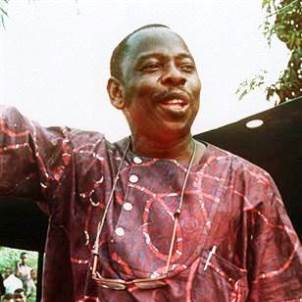
The organisation The Movement of the Survival of the Ogoni People, MOSOP provides further details. They maintain that Shell knowingly provided encouragement and motivation to the military authorities to stop the activities of MOSOP thus contributing to the deaths. There was an international outcry following the murder of Saro-Wiwa (pictured: photo MOSOP).

There does not seem to be any reference we could find on Shell’s website to these events. A relevant policy states: “Shell strives to make a positive impact on people around the world, and this includes providing the energy people need, contributing to local economies and communities, championing inclusion and respecting human rights” [accessed 28 February 2026].

There is some evidence to show that Shell has improved its performance in this area. However, after 30 years, the fight for justice continues. Shell has never fully cleaned up the oil spills and mess they created in the area and court actions continue.

The story of Ken Saro-Wiwa is presented in this piece in Historical Nigeria.

This is a story about a powerful international company which was able to operate in a country with few controls over its activities. When threatened by local people protesting about the severe damage it was doing to the environment, it is alleged they connived with the military authorities of the time who murdered a number of the protestors including Ken Saro-Wiwa. It seems that even after the passage of 30 years and some claims that Shell Oil is behaving more responsibly, they have yet to fully clean up the mess made by their activities. There are issues both about climate, the environment and human rights bound up in the same story.


Recent posts:

Saudi executes 81 in one day


News that Saudi Arabia has executed 81 people in one day has shocked the world. Where or how is not known but the usual method is beheading. It surpasses the 63 executed in one day in 1979. So much for the reforms Mohammed bin Salman was supposed to be introducing.

The dead were unlikely to have received a fair trial. They would almost certainly have been tortured into providing confessions. Saudi television said that those executed had ‘followed the footsteps of Satan’.

The executions brings into sharp focus UK relations with the regime. Saudi is our biggest overseas buyer of weapons many of which are being used in the war in Yemen. While our news media is giving wall to wall coverage of the war in Ukraine, the bombing of Yemen hospitals, clinics, weddings and other communal events gets scant coverage. Tens of thousands have been killed, including many children, and cholera is endemic.

The prime minister, Boris Johnson, is due to visit the kingdom in the next few days to try and increase the supply of oil. One wonders if the executions and the outrage they have caused will feature in the discussions. A Reprieve action urging Johnson to cancel his trip is here. Saudi Arabia has invested in Newcastle Football Club.

A report by the European Saudi Organisation for Human Rights report on this can be accessed here. This organisation has been added to our list of contacts to be found at the bottom of the page.

Lobbying – the hidden scandal


Lobbying and business influence in government at a high level.  MPs receive millions for lobbying

We have frequently drawn attention to the issue of corporate influence on our political process and in particular, the role of oil and arms companies.  We have recently seen three leaders from China, Egypt and India, visit the UK and be given the red carpet treatment.  Each has – to put it mildly – a poor human rights record.

In the case of China it includes the use of torture, shutting down the freedom of speech and more executions than the rest of the world put together.  Egypt has been involved in mass arrests and torture and President Modi of India has a dubious record in terms of the treatment of Muslims.

It seems as though the ‘prosperity agenda’ is eclipsing all else and the only thing that matters seemingly, is the pursuit of business and contracts.  No one is arguing for boycotts but that the issue of human rights be brought up in discussion with these leaders.

A factor in this is the role of lobbyists and a recent analysis by Transparency International is worrying and should receive wider coverage.

Analysing the new UK Register of Lobbyists and data from Parliamentary registers of interests, their new research has found:

  • Less than 4% of lobbyists are covered by the Government’s new lobbying register – almost all lobbyists are completely unaccountable.
  • 8/10 of the most frequent lobbyists are from FTSE 100 companies – lobbying is dominated by the corporate world.
  • £3.4 million paid to 73 MP’s last year for external advisory roles – a significant risk of conflicts of interest.
  • Payments for Parliamentary advice is still allowed in the House of Commons, but prohibited in the House of Lords, Scotland and Wales – a major loophole in the rules (TI’s emphasis)

The findings come after detailed analysis of research across Westminster, Scotland, Wales and Northern Ireland.  The report can be read on their web site or can be accessed here[There is also a permanent link to their site at the bottom of our page under ‘Links‘]

With such a high level of corporate lobbying and with the substantial level of fees MPs are earning, it is perhaps not surprising that business interests get such a high profile and human rights issues so low.

It appears from the report that the situation has got worse under the new government.  There were some publications of meetings with lobbyists concerning the previous year but that now seems to have stopped.  Most of the lobbying it seems is around domestic matters for example, firms trying to get a slice of the health service.

Business is important and of course companies should be free to lobby.  But it should be transparent and registered.  More importantly, business interests should not trump all else.  The government is not after all some kind of selling operation for FTSE 100 companies.

UPDATE: 16 NOVEMBER

It’s not about human rights but as if to illustrate the point, it’s just been reported the ex Health Minister, Lord Lansley, is to take up posts with firms hoping to profit from the NHS. 

Andrew Lansley and the revolving door

Blog at WordPress.com.

Up ↑