Shocking remarks by Danny Kruger MP


The Reform MP is asked about Israel and Gaza

November 2025

Danny Kruger is the MP for East Wiltshire (part of a county in England) and was voted in as a Conservative candidate in 2024. He switched just over a year later to become a Reform MP. He has a range of largely bizarre views and was interviewed by a Guardian journalist the results of which were published on 22nd of this month.

Our concern is not with his overall political views but on the specific remarks he made in answer to questions about Israel and Gaza which have implications for human rights. The journalist is Charlotte Edwardes. That section is as follows:

“[…] We move on to the conflict in Israel and Gaza, because he’s declared Palestine woke and I’d like to know how. He says the position of Israel is important to our politics in the UK, but also to the west in general, “because it stands for the idea of the nation and of western civilisation being something worth defending. [Israel] is fighting the battle for all of us in the Middle East”.

“Kruger does not believe Israel is committing genocide in the region: he says all the deaths in Gaza are the responsibility of Hamas. Nor does he feel Benjamin Netanyahu’s government has gone too far. “The children wouldn’t die if Hamas was not a security threat to Israel” he argues. “I can’t judge the precise tactics of particular IDF operations. I can well imagine there have been atrocities and excesses, as happens in wartime.” Is there no price too great in terms of human life for the elimination of Hamas? “Well, if that price is the elimination of Israel, then nothing is too great […].”

Normally, statements such as these would go unremarked being just one of many foolish statements made by a variety of MPs. But Kruger is advising Nigel Farage, the leader of Reform who, current polls predict are in a good position to form a government in the next election. He is thus someone who is influential and may be in a position to influence policy if Reform are successful in forming a government. A reading of the whole article – the result of three interviews – sees another journalist struggling to make sense of his remarks.

Comments
  • His comments are simplistic. To say ‘all the deaths in Gaza are the responsibility of Hamas’ is a gross distortion. It is accepted that Hamas is a terrorist organisation and the attack on October 7th was horrific. But Israel’s response has been wholly disproportionate making Gaza a wasteland and killing 70,000 Palestinians – many of them women and children.
  • He shows no sign of recognising the history of the conflict. It did not start on October 7th as so many of the Israeli cheerleaders want us to believe but its roots lie in the events following 1948/9 and the brutal expulsion and murder of at least 750,000 Arabs and Palestinians. He makes no reference to the system of apartheid operating in Israel making non-Jews second class citizens. As someone who has a DPhil degree from Oxford, it might be expected to see a greater understanding of historical causes of conflict.
  • It displays a degree of callousness to the suffering of the people of Gaza. To say ‘the children would not die if Hamas was not a security threat to Israel’ is crass not to say offhand. Elsewhere in the interview (and in other interviews and commentary) he makes great play of his Christian faith yet there is no sign of this in these comments.
  • Denial. He denies that Israel is committing genocide. He echoes the Labour government’s position on this which is no recommendation. How would you describe the deaths of 70,000, the deliberate destruction of all the hospitals, schools and water treatment plants, preventing food, water and medicines to enter the area? Perhaps there is another word Mr Kruger would like to deploy?
  • ‘Palestine [is] woke’ means what exactly? The interviewer does not get an answer.
  • The use of weasel words and phrases. ‘I cannot judge the precise tactics of IDF operations …’ is trite although he admits there have been atrocities and excesses. He has been quick to condemn Hamas (does he know the ‘precise tactics’ of their operations?) but tries to excuse IDF operations with these weasel words. The use of cluster munitions, using massive 500lb bombs to blow up entire buildings with no concern for who’s inside, parking remote control vehicles packed with explosives outside apartment blocks and blowing them up ditto.
  • His statement that Israel ‘stands for the idea of the nation and of western civilisation being something worth defending’ and that the country is ‘fighting the battle for all of us in the Middle East’. Can this really be true? How does apartheid fit into that? How does attacking olive farmers and destroying their trees count as civilised? Gangs attacking Palestinian villages at will with the police and army standing by – is this fighting the battle for all of us? The murder of many Palestinians in Israeli prisons. Holding over a thousand Palestinians in sometimes underground cells and the use of vile torture methods – are these values Mr Kruger wants us to support?
  • Finally, no mention or recognition of the violence on the West Bank.
  • His answer to the question ‘is there no price too great … ?’ is especially damning.

What emerges is someone who has a surface view of history and seemingly no understanding of the conflict or its roots. It is a combination of naivete and surface thinking. He seems to have swallowed Israeli ‘talking points’ wholesale. It lacks balance. Perhaps the most shocking part of the interview is the shear callousness concerning the death of children in vast numbers. We could add those who have lost limbs or have starved to death. This throwaway remark seems to be widely at odds with his purported Christian beliefs. He may be in an influential position in government after the next election when these beliefs will matter.

The full Guardian interview can be read here.

Recent posts:

Nigel Farage and immigration


The leader of the Reform party sets out his policy for handling immigrants and asylum seekers

August 2025

Nigel Farage made a speech yesterday (26th) setting out his ideas for handling the rising numbers of immigrants and asylum seekers many of whom arrived in boats across the Channel. Often termed ‘illegal’ immigrants although it is not illegal to come via this method if asylum is claimed. The whole issue of asylum seekers, boat crossings and hotels has become headline news in recent months and there have been protests outside some of them most notably in Epping. A case started today (26 August) concerning an Ethiopian man alleged to have sexually assaulted a 14 year old girl and this has added to the widespread sense of outrage.

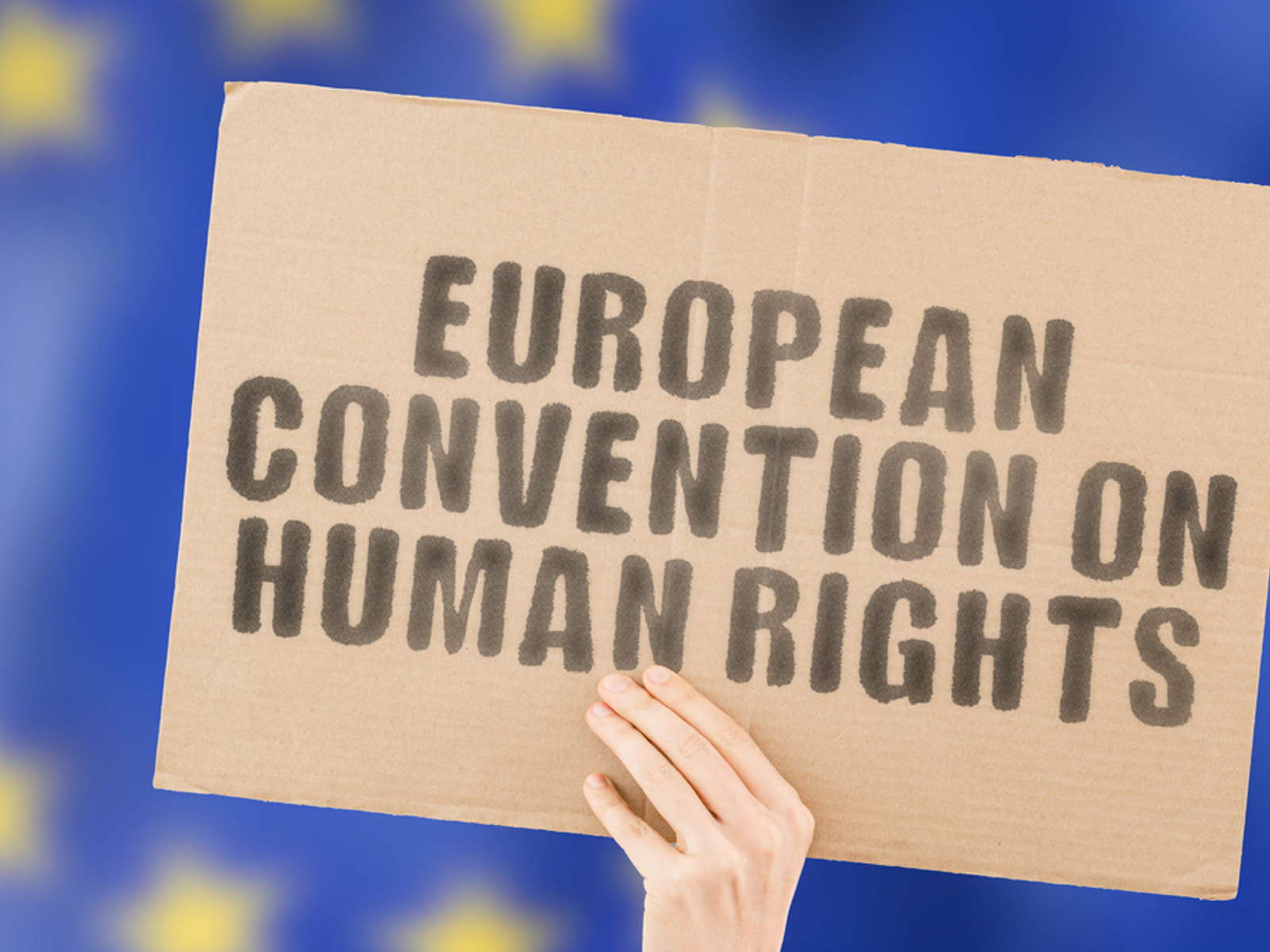
Mr Farage in his speech promised to fix the problem in quick order if he became prime minister. His speech has made headlines because of his poll lead which if maintained, could conceivably mean he will be a prime minister after the next election. Some polls show a 15 point lead over Labour. He promised to launch ‘Operation Restoring Justice‘ which would involve leaving the European Convention on Human Rights (joining Russia and Belarus), repealing the Human Rights Act and disapplying the Refugee Convention. This is to enable the UK to detain every migrant arriving illegally. Countries will be persuaded by a mixture of ‘carrot and stick’ to take them back. These will include countries with poor human rights records such as Iran, Afghanistan and Sudan where the risk of torture or death is extremely likely. The detentions will include women and children he made clear. They ‘will never be allowed to stay’ he said.

Critical issues arose in the press conference and included the cost and where they will be housed while deportations are arranged. He was not able to answer these questions. By amending or abolishing the legislations and coming out of the ECHR etc, it will frustrate the ability of lawyers to prevent deportations largely because the majority do have asylum claims which are legitimate. Over the coming days, other criticisms will appear. For example, existing English law, upon which the ECHR was largely founded after the war, provides protections despite membership of the Convention. Will foreign countries be willing to accept the large numbers involved?

Human rights

The concern here though is the desire to rid us of the ECHR and to repeal the Human Rights Act. This has popped up as a policy in several Conservative manifestos but has never actually come to pass. Local MP Danny Kruger is an advocate of this policy. Mr Farage’s ideas gained favourable coverage in some of the newspapers with the Daily Mail saying in a headline ‘Finally a politician who gets it’ [26 August, accessed 27 August]. His indifference to those he proposes returning to countries where torture is routine was particularly noteworthy. It is interesting however, looking at the comments from readers many of which were not supportive of his comments despite the uncritical nature of the article. The extent to which Mr Farage and Reform are making the waves was clear from the responses from the two main parties. Kemi Badenoch complaining that Reform had stolen their policies and a No 10 statement merely saying that Labour could not rule out leaving the ECHR. There was strong condemnation from the Liberal Democrats.

Mr Farage couched his speech in terms of a public mood of ‘total despair and rising anger’. It is disappointing to note the feeble and pusillanimous nature of the responses in particular from No 10. Britain was in the lead in promoting a new world order after the war following the Atlantic Conference. The ECHR was based a lot on British principles of justice. We would join only Russia and Belarus if we left – neither country a ringing endorsement of rights and human dignity. It is also disappointing to see newspapers like the Daily Mail, the Daily Express and the Daily Telegraph (How Farage would kick 600,000 migrants out of Britain) seemingly to endorse Mr Farage with little sign of critical analysis. The Telegraph even had a story headed ‘We’re ready to work with Farage on migration says Taliban‘. The human rights situation in Afghanistan is abysmal.

How have we come to a situation where prejudice and a lack of critical reporting about the almost unworkable and hugely expensive proposals put forward by Reform are treated in this way? Instead of a robust response and clear statements of how to tackle problems, the two main parties seem to be falling over themselves to ape Reform policies. Partly it is because they confuse some newspaper reporting as reflective of the wider public’s feelings about immigration which are a lot less black and white. It may also be a reflection of years of negative articles by some newspapers about human rights – and by extension the Human Rights Act – claiming it is a criminal’s charter. It is perhaps not surprising that part of Mr Farage’s speech was about the HRA and he spoke of ‘removing the tools from our judiciary’ to prevent successful asylum claims.

A point he referred to several times was around ‘whose side are you on?’ This was in answer to a question from the BBC concerning the risk of returnees being tortured. His answer was ‘are you on the side of the safety of our women and children on our streets, or on the side of outdated treaties backed up by dubious courts’. Another quote was defending our borders and keeping our people safe. There is no evidence of women and children rendered unsafe on our streets disproportionately by immigrants (illegal or otherwise). The torture question was asked more than once.

The tone of the presentation was that immigrants are a threat to our society. That women and girls are unsafe despite the fact that many asylum seekers and others are in secured accommodation. By extension, many of our problems would be removed in short order if he became prime minister. The HRA and other laws and treaties are part of the problem he claims.

Reflections

Mr Farage, despite being a member of a party with only 4 MPs, is able to command a big audience from a speech and to be the lead item on many news channels.

He enjoys wide and largely uncritical support in chunks of the media.

Mr Farage himself (!) noted an interesting point, namely most of the press questions were about process. There was little of a moral or principled point of view.

A large part of his speech was based on dubious claims and unsubstantiated facts. There are problems surrounding immigration and he is correct that both parties have been ham-fisted in trying to deal with them and failing. But solutions are complex and the nation cannot simply step away from international treaties and agreements.

He does not discuss the reactions from other nations from his set of unilateral proposals to deport all illegal migrants. The question is – what if all countries decided to do the same? He spoke of return agreements and an expert from the Migration Observatory said in an interview that such agreements had a mixed history.

He speaks as though the UK is uniquely affected by these problems. The reality is that the scale of displaced people around the world is massive. There are 36.8m refugees worldwide and 123m displaced people according to UNHCR. The UK’s problems in comparison are miniscule. We are also a rich country better able than most to tackle the problem with capable leadership. Many of the millions are in, or adjacent to, countries which are among the world’s poorest. No part of his speech discussed what could be done to tackle the worldwide problem.

So whose side are we on to pose Mr Farage’s question? Not his.


Why Labour Leaders Are Pushing for ECHR Revisions: A Political Analysis


Alarming stories that Labour leaders are wanting to reform the European Convention

June 2025

Alarming reports have emerged over the past few days that the current government is considering some kind of revision to the European Convention of Human Rights (ECHR). Figures such as the prime minister Sir Keir Starmer, the Justice Secretary Shabana Mahmood and the Attorney General Lord Hermer have made speeches suggesting disquiet concerning aspects of the Convention. In particular it is article 3: No one shall be subjected to torture or to inhuman or degrading treatment or punishment and article 8: Everyone has the right to respect for his private and family life, his home and his correspondence.

This story has history and the statements by politicians are more than usually disingenuous. To understand the story and the reasons for this recent slew of statements it is necessary to look at causes and why there is a clamour among politicians, some of the public and the media for change.

Stage 1the media

Much of the pressure has come from sections of the media so it is necessary to look at what is going on there. Newspaper readership has declined precipitately. Between 2000 and 2010, the decline was 65% and in the following decade up to 2020 a further 55%. Add in rising costs and declining advertising, and there is something of a crisis in the newsrooms. In this climate, it is cheaper to break into the emails, phones, bank accounts and even houses of the rich and famous, politicians and footballers to achieve a juicy front page, than to carry on the normal business of journalism.

Then came the hacking exposures and the Leveson enquiry which exposed the depth and extent of the hacking and criminal activity. It included senior police officers in the Metropolitan police in particular who sold information to the newspapers. This changed the dynamic of the industry and the notion of privacy was an anathema to their business models.

Over the last two decades there have been hundreds of stories alleging that criminals were not getting their just deserts because of their human rights either because of the ECHR or the domestic Human Rights Act. It was a ‘criminal’s charter’ they alleged. Photos of wanted criminals could not be circulated because of their human rights (they can), police could not evict an armed man until they provided him with a McDonalds hamburger because of his human rights (they could but it was normal practice to accede to requests to cool the situation). Abu Qatada was seriously misreported in the tussle over his deportation to Jordan.

Sadly, positive stories about the acts were almost entirely missing. The Daily Mail used the act to defend its journalist’s rights to protects their sources but strangely forgot to mention this to its readers.

Stage 2the politicians

Then the politicians began to join in perhaps sensing from the newspaper coverage that they were onto a popular winner. After all, if the voters were reading a never ending litany of stories about the evils of the human rights laws and Europe meddling in our affairs, it was a gift. It soon became part of the Conservative manifestos to abolish the act or later reform it. It became tangled up with the Brexit crusade and it is possible that many thought that coming out of Europe would mean that the ECHR would also be history. There was the famous cat story by Theresa May which was almost complete nonsense.

There was meant to be a Leveson part II to look at the unlawful conduct between the media and police but there were allegations that in return for a softer ride from the press, Keir Starmer agreed not to set it up. These allegations are denied. There are no plans for a part II.

Stage 3 – the boat people

As the means to arrive into the UK as a refugee or an asylum seeker diminished so the numbers who took to the boats to cross the Channel rose. This became a matter of massive political importance and the Reform party made huge progress with its promises to stop it. Media stories of asylum seekers being installed in hotels are constant. Despite boat crossings being only a small part of those coming to the UK, they loom large in the public imagination and politicians on the right have taken note of this.

The problem is that the government has obligations under the ECHR and other agreements, to treat asylum seekers in a proper way. Demands to simply ‘send them back’ are difficult to do particularly as ‘back’ can mean a county riven by war or where they can face dire consequences. But in simplistic terms human rights are standing in the way, as Mahmood says: ‘voters say international law stop them achieving the changes they want to see.

Stage 4 – the Reform party

Along came Reform and quickly began to made inroads into the political landscape. The overturning of a massive Labour majority of 14,700 in Runcorn and Helsby by Reform has shaken them badly. Reform has simple answers to matters like immigration which appeal to many and which has defeated both the Conservatives and now Labour. They would pick up boats in the Channel and return them to France. Asylum seekers would be processed off shore. These and other policies quick fix policies appeal to many and saying that they are difficult or impossible to do because of our international obligations carry little weight with many voters. They are even inflammatory particularly with those who have a deep distaste for anything European.

Stage 5 – today

So the Labour government is feeling under pressure. It has not ‘solved’ the Channel crossings problem. It has lost popularity for a variety of reasons quite apart from the discussion here. Reform is making great strides and even ahead in some polls with suggestions that Nigel Farage becoming a future prime minister was not the joke it might once have been. The Home Office remains dysfunctional and would take years to reform even under competent leadership. The party is becoming desperate to be able to counter the tide of dissatisfaction present in large parts of the kingdom particularly in the red wall seats.

So this brings into where we started and speeches about trying to reform elements of ECHR. The sadness is that they cannot. It would take years to carry through any reform in Strasbourg with little likelihood of success. If the government were to resile from either or both articles 3 and 8 would it solve its problems? Again sadly, no. The opposition to human rights laws and agreements have little to do with the people at the bottom of society so to speak. Almost no part of their speeches are about the victims of injustice which human rights are about.

As we have argued, it is sections of the media who have over decades created myths and disinformation about the workings of the laws. It is their business models which are under threat not the fate of asylum seekers. Why else would the Murdoch press spend over £1 billion in keeping the facts of its intrusion and criminality out of the courts? It is an irony – almost a supreme irony – that the much prized sovereignty that people apparently so desperately want is not in fact available to them. The Judiciary are all too happy to allow these hugely expensive legal actions to go ahead and thus subvert justice and free speech. There is no justice in any meaningful sense of the word. The rich and powerful can ‘buy’ silence by paying large sums into court that no one can afford to match.

These speeches appear to be preparing the ground at present in an attempt to match the rhetoric of Reform politicians. Instead of a proper concern for justice, establishing a Leveson II enquiry into the criminality of some of the media and their friends in the police, or tackling the rampant injustice of the defamation laws which serve to protect the rich from proper enquiry, our politicians seek to curry favour and favourable headlines in those very media outlets which have distorted the public’s attitudes to the laws which in truth protect them. The sadness is that the three politicians saying this stuff are experienced human rights lawyers who know it to be a distortion of the truth. A truly bizarre state of affairs.

Blog at WordPress.com.

Up ↑