
Refugees and boat crossings still making political waves
July 2025
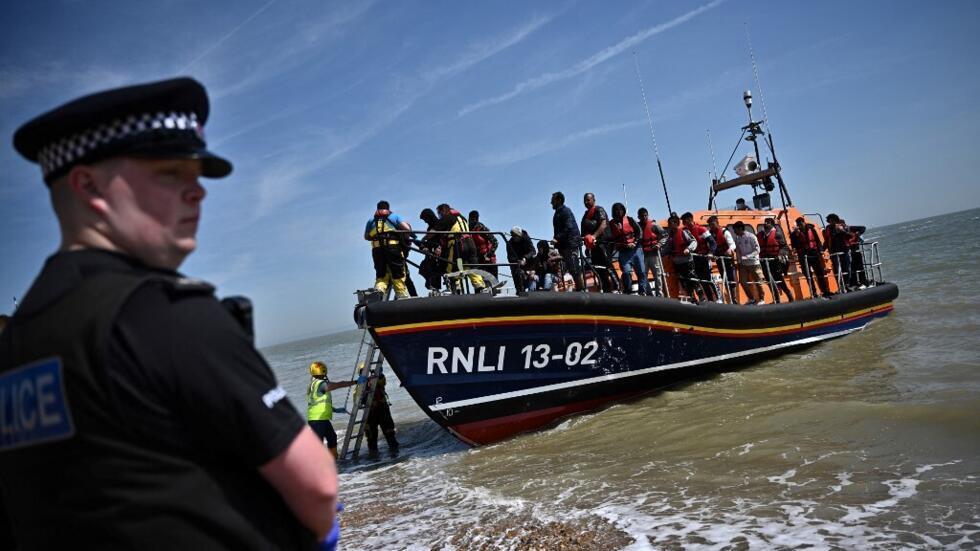
With the state visit of President Macron this week, the small boats are back in the headlines. As Macron and Starmer try to thrash out a deal to reduce the numbers arriving in the UK, the UK has been pressuring the French police to use new tactics against the irregular immigrants, allowing them to stop boats from up to 300 meters from the shoreline rather than only dealing with them on land. Presently they can only intervene if there is danger to life. The police are, in any event accused of puncturing inflatable boats as well as more heinously using tear gas and pepper spray on children.
An agreement between the UK and France on a “one in one out” basis, so that any arrival can be sent
back to France if replaced by a candidate deemed more worthy by dint of family connection, has been mooted, but the press conference will be on Thursday afternoon, so we will not know just yet. At all events, other EU nations are complaining about a possible deal which will make it more likely that arrivals in Europe will end up on their shores.
‘we have to make migration boring again’
Meanwhile, Amy Pope, the CEO of the (UN’s) International Organisation for Migration, has suggested any proposed changes will be unlikely to work, bearing in mind the level of commitment the migrants have already put in before reaching the English Channel. She is also in favour of de-politicising the debate. Her comment “We have to make migration boring again” is clearly the most valuable contribution from anyone so far.
Arrivals
As noted last month, the number of arrivals in the UK on small boats continues to break records (20,000 by the end of June). This has been put down to good weather, smugglers’ new techniques and increasing conflicts around the world (the largest number of hopeful asylum seekers in Calais are from Sudan).
The Government is hoping to save up to £1 billion by speeding up backlog processing. However, the backlog is now 90,000 rather than 50,000 in 2024. In 2024, there were84,000 asylum claims – In the EU as a whole there were nearly a million – 997,000.
With much discussion on what legal routes immigrants can take, here is a summary of the current situation in the UK: there are presently 7 options.
- UNHCR can select people it thinks appropriate to send (the places cannot be applied for, and amount to only 1% of all refugees).
- UK Resettlement Scheme. The status of this is unclear; it includes community sponsorship and accounts for about 700 arrivals last year.
- Mandate Scheme. This is for people with relatives in the UK. 23 cases were reported in 2024.
- Family Reunions. Applies after refugee status has been agreed by the UK.
Mostly Syrians , Iranians and Eritreans. 5000 in quarter 1 2025.
- Hong Kong. Numbers low now as most cases already settled.
- Afghanistan. ACRS and ARAOP have now been closed, with virtually no explanation. “Further measures…[will be] announced later this year.” More Afghans have been arriving by boats than under these arrangements anyway.
- Ukraine. Numbers also down now to about 4000 a month. Only 1698 asylum claims since 2022.
The Refugee Council have a new report New Roots, New Futures, arguing for a national integration strategy for refugees in the UK. They are particularly exercised by the need for new arrivals to have access to help in obtaining work and housing once they have been given right to remain.
The Green Party have put forward a plan for the Home Office to be split, with various options for the immigration departments.
By way of context, it should be noted that 73% of the world’s refugees are in Low/Middle Income countries, 67% of them are in countries neighbouring the one they are fleeing. Per head of population the countries with the highest number of refugees are Lebanon (1 in 8 of the population), Aruba and Chad.
The European Convention on Human Rights has become an issue again with questionable claims being made about possible unfair exploitation of loopholes. It should be stated that the Convention does not affect individual countries’ immigration policy, and that it is rare for claimants to a right of “family life” and such to win their case. The ECHR has ruled against the UK twice in the last two years, in neither case about immigration/deportation issues. They have generally prevented removals from the UK about once every 4.5 years since 1980. Leaving the Convention over this issue would seem rather unnecessary.
Andrew Hemming
Recent posts:

 Amnesty in Salisbury & South Wiltshire