Death penalty report


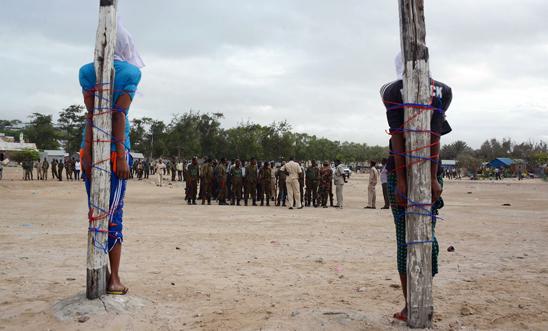
No to the death penaltyWe attach the monthly death penalty report, this time for 2 months, prepared by group member Lesley.  China doesn’t figure in the report as its executions are a state secret but is believed to be the world’s leader in the numbers executed.

May – June report (pdf)

Death penalty report


March/April report now available

STOP PRESS

Since this item was posted we have received notification that Californian Dept. of Corrections and Rehabilitation has extended its written public comment period to 15 MayFull details can be found on another post.

The death penalty report for March/April 2016 is now available thanks to group member Lesley for compiling it.  It has been a grim period with rises in executions in Iran and Pakistan and several executions in USA following dubious trials.  Iran is coming under increasing scrutiny worldwide for its practice of executing people who were juveniles at the time of their alleged offences.

China continues to lead the world with more executions than all other countries put together.

March – April report

No to the death penalty


UK government soft-pedalling over the death penalty


Amnesty sets out facts of government’s reluctance to press for an end to the death penalty in some countries

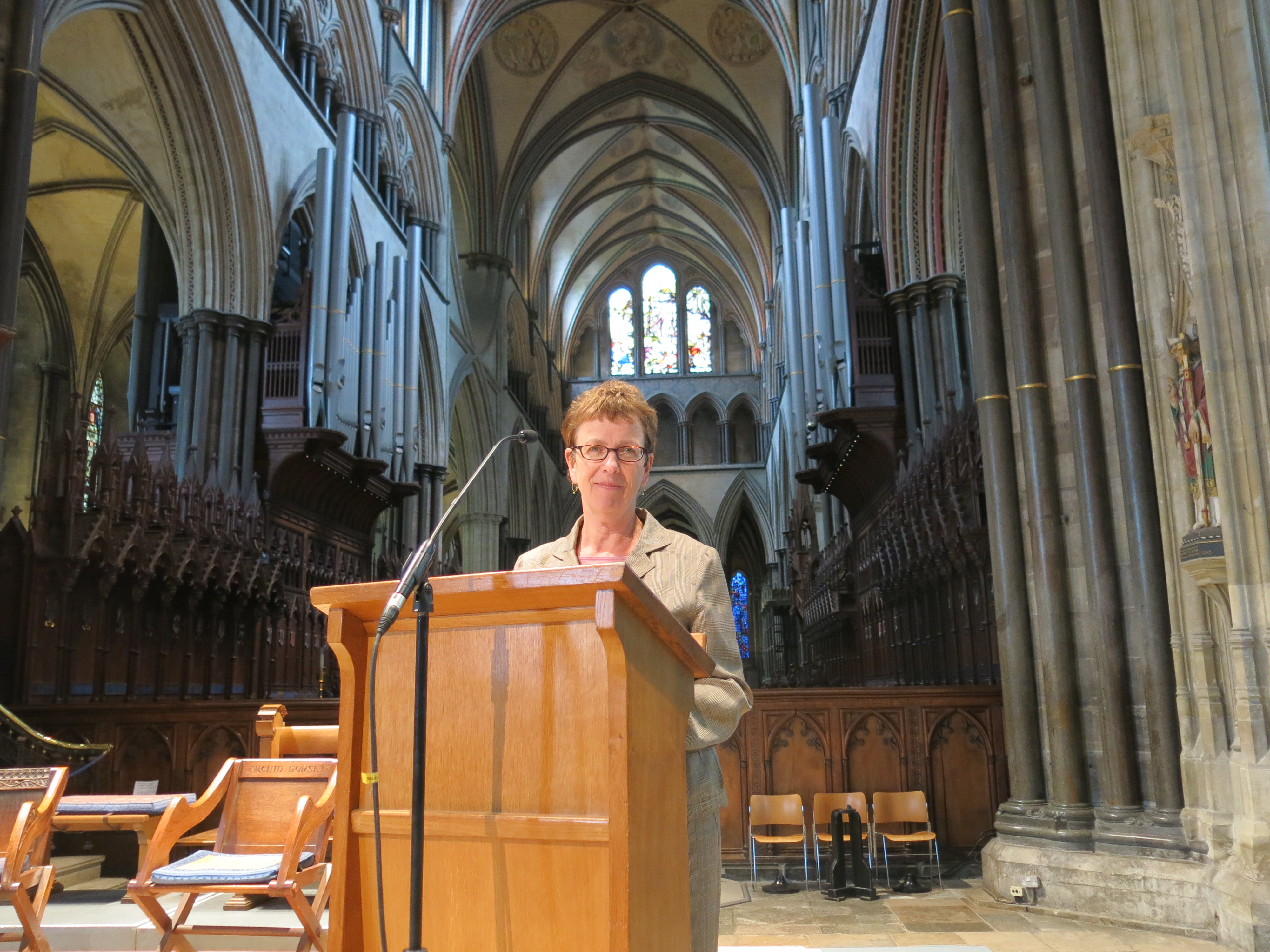
The Government has been accused of “soft-pedalling” over the death penalty and seeming to make trade more important than human rights.  The charge by Amnesty International UK’s director Kate Allen (pictured in Salisbury Cathedral last year) comes as the human rights organisation released figures showing that at least 1,634 people were executed in 2015, a rise of 54% on the year before.  Despite being the highest number Amnesty has recorded since 1989, this total does not include China, where thousands were likely to have been executed but where the death penalty is a state secret.

The figures – contained in the report Death Sentences and Executions in 2015 – show that the top five executioners in the world in 2015 were China, Iran, Pakistan, Saudi Arabia and the USA.

This “profoundly disturbing” surge in executions was largely fuelled by big increases in Iran, Pakistan and Saudi Arabia, Amnesty International reported.  Amnesty International’s fears have been raised just hours after MPs on the Commons Foreign Affairs Select Committee said there is “plainly a perception” the Government is prioritising trade and security with China, Saudi Arabia and Bahrain above human rights.

Ms Allen said:

Like the Foreign Affairs Committee yesterday, we’re worried that the Government has started soft-pedalling over foreign countries’ use of the death penalty, preferring to prioritise trade with countries like China, Saudi Arabia or Pakistan.

Until recently the UK’s policy of seeking global abolition of capital punishment had a clear focus and strategy.  Now the death penalty’s been thrown into the pot with other concerns and it’s much harder to tell whether the Government is prioritising this life-and-death matter.

If governments in Beijing, Tehran, Islamabad and Riyadh aren’t hearing about our outrage at executions after torture and unfair trials, then the executioners are going to think they’ve got a green light to carry on killing.

We want to see the Foreign Office publishing a clear strategy for its anti-death penalty work at the earliest opportunity.”

Amnesty International’s secretary general Salil Shetty said: “Iran, Pakistan and Saudi Arabia have all put people to death at unprecedented levels, often after grossly unfair trials.”

Last year, the Foreign and Commonweatth Office’s most senior civil servant made a frank admission to MPs that human rights “is not one of our top priorities” and that the “prosperity agenda is further up the list”.

Ministers deny the issue has been downgraded but a string of trade-focused, red carpet visits to the UK by the leaders of countries with some of the worst records of rights abuses has reinforced the perception of a shift of diplomatic emphasis.  Readers of this blog will know we have been following the twists and turns of this story for some months.  We wrote to our local MP Mr John Glen last year on Saudi Arabia and the rising toll of executions by beheading or crucifixion and we received a bland reply from the FCO minister Tobias Ellwood.  Since that time more evidence has emerged of policy changes designed it seems to scale down the human rights aspects.  We noted that when George Osborne visited China to the surprise of his hosts he failed to raise the question of human rights and executions at all.  Tobias Ellwood was reported by local media as congratulating the Saudis on the progress they were making with human rights.

Human rights minister Baroness Anelay said:

I am deeply troubled by the increase in the number of reported executions in 2015, which was driven by concerning increases in Pakistan, Iran and Saudi Arabia.

The UK opposes the death penalty in all circumstances and we make our opposition well known at the highest levels to countries which continue to apply it. Our message to them is clear, the death penalty is unjust, outdated and ineffective. It also risks fuelling extremism.

Despite these concerning figures there has been progress in many countries.  It is welcome that in 2015 Fiji, the Republic of Congo, Madagascar and Suriname all abolished the death penalty.

The Foreign Office will continue to use its diplomatic network to push for progress towards the global abolition of the death penalty.

Maya Foa, of Reprieve, described the rise in executions as “extremely troubling” adding: “It is all the more disturbing, therefore, to see what the Foreign Affairs Select Committee this week described as an ‘apparent deprioritisation’ of human rights by the UK government.

Now more than ever, Britain needs to be speaking out against the grave abuses – including mass trials, torture and death sentences handed down to juveniles and political protesters – being committed by its allies.

It is hard not to come to the conclusion that the primary aim of the government is trade and business with human rights coming a poor second if at all.  This overlooks the nature of ‘soft power’ and the fact that as a nation, we could be influential in humanising world affairs.  Instead, we chose to push out the red carpet for the most frightful regimes and, as the Panama papers are revealing, allow dubious individuals to buy up large parts of London using off shore tax havens.

Follow us on Twitter and Facebook

Death Penalty Report published


Dramatic rise in executions in 2015: the most in one year for a quarter of a century

To read the full report click here (pdf)


The past year has seen a horrific increase in executions around the world – the most we’ve recorded in a single year since 1989, and an increase of an astonishing 54% from the year before.

A few countries are executing prisoners by the hundreds, sometimes for crimes that aren’t serious, sometimes after trials and treatment that isn’t just or fair, and always violating the individual’s right to life and right to be free from torture.

From Australians Myuran Sukumaran and Andrew Chan shot by firing squad for drugs charges in Indonesia to Shafqat Hussein, hanged in Pakistan for a crime he confessed to after torture, aged just 14, over 1,634 individuals were put to death by state authorities last year.

Huge rise in executions

We recorded a huge increase in the death penalty, an increase of 54% compared with 2014. This is the largest number of state executions for a quarter of a century.

The number of countries that executed people rose – from 22 in 2014 to 25 in 2015. At least six countries resumed executions: Bangladesh, Chad, India, Indonesia, Oman and South Sudan.

Countries continued to flout other aspects of international law, putting to death people with mental or intellectual disabilities, as well as those charged with non-lethal crimes. Apart from drug-related offences, people were executed for crimes such as adultery, blasphemy, corruption, kidnapping and ‘questioning the leader’s policies’.

The death penalty is always a violation of human rights. We oppose it in every case.

The main executioners

A minority of countries are committing the majority of executions. 89% of executions in 2015 took place in just three countries: Iran, Pakistan and Saudi Arabia.

Iran

Iran continued to execute juvenile offenders like Shafqat – aged under 18 at the time of the alleged crime – in violation of international law. Authorities there sentencd juvenile offenders to death last year too.

Pakistan

Pakistan lifted its freeze on civilian executions in December 2014, and in the year that followed killed 326 people – the most we’ve ever recorded for that country in a single year.

An attack on a school in Peshawar prompted the government to start executing again, something it had not done since 2008. Initially, the freeze was lifted for those charged with terrorist-related offences, but in March 2015 the government resumed executions for all capital crimes, such as murder and blasphemy.

In a country where people are routinely denied the right to a fair trial, and evidence extracted through torture is used to seal convictions, hundreds of people are being sent to their deaths under the pretence of justice being served.

Saudi Arabia

Last year saw a huge surge in executions for an already prolific executioner. These figures don’t even include Saudi Arabia’s mass execution of 47 people at the start of this year.

The missing executioners

But these figures exclude China, where numbers remain a state secret, yet where we believe thousands of people are executed every year. We consider China to be the world’s top executioner, although the numbers are missing from this report.

We haven’t published figures for executions in China since 2008; we’re challenging the Chinese government to reveal their own figures and demonstrate that they really are limiting their use of the death penalty – something they have claimed to be doing since the country’s highest court began reviewing all death penalty cases back in 2007.

We also don’t publish figures for North Korea, a state shrouded in secrecy.

Execution sentences in 2015

At least 1,998 people were sentenced to death in 2015 and at least 20,292 prisoners remained on death row at the end of the year.

Some hope

Four countries abolished the death penalty for all crimes – the highest number to do so in the space of one year for almost a decade.

Madagascar, Fiji, Suriname and Congo all did away with the death penalty in the national laws once and for all.

Mongolia adopted a new Criminal Code outlawing the death penalty for all crimes in December which will enter fully into law in September 2016.

There is hope even in the USA, which continued to flout international law by executing people with mental disabilities.  Pennsylvania abolished the death penalty for all crimes in 2015 , bringing the total number of US states that have abolished the death penalty to 18.

We still hope for a world without the death penalty, and today half the world has abolished it for good. Add to this countries which have abolished this punishment in practice, as opposed to law, and the total comes to two-thirds of the world.

Committee to look into Yemen arms sales


A back bench committee is to probe arms sales to Yemen

Readers of this blog, other human rights sites as well the Campaign Against the Arms Trade, will be familiar with the story of Yemen.  There is a war going on there and civilians are being killed.  Médécins sans Frontières facilities are being bombed.  The UK is busy supplying the Saudis with arms and British military personnel are present in the command centre.  £2.8bn of weapons have been supplied since the war began.

At long last the cross party committee on arms exports controls is to look into the matter.  We await their report with interest.

Follow us on Facebook

Group minutes


The minutes of the last meeting are here thanks to group member Lesley for writing them up.  We discussed North Korea and the forthcoming video planned with Clare Moody; the Death Penalty report which highlights the events in Saudi, Pakistan and elsewhere; plans for the Human Rights Act, forthcoming events such as the stall in the market, and social media statistics including the success of the post about the war in Yemen and our role in arming and supporting the carnage, and several other topics.  The next meeting is on 14 April.

March


We have just added a link to an organisation, based in the USA, which campaigns for human rights of those who work in sometimes appalling factories for a pittance to bring us cheap clothes.  Called The Institute for Global Labour (sic) and Human Rights, it came to light in an article on the German retailer Lidl and its latest offering of a pair of jeans called ‘jeggings’ for the princely sum of £5.99 ($8.62).  The article alleges that the factories that make them in Bangladesh do so by paying a pittance to their workforce.  Source: The Observer 13 March 16

It’s sometimes easy to forget that human rights can be infringed in clothing factories as well.

Follow us on Twitter

Saudi executions imminent


“Saudi Arabia’s use of the death penalty to silence dissent sends a chilling message to anybody who dares to speak out against the authorities.” James Lynch
The families of three young men arrested for their involvement in anti-government protests while under the age of 18, fear their sons are among four people reported to be facing execution tomorrow, Amnesty International said today.
The family of Ali al-Nimr expressed fears on social media that he, along with Dawood Hussein al-Marhoon and Abdullah Hasan al-Zaher, is among the prisoners referred to in a government-run newspaper article published today. The article said the scheduled executions will complete a wave of punishments for terrorism offences that saw 47 people executed on the same day in January.

See the full story:

Executions

Death penalty report


Attached is the death penalty report compiled with thanks by group member, Lesley.No to the death penalty

Death penalty report


Follow us on Twitter and Facebook


Security and Policing Exhibition


Secretive Security and Policing Exhibition this week

This week, in Farnborough, the secretive Security and Policing Exhibition takes place behind closed doors.  On the face of it, the event, organised by the Home Office, is innocent enough.  It brings together firms providing security equipment with police and other security personnel who might have an interest in purchasing it.   The UK has a high-profile in this industry.

The first puzzle however, is why the taxpayer is funding this exhibition?  The current government is extremely keen on the private sector and in promoting free enterprise.  It has a distaste for the public sector and seeks every opportunity to outsource or privatise services previously provided by them.  So why, may one ask, is the Home Office organising and sponsoring this event?  Surely since these are profit-making enterprises – some hugely so – can they not organise their own event without subsidy from the taxpayer?

But the bigger concern is the use some of this equipment is put to and the customers being invited to the exhibition.  The list of countries include many well-known abusers of human rights and include Brunei; Indonesia, Saudi Arabia; Bahrain, Egypt, Israel and UAE.  The equipment being sold is likely to be used to violently and brutally repress individuals or groups of protestors who may be carrying out perfectly lawful demonstrations.  Once arrested, many will be tortured, mistreated and in some cases ‘disappeared.’  The UK will be complicit in this activity.

There is clearly some sensitivity around this exhibition – which as we’ve noted, is not open to the public – and its website says:

Established as one of the most important events in the security calendar, this unique event is aimed at police, law enforcement and offender management professionals who are tasked with security, civil protection and national resilience.
Security & Policing enables those with operational needs to meet companies with the relevant solutions. Exhibitors get the opportunity to display products that would be too sensitive to show in a more open environment. Visitors get to see the very latest products, services and technologies available – all within a secure environment. (emphasis added)

Reading some of the exhibitors’ websites is quite chilling with descriptions of real-time interception, harvesting millions of communications a minute and access to the ‘dark web.’  Clearly, if the public were to see some of the equipment it would be alarming so making the exhibition closed gets over that.

In addition to the Home Office, the Department for Business, Innovation and Skills will be attendance to show the delegates round and make them welcome.  John Glen MP is PPS to the Minister and will no doubt be taking part.  We look forward to his piece in the Salisbury Journal telling us about this.  UPDATE 17 March – no mention in the Salisbury Journal (17th March) so perhaps he didn’t attend.

We have previously commented on Britain’s role is supplying weapons and service personnel in various countries and in particular Yemen, where civilians and hospitals are being bombed using our equipment.  In addition to selling weapons, we sell repressive regimes the means to crack down on their citizens and we seem to be quite proud to do so as well.  Claims by the Prime Minister, other ministers and Mr Glen to be promoting human rights seem quite hollow in the light of these activities.


Follow us on Facebook and Twitter


The hidden war …


British involvement in the war in the Yemen

News programmes and newspapers generally are currently filled with arguments over Brexit, the American primaries, Syria and immigration.  Only occasionally does the war in Yemen and our involvement in it get a mention.  An exception was an interview by Frank Gardner [FG], the BBC’s Security correspondent, with Michael Fallon [MF] the Defence Secretary on Wednesday 2 March on the BBC’s Today programme.  It is worth reproducing most of it as it lays bare the thinness of the arguments deployed by Mr Fallon and also its inconsistencies.

Gardner introduces the piece by referring to the ‘unseen war’ which has waged for 5 years and the involvement by western powers in supplying the munitions to enable it to be carried on.  Indeed, Mr Cameron recently backed what he termed the ‘brilliant’ arms sales to Saudi Arabia only a matter of hours after the European Union voted to ban further supplies.  More arms firms are cashing in on the Yemen conflict and sales have surged to £2.8bn since the conflict began.

Michael Fallon said ‘British officers are offering training and advice to the Saudi armed forces, they are not involved in advising selection or the approval of targets in the war in Yemen.  On the contrary [they] are there to support the equipment we have supplied.’

FG: ‘You must be feeling a bit uneasy that some of that equipment, or the aircraft used to deliver it, is the Saudis have admitted, hitting hospitals and civilian targets?’

MF: We have some of the strictest arms control criteria in the world.  Before we supply equipment to anyone including obviously our key allies such as Saudi Arabia, we insist that they not only comply with international humanitarian law and the law of armed conflict …’ [interview ends]

FG said that he had spoken to a senior Saudi spokesman who denied that civilian targets were being bombed.  He then spoke to a Yemeni researcher about what ordinary Yemeni’s think of western, and in particular US and UK involvement, in this war.  She said that people on the ground are definitely aware of the involvement of the US and UK in the bombing.  What, asked Gardner, was the likely long-term effects of this?  She said:

The long-term effect is not only civilians dying and that the country is at a standstill, [but] what we are seeing is youth joining al-Qaeda in the Arabian peninsular and the Islamic State.

Gardner wound up by saying that the longer this war goes on without a result and the continued absence of the rule of law then the greater the risks that terrorist groups will profit from the chaos and build a ‘mini-state.’

Conclusions

There is no doubt that we are helping to fuel this conflict.  If our service personnel are there to ‘support the equipment we have supplied’ why was it all kept a secret until blurted out by a Saudi spokesman?  And what does ‘supporting equipment we have supplied’ mean anyway?  If weapons are being used to kill civilians does our ‘support’ make it better or worse?  The statement is meaningless.

But the big political error is to be involved at all and it could be laying the foundation stones of the next stage of ISIS’s development.  His statement that we have some of the ‘strictest arms control criteria in the world’ verges on the bizarre if the criteria are not being applied.

Our passion for arms sales has blinded politicians to the risks being run.  It’s all very well for the Prime Minister to be praising aircraft builders for their ‘brilliant’ achievements but if those planes are used to kill civilians, where does it take us?

In 2011, the then Foreign Secretary William Hague made a speech on human rights in which he said:

and how we are seen to uphold our values is a crucial component of our influence in the world.

He went on to say:

If change can be achieved peacefully in the Middle East it will be the biggest advance of democratic freedoms since the collapse of communism in Eastern Europe.  If it cannot, we are likely to see turmoil and unrest which sets hack the cause of democracy and human rights

It would seem these ideas have been forgotten.


Follow us on Twitter and Facebook

Our next meeting is on10 March at 7.30


Blog at WordPress.com.

Up ↑