Cricket and Afghanistan women


Do cricketing authorities have any moral compass at all?

January 2025

For women, life under the Taliban is like living in a prison. Even prisons have windows but the latest edict from the Taliban is that no new buildings can have a window through which a woman can be seen. Existing buildings must have such windows blocked up or screened off. The reason is “seeing women working in kitchens, in courtyards or collecting water from wells can lead to obscene acts”. Thus spoke Hibatullah Akhundzada, leader of the Taliban.

This is just the latest draconian measure. Women have no rights to free movement, education or work. Outside they must be completely covered over. Protections for girls and women subject to domestic abuse have been demolished. There has been a surge of forced marriages for girls and women. A full report, published by Amnesty called Death in Slow Motion reveals the full horrific nature of life for women, if ‘life’ be the correct word to use, in Afghanistan.

Enter cricket and the question of whether England should play Afghanistan: men, of course, because women are not allowed to play cricket or anything else, and members of the nascent women’s cricket team fled the country. This brings up the familiar question of whether we should engage in sporting activities with countries that have little concept of, or adherence to, human rights. We have discussed Saudi Arabia’s huge investment in sport and the recent disgraceful decision to award them the football (soccer, US) World Cup.

Bizarrely the Guardian reports (7 January) the England and Wales Cricket Board are refusing to schedule games against Afghanistan out of concern for a deterioration of basic human rights for women in the country. They are however, along with Australia, happy to play them in next month’s Champions Trophy. They are quoted as saying that they do not think a ban would make much difference to the ruling party there and that a unilateral decision would be less effective than a unified one by the International Cricket Council.

What should be the response for sporting bodies to taking part in sports with regimes who do not observe human rights for all or part of their citizenry? Does playing sport offer hope as the ECB argue? Or does continuing to play sport bolster the regimes and enables them to bask in the publicity while doing nothing to improve rights? Indeed, does sport actually make matters worse? During the communist era, East Germany and USSR for example, used sport to promote the idea of a healthy and successful society. The Saudi regime is investing billions in its sporting activities simply to promote the country to the world. We call it ‘sportswashing’. This enables regimes to sanitise their image knowing that the excitement of sport will give them massive uncritical coverage.

Will playing cricket against Afghanistan offer hope in the country? It might provide some amusement to Afghan men to watch their team, but the women? On the one hand it might put a spotlight on the country and its appalling treatment of women (good). On the other, it offers some favourable publicity to the regime and demonstrates to Afghanis that when money is on offer, the West very quickly loses its moral scruples (bad).

Meanwhile, a group of politicians led by Tonia Antiniazzi (Lab), has written to the ECB expressing their deep concern. The ECB’s responses can be seen in this BBC Sport report. Neither local MPs, John Glen nor Danny Kruger have signed the letter.

Sources: ECB, The Guardian, Amnesty International, BBC

Film: The Breadwinner


The Oscar nominated film The Breadwinner is showing this Friday, 8 March at the Arts Centre in Salisbury at 7:30 pm.  It concerns a young girl who pretends to be a boy in Taliban controlled Afghanistan to enable her to look after her family.  Cert 12A.  Tickets available from the Arts Centre, 01722 320 333, at the door or on line https://www.wiltshirecreative.co.uk/whats-on/salisbury-arts-centre/the-breadwinner/#book-tickets

There will be a short introduction by a member of our group.  If you are interested in joining the group we shall be around before and after the showing so it would be a good time to make yourself known.

Afghanistan


Britain’s role in Afghanistan is coming to an after over a decade of bloodshed and war.  It is doubtful that the country is in a fit state to function effectively since the Taliban and the warlords are still very much in evidence and there are reports of ISIS being present in the country as well.  After all this time it is easy to forget some of the original aims which were defeating terrorism and the Taliban.  We can also forget that it was the CIA who helped establish, arm and train the Taliban in order to assist them in their fight with the Russians.

One of the major victims of the years of war is women.  It has turned thousand of Afghan women into refugees and widows – or both – and made it dangerous for them to seek schooling, go out to work, get healthcare or secure paid employment.  Before the arrival of the Taliban in 1996, women’s rights had steadily improved and indeed, there are many photographs from that era women and girls in schools and university with not a burqa or veil in sight.  Improving the rights of women became one of the additional aims of the invasion and it will be recalled that Cherie Blair – wife of the then Prime Minister, Tony Blair – hosted an event in 10, Downing Street in 2001 with this aim in mind.  Kofi Annan said:

There cannot be true peace and recovery in Afghanistan without a restoration of the rights of women.

Similar sentiments were expressed by the then secretary of state Colin Powell:

The recovery of Afghanistan must entail a restoration of the rights of women, indeed it will not be possible without them.

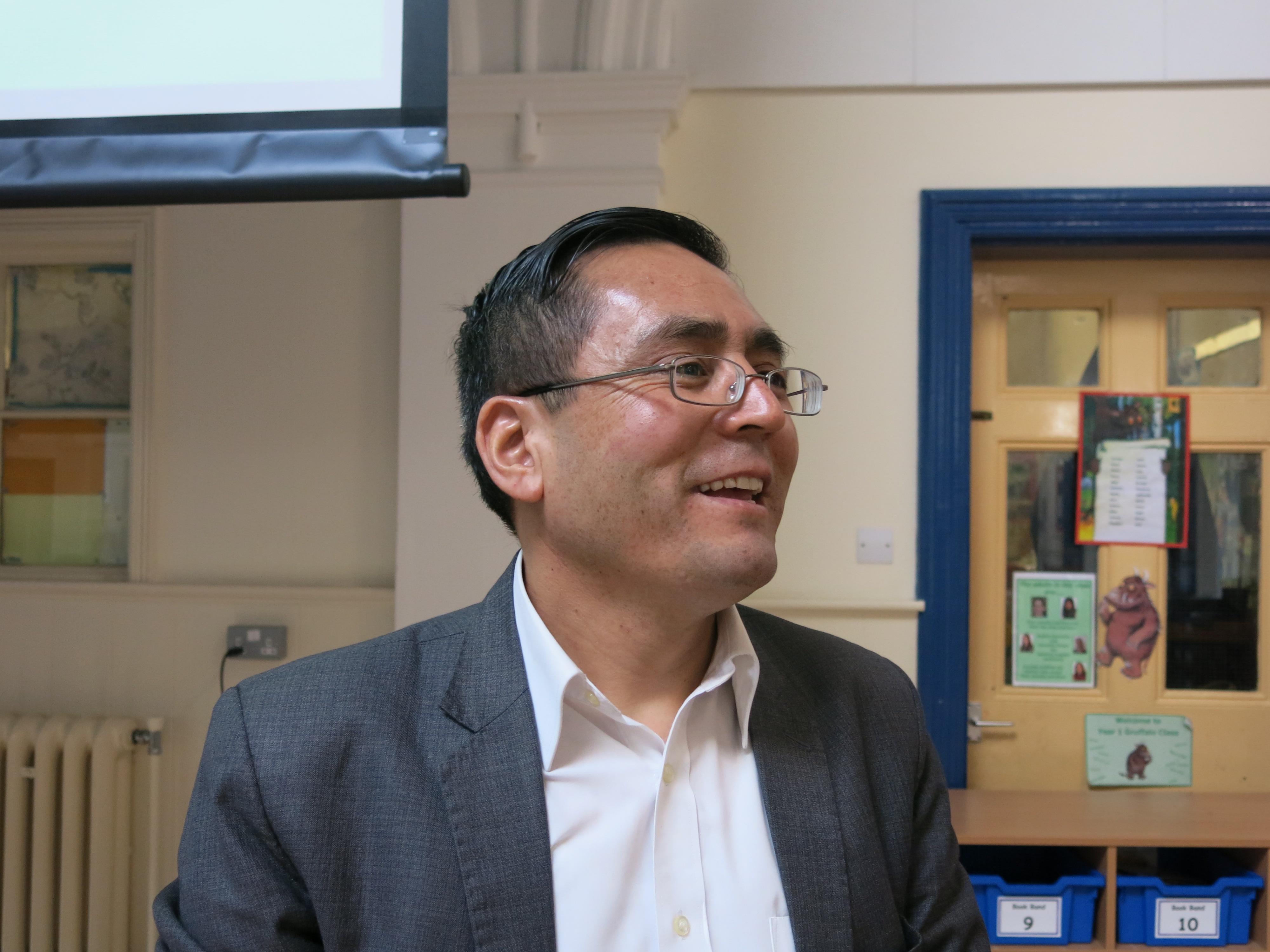
Abdul Hakim Hashemi  Hademi
Abdul Hakim Hashemi Hademi

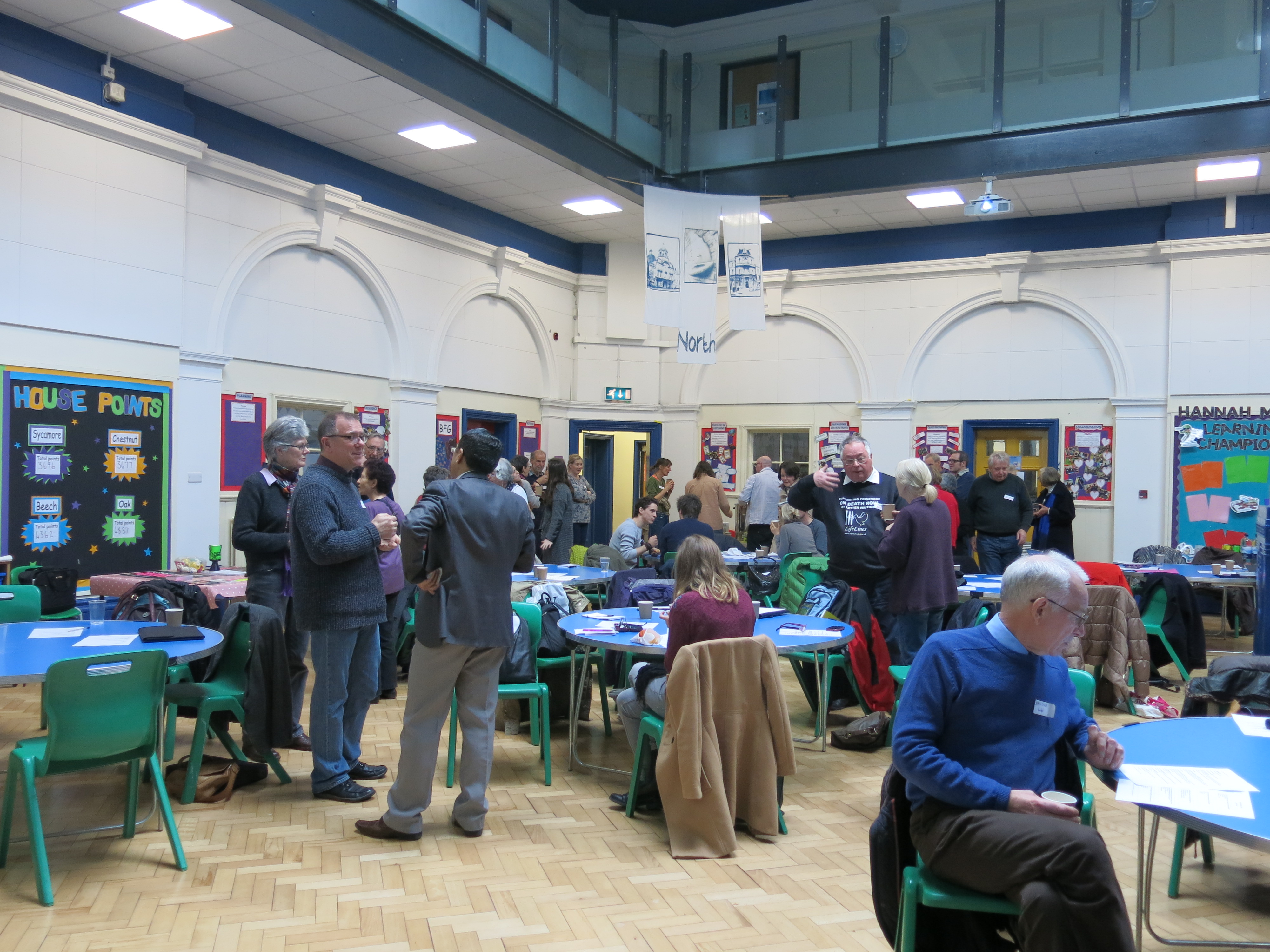
At the South West regional conference of Amnesty International it was heartening to hear from someone who has worked to improve the status of women through theatre and artistic groups in the countryside.  The speaker was Abdul Hakim Hashemi Hamidi who set up the Simorgh Film Association of Culture and Art, SFACA.  Unlike many aid programmes which tend to stay in Kabul or the main cities, SFACA goes out into the countryside and to the villages.

He has organised educational theatre workshops in prisons, juvenile correction centres, drug addiction rehabilitation centres, in schools and with the police.  He has produced films with an emphasis on human rights and the role of women.

Not all the problems faced by women are solely to do with the Taliban. Another factor is honour killings which are at a very high rate in the country.  57% are identified as the responsibility of a family member and 21% by the husband.  The perpetrator of 43% killings is unclear however.  A telling quote from the PowerPoint display was:

A problem with women [is] because men don’t accept women have rights

He went on to discuss the problems of human rights defenders in Afghanistan. These included difficulty in

Delegates at the South West Region conference

travelling to some areas combined with a lack of government control in some parts of the country, traditional beliefs and illiteracy.  Religion was a main cause he said and human rights are seen as a western construct.  He urged that the UK government consider the role of human rights defenders in their discussions with the Afghans.

It was an interesting and uplifting talk by someone who has taken risks to go into the Afghanistan countryside to promote the rights of women.  Abdul is a visiting fellow on the Protective Fellowship Scheme for Human Rights Defenders at York UniversityThere is a permanent link to the York University Centre for Applied Human Rights at the bottom of the main page.

Sources:

Watson Institute

Global Research

Amnesty International

Blog at WordPress.com.

Up ↑