Palestinian state recognised


UK recognises the state of Palestine

September 2025

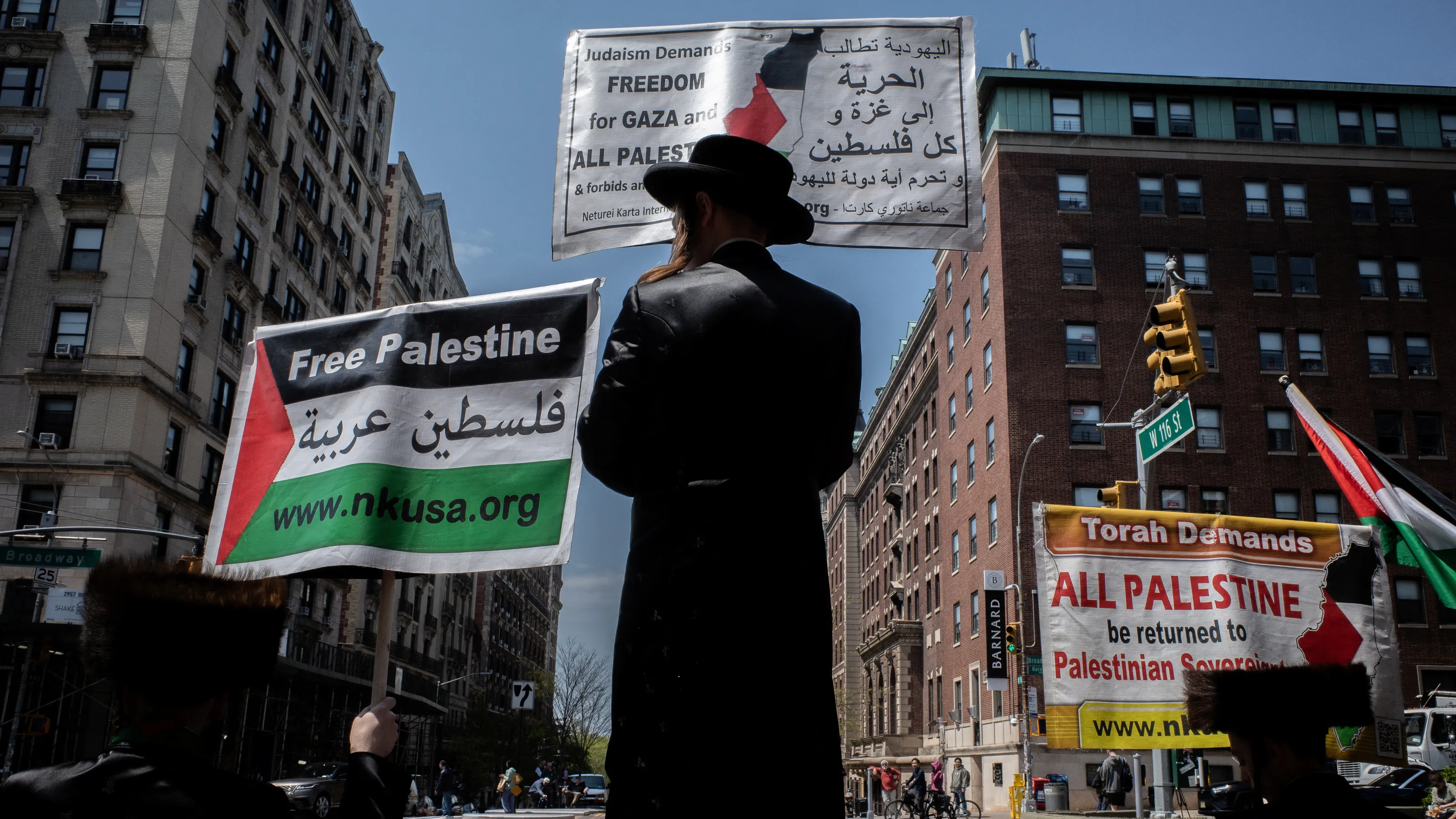
Today, 21 September, the UK government announces that it is to recognise the state of Palestine. It has joined the majority of countries around the world and joins Canada and Australia who did the same today. The decision has come after months of hesitation and was delayed until after the visit to the UK by President Trump who does not agree with it. To an extent, the government’s hand was forced. The disproportionate response to the horrific attack by Hamas on October 7th with the destruction of huge parts of Gaza, a death toll now over 65,000 many or whom are women and children and the deliberate introduction of siege conditions leading to more deaths by starvation, has left the government little option but to take action. Public opinion has also been a factor and the images of emaciated children have horrified many.

Britain’s decision is more than symbolic since the 1917 Balfour Declaration was instrumental in the creation of the state of Israel. The declaration was vague however since although it recognised that Arabs and Palestinians already lived there and said ‘nothing shall be done which may prejudice the civil and religious rights of existing non-Jewish communities in Palestine‘ it made no provision for protecting their claims or rights.

Some argue this is symbolic since with American support and ever increasing violence by settlers in the West Bank, the prospects of an actual state on the ground are receding. Some suggest that this means the conditions for statehood as set out in the 1933 Montevideo convention are not achievable. The Israeli government has rejected the decision saying ‘it categorically rejects the one-sided declaration of a Palestinian state by the UK and some other countries.’ It claims the decision does not promote peace. A spokesman for the British Board of Deputies interviewed on the BBC was critical of the decision and said it would cause deep dismay across the Jewish community in the UK. It says it is a reward for Hamas violence.

Implications

What are the implications? It will take some while for the implications to percolate through the claims and counter claims of the various political interests. It will enable the Palestinians to open an Embassy in the UK which will improve their status. It will enjoy diplomatic rights which will be significant. Up until recently, the Israelis have enjoyed almost uncritical support from governments but its continued violence in the West Bank and Gaza is seeing that support melt away.

It is unlikely to bring a peace deal any closer. Wars end because a kind of exhaustion sets in and the population goes weary of war-time restrictions and the loss of soldiers. This shows no sign of applying in Israel. Seemingly limitless weapons supplies from America and a huge military advantage in weapons and materiel mean any exhaustion is a long way off. IDF deaths are modest 464 [Jewish News Syndicate, 18 September]. The far right members of the Knesset such as Bezalel Smotrich see Gaza as a ‘property bonanza’ and claim the ‘demolition phase is over’.

Recognition will make it harder for the UK government to continue its support of Israel – open and covert – with RAF overflights for example, and ignore the plight of the Palestinians. It may even see some more robust reporting from the BBC whose lamentable performance has slowly begun to change.

Amnesty has said it is a ‘hollow gesture’ and without meaningful action to end the genocide, end violence in the West Bank and ending the Apartheid system against the Palestinian people. Real action needs to be taken to end arms sales and divest from companies which continue to sell arms to Israel. A report by CAAT sets out the details of arms export to Israel.

The Chilling Impact of UK Policing on Civil Liberties


Update on current issues in the UK

September 2025

Much of our coverage of human rights issues on this site features overseas countries and indeed there is a lot to write about. The latest edition of the Amnesty magazine (Autumn 2025, Issue 226) has a feature on the rise and arguably increasing number of authoritarian leaders for whom human rights are things to be suppressed by all means possible. The list includes Javier Milei of Argentina; Narendra Modi with his draconian anti-terrorism law used to target activists, journalists, students, protesters and others.

Vladimir Putin needs no introduction nor does Xi Jinping who enacts repressive laws, persecutes Uyghurs and the repression of Tibetan culture continue unabated. Others include Mohammed bin Salman in Saudi who is busy wooing anyone who’ll listen while engaged in suppression of any dissent and who has executed record numbers in 2024. Victor Orban who has increasingly targeted civil society while remaining a member of the EU. Netanyahu in Israel is well known and presiding over genocide in Gaza and intensifying violence and apartheid in the West Bank. He bans foreign journalists and the UN from entering Gaza.

Chilling effect’

But there are worries in the UK with more and more laws being passed to inhibit protests and empower the police to arrest or interdict such protests and those attending them. Palestine Action has been much in the news and the organisation was declared a terrorist group by the previous Home Secretary, Yvette Cooper. A high court judge has ruled that the co-founder of PA can bring an unprecedented legal challenge to the Home Secretary’s decision. Mr Justice Chamberlain said the proscription order against the group risked ‘considerable harm to the public interest’ because of the ‘chilling effect’ on legitimate political speech.

At the recent rally on 6th September in London organised by Defend our Juries, police arrested nearly 900 people many of whom were carrying Palestine Action placards. A 3 day hearing starts in November and it will be the first time an appeal is allowed against a ‘terrorist’ organisation. The court has given permission for both Amnesty and Liberty to intervene in the hearing.

Human Rights Watch: World Report

HRW’s World Report amplifies the above comments in its section on the UK. Laws criminalising protest undermine democratic rights they note. They remain on the statute book and the Labour government shows no sign of repealing them. The 2023 Public Order Act, the 2020 Police Crime Sentencing and Courts Act also remain on the statute book both of which increased police powers and act to limit free speech.

There are comments about the increasing disparity in wealth in the UK. On immigration and asylum it notes the failure to provide safe routes and how politicians and some media outlets have contributed to a hostile environment towards ethnic and racial minorities.

Policing

Since 2002, the police have had an increasing presence in schools under the Safer Schools Partnership programme. Liberty has found no evidence that this police presence has made them safer and that there is no reliable evidence that such presence reduces crime or violence. One problem is that police are mandated to report crime in schools even it may be inappropriate in the circumstances. Lack of funding for mental health leads police to step into roles unrelated to policing it notes One of their recommendations is that police a more supportive roles in PSHE activities. See the report for more details.

It cannot be argued that the UK is anywhere near the situation in some of the countries briefly mentioned above. Journalists are not murdered as in Russia, opposition politicians are not imprisoned for no reason which happens in Saudi, there are no second class citizens as in Israel. However, the slow drip of legislation and increasing police powers, widening use of facial recognition even in peaceful protests, a legal system largely the preserve of the very rich and elements of our media all too happy to laud clampdowns and arrests of those they don’t like are matters of increasing concern. We shall continue to highlight these issues in our posts.

Previous posts:

Why not become a subscriber?

Burma: the killing continues


Proposed elections are a sham. Sanctions are patchy and ineffective

August 2025

Myanmar, Sudan, Ukraine, Gaza: what links these current conflicts where thousands of women, children and the elderly die or have their homes destroyed? All are conflicts where the warring parties are equipped and supported by outside countries many of which are on the UN Security Council. Myanmar is armed and supported by Russia and China together with India and Austria with Singapore often acting as the go-between. Russia’s invasion of Ukraine is supported by China, Sudan by the UAE and Israel’s genocidal actions by America principally with other western countres in the frame including the UK.

It is unlikely these conflicts would be as deadly or last as long if it was not for this outside influence and support. The support takes different forms. The straightforward supply of weapons and military materiel. Providing the financial pathways to enable the regimes to engage in trade and pay for the weapons. Allowing western countries to trade with the regimes and buy their exports. And frustrating efforts by the UN to broker peace efforts or reign in the activities of the outside countries. The Security Council supporters of the regimes frustrate these efforts by vetoing motions and allow the carnage to continue. The noble aims of the post war era when the UN was formed and there was meant to be a new world order is in tatters.

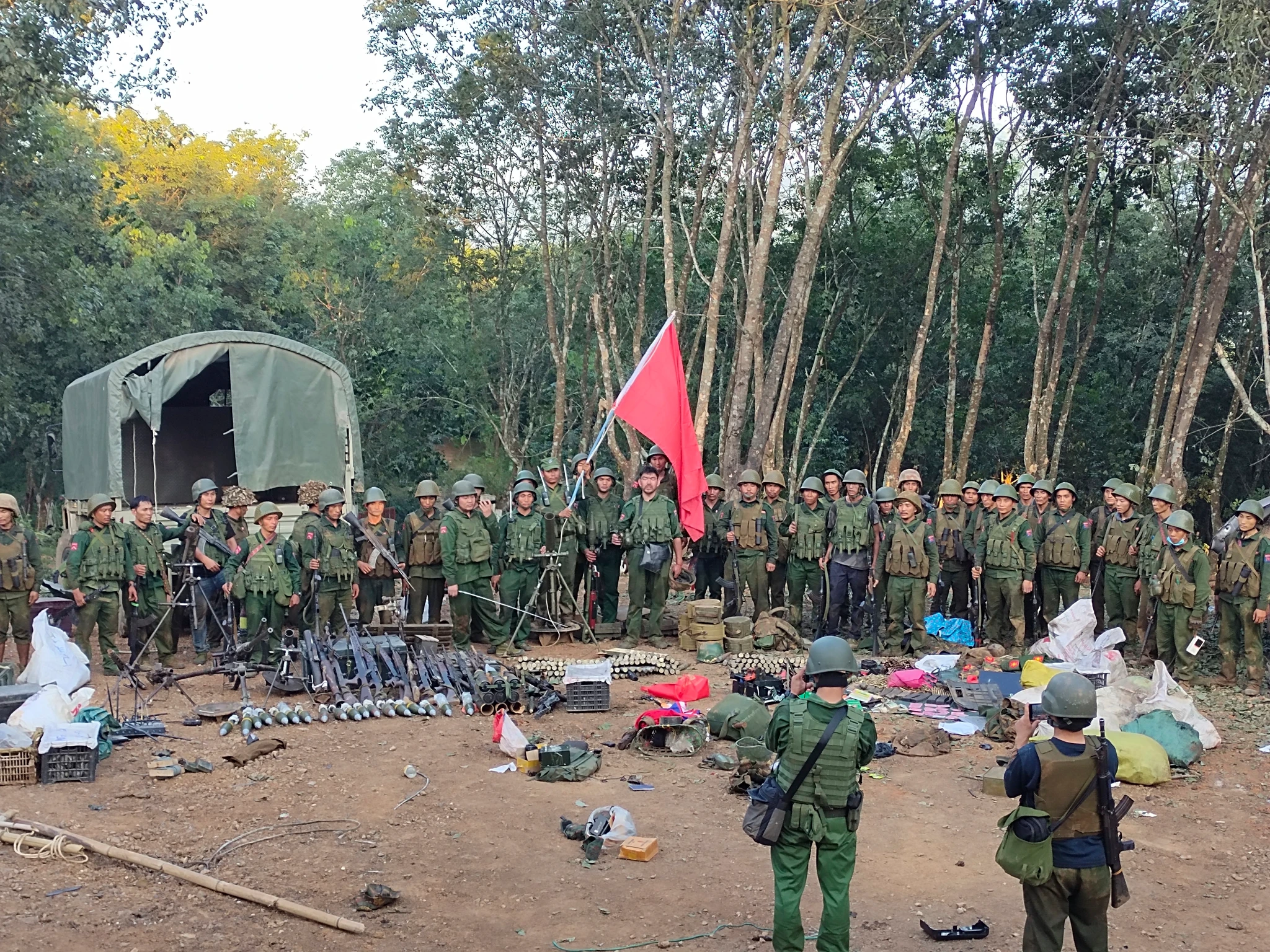
The latest edition of Burma Campaign News (Edition 48) is to hand and contains updates on the long running conflict in that country with 50,000 dead in the last four years. The country has slipped out of the news due largely to conflicts close to home and the difficulty and danger of reporting from there. After six decades of conflict, killings and attacks on minorities, the only good news is that the military is not having it all their own way. A combination of resistance, strikes, and economic boycotts, the military is slowly losing ground. The bombing of schools, hospitals and homes continues with around 5 million forced to flee. Elections are planned which will be a sham.

Many countries, including the UK, impose sanctions on the country. Unfortunately, as Office of the High Commission for Human Rights (OHCHR) points out in a report, these sanctions are not coordinated. This means there are gaps and what is sanctioned by one country may not be by another.

“There were 165 distinct entities sanctioned by the United States, European Union, and United Kingdom in response to the military coup in 2021.69 The report concluded that while the US, EU, and UK state that they are coordinating sanctions, there are significant missed opportunities to implement sanctions regimes in a coordinated manner. The report stressed that as of 1 February 2023, a mere 13 percent of the 165 entities were targeted by all three sanctions regimes, 20 percent by two, and 67 percent by only one. The report concluded that the gaps in the existing sanctions regime make it easier for the Myanmar military to evade sanctions. The report also noted that Member States seem reluctant to sanction high-impact targets such as Myanma Oil and Gas Enterprise (MOGE), which is sanctioned only by European Union, and aviation fuel, for which Canada has imposed wide ranging sanctions as of March 2023 and the UK has imposed targeted sanctions. 110. While these sanctions have been welcomed by the National Unity Government, Myanmar civil society, and international NGOs, they primarily regulate the engagement of persons under the jurisdiction of the Member State.70 As such, in the absence of economic sanctions imposed by the UN Security Council, third country actors are not legally prohibited from doing business with the sanctioned regime, person, or organization”. (Para 109)

A key source of revenue for the regime is the telecoms company Mytel described as the ‘jewel in the crown’ of the Burmese military and is highly profitable. The US sanctioned the company in January this year ‘for providing surveillance services and financial support to Burma’s military regime, enabling the regime to carry out human rights abuses through the tracking and identification of target individuals and groups’. The UK by contrast has not sanctioned them. Burma Campaign suggests contacting the Foreign Secretary asking for sanctions to be imposed: action.burmacampaign.org.uk/tell-british-government-sanction-mytel where there is a link.

A BBC report features the role of global arms firms in Burma.

A useful source of information on companies is to be found at the Business and Human Rights Resource Centre. Another useful site is Action on Armed Violence.

Recent posts:

Press Freedom Threats in Northern Ireland: Urgent Response Needed


Second of our reports points to failings in the UK

June 2025

A Threat to press freedom in Northern Ireland

Since 2019, Amnesty has documented over 70 death threats, bomb threats, and violent attacks against journalists. Most threats came from armed paramilitary gangs.  Not one has been prosecuted to date. Some reporters now live behind bullet-proof windows, reinforced doors and CCTV. Many people assume Northern Ireland’s conflict is over.  Yet some journalists are receiving more threats of serious violence from paramilitaries than ever before.

Amnesty calls for two urgent steps: a Media Safety Group – to coordinate an effective response to threats against journalists and A Home Protection Scheme – so journalists at risk can secure their homes without paying the price for doing their jobs.

Right to protest 

The EHRC was set up to “encourage good practice in relation to human rights” and “promote… protection of human rights” but it appears to be seeking to ban protests outside its offices.

“Article 11 protects your right to protest by holding meetings and demonstrations with other people”, says its website but the landlord of the Vauxhall office of the Equality and Human Rights Commission is seeking an injunction against protests outside its offices for the entire period for which the EHRC has a licence to occupy, that is until 31 January 2026.  

It would prohibit anyone (without the consent of the EHRC’s landlords) “entering, occupying or remaining upon all or any part of the commercial premises known as Tintagel House”, including on the forecourt outside its offices.  Protest may be possible on the public pavement or road outside its office – although with a risk of criminal conviction – but anyone entering the forecourt would risk imprisonment.  The application was sparked by an entirely peaceful encampment by Trans Kids Deserve Better outside Tintagel House on 30 May 2025.  Good Law Project considers this unlawful and is intervening to resist the injunction application.

Vagrancy Act Scrapped

The “cruel and outdated” Vagrancy Act is finally set to be scrapped in 2026 after making rough sleeping a

criminal offence for more than 200 years, the Labour government has announced. The 1824 law has criminalised rough sleeping and begging in England and Wales since the days of the Napoleonic Wars.  

Frontline homelessness charities have campaigned for years for the Vagrancy Act to be axed, warning that punishments, including fines, drive rough sleepers away from support.  Labour has promised it will finally be removed from law next spring and replaced with increased financial support for people experiencing homelessness and new legislation targeting “real crimes” such as organised begging by gangs.

British support for foreign security and intelligence services  

NGOs and senior MPs  have expressed concern in a joint letter to David Lammy that the Labour government’s ‘light touch’ review of policies regulating British support for foreign security and intelligence services will not remove ministers’ ability to approve UK cooperation in situations where there is a real risk of torture or the death penalty.  The policies were blamed for facilitating injustices in cases such as those of Jagtar Singh Johal and Ali Kololo.  Johal, a British human rights activist, was allegedly tortured in India, where he remains in jail, after a tip-off from UK intelligence services.  Kololo was wrongly convicted and sentenced to death over an attack on British tourists after the Met police provided assistance to Kenyan authorities.

The Mental Health Bill

This has now had its second reading in the Commons and aims to modernise the treatment of mental health. Among other things it will allow greater choice of treatment to patients, will reduce the use of detention especially in the case of autistic patients or those with learning difficulties and will address the disproportionate outcomes for black patients and those from minority groups.

UK’s legal obligations in Israel/Gaza conflict

The UK must impose sanctions on the Israeli government and its ministers and also consider suspending it from the UN to meet its “fundamental international legal obligations”, more than 800 lawyers, academics and retired senior judges, including former Supreme Court justices, have said.

In a letter to the prime minister, they welcome Keir Starmer’s joint statement last week with the leaders of France and Canada warning that they were prepared to take ‘concrete actions’ against Israel.  But they urge him to act without delay as “urgent and decisive action is required to avert the destruction of the Palestinian people of Gaza”.  The signatories, including the former Supreme Court justices Lords Sumption and Wilson, court of appeal judges and more than 70 KCs, say that war crimes, crimes against humanity and serious violations of international humanitarian law are being committed in Palestine.

More than 300 Foreign Office staff have been told to consider resigning if they cannot support the government’s policy on Israel, after they repeatedly expressed concern that the UK could be viewed as complicit in war crimes.

The UK government has now sanctioned Israeli government ministers Itamar Ben-Gvir and Benzalel Smotrich in response to their repeated incitements to violence against Palestinian communities and, in partner with Australia, Canada, New Zealand and Norway, calls for immediate action against extremist settlers.   

Sudan: world’s worst crisis


Two years of war has left 20 million suffering food insecurity

April 2025

Wars in Ukraine and in Gaza have drawn much attention from the world’s media and the events in Washington are also a major distraction. Meanwhile, in Sudan a less well reported conflict is causing immense suffering, death and destruction on an heroic scale. Commendably, Channel 4’s Unreported World devoted a programme to the conflict in March this year [registration needed].

The conflict is now 2 years old and is between the Sudanese Army and the Rapid Support Forces known as the RSF. By August 2023 around 1 million had fled the country. Currently, around 20 million are suffering acute food insecurity. Another million have fled to neighbouring Chad a country not equipped to handle such a large influx.

The RSF is accused of a range of war crimes including killings – sometimes in people’s homes and including small children – looting, sexual violence and arson. It has no regard for human rights.

The war could not last this long and at such an intensity without outside support and the major players are Egypt supporting the Army and the UAE who are alleged to be supporting the RSF. The reason according to Middle East Eye is to protect its investments in the country and to gain access to its mineral and agricultural resources. UAE imports 90% of its food and has little land suitable for agriculture itself.

UK seeks to suppress criticism

Weapons and arms are another key factor and suppliers include China, Russia, Serbia, Türkiye, UAE and Yemen. Amnesty suggests technology from France has been found. UAE appear to be the main player and the UK is alleged to be active in preventing criticism of the country. The United Kingdom has reportedly tried to suppress scrutiny of the UAE’s role in Sudan. In June, a report from the Guardian reported that the Foreign, Commonwealth and Development Office (FCDO) pressured African diplomats not to criticise the UAE. There is considerable trade and commercial interests between the two countries and the UAE invests in the UK including part ownership of Gatwick airport. Clearly, the government, with its focus on growth, does not want the role of the UAE in fomenting conflict in Sudan with devastating results, to stand in the way of commercial interests.

This seems to be yet another example of how outside interests result in fearful consequences for the people who’s properties have been burnt and who have had to flee to neighbouring countries to escape violence.

Sources: Amnesty; Human Rights Watch, Middle East Eye; Crisis Group; Guardian

Ex-diplomat alleges Britain ‘complicit in war crimes’


Britain’s system of arms control ‘broken’

February 2025

Allegations by an ex diplomat that officials were instructed to manipulate findings of misuse of weapons by allies will not come as shock to readers of this site. We have frequently questioned the oft repeated statement from the Foreign, Commonwealth and Development Office that ‘Britain’s export licensing controls are some of the most robust in the world’ as palpable nonsense. We have regularly featured items published by the Campaign Against the Arms Trade, CAAT.

In this case, featured on the front page of today’s Guardian newspaper (10 February), the ex-diplomat claims that officials are ‘bullied into silence’. Processes are manipulated to produce politically convenient outcomes. The article suggests that probably the most significant of his allegations was that officials had demanded the toning down of evidence that UK arms had been used to commit war crimes. This would appear to be a clear example of manipulation of what was intended to be an objective exercise. One tactic was to say they are ‘waiting for more evidence’ as cover for inaction. The FCDO office denies these allegations.

Palestinians returning to north Gaza have been shocked to see almost total devastation of their homes, communities, medical facilities and much else. What greets them are piles of rubble where once they lived their lives. The bombing of civilian targets using dumb bombs and the killing of thousands of non-combatants including many women and children, is clear evidence of a war crime. Israelis have been able to do this with weapons such as the F-35 parts of which are manufactured in the UK. Yet the UK government refuses to ban these exports.

The ‘revolving door’ enables corruption to continue

As we have argued before, the UK is in a kind of trap when it comes to these sales. Arms exports are one of the few areas where we do well from an economic perspective. Many jobs depend on these sales and a proper regime of controls would hit the industry. Arms firms employ many lobbyists to promote themselves. CAAT have spoken of the ‘revolving door‘ whereby senior staff from the civil service, the military and government retire and emerge as consultants or directors of these firms. Such senior staff have a clear incentive therefore, to sing the industry’s songs so as not to destroy the opportunity for lucrative employment post retirement. It is as close to corruption as you can get. We must not forget however, the end result of this corruption and manipulating processes as alleged, is the death, destruction, maiming and general mayhem as the weapons are used to destructive effect.

Apart from Gaza, another area where Britain turned a blind eye and pretended not to know was Yemen. We continued arming Saudi and provided support and advice stopping just short of arming the planes thus avoiding claims of being mercenaries.

Listening to ministers opine about peace ring hollow when its own staff are allegedly manipulating evidence to enable arms sales to continue.

Human Rights Watch critical of UK


HRW’s World Report for 2024 critical of the UK on several fronts

January 2025

It comes as a shock when a respected international human rights organisation produces a report containing a number of criticisms of the UK government over its human rights record. There are some in this country who think that our role in developing the Universal Declaration in 1948 and incorporating that into the Human Rights Act fifty years later, somehow gives us some kind of moral status as champions of rights. HRW’s report disabuses us of that. The UK is a cause for concern on several fronts it says.

There are others who think the opposite and consider the act to have gone too far, enabling murderers, rapists and terrorists not getting their just deserts presenting spurious arguments based on the act. The Conservative government has in its various manifestos promised to abolish it and more recently has suggested it wants a bill of rights to replace the act. There has been a concerted press and media campaign over many years arguing for it to be abolished and which has, arguably, engendered in many people that the idea that the legislation is somehow against them. The positive benefits of the legislation are seldom mentioned.

There are still many who want the UK to come out of the European Convention including the MP for East Wiltshire, Danny Kruger.

The World Report discusses several areas of concern where it considers the UK to be falling short on human rights issues.

Poverty

Poverty means people are less able to live fulfilling lives, have poorer health outcomes, and often cannot afford to heat their homes adequately. The UK has the one of the highest levels of income inequality in Europe. It notes that the Labour government has not abolished the two-child limit a factor driving up child poverty. There is a cost of living crisis. It often means people cannot pursue their rights in the courts, not only because the system is hideously expensive and legal aid has all but vanished, but because of years of delay before a case can be heard.

It notes that 7 years have passed since the Grenfell Tower fire yet no one has been brought to justice. It might also have noted that years have gone by following the publicity concerning grooming gangs – more accurately called rape gangs – with little sign of serious action and no one brought to account. And there is the Post Office scandal and what has happened in the Anglican church and the resignation of the Archbishop of Canterbury. There has been a spate of hospital scandals.

Curtailment of freedoms

Several laws introduced to curtail freedoms. They point to the 2023 Public Order Act and the 2022 Police, Crime, Sentencing and Courts Act which have increased police powers of arrest. They express concern about increasing surveillance including of peaceful protests. Facial recognition is being introduced apace amounting to mass surveillance of the populace. We are more like China than perhaps we like to think. They draw attention to the UN rapporteur’s concerns about clampdown on environmental protests.

There are other matters of concern in the UK and these can be seen in the full report starting on page 505. The past year has once again highlighted an often-disregarded reality: liberal democracies are not always reliable champions of human rights at home or abroad.

They discuss the role of the United States in connection to Gaza and note that “US President Joe Biden’s foreign policy has demonstrated a double standard when it comes to human rights, providing arms without restriction to Israel despite its widespread atrocities in Gaza, while condemning Russia for similar violations in Ukraine, and failing to address serious rights abuses by partners like the United Arab Emirates, India, and Kenya. Donald Trump’s return to the White House not only threatens rights within the US but will also affect, by commission and omission, respect for human rights abroad. If the first Trump administration’s attacks on multilateral institutions, international law, and the rights of marginalized groups are any indication, his second term could inflict even greater human rights damage, including by emboldening illiberal leaders worldwide to follow suit.”

This is probably the key message of the report as a whole. The promise of the Universal Declaration and the hope of ‘never again’ seems to be dead in the water. If countries like the US and the UK cannot give a lead, acting honourably and taking full account of human rights both at home and in their foreign policies, there is slender hope that countries led by a variety of despots will take any heed. As we noted in our last post on arms sales, the selling of arms to whomsoever causing death and terrible harm to millions seems to matter over any kind of moral consideration. The HRW report is a sober read.

The Middle East conflict


Current phase of the conflict a year old and little sign of an end

October 2024

There has been an exchange of letters in the Salisbury Journal concerning the conflict in the Middle East. Two letters have focused on the issue of Britain continuing to supply arms to Israel. Although a limited embargo is in place, we still for example supply components for the F35. These aircraft are being used to deadly effect in both Gaza and Lebanon. Over 42,000 are dead in Gaza and more than 2,000 in Lebanon.

The word ‘genocide’ has been used to describe Israel’s action in Gaza and South Africa has launched an action in the International Criminal Court. The allegations make grim reading. There are huge numbers of forced evacuations. A significant part of the population is being forcibly moved. The death toll, particularly among women and children, is rising. Medical aid is failing to reach the population. Tens of thousands are living in make-shift accommodation (the link provides a more detailed picture). In the past day or two, evidence has been put forward to the effect that the starvation of those remaining in north Gaza might be an act of deliberate policy. This is said to be the ‘Generals’ Plan’.

Are these actions genocidal? The problem for the ICJ will be the question of intent. Is the destruction however terrible, a justifiable answer to the atrocious actions of Hamas most particularly on October 7th last year? Is Israel justified in going after the terrorist organisations who continually lob salvos of rockets into their territory? Or is it way over the top and disproportionate? One of the problems the Israelis have made for themselves is not allowing foreign journalists or observers into the area. Last month, the offices of al Jazeera were closed down and done so aggressively. Israel justifies the destruction of buildings, including schools and hospitals. It claims these buildings are used by Hamas to fire rockets into Israel and to prepare for terrorist activities. It claims that the deaths are because Hamas are using the population as ‘human shields’. Very little evidence is provided to justify these claims. One might expect that a year into this conflict, we would see evidence of these alleged activities, evidence that outside observers could verify. Entire buildings have been demolished with massive 2000 pound ‘dumb’ bombs because it is alleged Hamas operatives are present within them.

One of the writers to the Salisbury Journal asserts that the Hamas Covenant of 1988 calls for the obliteration of Israel. A subsequent charter in 2017 distinguishes between Jews and Zionists confining its more violent actions towards the latter. He failed to mention the statement by the Israeli Minister Amichae Eliyahu suggesting a nuclear bomb be dropped on Gaza. Bezalel Smotrich suggested recently that it would be ‘justified and moral’ to starve the population of Gaza. Both have been disavowed. Israeli minister Ben Gvir has said that his right to move around the West bank is superior to freedom of movement for Palestinians. The point being that aggressive and bloodthirsty statements have been made by both parties.

It is largely forgotten that Netanyahu supported Hamas for a period of several years as a means to weaken the PLO. And this is close to the heart of the problem: the desire for a Palestinian state and Israel’s refusal to countenance this. The desire for a greater Israel and the violent actions by the Israelis (misleadingly called settlers) on the West bank are a key element in the conflict. Another misunderstanding is to claim that the violent actions of October 7th were the start of the current hostilities. The roots go back to 1948 nakba at least and elements can be traced back to the Balfour Agreement and further back still. October 7th is but the latest manifestation of long term hatreds.

What makes the conflict hard to unpick is that in effect there are two wars going on. Firstly, that between Israel and Palestine and the former’s resolute stance not to allow a two state solution. Secondly, Iran’s role. This has history going back to the Shah. They have supported Hezbollah, Hamas and the Houthis in Yemen as proxies to attack Israel. But the seat of their aggression is again the Palestinian state and a belief that Israel has usurped Arab lands.

A key feature is the imbalance of power. Israel, with a largely unquestioning US support, is the regional superpower. It can project its power over the region. It can do this both militarily and with superior intelligence. This intelligence was seen with the spate of assassinations of Hezbollah leaders in Lebanon recently. None of the other states can match this. The US is sending manpower and more equipment this week. This makes it unwilling to compromise its position simply because it doesn’t need to. The world is waiting for Israel to respond to the rocket attacks from Iran of a few weeks ago. Israel has the capacity to inflict real damage on Iran’s military infrastructure. Iran by contrast, cannot do this. Despite the huge number of missiles hurled at Israel, the damage was minimal.

One major shift is the international attitude towards Israel. The world was shocked by the horrific attack on October 7th. The ensuing destruction of huge chunks of Gaza and the appalling death toll and squalor has seen sympathy for Israel drain away. Western media reporting was largely pro Israel arising partly from a fear of being labelled ‘antiSemitic’ for any criticisms. It has become more balanced and robust as time has gone by. Occasionally, commentators have mentioned the apartheid policy in the West bank. Amnesty, Human Rights Watch and B’Tselem have all published detailed reports on this and Israel has accused them of being anti-Israel. Reporting is hampered by a lack of access to the conflict zones. Claims and counter claims cannot be independently checked.

Conclusions

Should the UK stop sending arms to Israel? From the purely practical point of view, doing so will make little difference. We are a small supplier anyway and so ceasing supplies will not stop or help resolve the conflict. The political position is rather different. The UK is a member of the Security Council and still an influential force around the world. Other countries like Spain, Canada, Belgium, the Netherlands and Italy have stopped their supplies. The moral case is rather more compelling. Are we content to see the destruction of a vast swathe of both Gaza and increasingly Lebanon? Are we content to see thousands of children die or receive terrible wounds. Can we stand by and accept the use of starvation as a weapon of war? The answer should be ‘no’. If genocide is pronounced, the UK will be obliged to stop all weapons sales.

The imbalance of power is a major factor in the continuation of this conflict and we are contributing to this. We also help Israel with overflights from Cyprus. Wars have to end sometime. Few have mentioned the economic cost of this conflict bearing mind Israel’s population is around 9.5 million 75% of whom are Jews. How long can they sustain this even allowing for massive US aid?

Yesterday’s killing of Yahya Sinwar (17 October), the leader of Hamas, has led the Americans and others to hope that this is some kind of ‘moment of justice’. They hope this is the opportunity for negotiations to begin. It is unlikely. Netanyahu is holding on in the hope that Donald Trump will win the election. Since the US is powerless to rein in Israel and Hamas and the other terrorist groups ignore them, the possibility of an outside force successfully engineering some kind of peace seems remote. Frequent efforts by Qatar came to nought.

An end

Wars end because exhaustion sets in. Another reason is the parties see no hope of gaining victory. Thirdly, the loss of treasure becomes too great to bear and a kind of armed truce takes place. The public may become tired and the initial euphoria turns to boredom or frustration. Unfortunately, in the case of this conflict, these factors which researchers* have identified in other conflicts, may not apply. As argued above, outside forces most particularly the USA, are the drivers here enabling Israel to continue for a long period. In many respects this is a proxy war both by USA and Iran. Israel’s losses are minimal and containable. But the greatest factor is the abiding hatred that seems to exist between the parties.

Being surrounded by enemies, some of whom are committed to its destruction, has a powerful effect on Israel. Nevertheless, it had agreed peace treaties with several countries such as Jordan and Egypt. The Abraham accords were also a positive step. It can be done. Trump’s ending of rapprochement with Iran was a backward step.

This stage of the conflict will come to some kind of an end, or should we say pause. The answer to the arms question is clear. Britain should suspend deliveries and use its diplomatic power to push for a two state solution. It would give Israel the security it needs and it would weaken the power and influence of the terrorist groups.

*MIT Research

Arms to Israel


UK continues to issue arms licences to Israel

June 2024

The conflict in Gaza continues and 36,700 Palestinians have died and well over 80,000 have been injured many seriously. In the last four months alone, 12,300 children have been killed. The death toll inflicted on Gaza is out of all proportion to the atrocity committed by Hamas on October 7, 2023. The International Court of Justice (ICJ) has found that there is a plausible case for Israel’s actions in Gaza amount to genocide. The response by the deputy foreign secretary Andrew Mitchell is to say that ‘the ICJ does not have jurisdiction [over Israel]’ (source, Government briefing, UK Arms Exports to Israel,’ May 2024). Lord Cameron, the foreign secretary, is quoted as saying that Israel ‘is committed to complying with International Humanitarian Law’ and hence did not recommend that licences be suspended. Today, 12 June 2024, the UN has issued two reports accusing both Israel and Hamas of committing war crimes and crimes against humanity including the use of torture.

Meanwhile, over 100 licences for arms have been issued to Israel since October 7, 2023. Quite what is licensed is difficult to discern. Eight are ‘open’ licences and the statistics do not give the value of the exports. In 2022, the value of arms exports to Israel amounted to £42m. The UK is not a major supplier and the US sends around ten times as much including fighters and artillery.

The ICJ action raises serious questions for the government which may well be different after July 4th. Essentially, governments continuing to arm Israel risk being complicit in genocide which is a specific crime under the convention.

Amnesty, Human Rights Watch and a Palestinian human rights organisation al-Haq, have joined a legal action by Global Legal Action Network for a judicial review. The position of the Labour Party (who may be in government soon) is unclear but the party has had a difficult relationship with Israel and has had to weather many accusations of antisemitism which it is keen to dispel.

There are signs of movement and in March, over 100 MPs and a number of Peers signed an open letter to the government calling for and end of arm sales to Israel. Lord Cameron has been critical of them commenting on the blocking of aid and turning away entire lorries on spurious grounds such as shipments containing ‘dual use’ items (medical scissors).

The question is largely a moral one. Should we continue to supply arms to a state which is causing such damage, bombing entire blocks of apartments, almost destroyed all hospitals and killed so many men, women and children? By not allowing journalists entry, objective assessments of Israeli claims of targeting Hamas fighters is hard to verify and we simply have to rely on IDF statements.

However, the conflict shows no signs of coming to a satisfactory conclusion. A hard-line Israeli government – which has become even more so after the recent resignation of Benny Grantz – is determined to see the complete extinction of Hamas, an objective almost impossible to achieve. The violence in Gaza will be breeding the next generation Hamas fighters. Violence on the West Bank has grown markedly worse. A two-state solution looks impossible to achieve. The continued supply of weapons principally by the US but also by the UK, is simple adding fuel to the fire. More important perhaps than the actual supply of military materiel, is the implicit support that the the licences give to the Israeli government, a government which is disinclined to end the violence.

Sources: CAAT, Guardian, Amnesty,

Human Rights Watch on UK events


HRW comments on the extraordinary events yesterday in the UK

November 2023

This is a piece from today’s (16 November) from HRW.

A Welcome Decision in the UK Regular Daily Brief readers may recall our story on the UK government’s obsession with cruelty, shown by its intention to ship asylum seekers to Rwanda, a country with a terrible rights record. I’m happy to report a good-news update to this story: yesterday, the UK Supreme Court said Rwanda is not a safe country for the government’s plans.

As my UK colleague Emilie McDonnell writes, the decision was “a huge victory that will protect the rights of countless people who have come to the UK seeking safety.” In a unanimous judgment, the UK’s highest court drew attention to Rwanda’s poor human rights record, including threats to Rwandans living in the UK, alongside extrajudicial killings, deaths in custody, enforced disappearances, torture, and restrictions on media and political freedoms.

The Prime Minister Rishi Sunak has responded by vowing to introduce emergency legislation “to confirm Rwanda is safe. ”Instead of arguing with reality, he would be wiser to ditch the government’s unlawful Rwanda deal.

Blog at WordPress.com.

Up ↑