China torture report


No end in sight

November 2015

This is the title of a report produced by Amnesty International concerning the use of torture in China.  It was only last month that China’s president received a red carpet treatment on his visit to Britain with smiles all round.  The subject of human rights was taboo and was not to be mentioned during the course of his visit.  The aim was to boost trade and to secure deals such as the nuclear power plant investment.

Human rights infringements are a major issue for China and there is always the hope that there will be a steady improvement over time.  Indeed, it is a favourite argument by politicians that engagement – whether through trade, culture, sport or otherwise – is the best way to effect improvements in countries still practising torture or other cruel, inhuman or degrading punishments.

Only it doesn’t seem to be working in places like Saudi Arabia or China despite the huge effort put into engagement with their leaders.  Amnesty has just published No End in Sight which shows that if anything, it is getting worse.  Despite having signed up to UN Charter against torture, it is still widely practised in all its medieval brutality.

Tiger bench
Tiger bench

The rot seems to start in police stations and the system of securing confessions acts as an incentive to extract one, by force if necessary.  The methods are extremely unpleasant and the least graphic (though no lest brutal) is the ‘tiger bench’ illustrated left.

The report explains the weak nature of the justice system which means no meaningful enquiries are made and that lawyers are themselves coerced or threatened if they try too hard to stop it.

It is alarming that this major nation, which is a member of the Security Council and is thus in a position to influence a lot of what happens in the world, should be steadily getting worse not better as far as human rights are concerned.  It is disappointing that the opportunity to express our concerns was apparently not taken during President Xi’s visit.


Sources

The Independent;

The Guardian;

Amnesty report

Letter to the UN concerning North Korea


The situation in North Korea remains dire as far as human rights are concerned and a number of NGOs have written to the Security Council asking for action to be taken

North Korea letter.


Eritrea


Why Eritrea?

In all the discussion about the relative merits of refugees from the various war-torn parts of the world, the Syrians are presently claiming most attention.  We all understand how dreadful their plight is, and so too those fleeing wars in Iraq, Afghanistan, Libya and the Sudan.  But Eritrea?  Eritrea is not actually at war with anyone (well, it’s in a face-off with Ethiopia, but wouldn’t dare to take on its bigger neighbor in a full-scale war), and the regime is in total control of the country.  So why the desperation of people to escape to Europe?  Indeed the British government has changed its view of the country in recent months to say that it is safe for asylum seekers to be returned home. The Home Office said:

its guidance on Eritrea is based on a careful and objective assessment of the situation in Eritrea using evidence taken from a range of sources including media outlets; local, national and international organisations, including human rights organisations; and information from the Foreign and Commonwealth Office.

However they have relied largely on a Danish report, the authors of which have disowned for its misinterpretation, and Eritrean government sources, rather than the reports of human rights groups.

The UK’s position is totally confused, as they are supposedly taking account also of a recent UN report, which would also give a somewhat different picture.  The report, by the UN Commission of Inquiry on Human Rights in Eritrea, cites a raft of human rights violations – some, it says, which may constitute crimes against humanity – of a ‘scope and scale seldom witnessed elsewhere’. The report strongly urges continued international protection for Eritrean refugees fleeing human rights violations, and warns against sending them back to danger in a country that punishes anyone who tries to leave without permission

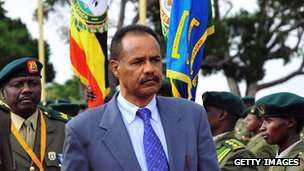
President Aferworki
President Afeworki

Following its independence in 1991, the country has lapsed into a total disregard for the rule of law.  Elections have been regularly postponed – President Isaias Afeworki has never faced the electorate – arbitrary detention is rife; torture is so common that the Commission concluded that it was government policy, and mass surveillance and neighbourhood spying is the norm.  Justice is arbitrary, detention conditions are appalling, and complete disappearance not unusual.  So far, so typical dictatorship but in Eritrea it is egregiously appalling.

The speciality of the state is that, under the pretext of defending the integrity of the State and ensuring national self-sufficiency, much of the population is subjected to open-ended national service, either in the army or through the civil service.  When they turn 18 or even before, all Eritreans are conscripted.  While national service is supposed to last 18 months, in reality conscripts end up serving for an indefinite period, up to 20 years in extreme cases.  Thousands of conscripts are subjected to forced labour that effectively abuses, exploits and enslaves them for years.  Women conscripts are at extreme risk of sexual violence during national service.

Many others – detainees, students, members of the militia – are also subjected to forced labour.  The report says

The use of forced labour is so prevalent in Eritrea that all sectors of the economy rely on it and all Eritreans are likely to be subject to it at one point in their lives.  The commission concludes that forced labour in this context is a practice similar to slavery in its effects and, as such, is prohibited under international human rights law.

The Eritrean Foreign Ministry inevitably claimed the Commission’s report contained ‘wild allegations’ which were ‘totally unfounded and devoid of all merit’ and charged the UNHRC of ‘vile slanders and false accusations’, without addressing any of the issues.  The British government have since modified their stance based on Eritrean assertions that military service will be limited to 18 months to 4 years, which would render it legal, but there is no evidence of this happening.

These widespread abuses have prompted thousands of Eritreans to flee their home country in search of asylum in Europe.  According to the latest estimates produced by Italian authorities, 32,000 Eritreans were rescued in 2014 as they attempted to traverse the Mediterranean – the majority of all migrants rescued by Italy’s comprehensive Mare Nostrum operation.  Meanwhile, the UN refugee agency has placed the number of Eritreans under its concern outside the country at more than 357,400.

This is the country we are intending to return refugees to as being “safe”.  The Government needs to think again.

Robust reponse to Saudi Arabia rejected by FCO


UPDATE: 3 August

At the end of this blog we wrote ‘it seems therefore that nothing will change’.  How wrong can you be as it has just been announced that the FCO will no longer be specifically campaigning for the abolition of the death penalty.  The FCO message to us was dated 6 July and Mr Glen’s covering letter dated 14 July.  So in the space of a few weeks abolishing the death penalty world wide has gone from ‘a human rights priority for the UK’ to being no longer a policy.  The group plans to write to Mr Glen again to seek clarification.


July 2015

No to the death penalty

The Salisbury Group wrote to the local MP, Mr John Glen to ask for a more robust response by our government to the barbaric activities of the Saudi government in particular the increasing number of executions which are taking place.  In our letter we said:

[we are writing] to you in connection with the increasing level of executions currently taking place in Saudi Arabia.  (Over the course of the first five months of this year, the number of executions has equalled that of the whole of 2014).

You will no doubt be aware that on his recent visit to the country, President Francois Hollande made a public statement to the effect that all executions, not just those of his own nationals, should be banned, and called for the abolition of the death penalty in Saudi Arabia.

M. Hollande was prepared to do this, despite the fact that France – as does the United Kingdom – has significant financial interests in the its dealings with Saudi Arabia. The British government, however, has never seen fit to raise the issue in public, preferring to pursue a policy of ‘quiet diplomacy’.  This policy has manifestly had no effect.  Numbers continue to rise, and the Saudi Government have now advertised for eight additional executioners – ‘no particular skills required.’

As a group, we are asking that your government should take a much more robust line over the issue with the Saudi government.

Whereas the government – including the Prime Minister – has been vocal in its criticisms of the Islamic State for its appalling behaviour and of Russia for its activities in Ukraine, they seem strangely silent when it comes to Saudi Arabia.  This contrasts with France which has openly criticised them and Sweden which has decided no longer to sell them arms.

Mr Glen replied, enclosing a letter from the FCO minister, and said:

“I enclose correspondence from the FCO minister Tobius Ellwood in reply to your recent letter about the UK’s apparent reticence when it comes to condemning the use of the death penalty in Saudi Arabia.

“As you can see, the approach taken by the government is not in any way indicative of an equivocal view on this practice, which is as barbaric as it is ineffective.

“However, the government recognises that its abolition is not a matter of mere legal reform but would require a seismic societal shift.  It has therefore taken an approach which it feels is most constructive – engaging behind the scenes rather than inflaming the situation and triggering a backlash through outspoken public critique”.

The letter from the Foreign and Colonial Office is as follows:

“[…] The abolition of the death penalty is a human rights priority for the UK.  The UK opposes the death penalty around the world because we believe it undermines human dignity and there is no evidence that it works as a deterrent.

“Saudi Arabia remains a country of concern on human rights, because of its use of the death penalty as well as the restricted access to justice, women’s rights, and the restrictions of the freedom of expression, freedom of assembly and freedom of religion or belief.

“Ministers, our Ambassador, and the Embassy team in Riyadh frequently raise the issue of the death penalty with the Saudi authorities, bilaterally and through the European Union.  As it is part of Sharia Law, we must recognise that total abolition of the death penalty is unlikely in Saudi Arabia in the near future.  For now, our focus is on the introduction of EU minimum standards for the death penalty as a first step, and supporting access to justice and the rule of law.

“The British Government’s position on human rights is a matter of public record.  We regularly make our views well known including the UN Universal Periodic Review process and the Foreign and Colonial Office’s  annual Human Rights and Democracy Report.  We also raise our human rights concerns with Saudi Arabian authorities at the highest level.  But we have to recognise that the human rights situation in Saudi Arabia reflects widely held conservative social values and that our human rights concerns are best raised in private rather than in public”.

It seems therefore that nothing will change.  It is important to recognise that behind the scenes lobbying can be constructive.  However, the policy of raising matters ‘in private rather than in public’ does not appear to be working.  Successive governments have courted the regime and Saudis are free to invest in London and elsewhere in the UK.

Eurofighter of the type sold to Saudi Arabia

It would be naïve not to recognise the reality behind this reluctance to criticise the Saudis and the importance to the government of the sale of arms and the supply of oil.  Saudi Arabia is a key market for the UK and much effort is put into promoting sales including by members of the royal family – see the Guardian article:  Human rights are of secondary concern.

As long as these interests are paramount, it is difficult to see how the toll of executions can be checked in the near future.


Arms sales destabilise many parts of the world


The arms trade is deadly corrupt business.  It supports conflict and human rights abusing regimes while squandering vital resources.  It does this with the full support of governments around the world.’  Campaign Against the Arms Trade [see link at the bottom of the home page]

A fuss broke out today in the UK election campaign about who said what and who did what concerning the invasion of Libya.  The argument is that by attacking Libya and not sorting out a stable regime after the fall of Gadhafi, we laid the foundations for the thousands of refugees who attempt to reach Italy from its shores.

Not for the first time in this election, the arguments seems to swirl around everything other than the real one.  We have commented before in the role arms have to play in the Middle East and elsewhere.  Figures from Janes reveal that the trade is now worth $64bn up from $54bn in 2013.  Total Global military expenditure is said to worth around $1,776bn (SIPRI).

UPDATE: May 2015.  Transparency International has produced a new anti-corruption index for defence companies.  Local companies like Chemring and QinetiQ feature in it.

Articles about the defence industry tend to discuss sales of helicopters, aircraft, ships, tanks and the like – that is big items of military hardware.  While these weapons can be deadly, in fact most people suffer from the sale of small arms.  It is guns and grenades that are the biggest killers of ordinary people.

The plain fact is that the biggest sellers of arms are 1. USA, 2. Russian Federation; 3. France; 4. UK; 5. Germany (2014).  The first four are permanent members of the UN security council.  The arms trade supplies the arms which fuels the many wars and conflicts in the Middle East and elsewhere.  When thousands are displaced from these wars and attempt to flee to somewhere where they can lead a peaceful life, we then refuse to deal with the problem.  There is a kind of disconnect between the causes of these conflicts and the inevitable results.  We get excited and argue over images of laden vessels in the Mediterranean, and we get upset when one capsizes and hundreds die, but we do not seem to get at all upset over the role of arms companies, dealers and brokers who provide the means for the conflict in the first place.

#SaudiArabia


UPDATE: 18 January

The second bout of 50 lashes was postponed following huge worldwide protests.  Kate Allen of Amnesty International contrasted the willingness of (UK) Ministers to condemn the Charlie Hebdo massacre but are strangely silent when it comes to the Saudi actions.

50 lashes and only 950 to go …

saudi floggingOver the last few days, the world’s attention has been focused on France and the events following the massacre at the Charlie Hebdo offices last week.  World leaders, including David Cameron, went to Paris on Sunday to join in the demonstration and to show solidarity with the French people. 

Also last week, Raif Badawi received the first of his 50 lashes in a square outside the Juffali Mosque in Jeddah to a cheering crowd.  His crime is to run a blog called Saudi Arabian Liberals which criticised the religious police.  Among the charges was ‘insulting Islam’ and the original sentence was 600 lashes.  Judges subsequently increased that to 1 000 lashes and a fine of a million Riyals equivalent to around ¼ m US dollars.  His lawyer has also been condemned to 15 years in prison.  His wife has fled the country and lives in Canada.  Bizarrely, the Saudi Government has condemned the killings in Paris whilst suppressing free speech in their own country.

Saudi Arabia ratified the UN Convention against the use of torture or other cruel and unusual punishments in 1997 but, in common with many other countries, ignores it.

This sentence and the punishment has been condemned around the world.

stop_torture

Sources: Amnesty International; Human Rights Watch; The Guardian; Independent

The case against human rights


December 2014

This was the title of a piece in the Journal section of the Guardian newspaper on 4 December by Eric Posner who is a professor at the University of Chicago Law School.  This is a thoughtful piece, not written by some demagogue, but by someone with a background in the subject and who has made significant contributions to the debate on the issue of human rights.  The points he makes are cogent and need addressing seriously.  The arguments he puts forward seem to come from his book The Twilight of International Human Rights Law (Oxford University Press, 2014).

His article starts with a review of the history of the subject, especially since 1948, with the adoption of the Universal Declaration of Human Rights by the UN which he correctly points out is not a treaty in the usual sense.  He might have added the European Convention of Human Rights came into being at about the same time and for broadly the same reasons.

The essential problem from the beginning he says was the different outlook by the key players when writing the UNDHR.  America had in mind their constitution which was largely based on ‘political’ rights which have developed under their constitution.  Even so, they did not want racial equality to be included: the effects we see today with the recent shooting in the USA of two black people by police and the lack of a legal follow through.  The then Soviet Union wanted more social rights and the need to provide jobs – hence a right to work.  The colonial powers – chiefly Britain and France – did not want the emancipation of their colonies to be included within it.  Hence the result was a partial framework not a coherent, legally binding treaty.

His argument is based on the following main points:

  • Human rights campaigning has failed to achieve its fundamental objectives.  Despite countries signing up to various agreements, torture is still widely practised, almost routinely, around the world; women’s rights are widely neglected especially in the middle east, and children are still working in mines and sweatshops
  • The notion of human rights is hopelessly ambiguous with over 400 listed, which can provide no guidance to governments on how to incorporate them.  For example, eliminating torture would require major changes to the police forces and reform of corrupt judiciaries.  It is still practised he argues, because the police have no other way in the light of crime and corrupt courts.  Governments would prefer to build schools and hospitals rather than spend on the police and reforming the court system
  • Things like free speech have little practical value where religious issues prevail.  Many western countries limit it, for example for defamation or obscenity
  • But his main argument centres around the ‘top down’ nature of human rights.  It is reminiscent of old colonial ways where primitive cultures had reforms foisted upon them by white occupiers who thought themselves superior.
  • Another factor is the post 9/11 use of torture by the United States.  This seriously undermined their moral standing and since they were the country most active in pursuing human rights, this was a serious blow to the cause.

This is only a flavour of his arguments but the essential point remains that six human rights treaties have been signed by over 150 countries around the world yet torture is still widespread, free speech is absent from many parts of the world (for example Russia where many journalists have been murdered), and democracy is a tenuous concept in countries like China – witness the recent events in Hong Kong where the communists only want their people to be on the ballot list.  Western countries are guilty of hubris and ‘forcing other countries to adopt western institutions, modes of governance, dispute resolutions systems and rights.’

It is indeed a gloomy picture.  His proposal is for human rights practitioners to follow the example of development economists who he says are changing from their top-down, coercive approaches and adopting more pragmatic ones better aligned to the countries own ways of doing things.  These arguments appear weak however since the west still imposes western style conditions on its funding and support for developing countries.  They are required to open up their markets and to privatise their industries, usually to their financial detriment.  Elsewhere from the Guardian article he has argued for open borders as far as migration is concerned – not something likely to make him popular for a European audience or even some US states.

So we must look at the failings he spells out and examine how true they are.

Firstly, the ambiguity he speaks of seems a weak reason why some rights are so cavalierly ignored.  One is tempted to ask ‘what is there not to understand?’ about such issues as torture or lack of due legal process.  These are not sophisticated or complex issues that countries are wrestling with.  Inflicting violence on individuals, in all its various forms, is abhorrent and since nearly all the countries of the world have signed up not to use it, it is odd to argue that there is some conceptual blockage to its continued use.

On the subject of torture, the suggestion that it is used by police forces because they are frustrated by the judicial process is also shaky.  Torture is never effective since people say anything to get it to stop.  It brutalises both the torturer and the tortured.  People are unlikely to wish to engage with police forces if they fear what might happen to them.

The ‘top down’ argument and that western governments seek to impose their morals on the west has merit.  On the other hand, this thinking has evolved from over a thousand years of strife, wars, revolutions and upheaval and, however imperfectly, has resulted in prosperity for these countries.  As a way of doing things they seem worth sharing with less well developed countries.  Doing it sensitively is of course desirable.

He discusses how China is admired today and the fact that they have opted for economic development in return for a lack of political freedom.  There is a kind of Faustian pact: we will provide the shopping malls if you allow us to carry on as a one-party state.  But for how long will this last?  Events in Hong Kong seem to demonstrate that for some Chinese, the ‘human right’ of being able to chose one’s leaders is quite strong.  It is that which worries the leaders in Beijing.  It is not that there is a lack of understanding of the human rights issues involved, it is a straightforward desire to hold on to power.  It is not a struggle to understand the concepts or the treaties.

Finally, professor Posner seems to overlook the influence of social media and travel.  Individuals are now able to exchange information in all sorts of forms at the press of a button.  Even in China, which works hard to shut out the web, information gets through and of course millions of Chinese travel the world.  So the diffusion of these ideas and aspirations are not just through treaties and international agreements.  There is pressure from the ground up for better standards.  People are aware of poor treatment and corruption and recognise it to be wrong, not necessarily because of a clause in a UN treaty but because they know it to be so.  This ‘bottom-up’ pressure is a significant force and the article does not give it sufficient credence.

On the one hand it is possible to be pessimistic about the lack of progress over the last six or seven decades, but there have been improvements.  Imperfect though it has proved to be, the Arab Spring for example, sent a shockwave through a range of undemocratic nations in north Africa and a key issue was human rights.  At base it is an issue about power and who has it.  However imperfectly, human rights express that power and give more of it to ordinary people.  It is that aspect which those who hold power do not like, not some puzzlement over the precise meaning of the UN Declaration or European Convention of Human Rights.

#stoptorture


At a conference held by Amnesty in London, one of the speakers was Prof. Malcolm Evans of Bristol University.  He spoke on the subject of and its use around the world with the particular perspective of the UN Convention Against Torture [full title: Subcommittee on the Prevention of Torture and other Cruel, Inhuman or Degrading Treatments or Punishment, SPT].

One of the problems with the issue of torture and its use is that many countries have signed up to abolish its use but nevertheless continue to practise it.  Another speaker pointed out that 155 countries have signed the protocol but as far as is known there are credible reports of its use in 141 countries around the world.  It’s easy when reading statistics sometimes for one’s eyes to glide over such figures.  But just ponder that figure -141 countries.

SPT gives the right of the UN to go to any country, which has signed the optional protocol, without prior warning.  It is the only UN body able to do this.  They are not there to investigate individual instances but to ‘get ahead’ of violations and to stop something from happening rather than holding individuals to account.

Their purpose is to get preventative safeguards established which include issues of legality, and knowing who is in detention.  They work alongside authorities and discussions are held, sometimes with people one would rather not have discussions with.

He made the point that it wasn’t just dictatorial regimes who engaged in this activity but that it was more a matter of how it has always been done.  There was a kind of routineness to it.  It was as much to do with corruption as anything else.  In trying to advance change, you have to work with what is practical to achieve and to establish relationships to achieve momentum.

He also raised the intriguing point that it was all very well writing to presidents and the like asking them to stop this practice, but since most of them had signed up not to do it anyway, how effective is that as a campaign method?

Blog at WordPress.com.

Up ↑