China successfully threatens university


China forces a British university to stop Uyghur research

November 2025

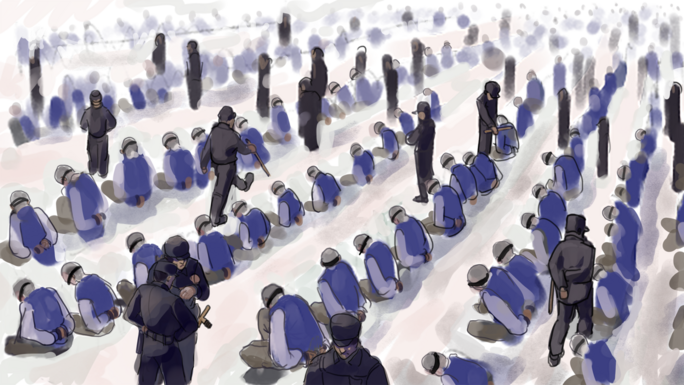
There is considerable evidence that around one million Uyghurs in China are subject to forced labour and people trafficking on a massive scale. It is thought that around one fifth of all textiles are now the product of coercive practices. Garment firms show little inclination to check sources beyond what is called the ‘first tier’ even though they could do so easily. Australian research shows that approximately 100 major consumer brands are sourcing their materials from this region. There are some 380 camps surrounded by razor wire and armed guards. The treatment of such large numbers of people in ways almost amounting to slavery is a matter of major concern. The complicity of many Western garment firms in these crimes is a disgrace.

One of the centres producing the research is based in Sheffield Hallam under prof. Laura Murphy. She has produced many reports and her work has been widely cited. The University congratulated her on this work and her research. Until that is the Chinese complained when everything changed. Her website was taken down and it decided not to publish her latest research. It amounted to a flagrant example of a breach of academic freedom. University staff based in China received threatening visits from security services.

The university said they stopped publication because they could not gain the indemnity insurance for her work mindful of possible lawsuits. Documents released under freedom of information laws showed that the University ‘had negotiated directly with a foreign intelligence service to trade [her] academic freedom for access to the Chinese student market‘. The point being that universities are so cash-strapped these days they have to recruit foreign students to balance their books. In other words, we (China) will not allow our students to come to your University unless you stop publishing material about the Uyghurs. China denies all claims but will not allow foreign observers into the region.

Clearly embarrassed the University has apologised and restored her work.

The story reveals how easy it is for China to intimidate those it dislikes or who comment negatively on their various activities. It also reveals how quickly and tamely a British University agreed to censor an academic’s work. Troubling is that this is an example of something which has come to light. Which other universities are quietly agreeing not to rock the boat and not even allow researches to get underway for fear of losing a contingent of Chinese students? The last two weeks have seen the government tie itself in knots over two alleged Chinese spies and whether or not to prosecute them. China’s increasing power is more and more troubling. Meanwhile, a million or so Uyghurs are virtual slaves.

Detailed work produced by Prof Murphy can be accessed here. It will be interesting to see if China’s heavy-handed efforts to threaten a British University will backfire.

Sources: BBC, China Star, Guardian, Sheffield Hallam University.

Photo: satellite picture of one of the Uyghur camps.

Trade Talks with China: Ethical Dilemmas Ahead


Government has to decide: rights or trade?

June 2025

It is reported today that the government is engaged in a range of talks with Chinese officials to improve trade and political relations. The Chinese Embassy is quoted as saying that relations have ‘positive momentum’. Elsewhere, relations are described as ‘warming’. Of course both countries are suffering from the Trump tariff war and so a degree of mutual comfort is to be expected.

The fact remains that human rights in China are dire across a very wide spectrum, almost too long to describe in fact. They include no freedom of expression; atrocious and genocidal behaviour towards the Uyghurs and other Turkic peoples; Human Rights defenders who face long prison terms and torture; continuing repression in Tibet; the crackdown in Hong Kong and the execution of large numbers of its citizens – possibly equal to all the rest of the world put together. It is also aggressively pursuing overseas Chinese who criticise the country and persecutes any of their family members in China. Restrictions are getting steadily worse over time.

Azeem Ibrahim, speaking at the Humanist Convention this month, described the multi-pronged approach

adopted by the Chinese. It was a talk about the rising threat of autocracies which included Russia and Turkey. He pointed out that the country leads the world in surveillance and it has a massive programme using facial recognition technology. It is also working hard to gain access and control to international agencies in the UN for example. The Warsaw Institute describes how they use their commercial power and investments to shut down any Security Council criticisms of their human rights infringements. His basic message was that China in particular has an organised and well-funded programme to attack western values by any and all means available. He added that the West has been complacent in thinking that western values are a settled state of affairs.

So where does that leave the Labour government? It is reported to be softening its position now it is in government. Nine individuals have travel restrictions placed on them including 5 Conservatives: Ian Duncan Smith being one and Tom Tugendhat another. All because they criticised the treatment of Uyghurs. These restrictions might be lifted. The concern is that the government is desperate to achieve growth and seems willing to abandon all principles to achieve it although a trade deal is not on the cards. This site is concerned with human rights but the wider issue is western governments – like the UK – who seem very slow to wake up to the organised threat posed by autocracies like China who are determined to pursue their view of the world by all means possible.

Sources include: Human Rights Watch, Amnesty, Guardian, US Department of State, New China Human Rights.

Exeter event


Film being hosted by the Exeter Amnesty group subject: China

On Saturday 18th January at 1pm, Exeter Amnesty group hosts the film, All Static and Noise, at Exeter Phoenix, followed by a Q&A session with Nabila Hanson, AIUK China Coordinator. The plight of Uyghurs in China does not receive the attention it deserves. Governments are keen to forge relationships with the country for commercial reasons. Little attention is paid for example to the scandal of cotton produced using forced or slave labour in the region which finds its way into clothes sold on our high streets.

In the film, All Static & Noise, by David Novack, survivors and their families risk everything to expose the truth of China’s Uyghur detention and ‘re-education’ camps. Jewher, a Uyghur teen from China, lands in the US after she is violently separated from her father at the Beijing airport. Abduweli, a linguist and poet imprisoned and tortured for teaching Uyghur language, leaves for Istanbul upon his release. Together, they join survivors of China’s “re-education camps” and their families, in Turkey, Kazakhstan, Europe and the United States to expose atrocities with the hope that global awareness brings change.

Saturday 18th January 2025 1pm Tickets £7 www.exeterphoenix.org.uk 01392 667080 https://exeterphoenix.org.uk/events/all-static-and-noise/

Image from the film site.

Taking the shine off Shein


Test for new Labour government over listing of Shein on LSE

July 2024

The new government – likely to be Labour after the election tomorrow – will have an early test in connection with the Chinese clothing firm Shein which wishes to list on the London Stock Exchange. Both Conservative and Labour politicians have been keen to support the bid whereas Wall Street declined for a variety of reasons and doubts about the firm.

Shein has grown at a phenomenal pace but there are many doubts about its finances. LSE is keen to list the firm and there are a range of banks including Goldman Sachs and JP Morgan ready and willing to assist. Today, it was announced the EU is changing the rules which enabled the firm to import millions of pounds of clothing yet avoid duties because each was individually packed thus taking them under the £135 rule.

But the main problem is how the raw material is sourced and the use of sweat shops via sub-contractors in Bangladesh and Vietnam. As we have noted before, about three quarters of the cotton produced by China comes from Xinjiang where there are credible reports of the use of forced labour. In addition is the appalling treatment of Uyghurs where nearly a million are being persecuted and whose culture is being systematically destroyed. It has been described as a crime against humanity and genocide. Shein rejects these allegations and says it is committed to good governance.

Another problem is that the firm is likely to be audited by one of the big four accountancy firms who have a dismal record when it comes to Chinese firms and have been fined on several occasions for accounting scandals.

The Labour party has been keen to court the City as part of its business friendly policy. Three shadow ministers have met Shein’s chairman. Will they play their part in welcoming Shein to the LSE to keep the city bankers happy or will they look closely at their labour practices, lack of transparency and the probable use of cotton from Xinjiang? Amnesty have said to allow them to list will be a ‘badge of shame’. It will be an early test for the new government: money v. morals.

Sources: Private Eye ; Guardian; Amnesty International; Stop Uyghur Genocide

Uyghurs win important case


World Uyghur Congress wins important Appeal Court case concerning cotton produced in Xinjiang

June 2024

The dreadful treatment of Uyghurs in Xinjiang province in China is well established and around one million of them are kept in 380 internment camps. They are also used as forced labour in the production of cotton and 85% of China’s cotton comes from this region. This cotton finds its way into western markets and is used to produce clothing on sale in UK shops and elsewhere.

The WUC tried to get the National Crime Agency to carry out an investigation which the declined to do saying that they needed details of specific contracts. This was overturned at the Appeal Court in what is being described as a ‘watershed moment‘ ([2024] EWCA Civ 715). The court said the decision by NCA was ‘illegal’. The cotton produced using forced labour infringes the Proceeds of Crime Act. This is the first successful action in the world and is being regarded as a landmark decision. If a company knowingly uses, or which they suspect to be using, forced labour, then a prosecution can be initiated under POCA.

Needless to say the Chinese are angry and the Chinese Embassy said it was ‘an enormous lie by anti-Chinese elements to smear China’. The problem for the Chinese is that it is a closed region and journalists are not allowed in. Footage that has emerged has been shot clandestinely. There seems little doubt however that the scale of the repression, the attempted destruction of the Uyghur culture including banning the language, and the demolition of hundreds of mosques, represents a major crime taking place in the twenty first century. It is variously described as a crime against humanity and genocide.

A lawyer from the Global Legal Action Network said ‘this litigation has been critical in recognising the mass atrocities being committed against Uyghur and other Turkic Muslim people by the Chinese government, and holding to account those complicit in, or profiting from, these crimes.’ Producers of clothes using Chinese cotton will now have to take extra care that it does not use forced labour. Major high street names are involved.

Sources: Binman’s, Reuters, The Guardian, Law Society Gazette

UN alleges possible ‘crime against humanity’ in China


September 2022

Un report published on 1 September 2022 suggests that China may be committing genocide in Xinxiang province

The BBC today discussed the UN report which describes in great detail, the use of torture, sexual violence and arbitrary detention of the Uyghur population in China. This abuse, which they believe is a possible crime against humanity, has been widely reported around the world and is a huge stain on the Chinese state. Around a million Uyghurs are held in so-called re-education centres and are forced to work picking cotton for example, some of which is believed to used in garments in the UK. Photographs show these establishments surrounded by barbed wire with watchtowers. The release of files last year revealed instructions to the guards should a Uyghur try to escape: if the warning shots did not work then the instructions were shoot to kill.

The Chinese government refutes the allegations and a lengthy report is attached to the UN report. It is described as ‘disinformation’ and a ‘farce’. The BBC interviewed someone representing the Chinese point of view. It was not very enlightening and consisted of a flat denial of the allegations. He also claimed, falsely, that delegations have visited the area and this was not picked up by the interviewer. Allow unfettered access could do a great deal to answer the allegations if they were untrue. The main claim for the actions the government is taking is that it is to tackle ‘terrorism, extremism and radicalisation’. These claims are extremely exaggerated and do not justify the scale of abuse foisted on the Uyghur people.

The World Uyghur Congress welcomed the report but claims it does not go far enough. They urge western governments to do more to challenge the Chinese for their activities in Xinjiang. Amnesty described the report as a ‘game changer’.

One interesting aspect to the BBC interview was the fact that several countries sought to stop the report being published. The Chinese interviewee was vague about this matter and the interviewer wondered if the UK government was one of them. The question was left hanging.

Attitudes towards China have changed in recent years. In the UK, the desperate desire by the then prime minister David Cameron and the Chancellor, George Osborne to forge close relationships with the country now look a little forlorn. Predictions that China was imminently due to overtake the USA economically also look rather silly. The country’s banks and property market are in a parlous state and the economy does not look as strong as it once was. Politically, the crushing of dissent in Hong Kong, their actions in the South China Sea and bullying actions around Taiwan have forced countries to reappraise their approach. The mass abuse of almost an entire nation and the destruction of religious buildings hardly adds to their reputation.

UN visit to China criticised


Michelle Bachelet’s visit to China and the Uyghurs severely criticised

June 2022

The treatment of the Uyghurs in China has been the subject of criticism for some time and in September 2021, the UN were said to be finalising its report into the matter. Eight months later it still has not appeared and human rights organisations including Amnesty International have urged it to be published immediately.

Bachelet visited China recently and this itself has been severely criticised. She was not given unfettered access to the area nor able to interview individual Uyghurs in private. The World Uyghur Conference has voiced its serious dissatisfaction with the UN visit claiming it was a ‘propaganda victory for the Chinese enabling them to whitewash its activities’.

A previous post detailing some of the treatment the Chinese are meting out to Uyghurs was described. We add our voices to those calling for the report to be published.

Let us not forget the Uyghurs


The focus on Ukraine risks us forgetting other abuses around the world

One of the problems with crises such as that in Ukraine following the Russian invasion, is that other terrible events can risk being forgotten. It is as though we can only cope with one crisis at a time which may well be true enough. As we watch the horrific events unfold in Ukraine, we must not forget that millions suffer in Syria, Myanmar, Yemen and in China.

In a recent edition of the New Statesman magazine (18 – 24 February 2022), there were several articles under the general heading of The Silencing focusing on the plight of the Uyghurs in China. There were pieces by Katie Stallard, John Simpson, Elif Shafak, Rian Thum and Musapir. Some of the points made are repeated below.

The opening ceremony of the recent Winter Olympics which was described as ‘jarring and banal’. A Uyghur skier stood on a podium with a member of the Han community (the dominant one in China) in an attempt to show harmony and to send the message ‘genocide, what genocide?’ Unfortunately she could not be interviewed as she failed to appear in the media zone. It was denounced by the Uyghur Human Rights Project as a ‘political stunt meant to deflect international criticism as though parading a Uyghur athlete around somehow disproves the party state’s well document atrocity crimes’.

The state has implemented a ‘devastating system of collective punishment that targets the Muslim population of Xinjiang’. Attending a mosque or growing a beard is considered suspect. Hundreds of internment camps and a suffocating network of surveillance technology have been built and between 10% and 20% of the adult population has been detained.

John Simpson notes that ‘the 12 million Uyghurs in Xinjiang, China are suffering one of the most intense policies of collective punishment since the end of the Second World War: a campaign designed to change them as a people, remould their beliefs and limit their numbers.’

Satellite images examined by the Australian Strategic Policy Unit (ASPI) have identified at least 380 detention centres ranging from low-security installations to fortified prisons complete with watch towers, high walls and barbed wire. Some of these were seen in a recent Channel 4 documentary.

Perhaps the most shocking revelation is that they estimate 83 Chinese and foreign brands have allegedly benefitted from the forced labour of Uyghur prisoners and they name Apple, Amazon, Marks and Spencer, Nike and Adidas among others. There have been repeated claims that much of China’s cotton, which is grown in Xinjiang, is produced by slave labour.

Elif Shafak bemoans the shear number of crises around the world and the difficulty we have in coping with it all. She quotes the humanitarian crisis in Afghanistan, attacks on abortion rights in USA and the ethnic cleansing of Tigrayans in Ethiopia as well as Myanmar. She says one thing that dictators and demagogues know is that numbness is transmissible – that is our indifference and detachment as global citizens.

Every time we fail to investigate a gross human right violation, every time we turn a blind eye to atrocities because we have trade deals or financial engagements, we are closely observed not only by that particular country’s government but also be the authoritarian regimes across the world. for they know that when one of them is met with numbness it will benefit them all. This is how democracy loses. Not only “there” but here and everywhere.

New Statesman 18 – 24 February 2022

As we are learning with Russia and Ukraine, financial interests have dominated our policy and there is now, belatedly, an attempt to control the flow of Oligarch money following the invasion.

UPDATE 8 March 2022: The full ASPI report on Uyghur oppression. Other reports can be found on the ASPI site. More companies listed in the appendix include: Microsoft, Google, Samsung, Electrolux, Gap, Diesel, Zara, Rover, Mercedes-Benz, VW, Nintendo, Nokia, Levi’s, Victoria’s Secret, Gap, Calvin Klein, Adidas and many more [accessed 10 March 2022]. NB: the appendix has been updated to include denials by some of the companies named (not included in this list) and other less well-known companies in the UK have not been included.

Genocide in China


Report finds that China’s treatment of the Uyghurs is genocide

The word ‘genocide’ has entered the language and we use it today to describe attacks by governments on entire communities usually for reasons of race or religion. It is sometimes surprising to some to discover that it is in fact quite a new word invented in 1944 by Rafael Lemkin. He used it to describe the Nazi’s programme of seeking to exterminate the Jews. Further background to the tussles to get the word accepted is described in Phillippe Sands’ book East West Street (Weidenfeld and Nicolson, 2016). The victors after the war were keen to set up a system to try and prevent those terrible events from happening again including the Genocide Convention of 1948 agreed only four years after Lemkin first coined the word.

Genocide has not disappeared in the world today and the worst example currently is the programme being carried out by the Chinese against the Uyghur people. A report has recently been published which – although having no official standing – has looked thoroughly into the treatment of the Uyghurs and concludes that ‘efforts to prevent births amounted to genocidal intent.’ Uyghur women are having their wombs removed and babies are often killed after being born.

The Chinese treatment of the has been horrific and that it should be taking place in the modern age is deeply depressing. China can use its veto power to prevent action by the International Criminal Court. In addition to the suppression of births the report describes ‘unconscionable crimes’ against the Uyghur people. These include physical violence, sexual abuse including penetration by electric shock rods or iron bars, holding people up to their necks in cold water for prolonged periods of time and the use of heavy shackles sometimes for months at a time. Face recognition technology is used on an extensive scale making communities effectively open prisons.

As many as a million are in held re-education establishments where they are forced to learn Chinese. If caught speaking their own language they are severely beaten. Hundreds of thousands of Uyghur children have been removed from their families and placed in Han speaking homes. Mosques have been destroyed and graves bulldozed. Travel to the region is tightly restricted.

It is a catalogue of depravity of truly shocking extent. The Chinese deny any of this is taking place but the weight of evidence is too great to dismiss. The scale and extent of the persecution must have received authority at the highest level. Although, unlike the Nazis, there is no programme of mass killing, the programme does represent a deliberate programme to eliminate the culture, history and language of these people.

The UK government has so far declined to call the programme genocide.

Genocide in China


Parliamentary committee produces damning report

Report by the House of Commons Foreign Affairs Committee accuses China of genocide towards the Uyghurs in Xinjiang province. The report is entitled: Never Again: the UK’s Responsibility to Act on Atrocities in Xinxiang and Beyond. It does not pull its punches. It is perhaps one of several events which are leading to a reappraisal of our relations with China. The previous Conservative administration was keen to see an improvement in our relations and with it, increases in trade and development. The treatment of the Uyghurs, the repression in Hong Kong, threats to the integrity of Taiwan and the poor behaviour in the early months of the Covid pandemic, is slowly forcing countries to think again.

The crimes being committed against the Uyghurs and other ethnic groups in the Xinjiang Uyghur Autonomous Region (XUAR) are truly horrifying. The Chinese government is responsible for the mass detention of more than a million Uyghurs, for forcing them into industrial-scale forced labour programmes, and for attempting to wipe out Uyghur and Islamic culture in the region through forced sterilisation of women, destruction of cultural sites, and separation of children from families. It is altogether a gruesome picture and shocking behaviour from on the UN’s Security Council members.

The Committee heard that under the guise of counter-terrorism, the Chinese government is committing mass atrocities and human rights abuses against the Uyghurs and other ethnic groups in Xinjiang. Reports include the use of forced labour programmes, arbitrary detention in internment camps, cultural erasure, systematic rape, forced sterilisations, separation of children from their families, and a high-technology surveillance system – all endorsed by the Chinese government’s central leadership. Thousands of mosques have been demolished.

One element of the report relates to cotton. It is estimated that some 570,000 people are forced to work picking cotton 84% of which comes from Xinjiang. Satellite imagery shows the use of surveillance equipment, factories surrounded by barbed wire and watch towers. The report notes that ‘virtually the entire’ UK textile and clothing is linked to the abuses.

Virtually the entire UK textile and clothing industry is linked to the abuses in Xinjiang

The UK government has adopted a low profile in this matter although there are signs of a stiffening of attitudes. The Committee argues that guidance is insufficient and that ‘stricter methods’ are needed.

The problem for the public, many of whom are horrified by the stories emerging from Xinjiang, is that action is difficult. How does one know, when buying a cotton T shirt or blouse, whether it has Chinese cotton in it produced by Uyghur slaves? We have to rely on firms applying due diligence in their supply chains. Undoubtedly, some retailers will take this seriously – not just as a matter of morals but because of the risk of reputational damage – whereas others may not do so. A representative of the Ethical Trade Initiative (ETI) thought that voluntary action would not be enough for some retailers. We rely therefore on government to take the lead.

The government is financially supporting the Australian Strategic Policy Institute ASPI, which produces analysis of Chinese actions. A report on the Uyghurs is available here.

To see in more detail what the Ethical Trade Initiative says about the Chinese situation follow this link.

Blog at WordPress.com.

Up ↑