Recent posts …


Our recent posts all in one place

May 2025

Good attendance at vigil


December 2025 UPDATED A good attendance at the 106th vigil in Salisbury with around 40 of us there. We were joined by some by some passers-by which is always encouraging. News about Gaza has been eclipsed by the continuing war in Ukraine and the appalling attack on Jews on Bondi Beach killing 15 people on…

Minutes and Newsletter, December


Minutes of our December meeting December 2025 We are pleased to attach our minutes and newsletter for the December group meeting thanks to group member Lesley for compiling them. They include several reports some of which appear elsewhere on this site with links to other sites of interest. Item 12 refers to upcoming events which…

UK Human Rights Report: Current Threats and Government Actions


Monthly report on human rights in the UK December 2025 Amnesty has for many years, focused its efforts on human rights issues overseas. Recent actions by governments of both persuasions have meant a greater focus on the threats to rights here in the UK. Only this very week, the prime minister and other ministers are…

Analysing the Shift in UK Migration Figures: What It Means


Net migration figures halved December 2025 In a week where the focus has been on European discussions about the European Convention on Human Rights, actual migration has taken a back seat behind probable ever-tougher measures against those arriving here (the expected next French president Jordan Bardella is talking of letting UK Border Force push small…

Death penalty report


December 2025 We are pleased to attach our monthly death penalty report thanks to group member Lesley for the work in compiling it. Contains a lot about America, or specifically the US the only nation on the continent still to have the penalty. Note as usual that there is no mention of China which is…

Court Decisions Impacting Protests and Gender Rights in the UK


Significant number of things happened this month

May 2025

There were a number of interesting events on the human rights front in the UK this month including the Court of Appeal judgement discussed below. There has been a steady ‘nibbling away’ of rights by successive governments which is why we have started this series of reports of which this is the second and why the judgement is good news.

Right to Protest 

This month the Court of Appeal has upheld an earlier ruling of the High Court from May 2024 that then Home Secretary Suella Braverman did not have the power to create a new law that lowered the threshold of when the police can impose conditions on protests from anything that caused ‘serious disruption’ to anything that was deemed as causing ‘more than minor’ disruption. They said that “the term “serious” inherently connotes a high threshold … (and) cannot reasonably encompass anything that is merely ‘more than minor’”.

This was the first time a government had sought to make changes through so-called ‘Henry VIII powers’ of secondary legislation to a law which had been democratically rejected by Parliament when introduced in primary legislation.

Hundreds of protesters have been arrested under these measures since they were created, including the

climate activist Greta Thunberg (pictured: MusikExpress) who was acquitted of all charges in a hearing in February 2024.

Liberty has called for the regulations to be quashed immediately (as per the initial ruling from the High Court, whose decision to scrap them was put on hold until the conclusion of the appeal) and has called for all arrests and prosecutions under the legislation to now be urgently reviewed, alongside a comprehensive review into all protest laws that have been passed in recent years.

The Court will decide in the coming weeks if the legislation is to be quashed.

Gender Recognition Ruling

Five judges from the UK Supreme Court ruled unanimously that the legal definition of a woman in the Equality Act 2010 dealt with biological sex at birth and did not include transgender women who hold gender recognition certificates.

In a significant defeat for the Scottish government, their decision will mean that transgender women can no longer sit on public boards in places set aside for women and it will have far reaching implications for access to protected spaces and services such as the armed service, hospitals, women-only charities and changing rooms and access to sport.

Lord Hodge told the court the Equality Act (EA) was very clear that its provisions dealt with biological sex at birth, and not with a person’s acquired gender, regardless of whether they held a gender recognition certificate.  In a verbal summary of the decision, he said: “Interpreting sex as certificated sex would cut across the definitions of man and woman in the EA and thus the protected characteristic of sex in an incoherent way.”  He stressed that the ruling does not change the protection trans people are afforded under the protected characteristic of ‘gender reassignment’ under the Equality Act.  Amnesty has called the decision ‘disappointing’.

Humanist Rights

Two couples are taking the government to court over its failure to legalise humanist marriage in Wales and England, five years after a ruling that the lack of recognition was discriminatory. Humanist marriages are legal in Scotland and Northern Ireland, and elsewhere in the world including New Zealand, Canada and Australia.  In Scotland in 2022 there were 9,140 humanist wedding ceremonies compared with 8,072 based on faiths or other beliefs.

Activists Detained

Non-violent activists Roger Hallam and Dr Patrick Hart are being refused their right to a Home Detention Curfew.  Days before their scheduled release from prison in March Dr Hart was told that there was ‘no suitable accommodation’ and Hallam that the media’s interest in his case meant that he was deemed unsuitable for HDC (which actually states that non-violent prisoners can only be denied release ‘in exceptional circumstances’). New release dates are respectively June and possibly August. There will be an appeal.

The Counter Terrorism and Border Security Act of 2019

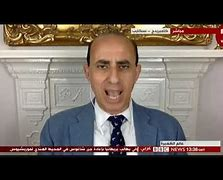
This was invoked by police at St Pancras rail station for detaining a Palestinian-British Christian academic and his 8-year-old son on their return from Paris on Good Friday. Professor Makram Khoury-Machool (pictured: BBC Arabic Service) is a Palestinian-British Christian academic who has lived in the UK since 1999 and taught in Cambridge since 2004.  He is the founder of the Cambridge Centre for Palestine Studies whose board members and patrons include Dr Rowan Williams, Baroness Helena Kennedy, Baroness Sally Morgan, Lord Chris Smith, HE Clare Short, Baroness Warsi and Lord David Steel.  

He and his son were held over 4 hours until after midnight, were given no food while the police took his fingerprints, DNA samples, searched his personal belongings and confiscated his laptop and mobile phone using the threat of force.  Seven days later, the devices were returned but without his SIM card.  He was subjected to an intimate body search, and his son was left traumatised by the experience.  This is perhaps the first time a child as young as eight has been detained in the UK under the 2019 Act; his treatment may breach the UN Convention on the Rights of the Child to which the UK is a signatory.

Economic, Social Cultural Rights

Amnesty reports that in the UK there is no legislatively defined universal social protection floor such as the one recommended by the UN’s International Labour Organisation: this is left to the discretion of the state and is inconsistent across Great Britain and Northern Ireland.  The changes proposed by the Pathways to Work Green Paper 2025 will require new legislation allowing the secretary of state to implement proposed cuts to social security rates for disability and incapacity schemes, and removing some of the legislative protections which are in place to protect against political whims.

If implemented, Amnesty considers the extensive reforms proposed would be a deliberately discriminatory, disproportionate and retrogressive violation of human rights;  The UK’s social security system does not legally guarantee essential social security payments that ensure access to basic needs such as healthcare, housing, food and education and that social security freezes, caps, and deductions, removal of the spare room subsidy (bedroom tax) and two-child limit have deepened poverty and disproportionately harmed children, the disabled and low-income families. Despite increased social security spending, poverty rates remain unacceptably high.

Recent posts:

Death penalty report


Report for April – May

May 2025

We are pleased to attach the monthly death penalty report thanks to group member Lesley for the work in compiling it. As ever we remind our readers that China is believed to execute more of its citizens than the rest of the world combined but information is a state secret.

Refugee report: May


The treatment of asylum claimants takes centre stage

May 2025

The question of immigration and boat people continues to make political waves although survey results recently suggest it has dropped down the list of people’s concerns. ONS surveys show that the NHS and the cost of living are of most concern and were the issues which came up in last weeks elections. Only among the over 70s did immigration and such matters have high salience.

There has been much debate in recent weeks about Article 8 of the Human Rights Act, the one that concedes a right to a family life to irregular migrants under threat of deportation. Some political parties wish to remove this right, and the government say it is “under review”. The issue is whether or not this right has been exploited by people whose claim is questionable. Baroness Kennedy has taken up the issue on behalf of claimants.

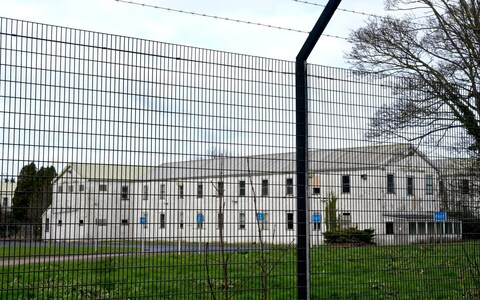
Indeed, the treatment of asylum claimants after their arrival has taken centre stage lately. Some who were held at the notorious Manston camp have sued the government over the associated health issues. The unfortunate camp is now under attack over the level of drug abuse by staff working there.

The Home Office is eager to reduce the waiting time for appeals from its current 50 weeks to 24. This is not made easier by the downward trend in initial refusals. A further government action has been to declare that proven sex offenders will be denied asylum. It is not known how many applicants may fall into this category. Also on the Government’s mind (as part of the ongoing Border Security Asylum and Immigration Bill) is that lawyers should not be allowed to advise claimants unless properly qualified. The Bill will reach its Report stage in the Commons on Monday and more changes have been promised.

Profits

While much noise has been generated by the possible big profits obtained by the small boat providers, a research team from four UK universities has been looking at the profits made by companies in the border security business. Their report concludes that worldwide the business is worth $377 billion, and in the UK £3.77 billion in contracts with the government, for a wide range of activities (e.g. boat repair, sniffer dogs, marquees). The information is not easy to come by and may well be an underestimate.

The European Commission has proposed setting up a Common European System for Returns (though it is not in the 2024 Migration and Asylum Pact), with processing hubs in third countries (as Italy has tried to do with Albania, but hit legal obstacles). Perhaps surprisingly, the UNHCR has endorsed the idea. It is said that only 20% of people with a deportation order are effectively removed from the EU.

Elsewhere

Much is happening in Greece, notably sentences of 25 years for smuggling (most of which have landed on the pilot). Crete has had 2,500 migrants from Africa in the last year.

Syrian refugees are still in limbo as the government waits to see developments post-Assad. 100,000 are in Europe awaiting recognition as claimants, while the in-power HTS is still listed as a “terrorist organisation”.

Reports that the US sent an Iraqi asylum seeker to Rwanda seem to be supported by news that the White House is in talks with the Rwanda government about sending deportees there, probably to facilities built by the UK.

Notes from elsewhere – 12,000 central African (or Central African?) refugees want to go home from Chad and Cameroon, but there is no support structure to enable this; the UNHCR, on its 75th birthday is warning of a funding crisis; 250,000 exiles have been sent back to Afghanistan from Iran and Pakistan (96,000 forcibly) and are expected to head for Europe.

Finally, AIUK have a briefing paper on the asylum seeker backlog and how to resolve it. In their conclusion they say:

‘Backlogs have recurred in the asylum system for decades because successive administrations have pursued bad policies. They have tried to avoid responsibilities rather than take them. Their efforts at deterring and preventing people seeking asylum have broken the system and had other bad effects. This has generally been because they have set aims for the system that are impractical, even illegitimate. Asylum responsibilities cannot be avoided. They can, however, be managed badly or managed well. Fair and efficient decision-making is critical to managing well and avoiding backlogs’.

And a new Urgent Action asking people to write to the Belgian authorities about their refusal to supply accommodation or assistance to 2,500 asylum seekers.

Recommended reading: Nicola Kelly: Anywhere But Here; How Britain’s broken asylum system fails us all (Elliott & Thompson, 2025)

Andrew Hemming

Anti-protest law modified


High Court loosens restrictions on demonstrations

May 2025

No government likes protests. They demonstrate, all too visibly, that the public – or a part of them at least – is not happy with them or the status quo. Depending on the degree of despotism, demonstrations are controlled or in the worst of countries, banned altogether. China has an extremely restrictive policy backed up by a massive and all pervasive surveillance system making protests all but impossible. Gulf states are also highly restrictive.

Demonstrations are often how change happens. Britain has many examples throughout its history of protest bringing change. Wat Tyler and the plight of the poor (serfs); the Poll Tax riots in 1381 and 1970; the Prayer Book rebellion; the Iraq War protest and of course the Suffragettes. There are many more examples. They do not necessarily bring about immediate change. They do show to politicians and others the depth of feeling that people have about their cause.

The last Conservative government was no different to others in disliking protests. What upset them the most were the climate protests. Just Stop Oil and other groups such as Extinction Rebellion, engaged in a series of eye-catching protests which shone a light on the government’s failure (in their eyes) to do enough to stop fossil fuel extraction.

Suella Braverman, then the Home Secretary resented these protests and introduced the Police, Crime, Sentencing and Courts Act in 2022 in an attempt to seriously curtail them. Controversially they introduced a change in the threshold wording from ‘serious disruption’ to ‘more than minor’. This was done by using a statutory instrument not after proper debate in the House of Commons. This had the effect of almost banning all protests.

Successful challenge

Liberty and other groups successfully challenged this in the courts and the new Labour government decided to appeal. This seems to demonstrate that the dislike of protest is not a party political matter: governments just do not like challenge. Last week (May 2) the Appeal Court ruled that ‘serious’ is not ‘more than minor’ and said that the anti-protest laws were introduced unlawfully. The regulations gave police almost unlimited powers to prevent protests taking place. Many were arrested using these powers.

The protests which so upset the previous government concerned fossil fuels. The fossil fuel industry is extremely powerful and well-funded. Several of the various think tanks based in and around 55 Tufton Street are thought to be funded by them. These include: The Tax Payers Alliance; Civitas; Adam Smith Institute; Global Warming Policy Foundation; Centre for Policy Studies and the Institute of Economic Affairs. Their funding is opaque but is thought to be mainly from fossil fuel companies such as the Koch corporation in the USA among others. They have frequent access to the media being interviewed on various BBC and commercial stations without ever being asked ‘who funds you?’ Their opinions often appear in newspaper columns. They employ large numbers of lobbyists and enjoy close contact with ministers and civil servants. They claim to be influential in forming policies to suit their interests. It was admitted by Rishi Sunak when he was prime minister that the Policy Exchange – another of these think tanks funded by Exxon Mobil – had drafted the anti-protest legislation.

Protest is crucial to enable the ordinary person to make their voice heard. As with the arms industry we highlighted in a previous post, governments are dominated by commercial concerns, the need for growth and the enormous power and influence of companies and their army of lobbyists. Around £2bn per annum is spent by firms on this activity. It is welcome news that the Appeal Court has ruled against the government and its ‘draconian’ anti-protest legislation.

Vigil 74


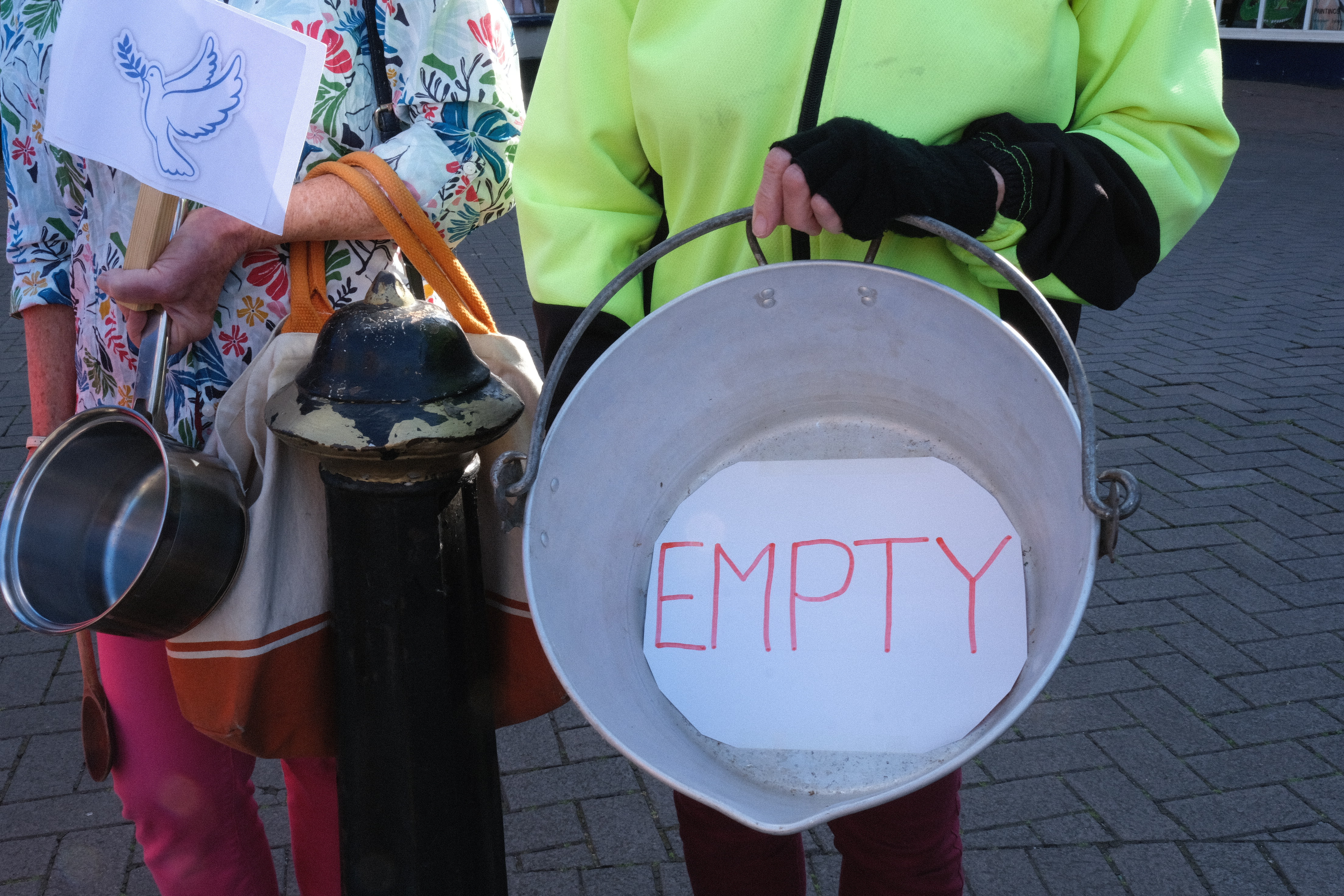
The 74th vigil held with empty pans

May 2025

This vigil took place against the backdrop of increasing stress in Gaza as the blockage of supplies begins

to bite. Over 60 days have passed without food, fuel or aid being allowed in. There are distressing pictures of Palestinians arriving with empty food pots and utensils in the hope of acquiring meagre rations. It is part of the plan by Israel to force Hamas to release the remaining hostages they took on October 7th. Several nations have condemned Israel for using food supplies as a weapon of war. People attending the vigil held empty pans to show support for the lack of food available to those living in Gaza.

Israel disputes the claims and they say that aid is being stolen by Hamas for sale on the black market, a claim disputed by aid agencies. Journalists are not allowed into Gaza so establishing truth is difficult in these circumstances.

Over 52,000 have now died in Gaza the majority being women and children. The International Committee of the Red Cross warned that the humanitarian response was on the verge of collapse.

Sources: The Independent; ICRC; Aljazeera; Guardian; Haaretz


A video of the vigil is now available with thanks to Peter Gloyns

Arms trade news


Grim reading in Campaign Against the Arms Trade’s latest newsletter

May 2025

The CAAT Newsletter (Spring 2025, Issue 272) has details of what’s happening in the world of arms sales a world in which the UK is a big player. Our previous post discussed the continuing sale of arms to Israel which is subject to an Appeal Court hearing starting on 13th. Also we mentioned the role of the RAF in carrying out hundreds of flights over Gaza and quite what is being done with the information gleaned is not revealed.

Arms sales are important for several reasons. Weapons have an enormous capacity to do great harm in the wrong hands. Governments need to exert great control over licensing to ensure that arms do not fall into such hands. British governments are frequently to be heard claiming it exercises ‘robust’ controls. It is doubtful that this is the case and CAAT have often noted the considerable use of open licences which means little effective control exists.

The current Labour government has a policy of growth which seems to dominate thinking. As the court case will reveal, and papers have already revealed, this seems to trump considerations of human rights. CAAT News has the following examples:

  • The Defence Secretary has held meetings with counterparts in Saudi Arabia and Turkey to discuss opportunities for expanding military cooperation which is likely to involve arms sales. Both countries have woeful human rights records. Saudi has a full array of violations including public executions, use of torture, restrictions on women’s rights and repression of any opposition or free speech. Turkey has carried out baseless prosecutions against journalists, human rights defenders and opposition leaders, thousands of whom are in gaol.
  • Eurofighter sales – which the UK co-produces – are planned for Qatar and Turkey. The latter is involved in bombing Kurdish groups in its own country and Iraq. Qatar is another repressive Gulf state and is highly corrupt.
  • We have noted before the question of the Revolving Door where politicians, ministers, senior civil servants and military personnel leave their posts and head off for lucrative appointments/directorships/consultancies with arms firms. It is an open invitation for corruption and the ACOBA system seems powerless to stop it. The Aerospace, Defence and Security Group, (ADS) the trade body for the defence industry representing all of the major arms makers, holds an annual dinner at the Grosvenor House Hotel in which, in the words of CAAT ‘The dinner’s purpose is to introduce them to one another and allow them to schmooze and entertain their powerful friends from Parliament and the Civil Service‘ … These kinds of dinners are where relationships are formed and built and where the next round of arms deals are made, over fine food and wines.’
  • And it doesn’t end there. The Defence and Security Equipment International (DSEI) resumes in September at the ExCel Centre in London. This may be the largest such exhibition in the world. It is popular because the UK government invites representatives from a wide range of countries including those with appalling human rights records, some even on its own watch list. The thousands of attendees will be met by ‘a cast of compliant senior civil servants and politicians on hand to make sure things run smoothly’ (CAAT).
  • … or even there because the Farnborough International Exhibition and Conference Centre is to host Security and Policing run by the Home Office. Again, a range of countries with dreadful human rights are cordially invited to view the latest in surveillance, tear gas and ammunition. Journalists are banned. Britain seems happy to be host to regimes who use this equipment to repress and intimidate oppositions, journalists or human rights people.
Growth or rights?

The government seems keen to actively support these activities and to do all it can to promote arms and surveillance equipment to repressive regimes. It does this while piously claiming that:

This Government is fully committed to the protection of human rights both at home and abroad. We are committed to the international human rights framework and the important role that multilateral organisations like the Council of Europe play in upholding it. (Ministry of Justice, November 2024, ref: CP 1192)

It is hard to square the multi-level activities to promote arms sales and in the process currying favour with some of the world’s worst regimes, with their stated desire to be upholders of human rights and the wellbeing of those at the end of it all. While politicians, civil servants, military brass and ministers ‘schmooze’ with the arms manufacturers in expensive London hotels, it may be hard for them to empathise with those who have been bombed, starved, driven from their homes or incarcerated, tortured or executed for no reason. All facilitated by the weapons and equipment they so admire whilst quaffing the Bollinger. Is it growth above all else?

Sources include: CAAT, The Canary, Amnesty

High Court to decide on arms to Israel


The appeal is to be heard on May 13

May 2025

UPDATE: 8 May. The Foreign Secretary, David Lammy was interviewed on the PM programme yesterday evening [BBC Radio 4] and made the claim, twice, that he had decided to suspend arms sales to Israel. This was not true and regrettably, he was not challenged on either occasion by the interviewer, Evan Davies. Mr Lammy should be thankful that he had such an unchallenging interview, not just on this falsehood but on a range of other matters as well.

The appeal against the government’s decision to continue to supplying Israel with arms – and in particular, components for the F-35 – will be heard in the High Court starting on May 13th. The government is in something of a bind. The actions by Israel in Gaza are widely deplored and many contend amount to a war crime and genocide. But to offend the Americans by curtailing supplies of components for the F-35 used in Gaza is almost unthinkable for the government desperate as it is to curry favour with the Americans.

The action is being brought by Al Haq a human rights organisation based in Ramallah, and Global Legal Action Network consisting of lawyers and investigators which identifies and pursues legal actions against those involved in human rights violations. They have been joined by Amnesty, Oxfam GB and Human Rights Watch.

The latest edition of Campaign Against the Arms Trade (Issue 272, Spring 2025) discusses the issue of continuing military aid to Israel. It notes that ‘even our government has been forced to admit that is assesses Israel is not committed to complying with International Humanitarian Law‘. The case will be the biggest legal test of UK exports to Israel to date. They highlight an article in the Guardian by a former Foreign Office diplomat who described continued attempts by ministers to stonewall or play down evidence of what is happening in Gaza.

Over 52,000 have now been killed in the conflict. There are now reports of 57 deaths due to malnutrition mainly of children, the sick or the elderly. No aid is allowed in including food and necessary medical supplies. This has been the case now for over 60 days. Aid agencies stocks are depleted. A gloomy picture is painted on the situation in Haaretz.

We will follow the court case with great interest.

In addition to the supply of arms, there is the question of involvement of the RAF which has carried out over 250 overflights of Gaza (Declassified says 500). The chief of defence staff, Sir Tony Radakin was asked by a reporter from Declassified whether the RAF’s activities meant they were participating in Israel’s operations in Gaza? Answer came there none. They are not alone and the article reports that backbench MPs have sought answers without success. It is disturbing that the RAF are seemingly deeply involved in what is happening.

Market stall


Market stall

May 2025

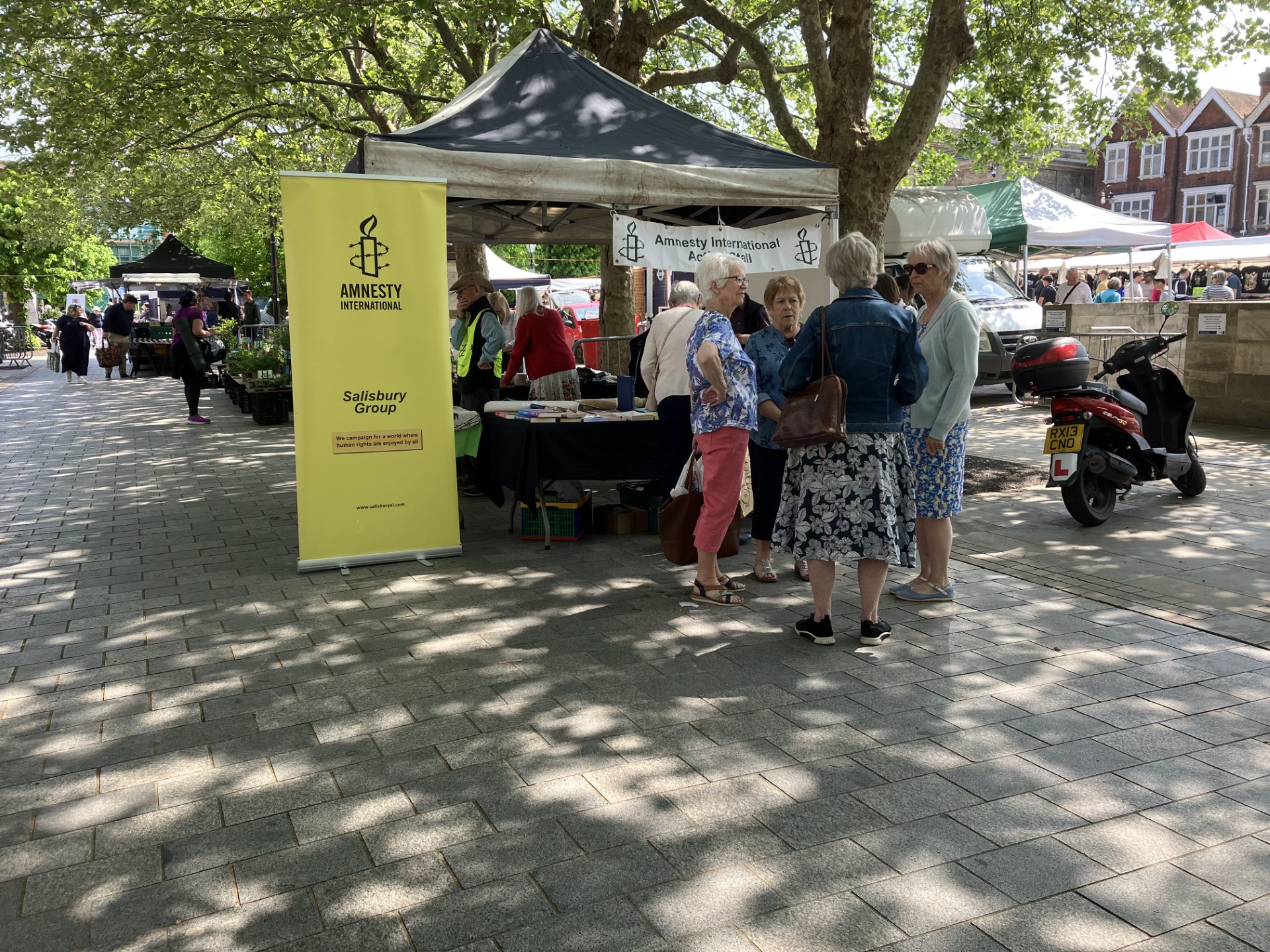
We were in Salisbury market square on Saturday 3rd, with our market stall. Thanks to group members Tony, Fiona, Rose, Eddie, Andrew, Val, Lesley and Peter for turning out to help. New photo added (5.v)

Recent posts:

Blog at WordPress.com.

Up ↑