
Report shows that threats to various rights exist in this country
July 2025
We tend to think of threats to human rights exist elsewhere than in the UK. As this report shows, there are threats to freedom of speech and the right to protest in the UK. There are also issues of poverty which have a dramatic effect on people’s wellbeing. We are grateful for group member Fiona for the work put in to produce this report.
Abortion Law Reform
In an amendment to the government’s crime and policing bill, parliament voted to change the criminal laws that govern abortion in England and Wales so that women procuring a termination outside the legal framework cannot be prosecuted.
The framework of access to an abortion – including the need for two doctors’ signatures, and the time limits at which terminations can be carried out – will remain the same and doctors who act outside the law will still face the threat of prosecution. But women who terminate their pregnancy outside the rules, for example after the time limit or by buying pills online, will no longer face arrest or prison. The offence of inducing a miscarriage carries a maximum sentence of life. The amendment came after growing calls for a change in the law as the number of women investigated, arrested or prosecuted has increased in recent years.
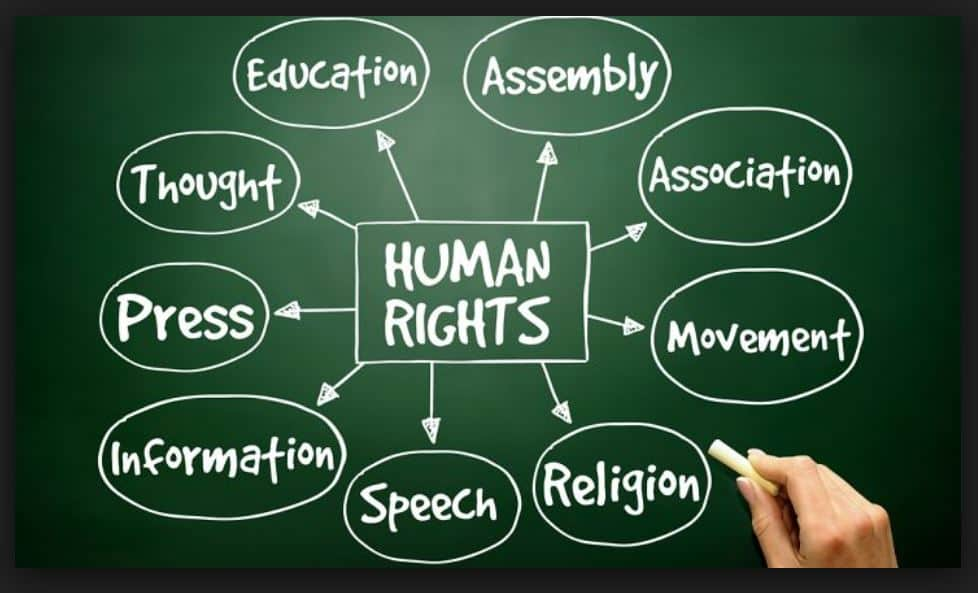
Freedom to Protest
In June the government decided not to continue their appeal against the High Court Judgement brought by campaign charity Liberty, which disallowed the former Home Secretary Suella Braverman’s definition of ‘serious disruption’ as ‘more than minor’ disruption in relation to the policing of protests. This means that Liberty’s original High Court challenge is now legally accepted and the draconian anti-protest laws are now void. Liberty is now demanding a government review of dozens of wrongful arrests and convictions of peaceful protesters that are now invalid.
ECHR Reform
Britain is determined to protect the European Convention on Human Rights claimed the justice secretary but will pursue reform of the ECHR both at home and in Strasbourg. The Home Secretary, Yvette Cooper, said ‘The European convention on human rights is one of the great achievements of post-war politics. It has endured because it has evolved and must do so again.’
She will undertake an examination of how the courts were applying the right to freedom from degrading treatment. Change could come in the form of guidance to courts, or even legislation. The move is seen as a defence against right-wing populism. Concern focuses on Article 3, freedom from torture and other degrading treatment, and Article 8, the right to a family life, recently raised in an ITV documentary about the case of two criminals avoiding deportation because of overcrowded conditions in Brazilian jails.
Assisted Dying
Terminally ill people are to be given the right to an assisted death in a historic societal shift that will transform end-of-life care in England and Wales. After months of argument, MPs narrowly voted in favour of a private member’s bill introduced by Labour’s Kim Leadbeater, which could become law within four years.
The emotional debate in parliament was dominated by pleas from opponents of the bill for stricter safeguards against coercion by abusers, concern from disabled people and warnings about the fundamental change in the power of the state when granted new rights over life and death. The prime minister, Sir Keir Starmer, voted in favour of the bill, and MPs were given a free vote. The House of Lords is not expected to block its progress, though opponents said they would continue to fight the bill there. Royal assent is widely expected by the end of the year. It will give people in England and Wales with less than six months to live the right to an assisted death after approval from two doctors and a panel including a psychiatrist, social worker and senior lawyer.
Note: Amnesty does not have a position on assisted dying. it arose because it concerned the manner of the decision and people’s right to chose.
Campus Protests Guidance
Universities in England will no longer be able to enforce blanket bans on student protests under sweeping new guidance from the Office for Students that urges a “very strong” approach to permitting lawful speech on campus.
The detailed regulations set out for the first time how universities should deal with inflammatory disputes, such as those between the University of Cambridge and students over the war in Gaza, and rows over academics who hold controversial but legal opinions, such as the gender-critical professor Kathleen Stock.
The guidance issued by the OfS will make it harder for universities to penalise students and staff for anything other than unlawful speech or harassment. But experts said the guidance failed to address the complexity of balancing free speech with activities that have “chilling effects” on students or staff. Universities are advised not to apply prolonged bans on protest encampments involving the Israel-Gaza conflict such as were used by Cambridge University earlier this year but are encouraged to block demonstrations that are “frequent, vociferous and intrusive” if they intimidate Jewish students. The guidance also says: academics should not be pressed to support particular views; protests should not be restricted for supporting legal viewpoints; students or staff should not be “encouraged to report others” for lawful speech; universities must “secure freedom of speech” for visiting speakers.
Activism group proscribed
The Home Secretary has determined to proscribe the activist group Palestine Action after their spray painting of two RAF spotter planes in Brize Norton used for surveillance in Gaza. Ministers claim they are used solely to search for hostages but critics claim that any information sharing with Israeli security could lead to the torture of Palestinians. The protest group has now been designated a terrorist organisation.
While sharing information from Netpol.org or Amnesty International about, for example, the legal analysis of the proscription, is not an offence, actively expressing support for Palestine Action, such as through chanting, wearing clothing or displaying articles associated with the group, is an offence according to the Metropolitan Police.
Post Office Horizon Scandal
The first findings from the public inquiry into what has been labelled the worst miscarriage of justice in UK history reveals that more than 13 people may have killed themselves while at least 59 were driven to contemplate suicide. Sir Wyn Williams, the retired judge who chaired the hearings, looks at the “disastrous human impact” on the more than 1,000 post office operators wrongly accused of taking money from their branches because faulty software showed a shortfall.
It also covers the issue of compensation to those seeking financial redress, who now number at least 10,000.
Speaking after the report was published, Williams said evidence had revealed a “profoundly disturbing” picture. About 1,000 post office operators were prosecuted and convicted by the Post Office between 1999 and 2015, the report said, because of faulty Horizon accounting software that suggested they had committed fraud. A further 50 to 60 people, possibly more, were prosecuted but not convicted. At least 3000 cases are still to resolve.
State Broadcaster Impartiality Challenged
Critics have claimed that the BBC’s continuing news coverage of the Gaza situation has shown bias in, for example. failing to mention the role played by the RAF in surveillance of the area. The BBC also decided to pull the film Gaza: Doctors Under Attack which, when subsequently broadcast by Channel 4, exposed a pattern of deliberate destruction of medical facilities and arrest, detention and torture of medics in Gaza. Since Israel and the IDF was given every opportunity to rebut the claims made in the film, critics say it is difficult to see any reason why the BBC could not have shown it.
Trial by Jury
Thousands of defendants in England and Wales could lose the right to a jury trial under plans designed to save the criminal justice system from collapse, with 77,000 cases pending in crown courts.
Former judge Sir Brian Leveson, asked by the government to come up with proposals to tackle a record courts backlog, said he had been forced to make recommendations he did not “rejoice in”. Historically, only defendants facing minor offences in a magistrates court have been denied the right to a jury trial, which has long been synonymous in England and Wales with the right to a fair trial. But if Leveson’s recommendations are implemented the right could be removed for offences such as sexual assault, racially or religiously aggravated strangulation, harassment and child abduction.
Recommendations in the report include: the creation of a new division of the crown court in which a judge and two magistrates hear “either way” offences (those in which the defendant can currently choose to be heard by either a magistrate or a jury in the crown court); removing the right to be tried in the crown court for offences that carry a maximum sentence of no more than two years; reclassifying some either way offences so they can be tried only in a magistrates court; trial by judge alone for serious and complex fraud cases; the right for all crown court defendants to elect to be tried by a judge alone.
Welfare Bill
The second reading of the government’s welfare bill has passed its first Commons test only after a central element – changes to personal independence payments – was removed on Tuesday. The bill passed with an unprecedented 49 Labour MP’s rebelling. The restriction of access to PIP was felt to unduly penalise vulnerable people, the disabled and ethnic minorities.




 Amnesty in Salisbury & South Wiltshire