Brian Oosthuysen


October 2025

We were sad to note the death this summer of Brian Oosthuysen who was 87. Brian was an active member of the Stroud Amnesty group and, with other members of that group, took part in the campaign we ran on North Korea. Brian was born in South Africa during the Apartheid era. The picture below shows him holding the banner on one of his trips to Salisbury. There is an obituary in the Guardian which describes his many activities including being a County Councillor, helping at a food bank as well as his Amnesty work. We sent Our condolences go to Carole and family.

Members of Salisbury and Stroud Amnesty groups (Brian is 6th from right) in Queen Elizabeth Gardens.

Is International Law Losing Its Authority?


Does International Law mean anything any more?

October 2025

Last week, the International Court of Justice (the principal judicial organ of the United Nations), in an advisory opinion, declared Israel to be in breach international law in preventing aid from being sent to Gasza. And this week, Danny Kruger MP, on behalf of Reform UK, declared that the requirement in the UK’s ministerial code to acknowledge international law in their decision-making would be dropped by any future Reform UK government. On the first point, the Israeli government of course denied the charges and the second is unlikely to happen, but they raise the question “How far is international law able to be enforced?”

Readers may recall, at the time of the Brexit negotiations, a particularly awkward point was resolved by evidently breaking international law. The then minister, one Brandon Lewis, claimed that it only broke international law “in a specific and limited way”, for which he received much ridicule, but is such a response arguable or merely dismissive?

International law is a vague concept, in that much of it is not regulated. Those aspects that are enshrined in treaties are binding (but only among signatory states), while some are no more than statements of principle (think migration). The case of Benjamin Netanyahu and the International Criminal Court reveals some of the problems – countries that have signed up to the Court are obliged to arrest him if he come under their jurisdiction, but he can move at will among non-signatory countries, and some signatories may consider it too much of a hot potato to intercept him. In his trips to Washington for example, he has to fly an inefficient route to avoid needing to overfly an unfriendly state.

So, is the law becoming meaningless? The current United States administration is set on removing and authority from the United Nations, which has largely been the means by which the laws have been enforced, and the collegiality that once existed on e.g. climate change, has largely gone. Even the EU has its own laws constantly flouted by member states (which are punished, but don’t care). But appeals are still made to the UN and other international arbitrators, in the absence of any better option.

Clearly, our expectations of governments’ probity have been too high. The ICJ’s judgements are binding, but they have no powers of enforcement and are dependent on the Security Council for any action (and the Council is subject to veto by any of the 5 permanent members).

Indifference

One might conclude that international law is like human rights law; important to have it, but, in the end, any state choosing to ignore its precepts will probably get away with it. What has changed maybe has been that states used to argue the their actions were within the law, whereas now they are indifferent as to how they are judged. It might be worth establishing a regime of specific sanctions for specific offences, which could be more plausibly mandatory. But, as Hobbes said, “Covenants without the sword are but words.”

AH


Danny Kruger is the MP for East Wiltshire who recently defected to Reform from the Conservatives.

Recent posts:

The 99th vigil


The vigils continue as peace is still very uncertain

October 2025

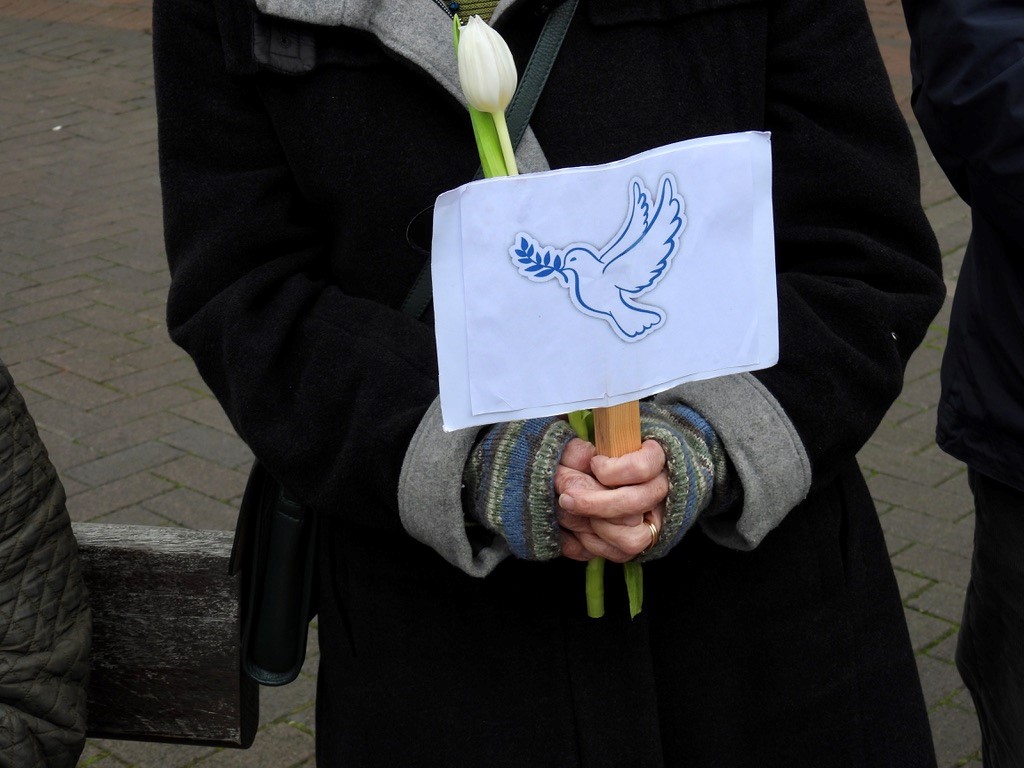
The 99th vigil took place in Salisbury market place on 25th with over 35 in attendance. The question we continue to ask ourselves is ‘should we continue?’ The ceasefire on 10 October was thought by some to mark some kind of end to hostilities and with talk of peacekeepers and much glad-handing, it might have hinted at an end to it all. We continue because it does not look to be promising. Fundamental issues remain and the distrust is very deep. There is little sign of a genuine rapprochement. The West Bank violence continues and there is no plan to resolve the plight of Palestinians there and the attacks they are subject to show no sign of ending.

A podcast on Haaretz discusses the current situation and makes the point that Netanyahu is unhappy with the agreement. The Americans are ‘keeping a watchful eye on [him]’ they report. Israel has been reminded they are not the only stakeholder in the area and the bombing of Qatar was clearly a major mistake – perhaps a hubristic mistake – by the government. JD Vance, Jared Kushner and Steve Witkoff have all been in Israel as part of the US plan to maintain momentum.

Israel is feeling the pressure but so is Hamas and the lack of clarity over their role is a factor. They were to hand over all weapons but they are busy settling scores with the various crime groups – some supported by Israel – and acting as a quasi police force. Hostage bodies are being handed over but finding them does seem to be a genuine problem.

Israel has not allowed independent media into Gaza. However, with the promise of an external force of some kind being discussed, the ending of this bar may be on the cards it has been reported.

A video of this vigil thanks to Peter Gloyns for preparing it. A letter was published in last week’s Salisbury Journal by one of the attendees at our vigils. An interesting article in the Observer (26th) discusses how Israelis will have to come to terms with their PTSD as time goes by.

November 1st will be our 100th vigil so we hope many will turn out for the half an hour.

Previous posts:

Letter published on the vigil


A letter was published this week in the Salisbury Journal on line

October 2025

“There is a group of people in Salisbury who have given their time to spend 97 Saturdays [actually 98] in a row standing outside the library at 5 pm calling for peace for all those in the Middle East, particularly for the people in Gaza. I am proud of these, mainly elderly, citizens for standing quietly and with dignity, to bear witness to the horrifying events we have seen every day on TV and on our phones and to call for it to stop.

“Last week at the Vigil, I heard a passer-by ask why it was all old people standing there? Perhaps it’s

because they are a generation who lived closer to World War 2 with parents who were directly affected by the senseless horror of war. Perhaps they can imagine what it means when UNICEF reports that ‘an average of 28 children are killed in Gaza every day, the equivalent of an entire classroom’. Perhaps they just have more wisdom than the rest of us and know “hate breeds hate”, as one of their posters reads.

“This is not a demonstration but rather a silent vigil. As one of the group says, “silence is more powerful than words”. There are no chants and no arguments. As the weeks have passed, more people attend, and sometimes there have been more than 50 people there. Now the world waits as we hope the fragile ceasefire will hold. I think that the group will continue to bear witness to the actions on all sides. We hope for a just peace and safety for all.

“The group would love to have more younger members. Growing our numbers is still important even with the ceasefire, as the situation is not resolved. Our government must take notice that UK citizens want it to fulfil its pledge to support a viable Palestinian State.

On November 1, the 100th Peace Vigil will take place. Will you join us outside the library at 5 pm and give 30 minutes of your time?

Sarah Nicholson Barbour

See Facebook page: Sarum Concern for Israel / Palestine

See Instagram: @salisburypeacevigils

The letter was published in the print edition on 23 October.


There is a really good YouTube video of a discussion of the current situation with Daniel Levy and a journalist from Declassified UK. Levy points to many failings in the current process including the point that any idea of a Palestine state is just an exercise in creating a kind of Bantustan: the homeland for black people creating by the then South African state as part of their Apartheid policy. This is of a piece with the Apartheid policy operating in Israel and recognising that they are operating a colonial enterprise. He enjoins us not to be distracted from the real issues and the need for accountability to take place. Politicians are all too keen to say ‘move on’ these days. He doesn’t think much of Tony Blair’s mooted role in nation building.

A letter critical of Israel’s actions in Gaza written by Jewish people has been published. They say the ‘unconscionable actions by Israel amount to genocide’.

Recent posts:

Stories from the Small Boats Crisis


Notes from a talk at the Cheltenham Literature Festival

October 2025

This was the title of an extremely interesting talk given by three different speakers at the Festival on the the vexed subject of the small boats crossing the Channel. You would have to be living in a cave in the UK not to know that the boats crossing the Channel is causing huge political waves in the UK. Politicians are scrambling to come up with solutions to stop the crossings. The tabloid and right-wing newspapers keep up a seemingly never ending series of stories on the subject. Some communities are sufficiently angry to stand outside hotels where asylum seekers are housed. The nation as a whole seems very angry.

It was interesting therefore to go to a talk where there was a different take on the subject give by the three speakers. They were:

  • Nicola Kelly, an investigative journalist but had worked for the Home and Foreign offices before leaving
  • Horatio Clare an author and
  • Mir Rahami who at 13, had to flee Afghanistan.

There were a number of points made as you would expect. The ‘crisis’ as it has come to be called was presented as a crisis for us rather than a crisis for those on the boats. The sufferings of such people and the privations they have experienced has got lost in all the invective hurled at them by a number of politicians and journalists. The rights of the people arriving seem to have got lost.

If there were no wars there would probably be no refugees, or least fewer of them, it was claimed. We have noted in previous posts that the UK has been happy to sell arms and issue open licences for such arms with only weak controls on where they end up. There is a kind of irony in this activity which causes deep distress and mayhem in the countries involved while the same politicians complain about those escaping arriving on our shores.

The similarity to Brexit was discussed. Misinformation promoted by some of the same individuals making much noise over the crossings. A balanced view never seems to emerge either from them or those elements of the media which support them. Another aspect of Brexit was mentioned. It is often a complaint that we do not know who the immigrants are and that some may be people with criminal pasts. This is made worse because we no longer have access to the databases having left the EU. Brexit in other words has made the problem worse.

One interesting point – a point you seldom hear discussed – is that money and investment can go where it wishes. Goods can be traded internationally largely without let or hindrance. But people cannot. So the forces which cause economic imbalances are unfettered but those affected are not permitted to respond by leaving.

A major part of the government’s response is to ‘smash the gangs’. There is a lot of talk on this topic but always with the assumption that the gangs are in the Continent. What about the gangs operating here about which there seems to be silence? Might it be part of the UK being a victim in some way of the lawless gangs? That gangs which operate here don’t fit that narrative.

A major point made – a lament really – was the lack of politicians willing to speak out in favour of immigration and the benefits they bring. There are problems but there just seems to be a constant flow of one way talk about the ‘crisis’. It became self-fulfilling. The ex-Home Office speaker said the department were obsessed with the media and tried to come up with sensationalist material to show they were on top of the subject.

The presentation was well received.

(Image, BBC)

Vigils continue


Vigils continue. A very fragile ceasefire in place

October 2025

We held the 98th vigil yesterday (18th October) even though there is a ceasefire in place. We have debated during the last two vigils whether to carry on but the feeling is that the peace deal will not last. In the last few days and hours, 9 more have died in Gaza bringing the total to 67,967 of whom 20,179 are children. Injuries are put at 170,179 since the conflict began. There have been sporadic clashes between the IDF and Hamas the truth of which is impossible to discern. Ben-Gvir the security minister for Israel is quoted as saying to the prime minister ‘order the IDF to fully resume combat in the Gaza strip with maximum force. An air attack on Rafah took place today while this was being typed. No independent journalists have been allowed into the territory.

All the hostages have been returned but Hamas are having difficulty (they claim) in locating all of the deceased hostages under the rubble. Two more were returned today.

At present, the prospects do not look promising. Hamas has not disarmed and there was footage of executions taking place in the street. These were claimed to be members of gangs allegedly armed and funded by Israel, operating in Gaza.

Massive aid convoys have been held up on the Egyptian border.

[Below] mourner at the grave of one of the returned hostages (picture: Haaretz)


A video of the vigil can be viewed here. For those interested here is a link to all the videos produced by Peter Gloyns for whom we are grateful for permission to post them.

A copy of the report on the UK’s role in arming Israel published by CAAT is available here.

Sources: Independent, CNN, Al Jazeera, Haaretz.

World Day Against the Death Penalty


10th October was the World Day calling for an end to this barbaric penalty

October 2025

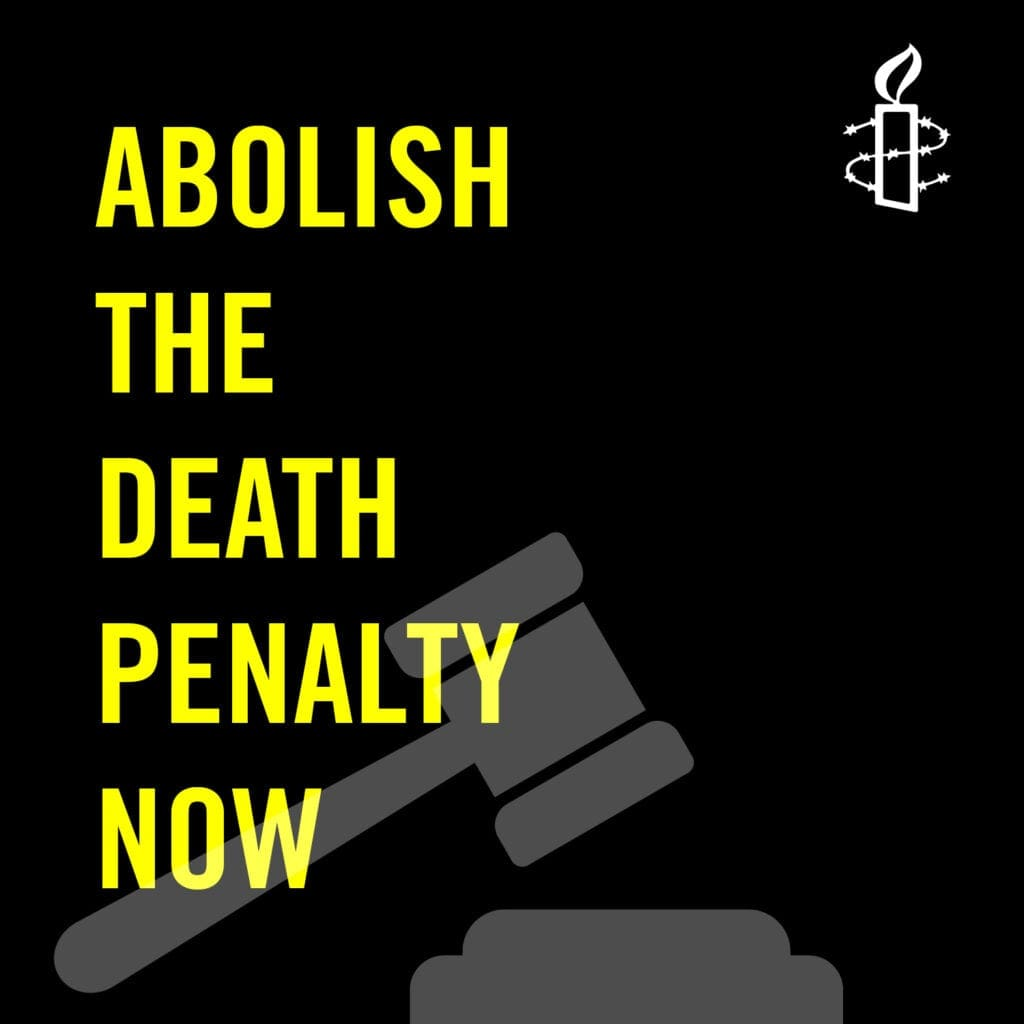
The 25th World Day was last Friday and there is a post by the International Bar Association Human Rights Institution with further details. The IBAHRI Co-Chair Mark Stephens CBE commented: ‘The death penalty is a legal relic that belongs in the dustbin of history. It is cruel, inhuman, and degrading – not justice, but a failure of it. The IBAHRI condemns its use in all circumstances. We applaud those nations that have had the moral courage to abolish it and urge those still clinging to this barbarism to follow suit. The global tide is turning – abolition is not just inevitable, it is imperative.’

Amnesty is focusing in its latest campaign against the use of the penalty as a tool of repression. Trends recorded so far in 2025 indicate that executions have significantly increased in some countries, when compared to figures registered in recent years. Among these rises, some governments have shown renewed determination to use this cruel punishment as a tool of repression and control. This has frequently happened in the context of flawed narratives intended to create a false impression of security through a display of heavy-handed responses from the state, and to score political points. These narratives have also fostered a flagrant disregard for safeguards and restrictions under international
human rights law and standards that have been established to protect people facing execution from being arbitrarily deprived of their lives.

Held every year on 10 October, the World Day against the Death Penalty is organised by the World Coalition Against the Death Penalty (WCADP), of which the IBAHRI is a member.

Our group has campaigned for years for an end to the penalty. It is not a deterrent against crime, mistakes cannot be corrected if new evidence comes to light and the effects on those who have to carry it out is seldom taken into account. We publish a report every month and the latest is available here. We shall be following up the Amnesty campaign in later posts.

Recent posts:

Latest minutes and news


October 2025

We are pleased to attach our latest October group minutes and news thanks to group member Lesley for preparing them and to other group members for their contributions. The summary from our monthly death penalty report is included and the effects of the more aggressive approach to the use of the penalty in the US can be seen all too clearly.

We have become more concerned at the increasing threats to our membership of the ECHR and to the Human Rights Act. Both Reform and the Conservatives are talking in these terms and the Labour party is less than full-throated in its support.

The weekly vigils are continuing and we hope the ceasefire holds and negotiations can lead to a lasting settlement for both the Israelis and Palestinians.

Immigration and boat crossings continue to make considerable political waves with all parties trying to outdo each other. There is a report in the minutes which can be read separately here.

We are also trying to interest local schools in human rights issues which we hope to be able to report on at the next meeting.

The next meeting is on 13 November.

97th vigil


The 97th vigil in Salisbury – peace at last in the region?

October 2025

This vigil, the 97th, took place after ceasefire and hostage release deal was agreed a few days ago. The remaining hostages will be released very soon – maybe tomorrow (Sunday) – and a significant number of Palestinians will be released from Israel jails. The bombing appears to have stopped and thousands are returning to what’s left of their homes in north Gaza. The IDF has pulled back and now occupies less of Gaza than recently.

With the ceasefire underway and negotiations continuing concerning the 20 point plan initiated by the Americans, we wondered, as we said in our last post, whether to continue. A kind of answer was delivered at this vigil when well over 40 attended with a number of new faces, and 29 cars and other vehicles, sounded their horns in recognition.

A video of the vigil is available here produced by Peter Gloyns to whom we are grateful.

Needless to say we wish the process well and hope the negotiations bear fruit. We would like nothing more than to stay home on a Saturday evening. Will it last? The first thing to note is that it was forced on both sides by the Trump administration and their shift in tone followed the bombing of Qatar where they have their major Middle Eastern base.

Peace will last if both sides see it as being in their best interests to do so. It is not clear that is the case and there are extreme positions on each side. Israel has suffered in the conflict with a rising deficit, low growth of around 1% and a large exodus of skilled people. Since the tech sector is a major part of their economy, this is of concern. Foreign direct investment is falling and the shekel is weak. It is close to becoming a pariah state as witnessed at the UN with the hall emptying when Netanyahu arrived to speak. Despite this, the resolve to destroy Hamas and prevent a Palestinian state is a powerful force.

Hamas has been seriously weakened and Iran is not at present able to offer the same level of support to the various terrorist groups in the region.

We will continue with the vigils in the hope that the ceasefire continues. At present there seems no prospect of a Palestinian state.

The Salisbury MP, Mr John Glen, has never appeared at these vigils nor mentioned them in his weekly column in the local paper. He is listed as being a member of the well funded Conservative Friends of Israel group.

Image: The South African

Previous posts:

Vigil today?


October 2025

With the peace deal in place, we wondered if it was necessary or appropriate to hold a vigil today 11th October. Surely, it might be argued, the fighting has stopped and the IDF has withdrawn from parts of Gaza. Might this be an end to the 2 years of hostilities and some kind of peace can now take place? Can we not be optimistic rather than hold a vigil for a cause which is now history?

Of course we can hope that this is a lasting end to the violence. With President Trump essentially twisting the Israeli government’s arms, there will be a stop to the ceaseless bombing and parking loaded people carriers next to apartment blocks and blowing them up.

But, will it last? Israel has no intention of allowing a Palestinian state. Elements in the Knesset want Gaza to be flattened and its inhabitants to be sent elsewhere. Settlers will continue with their nightly violence and killing of Arab and Palestinians living in the West Bank. Will Trump stay engaged in the coming months to ensure the two sides stay on course? Will Hamas quietly put down their guns and stop sending rockets over to Israel? Aid is to be allowed in but will that continue? And we must keep in mind that Gaza is one vast prison with no port, no boats allowed into the Mediterranean and with no airfield. All access in and out tightly controlled by Israel with queues sometimes lasting hours for no apparent reason. And Gaza is now a wasteland with water treatment plants destroyed, hospitals reduced to rubble, and agricultural land made infertile.

These are huge barriers to be overcome and overcome they might with goodwill. But is there goodwill? Or do the hatreds run too deep?

So while we welcome the ceasefire and hope that it will be sustained if only because of sustained and outside pressure, whether it will last is not at all uncertain.

We will be holding a vigil today, 11th starting at 5pm as usual.

Blog at WordPress.com.

Up ↑