Controversial UK Immigration Policies: Public Reaction


Public reactions to immigration not straighforward

November 2025

The main news topic in the UK this month has been accommodation for asylum seekers, and the public reaction to the Government’s move to place claimants in military establishments following the furore over the use of hotels. Although such sites are expensive to run, the Home Office’s view is that ”quelling public disquiet was worth any extra cost.” Current plans include places for 900 claimants near Inverness, and 600 at Crowborough, East Sussex. Needless to say protests are already taking place. The Home Affairs Select Committee has expressed disapproval of the plans as unsuitable and requiring vast expenditure making the sites liveable. Figures for the numbers in hotel accommodation have fallen from 50,000 in June 20203 to 31,000 in June 2025.

A YouGov poll in 2022 revealed that the British public were split on whether or not immigration was good

for the country 29% for, 29% against. By 2025 the equivalent figures were 20% and 43%, and three quarters of responders thought immigration too high. The change in view has been put down to “imagined immigration”, whereby the population has acquired an incorrect understanding of the reality. For example, 47% of respondents believe that there is more illegal than legal immigration (small boat arrivals are actually 4% of the total).

The Government’s decision to end the family reunion process continues to cause concern. It has been suggested that this was an idea taken up from Denmark’s current hardline policy on immigration, and that the Home Secretary is minded to follow more Danish policies, such as allowing in only claimants who are known targets of their home government. The Home Secretary’s plan for a “major shake-up of the immigration and asylum system later this month” will probably take account of other aspects of the Danish system, possibly including its policy of “parallel societies” (removing people from integrated areas to encourage homogeneous neighbourhoods in a two-tier system: catch Iain Watson’s Radio 4 programme “Immigration: the Danish Way” for the story.) [limited time].

In Parliament, the Border Safety, Asylum and Immigration Bill is still in the Lords, where Lord Dubs has an amendment to counter the removal of family reunion by allowing the entry of children lost on the way to this country. This may pass.

Another controversial area of  policy has been Afghanistan, where people who worked for the previous government are being refused asylum as the Home Office claims they are not vulnerable to the Taliban. The organisation Asylos has a paper that has a different view, based on information from on the ground.

On the small boats front, there were 14 consecutive days in late October/early November when no boats crossed the Channel, since when a 1200 arrivals came in two days with better weather. The “one-in, one-out” arrangement with France continues in existence as a pilot scheme, but no assessment has yet been offered.

An interesting view of the prospects for migration comes from Britain in a Changing Europe’s James Bowes, who thinks that migration levels to the UK will fall dramatically. Most of this will be among legal migrants being denied visas, but lower numbers from Ukraine and Hong Kong will also have an effect; total net migration, he predicts, will fall to 70-170,000 in 2026 (the figure was 431,000 in 2024).

The journal Border Criminologies has noted that European governments have been using migrants’ mobile phone data to criminalise them rather than doing proper assessments. This story may get bigger.

There are numerous ongoing campaigns around. Next year’s Refugee Week (15th – 21st June) has as its theme “Courage”; Safe Passage are running a campaign against the family reunion policy under the title “Together Not Torn” “and Refugee Action are encouraging fundraising activities in the pre-Christmas period. Details can be found at https://www.refugee-action.org.uk/campaigns/

AH

Importance of Human Rights: UK Support for the ECHR


November 2025

Nigel Farage’s proposal for the UK to leave the European Convention on Human Rights was defeated on 29 October by 154 votes to 96, a majority of 58. The vote was largely symbolic: a ten-minute bill without government backing is often used simply to air an issue. The Liberal Democrats led the opposition to the bill, a number of Conservatives joined Reform UK in supporting it and many Labour backbenchers chose not to abstain but voted against it, fearing that were it to pass even symbolically, it would send a negative message to European allies.

The position of the Government remains that while it may pursue some changes to the interpretation of the Convention it would under no circumstances seek to abolish it.

75th  Anniversary 

A statement of support for the ECHR was signed by almost 300 organisations to mark the 75th anniversary of the Convention. Organised by Liberty, the statement highlighted the many ways the Convention has helped ordinary people from victims of sexual violence to LGBT+ service personnel, public interest journalists to mental health patients and victims of grave miscarriages of justice, as with the Hillsborough and Windrush cases.

It calls on the government to make the positive case for the UK’s human rights protections and claims that the way the Convention has been scapegoated in recent years has had devastating real world consequences. 

Meanwhile a survey for Amnesty by the widely respected agency Savanta concluded that more than 8 in 10 UK adults say that human rights protections are as important – or more important – today than when the ECHR was created after the Second World War. When asked which rights matter most to them, UK adults chose: the right to a fair trial (42%); the right to life (41%); the right to privacy, family life and respect for your home (40%).   

Support for staying in the ECHR is almost twice as high as support for leaving.  48% want the UK to remain part of the ECHR.  Only 26% want to leave.  

People believe rights should be universal, permanent, and protected from political interference:   87% agree that rights and laws must apply equally to everyone, 85% agree we need a legal safety net to hold the Government accountable in cases like the infected blood scandal and Grenfell and 78% agree rights should be permanent, not something the Government of the day can reduce. 

Respondents were shown a list of major UK scandals or institutional failings and asked which made them feel the importance of strong legal protections and accountability. The top five were: 

Grenfell Tower – 46%; Hillsborough disaster and cover up – 42%;   Infected blood scandal & the COVID inquiry – 37%; The murder of Sarah Everard – 36%;   Windrush scandal – 29%.   

ECHR and Immigration

In response to critics attributing the real problems of the UK’s immigration system to the ECHR, the Good Law Project set out some basic facts about the Convention, namely that it does not provide a right for people to enter or remain in a country of which they are not a national; that the Court rarely rules against the UK on immigration issues at all  – since 1980 only on 13 of the 29 cases concerning either deportation or extradition. And while the Human Rights Act of 1998 incorporating ECHR rights into UK law makes it unnecessary to go to Strasbourg, successful claims to stay in the UK are rare. Last year out of a total inward immigration of 948,000 only 3,790 cases related to the Human Rights Act were won at immigration tribunals.

Protect the Protest: Palestine Action and Judicial Review

Amnesty and Liberty will be making the case to lift the ban on the proscribed activist group Palestine Action in the Judicial Review scheduled for 25 – 27 November.

Defend Our Juries are urging the police not to bow to pressure from the Government but to allow the

peaceful protests organised throughout November at the continuing crisis in Gaza, the West Bank and Israel. They say that police are struggling to enforce the law in the face of peaceful protesters, many of them elderly. Some police forces are refusing outright to make arrests. International and national human rights groups, politicians and United Nations representatives have condemned both the ban and the subsequent attacks on civil liberties. Unions are declaring that they will not recognise the ban, with over 2,100 now arrested under ‘terror charges’ related to this peaceful sign-holding campaign.

Sacha Deshmukh, Amnesty’s Director, criticised the Home Secretary for statements “that create a chilling effect by dissuading people from exercising their fundamental right to peaceful protest. At any time, any interference with freedom of expression must be strictly necessary, proportionate and in full accordance with the law.” 

In a further incident of Transnational repression Sheffield Hallam University terminated a staff member’s project about Uyghur forced labour after Chinese security officers interrogated a staff member in Beijing and a Chinese company named in the report filed a defamation lawsuit in the UK. The university retracted the ban but only after  Professor Laura Murphy, specialising in human rights and modern slavery, began legal action against it for violating her academic freedom.

Latest posts:

All our posts are free to use by other Amnesty or human rights sites.

Florida and Iran: Key Insights from Recent Death Penalty Report


November 2025

We are pleased to attach the current death penalty report for mid October to mid November thanks to group member Lesley for the work in compiling it. Florida features quite strongly as does Iran which is executing young people – a truly horrific act. There is also material on Israel which is considering laws for Palestinians quite different from the Jewish population, an example of apartheid which operates there. We note as ever that even though China makes a brief entry, the country is believed to execute more of its citizens than the rest of the world combined but details are a state secret.

Latest posts:

Material on this site is free to use by other Amnesty or human rights groups.

Not over yet in Gaza


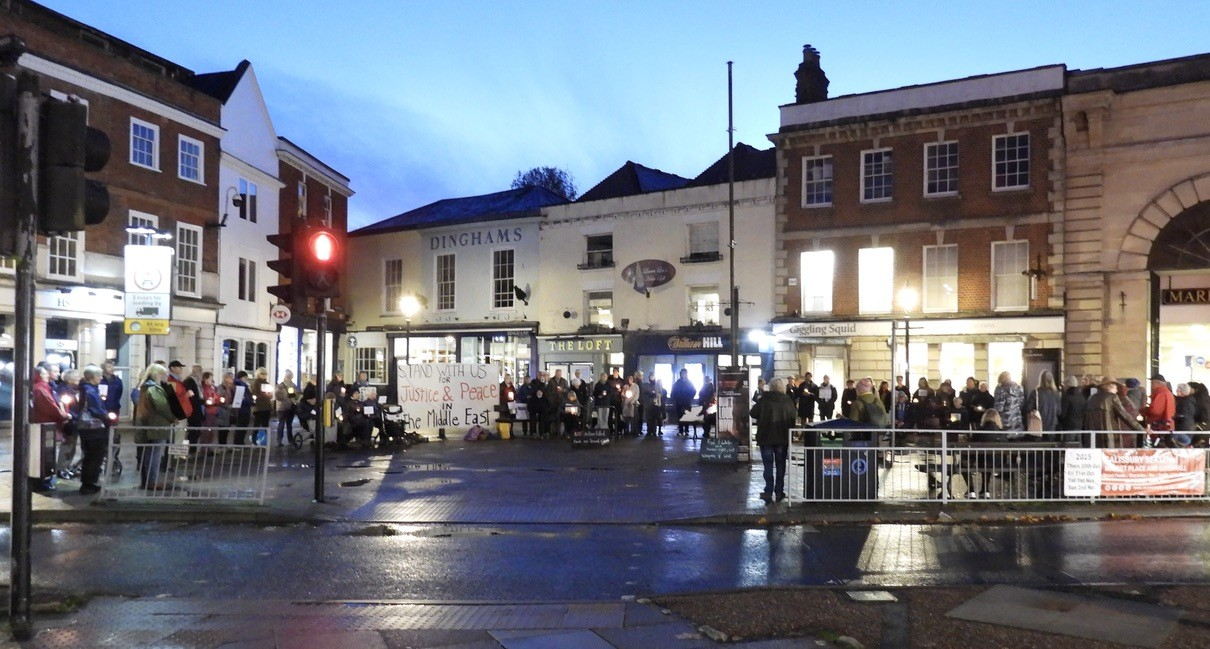
Around 35 attended the 101st vigil in Salisbury and the recognition by passers by was higher than usual.

November 2025

News about Gaza has dropped down the agenda in recent weeks with concerns about prisoners mistakenly being let out of gaol tending to occupy the news agenda. Endless speculation about the budget is also taking up space and the terrible events in Sudan rightly receiving attention. The ceasefire in Gaza and the imminent arrival of the peace force (if Washington is to be believed) has dropped off the agenda. No war, no news.

This could prove to be a big mistake. Pressure is growing on the Israeli government to allow foreign journalists into Gaza especially as one reason given was their safety. Many journalists have died, around 245, the largest death toll in a conflict. The Palestinian Journalists Syndicate has accused the IDF of deliberately targeting journalists who have struggled against great odds to get their stories out. No sign yet that Israel will agree although they did allow limited access to reporters, including the BBC, last week and a brief report was broadcast. The visit was tightly controlled, reporters were not allowed to speak to any Palestinians, and an IDF officer was allowed to speak without being questioned or challenged. Nevertheless, the scenes of total devastation were horrific.

We survived the war, we may not survive the ceasefireSara Awad, a Palestinian journalist in Gaza recently

Will the ceasefire lead to a lasting peace? It is unlikely. Firstly, the territory is still being bombed. There are differing reports about the death toll since the 10 October with Haaretz reporting 38 and Al Jazeera 238. The video above says 245. There is no likelihood of a Palestinian state. West Bank violence continues unabated. Some reports suggest little has changed in terms of food supplies into Gaza.

It is one of the reasons we are continuing with our vigils: to take our eye off the ball at this stage would be a mistake. Much as our government would like protests to stop and the police are busy arresting protestors, awareness of the genocide in the area is greater than ever. This is denied by Israel and an argument against this can be read here. The complicity of our government in the carnage is a story yet to be told and will be the subject of future posts.

A video of the 101st vigil is available thanks to Peter Gloyns for producing it is such quick time. We shall be back next week on 15th. Other information on the Salisbury CND site.

Previous posts:

China successfully threatens university


China forces a British university to stop Uyghur research

November 2025

There is considerable evidence that around one million Uyghurs in China are subject to forced labour and people trafficking on a massive scale. It is thought that around one fifth of all textiles are now the product of coercive practices. Garment firms show little inclination to check sources beyond what is called the ‘first tier’ even though they could do so easily. Australian research shows that approximately 100 major consumer brands are sourcing their materials from this region. There are some 380 camps surrounded by razor wire and armed guards. The treatment of such large numbers of people in ways almost amounting to slavery is a matter of major concern. The complicity of many Western garment firms in these crimes is a disgrace.

One of the centres producing the research is based in Sheffield Hallam under prof. Laura Murphy. She has produced many reports and her work has been widely cited. The University congratulated her on this work and her research. Until that is the Chinese complained when everything changed. Her website was taken down and it decided not to publish her latest research. It amounted to a flagrant example of a breach of academic freedom. University staff based in China received threatening visits from security services.

The university said they stopped publication because they could not gain the indemnity insurance for her work mindful of possible lawsuits. Documents released under freedom of information laws showed that the University ‘had negotiated directly with a foreign intelligence service to trade [her] academic freedom for access to the Chinese student market‘. The point being that universities are so cash-strapped these days they have to recruit foreign students to balance their books. In other words, we (China) will not allow our students to come to your University unless you stop publishing material about the Uyghurs. China denies all claims but will not allow foreign observers into the region.

Clearly embarrassed the University has apologised and restored her work.

The story reveals how easy it is for China to intimidate those it dislikes or who comment negatively on their various activities. It also reveals how quickly and tamely a British University agreed to censor an academic’s work. Troubling is that this is an example of something which has come to light. Which other universities are quietly agreeing not to rock the boat and not even allow researches to get underway for fear of losing a contingent of Chinese students? The last two weeks have seen the government tie itself in knots over two alleged Chinese spies and whether or not to prosecute them. China’s increasing power is more and more troubling. Meanwhile, a million or so Uyghurs are virtual slaves.

Detailed work produced by Prof Murphy can be accessed here. It will be interesting to see if China’s heavy-handed efforts to threaten a British University will backfire.

Sources: BBC, China Star, Guardian, Sheffield Hallam University.

Photo: satellite picture of one of the Uyghur camps.

Farage loses vote to leave the ECHR


Reform leader loses Commons vote

November 2025

Edited, 5 November

Last week, Nigel Farage, the leader of the Reform party, lost his Commons vote to leave the ECHR. Reform, along with many Conservatives, are pushing the idea of leaving the European Convention as means to solve the immigration crisis and in particular the Channel crossings. In a vote, 154 were against and 96 for leaving.

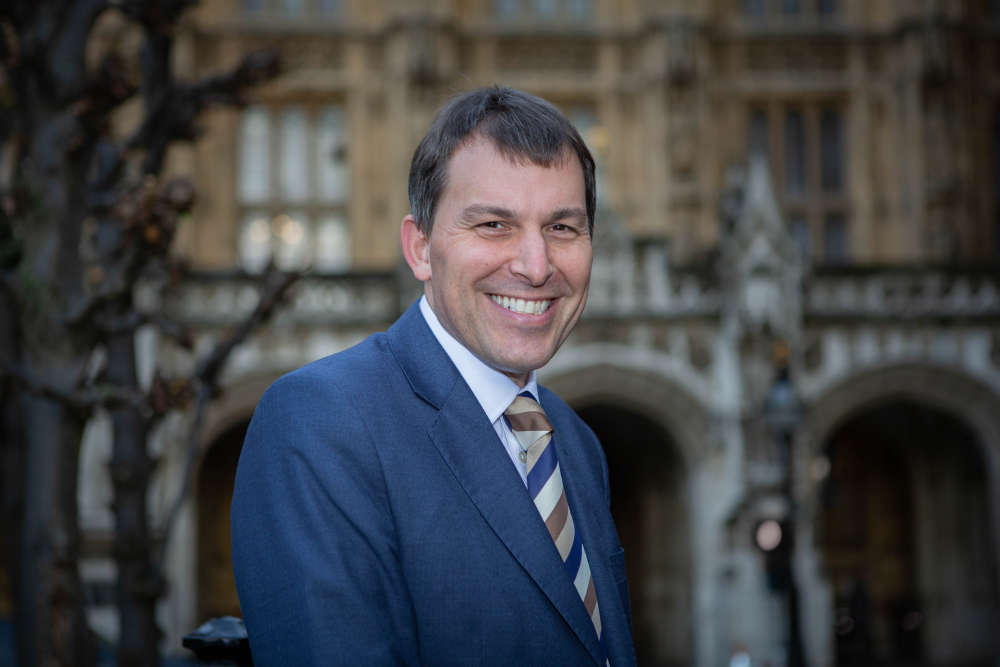
Farage is not alone and in the Guardian link to this story, local readers will see the East Wiltshire MP Danny Kruger sat beside him. The Salisbury MP Mr John Glen (pictured) has also joined the chorus, no doubt following his leader Kemi Badenoch, who made an abrupt U-turn on the subject at their conference in September. It appeared in the ‘View from the Commons‘ piece in the Salisbury Journal (16 October). Entitled ‘Exiting ECHR not about watering down our rights‘ it seeks to justify the U-turn by Kemi Badencoch.

‘We do not need it’ ‘Mr Glen told us claiming that Common Law is all you need because ‘we are perfectly capable of upholding our rights and freedoms‘. Why then did scores of people have to go to Strasbourg to get justice? Why did the Hillsborough families have to wait years to get their justice? And the Birmingham Six were finally exonerated when judge after judge failed in their duty? And all those who spent years in prison for crimes they didn’t commit. A list of other cases where people sought justice from Strasbourg can be found here. The Post Office scandal?

The Conservatives have hated the Human Rights Act and it’s noteworthy that both Glen and Kruger ‘generally vote against laws to protect equality and human rights’ according to They Work for You. They are happy with a legal system that largely protects the rights of the powerful and the property owners but are somewhat less concerned with the rights of the powerless even assuming they could contemplate using the law at all.

Mr Farage argues that we will not have true sovereignty until we leave the Convention, a similar argument to that put forward at the time of Brexit. The threat to our sovereignty is more likely to come from the Trump administration in the US. Trade sanctions and threats to NATO are much more serious than anything coming from Europe.

The Guardian piece above was written by Daniel Trilling who came to Salisbury to speak on immigration matters.

Image: Salisbury Radio noting that Mr Glen voted to leave the ECHR.

Large crowd attends 100th vigil


Around 90 attend the 100th vigil

November 2025

It is astonishing to report that around 90 people attended the silent vigil in Salisbury’s market place. There have been a few occasions over the past 2 years when we have considered stopping, usually after a ceasefire or peace initiative when some might have believed that the killing was over. The recent ceasefire was no exception with a huge amount of fanfare from President Trump supported by a degree of pressure on Israel to stop. Well, it hasn’t lasted with over 100 killed on Tuesday and the creation of a semi-permanent line being established taking yet more territory from Gaza. Hamas have returned the remaining live hostages and Israel has released 250 prisoners and 1,700 ‘detainees’.

There are arguments about the remaining dead hostages with Hamas claiming that they are finding it difficult to locate them in the rubble. As Israel will not allow foreign journalists into Gaza, truth is hard to determine but it would seem probable that Hamas’s account is likely.

We put detainees in inverted commas because the hostages taken by Hamas on their violent raid on October 7th two years ago received, rightly, considerable coverage and few will be unaware of the numbers killed or taken. Media coverage has consistently used the word ‘hostage’ for those taken by Hamas. Those taken by Israel – in considerably larger numbers and who were subject to horrific treatment and torture – are referred to as ‘detainees’. British media has continued with this fiction since the conflict began.

The death toll in Gaza is nearly 69,000.

That such large numbers turn out on a Saturday evening is a testimony to the strongly held convictions about many aspects of the conflict. Whilst acknowledging the brutal nature of Hamas and the horrific attack on October 7th, the destruction of Gaza, the imposition of a food and medicine blockade and the wanton killing of women and children has profoundly shocked many. The British government’s continued support for Israel – directly and covertly – has also produced great anger.

UK arms sales reached a record level in June and the notion that the UK has ‘robust’ measures to control such sales is in tatters according to Campaign Against the Arms Trade. Exact details are impossible to determine as the licensing is vague and because of secrecy. The plain fact is that we continue to supply arms and overfly Gaza despite the appalling carnage that has taken place there.


One hundred vigils and no sign of the local MP Mr John Glen at any of them nor any mention in his weekly piece in the Salisbury Journal. Mr Glen is thought to be a member of Conservative Friends of Israel.

A short video is available here thanks to Peter Gloyns. We shall be back (sadly) on November 8th.

Blog at WordPress.com.

Up ↑