Right to protest under threat


Government making protesting more and more difficult

February 2026

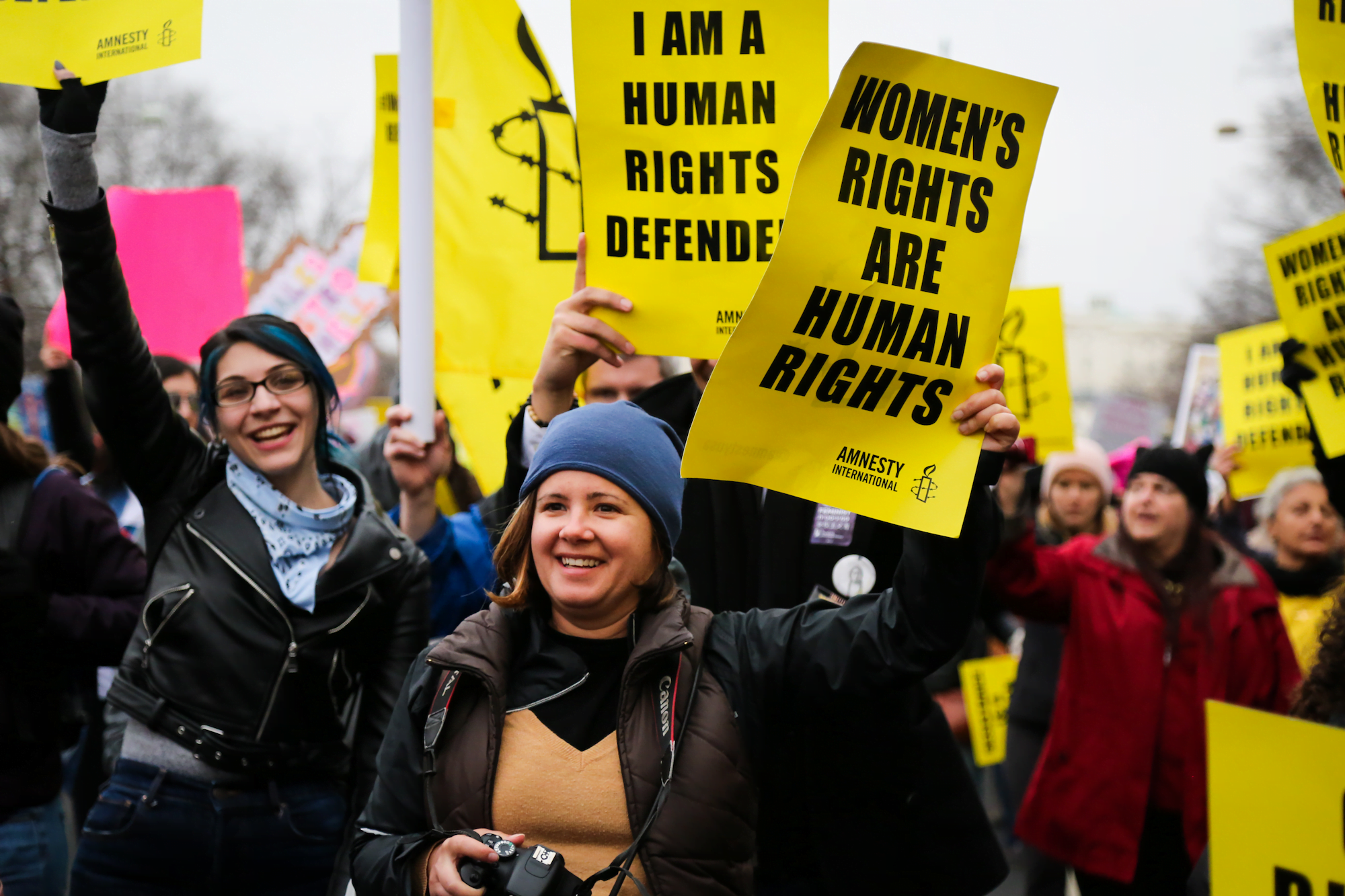
Successive governments have taken more and more steps to limit the right to protest. More laws are planned and existing laws are used to prevent or obstruct the right to protest. The laws have been used particularly against Palestine Action which has been banned on spurious grounds. A recent Channel 4 programme Palestine Action: The Truth Behind The Ban (registration needed) exposes the shaky grounds for the ban with the government alleged to have planted stories willing printed by the Times and other right wing papers claiming Iranian funding. Further legislation is planned to prevent repeated protests. Scotland is to hold a judicial review in March over the ban on Palestine Action.

On 4 February a jury at Woolwich Crown Court acquitted all of the first six Palestine Action activists of charges of aggravated burglary or violent disorder at Elbit Systems Filton factory. None had been charged with terrorism offences.
After more mass arrests of peaceful protesters at Wormwood Scrubs, the hunger and thirst strikes have now ended with five members released on bail, although the health implications for them will continue into the future. The family and lawyer of thirst-striker Umer Khalid claim they have been denied access to him since his hospitalisation on 26 January. By the time the remaining prisoners are charged, some individuals will have been in pre-trial detention for 2 years which is well over the six-month limit. The actions of the Palestine Action group in sabotaging Israel-linked arms manufacture Elbit, have resulted in the closure of the factory. Elbit has lost a £2 billion training contract with the UK government but continues to supply other military equipment and services.

The Extinction Rebellion appeal, backed by Defend our Juries, which claimed that the jury’s right  to vote according to their conscience had been interfered with in the judge’s summary at their trial, was dismissed in a Court of Appeal ruling. This, somewhat incongruously, recognised the validity of the conscience clause but denied their claim of judicial interference in this case. 

Proposed changes to ECHR  

David Lammy, Secretary of State for Justice, is seeking to limit access to rights in Article 8 of the ECHR for some violent prisoners. See a previous post for fuller discussion.

Liberty is joining forces with Amnesty International UK, Greenpeace, Palestine Solidarity Campaign, and Quakers in Britain, for a mass lobby of Parliament to defend our right to protest. Join us in London at Westminster Hall in Parliament from 2pm–5pm on Tuesday 17 March 2026.   

Concerns about facial recognition


The use of facial recognition technology advancing with few controls

February 2026

One of the features of the Chinese state is the massive use of facial recognition technology throughout China. It is a vast system with millions of cameras and is used to monitor every movement of its citizens. The system is used to control every citizen and it means no one can move or meet someone without it being observed and logged by the state. It is the penultimate example of the panopticon in a modern setting.

Some are remarkably relaxed about its use in the UK believing claims made that it will be properly controlled and will be used to catch criminals, drug dealers and the like. So innocent people have nothing to fear. Read on …

Right to Privacy

The government’s Biometric Technology Consultation (to close on 12 February) aims to help develop a new legal framework for the use of facial recognition and similar technologies by law enforcement. Despite the landmark UK Court of Appeal ruling in 2020, that found the South Wales Police use of automated facial recognition (AFR) technology was unlawful, police forces in different parts of the country have increased their use of Live Facial Recognition (LFR).  As these systems contain the biometric data of huge numbers of people, some concerns from human rights groups, including Amnesty and Liberty, are briefly summarised here.

The first concern is to ensure that a new legal framework should apply to all use of ‘biometric technologies’ by all law enforcement and other organisations and should be transparent.  Complex mathematical processing is used to identify facial features and generate ‘similarity scores’ but the internal logic of how a match is calculated is hidden from both the police operators and the public.  The authorities cannot explain the specific basis for an intervention nor account for why or if the technology produces biased or inaccurate results.

Second, it is concerning that the use of Facial Recognition Technology (FRT) is becoming widespread and easily accessible, with retail outlets taking on a quasi law enforcement role, aided and supported by the police, and drawing on the same or similar databases.  It is becoming normalised in schools, in commercial and retail settings, with information flowing between sectors and under a patchwork of inconsistent laws which the public does not understand and find almost impossible to challenge.

This was demonstrated in a recent Guardian report (6th February) on the apprehension and removal from Sainsbury’s store in Elephant and Castle of a customer who had been wrongly matched by staff with a photo of a different customer flagged by their Facewatch camera.  In order to prove his innocence he had to apply to the agency using a QR code and submit a photo and a copy of his passport to them before they declared him not on their blacklist.

 The following is a list of factors of concern to human rights groups:

Transparency – to include how and when the technology is being used and the clarity of accessible information about rights.

– Whether biometric data is acquired overtly or covertly.

– Whether it is collected voluntarily or involuntarily. Pervasive monitoring is leading to the normalisation of suspicion less surveillance.

-The subject’s status – whether or not someone is the intended subject of a police investigation or an innocent bystander walking past a camera.

– Who has access to the data and the results.

– The space, context and location of deployment. Expectations of privacy vary significantly between a quiet park and a busy thoroughfare.

– Whether the system is used to make inferences about a person’s internal state, their emotion or intent.

– Whether the interference is demonstrably ‘necessary’ and ‘proportionate’ to a legitimate aim, such as the prevention of serious crime.

– Whether assessments consider the Public Sector Equality Duty (PSED) to ensure the technology does not have a discriminatory impact.

Algorithm bias: whether this performs differently based on race, gender, or age, which could lead to the over-policing of marginalised communities.

Watchlist bias: whether scrutiny of criteria can ensure groups are not disproportionately targeted based on protected characteristics.

Bias in interpretation of identification patterns claiming to provide predictive evidence.

Human Rights groups say that any new regulation should protect privacy and limit data-sharing between public authorities, law enforcement and private companies; and that as the state gains powerful new ways to monitor citizens, a strong and resilient oversight body with true independence is needed to protect human rights and dignity.

Latest death penalty report


Report for mid January to mid February

February 2026

We are pleased to attach the latest monthly report on the state of the death penalty around the world thanks to group member Lesley for the extensive work in compiling it. Good and bad but mostly the latter, with Florida leading the charge in the US and Iran engaged in a continuing programme of executions. As ever we have no information on China which probably carries out more executions than the rest of the world combined but whose details are a state secret.

Blog at WordPress.com.

Up ↑