Vigils continue while UK continues its support for Israel


Article in Middle East Eye and package on Channel 4 News sets out UK’s complicity in war crimes in Gaza

November 2026

The Genocide Convention has a clause saying that one aspect of the crime is ‘deliberately inflicting on the group conditions of life calculated to bring about its destruction in whole or in part’. It is clear that this condition has been met and furthermore, the UK government has been complicit in the crimes and continues to do despite its claims to the contrary.

The main accusation is the deliberate restriction of supplies to Gaza of food, fuel, medicines and shelter. With hundreds of thousands of Gazans living in tents now that most buildings have been bombed or are unsafe this is becoming an increasing problem and causing immense suffering. Two million are now compressed into less than 30% of the territory with the infamous ‘yellow line’ sealing off the remaining territory. It is this territory where agriculture is possible so the population is forced onto largely uncultivable land. The UN estimates this is now only 3%.

The ceasefire agreement was for 18,200 trucks of aid a day. Israel had blocked many from entering and only around a quarter have been allowed in. They are blocking 150,000 tents claiming they are capable of ‘dual use’. If it wasn’t so tragic it would be laughable. When questioned on BBC World at One last week, quite how a tent could be used other than as a tent, an Israeli spokesman was unable to answer despite several attempts.

Spare parts for machinery are also blocked preventing work to clear rubble or ensure drainage is restricted.

Arms supplies

Channel 4 has worked hard over several months to uncover arms export data and it reveals a sorry picture of continuing supplies and ministers deceiving the public with their various statements. Since genocide is plausible (but not yet proved) the UK government is bound under several treaties to suspend arms. The overall level of sales has shown an astonishing level of increase from ยฃ164m under the Conservative government to ยฃ498m under Labour. The programme does issue caveats around these figures since the exact destination is not known and whether the licenses have actually been actioned or supplied.

The get-out clause allowing these exports was because only munitions and kit for training was given a license. Channel 4 has shown this not to be true and weapons and materiel capable of being used offensively has been exported.

Even so the public has been informed that tight measures are in place which seems clearly not to be the case. Even more astonishing is the revelation that purchases from Israel have increased a hundred fold. We have commented on this deception several times in our reporting of CAAT newsletters.

Media deception

The BBC comes in for criticism again. An organisation called Newscord has described what it calls โ€œThe BBC: Israel Would Sayโ€ Files, it found that BBC presenters interjected 252 times over the past three years to stop interviewees making the Palestiniansโ€™ case and insert Israeli denials. By contrast, it found BBC journalists interrupted pro-Israel interviewees to make a humanitarian case for the Palestinians on only 15 occasions.

It routinely prefaces death statistics as ‘Hamas run’ ministry which it never does when discussing other statistics. For Ukraine it does not say ‘Ukrainian run Health Ministry … ‘ when discussing the latest result of a Russian attack. They contend it is done to sow doubt on the data despite it being recognised that the information has been substantially accurate.

The latest data we have is 74,742 killed; 176,227 injured of whom 21,976 were children and 12,500 women. 1,289 have been killed on the West Bank.

Two hundred and fifty British Jews accused the British Board of Deputies of ‘genocide denial’ yet this has not been reported. We could not find any mainstream media reference, only Middle East Eye and some other Middle East outlets reporting this. Yet representatives of the Deputies are interviewed from time to time giving the impression they speak for all Jewish people which clearly they do not.
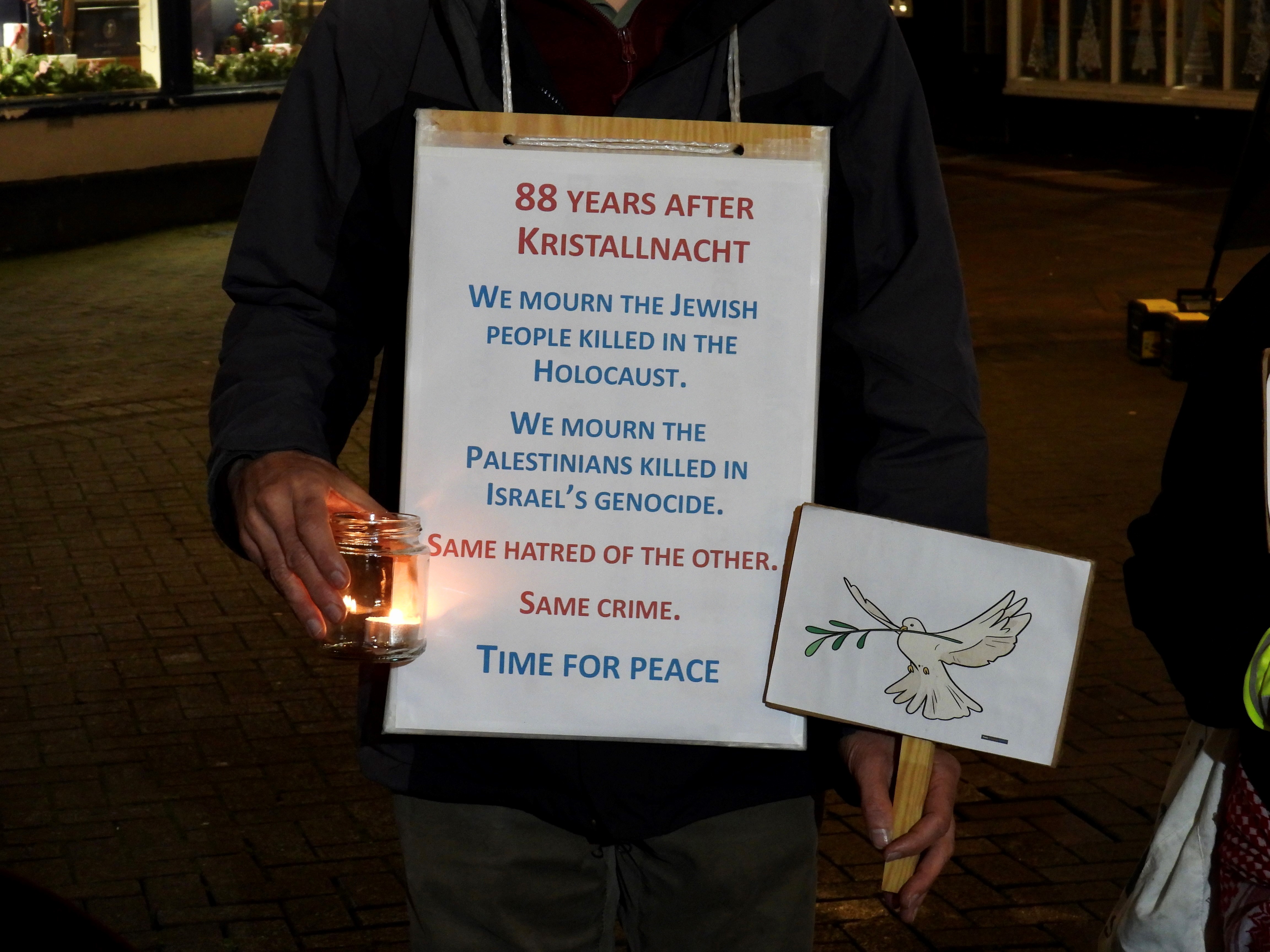

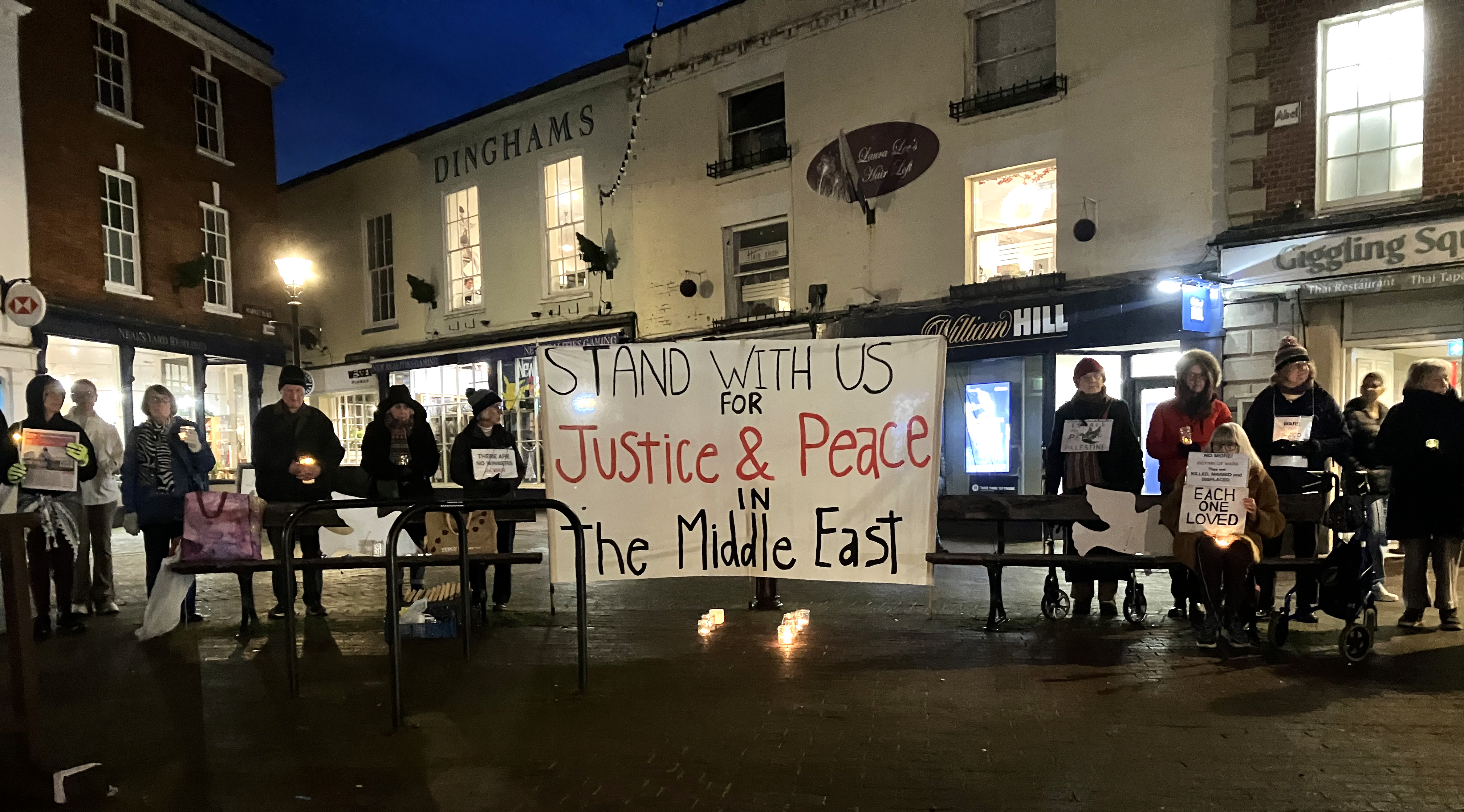
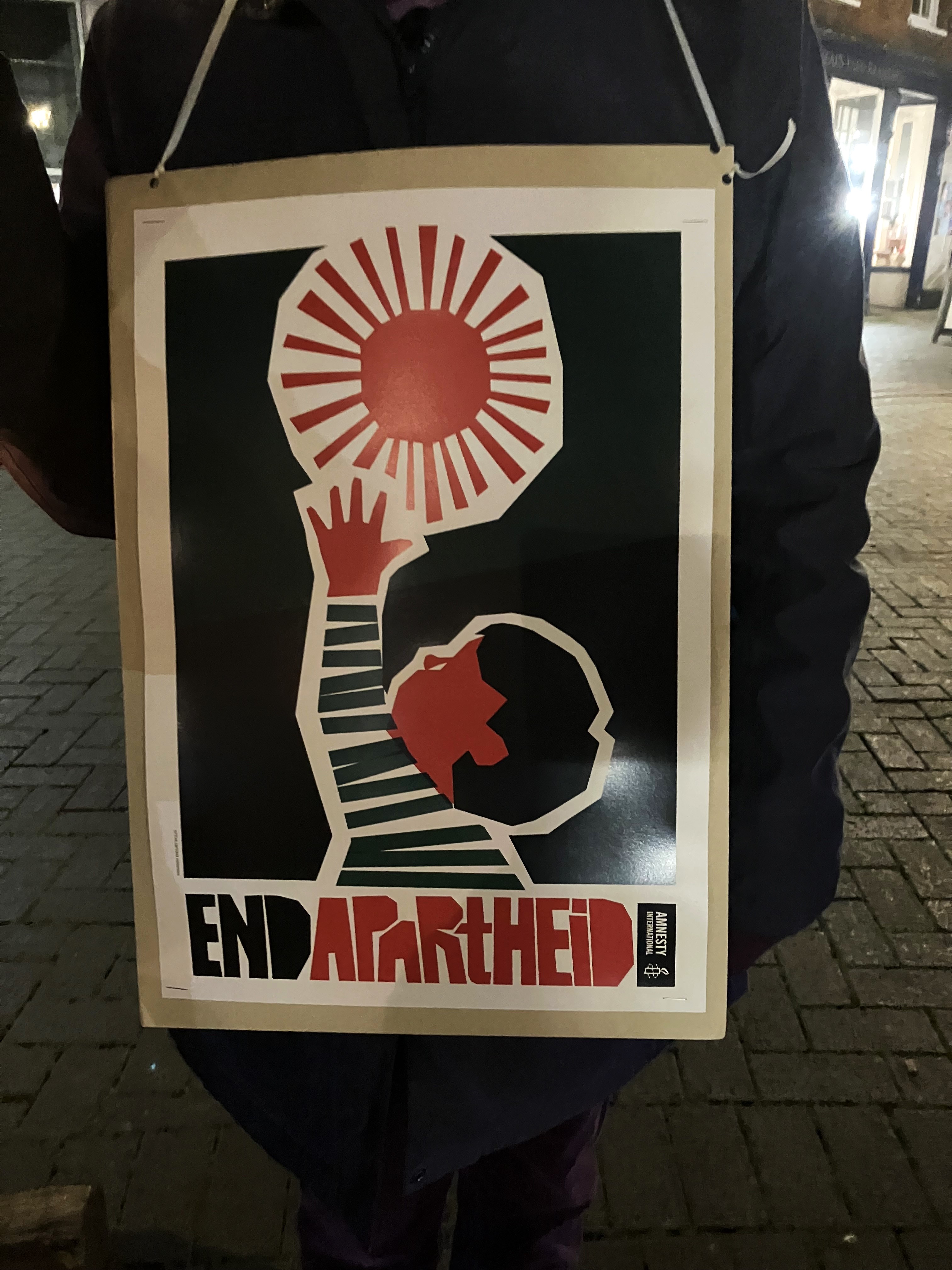
Photos: l to r: courtesy of Peter Gloyns and Salisbury Amnesty. This was a Christmas display which we ‘borrowed’ for our vigil.

Yesterday was our 155th vigil but the local MP Mr John Glen has never put in an appearance nor mentioned them in his weekly column in the Salisbury Journal. He is one of around 150 MPs who are members of one of the Friends of Israel lobby groups. Background to the Labour FoI group.

Watch our video Because …

UN criticises ‘vague’ terrorism laws


UN report is critical of laws which criminalise demonstrations

November 2026

The banning of Palestine Action has led to a series of legal actions and currently it is before the Supreme Court. This is now in secret session to allow the security services to present their evidence. The categorisation of Palestine Action as a terrorist organisation is questionable and a range of human rights organisation and some MPs have expressed disquiet. It was achieved by lumping the organisation in with two other seemingly obvious terrorist organisations and whipping MPs to vote for it. 3.000 or so have been arrested for taking action in support of the organisation.

The UN has produced a report criticising ‘vague laws’ used to silence dissent and demonstrations. These they say are a means to defend common values, exchange ideas and pursue shared social, economical, cultural and political rights-based objectives, including the protection of human rights. It protects a wide range of associations, including political parties, non-governmental organisations, social movements, religious communities, trade unions and professional associations. The enjoyment and exercise of the right to freedom of association do not require prior authorization by the State.

A variety of laws have been introduced and there has been a steady increase in restrictions on protests. Protests are vital to our democracy particularly because parliament is subject to well-funded lobbying and we have a foreign dominated media landscape (the Telegraph group is the latest to fall into overseas ownership). Governments have almost certainly be swayed by the Israeli government which is believed to run the best funded of the lobby organisations and has over 150 MPs members of its Friends of Israel groups.

We await the Supreme Court’s decision with interest.


Vigils continue while UK continues its support for Israel


Article in Middle East Eye and package on Channel 4 News sets out UK’s complicity in war crimes in Gaza November 2026 The Genocide Convention has a clause saying that one aspect of the crime is ‘deliberately inflicting on the group conditions of life calculated to bring about its destruction in whole or in part’.โ€ฆ

UN criticises ‘vague’ terrorism laws


UN report is critical of laws which criminalise demonstrations November 2026 The banning of Palestine Action has led to a series of legal actions and currently it is before the Supreme Court. This is now in secret session to allow the security services to present their evidence. The categorisation of Palestine Action as a terroristโ€ฆ

Myanmar committed genocide


International Criminal Court of Justice finds the country committed genocide on the Rohingya in 2017 November 2026 The decision by the ICJ is momentous mainly because it has found a state guilty of genocide as opposed to individuals which it has done in previous judgements. The decision sends a clear message to other nations andโ€ฆ

Myanmar committed genocide


International Criminal Court of Justice finds the country committed genocide on the Rohingya in 2017

November 2026

The decision by the ICJ is momentous mainly because it has found a state guilty of genocide as opposed to individuals which it has done in previous judgements. The decision sends a clear message to other nations and will of considerable concern to Israel which awaits its own decision concerning its activities in Gaza.

“A rare moment of justice for survivors, victims and their families” Agnรจs Callamard, Amnesty International secretary general

A major problem with genocide is proving intent. It is not enough to show brutality, killings and other forms of violence, it has to be shown that the state or individual intended to attack a national, ethnic, racial or religious group. 10,000 were killed by the military. The problem for the South Africans in their claim against Israel is proving this intent. It may not be too difficult as many senior Israeli politicians have made their intentions extremely and explicitly clear.

USA wants to shut down the court

There are problems for the ICJ – serious problems – because the US wants to ‘dismantle a rogue institution’. They have launched actions to collapse its ability to operate financially. US firms are not allowed to provide access to use their services which means banking, the internet and products like Microsoft are, or will be, unavailable to them. The future of the ICJ is in doubt and its ability to pursue investigations is in doubt. The reason is the US resenting an institution which might act against Americans.

President Trump has indicated there is no need for such an institution while at the same time, claiming that Iran is acting contrary to international law by closing the Straight of Hormuz. As ever with recent American statements, looking for consistency is a fool’s errand.

So while we can applaud on the one hand a judgement against murderous activities by the Myanmar Junta, the future of the court itself is in jeopardy.

Sources: BBC, Guardian, Reuters


Criticism of Israel for not allowing aid in


Several nations issue statement critical of Israel not allowing aid in to Gaza. Vigil No. 154 held

November 2026

UPDATE: A spokesman for the Israeli government was interviewed on BBC Radio 4 on 16th, and said the tents were not allowed in as they were considered ‘dual use’ that is capable of being used by Hamas for offensive purposes. The interviewer attempted to determine how a tent could be used for such purposes, other than as a tent, but could not obtain an answer. 17th November.

The 154th vigil was held on Saturday 14th and had a good attendance. News this week is that four countries, Australia, Canada, Italy and the UK, have issued a statement urging Israel to allow aid into Gaza at a faster rate. It is reported that 150,000 tents await delivery and are being held up for unknown reasons. As winter approaches, the plight of Gazans is becoming more acute.

Nighttime peace vigil in a town square with people holding signs reading โ€œStand with us for Justice & Peace in the Middle East.โ€

In addition to politicians, the F1 driver Lewis Hamilton visited the Rafah crossing and made various statements about the aid situation. He said he could see lines of trucks lined up but not allowed entry. He is quoted in the Guardian newspaper:

“I saw walls stretching for miles, built to keep them in. Standing there, outside what felt like an open-air prison, all I could think about was getting in to help,โ€ he said in the post. โ€œAt the Rafah border, I saw food trucks lined up ready to go, but theyโ€™re regularly not allowed in or face major delays. The first driver in line that I spoke to had already been waiting over 12 hours. At the nearby logistics centre, I saw the hard work of the aid workers, but I also saw what gets rejected for crazy reasons. Sleeping bags, first aid kits, medical equipment, wheelchairs even footballs for kids.

โ€œIsrael needs to fulfil its obligations under the ceasefire and let the aid trucks in. I know so many people feel that same helplessness. That same need to do something rather than just watch. No excuse. I donโ€™t want โ us to get used to their suffering. I donโ€™t โ€‹want us to โ€‹look away.”

Person holding an anti-apartheid protest poster with a raised fist and the words โ€œEND APARTHEID.โ€

Israel denies it is holding up deliveries. Haaretz newspaper reports that the aid system is near collapse as Israel refuses to allow entry of spare parts, tyres (tires) and engine oil which could cripple the aid distribution system. They report that Israel is doing this for fear that it could be used by Hamas.

It is interesting that the so called Board of Peace has also called for more aid to be allowed in but is also being ignored. CNN reports that the board has criticised Israel for not helping more with the effects of flooding.

Photos: Salisbury Amnesty


November minutes and newsletter


Minutes and newsletter of the group’s November meeting

November 2026

We are pleased to attach the minutes of the group’s last meeting which contain much of interest. If you are thinking of joining us this is the place to start. On that subject, towards the end is a list of events we will be engaged in and if you are interested in joining that would be a place to come and make yourself known. Members also attend the vigil which takes place in the Market Place in Salisbury near the Library every Saturday between 17:00 and 17:30.

We are grateful for group member Lesley for compiling them and also to other members who contributed text reports or data.

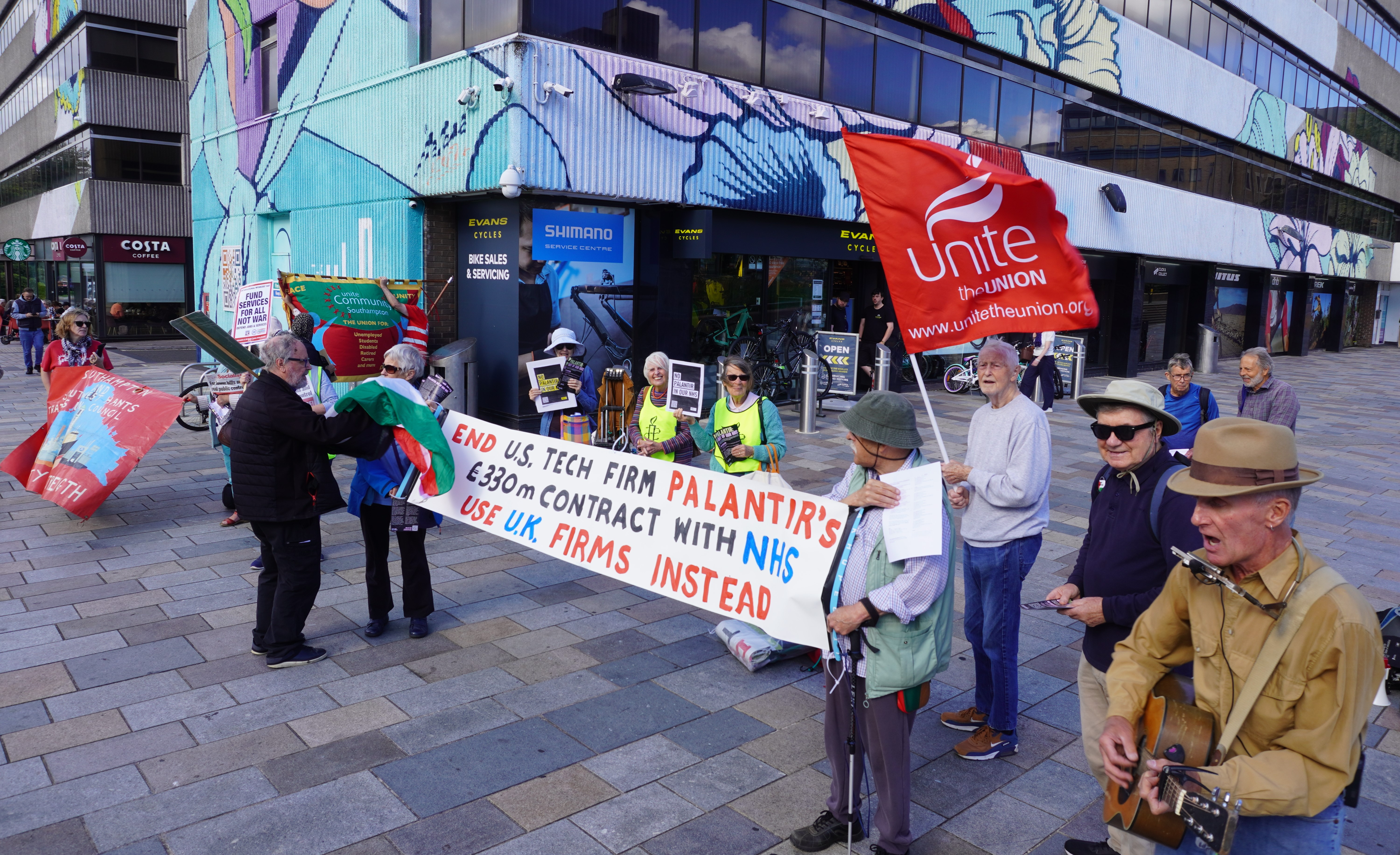
Protesters outside a bicycle shop hold a banner opposing a Palantir NHS contract, with a Unite the Union flag and a musician playing guitar.

Image: group members take part in a demonstration against Palantir


Thought of subscribing?

News about Richard Glossip, Oklahoma


Some welcome news from this state

November 2026

On November 12, Richard Glossip entered a plea agreement, pleading guilty to accessory after the fact in exchange for the prosecution dropping its first-degree murder charges against him for his alleged role in the 1997 โ€œmurder-for-hireโ€ of Barry Van Treese, his boss at an Oklahoma City motel. Mr. Glossip was released in May 2026. as it was acknowledgment that evidence โ€œdoes not support that he is guilty of first degree murder beyond a reasonable doubt.โ€ The state was set to go to trial on December 7, but with Mr. Glossipโ€™s guilty plea, the state will proceed with sentencing on December 17.

Murder charge dismissed

Following the hearing, Mr. Glossipโ€™s long-time attorney Don Knight released the following statement:

โ€œFor 30 years Richard Glossip has maintained his innocence. After nearly executing him nine times, the State of Oklahoma has now dismissed the murder charge against him. This morning, to finally put this matter to rest, Rich pleaded guilty to be an accessory after the fact. We believe Rich has more than paid his debt to society by spending nearly 30 years on death row, during which time he was served three last meals, and came within minutes of being executed for a crime he did not commit.โ€ Mr. Knight added, โ€œIn 1997, had Rich been given the longest possible sentence for the crime he pled guilty to today, he would never have been on death row and would have been released ten years ago. We look forward to an opportunity to show why returning him to custody would not service the interests of justice, and to ending this nightmare for Rich and all concerned.โ€

Justin Sneed, a co-worker of Mr. Glossipโ€™s, confessed to killing Mr. Van Treese but testified at trial that Mr. Glossip paid him to do so and helped cover up the killing. Mr. Sneed was sentenced to life in prison without the possibility of parole for his involvement in the murder. Mr. Glossip was first sentenced to death in 1998, but his conviction was overturned in 2001. In 2004, the state again pursued a death sentence, and a jury sentenced him to death.

Important information not disclosed

An independent investigation carried out by the law firm Reed Smith previously found that Mr. Sneed discussed recanting his testimony over the course of a decade, both before and after Mr. Glossipโ€™s 2004 conviction. A handwritten note from Mr. Sneed to his attorneys, states, โ€œDo I have the choice of recanting at any time during my life?โ€ An additional handwritten note indicates that Mr. Sneed believed his testimony to be a โ€œmistake.โ€ These notes were never given to Mr. Glossipโ€™s defense team. Reed Smithโ€™s investigation also included documentation of conversations between Mr. Sneed and Reed Smith lawyers in which he agreed that he talked with his mother and daughter about recanting his testimony, something he previously denied.

In a 5โ€‰โ€“โ€‰3 decision issued in Glossip v Oklahoma on February 25, 2025, the U.S. Supreme Court threw out Mr. Glossipโ€™s 2004 conviction for arranging Mr. Van Treeseโ€™s murder, and ordered a new trial because prosecutors allowed a key witness to lie in court and withheld crucial information about the same witness. Writing for the majority, Justice Sonia Sotomayor said that prosecutors in Mr. Glossipโ€™s case โ€œviolated [their] constitutional obligation to correct false testimony,โ€ and thus, he โ€œis entitled to a new trial.โ€

On June 9, 2025, AG Drummond announced his office would retry Mr. Glossip but would not seek the death penalty. The Attorney Generalโ€™s office noted that the man who admitted to actually murdering Mr. Van Treese with a baseball bat, Mr. Sneed, is serving a sentence of life without parole. In a statement released following this announcement, AG Drummond said, โ€œWhile it was clear to me and to the U.S. Supreme Court that Mr. Glossip did not receive a fair trial, I have never proclaimed his innocence.โ€

Glossip’s case illustrates the issue of failings or mistakes in the justice system could lead to someone being executed who should not be. He has received three last meals and is fortunate still to be alive.

…

Amnesty is opposed to the death penalty in all circumstances. The Salisbury group publishes a report each month on the use of the penalty around the world. We are grateful to the Death Penalty Information Center for much of the text of this post. Further background can be found on the Oklahoman.


Fears expressed about Christian nationalism


Fears expressed about the role of Christian Nationalism in the UK

November 2026

In the recent edition of Humanist News (November 2026), fears were expressed about the increasing role of Christian Nationalism in the United Kingdom. To some extent this is an American import and there are reports of significant funding being made available from the US to further these ideas.

Article 18 of the Universal Declaration says ‘Everyone has the right to freedom of thought, conscience and religion‘. The problem is when this form of Christianity becomes an element of political philosophy which it appears to have become with the Reform party. A leading proponent of this policy is the local MP, Danny Kruger (Reform, East Wiltshire) who has spoken and written on this topic.

When Danny Kruger spoke to a largely empty House of Commons earlier this year, he gave voice to something rarely heard in Britainโ€™s legislature which was a call for politics explicitly rooted in Christian conviction. โ€œWe are a Christian country, or we were,โ€ he told MPs, โ€‹โ€œand we need to recover the sense that our values are not arbitrary but are grounded in the eternal truths of the Christian faith.โ€ Mr Kruger was reported to have received a substantial sum of ยฃ55,000 from a Christian organisation to oppose assisted dying which was being voted on in parliament. In his letter to constituents this week, he makes no mention of this issue.

The Reform Party and its Education spokesman, Suella Braverman, is proposing that Christian worship will be compulsory in schools. They would be required to sing Christian hymns and the national anthem. This overlooks that fewer than half the population identify as Christian and many other faiths exist as well who are unlikely to want to sing such hymns. There are also those with no faith.

Other worrying aspects to this form of nationalism is how it is being used to support violent protest. For example at Portsmouth and Dover, balaclava wearing crowds chanted ‘Christ is King’. It is also being used by protestors such as Tommy Robinson in his various demonstrations.

In America, this form of nationalism is more extreme and they are promoting the idea that to be a true American you have to be a Christian. Some of their sites proclaim ‘God has called on Christians to exercise dominion over all areas of society’. With funds and support, the worry is that this form of extremism will become rooted in our society.

Sources: Humanist News, Evangelical Alliance, Kettering News, Guardian, iSideWith, Left Foot Forward, London Daily Archive, The Reform Party.


Podcast Episode: Rights, Refugees, And Free Speech


Pip: If you wanted a masterclass in how democracies quietly tighten the screws, Salisbury Amnesty has been taking careful notes โ€” and the picture is not flattering.

Mara: This episode draws on recent posts covering free expression and digital rights in the UK, and the state of refugee and asylum policy both here and globally. Let’s start with what’s happening on campuses, in courtrooms, and on Oxford Street.

Free Expression And Digital Rights On Campus And Beyond

Pip: The central question here is how much space is actually left in the UK for dissent โ€” and the answer, depending on where you look, is shrinking.

Mara: Amnesty UK’s report on universities sets the scene directly: “Since October 2023, institutions have implemented responses that include prior authorisation for meetings and events, compelled no-protest undertakings, the use of civil injunctions, and disciplinary action. These measures are at odds with international human rights law and have a chilling effect on freedom of expression.”

Pip: So the upshot is that the most prestigious universities in the country are using bureaucratic machinery to make protest structurally difficult, not just socially uncomfortable.

Mara: And it’s not only universities. The post also covers terrorism arrest figures โ€” 3,867 in the year to June 2026, up from 234 the previous year, with 94% linked to the proscription of Palestine Action. On privacy, the Met has confirmed fixed live facial recognition on Oxford Street from December, ahead of any legal framework.

Pip: Palantir, facial recognition, terrorism charges for a retweet โ€” the infrastructure of surveillance assembles itself faster than the oversight does.

Mara: The Defend Dissent Campaign is the practical response โ€” a student-led push for universities to adopt a charter protecting peaceful protest and open enquiry on campus.

Refugee Policy, Asylum Reform, And The Global Picture

Mara: The Immigration and Asylum Bill is moving toward the Lords, and the headline figure buried inside it deserves a moment: some people classified as illegal immigrants could wait up to thirty years to be settled.

Pip: Thirty years is not a processing delay. That is a life sentence administered in paperwork.

Mara: The UNHCR is among those expressing concern. On safe and legal routes, Home Office Minister Anna Turley told the Commons that initial routes will operate from seven countries โ€” India, Bangladesh, Egypt, Kenya, Malaysia, Pakistan, and Uganda โ€” with a registration cutoff of October 1 this year.

Pip: So the route is legal, provided you were already in the right country, registered with the right authority, before a date that has already passed.

Mara: On family reunion, the right suspended in 2025 has still not been restored, and Safe Passage is now litigating. Consultations on the bill revealed 84% of individuals and 79% of organisations were opposed โ€” a fact the post flags as notable.

Pip: Consulted, noted, and then largely set aside.

Mara: The post broadens to the global picture. In the Mediterranean, this year has been the most violent since 2016, with the Libyan coastguard โ€” trained and equipped by the EU โ€” responsible for much of the brutality. Net migration to the UK is now at its lowest in thirty years, and asylum numbers are falling alongside it.

Pip: And yet the legislative machinery keeps tightening, as though the numbers were still at their peak.

Mara: Syria sees some return โ€” 1.7 million people back, 2.2 million no longer internally displaced โ€” but 3.7 million remain outside the country, and the post notes the rate of urged returns may exceed what the country can absorb. COP31 is now discussing climate mobility, which may define the next chapter of this conversation entirely.


Pip: What ties all of this together is the gap between stated values and actual architecture โ€” the laws, the contracts, the injunctions that quietly do the work.

Mara: Next time, watch for how the Business, Human Rights and Environment Act campaign develops โ€” and whether climate mobility finds any traction at COP31.

Defend Dissent: How UK Laws, Universities and Tech Curb Our Rights


Various matters of concern to rights in the UK

November 2026

Freedom of Expression in UK Universities

This is the latest in our reports on the human rights situation in the UK. There are many worries about a steady deterioration in these rights with successive governments tightening or restricting controls on assembly and the right to protest, the adoption of Palantir technologies in defence and the NHS (with reports that the firm is seeking access to patient records in GP practices) and threats to privacy with facial recognition being steadily applied.

In an overview of its recent report on freedom of expression in UK universities Amnesty UK concludes that many are adopting restrictive measures that unduly limit studentsโ€™ and academicsโ€™ rights to organise, assemble and express political views, particularly in support of the human rights of Palestinians

Since October 2023, institutions have implemented responses that include prior authorisation for meetings and events, compelled no-protest undertakings, the use of civil injections, and disciplinary action.  These measures are at odds with international human rights law and have a chilling effect on freedom of expression.  Some appear to have been implemented in a discriminatory way.  The cases featured in this report spotlight some of the most prestigious UK universities among others.  They send a clear message to all students and academics that they could face sanctions if the speak out on Palestine or participate in protests.

This report makes recommendations to universities and others who have the power to reverse the trends seen on campus, and reassert the role of universities as places of open enquiry and learning.  The report finds that external pressures from the Department for Education and Office for Students, along with shared security planning through networks such as Universities UK and the Association of University Chief Security Officers, have contributed to the suppression of freedom of expression since 2023.

Amnesty UK has launched a student-led Defend Dissent Campaign alongside the report to push universities to adopt the Defend Dissent Charter, which aims to protest peaceful protest and open enquiry on campus.

A joint investigation by Liberty Investigates and Al Jazeera has revealed that 13 British universities have discussed how to handle pro-Palestinian campus protests with the UKโ€™s largest weapons manufacturer, including ramping up security at events and coordinating responses to criticism, among them the Universities of Manchester, Nottingham, Southampton, Birmingham, Strathclyde, Cranfield, Lancashire, Sheffield Hallam and Cardiff.  Those which are considered โ€˜strategic partnersโ€™ by BAE Systems collectively receive up to ยฃ15 million a year from the company under long-term funding agreements.

Terrorism Arrests/Palestine Action

Recently released Home Office statistics show record numbers of terrorism related arrests in the year to June 2026.  The total number of such arrests was 3,867 up from 234 in the previous year.  The increase can be attributed to the proscription of Palestine Action and the large numbers of people who publicly declared their support for the group in the wake of that decision.  94% of all terrorism arrests that year were linked to this.  At the date of reporting, only 704 results had resulted in a charge, including 634 linked to Palestine Action (Source: UK Human Rights Blog.)

This repression has been forcibly demonstrated by the recent refusal of entry to the UK of Swedish academic Andreas Malm, whose presence the Home Office considers โ€˜may not be conducive to the public goodโ€™.  Malm, an environmental campaigner, supporter of Palestine (but not a member of Palestine Action) and a regular visitor to academic conferences in the UK, was due to share a talk with Huda Ammori, co-founder of Palestine Action.  He says his entry ban is โ€˜scandalousโ€™ and the UK Government should reconsider it. 

The author Sally Rooney is now unable to enter the UK because of the threat of arrest, following her pledge to use proceeds from her works to support Palestine Action, while her publisher Faber could face criminal charges if it passes on to her proceeds from sales. 

Palestine Action has received permission from the High Court to appeal once again against its ban, but only on the grounds of whether the Home Secretary applied her policy directly, not on human rights grounds.  The intervention by Amnesty and Liberty was heard on 4th and 5th November.

Rights of Residence

The Home Office has now lifted the deportation order on Tony Hall, the second-generation Windrush immigrant whose prison sentence ended 25 years ago but who has been unable to start his new life with a deportation order hanging over him.  He was deported to Barbados but was refused entry as he had lived in Britain since he was 12.  He could neither work, get benefits, rent, nor access full NHS treatment and was living in limbo and on his family as a result.

Privacy

A recent Liberty poll found that 48% of people oppose scanning the faces of people walking in high streets and towns when there is no suspected imminent threat, while 41% supported it and 11% were unsure as to its use.  The Met have confirmed that fixed live facial recognition will be put in place in December in the newly pedestrianised Oxford Street.  The Governmentโ€™s commitment to introduce a legal framework through the Police Reform Bill is not expected until the New Year.

(Proposed) Business, Human Rights and Environment Act

Major British supermarkets, including M&S, ASDA and Sainsburyโ€™s, have now joined a campaign calling on the Government to introduce mandatory human rights and environmental due diligence for businesses in both their domestic and supply chains.  Campaign concerns include the use of forced labour, working conditions and pollution, and it would require retailers to identify and prevent environmental and human rights harms.  Currently many business standards are voluntary and the Modern Slavery Act 2015 is seen as significantly limited,  The campaign is supported by the British Retail Consortium, the Ethical Trading Initiative and the Corporate Justice Coalition as well as trade unions, businesses and campaign groups.  Its aim is โ€˜to transform corporate culture for the betterโ€™ and level the playing field for victims of abuses.

Palantir

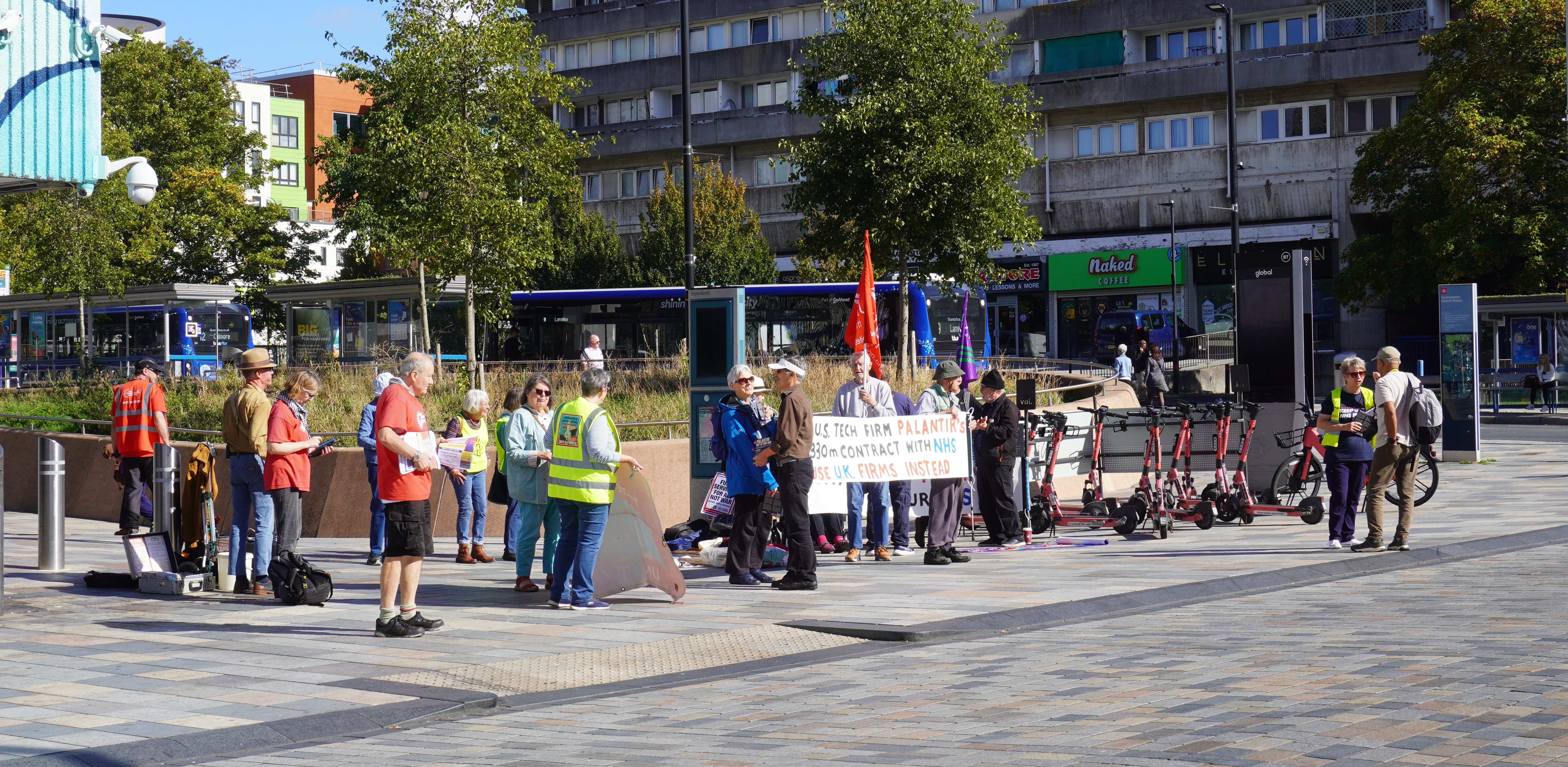
Country-wide demonstrations against the use of Palantir in the NHS may be having some effect.  The Financial Times reported in October that more than 20 NHS trusts have stopped using Palantirโ€™s waiting list tools, and at least 16 NHS bodies have formally stated through Freedom of Information responses that they do not use Palantirโ€™s Federated Data Platform at all.  It is not clear whether these are new decisions or whether the Government may still renew the contract.

Demonstration in Southampton against Palantir. Photo: Salisbury Amnesty


Global Refugee Report 2026: UK Asylum Reforms, Mediterranean Deaths


Latest refugee and asylum report

November 2026

The Immigration and Asylum Bill is now at the report stage prior to going to the Lords. Most attention has been focused on the extension of the time allotted to migrants seeking the legal right to remain. Although for some cases, the time has been reduced, it would still be possible for so-called illegal immigrants to have to wait up to 30 years to be settled.

Family walking along a rural country road through rolling countryside on an overcast day

The UN High Commissioner for Refugees is among those expressing concern. The Governmentโ€™s proposed โ€œsafe and legal routesโ€ are due to start next year. Home Office Minister for Border Security and Asylum, Anna Turley, told the House of Commons last week that the new routes will initially operate from seven countries — India, Bangladesh, Egypt, Kenya, Malaysia, Pakistan and Uganda. ย To be eligible, refugees will need to be outside their country of nationality and to have been present and registered with relevant authorities or the United Nations High Commissioner for Refugees (UNHCR) in one of these countries before October 1 this year. ย 

Also, the Home Office have announced that applications have opened for charities seeking to become lead sponsors under the ‘safe and legal’ heading.

In Parliament, the House of Lords Secondary Legislation Scrutiny Committee welcomed a commitment by the Home Office to notify Parliament whenever changes to immigration policy are made through ‘published concessions’ outside the Immigration Rules. ย Last month, the Committee raised concerns over the Home Secretary’s wide-ranging power to change the Immigration Rules without parliamentary approval or formal notification to Parliament.

Interestingly, the Government held consultations with various bodies and individuals before finalising their bill. It has been revealed that 84% of individuals and 79% of organisations were opposed.

Family reunion

The other major area of concern is the reunion of divided families. The right was suspended in 2025 with the intention of returning to the old system in Spring 2026, but the Home Secretary said in May that it would continue. Safe Passage are litigating the matter.

There has been over the years much noise about Article 8 of the European Convention on Human Rights giving consideration to the โ€œright to a family lifeโ€ proportionately to the argument for deportment, but the Court has said that no weight is given to this aspect in its decisions.

Falling numbers

As the total number of immigrants continues to fall, so do the number of asylum seekers.  Net migration is now at its lowest for 30 years.  Madeleine Sumption of the Migration Observatory has noted that high periods of immigration are followed by low ones as most people will leave within 5 years of arriving (this of course is not just refugees but people on work visas).

Wider issues

On the wider front, in Europe the main crisis point is in the Mediterranean, where this year has been the most violent since 2016, with several drownings off Greece, and most brutality carried out by the Libyan โ€œcoastguardโ€ (a body trained and equipped by the EU).

There has also been a surge in arrivals on the Canaries (believed to be because of Spainโ€™s more liberal attitude, but this is likely to change following the upcoming election).

Also following elections, in the United States, ICEโ€™s activities have resulted in 91,000 habeas corpus petitions (and a lot of rearrests).

In Syria, many refugees have returned, but the number is dropping.  1.7 million have returned and 2.2 million are no longer internally displaced, but 3.7 million are still outside the country.  It is said that the number being urged to return is greater than the countryโ€™s ability to absorb them.

COP31, now in session, will be discussing, among other things, the question of โ€œclimate mobilityโ€, that is the issue of climate change making it impossible to survive in parts of the world and the impact this will have on migration.

The theme for next yearโ€™s Refugee Week will be Solidarities.

AH

Image: AI


Recent posts:

Blog at WordPress.com.

Up ↑