The monthly meeting took place tonight, Thursday 19 March at 7.30 as usual. It was held over from last week as we had the Cathedral lecture and service. A fuller report will appear soon.
Amnesty award
It was announced in the Salisbury Journal this week that a group of students at Burgate School in Fordingbridge, Hampshire has won the Amnesty International Youth award for the ‘most committed’ category. Every congratulations from the Salisbury Group.
New link added to the list: Globalconsilium
Magna Carta and Human Rights Today
Around 160 people attended the Cathedral this evening to hear Dominic Grieve QC MP give a brilliantly lucid lecture in support of the Human Rights Act. He traced some of the key clauses of the Magna Carta and showed how they had continuing relevance today. We hope to include a transcript of his lecture soon. His lecture followed the annual Amnesty evensong which also was very well attended with around 120 people.
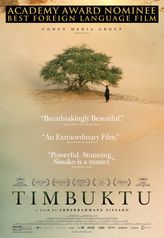
#Morocco film
UPDATE 25TH MARCH
The film Bastards (12A) was shown this Wednesday 25 March starting at 7.30 and the audience reaction was very positive indeed. There were many questions to the producer Deborah Perkin.
In Morocco, as in all Muslim countries, sex outside marriage is illegal and women bear the brunt of society’s disapproval. But what is the fate of the children of those single mothers? They cannot attend the better schools, are turned away from infant immunisation clinics and refused government posts. Jobs, housing and a huge range of social advantages are denied them. They are despised outcasts, condemned to a life of discrimination. Bastards is the first film to tell this story from a mother’s point of view.
Afghanistan
Britain’s role in Afghanistan is coming to an after over a decade of bloodshed and war. It is doubtful that the country is in a fit state to function effectively since the Taliban and the warlords are still very much in evidence and there are reports of ISIS being present in the country as well. After all this time it is easy to forget some of the original aims which were defeating terrorism and the Taliban. We can also forget that it was the CIA who helped establish, arm and train the Taliban in order to assist them in their fight with the Russians.
One of the major victims of the years of war is women. It has turned thousand of Afghan women into refugees and widows – or both – and made it dangerous for them to seek schooling, go out to work, get healthcare or secure paid employment. Before the arrival of the Taliban in 1996, women’s rights had steadily improved and indeed, there are many photographs from that era women and girls in schools and university with not a burqa or veil in sight. Improving the rights of women became one of the additional aims of the invasion and it will be recalled that Cherie Blair – wife of the then Prime Minister, Tony Blair – hosted an event in 10, Downing Street in 2001 with this aim in mind. Kofi Annan said:
There cannot be true peace and recovery in Afghanistan without a restoration of the rights of women.
Similar sentiments were expressed by the then secretary of state Colin Powell:
The recovery of Afghanistan must entail a restoration of the rights of women, indeed it will not be possible without them.

At the South West regional conference of Amnesty International it was heartening to hear from someone who has worked to improve the status of women through theatre and artistic groups in the countryside. The speaker was Abdul Hakim Hashemi Hamidi who set up the Simorgh Film Association of Culture and Art, SFACA. Unlike many aid programmes which tend to stay in Kabul or the main cities, SFACA goes out into the countryside and to the villages.
He has organised educational theatre workshops in prisons, juvenile correction centres, drug addiction rehabilitation centres, in schools and with the police. He has produced films with an emphasis on human rights and the role of women.
Not all the problems faced by women are solely to do with the Taliban. Another factor is honour killings which are at a very high rate in the country. 57% are identified as the responsibility of a family member and 21% by the husband. The perpetrator of 43% killings is unclear however. A telling quote from the PowerPoint display was:
A problem with women [is] because men don’t accept women have rights
He went on to discuss the problems of human rights defenders in Afghanistan. These included difficulty in

travelling to some areas combined with a lack of government control in some parts of the country, traditional beliefs and illiteracy. Religion was a main cause he said and human rights are seen as a western construct. He urged that the UK government consider the role of human rights defenders in their discussions with the Afghans.
It was an interesting and uplifting talk by someone who has taken risks to go into the Afghanistan countryside to promote the rights of women. Abdul is a visiting fellow on the Protective Fellowship Scheme for Human Rights Defenders at York University. There is a permanent link to the York University Centre for Applied Human Rights at the bottom of the main page.
Sources:
Watson Institute
Global Research
Amnesty International
February minutes
#NorthKorea
We attach here a speech by Fiona Bruce MP given just before Christmas last year on life in North Korea. The group has campaigned on several occasions concerning life in this country and this has included a video on YouTube as well as petitions. We feel Fiona’s speech is worthy of a wider audience and we include most of it here:
Life in North Korea is not a joke. It is not a joke that desperate women wade across the frozen Tumen river to escape to China, only to be caught by Chinese men, sold into sexual slavery and then, when used up, sent back by the authorities to face torture in North Korea and the forced abortion of their unborn children.
It is not a joke for those hundreds of thousands who live in concentration camps reminiscent of the Nazi era, many for uttering a few words against the North Korean regime — or, worse, under the regime’s atrocious “guilt by association” rule, not for something they have done, but for something their relatives have done to offend the regime. Prisoners are told they are not humans but animals and indescribably tortured: steam-rolled to death; killed by having hot molten metal poured over them; frozen to death; starved to death; worked to death in factories; hung upside down to have water poured into their nostrils, like so much beef hanging from hooks in a slaughter house; deprived of clothing and sleep, then mercilessly pummelled with wooden bats; kept in cells with two holes in the door for them to stick their feet out to be horrendously tortured; and frequently forced to watch executions, including of their blood relatives. As my co-chair of the all-party group on North Korea, an increasingly active group, Lord Alton, said:
“Christmas spent in a North Korean gulag will be just another day of grotesque suffering.”
Life in North Korea is not a joke outside the concentration camps either. It is not a joke for the thousands of stunted, parentless children—the so-called wandering swallows—who eke out a living on the streets. The problem of malnutrition in North Korea is so bad that the minimum height for a member of their armed forces is just 4 feet 2 inches. It is not a joke for the disabled in North Korea either. Just when we thought that reports from North Korea could not get any worse, this week we heard at first hand from an escapee at a meeting of the all-party group in the UK Parliament about how disabled people, including children, were sent:
“for medical tests such as dissection of body parts, as well as tests of biological and chemical weapons. Dwarves are castrated. Babies with mental and physical handicaps are routinely snatched from hospitals and left to suffer indescribable things until they die. The disabled in North Korea are simply disappeared.”
We were told that by a disabled escapee, Ji Seong-Ho, who, at 14, lost his left hand and leg after passing out from hunger while scavenging for coal on railway tracks and was run over by a train. He was told by North Korean Government officials:
“disabled people like you hurt the dignity of North Korea and you should just die.” He told us, “That really hurt.”
At Christmas time, let us remember that living in North Korea is not a joke for the many brave Christians who every day fear incarceration simply for owning a Bible. One lady has told the all-party group that if soldiers suspect that someone is a believer, they will ransack their home until they find what they are looking for. In her home, they did: they noticed a brick slightly out of position, and behind it they found her Bible, so she was taken to prison.
I have mentioned just two of many escapees who have spoken to our group this year and who are now finding sanctuary in the UK and increasingly giving testimonies of their suffering to Members of Parliament.
For the rest of my speech, however, I want to speak not to fellow Members, or even to our constituents, but to the people of North Korea. When I first spoke about North Korea in the House, I was amazed to receive a letter from supporters in South Korea saying, “You are being heard” so I know that when we speak here, many of you in North Korea hear what we say—and that is increasingly the case with modern means of communication, such as smuggled-in USB sticks.
I want you, the people of North Korea, to know that your suffering is being heard. Do not think that no one cares. Do not think that no one is speaking out for you. In the UK Parliament, more and more people are speaking out and showing that they care. We have compassion for you in your suffering, and this Christmas remember that our compassion is as nothing compared with that of Christ. One day, this too will end. Kingdoms rise and fall. We are praying for you and for your freedom.
In addition to praying and speaking out, more and more people are acting. This year, a 400-page UN report by Mr Justice Kirby catalogued the brutal atrocities you experience. The world now knows of them and cannot stay silent. Increasingly, people in the free world are calling for action on your behalf. Only last week in this Parliament, the all-party group on international freedom of religion or belief issued a report that can be found at http://www.freedomdeclared.org which added to demands made last month at the UN by no fewer than 111 countries that those responsible for human rights violations in North Korea be brought to justice by the International Criminal Court.
We also called for all appropriate justice mechanisms to be considered to bring the North Korean Government to account for their terrible atrocities against their own people. Here in the UK Parliament, as MPs we continue to press for the BBC World Service to broadcast to you, the people of North Korea, in the Korean and English languages, and we MPs continue to press for an increased dialogue with China to stop its policy of forced repatriation and for humanitarian aid to the people of North Korea.
So, at Christmas time our hearts go out to you, the North Korean people, from the UK. Know that we are with you; know that we are supporting and working with your relatives and friends who have escaped to this country and know that they have a voice; and know that we shall continue to speak out for you and to press for action on your behalf until the day comes, which it surely will, when your country is free again and your suffering is at an end.
The Shadow Leader of the House, Thomas Docherty responded saying:
“As ever, the hon. Member for Congleton (Fiona Bruce) made an impassioned and knowledgeable speech about the situation in North Korea. She has a tremendous track record in relation to the persecution of Christians, and—again, as ever—she made a hugely important contribution. I know that her work has the support of all Members.”
Arms trade support for a college
SCHOOL NOW CLOSED
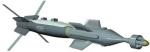
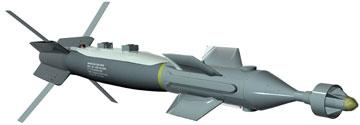
The new South Wilts University Technical College in Salisbury is to be part-funded by arms companies and a number of people are concerned that young people will be corrupted by such firms. The Salisbury group has campaigned in the past on the issue of arms as Salisbury is surprisingly rich in arms companies. It is likely that because we are near to Salisbury Plain – where a number of regiments are based – and the garrison towns of Bulford and Tidworth, it is attractive to such firms to set up here. We are also near Porton Down and to Boscombe Down.
Some years ago, we discovered that a firm based in Salisbury was supplying the Indonesians with armoured land rovers being used in the oppression of the East Timorese. Chemring, which has a factory at a place called High Post near Salisbury, was also the subject of press interest recently for allegedly supplying CS gas to the Hong Kong police to help suppress demonstrations, and to Israel. Chemring supplied CS gas which was used in Egypt.
So the activities of arms companies are a matter of interest to us. It has to be said straight away that, unless you are a complete pacifist, there are aspects of the arms trade which are perfectly legitimate. We need to defend ourselves and therefore have a need to make armaments. We can also sell such arms to countries we trust or to whom we are allied. The difficulty is when arms are supplied to regimes who have little interest in human rights. This is why Amnesty among others has been promoting an arms trade treaty. Another problem is the shadowy world of dealers and brokers who go on to supply anyone willing to pay.
Anyone interested in the arms trade, then a book to read is The Shadow World: inside the global arms trade by Andrew Feinstein (Hamish Hamilton, 2011). This remorselessly describes the trade and the high degree of corruption involved in its activities. The industry is over £1tn in size and money flows via tax havens and brokers around the world.
Look at almost any news broadcast and it doesn’t matter who is fighting whom, what is noticeable is that they all seem to be remarkably well armed. The various belligerents drive around in military vehicles, and they seem to be guns and rocket launchers aplenty. These arms don’t appear out of nowhere, they are supplied by the shadowy world of the arms dealer and are financed via various tax havens, many of which are Crown dependencies.
Feinstein expresses it well in his introduction:
In our twenty-first-century world the lethal combination of technological advances, terrorism, global crime, state sponsored violence and socio-economic inequality has raised instability and insecurity to alarming levels. At the same time, the engine that has driven this escalation, the global arms trade, grows ever more sophisticated, complex and toxic in its effects.
It might therefore be thought essential that the world’s democratic nations should address this trade effectively and urgently. If it must exist, then surely it should be coherently regulated, legitimately financed, effectively policed and transparent in its workings, and meet people’s need for safety and security?
Instead the trade in weapons is a parallel world of money, corruption, deceit and death. It operates to its own rules, largely unscrutinized, bringing enormous benefits to the chosen few, and suffering and immiseration to millions. The trade corrodes our democracies, weakens already fragile states and often undermines the very national security it porports to strengthen. (p xxii, ibid)
Arms sales are promoted by the British government by the Defence Export Services Organisation (DESO). There has been a lot of publicity recently as various ministers – including the Prime Minister – visiting the Gulf states to sign arms deals. Some of these countries arrest or harass oppositions, use torture regularly, execute people in public, mistreat their women and have corrupt judicial systems. No matter it seems, there’s trade to be had. The Campaign Against the Arms Trade CAAT held a meeting in Salisbury recently to publicise the financing of this college by four arms firms. The firms involved include Chemring, QinetiQ, Esterline and Dstl. Serco is also involved which has a dubious record.
Some of the questions to ask of this college are: will their young people be free to discuss the activities of this trade? If it transpires that munitions supplied by one of these firms are used to suppress demonstrations or are used to kill unarmed people for example, will students be free to debate this? Will the effects and practices of the arms trade be a topic of discussion in Citizenship activities? Interesting questions … CAAT allege that the firms will use the college as a means to promote their image. It will be interesting to see how this UTC deals with the ethical and moral issues of the arms trade and adopts an appropriately impartial position when and if allegations of wrongdoing emerge.
The college is part of the Baker Dearing Educational Trust and none of its trustees has any local links.
Article in Salisbury Journal. CAAT item discussing the college is here.
UPDATE
The College has now closed (2019)