Football and human rights


Contrasting positions by footballers and supporters

Following the death of George Floyd in Minneapolis last week, there have been several photos in the sports pages of groups of kneeling footballers forming either circles (Liverpool) or an H (Chelsea) in support of black rights in the USA.  They are expressing their outrage at the killing of a black American by allegedly over aggressive policing and restraint, which led to Floyd’s death, the latest in a series of black people who have died at the hands of the police.

At the same time – as we have written before – the Premier League is currently debating the sale of Newcastle United Football Club to a consortium funded by Saudi interests to the tune of £300 million.  The litany of human rights abuses in that country are many: torture is common; women’s rights are highly restricted; the death penalty is frequently used, often in public and by beheading, and amputation is practised as a punishment for certain crimes.  There is no free speech and religious persecution is carried out.  Whatever one may think of heavy-handed policing in the USA and the problems over race in that country, it comes no way near the grim state of affairs in Saudi Arabia.  In addition to the human rights abuses there is the war being waged by Saudi in Yemen which is causing immense misery and suffering.

Despite this, supporters of NUFC are overwhelmingly in favour of the transaction taking place.  A poll showed 97% in favour of the sale.  This partly because the current owner – Mike Ashley – has failed to adequately invest in the club and the supporters want the club to do better.  The Premier League is currently debating the sale of the club and the sole consideration, as far as their statements are concerned, is whether broadcasting rights have been infringed:

Qatar broadcaster beIN Sports has also accused the Saudi Arabian government of facilitating the piracy of Premier League football rights in the Middle East through broadcaster beoutQ, although there is a long-running diplomatic row between the two countries.

Saudi broadcaster Arabsat has always denied that beoutQ uses its frequencies to broadcast illegally and has accused beIN of being behind “defamation attempts and misleading campaigns”.  Source: BBC

Newcastle fans bristle at the suggestion that they should not accept such tainted money.  They argue that the issues has only achieved this degree of salience because football is in the public eye.  They point to the sale of arms by the UK and USA governments with little concern for the use they are put or the misery and destruction caused.  They also point to other investments by the Saudi regime in the UK – Uber taxis, or the Independent newspaper – which haven’t received similar negative publicity.

When the widow of Adnam Kashoggi, who was murdered by the regime in Turkey, asked Newcastle to reflect on the funding and not to take it, she was rewarded with some unpleasant trolling on Twitter.

But the contrast is quite stark.  On the one hand an outpouring of sympathy and support for the death of an innocent man in the USA, and on the other, avid support for a takeover by a terrible regime committing far worse acts on its citizens who seek to purchase a football club as part of its sports wash programme.  Quite why there should be this disparity of interest is hard to say.  Possibly sharing the same language so that information from America flows around the world quickly.  The presence of a free press there will be another factor.

If we in the UK – including football fans – could see what is going on in Saudi, if the women were allowed to speak and mobile phone footage of public executions widely circulated, then it is to be hoped their views might be different.

Jonathan Lieu, writing in the New Statesman (22 – 28 May 2020) argues that fans have craved the departure of Mike Ashley and not prepared to get too squeamish about who might replace him.  He says the dissatisfaction with Ashley is not to do with his zero-hours contracts or compromised labour rights, but more to do with his parsimony and failure to splash out some of his wealth on the club.  He argues that the fan’s behaviour and attitudes to the deal –

… is an admission of where the fans sit in the order of things.  Shorn of any real influence, deprived of any meaningful stake in their club, shut out of their stadiums for the foreseeable future, perhaps it is no wonder that some many have simply plumped for the path of least resistance and maximum gratification.  New Statesman p40

This may be so.  But just as important is the power of money in this sport.  Success – other than a fleeting cup run – is almost entirely dependant on huge investment to enable the purchase of top players.  Since investment in football is a risky venture from a financial point of view, the big money comes from people with big egos to support or who are using the sport to launder a reputation.  The desire for success and the need for big money feed on themselves.  Any moral qualms are trampled under foot.  In that, the supporters share with the UK government – whose desire for money from weapons sales – lack any consideration for human rights or the plight of those in Yemen.

Sources: BBC; Premier League; Guardian; New Statesman; aljazeera

Weapons to the Saudis


Letter from Kate Allen, Director of Amnesty, to the Observer

We have featured on these pages the continuing scandal of arms sales to the Saudi regime.  Not only the destruction of large parts of Yemen these weapons are used for, but the fact that the Saudi regime’s repression of its own people and denial of human rights.  After China, they are the world’s second biggest executioner often following unfair trials and confessions extracted through torture.  But no matter, there’s money to be made.

Kate Allen discusses these factors in her letter to the Observer newspaper on Sunday 10 May 2020:

It is, as you say, long over overdue that the UK government put its relationship with Saudi Arabia on a healthier footing (Now is the time to distance ourselves from an odious regime, editorial 3 May, 2020).  For years, the UK has claimed behind-closed-doors diplomacy with Riyadh has been better than “lecturing” the kingdom over its appalling humans rights record.  Yet repression has only worsened including under the suppose reformer Mohammad bin Salmon.  Now virtually every human rights activist in the the country has either been locked up, intimidated in to silence or forced the flee the country.

We have sole Riyadh plenty of weaponry, but the UK hushed policy on Saudi human rights has sold the country’s embattled human rights community shamefully short.

The weapons are used in the war in Yemen the bombing of which has caused appalling damage to the nation’s infrastructure.

Attacks by the Saudi-led coalition have destroyed infrastructure across Yemen. Saudi forces have targeted hospitals, clinics and vaccinations centres.  Blockades have starved the population and made it hard for hospitals to get essential medical supplies.  Source; Campaign Against the Arms Trade

The UK is complicit: many of the Coalition’s attacks have been carried out with UK-made fighter jets, and UK-made bombs and missiles – and the UK government has supported them with billions of pounds of arms sales.


Nae Pasaran


This moving film shown at the Arts Centre on 13 November

The film is about a group of workers at the Rolls Royce factory in East Kilbride who in 1972, having seen footage of the brutal coup in Chile and its aftermath, decided to ‘black’ the engines which were being repaired for the Chilean Airforce.  The engines were fitted into the Hunter Hawker jets which were used to bomb the presidential palace in Santiago in which President Allende died.  Some witnesses say the president killed himself.

The coup against Allende was inspired by the USA who were concerned about a socialist government successfully establishing itself in South America which they regarded as their backyard.  Copper was the country’s main export and American firms were said to be extracting excessive profits.  Allende’s predecessor had started the process of nationalisation which angered the American companies concerned.

The film – documentary by Filipe Bustos Sierra – plots the story of the Scottish shop stewards and the arguments and repercussions which followed the blacking.  The three key players who were quite elderly by the time the film was made never really knew the effects of their actions.  They knew of course that the engines were sitting in crates at the back of the factory but they did not know that they were the planes which actually bombed the palace.  The engines quickly became useless because of deterioration.

The Pinochet regime became notorious for the scale of its atrocities against its own people.  Thousands were simply shot, others were thrown from helicopters into the Pacific, torture was practised extensively.  Eventually, Pinochet was arrested in London under a Spanish warrant which caused enormous political upset.  He had many supporters in the UK and a YouTube video of a speech by Mrs Thatcher is quite shocking in the light of this film.

The director quite amazingly, managed to track down the engines which are lying in a field about an hour from Santiago.  The particular engine was shipped back to East Kilbride.

We were pleased to see that Amnesty had several mentions during the film for their part in documenting the outrages perpetrated by the regime.  We are grateful for the Arts Centre in showing it and to enable us to give a short presentation and collect signatures afterwards.

Today

The question of course is what about today?  We have for several years now described the horrors of the war in Yemen and in particular, the role of British companies in supplying weaponry to the Saudis.  Not only do we supply the weapons, but British and RAF personnel are involved in the bombing by helping the Saudis.  British weapons are used to bomb schools, mosques and medical facilities.  So are the workers at BAE Systems and other arms companies ‘blacking’ their products destined for the Saudi Air Force.  It seems not.  One reason is the trade union laws are such that actions of this nature are illegal.  Arms sales have become so normalised now that the idea of protesting at the effects of their use seems pointless.

This was an absorbing film and a moving story of a handful of shop stewards in Scotland who felt they had to do something and even risk the sack, to help stop the terrible events in Chile.


Film


Nae Pasaran this week

The film Nae Pasaran is on this Wednesday 13th at the Arts Centre in Salisbury starting at 7:30 and tickets are available at £8.00 each.  The film is set in Scotland.  Details about the film can be seen here.

Hong Kong and Chemring


Hong Kong withdraws from the DSEI arms exhibition.  Tear gas supplied by Chemring used by the police

The protests in Hong Kong have been going on since 9th June 2019 and we have seen regular incidents of violent police actions to quell the demonstrations.  There have also been what appear to be organised attacks by thugs wielding bars and clubs with no sign of any arrests or indeed of police at all.

A statement by Amnesty following the July events said:

The violent scenes in Yuen Long tonight were in part because Hong Kong police chose to inflame a tense situation rather than deescalate it.  For police to declare today’s protest unlawful was simply wrong under international law.

While police must be able to defend themselves, there were repeated instances today where police officers were the aggressors; beating retreating protesters, attacking civilians in the train station and targeting journalists.  Alarmingly, such a heavy-handed response now appears the modus operandi for Hong Kong police and we urge them to quickly change course.   Man-kei Tam, Director of Amnesty International Hong Kong

The police have been using tear gas supplied by the UK company Chemring.  The firm has a factory outside Salisbury (pictured) although the cannisters are made by their plant in Derby.  It is still under investigation for money laundering, bribery and corruption by the Serious Fraud Office.

IMG_6942
Chemring factory near Salisbury.  The CS gas cannisters are not made here but in their plant in Derby.  Photo: Salisbury Amnesty

Following similar incidents in 2014 – the umbrella movement – it was thought that a licence to sell tear gas was withheld or at least under review but it seems as though the company was free to sell it to the Hong Kong police.  This is part of a wider government policy of allowing UK companies to sell weapons to all kinds of regimes whilst allegedly claiming to enforce a strict control policy.  Chemring were granted an open licence in 2015.  The former foreign secretary, Jeremy Hunt, recently withdrew the licence following the weeks of violence which makes inviting HKPF to the DSEI arms fair odd.  The firm’s human rights policy (2019) says:

[We will] seek to uphold all internationally recognised human rights wherever our operations are based.  para 3.14, 2019

Hong Kong police withdrew from the DSEI arms fare to be held this week having been invited by the Dept. for International Trade the minister for which is Liz Truss.  A statement by the department said:

an invitation does not imply that any future export licences will be granted to Hong Kong

Campaign Against the Arms Trade, CAAT said:

The UK government approved the export of an unlimited quantity of crowd control equipment to Hong Kong.  Police in Hong Kong have used tear gas, rubber bullets, water cannon and batons to violently disperse protests opposing the new Extradition Bill.  At least six people have been taken to hospital after inhaling tear gas.

There have been many protests about this fair which invites a number of countries many of which commit a range of human rights infringements, use torture and in the case of Saudi Arabia are bombing civilian targets in Yemen.

The Omega Research Foundation established in 1990, provides rigorous, objective, evidence-based research on the manufacture, trade, and use of, military, security and police (MSP) equipment.  Such technologies range from small arms and light weapons to large weapon systems; from policing technologies and prison equipment to equipment used for torture, amongst others.  A recent tweet from them shows a photograph of a CS gas cannisters which appears to be made by Chemring.

The substance of the Hong Kong protests is that they do not want individuals to be extradited to China whose legal system is corrupt.  Britain has a delicate role to play in protecting the agreement with China for ‘one country – two systems’.  We wish to see essential freedoms in the ex colony to be upheld.  Our integrity is a key component in that.  As in so many other countries around the world, our willingness to sell arms and MSP equipment risks compromising that integrity.

UPDATE 5 June 2020  see also the firm’s alleged activity in selling arms to the Egyptian regime which commits many human rights abuses.  


If you would like to join the local group you would be most welcome.  The best thing is to keep an eye on this site or on Facebook and Twitter, and make yourself known at an event.


Sources:  Financial Times; CAAT; Morning Star; Guardian; Fieldfisher; Omega Research Foundation; Chemring website


Yemen: UN report


September 2019

UN Human Rights Council publishes a report yesterday (3 September 2019) on human rights infringements by Britain France and USA

The UN’s panel of eminent experts on Yemen has today published a damning report on the activities of the UK government and others into the atrocities being committed in Yemen.  They conclude that international human rights law has been infringed.  The most damning conclusion is:

The Experts found reasonable grounds to believe that the conduct of hostilities by the parties to the conflict, including by airstrikes and shelling, continued to have an extreme impact on civilians and many of these attacks may amount to serious violations of international humanitarian law.  The Experts further found reasonable grounds to believe that, in addition to violations related to the conduct of hostilities, the parties to the armed conflict in Yemen are responsible for arbitrary deprivation of the right to life, arbitrary detention, enforced disappearances, sexual violence, torture, ill-treatment, child recruitment, violations of fundamental freedoms, and violations of economic, social and cultural rights.  These amount to violations of international human rights law and international humanitarian law, as applicable. Subject to determination by an independent and competent court, many of these violations may result in individuals being held responsible for war crimes.

The Campaign Against the Arms Trade has waged a long legal battle with the UK government which was successful in June  persuading the Court of Appeal that the Secretary of State’s actions were ‘irrational and therefore unlawful.’

Further background on the UN report can be found in a Guardian article 3 September.

Another extract from the report details activities we have previously highlighted:

The report notes that coalition air strikes have caused most direct civilian casualties.  The airstrikes have hit residential areas, markets, funerals, weddings, detention facilities, civilian boats and even medical facilities.  Based on the incidents they examined, the Group of Experts have reasonable grounds to believe that individuals in the Government of Yemen and the coalition may have conducted attacks in violation of the principles of distinction, proportionality and precaution that may amount to war crimes.
“There is little evidence of any attempt by parties to the conflict to minimize civilian casualties. I call on them to prioritise human dignity in this forgotten conflict,” said Kamel Jendoubi, chairperson of the Group of International and Regional Eminent Experts on Yemen.

The UN report can be accessed here.


If you live in the Salisbury, South Wilts/North Dorset area we would and would like to join us, you would be very welcome.  The best thing is to keep an eye on this site or our Facebook and Twitter pages and come to an event.

Yemen arms ruling


Good news today that the Court of Appeal has upheld the appeal by the Campaign Against the Arms Trade who are trying to stop the British government supplying lethal weapons to the Saudis who are using them to cause terrible death and destruction in Yemen.

There will be more about this in future posts.  A previous post on this subject can be read here.


Yemen: Britain’s hidden war


Channel 4 Dispatches programme shows Britain’s involvement in this terrible war

On Monday 1 April 2019, Channel 4’s Dispatches programme showed some terrible scenes from the war in Yemen and the death and destruction which is taking place.  The war has resulted in considerable misery for thousands of civilians and the programme reported that around 55,000 children under 5 have died from malnutrition as a result.

They focused on a bus which containing school children which was bombed in a market place killing 40.  They were able to find a young survivor who had suffered shrapnel wounds but was lucky to have escaped with his life.  He was understandably still traumatised.

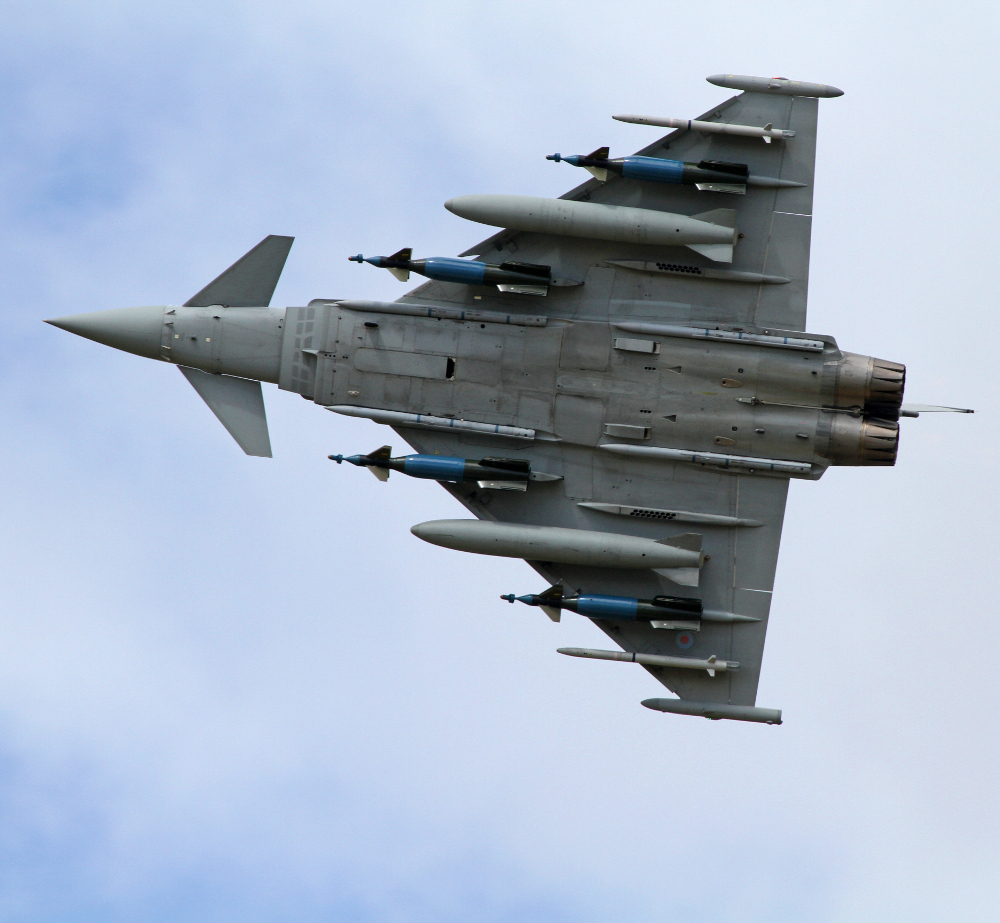
Britain – as we have noted in this blog many times before – is a key supplier of weapons and the main supplier is BAE Systems who sell the Typhoon fighter jet.  It is these jets, along with those supplied by the Americans, which are used to bomb Yemen and in particular, schools, mosques and hospitals.

In addition to supplying jets and munitions, the programme revealed that 6,000 BAE staff were working there involved in the crucial business of keeping the jets flying.  They managed to excuse their activities by claiming that because they do not actually handle the weapons – the final 5% as someone put it – therefore they were not mercenaries.  They also reported that British military personnel (which we know to be from the RAF) were also involved.

A great deal of time was spent interviewing various individuals concerning the ethics of supplying weapons – especially jets and their rockets – which are used by the Royal Saudi Air Force to cause such misery.

‘Dancing with the Devil is sometimes worth it’ former Air Vice-Marshall Sean Bell

One person interviewed was former Air vice-Marshall Sean Bell who argued that if we were not involved it could be a whole lot worse.  This seemed to be based on the notion that we were in some way moderating the Saudi activities which seemed a weak argument especially in the light of the rest of the programme.  He said ‘dancing with the devil is sometimes worth it’ because of the influence it gives us, not just with the Saudis but also in the Middle East generally.  Our involvement and dependence on Saudi arms sales was featured in a Channel 4 news item with Bell.  A Twitter feed on this topic can be found at @c4dispatches.

The British government has also been engaged in some dubious thinking based also on the notion of influence.  The Foreign Secretary, Jeremy Hunt MP said in the House of Commons:

Because of our commercial relations with Saudi Arabia we are actively monitoring their compliance with International Human Rights law and we have a lot of contact with them […] We raise concerns with them if we think things are going wrong.  Clip from the Dispatches programme

This concept of maintaining contact so that we can exert influence took a knock in the programme because it was revealed we have in fact next to no influence.  Former US Secretary of Defense Leon Panetta said that attempts to hold back the Saudis seemed ineffectual since their attitude was to ‘act quickly and ask questions later.’

Further damage to the notion of influence was evidence from an American official sent to investigate after the school atrocity.  It seems our personnel were ‘not where it mattered’ [in the control room that is] but that there was a separate floor where the operations were actually being directed.  More damagingly, most of the strikes are not in fact controlled from Riyadh but are what are called ‘dynamic strikes’ conducted by SRAF pilots without reference to the control room.  They do not have in their cockpits the vital information about which targets are safe to be hit.

Conclusions

Britain’s involvement in this war is calamitous for the country itself and our influence and reputation.  We can hardly complain about Russia’s activities in Syria when we are only one remove from doing the same in Yemen.  Because sale of arms to Saudi Arabia is so important and lucrative, we are not in a position to end it without significant damage to our balance of payments.  The only beneficiary of this trade are the shareholders of BAE Systems and other arms firms and dealers.  The losers are of course the 60,000 dead in Yemen.

In addition to the use of our weapons in this terrible war, is the fact that we have given support to this regime, a regime which systematically uses torture and has closed down any form of dissent and freedom of speech.  Again the arguments are about our ‘influence’ which seems to be all but invisible.  Members of the royal family are regularly rolled out to visit and add a veneer of respectability to the Saudi royals.

When Mohammad bin Salman assumed power the talk was of a reforming monarch.  This disintegrated following the Khashoggi murder and more arrests of human rights activists.

The final word should perhaps go to Andrew Mitchell MP, interviewed on the programme, who said:

History will judge it as an appalling failure of British foreign policy


Spyware outrage


Observer publishes article about use of spyware

March 2019

Today’s (17 March 2019) UK Observer newspaper published a story about the use of spyware around the world and in particular by countries known for their poor human rights record.  These include Indonesia, Saudi Arabia and Bahrain.

Readers of this blog will know that this has been going on for some time and a report by the University of Toronto’s Citizen’s Lab has been compiling evidence of this activity and publishes reports of the use of spyware around the world.  Other organisations like Privacy International are also concerned.

What the Observer article reveals is the scale of the UK’s exports which have amounted to £75m since 2015.  Human Rights groups are concerned at this trade since it enables authoritarian governments to penetrate the devices of anyone it doesn’t like and gather information at will from their equipment.   The equipment is capable of intercepting email, instant messaging and VoIP communications, as well as spying on users through webcams and microphones and transmitting the data to a command-and-control server.

In addition to the scale of trade, is the issue of secrecy and attempts to get details of what and who is being supplied from Department of International Trade using FOI are largely fruitless.  The concern is that what matters is trade and not the purposes to which the equipment is put.

Part of the units occupied by Gamma in Porton

Porton Business Centre

This is of interest in the Salisbury area because one of the firms which manufactures this equipment called Finspy is a firm called GammaTSE based in the village of Porton not far from the city (and not far from Porton Down, the chemical weapons centre – the same Porton).  A report by the University of Toronto in 2013 found Finspy installed in 36 countries.  The firm’s website coyly describes its service thus;

GammaTSE has been supplying government agencies worldwide with turnkey surveillance projects since the 1990s.  GammaTSE manufactures highly specialized surveillance vehicles and integrated surveillance systems, helping government agencies collect data and communicate it to key decision-makers for timely decisions to be made.

An earlier post described the firm’s activities in more detail.  The UK is therefore heavily involved in a trade which allows governments to intercept messages of human rights activists, opposition members, journalists and more or less anyone it does not like.

Yemen: the conflict continues


UK continues to supply arms to Saudi Arabia

The war in Yemen continues and the death toll continues to rise.  The UN estimates around half a million people have cholera.  They also estimate around two thirds of the population are in need of humanitarian assistance.  Yet the UK continues to supply arms to Saudi Arabia and half our arms exports go to the country.

The supply of arms is monitored by the Commons Committee on Arms Export Controls (CAEC) yet bizarrely, at its most recent meeting, it did not have the supply of weapons to Saudi on the agenda presumably because it has become too sensitive a subject.

There are many worries about arms sales and in particular the use of what are called ‘open licences’.  There are also concerns about brass plate companies which are often fronts for brokers.  Control Arms UK has submitted evidence to CAEC suggesting that the number of licences has increased by 17% in one year.  It is not possible to determine what items are sold under this secretive open licence system since it can be a small item of equipment or a jet fighter.  The Government must demonstrate that companies using open licences are subjected to proportionately rigorous and frequent compliance audits.  We are ‘most dissatisfied at the Government’s admission that no such audits are ever carried out in respect of UK companies’ operations overseas’ (our italics).

Detailed work by researchers suggests that civilian casualties are running at a far higher level than those documented by the UN. According to the Armed Conflict Location & Event Data Project (ACLED), at least 56,000 civilians were killed between January 2016 and October 2018.  They estimate that from March 2015 to the end of 2018, the number of civilian deaths related to combat could be as high as 80,000.  This does not include deaths resulting from disease or malnutrition.

Not only did the select committee not discuss Yemen, but the chair of the committee, Graham Jones MP (Lab) launched an extraordinary attack on the various organisations reporting on what is happening in that country.  He accused them of being ‘dishonest’ in their reporting.  They were guilty of ‘gross exaggeration’ of what has happened.  Much of their evidence was false he said.  It was ‘disgraceful how NGOs and loony left organisations have refused to back the UN’s unanimous position’.  He denied that the problems there were an airstrike problem but were as a result of economic mismanagement.

His view is that the fault lies with the Houthis and he is in support of the Saudi’s actions there.  He was to be seen with Price Mohammed bin Salman during his visit to the UK.

The misery in Yemen continues and the government continues to allow the supply of weapons causing huge damage to the country.  While the number of air attacks has diminished in 2018, the proportion of those attacks striking clearly civilian targets rose, while attacks on clear military targets fell according to Control Arms.  They report that of the 3,362 air raids in Yemen in 2018:

 420 air raids hit residential areas
 231 hit farms
 133 hit transport infrastructure
 95 hit civilian vehicles and buses[5]
 31 hit educational facilities (schools, institutes, universities, etc.)

Other targets included market places, mosques and medical facilities.

It seems unlikely that the situation will improve although peace talks are continuing. It is disappointing that the chair of the relevant Commons committee should voice opinions which suggest he is less than impartial.  Undoubtedly, NGOs and other organisations make errors in reporting on the situation in Yemen but to suggest that it is all a gross exaggeration is not justified.  Our involvement in the bombing campaign and the extent of our arms supplies is unconscionable and is fueling the conflict.


Blog at WordPress.com.

Up ↑