Stop torture campaign – Minister’s letter


Arms-Fair---share-assets-email-Sep-2015Amnesty has been pursuing the ‘stop torture’ campaign for some time now and expressed concern a few months ago at the DSEI exhibition.  Amnesty was barred from entering and there were concerns that torture equipment makers would be present.

Large numbers of people wrote to the Minister and we are pleased to note she has responded.  A copy of her reply is below.

Minister’s letter

Amnesty rep banned from the London Arms fair


Arms-Fair---share-assets-email-Sep-2015Olly Sprague is Amnesty’s Arms expert and for the first time ever, he was barred from the London Arms Fair this week.  Maybe they didn’t like the ad campaign we made for them… Or maybe they had something to hide?  At every one of the last five Fairs, we’ve uncovered illegal torture equipment and other illegal weapons being advertised, including leg irons, gang chains, electric-shock batons and cluster bombs.

It seems to be something of an own goal since if what was being sold was legitimate and in accordance with current regulations, then why ban a representative of Amnesty International?

So are they selling torture equipment or aren’t they?


London Arms Fair


Will torture equipment be on display this week in London?

The London Arms fair, DSEI, opens on 15th September at the ExCel centre at which – in addition to the range of arms large and small – torture equipment has been displayed in past years.  No doubt drones will be on display which enable executions to be carried out from thousands of miles away.  The exhibition runs under conditions of great security and in the past, the comedian Mark Thomas was able to set up a fake stall and interest various passing visitors with his torture equipment.

Arms-Fair---share-assets-email-Sep-2015

The four day exhibition is supported by the government and is an exclusive expo of deadly weapons and arms with a history of companies advertising illegal torture equipment.  Britain has sold arms to 19 of the 23 countries listed by the UN for grave violations against children.

There is a kind of irony that two weeks ago the country was shaken by the death of Aylan Kurdi which prompted a volte face by our government and has seen Mr Cameron in the Lebanon visiting the camps.  The Chancellor, George Osborne spoke of the need to tackle the refugee crisis at source yet we host an event which supplies deadly equipment to countries like Saudi Arabia; Turkmenistan; Pakistan; Libya and Colombia where respect for human rights is almost non-existent.

We want to see the government to stop illegal torture equipment being advertised in the UK.

Poster by Amnesty International

Robust reponse to Saudi Arabia rejected by FCO


UPDATE: 3 August

At the end of this blog we wrote ‘it seems therefore that nothing will change’.  How wrong can you be as it has just been announced that the FCO will no longer be specifically campaigning for the abolition of the death penalty.  The FCO message to us was dated 6 July and Mr Glen’s covering letter dated 14 July.  So in the space of a few weeks abolishing the death penalty world wide has gone from ‘a human rights priority for the UK’ to being no longer a policy.  The group plans to write to Mr Glen again to seek clarification.


July 2015

No to the death penalty

The Salisbury Group wrote to the local MP, Mr John Glen to ask for a more robust response by our government to the barbaric activities of the Saudi government in particular the increasing number of executions which are taking place.  In our letter we said:

[we are writing] to you in connection with the increasing level of executions currently taking place in Saudi Arabia.  (Over the course of the first five months of this year, the number of executions has equalled that of the whole of 2014).

You will no doubt be aware that on his recent visit to the country, President Francois Hollande made a public statement to the effect that all executions, not just those of his own nationals, should be banned, and called for the abolition of the death penalty in Saudi Arabia.

M. Hollande was prepared to do this, despite the fact that France – as does the United Kingdom – has significant financial interests in the its dealings with Saudi Arabia. The British government, however, has never seen fit to raise the issue in public, preferring to pursue a policy of ‘quiet diplomacy’.  This policy has manifestly had no effect.  Numbers continue to rise, and the Saudi Government have now advertised for eight additional executioners – ‘no particular skills required.’

As a group, we are asking that your government should take a much more robust line over the issue with the Saudi government.

Whereas the government – including the Prime Minister – has been vocal in its criticisms of the Islamic State for its appalling behaviour and of Russia for its activities in Ukraine, they seem strangely silent when it comes to Saudi Arabia.  This contrasts with France which has openly criticised them and Sweden which has decided no longer to sell them arms.

Mr Glen replied, enclosing a letter from the FCO minister, and said:

“I enclose correspondence from the FCO minister Tobius Ellwood in reply to your recent letter about the UK’s apparent reticence when it comes to condemning the use of the death penalty in Saudi Arabia.

“As you can see, the approach taken by the government is not in any way indicative of an equivocal view on this practice, which is as barbaric as it is ineffective.

“However, the government recognises that its abolition is not a matter of mere legal reform but would require a seismic societal shift.  It has therefore taken an approach which it feels is most constructive – engaging behind the scenes rather than inflaming the situation and triggering a backlash through outspoken public critique”.

The letter from the Foreign and Colonial Office is as follows:

“[…] The abolition of the death penalty is a human rights priority for the UK.  The UK opposes the death penalty around the world because we believe it undermines human dignity and there is no evidence that it works as a deterrent.

“Saudi Arabia remains a country of concern on human rights, because of its use of the death penalty as well as the restricted access to justice, women’s rights, and the restrictions of the freedom of expression, freedom of assembly and freedom of religion or belief.

“Ministers, our Ambassador, and the Embassy team in Riyadh frequently raise the issue of the death penalty with the Saudi authorities, bilaterally and through the European Union.  As it is part of Sharia Law, we must recognise that total abolition of the death penalty is unlikely in Saudi Arabia in the near future.  For now, our focus is on the introduction of EU minimum standards for the death penalty as a first step, and supporting access to justice and the rule of law.

“The British Government’s position on human rights is a matter of public record.  We regularly make our views well known including the UN Universal Periodic Review process and the Foreign and Colonial Office’s  annual Human Rights and Democracy Report.  We also raise our human rights concerns with Saudi Arabian authorities at the highest level.  But we have to recognise that the human rights situation in Saudi Arabia reflects widely held conservative social values and that our human rights concerns are best raised in private rather than in public”.

It seems therefore that nothing will change.  It is important to recognise that behind the scenes lobbying can be constructive.  However, the policy of raising matters ‘in private rather than in public’ does not appear to be working.  Successive governments have courted the regime and Saudis are free to invest in London and elsewhere in the UK.

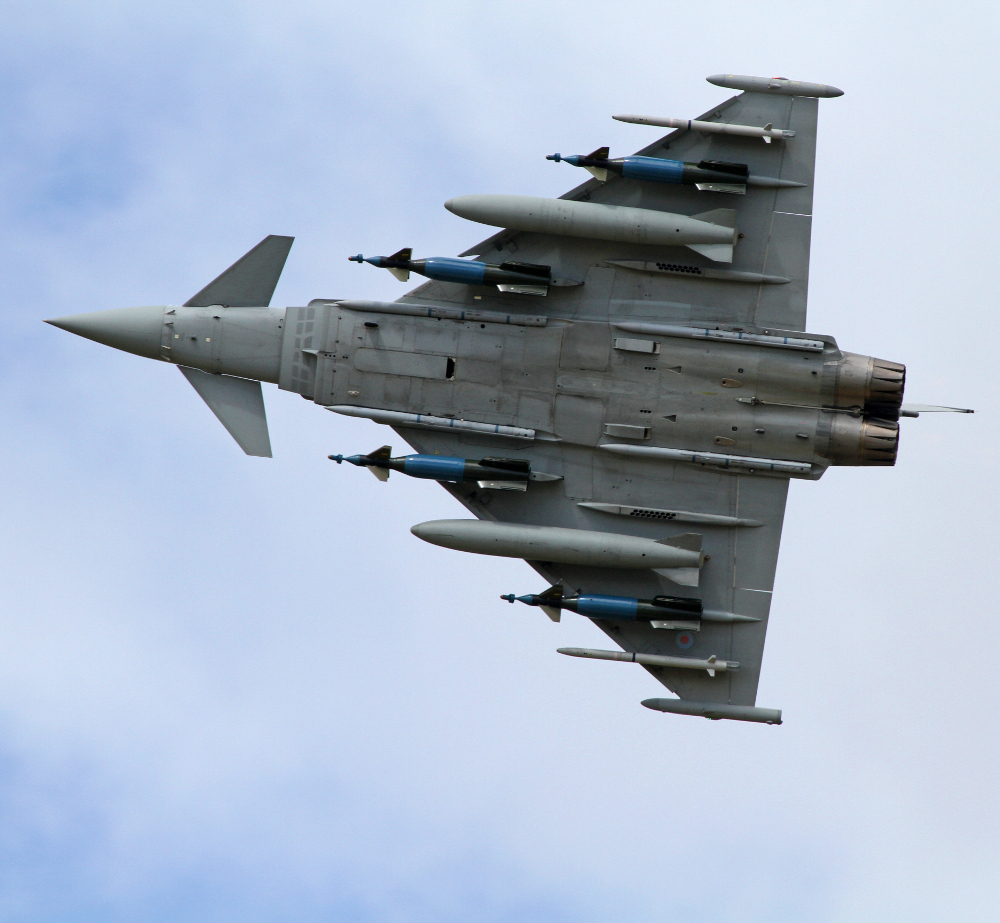
Eurofighter of the type sold to Saudi Arabia

It would be naïve not to recognise the reality behind this reluctance to criticise the Saudis and the importance to the government of the sale of arms and the supply of oil.  Saudi Arabia is a key market for the UK and much effort is put into promoting sales including by members of the royal family – see the Guardian article:  Human rights are of secondary concern.

As long as these interests are paramount, it is difficult to see how the toll of executions can be checked in the near future.


Raif Badawi is still in peril in SaudiArabia as sentence is renewed. #backlash


UPDATE: 11 June  Sentence upheld and flogging could start tomorrow (Friday 12th)

The blogger Raif Badawi’s life is still in peril after the court in Saudi Arabia upheld the sentence of 1000 saudi flogginglashes.  This case has received enormous publicity worldwide with calls for Raif to be pardoned and released.  There is now a suggestion that he may face a retrial with the possible sentence of being executed.

This case brings into focus the role of the British government and arms sales to the Saudis.  The Coalition government authorised £3.8bn in arms sales (Source: Campaign Against the Arms Trade) and previous governments have done the same.  These arms are now being used in the Yemen where the latest death toll estimate has passed 2 000.  CAAT say the human rights situation is ‘dire’ and Amnesty International has described in many reports the high rate of executions, routine torture and ill-treatment of prisoners and discrimination which is rife.

When the Badawi case came into the limelight earlier this year the British government was stirred into some kind of action.  The Deputy crown prince Muhammad bin Nayef had dinner with the Foreign Secretary, Philip Hammond and met the Defence Secretary, Michael Fallon on his visit here in February.  Prince Charles was said to have raised the case with the Saudi Royal family on his visit to the country.  The British Ambassador was quoted as saying that ‘Royal to Royal links have a particular value…  These kinds of visits are capable of having a significant value.’

The government has long taken the approach that discrete and ‘behind the scenes’ contacts are better than what they might term mega-phone diplomacy.

The problem is that absolutely nothing has changed

It is interesting to contrast our government’s quietly, quietly approach – which is clearly ineffective – with Sweden which has cancelled its arms treaties with Saudi.  They were worth £900m which compared to its size is worth more than Britain’s.  France has a high level of sales to Saudi yet Francois Hollande felt able to speak out in public about their human rights record.

It is clear that the Saudi government is deaf to all approaches either from our ministers or from the Royal family.  It is very hard to pursue an ethical foreign policy when what underpins everything is the sale of arms.

The local group has written to our local MP John Glen to ask him to lobby for a more vigorous response to the Saudis and we await his reply.

Arms sales destabilise many parts of the world


The arms trade is deadly corrupt business.  It supports conflict and human rights abusing regimes while squandering vital resources.  It does this with the full support of governments around the world.’  Campaign Against the Arms Trade [see link at the bottom of the home page]

A fuss broke out today in the UK election campaign about who said what and who did what concerning the invasion of Libya.  The argument is that by attacking Libya and not sorting out a stable regime after the fall of Gadhafi, we laid the foundations for the thousands of refugees who attempt to reach Italy from its shores.

Not for the first time in this election, the arguments seems to swirl around everything other than the real one.  We have commented before in the role arms have to play in the Middle East and elsewhere.  Figures from Janes reveal that the trade is now worth $64bn up from $54bn in 2013.  Total Global military expenditure is said to worth around $1,776bn (SIPRI).

UPDATE: May 2015.  Transparency International has produced a new anti-corruption index for defence companies.  Local companies like Chemring and QinetiQ feature in it.

Articles about the defence industry tend to discuss sales of helicopters, aircraft, ships, tanks and the like – that is big items of military hardware.  While these weapons can be deadly, in fact most people suffer from the sale of small arms.  It is guns and grenades that are the biggest killers of ordinary people.

The plain fact is that the biggest sellers of arms are 1. USA, 2. Russian Federation; 3. France; 4. UK; 5. Germany (2014).  The first four are permanent members of the UN security council.  The arms trade supplies the arms which fuels the many wars and conflicts in the Middle East and elsewhere.  When thousands are displaced from these wars and attempt to flee to somewhere where they can lead a peaceful life, we then refuse to deal with the problem.  There is a kind of disconnect between the causes of these conflicts and the inevitable results.  We get excited and argue over images of laden vessels in the Mediterranean, and we get upset when one capsizes and hundreds die, but we do not seem to get at all upset over the role of arms companies, dealers and brokers who provide the means for the conflict in the first place.

February minutes


The February minutes are below thanks to Karen.  A full agenda as you see with a lot going on.

February minutes

Arms trade support for a college


The new South Wilts University Technical College in Salisbury is to be part-funded by arms companies and a number of people are concerned that young people will be corrupted by such firms.  The Salisbury group has campaigned in the past on the issue of arms as Salisbury is surprisingly rich in arms companies.  It is likely that because we are near to Salisbury Plain – where a number of regiments are based – and the garrison towns of Bulford and Tidworth, it is attractive to such firms to set up here.  We are also near Porton Down and to Boscombe Down.

Some years ago, we discovered that a firm based in Salisbury was supplying the Indonesians with armoured land rovers being used in the oppression of the East Timorese.  Chemring, which has a factory at a place called High Post near Salisbury, was also the subject of press interest recently for allegedly supplying CS gas to the Hong Kong police to help suppress demonstrations, and to Israel.  Chemring supplied CS gas which was used in Egypt.

So the activities of arms companies are a matter of interest to us.  It has to be said straight away that, unless you are a complete pacifist, there are aspects of the arms trade which are perfectly legitimate.  We need to defend ourselves and therefore have a need to make armaments.  We can also sell such arms to countries we trust or to whom we are allied.  The difficulty is when arms are supplied to regimes who have little interest in human rights.  This is why Amnesty among others has been promoting an arms trade treaty.  Another problem is the shadowy world of dealers and brokers who go on to supply anyone willing to pay.

Anyone interested in the arms trade, then a book to read is The Shadow World: inside the global arms trade by Andrew Feinstein (Hamish Hamilton, 2011).  This remorselessly describes the trade and the high degree of corruption involved in its activities.  The industry is over £1tn in size and money flows via tax havens and brokers around the world.

Look at almost any news broadcast and it doesn’t matter who is fighting whom, what is noticeable is that they all seem to be remarkably well armed.  The various belligerents drive around in military vehicles, and they seem to be guns and rocket launchers aplenty.  These arms don’t appear out of nowhere, they are supplied by the shadowy world of the arms dealer and are financed via various tax havens, many of which are Crown dependencies.

Feinstein expresses it well in his introduction:

In our twenty-first-century world the lethal combination of technological advances, terrorism, global crime, state sponsored violence and socio-economic inequality has raised instability and insecurity to alarming levels.  At the same time, the engine that has driven this escalation, the global arms trade, grows ever more sophisticated, complex and toxic in its effects.

It might therefore be thought essential that the world’s democratic nations should address this trade effectively and urgently.  If it must exist, then surely it should be coherently regulated, legitimately financed, effectively policed and transparent in its workings, and meet people’s need for safety and security?

Instead the trade in weapons is a parallel world of money, corruption, deceit and death.  It operates to its own rules, largely unscrutinized, bringing enormous benefits to the chosen few, and suffering and immiseration to millions.  The trade corrodes our democracies, weakens already fragile states and often undermines the very national security it porports to strengthen.  (p xxii, ibid)

Arms sales are promoted by the British government by the Defence Export Services Organisation (DESO).  There has been a lot of publicity recently as various ministers – including the Prime Minister – visiting the Gulf states to sign arms deals.  Some of these countries arrest or harass oppositions, use torture regularly, execute people in public, mistreat their women and have corrupt judicial systems.  No matter it seems, there’s trade to be had.  The Campaign Against the Arms Trade CAAT held a meeting in Salisbury recently to publicise the financing of this college by four arms firms.  The firms involved include Chemring, QinetiQ, Esterline and Dstl.  Serco is also involved which has a dubious record.

Some of the questions to ask of this college are: will their young people be free to discuss the activities of this trade?  If it transpires that munitions supplied by one of these firms are used to suppress demonstrations or are used to kill unarmed people for example, will students be free to debate this?  Will the effects and practices of the arms trade be a topic of discussion in Citizenship activities?  Interesting questions …  CAAT allege that the firms will use the college as a means to promote their image.  It will be interesting to see how this UTC deals with the ethical and moral issues of the arms trade and adopts an appropriately impartial position when and if allegations of wrongdoing emerge.

The college is part of the Baker Dearing Educational Trust and none of its trustees has any local links.

Article in Salisbury JournalCAAT item discussing the college is here.

UPDATE

The College has now closed (2019)

CAAT Newsletter item (p6)

Blog at WordPress.com.

Up ↑