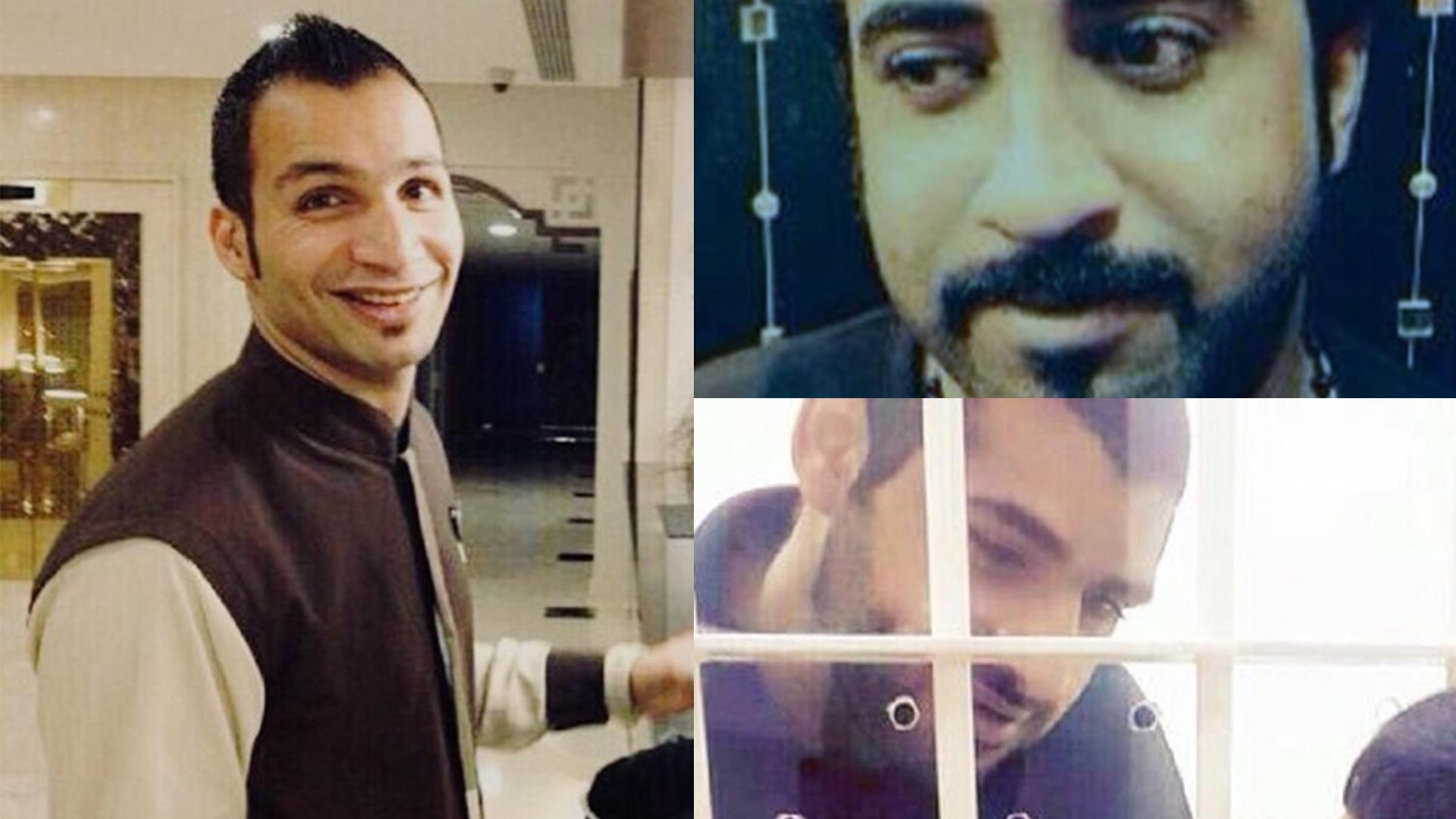
Egypt – threatened execution


Dr. Osama Yassin is a paediatrician – but right now, he is sitting on death row in Egypt – where there is human rights crisis. 

He was arrested in 2013 and has been in solitary confinement since – often denied food and water. He was sentenced to death alongside 11 other men in a mass trial of 739 people and faces imminent execution. 

No specific evidence was introduced against Dr Osama in his trial.

This is reproduced from a message from Reprieve. If you can add your name to their petition that would be wonderful. You can access it here.

Saudi Arabia: Don’t execute Abdullah al Howaiti


Abdullah was 14 years old when he was abducted by Saudi Arabian authorities in 2017. He was tortured until he ‘confessed’ to crimes he couldn’t have committed. He has several alibis—he was at the seafront 200 km away, playing football with his friends, at the time of the alleged crime.

Abdullah’s conviction was overturned in November 2021. This should be good news, but under Saudi Arabian law there must now be a retrial. That’s why we can’t stop fighting now. 

Saudi Arabian authorities say that they ended the use of the death penalty for child defendants in April 2020. But this is clearly a lie—Abdullah is a child defendant. We’re holding them accountable and making sure the death penalty and his so-called ‘confession’ are off the table. 

Thousands of us in the Reprieve community are helping build a huge swell of public attention and demanding that UK Foreign Secretary Liz Truss steps in to protect Abdullah. Will you help too?

If you would like to take part follow this link to the Traidcraft site.

Death penalty report


Latest report from mid November to mid December

We are pleased to attach the latest death penalty report for the month thanks to group member Lesley for compiling it. The report features events in Egypt which is executing large numbers of people, USA, India and other countries. Note that China, which probably executes more of its citizens than the rest of the world combined, does not feature because it keeps details a state secret.

Singapore execution deferred


Amnesty calls for execution of man with intellectual disability to be ended

Update 30 November

The 30 November appeal hearing has been postponed. Ahead of the appeal hearing before the planned execution of Malaysian national Nagaenthran K Dharmalingam, Amnesty International’s Singapore Researcher Rachel Chhoa-Howard said:

“Singapore authorities must listen to the global outcry against executing Nagaenthran, whose case has shocked people around the world.  This appeal hearing provides an opportunity to call off this horrific punishment against a man who may not fully understand what is happening to him.

“Nagaenthran’s case has been marred by multiple human rights violations including deep concerns about Nagaenthran’s intellectual disability, which UN experts have stressed would render his execution unlawful. Recent testimony from his family and lawyer about his current mental health condition reinforces these concerns.

“Singapore must act now to avoid a stain on its international reputation by commuting Nagaenthran’s sentence, and avoiding another case like this by urgently reforming its use of the death penalty, and introducing a moratorium on executions as first steps towards full abolition of this cruel punishment.”

Background

Lawyers for Nagaenthran made an application to Singapore’s High Court seeking a stay on the ground that executing him would be unconstitutional in light of his intellectual disability. This application was dismissed, but his lawyers were able to appeal the decision to the Court of Appeal.

The hearing was postponed after Nagaenthran tested positive for COVID-19 on 9 November, was rescheduled for 30 November, and has now been postponed again. The next date has yet to be confirmed. If appeals are unsuccessful, a stay will be lifted and the execution will proceed, possibly in a matter of days.

Nagaenthran was convicted and sentenced to the mandatory death penalty in November 2010 for importing 42.72 grams of diamorphine (heroin) into the island state in April 2009. His conviction and death sentence have so far been upheld on appeal.

Medical experts who have assessed Nagaenthran found that his cognitive deficits may have contributed towards his diminished responsibility when carrying out his offence. In recent weeks, Nagaenthran’s youngest brother has expressed deep concerns about his brother’s mental state and incomplete understanding of his imminent execution when he was able to visit him in prison.

Amnesty International opposes the death penalty in all cases without exception. As of today, 108 countries have abolished the death penalty for all crimes and more than two-thirds are abolitionist in law or practice.

Iran: execution


Iran is one of the world’s major countries for executing its citizens often after inadequate trials and the use of torture. We learned today that the execution has taken place in Iran of Arman Abdolali.  This is the young man for whom Amnesty have campaigned recently.  Now aged 25, he was sentenced to death as a child following his conviction for murder in a trial that was grossly unfair and included confessions obtained through torture.  International condemnation led to his execution being halted twice – most recently on 16th October – but he has now been executed under the ‘qisas’ laws allowing the victim’s family to request ‘an eye for an eye’ justice.

Monthly Death Penalty report


We attach the death penalty report for mid October to mid November thanks to group member Lesley for the work in compiling it. We are delighted to include the news of Ali Al Nimr’s release from prison in Saudi. Ali was the subject of a world wide campaign and members of the Salisbury group also campaigned on his behalf.

Singapore execution: latest


NAGAENTHRAN DHARMALINGAM

Nagaenthran was scheduled to be executed today (10 November 2021). The stay of execution he has been granted has been made indefinite, but it is NOT permanent.

The most recent information we have been able to find is in today’s Guardian. Mr Dharmalingam, who has learning difficulties and whose case led to a huge international outcry, was due to have his appeal heard yesterday (9th), but he had tested positive for Covid and so the appeal was adjourned, and the stay of execution ordered. 

Amnesty and Reprieve have taken up his case, and will no doubt let us know when we need to take further action.

Help stop an execution in Iran


Arman Abdolali was due to be executed today but it has now been scheduled for Saturday. We ask that you spend a few moments to send a message to the Iranian Embassy to ask them not to do this. Full details are in the link below.

Arman was just 17 when he was arrested. He was held in solitary confinement and beaten regularly, before “confessing”. He says this “confessions” was obtained under torture and there are serious concerns about his trial. 
 

Take action by calling on the Iranian Embassy in the UK to ensure the execution on Saturday does not go ahead. 

http://email.amnestyuk.org.uk/q/11mqIvSAxHoACoGGucijZqv/wv

Death Penalty report: Sept/Oct 2021


We are pleased to attach this month’s DP report thanks to group member Lesley for her work in compiling this. A mixture of news as ever with the situation in the USA becoming more troubling in some states. France’s action in trying to achieve a world wide ban is encouraging. As ever there is no information from China where executions are a state secret and are believed to be the worst in the world.

Time for Ghana to scrap the death penalty


World Day Against Death Penalty

The death penalty in Ghana has been frequently used in violation of international law and standards, affecting predominantly those from disadvantaged socio-economic backgrounds, as shown by research carried out by Amnesty International. It is high time the authorities of Ghana acted to fully abolish it.

In Ghana the death penalty has been imposed mainly as the mandatory punishment for murder, meaning that judges were unable to consider any mitigating factors relating to the case, the circumstances of the offence or the background of the defendants at sentencing, when they imposed the death penalty. This has meant, for example, that some women on death row could not have their experience of being subjected to prolonged domestic violence at the hands of their husbands or partners taken into account when they were convicted of their murders.

The widespread concerns on the lack of effective legal representation and appeals described by many on death row is also greatly alarming, including as these are critical safeguards to protect the rights of those facing the death penalty and avoid miscarriage of justice. Around three-quarters of the 107 people on death row interviewed by Amnesty International in preparing its 2017 report, had a state-appointed lawyer at trial level, with only around 15% able to hire a lawyer of their choice with help from their families. Three men stated they did not have any legal representation during their initial trial; of the three women on death row at the time of the interviews, two said they did not have a trial lawyer. Several others said that their lawyers had not attended all the hearings; and many said that they did not have a chance to talk to their lawyer and prepare their defence during trial.

As appeals are not mandatory in Ghana, the majority of those on death row told Amnesty International that they had been unable to appeal their convictions and death sentences. Most did not fully understand their right to appeal or how to pursue this process, and believed they needed to have sufficient money to hire a private lawyer in order to appeal. Figures provided by the Ghana Prison Service (the Prison Service) in March 2017 indicated that only 12 prisoners on death row had filed appeals since 2006. None of the three women on death row had been able to file an appeal due to lack of money. One woman told Amnesty International that at the time a lawyer asked for 60 million Old Ghana Cedi (more than US$12,000) to file an appeal.

It comes as no surprise that in a legal system with so few built-in safeguards those who end up carrying the burden of the death penalty have disadvantaged backgrounds. The majority of the 107 people interviewed came from outside of the greater Accra region, had minimal educational levels and were from disadvantaged socio-economic backgrounds, with children left in the care of others. Against international safeguards, six people on death row at Nsawam Prison were considered to have mental (psychosocial) or intellectual disabilities and were not supported through specialized care.

Conditions for men and women on death row do not meet international standards. Both men and women reported overcrowding, poor sanitary facilities, isolation, and lack of adequate access to medical care and to recreational or educational opportunities available to other people in detention. Amnesty International opposes the death penalty in all cases without exception.

This post is reproduced from Amnesty

Amnesty briefing

Blog at WordPress.com.

Up ↑