UK government soft-pedalling over the death penalty


Amnesty sets out facts of government’s reluctance to press for an end to the death penalty in some countries

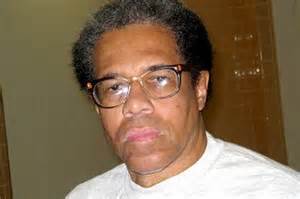
The Government has been accused of “soft-pedalling” over the death penalty and seeming to make trade more important than human rights.  The charge by Amnesty International UK’s director Kate Allen (pictured in Salisbury Cathedral last year) comes as the human rights organisation released figures showing that at least 1,634 people were executed in 2015, a rise of 54% on the year before.  Despite being the highest number Amnesty has recorded since 1989, this total does not include China, where thousands were likely to have been executed but where the death penalty is a state secret.
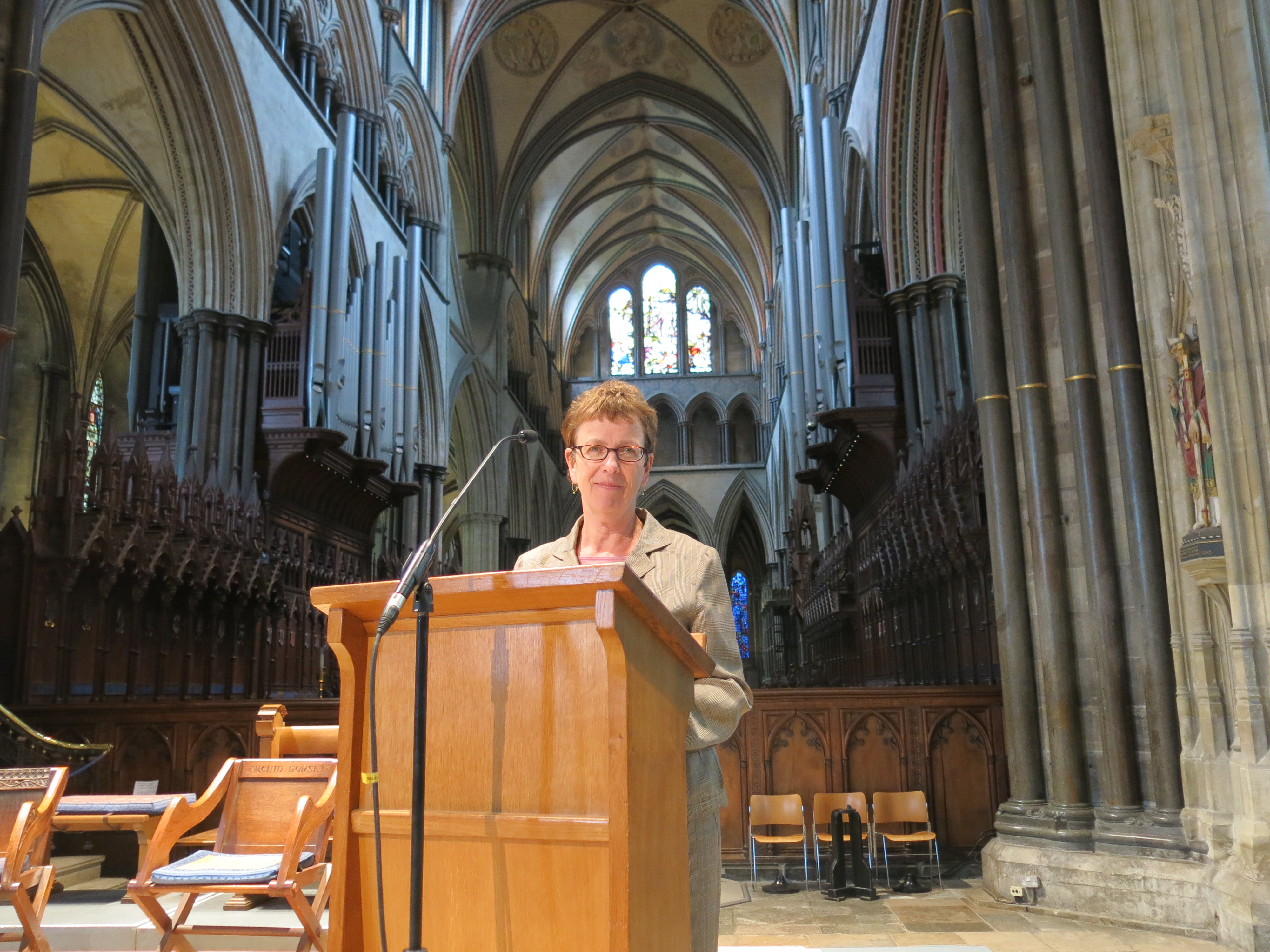
The figures – contained in the report Death Sentences and Executions in 2015 – show that the top five executioners in the world in 2015 were China, Iran, Pakistan, Saudi Arabia and the USA.

This “profoundly disturbing” surge in executions was largely fuelled by big increases in Iran, Pakistan and Saudi Arabia, Amnesty International reported.  Amnesty International’s fears have been raised just hours after MPs on the Commons Foreign Affairs Select Committee said there is “plainly a perception” the Government is prioritising trade and security with China, Saudi Arabia and Bahrain above human rights.

Ms Allen said:

Like the Foreign Affairs Committee yesterday, we’re worried that the Government has started soft-pedalling over foreign countries’ use of the death penalty, preferring to prioritise trade with countries like China, Saudi Arabia or Pakistan.

Until recently the UK’s policy of seeking global abolition of capital punishment had a clear focus and strategy.  Now the death penalty’s been thrown into the pot with other concerns and it’s much harder to tell whether the Government is prioritising this life-and-death matter.

If governments in Beijing, Tehran, Islamabad and Riyadh aren’t hearing about our outrage at executions after torture and unfair trials, then the executioners are going to think they’ve got a green light to carry on killing.

We want to see the Foreign Office publishing a clear strategy for its anti-death penalty work at the earliest opportunity.”

Amnesty International’s secretary general Salil Shetty said: “Iran, Pakistan and Saudi Arabia have all put people to death at unprecedented levels, often after grossly unfair trials.”

Last year, the Foreign and Commonweatth Office’s most senior civil servant made a frank admission to MPs that human rights “is not one of our top priorities” and that the “prosperity agenda is further up the list”.

Ministers deny the issue has been downgraded but a string of trade-focused, red carpet visits to the UK by the leaders of countries with some of the worst records of rights abuses has reinforced the perception of a shift of diplomatic emphasis.  Readers of this blog will know we have been following the twists and turns of this story for some months.  We wrote to our local MP Mr John Glen last year on Saudi Arabia and the rising toll of executions by beheading or crucifixion and we received a bland reply from the FCO minister Tobias Ellwood.  Since that time more evidence has emerged of policy changes designed it seems to scale down the human rights aspects.  We noted that when George Osborne visited China to the surprise of his hosts he failed to raise the question of human rights and executions at all.  Tobias Ellwood was reported by local media as congratulating the Saudis on the progress they were making with human rights.

Human rights minister Baroness Anelay said:

I am deeply troubled by the increase in the number of reported executions in 2015, which was driven by concerning increases in Pakistan, Iran and Saudi Arabia.

The UK opposes the death penalty in all circumstances and we make our opposition well known at the highest levels to countries which continue to apply it. Our message to them is clear, the death penalty is unjust, outdated and ineffective. It also risks fuelling extremism.

Despite these concerning figures there has been progress in many countries.  It is welcome that in 2015 Fiji, the Republic of Congo, Madagascar and Suriname all abolished the death penalty.

The Foreign Office will continue to use its diplomatic network to push for progress towards the global abolition of the death penalty.

Maya Foa, of Reprieve, described the rise in executions as “extremely troubling” adding: “It is all the more disturbing, therefore, to see what the Foreign Affairs Select Committee this week described as an ‘apparent deprioritisation’ of human rights by the UK government.

Now more than ever, Britain needs to be speaking out against the grave abuses – including mass trials, torture and death sentences handed down to juveniles and political protesters – being committed by its allies.

It is hard not to come to the conclusion that the primary aim of the government is trade and business with human rights coming a poor second if at all.  This overlooks the nature of ‘soft power’ and the fact that as a nation, we could be influential in humanising world affairs.  Instead, we chose to push out the red carpet for the most frightful regimes and, as the Panama papers are revealing, allow dubious individuals to buy up large parts of London using off shore tax havens.

Follow us on Twitter and Facebook

Death Penalty Report published


Dramatic rise in executions in 2015: the most in one year for a quarter of a century

To read the full report click here (pdf)


The past year has seen a horrific increase in executions around the world – the most we’ve recorded in a single year since 1989, and an increase of an astonishing 54% from the year before.

A few countries are executing prisoners by the hundreds, sometimes for crimes that aren’t serious, sometimes after trials and treatment that isn’t just or fair, and always violating the individual’s right to life and right to be free from torture.

From Australians Myuran Sukumaran and Andrew Chan shot by firing squad for drugs charges in Indonesia to Shafqat Hussein, hanged in Pakistan for a crime he confessed to after torture, aged just 14, over 1,634 individuals were put to death by state authorities last year.

Huge rise in executions

We recorded a huge increase in the death penalty, an increase of 54% compared with 2014. This is the largest number of state executions for a quarter of a century.

The number of countries that executed people rose – from 22 in 2014 to 25 in 2015. At least six countries resumed executions: Bangladesh, Chad, India, Indonesia, Oman and South Sudan.

Countries continued to flout other aspects of international law, putting to death people with mental or intellectual disabilities, as well as those charged with non-lethal crimes. Apart from drug-related offences, people were executed for crimes such as adultery, blasphemy, corruption, kidnapping and ‘questioning the leader’s policies’.

The death penalty is always a violation of human rights. We oppose it in every case.

The main executioners

A minority of countries are committing the majority of executions. 89% of executions in 2015 took place in just three countries: Iran, Pakistan and Saudi Arabia.

Iran

Iran continued to execute juvenile offenders like Shafqat – aged under 18 at the time of the alleged crime – in violation of international law. Authorities there sentencd juvenile offenders to death last year too.

Pakistan

Pakistan lifted its freeze on civilian executions in December 2014, and in the year that followed killed 326 people – the most we’ve ever recorded for that country in a single year.

An attack on a school in Peshawar prompted the government to start executing again, something it had not done since 2008. Initially, the freeze was lifted for those charged with terrorist-related offences, but in March 2015 the government resumed executions for all capital crimes, such as murder and blasphemy.

In a country where people are routinely denied the right to a fair trial, and evidence extracted through torture is used to seal convictions, hundreds of people are being sent to their deaths under the pretence of justice being served.

Saudi Arabia

Last year saw a huge surge in executions for an already prolific executioner. These figures don’t even include Saudi Arabia’s mass execution of 47 people at the start of this year.

The missing executioners

But these figures exclude China, where numbers remain a state secret, yet where we believe thousands of people are executed every year. We consider China to be the world’s top executioner, although the numbers are missing from this report.

We haven’t published figures for executions in China since 2008; we’re challenging the Chinese government to reveal their own figures and demonstrate that they really are limiting their use of the death penalty – something they have claimed to be doing since the country’s highest court began reviewing all death penalty cases back in 2007.

We also don’t publish figures for North Korea, a state shrouded in secrecy.

Execution sentences in 2015

At least 1,998 people were sentenced to death in 2015 and at least 20,292 prisoners remained on death row at the end of the year.

Some hope

Four countries abolished the death penalty for all crimes – the highest number to do so in the space of one year for almost a decade.

Madagascar, Fiji, Suriname and Congo all did away with the death penalty in the national laws once and for all.

Mongolia adopted a new Criminal Code outlawing the death penalty for all crimes in December which will enter fully into law in September 2016.

There is hope even in the USA, which continued to flout international law by executing people with mental disabilities.  Pennsylvania abolished the death penalty for all crimes in 2015 , bringing the total number of US states that have abolished the death penalty to 18.

We still hope for a world without the death penalty, and today half the world has abolished it for good. Add to this countries which have abolished this punishment in practice, as opposed to law, and the total comes to two-thirds of the world.

Saudi executions imminent


“Saudi Arabia’s use of the death penalty to silence dissent sends a chilling message to anybody who dares to speak out against the authorities.” James Lynch
The families of three young men arrested for their involvement in anti-government protests while under the age of 18, fear their sons are among four people reported to be facing execution tomorrow, Amnesty International said today.
The family of Ali al-Nimr expressed fears on social media that he, along with Dawood Hussein al-Marhoon and Abdullah Hasan al-Zaher, is among the prisoners referred to in a government-run newspaper article published today. The article said the scheduled executions will complete a wave of punishments for terrorism offences that saw 47 people executed on the same day in January.

See the full story:

Executions

Death penalty report


Attached is the death penalty report compiled with thanks by group member, Lesley.No to the death penalty

Death penalty report


Follow us on Twitter and Facebook


Urgent action: Iran


Possible execution of someone a juvenile when offence committed

We enclose an urgent action concerning a man who was a juvenile when the alleged offence was committed.  If you are able to write this would be appreciated.

Urgent action (pdf)

twitter imageFollow us on Facebook and Twitter

Albert Woodfox freed


Today, Louisiana prisoner Albert Woodfox walked free, 44 years after he was first put into solitary confinement.

[We are publishing this case from Amnesty USA.  The Salisbury group has campaigned on behalf of this man so we are delighted to see his release after all this time.]

albert woodfoxHe was the United States’ longest serving prisoner held in isolation. Nearly every day for more than half of his life, Albert Woodfox woke up in a cell the size of a parking space, surrounded by concrete and steel. Tomorrow morning, for the first time in more than four decades, he will be able to walk outside and look up into the sky. Over the course of nearly five years working on Albert Woodfox’s case at Amnesty, I heard many times that the odds were insurmountable. But I always knew that Albert Woodfox would go home. I have seen the incredible power of our movement when we work together. I have seen the courage humility, and determination of so many of you who have played big and small roles to help this historic human rights victory come to fruition. I have seen the unbelievable strength of the Angola 3: Robert King, Herman Wallace, and Albert Woodfox himself—all three of whom endured nightmares but persevered with humor, dignity, and resolve to wage a relentless fight against the cruel, inhuman and degrading practice of prolonged solitary confinement in the United States. With the knowledge of his release, Albert had this message for those who have helped him secure his freedom:

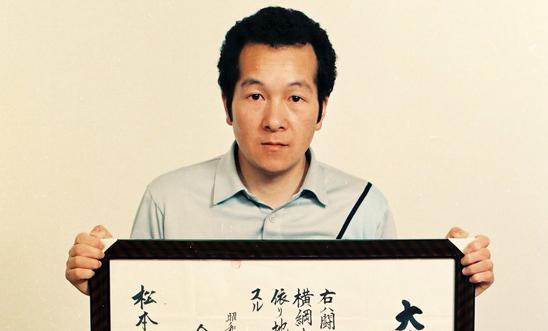
I want to thank my brother Michael for sticking with me all these years, and Robert King, who wrongly spent nearly 30 years in solitary. I could not have survived without their courageous support, along with the support of my dear friend Herman Wallace, who passed away in 2013. I also wish to thank the many members of the International Coalition to Free the Angola 3, Amnesty International, and the Roddick Foundation, all of whom supported me through this long struggle. Lastly, I thank William Sothern, Rob McDuff and my lawyers at Squire Patton Boggs and Sanford Heisler Kimpel for never giving up. Although I was looking forward to proving my innocence at a new trial, concerns about my health and my age have caused me to resolve this case now and obtain my release with this no-contest plea to lesser charges. I hope the events of today will bring closure to many.

I’m carrying those words with me today as we celebrate this victory. Today Albert Woodfox walks free—February 19, 2016, his 69th Birthday. In Solidarity, Jasmine Heiss Senior Campaigner, Individuals at Risk Program Amnesty International USA

Death penalty summary


The death penalty summary for the last month is published below with thanks to group member Lesley forNo to the death penalty compiling it.  It contains some good news with four more abolitionist countries and modest progress in USA.  Set against that is the dire situation in Saudi, Iran and Pakistan.  China is the worlds leader in executions but the figures are a state secret.

Many of the items in the summary are covered in greater detail elsewhere on this blog.

Death penalty summary

Sixteen years on death row in Japan


Facebook

Making a Murderer and Matsumoto Kenji: The truth can be stranger than fiction
Matsumoto Kenji Matsumoto Kenji © Private
  • A man from a poor background, with an IQ below 70; a score so low that he has difficulty comprehending what is happening to him.
  • His implication in a serious crime, in which a dominant older relative was the prime suspect.
  • A confession extracted by police after hours of intense interrogation, a confession which was subsequently described as ‘coercive’ by the man’s lawyers.

Well, if you’ve been watching the Netflix documentary ‘Making a Murderer’ you may be thinking of the case of Brendan Dassey who, at the age of 16, confessed to assisting his uncle in a rape and murder after hours of intense police questioning.  No lawyer was present during the interrogation, nor was his mother, despite the fact that he was a minor.

Dassey later recanted his confession and one Wisconsin lawyer who assisted on the case on seeing the video of the ‘confession’, described “feeling physically sick as I watched it (sic), he just didn’t understand what was going on”.  No physical evidence linked him to the crime and jurors have stated that his conviction was heavily influenced by the confession.

Brendan Dassey is not the only young man spending a very long time in prison after being convicted of a crime following a confession extracted in contentious circumstances.

In 1993 Matsumoto Kenji – along with his older brother – was arrested and charged with a double murder in Japan. Kenji has an IQ of between 60 and 70, allegedly caused by Minamata disease (mercury poisoning) which was common in the prefecture in which he was born, around the time he was born. As a result of the condition Kenji suffered from seriously hampered cognitive function.

Amnesty has serious concerns about Kenji’s treatment at the hands of the police.  His interrogation has been described at coercive, as officers offered him food if he talked and told him to “be a man” during the interrogation.

Upon learning of a warrant being issued for his arrest, his brother killed himself and Kenji was left to face trial alone.  During his trial it was accepted by the court that he was totally dependent upon his brother and was unable to stand up to him.  Following his conviction he was sentenced to death, a sentence which has been repeatedly upheld in subsequent appeals.

In Japan, death row patients are held in solitary confinement and are not allowed to speak to other inmates, only receiving occasional visits from family or lawyers.  When they are in their cells they are forbidden from moving, being punished severely if they do.  They are also given no prior warning before they are executed, leaving death row patients suspended in an endless state of anxiety.

Unfortunately, Kenji’s mental health has deteriorated significantly on death row, to the point that he has developed a delusional disorder.  His lawyers have argued that he is currently unable to communicate or understand information pertinent to his case and they further believe that his isolation has contributed significantly to his deteriorating mental health condition.

No to the death penaltyThese two cases, so similar, illustrate the vulnerability of individuals with serious learning difficulties in the face of major criminal charges, and the difficulty they face in ensuring their right to fair treatment at the hands of authorities in the criminal justice system.

Under international laws around use of the death penalty, it is illegal to execute someone with serious mental or intellectual disabilities.  At Amnesty, we continue to oppose the death penalty in all instances and in all cases as it’s a violation of the right to life and to be free from torture.

Call for justice for Kenji on his birthday

Today is Kenji’s 65th birthday. It’s the 16th birthday he has spent on death row.Kenji’s case is currently under review for appeal and the Minister of Justice will be the key decision-maker. If you have a moment, please write to him and call for him not to execute Kenji.

What to say

Please write to Justice Minister Matsuhide Iawki, urging him:

  • Not to execute Matsumoto Kenji and to introduce a moratorium on executions in Japan;
  • To commute Matsumoto Kenji and all other prisoners’ death sentences;
  • To Improve the treatment of death row inmates, including an end to solitary confinement;
  • To promote debate on the abolition of the death penalty in Japan.

You can also write to Health Minister Yasuhisa Shiozaki and ask him to:

  • Ensure that Matsumoto Kenji’s health is regularly assessed and he is provided with any necessary treatment.

Whom to contact

Minister of Justice, Matsuhide Iawki
Ministry of Justice
1-1-1 Kasumigaseki
Chiyoda-KU
Tokyo 100-8977
Japan

Twitter: @MOJ_HOUMU

Minister of Health, Yasuhisa Shiozaki
1-2-2 Kasumigaseki
Chiyoda-ku
Tokyo, 100-8916
Japan

Follow us on Twitter and on Facebook


Urgent Action: Belarus


Death sentence in Belarus
President Lukashenko

We are highlighting the case of Gennadii Yokovitskii in Belarus and asking that you find time to write to the relevant authorities please.  Belarus is the last country in Europe which exercises the death penalty and as much of what goes on is secret, there is a lack of an informed debate within the country.

The justice system is flawed with many convictions based on forced confessions.

When the executions actually happen is unknown to the victim, his or her family or their legal representative which adds considerably to the stress the family is suffering.  After the executions have taken place, the authorities will not release the body or even say where it is buried.

Amnesty is opposed to the death penalty in all cases.  There is no available image of Gennadii.

Urgent Action

twitter imageFollow us on Twitter and Facebook


No to the death penalty

Urgent Action: Sheik Nimr Al-Nimr’s body


Plea to return body

This urgent action concerns the body of Sheikh Nimr al-Nimr’s which, despite repeated requests, has still not been returned to the family.  This followed his execution along with 46 others.  The Saudi’s are showing signs of irritation at the negative publicity they are getting following the mass executions which took place recently and at the increasing numbers of executions generally.

Hardly surprising.  Because, in addition to execution itself, there are a number of other matters which are No to the death penaltytroubling about his arrest, trial and subsequent treatment.  Namely:

  • The family was not informed of his exection
  • the authorities have so far refused to return his body
  • the court hearings took place without his family or his lawyer being present
  • he was denied access to the court documents
  • the officers who arrested and interrogated him gave evidence but were not allowed to be cross-examined.

Not exactly a fair system.  Full details of this is contained on the urgent action below and we would be grateful if you could find the time to write to the authorities.  Why does it matter?  Because the UK government continues to turn a blind eye to the human rights violations in that country and would prefer to carry on being a major arms supplier.  This is a time of change in Saudi with a new generation taking over.  The rapprochement with Iran is troubling them and the decline in the oil price is going to cause major problems.  Carrying our executions of the Shia minority who were demonstrating not engaged in violence is not a productive way forward.

Urgent Action


twitter imageFollow us on Twitter and Facebook.  If you would like to join us please go to the ‘Joining’ link on the home page for details.  It is free to join the local group.

Blog at WordPress.com.

Up ↑