Minutes and Newsletter, December


Minutes of our December meeting

December 2025

We are pleased to attach our minutes and newsletter for the December group meeting thanks to group member Lesley for compiling them. They include several reports some of which appear elsewhere on this site with links to other sites of interest.

Item 12 refers to upcoming events which if you are interested in joining us are a good opportunity to make contact.

Previous posts:

Importance of Human Rights: UK Support for the ECHR


November 2025

Nigel Farage’s proposal for the UK to leave the European Convention on Human Rights was defeated on 29 October by 154 votes to 96, a majority of 58. The vote was largely symbolic: a ten-minute bill without government backing is often used simply to air an issue. The Liberal Democrats led the opposition to the bill, a number of Conservatives joined Reform UK in supporting it and many Labour backbenchers chose not to abstain but voted against it, fearing that were it to pass even symbolically, it would send a negative message to European allies.

The position of the Government remains that while it may pursue some changes to the interpretation of the Convention it would under no circumstances seek to abolish it.

75th  Anniversary 

A statement of support for the ECHR was signed by almost 300 organisations to mark the 75th anniversary of the Convention. Organised by Liberty, the statement highlighted the many ways the Convention has helped ordinary people from victims of sexual violence to LGBT+ service personnel, public interest journalists to mental health patients and victims of grave miscarriages of justice, as with the Hillsborough and Windrush cases.

It calls on the government to make the positive case for the UK’s human rights protections and claims that the way the Convention has been scapegoated in recent years has had devastating real world consequences. 

Meanwhile a survey for Amnesty by the widely respected agency Savanta concluded that more than 8 in 10 UK adults say that human rights protections are as important – or more important – today than when the ECHR was created after the Second World War. When asked which rights matter most to them, UK adults chose: the right to a fair trial (42%); the right to life (41%); the right to privacy, family life and respect for your home (40%).   

Support for staying in the ECHR is almost twice as high as support for leaving.  48% want the UK to remain part of the ECHR.  Only 26% want to leave.  

People believe rights should be universal, permanent, and protected from political interference:   87% agree that rights and laws must apply equally to everyone, 85% agree we need a legal safety net to hold the Government accountable in cases like the infected blood scandal and Grenfell and 78% agree rights should be permanent, not something the Government of the day can reduce. 

Respondents were shown a list of major UK scandals or institutional failings and asked which made them feel the importance of strong legal protections and accountability. The top five were: 

Grenfell Tower – 46%; Hillsborough disaster and cover up – 42%;   Infected blood scandal & the COVID inquiry – 37%; The murder of Sarah Everard – 36%;   Windrush scandal – 29%.   

ECHR and Immigration

In response to critics attributing the real problems of the UK’s immigration system to the ECHR, the Good Law Project set out some basic facts about the Convention, namely that it does not provide a right for people to enter or remain in a country of which they are not a national; that the Court rarely rules against the UK on immigration issues at all  – since 1980 only on 13 of the 29 cases concerning either deportation or extradition. And while the Human Rights Act of 1998 incorporating ECHR rights into UK law makes it unnecessary to go to Strasbourg, successful claims to stay in the UK are rare. Last year out of a total inward immigration of 948,000 only 3,790 cases related to the Human Rights Act were won at immigration tribunals.

Protect the Protest: Palestine Action and Judicial Review

Amnesty and Liberty will be making the case to lift the ban on the proscribed activist group Palestine Action in the Judicial Review scheduled for 25 – 27 November.

Defend Our Juries are urging the police not to bow to pressure from the Government but to allow the

peaceful protests organised throughout November at the continuing crisis in Gaza, the West Bank and Israel. They say that police are struggling to enforce the law in the face of peaceful protesters, many of them elderly. Some police forces are refusing outright to make arrests. International and national human rights groups, politicians and United Nations representatives have condemned both the ban and the subsequent attacks on civil liberties. Unions are declaring that they will not recognise the ban, with over 2,100 now arrested under ‘terror charges’ related to this peaceful sign-holding campaign.

Sacha Deshmukh, Amnesty’s Director, criticised the Home Secretary for statements “that create a chilling effect by dissuading people from exercising their fundamental right to peaceful protest. At any time, any interference with freedom of expression must be strictly necessary, proportionate and in full accordance with the law.” 

In a further incident of Transnational repression Sheffield Hallam University terminated a staff member’s project about Uyghur forced labour after Chinese security officers interrogated a staff member in Beijing and a Chinese company named in the report filed a defamation lawsuit in the UK. The university retracted the ban but only after  Professor Laura Murphy, specialising in human rights and modern slavery, began legal action against it for violating her academic freedom.

Latest posts:

All our posts are free to use by other Amnesty or human rights sites.

Farage loses vote to leave the ECHR


Reform leader loses Commons vote

November 2025

Edited, 5 November

Last week, Nigel Farage, the leader of the Reform party, lost his Commons vote to leave the ECHR. Reform, along with many Conservatives, are pushing the idea of leaving the European Convention as means to solve the immigration crisis and in particular the Channel crossings. In a vote, 154 were against and 96 for leaving.

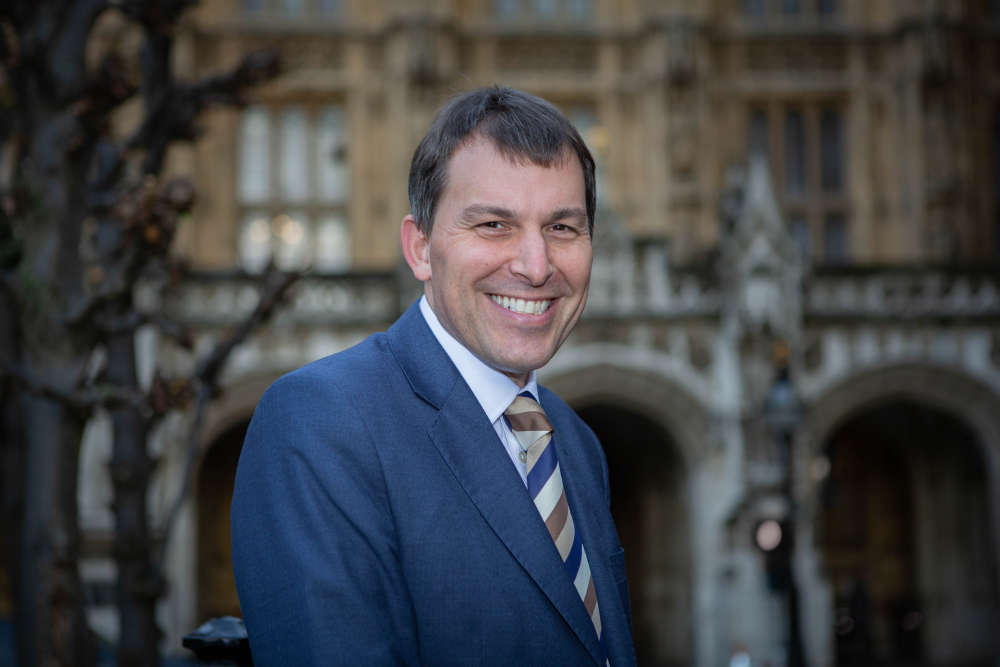
Farage is not alone and in the Guardian link to this story, local readers will see the East Wiltshire MP Danny Kruger sat beside him. The Salisbury MP Mr John Glen (pictured) has also joined the chorus, no doubt following his leader Kemi Badenoch, who made an abrupt U-turn on the subject at their conference in September. It appeared in the ‘View from the Commons‘ piece in the Salisbury Journal (16 October). Entitled ‘Exiting ECHR not about watering down our rights‘ it seeks to justify the U-turn by Kemi Badencoch.

‘We do not need it’ ‘Mr Glen told us claiming that Common Law is all you need because ‘we are perfectly capable of upholding our rights and freedoms‘. Why then did scores of people have to go to Strasbourg to get justice? Why did the Hillsborough families have to wait years to get their justice? And the Birmingham Six were finally exonerated when judge after judge failed in their duty? And all those who spent years in prison for crimes they didn’t commit. A list of other cases where people sought justice from Strasbourg can be found here. The Post Office scandal?

The Conservatives have hated the Human Rights Act and it’s noteworthy that both Glen and Kruger ‘generally vote against laws to protect equality and human rights’ according to They Work for You. They are happy with a legal system that largely protects the rights of the powerful and the property owners but are somewhat less concerned with the rights of the powerless even assuming they could contemplate using the law at all.

Mr Farage argues that we will not have true sovereignty until we leave the Convention, a similar argument to that put forward at the time of Brexit. The threat to our sovereignty is more likely to come from the Trump administration in the US. Trade sanctions and threats to NATO are much more serious than anything coming from Europe.

The Guardian piece above was written by Daniel Trilling who came to Salisbury to speak on immigration matters.

Image: Salisbury Radio noting that Mr Glen voted to leave the ECHR.

Conservative Party’s Plan to Repeal Human Rights Laws


Speech by the leader of the Conservative party in Manchester

October 2025

These are some extracts from the speech Kemi Badenoch MP gave to the Conservative party conference in Manchester this week. We have selected those parts which focus on human rights issues and in particular the plan to leave the European Convention and to repeal the Human Rights Act.

“[…] It is fundamental, why can’t we control our borders and remove those who need to go? All these

questions boil down to who should make the laws that govern the United Kingdom? Conservatives, believe it should be our sovereign Parliament, accountable to the British people. The reality today, is that this is simply not the case.

“This use of litigation as a political weapon is what I call lawfare. Well-meaning treaties and statutes – like the European Convention on Human Rights and the European Convention on Action against Trafficking drafted with the best of intentions in generations gone by, and more recent additions like the Modern Slavery Act, are now being used in ways never intended by their original authors.

“What should be shields to protect the vulnerable, have instead become swords to attack democratic decisions and frustrate common sense. It is that whole system which we need to reform. And the place to start is the European Convention on Human Rights.

Five tests that a country has to pass to be truly sovereign.

First, can we deport foreign criminals and those who are here illegally?

Second, can we stop our veterans being harassed through the courts?

Third, can we put British citizens first for social housing and public services?

Fourth, can we make sure protests do not intimidate people or stop them living their lives?

And fifth, can we stop endless red tape and legal challenges choking off economic growth?

[Lord Wolfson was commissioned to study the ECHR and our membership of it and produced a report the key conclusion was]

When it comes to control of our sovereign borders, preventing our military veterans from being pursued indefinitely, ensuring prison sentences are applied rigorously for serious crimes, stopping disruptive protests, or placing blanket restrictions on foreign nationals in terms of social housing and benefits, the only way such positions are feasible would be to leave the ECHR.’

Commitment to leave

[Badenoch] “We must leave the ECHR and repeal the Human Rights Act. Conference, I want you to know that the next Conservative manifesto will contain our commitment to leave (our emphasis). Leaving the Convention is a necessary step, but not enough on its own to achieve our goals. If there are other treaties and laws, we need to revise or revisit then we will do so. And we will do so in the same calm and responsible way, working out the detail before we rush to announce.

“The rights we enjoy did not come from the ECHR. They were there for hundreds of years in our common law. Parliament has legislated over centuries to reflect and protect our freedoms. Human Rights in the United Kingdom did not start in 1998 with the Human Rights Act, and will not end with it. As we work through our detailed plan, we are clear that leaving the ECHR and repealing the Human Rights Act will not mean that we lose any of the rights we cherish”. […]

Comment

The statement by the Conservative leader is clear and unequivocal. Even allowing that it is a speech a long way from an election and designed to encourage a party currently scoring badly in the polls, it is part of a worrying trend with more and more voices calling for us to leave the ECHR.

The big claim towards the end of her speech quoted above that ‘Human Rights in the United Kingdom did not start in 1998 with the Human Rights Act, and will not end with it‘.’ Many did start, and some will end if it is repealed. If there will be no difference, then why the desire to end it? She seems to have forgotten that the HRA was introduced because people had to go to Strasbourg to get the justice denied them in the British courts. It is nonsense to claim that the HRA has added nothing of benefit to the rights of the ordinary person.

There are likely to be many who will disagree with Lord Wolfson’s benign conclusion that the proposed departure from the ECHR would be fully compliant with the Belfast Agreement.

Leaving the ECHR will be a retrograde step and have repercussions for our international relations. It is likely to make trade between us and Europe more difficult. We will join Russia and Belarus as the only nations outside its remit. Repealing the HRA – which has been promised several times before by Conservative leaders but never carried out – will seriously damage our rights as citizens. Combined with recent legislation to limit protests for example, it will be a retrograde step.

An Amnesty petition can be accessed here.

Speech accessed from the Conservative website [8 October]

Human rights under threat


Many politicians lining up to weaken rights

September 2025

We have posted over the years of this site’s existence the near constant attacks on human rights, the act itself and more recently, the European Convention (ECHR) which is generating a lot of anger at present. Many of the attacks came from news outlets who were concerned about privacy issues in the light of their various hacking* activities. The attacks have morphed in recent years with greater emphasis on the ECHR and a widespread desire among politicians to leave it. The impetus for this latest surge follows the attempt to deport immigrants to Rwanda which was stopped at the last minute by the European Court from flying from an airfield a mile or two from where this is being typed. The policy was abandoned by Labour when it came into power.

This post draws heavily on an article in the Observer (14 September) by Rachel Sylvester entitled: Misinformation and myth: the UK’s phoney war on human rights. The article begins with the well worn disinformation stories the latest being the chicken nugget debacle. Immigration, asylum seekers, hotels and the boat crossings are making the political waves at present and a wide range of politicians are seizing on the unrest to make political hay. They include Nigel Farage (Reform), Robert Jenrick and Kemi Badenoch (Conservative). Locally, Danny Kruger MP for East Wiltshire, is a vocal opponent [Kruger switched from Conservative to Reform while this post was being written].

Chicken nuggets debacle

Chicken nuggets? The story was that an Albanian criminal could not be deported because his son disliked eating chicken nuggets. There was no such ruling. A senior judge made it abundantly clear that an aversion to chicken nuggets could never be enough to avoid deportation. The false story was latched onto by the politicians mentioned above. Since two are members of their political parties and one wants to become one, it is disappointing to observe that they keen to perpetuate myths.

The fury over the boat crossings has led to many politicians wanting to leave the ECHR despite the fact, the article notes, Strasbourg has only ruled against the UK three times in 45 years. In all the invective against the ECHR, its positive effects are seldom reported: Hillsborough being a prime example [Correction: 20 September. It was the HRA which was significant with this inquiry]. But in areas of the country where immigration is a particular problem, leaving the ECHR is a ‘test of ideological purity’ (ibid). It is also part of the Brexit story since many believed that when we left the EU we would leave the European Court as well.

Few friends

The court seems to have few friends however. Politicians who should know better, such as Richard Hermer the Attorney General, are talking in terms of ‘reform’. Reform might be all right but when reform = weaken it’s not all right. There seems to be a lack of stout defence of the act by politicians. Such is the ascendancy of Nigel Farage that it appears politicians of all stripes are desperate to ape his remarks or even try and outdo him. The Human Rights Act has made a significant difference to people’s lives in way many may not be aware of. It would be a huge loss to the country if as a result of hysteria over immigration, we were to lose some important rights.

*There is an ITV drama on this to air shortly.

Previous posts

Why Labour Leaders Are Pushing for ECHR Revisions: A Political Analysis


Alarming stories that Labour leaders are wanting to reform the European Convention

June 2025

Alarming reports have emerged over the past few days that the current government is considering some kind of revision to the European Convention of Human Rights (ECHR). Figures such as the prime minister Sir Keir Starmer, the Justice Secretary Shabana Mahmood and the Attorney General Lord Hermer have made speeches suggesting disquiet concerning aspects of the Convention. In particular it is article 3: No one shall be subjected to torture or to inhuman or degrading treatment or punishment and article 8: Everyone has the right to respect for his private and family life, his home and his correspondence.

This story has history and the statements by politicians are more than usually disingenuous. To understand the story and the reasons for this recent slew of statements it is necessary to look at causes and why there is a clamour among politicians, some of the public and the media for change.

Stage 1the media

Much of the pressure has come from sections of the media so it is necessary to look at what is going on there. Newspaper readership has declined precipitately. Between 2000 and 2010, the decline was 65% and in the following decade up to 2020 a further 55%. Add in rising costs and declining advertising, and there is something of a crisis in the newsrooms. In this climate, it is cheaper to break into the emails, phones, bank accounts and even houses of the rich and famous, politicians and footballers to achieve a juicy front page, than to carry on the normal business of journalism.

Then came the hacking exposures and the Leveson enquiry which exposed the depth and extent of the hacking and criminal activity. It included senior police officers in the Metropolitan police in particular who sold information to the newspapers. This changed the dynamic of the industry and the notion of privacy was an anathema to their business models.

Over the last two decades there have been hundreds of stories alleging that criminals were not getting their just deserts because of their human rights either because of the ECHR or the domestic Human Rights Act. It was a ‘criminal’s charter’ they alleged. Photos of wanted criminals could not be circulated because of their human rights (they can), police could not evict an armed man until they provided him with a McDonalds hamburger because of his human rights (they could but it was normal practice to accede to requests to cool the situation). Abu Qatada was seriously misreported in the tussle over his deportation to Jordan.

Sadly, positive stories about the acts were almost entirely missing. The Daily Mail used the act to defend its journalist’s rights to protects their sources but strangely forgot to mention this to its readers.

Stage 2the politicians

Then the politicians began to join in perhaps sensing from the newspaper coverage that they were onto a popular winner. After all, if the voters were reading a never ending litany of stories about the evils of the human rights laws and Europe meddling in our affairs, it was a gift. It soon became part of the Conservative manifestos to abolish the act or later reform it. It became tangled up with the Brexit crusade and it is possible that many thought that coming out of Europe would mean that the ECHR would also be history. There was the famous cat story by Theresa May which was almost complete nonsense.

There was meant to be a Leveson part II to look at the unlawful conduct between the media and police but there were allegations that in return for a softer ride from the press, Keir Starmer agreed not to set it up. These allegations are denied. There are no plans for a part II.

Stage 3 – the boat people

As the means to arrive into the UK as a refugee or an asylum seeker diminished so the numbers who took to the boats to cross the Channel rose. This became a matter of massive political importance and the Reform party made huge progress with its promises to stop it. Media stories of asylum seekers being installed in hotels are constant. Despite boat crossings being only a small part of those coming to the UK, they loom large in the public imagination and politicians on the right have taken note of this.

The problem is that the government has obligations under the ECHR and other agreements, to treat asylum seekers in a proper way. Demands to simply ‘send them back’ are difficult to do particularly as ‘back’ can mean a county riven by war or where they can face dire consequences. But in simplistic terms human rights are standing in the way, as Mahmood says: ‘voters say international law stop them achieving the changes they want to see.

Stage 4 – the Reform party

Along came Reform and quickly began to made inroads into the political landscape. The overturning of a massive Labour majority of 14,700 in Runcorn and Helsby by Reform has shaken them badly. Reform has simple answers to matters like immigration which appeal to many and which has defeated both the Conservatives and now Labour. They would pick up boats in the Channel and return them to France. Asylum seekers would be processed off shore. These and other policies quick fix policies appeal to many and saying that they are difficult or impossible to do because of our international obligations carry little weight with many voters. They are even inflammatory particularly with those who have a deep distaste for anything European.

Stage 5 – today

So the Labour government is feeling under pressure. It has not ‘solved’ the Channel crossings problem. It has lost popularity for a variety of reasons quite apart from the discussion here. Reform is making great strides and even ahead in some polls with suggestions that Nigel Farage becoming a future prime minister was not the joke it might once have been. The Home Office remains dysfunctional and would take years to reform even under competent leadership. The party is becoming desperate to be able to counter the tide of dissatisfaction present in large parts of the kingdom particularly in the red wall seats.

So this brings into where we started and speeches about trying to reform elements of ECHR. The sadness is that they cannot. It would take years to carry through any reform in Strasbourg with little likelihood of success. If the government were to resile from either or both articles 3 and 8 would it solve its problems? Again sadly, no. The opposition to human rights laws and agreements have little to do with the people at the bottom of society so to speak. Almost no part of their speeches are about the victims of injustice which human rights are about.

As we have argued, it is sections of the media who have over decades created myths and disinformation about the workings of the laws. It is their business models which are under threat not the fate of asylum seekers. Why else would the Murdoch press spend over £1 billion in keeping the facts of its intrusion and criminality out of the courts? It is an irony – almost a supreme irony – that the much prized sovereignty that people apparently so desperately want is not in fact available to them. The Judiciary are all too happy to allow these hugely expensive legal actions to go ahead and thus subvert justice and free speech. There is no justice in any meaningful sense of the word. The rich and powerful can ‘buy’ silence by paying large sums into court that no one can afford to match.

These speeches appear to be preparing the ground at present in an attempt to match the rhetoric of Reform politicians. Instead of a proper concern for justice, establishing a Leveson II enquiry into the criminality of some of the media and their friends in the police, or tackling the rampant injustice of the defamation laws which serve to protect the rich from proper enquiry, our politicians seek to curry favour and favourable headlines in those very media outlets which have distorted the public’s attitudes to the laws which in truth protect them. The sadness is that the three politicians saying this stuff are experienced human rights lawyers who know it to be a distortion of the truth. A truly bizarre state of affairs.

Report critical of human rights


Report published by Policy Exchange claiming the HRA has curtailed the rights of Parliament

November 2024

Slightly amended 13 November

An article appeared in the Daily Mail on 11 November under the headline ‘Rights Act ‘curtailed power of Parliament ”. It said ’eminent lawyers have compiled a dossier of 25 cases where the Human Rights Act was applied and have shown how its use removed power from Parliament’. It continued that ‘power once held in Westminster is increasingly being transferred to the European Court of Human Rights in Strasbourg’ and quotes the example of the government’s wish to deport ‘illegal’ immigrants to Rwanda which was frustrated at the last minute by the Court.

The Mail did not tell its readers however, who produced this report and a reference does not appear in the online version either. It was in fact written by the Policy Exchange and published on 11th. The organisation promotes itself ‘as an educational charity [and] our mission is to develop and promote new policy ideas which deliver better public services, a stronger society and a more dynamic economy‘.

The problem is that the Exchange is an opaque organisation and does not reveal who funds it, does not reveal funding on its website nor tells us the amounts given by funders. Open Democracy is very critical about the secretiveness of this organisation, its ‘dark money’ and its influence in government both with the Conservatives and now, it alleges, Labour.

It was revealed by Rishi Sunak who admitted that Policy Exchange received funding from US oil giant ExxonMobil who helped the government write its draconian anti-protest laws. It serves as confirmation by the then prime minister of Open Democracy’s revelations that last year’s controversial policing bill, which became the Police, Crime, Sentencing and Courts (PCSC) Act, may have originated in a briefing from Policy Exchange. The organisation has form therefore in being hostile to rights and protests. It is curious that the Daily Mail, in the vanguard in promoting parliamentary sovereignty and a powerful force in the Brexit debate, failed to mention the influence of American money believed to be behind several of this and other think tanks. Quite where is this ‘sovereignty’ they are keen on?

The limited information provided to Daily Mail readers meant they are unaware of who funds these reports or the motives of the assumed funders (if indeed ExxonMobil are one of the funders). The report’s arguments are thin and present the reader with the notion that human rights were amply protected by our common law and there is no need for this ‘foreign’ court. Were that so and the victims of Hillsborough for example might disagree having been let down by the courts, the police and elements of the media in their search for justice. They finally achieved justice partly with the aid of the Human Rights Act so despised by the Mail. There are many victims of injustice who have found our institutions to be less than favourable to their interests – the Post Office scandal anyone?

Shamima Begum


Court of Appeal turns down Shamima Begum appeal to challenge citizenship ruling.

August 2024

Shamima Begum’s appeal to overturn the government’s decision to remove her British citizenship was turned down by the Court of Appeal on 7 August. They said her appeal ‘[did] not raise an arguable point of law’. She fled the country in 2015 with two others – now believed to be dead – in order to join ISIS then in the process of trying to establish an Islamic caliphate. ISIS committed a number of horrific crimes, including beheadings, and large numbers of people died during their violent reign.

Begum was 15 when she fled and once there, she became a bride, had three children all of whom died young. She is now 24 and is living in al-Roij camp in Syria. A great deal of rage settled on her and various commentators have tried to understand this – why her? Partly it seems to be a mixture of misogyny and the fact she did not conform to the standard narrative of someone who had done what she did and now sought forgiveness. She became a kind of figurehead for the rage people felt about the terrible actions of ISIS. It also seems to have been forgotten that she was a child of 15 when she left.

Removing someone’s citizenship is a severe retribution however and seems to have been done by the then home secretary Said Javid in response to tabloid rage. The argument that she was a ‘threat to national security’ is absurd and in what way was never explained. It has never been claimed that she committed any atrocity. How she would be a threat if she returned to the UK is also not explained. The government tried to argue that she could become a Bangladeshi citizen, an argument Lord Sumption described as a ‘legal fiction’.

Amnesty has issued a press release on this topic.

“It’s deeply concerning that the Supreme Court has concluded there’s no point of law to be considered on such a serious matter as stripping a British person of her citizenship – particularly when that was done on the back of her being exploited as a 15-year-old child.

Stripping Shamima Begum’s nationality was profoundly wrong – she is and has always been British.

Begum is now exiled in dangerous and inhuman conditions, along with thousands of other people, including women and children, in north-east Syria”.

The UK should follow others by taking responsibility for nationals stranded in Syria – including by assisting in their safe return to the UK, whether or not that means facing possible criminal investigation or prosecution on their return.”

It is interesting to note that in an article in the Daily Mail on line, they report that the residents of Bethnal Green (where Shamima Begum used to live) would ‘welcome her back’.

There is now likely to be an appeal to the European Court of Human rights.

Salisbury group at 50


The Salisbury group was established 50 years ago: did the founders think we’d still be needed half a century later?

May 2024, amended in September

Following the Observer article by Peter Benenson in 1961 which led to the formation of Amnesty International, local groups formed around the country and the Salisbury group came into being in 1974. It is the only surviving group in Wiltshire which is disappointing to report. Did the founders, it might be asked, think we would still be campaigning all these years later? It might not have been a question they asked themselves at the time but there was a feeling following the horrors of the war and the signing of the Universal Declaration of Human Rights in 1948, that we were on some kind of improving path towards better treatment for people wherever they lived. There was some kind of belief in a new future.

To an extent, the history of the UDHR and the true commitment of nations to the cause of universal rights, has been overstated. There was considerable resistance by the colonial powers, in particular the UK, to the ‘universal’ element because of the likely effect of such rights in the subject peoples of the colonies. Many were seeking independence from the Empire and this was not always achieved peacefully. America was fearful of the effects in the southern states in particular because of the treatment of the black population and the Jim Crow laws.

The human rights situation in the world today is dire. Entire peoples have been oppressed or driven from their homes, the Rohingya in Burma for example. China has oppressed Tibet and is currently detaining around a million Uyghurs in what almost amounts to genocide. Russia has invaded the Ukraine and committed many human rights violations. Wars rage in sub-Sahara Africa with millions displaced from their homes and villages – those who have not been killed that is. The Israeli response to the October 7th massacre by indiscriminate bombing in Gaza is causing widespread international concern. Around 36,000 have now been killed.

Flaws

One of the flaws of the post-war agreement was the reliance on countries to be the ‘policemen’ so to speak. The US in particular did not want to grant powers to the newly created UN to enforce rules in countries not obeying them. Since it is countries which are heavily involved in committing the crimes this is a serious weakness.

Another flaw was the rise of corporate power and the ability of major corporations to operate in ways making control extremely difficult. These companies, and the banking system which supports them, engage in arms sales, mineral exploitation, tax evasion and abuse of people in sweat shops almost with impunity. Millions suffer impoverishment and almost non-existent rights as a result of their activities yet little is done to control them.

The Declaration grew out of the European tradition since it was Britain, France and the US who were the key players after the war. Power has slowly drifted away in the last few decades however, with the rise of China, a re-emergent post-Soviet Russia and the rise of new southern hemisphere countries such as South Africa and Brazil not all of whom share all these traditions. The freedom of the individual is not something they are concerned with. The Gulf states are another group of powers where free speech, religious freedom and human rights are not supported. Women enjoy few rights in these states. The world has changed therefore and the comfortable assumptions of European Emancipation is no longer the only game in town.

UK

The international order has changed, so has the climate in the UK. Over the past two decades or so, there has been a concerted move to abolish the Human Rights Act and by some, to leave the European Convention (see the last post). Sections of the media have characterised human rights as a threat not a protection. It is claimed that they enable terrorists and criminals to escape justice because their human rights will be infringed. Stories abound of the act being used to enable pornography in prisons or hostage takers to demand a burger of their choice. Infamously, the then home secretary Theresa May, claimed someone could not be deported because they had a cat. These and other stories provide background music for a variety of MPs to demand that the act be abolished or seriously modified. Local Wiltshire MPs generally vote against human rights measures according the They Work for You website.

Too negative?

Is the above too negative? It is and it isn’t. Millions have human rights but many of those millions do not enjoy them. They live in countries which have signed up to this and that convention – against the use of torture for example – but where police and security services use it routinely and with impunity. They live in countries where free speech is part of the country’s constitution but where the media is controlled, shut down or where journalists are arrested or even gunned down outside their apartment block (Russia).

But it also true to say that human rights have entered people’s consciousness. They know they should have them and they know they are being infringed which induces a tension in society and a deep sense of anger. It has put pressure on countries in their dealings with other countries to be aware of the human rights issue even if they proceed to ignore it in the interests of their economy and jobs. Most of all, it has articulated what rights should be and it is a genie which has escaped the bottle of power and oppression. It has provided campaigners around the world with a cause.

So, fifty years on, sadly the need for a human rights group in Salisbury is still present. With several Wiltshire MPs wishing to see those rights limited, curtailed or even abolished, it is a long way from ‘job done’. Those who are in positions of power and privilege and who consort with other power holders – corporate, City and media for example – there is a natural desire to hold on to that power, and demands by ordinary people are seen as some kind of threat to the natural order of things. Human rights groups, trade unions and protest organisations are seen as a threat to that natural order. Fifty years ago it was other countries which were the subject of campaigning and it is regrettable that we now spend part of our time defending rights in this country, such has been the regression. More and more legislation, ever increasing police powers and a sometimes supine judiciary together conspire to form a pincer movement against the rights of ordinary people. So we embark on the next 50 years …

The European Court


Seminar asking ‘what’s at stake?’ with the threat to leave the European Court

May 2024

Following the last minute reprieve last year by the European Court for the asylum seekers on their way to be deported to Rwanda, many politicians and a large section of the media are campaigning for Britain to leave the jurisdiction of the Court and resign from the European Council. The MP for Devizes, Danny Kruger, is a prominent member of this group. It has become a political issue, one likely to crop up in the current election. This webinar by the European Movement UK discussed the history of the court and the institution and what some of the implications might be if we did leave.

The Court has been subject to much abuse and is generally and disparagingly referred to as a ‘foreign court’ and together with Strasbourg, has almost become a term of abuse. Although nothing to do with the EU which Britain has left, it is confused with that entity and it is possible that many people thought that when we left the EU we had left all things European including the Court.

The webinar started with some history including the key fact that it was Britain and in particular Winston Churchill, who were instrumental in getting the European Council established at the Treaty of London after the war. The UK was the first country to ratify the treaty. It is an irony that it was Conservatives who led the way in the post-war years yet it is members of the same party who are now keen to see us depart.

From the rhetoric and press reporting one might gain the impression that the Court is a regular thorn in the exercise of law in this country and frequently interfering in the exercise of justice. The reality is quite the opposite. The UK has the lowest number of applications and out of 38,000 applications from member states in 2023, only 176 relate to the UK. There have been 3 judgements and one violation. There are issues still outstanding concerning Northern Ireland however. The main point being made was that on the whole, the UK has a reasonable judicial system and most matters are resolved within the country without need to go to Strasbourg.

As far as being a ‘foreign court’, only France has more nationals working there and the British presence is strong and influential.

False promise

Another speaker referred to the main reason for the current desire to leave is the Rwanda issue. The promise of leaving the jurisdiction of the Court overlooks other conventions we have signed up to including the Refugee Convention. The consequences of us leaving were discussed and these included the negative effects on human rights in the UK if the ultimate backstop was removed. There will be consequences for the Good Friday agreement in Northern Ireland. It will undermine UK’s standing in the world as a country which stands by its international agreements. It will reduce our influence, which, as already mentioned, is considerable.

Dominic Grieve, the final speaker, said it ‘has been the best example of soft-power exercised by the UK since the second world war’. He repeated that the UK was hardly ever in violation. The Court had brought about positive change for example by overturning the decision by a local authority to house an elderly couple in separate care homes brought about by the family life provision in the Convention. He noted that the obsession by some politicians was not reflected by the public at large.

Success

The success of the Court in the post war world should be a matter of celebration rather than the subject of 15 years of denigration. Recent government legislation to inhibit demonstrations and the actions of judges in preventing protestors explaining why they were protesting are examples of how fragile our rights are. The combination of government laws, increased police powers, media disinformation around human rights and demonising protestors as ‘rioters’ and ‘eco-zealots,’ has cast a chilling effect over attempts to bring concerns to public attention via protests. It is forgotten that a huge range of social reforms have almost always resulted from protest. It will be interesting to see what appears in the parties’ election manifestos on this subject.

Blog at WordPress.com.

Up ↑