Trials of human rights activists in China


August 2016

Harassment and trials of over 230 human rights lawyers and activists are underway in China.  This is part of a crackdown started by the Chinese government in July of 2015.  The trials are extremely dubious with suspects turning up and uttering robotic statements in court reminiscent of the Soviet trials decades ago.  People are arrested, denied access to lawyers and detained in unknown locations.  This by a country which is on the Security Council of the UN.

The charges include nebulous statements such as ‘harmed national security and social stability’.  The courts are sealed off and foreign journalists are not allowed entry being blocked by large numbers of police.

The US embassy in Beijing has said:

[the] US remains concerned by the Chinese governments continuing efforts to harass, intimidate and prosecute defense lawyers and human rights activists for their work.

The prevailing narrative concerning China is that of a country growing stronger.  True the relentless predictions of when it would overtake the USA have disappeared of late but nevertheless, stories about its military buildup and foreign investments still fill the pages.  But this activity of cracking down on dissenters, the strange abductions of Hong Kong booksellers, a strictly controlled press and the Chinese internet wall do not speak of strength but of a leadership which is fearful.  The one party system has delivered so far but with more and more Chinese travelling the world and finding ways to circumvent the internet wall, there must come a time when sufficient people realise the fictions told to them are just that.

Last year the Chinese premier was given a shameless welcome in the UK as part of the government’s policy of cosying up to China in the hope of receiving their investment.  It is interesting that Theresa May has paused the Hinkley Point power station investment – with substantial Chinese money – and one of the concerns is security.  With Stuxnet in mind (where software was introduced into Iranian centrifuges to get them to burn out) the worry must be that the Chinese government will introduce a deliberate flaw in the design to activate if need be.

The Chinese government has managed to achieve world wide condemnation for these trials and they are to be deplored.  Let us hope that a more robust attitude is adopted to the Chinese government in future and the craven approach by George Osborne and David Cameron is no more.

Sources: Amnesty UK; Los Angeles Times; Washington Post; The Guardian


Follow us on Twitter

Proposed snooper’s charter infringes rights


A senior judge at the Court of Justice of the European Union (CJEU) has concluded that powers letting police and public bodies grant themselves access to people’s communications data with no external oversight or suspicion of serious criminality breach human rights law.

It is difficult to generate much interest among the public to the proposals by the government – drafted by Theresa May when she was Home Secretary – to introduce the Investigatory Powers Bill.  A few weeks ago, the country voted against staying in Europe which was interpreted by many as a protest against government and the governing class who were seen as out of touch and indifferent to their plight.  There were other matters such as immigration and the EU itself, but it was a cry by the ‘left behinds’ who are finding life, jobs and housing an increasing trial.

Yet they seem relaxed at giving the government yet more powers to pry into their lives.  Of course it is presented as a fight against terrorism and that these powers are needed to fight this ever present menace.  But, in addition to the police and security services, local councils and various government agencies such as the Food Standard Agency will also enjoy these rights.  It is hard to see how the FSA can be dealing with serious crime.  And are there half a million serious crimes a year?  That is the number of requests.

The previous act Data Retention and Investigatory Powers Act [DRIPA] was introduced in a desperate hurry by Theresa May because of a previous ruling by the European Court.  This meant that there was an urgent need to introduce legislation to legitimise the high level of interception that was taking place without proper oversight.  Hardly any time was allowed for parliamentary debate.

The new law will go further and the CJEU has fired a warning shot concerning the breach of liberties.  Ah you might say, ‘aren’t we about to leave the EU so we can give two fingers to them.’  The problem is that the EU will want to ensure that we are protecting fundamental rights when the come to negotiate with us as an external partner.

The new PM is not known as a libertarian and this promises to be an interesting struggle.  We do not yet know whether the new Home Secretary will simply trot along behind what the PM left her.  So far the public has remained relaxed having bought the line that this all part of the battle against terrorism.  One day however, one or other of the tabloids might wake up and have a go in which case the mood will change quickly.


Souces; Guardian; Privacy International; Liberty; Open Rights Group

Follow us on Facebook and twitter


Why do they hate the Human Rights Act?


Act is likely to be doomed whoever is Prime Minister

June, 2016

Both the leading contenders to become the new Prime Minister, Boris Johnson [UPDATE: 30/06 Johnson rules himself out.  Michael Gove is standing]  and Theresa May, are committed to getting rid of the Human Rights Act [HRA] and want to introduce a British Bill of Rights [BBoR].  It is also true of Salisbury’s MP, John Glen who has written to that effect in the Salisbury Journal.  The commitment was in the Conservative party’s manifesto in last years general election.  This is yet to see the light of day and how it will differ from the existing act has still to be made clear.  We have suggested that the only thing which may stop this happening is that considerable time will now be needed to negotiate our exit from the EU; negotiate new trading arrangements with the EU and the rest of the world, together with a mass of budgetary issues once we no longer are in receipt of EU regional, sectoral and other funds.  Whether there will be time for a long battle with the Lords over the HRA is in doubt.

Perhaps now is timely to ask why is it that the HRA has become almost a dirty word and why the media in particular has waged a relentless campaign against the act and against the EU itself, culminating in the Brexit vote last week.  Part of the answer is in that last sentence: the HRA is the embodiment in British law of the European Convention on Human Rights and as such is tainted by its association with Europe generally.  But that is not the whole answer because it would be possible to be against the EU for economic reasons – slow growth, high unemployment and low investment for example – but still be in favour of the act.

RightsInfo in a recent post has argued that we need to learn 5 lessons from all this and argues for a changed approach to countering the inbuilt media bias against the EU project and the ECHR.  While this is true it is nevertheless important to understand where this bias comes from.  Why is a large section of the media (roughly 70%) so viscerally against the act and dedicated to writing misleading or plain wrong stories about Brussels and Strasbourg?  Unless we can gain an understanding of this then efforts to counter it and change minds are probably doomed.

Loss of Britishness

The first reason may be the sense that we have lost a sense of Britishness acquired over the last eight hundred years, especially as far as the law is concerned.  This was very evident during the Magna Carta celebrations last year.  There was this sense of 800 years of seamless progress culminating in the corpus of law we now have.  Then along came Europe and imposed a new law upon us which had wide ranging implications for all our law in the UK.  It said that human rights had to be respected and for some this came hard.  Despite the fact it was Churchill who pushed for the European Convention and our support for the UN Declaration of Human Rights in which we played – at times reluctant – part, the ECHR was seen as an intrusion into our affairs.  We simply did not need it and there was resistance to its application in the UK.

Magna Carta was about the release of power by the king to his barons.  Much of subsequent legal history has been about the steady release of power by those elites who hold it to the ordinary people.  As industrialisation gradually took hold in the nineteenth century for example, there were prolonged battles to obstruct and delay public health reforms; improved safety in factories; better housing, and for ordinary people to be educated.  The HRA turns this approach on its head and says that there are basic rights that everyone should have.  It also gives people the chance to challenge, using the legal process, those in power.  It comes as no surprise therefore that those who have the power are miffed at its loss or at least diminution.

One can also detect a kind of arrogance.  We won the war and helped put in place a set of rules for them (the Europeans) to live by.  We didn’t need them because we have this ancient and trusted system.  When we started allowing appeals to Strasbourg it came as something of a shock when rulings started to go against us.  Suddenly, this superb system didn’t seem so wonderful after all.  Ordinary people spoke and something of a shiver went through the political elite.

Gift to the world

Linked to this is that the British system is now used around the world principally by countries that used to be colonies.  From the USA to New Zealand,  much of Africa and the subcontinent, the system of justice is based on what was developed here.  Europe on the other hand has a different legal system and does not (with a few exceptions) have a corpus of common law.  It is difficult in these circumstances for some people not to feel that Europe is a ‘Johnny come lately’ to the legal scene so why should they tell us what to do?  After all, fascism was rife in Europe so who are they to lecture us on human rights?

The media and neo-liberalism

One of the strangest paradoxes of the EU debate and the passions the referendum unleashed is that our close links to the USA are almost never mentioned.  Yet the effect of the USA and its major corporations have arguably as equal an effect on life in the UK as do the machinations of Brussels.  We have witnessed major tax dodging by US corporations such as Google, Amazon, Starbucks et al amounting almost to plunder.  Starbucks graciously agreed to pay a voluntary amount and Google a trifling sum.  Europe has shown itself to be keener and tougher in its approach to taxing these behemoths.

Throughout the whole debate following the Snowden revelations, it was the linkage between the American spy agency NSA and GCHQ which was a significant fact.  NSA used GCHQ to hoover up information on US citizens which, under their Constitution, they were not allowed to do.  Both were engaged in mass surveillance largely uncontrolled by our politicians who were – on this side of the pond at least – asleep at the wheel.

A large chunk of our media is owned by Americans, most particularly the Murdoch family.  This was allowed to happen to help Mrs Thatcher gain power.  The important point however is that these proprietors are keen believers in the Neocon agenda.  For them good government is small government.  They still believe in the merits of unfettered free markets.  The emphasis on the social chapter in Europe is not something they are at all keen on.  Power is also important and as we saw during the Leveson hearings, they were used to slipping in and out of the back door of Downing Street for surreptitious and unminuted meetings with the Prime Minister of the day.  Europe makes all this harder.  Instead of a ‘quiet word’ with the PM, there are 27 other countries to deal with.

American power is therefore widely felt and in many areas has greater influence than anything coming out of Brussels.  Yet it is Europe and Europe alone which fills the media and the airwaves.  There is thus an inbuilt bias in the reporting of Europe and American power almost never gets a mention.  It wasn’t Europe which took us into the Iraq or Afghan wars.

Media and privacy

Still on the media but taking in the tabloids in particular, is the issue of privacy.  The phone hacking story revealed many parts of the British media to be acting outside the law.  People’s phones and emails were hacked, bank accounts blagged and for some celebrities and politicians, they were almost unable to communicate with anyone without the risk of their message being intercepted.  The full story can be read in Nick Davies’s book Hack Attack [1].  Aspects of this was illegal but recourse to the police was largely a waste of time since the police themselves were selling information to the tabloids or were afraid to tackle the media with whom they had an unsavoury relationship.  It has been argued that the phone hacking scandal only saw the light of day because of the HRA [2].  Regulation into interception was introduced because the UK fell foul of the ECHR.

The print media were feeling the pinch however with falling advertising revenues, fewer people buying newspapers, preferring the internet to gain access to stories, and increasing costs.  Much easier therefore to hack into celebrities’ phones to get a juicy front page.  They were free to do this because there was no law of privacy.  The HRA does provide some privacy protection and this poses a threat to their business models.  So parts of the media have a problem, both ideologically with its adherence to free market ideas and, its business model based on intrusion.  Europe is a threat to both these aspects, especially the latter from the HRA.

Thirdly is the concept of freedom and responsibility.  To be able to reach millions of people either in print or online is a huge responsibility, a responsibility to give as balanced a view as possible to impart the key facts.  Freedom of speech is a precious thing but it does also come with some responsibilities.

To end this section it would be unfair to blame all the media’s woes on the media themselves.  They are there to sell papers and, as with all forms of marketing, it is based on the principal of giving people what they want.  Clearly, they have picked up a mood or anti-Europeanism and they have provided the stories to match.  One can argue that they have failed to provide a balanced view.  They, however, might argue that the Independent newspaper was balanced, but is now only available on-line and the only other paper trying to give an even handed view is the Guardian which sells only a derisory number of copies.  If the public were interested in balance and wanted to read the benefits of EU membership they can do so.  They don’t.  The tabloids can fairly argue that they reflect the public’s view.  People buy their papers by the million, not the ones with balanced views. The Daily Mail has the world’s biggest on-line readership.

Politicians

Which brings us to the final point.  Against the tide of misinformation and negative stories about the HRA and Europe generally most of our politicians have either joined in or remained silent.  A few Lib Dems were proponents but they were reduced to a rump at the last election and are now scarcely a political force.  Whereas Ukip and Nigel Farage are rarely out of the news, the Lib Dems have all but disappeared off it.  Saying positive things about Europe to try and keep Britain within the EU came late to many of our politicians during the Referendum campaign and resulted in them not being believed anyway.  Anthony Lester refers to the ‘love-hate relationship’ between politicians and journalists in his book Five Ideas to Fight For  [3].

They are mutually dependent and yet proclaim their independence, each side claiming to represent the public interest better than the other.  (p159)

The media and politicians are both part of what has been termed the ‘Establishment’.  In his book The Establishment and how they get away with it [4] Owen Jones attempts a definition:

Today’s Establishment is made up – as it always has been – of powerful groups that need to protect their position in a democracy in which almost the entire adult population has the right to vote.  The Establishment represents an attempt on behalf of these groups to ‘manage’ democracy, to make sure it does not threaten their own interests.  (p4)

In a chapter entitled ‘Mediaocracy’ he describes how the media plays a role within this Establishment by focusing people’s ire on those at the bottom of society.  The success (if success be the right word) of this blame game could be seen in spades with the Brexit campaign and its focus on immigrants and Europe as the cause of many of our woes.  That immigrants contribute at least £2bn to the UK’s economy and are a mainstay of hospitals, the food industry, transport and much else is something you would not be aware of from much of the media.

It can be seen that the dislike of the HRA is the result of several forces.  The shift in power away from the elites and the provision ordinary people with rights is resented especially by those who have sense of being born to rule.  A right to privacy threatens those parts of the media whose business model depends on the wholesale intrusion into the lives of celebrities, sportsmen and women, and politicians (but never you notice other media folk).  An arrogance concerning the age of our legal system and its alleged superiority to the continental one makes us reluctant to accept correction or a different perspective from across the channel.  A loss of power and influence by media proprietors of the political establishment is also a factor where Europe more generally is concerned.  All these forces come together to result in an assault on the act.   Very little good is allowed to be said of it but plenty which is bad – whether true or not – can.  The HRA enabled a light to be shone into the Establishment and what was revealed was murky.  Is it any wonder they are so keen to see it gone?

This is the backdrop to the likely demise of the HRA.  And it seems little can be done to halt the process.  Good news stories rarely get into the media and are unlikely to be believed anyway.

Sources:

[1] Hack Attack, How the Truth Caught up with Rupert Murdoch, 2014, Nick Davies, Chatto & Windus

[2] A Magna Carta for all Humanity, 2015, Frances Klug, Routledge

[3] Five Ideas to Fight For, 2016, Anthony Lester, Oneworld

[4] The Establishment, and how the get away with it, 2014, Owen Jones, Allen Lane

On Liberty, 2015, Shami Chakrabarti, Penguin


Follow us on Twitter and Facebook

What happens now?


The country (UK) has decided to leave the EU: so what next?

In the early hours of yesterday morning, the referendum was concluded and the country decided to leave the EU on a high turnout.  The Prime Minister is to resign and there may be an election by Christmas.

One of the key issues that decided the referendum was the question of immigration and the other was sovereignty.  While those politicians who were in favour of remaining in the EU, went on about the economy, security, jobs and so forth, it was obvious from interviews in the street (vox pops) that very many people were concerned about more basic matters.  As far as many of them were concerned, they were suffering from the effects of austerity and the people who were making matters worse were the immigrants.  They were ‘flooding’ into the country and were putting a strain on public services and bidding down wages (it was claimed) thus making their own lives a misery.  Membership of the EU made matters worse as we were unable to stem the tide because of their rules.  Coming out was clearly a solution to their woes.

Sovereignty also reared its head from time to time and a familiar line was taking back our sovereignty so that we can make our own laws and run our own affairs, free from interference by Brussels bureaucrats and unelected judges in Strasbourg.  The election of our own judges is something that must have passed us all by.

So what of the Human Rights Act?  The Conservative’s manifesto made clear their desire to scrap it and replace it with a British Bill of Rights.  Months have gone by since the election and no sign has been seen of this document.

But if anything is clear from yesterday’s events, it is that hatred of the EU and its alleged interference in our affairs – including our legal affairs – is very strong and was one of the deciding factors which enabled the Brexiters to win the referendum.  This has been whipped up by a right-wing press and not a little xenophobia.

The problem now for the new government – expected at the time of writing to be formed by Boris Johnson – is that they just cannot leave the BBoR to one side in view of the fervour generated and promises they have made to the electorate.  But, the EU will be wanting a speedy departure by the UK from the EU, and not on painless terms either, to prevent contagion spreading to other disaffected countries.  So considerable time will need to be spent by thousands of civil servants negotiating new terms, agreements and treaties to enable our new relationship with the EU to continue.  Enormous parliamentary time will be needed as well.  The question is therefore – will there be the time or energy for this battle?  Getting a diminished set of rules through the Lords will not be easy.

It is a great pity that so many politicians have allowed the untruths and exaggerations by the right-wing media to gain such traction and to go unanswered.  Many believe that all red tape and rulings from Brussels are automatically bad news and diminish our lives.  We would be so much better off without them they say.  The word ‘free’ is used a lot: free of such rules, free to trade where we will, free to rule our lives and free of encumbrances generally.   The HRA has been a lifeline for many, many people in the UK.  They have used it to secure redress against arbitrary decisions which affect their lives.  Public authorities have to be cognisant of the act in their policy making.  Is all this to go?

We may ask the question ‘free for whom?’  Axing the HRA will not provide ordinary people with more freedom, but less.

So whether we will see the end of the HRA remains to be seen.


Brexit and human rights


Human rights will be diminished if we leave Europe

Human rights have not directly figured much in the vexed debate about whether to remain or leave the European Union.  The arguments seem to have settled on immigration, which has become a toxic topic, with the Brexiters claiming that a leave vote will enable us to regain control of our borders.  The Conservative government has promised to repeal the Human Rights Act but progress has been slow so far.  Reporting on the many issues has been poor with the main focus on the scrapping between the Tory party factions rather than on a measured debate.

The crucial question on how our rights will be affected after a vote to leave – if that should happen on Friday – has received little coverage.  Partly this is because of the complexity of the subject and also detailed discussions of legal judgements does not make for racy copy.  As ever, Rights Info has done an excellent job of discussing the issues with a link through to the Independent newspaper (now only online) which has also done a detailed analysis.

Despite its faults, the European Convention, which in turn led to the Human Rights Act, has been of considerable benefit to ordinary people.  For many this will come as a surprise and for readers of the right wing press in the UK, a statement at variance to the facts as they know them.  And this has been a large part of the problem: a deliberate and sustained attack on the act which has included misreporting, non-reporting and the running of scare stories many of which have no foundation in fact.  For readers of the Daily Mail in particular but also the Sun, the Daily Telegraph and the Daily Express, they are treated to lurid stories of terrorists going free, criminals living the high-life in prison and murderers demanding pornography as their ‘human right’ (they didn’t).

Why the right wing media should be so hostile to the act (as opposed to airing proper criticism of it) is discussed by Francesca Klug in her book A Magna Carta for all Humanity (Routledge, 2015).

As the late, great former Lord Chief Justice Lord Bingham put it: there is ‘inherent in the whole of the ECHR … a search for balance between the rights of the individual and the rights of the wider society.’  For the press to mention this inherent approach would not only spoil a good story, it could draw attention to an inconvenient truth: that Article 10 ECHR, the right to free expression, explicitly states that free speech comes with ‘duties and responsibilities’.  This is not a very popular statement with many journalists.  But, I suppose – with notable exceptions – the press is hardly alone in thinking that responsibilities apply to everyone but themselves.  (p265)

She goes on to explain that there was little legal remedy against press intrusion before the act was passed.  Common law provided no real protection.  An example was Gordon Kaye, the star of the TV series Allo, Allo who was recovering in hospital after a car accident.  Two Sunday Sport journalists entered his hospital room and interviewed and photographed him.  In view of his medical state it is unlikely he knew what was happening.  Under existing English law he had no redress.

Brexiters like to portray English law as some kind of noble construct which has been diminished by Europe and that by leaving, we will be able to get rid of all this interference by ‘unelected European judges’ and get back to the way we were.  Europe is presented in purely negative terms and acting to diminish our rights.  British law is indeed a fine system in many respects, but without the HRA we would never have had the investigation into the activities of the press and phone hacking; no Leveson enquiry and the Murdochs (father and son) being asked to come before a select committee.

The benefits of the act to ordinary people in their struggles for justice against the police or public authorities are seldom mentioned.  The use by the media themselves to defend their sources or to prevent unjust interference by the police or security services is likewise rarely mentioned.  The rights ordinary people enjoy have almost in every case been achieved after a struggle and the current government is keen to erode these rights still further.  Access to the courts and the availability of legal aid has been seriously curtailed; further legislation to diminish the – already limited – rights of trades unions is planned, and the Snooper’s Charter is well on its way to becoming law.

The idea therefore that we will be better protected if we leave is not supported by the evidence.  If we leave Europe and the process begins to abolish the Human Rights Act (which our MP, Mr John Glen is keen to do) and other treaties, it will only result in diminished rights for the ordinary people of this country.


Follow us on Facebook and Twitter


F1 in Azerbaijan


F1 to take place in Azerbaijan this weekend where human rights are seriously restricted
Baku F1 circuit.  Picture: racerviews.com

It’s called ‘sportswash’ and it is the present day attempt by tyrannical regimes to get themselves some positive publicity by hosting a sporting event, in this case, motor racing.  And they do not seem to have any difficulty in persuading sponsors, drivers and others involved to come to their country and lend support to the host however poorly they behave.

Bernie Ecclestone, when questioned about the dismal human rights record in Azerbaijan said:

The moment someone tells me that human rights are, then we can have a look at it, and see when and where it applies.  (Source – Daily Mail)

One could mention the UN Declaration or the European Convention on Human Rights as a starting point but one gets the impression there wouldn’t be much interest.

But Kerry Moscogiuri, director of campaigns at Amnesty International UK, said:

The arrival of Formula One in Baku must not steer attention away from the Azerbaijani authorities’ human rights crackdown.

Behind the glitz the authorities are locking up their critics, have shut down NGOs and arrested or harassed their leaders.  The recent release of some of those jailed on trumped-up charges should not fool anyone into thinking that the wind in Baku is blowing in a different direction.

Azerbaijan has courted big international sports events to improve its image abroad and the Grand Prix is no different.  While the world’s fastest drivers take to the streets of Baku in this spectacle of speed, there are many who will not be able to enjoy the show.

F1 is in pole position to influence positive change in Azerbaijan.  We would like to see them publicly urge President Aliyev to end this crackdown and free all prisoners of conscience.

Rebecca Vincent of Sport for Rights commented:

Bernie Ecclestone’s attitude to human rights is an embarrassment for Formula One.  The Sport For Rights coalition has repeatedly raised the cases of political prisoners in Azerbaijan with those in the F1 world, without anything resembling a sufficient response. The sport and its sponsors should be ashamed to allow themselves to be used as a propaganda tool for repressive governments such as President Aliyev’s.

They also claim that media outlets critical of Aliyev’s government have been harassed and intimidated and subsequently forced to close, while four journalists have also died in custody since 2005, according to Sport for Rights.

It all seems a long way from the Greek idea which informed their philosophy behind the idea of athletics and sporting prowess.  This philosophy was that the success of a democratic government depended on the moral character of the citizenry and sport was part of that philosophy.  This was a large part of the motivation for the combined athletic/moral training.  Now that sport is a business it only seems to matter who can pay the most.  Sport is now part of the apparatus of repression rather that something which uplifts the soul.  Thus any regime which oppresses its citizens and ignores human rights can host a football tournament, motor racing event or some other sporting attraction at will.  The people who take part in these events seem unconcerned at the misery which surrounds them and they are guaranteed uncritical coverage of their exploits in the media.


UK government soft-pedalling over the death penalty


Amnesty sets out facts of government’s reluctance to press for an end to the death penalty in some countries

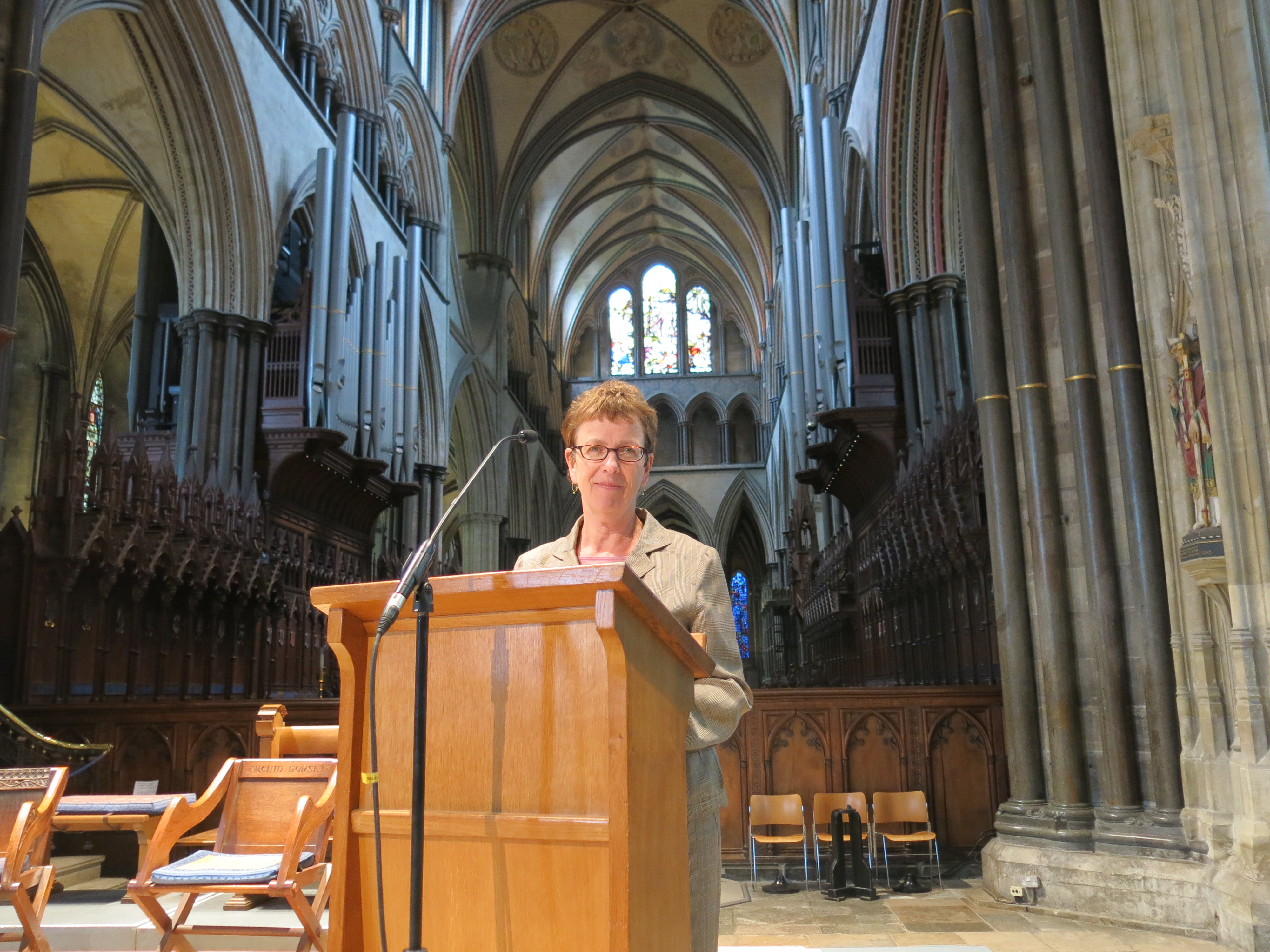
The Government has been accused of “soft-pedalling” over the death penalty and seeming to make trade more important than human rights.  The charge by Amnesty International UK’s director Kate Allen (pictured in Salisbury Cathedral last year) comes as the human rights organisation released figures showing that at least 1,634 people were executed in 2015, a rise of 54% on the year before.  Despite being the highest number Amnesty has recorded since 1989, this total does not include China, where thousands were likely to have been executed but where the death penalty is a state secret.

The figures – contained in the report Death Sentences and Executions in 2015 – show that the top five executioners in the world in 2015 were China, Iran, Pakistan, Saudi Arabia and the USA.

This “profoundly disturbing” surge in executions was largely fuelled by big increases in Iran, Pakistan and Saudi Arabia, Amnesty International reported.  Amnesty International’s fears have been raised just hours after MPs on the Commons Foreign Affairs Select Committee said there is “plainly a perception” the Government is prioritising trade and security with China, Saudi Arabia and Bahrain above human rights.

Ms Allen said:

Like the Foreign Affairs Committee yesterday, we’re worried that the Government has started soft-pedalling over foreign countries’ use of the death penalty, preferring to prioritise trade with countries like China, Saudi Arabia or Pakistan.

Until recently the UK’s policy of seeking global abolition of capital punishment had a clear focus and strategy.  Now the death penalty’s been thrown into the pot with other concerns and it’s much harder to tell whether the Government is prioritising this life-and-death matter.

If governments in Beijing, Tehran, Islamabad and Riyadh aren’t hearing about our outrage at executions after torture and unfair trials, then the executioners are going to think they’ve got a green light to carry on killing.

We want to see the Foreign Office publishing a clear strategy for its anti-death penalty work at the earliest opportunity.”

Amnesty International’s secretary general Salil Shetty said: “Iran, Pakistan and Saudi Arabia have all put people to death at unprecedented levels, often after grossly unfair trials.”

Last year, the Foreign and Commonweatth Office’s most senior civil servant made a frank admission to MPs that human rights “is not one of our top priorities” and that the “prosperity agenda is further up the list”.

Ministers deny the issue has been downgraded but a string of trade-focused, red carpet visits to the UK by the leaders of countries with some of the worst records of rights abuses has reinforced the perception of a shift of diplomatic emphasis.  Readers of this blog will know we have been following the twists and turns of this story for some months.  We wrote to our local MP Mr John Glen last year on Saudi Arabia and the rising toll of executions by beheading or crucifixion and we received a bland reply from the FCO minister Tobias Ellwood.  Since that time more evidence has emerged of policy changes designed it seems to scale down the human rights aspects.  We noted that when George Osborne visited China to the surprise of his hosts he failed to raise the question of human rights and executions at all.  Tobias Ellwood was reported by local media as congratulating the Saudis on the progress they were making with human rights.

Human rights minister Baroness Anelay said:

I am deeply troubled by the increase in the number of reported executions in 2015, which was driven by concerning increases in Pakistan, Iran and Saudi Arabia.

The UK opposes the death penalty in all circumstances and we make our opposition well known at the highest levels to countries which continue to apply it. Our message to them is clear, the death penalty is unjust, outdated and ineffective. It also risks fuelling extremism.

Despite these concerning figures there has been progress in many countries.  It is welcome that in 2015 Fiji, the Republic of Congo, Madagascar and Suriname all abolished the death penalty.

The Foreign Office will continue to use its diplomatic network to push for progress towards the global abolition of the death penalty.

Maya Foa, of Reprieve, described the rise in executions as “extremely troubling” adding: “It is all the more disturbing, therefore, to see what the Foreign Affairs Select Committee this week described as an ‘apparent deprioritisation’ of human rights by the UK government.

Now more than ever, Britain needs to be speaking out against the grave abuses – including mass trials, torture and death sentences handed down to juveniles and political protesters – being committed by its allies.

It is hard not to come to the conclusion that the primary aim of the government is trade and business with human rights coming a poor second if at all.  This overlooks the nature of ‘soft power’ and the fact that as a nation, we could be influential in humanising world affairs.  Instead, we chose to push out the red carpet for the most frightful regimes and, as the Panama papers are revealing, allow dubious individuals to buy up large parts of London using off shore tax havens.

Follow us on Twitter and Facebook

Blog at WordPress.com.

Up ↑