Threat to Jury Trials: MPs Debate New Court Bill


Threat to trial by jury

March 2026

MPs voted to allow the Courts and Tribunals Bill to proceed to the next stage after significant debate during its second reading.  This was over proposals to replace juries in England and Wales with a single judge in cases where a convicted defendant would be jailed for up to three years.  Justice Secretary David Lammy says changes to jury trials and other reforms can help turn around the Crown Court backlog, which has reached record levels of 80,000 cases. These delays mean some defendants charged today may not face trial until 2030.

However more than 3,200 lawyers including 300 top barristers and retired judges have called on the government to drop the plan to abolish some jury trials.  The letter to Prime Minister Sir Keir Starmer, a former director of public prosecutions, says there is no evidence the “unpopular” plan will solve unprecedented delays in criminal courts.  The letter organised by the Bar Council, which represents all barristers in England and Wales, says the plan is an attempt “to force through an unpopular, untested and poorly evidenced change to our jury system”.

The bill will still have to clear the House of Lords before it can become law.  The right to jury trial – in which ordinary people decide on the guilt or innocence of defendants brought before Crown Courts – is a cornerstone of the constitution dating back more than 800 years.

Magna Carta did not specifically mention jury trials but does say ‘no free man shall be seized or imprisoned except through the lawful judgment of his peers or by the law of the land’ (women are not mentioned). It did however plant the seed of juries and over time the idea became established in British law. The Statute of Westminster was passed in 1275 that required jury trials in certain cases, showing how these ideas from the Magna Carta were evolving into legal practice.

Recent governments have revealed a dislike of protest and have done a lot to introduce measures and restrictions making such protests more and more difficult. Police powers have been increased and thousands were arrested protesting on behalf of Palestine Action for example. Some juries have gone against judicial directions and have freed defendants. There must be a worry therefore that restricting the right to a jury trial leaves defendants at the mercy of judges alone who, some argue, can be reactionary,

How the New UK Bill Aims to Prevent Foreign Election Interference


New bill to tackle electoral reform

March 2026

A functioning democratic system is vital for human rights.  It is about power and how it is wielded.  Increasingly, we have witnessed powerful outside interests – whether they be states or wealthy individuals – influencing the political debate.  Electoral reform is carried out infrequently partly because political parties settle into a comfortable relationship with the status quo.  They can also be reluctant to go against the wishes of their influential patrons. 

The newly introduced Representation of the People Bill aims to keep hostile foreign states from interfering in British elections while significantly extending democratic rights to the population. As part of the biggest expansion of democratic participation in a generation it offers first the extension of the franchise to 16 and 17-year olds, which will give voice to millions of young people.

Second, the capping of donations from companies towards electoral expenses will be set at two years of revenue, ensuring that companies that have no genuine business activity or UK footprint will be prevented from making donations.  The Bill means companies will need to have shown sufficient revenue made over the previous 3 years (allowing in most cases two financial years of revenue) to justify their donation.  It means foreign actors will no longer be able to use their money to interfere in the UK’s elections,

MPs will not be allowed to accept gifts of money or in-kind donations over £2,230. Legitimate gifted hospitality valued below this thresh-hold will continue to be acceptable.

The many other proposals to ensure election fairness include automatic voter registration without voters needing to apply, extending legitimate Voter ID to include bank cards digital forms of ID, increasing the time available for postal voting, ensuring candidates offer documentary proof of their identity to avoid misleading voters, and addressing issues of harassment at polling stations

It marks the beginning of a process that may reshape the practical workings of the UK’s democracy. Few governments have attempted to reform our democratic system quite so comprehensively in a single legislative package.  For once, the over-used ‘once in a generation’ tag may actually be justified.

But it does little to protect democracy from misinformation and disinformation in elections, despite the government recognising the risks.  It is this ability to ‘control the narrative’ which is a big factor in our political process.

Image: Electoral Reform Society

Impact of Middle East Conflicts on Refugees in Turkey


War in Middle East and its effects

March 2026

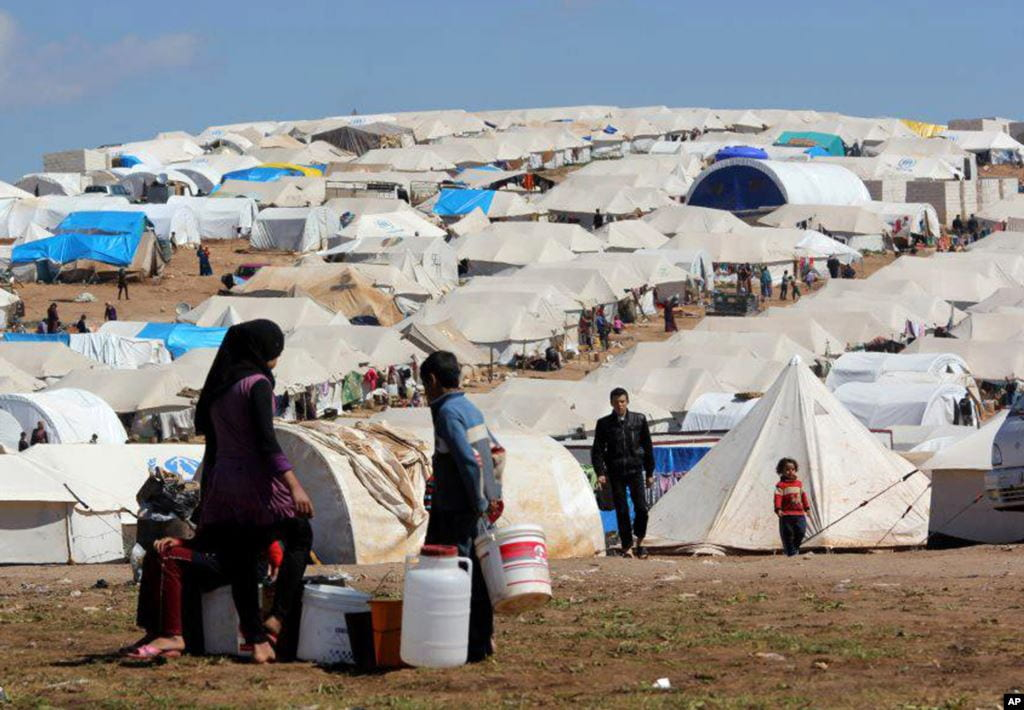
Although war reporting generates a lot of commentary on the deaths of those caught up in the conflicts, the effects on refugees and those displaced receives much less attention. With the new war(s) in the Middle East, refugees are again in the news. So far, most displaced people have been moved within the countries of Iran and Lebanon, but Turkey in particular is being readied for an influx of refugees.  The European Union Agency for Asylum thinks here will possibly be large numbers of displaced persons as a result of the conflict, many of them heading for Turkey. The Institute for Migration estimates that as of now there are 19 million internally displaced in the region; the UNHCR have calculated in the last few days that 667,000 Lebanese have registered as displaced.

Home Secretary’s refugee plans

At home, the big story is the Home Secretary, Shabana Mahmood’s plan to reduce the length of protected stay of refugees from 5 years to half of that, during which time they will only have temporary refugee status.  This will be subject to review every 30 months for up to 20 years. During this period claimants may be deported if, in the opinion of the Home Office, their country of origin has become deemed “safe”.  A large number of Labour backbenchers are opposing the move, and the Law Society has observed that it might not comply with international law. Other objections have been that the plan will be costly (£872 million over a decade, according to the Refugee Council) and impractical. On 5th March, the Home Secretary revoked the legal duty to provide destitute asylum seekers with support and accommodation while their claims are processed, often for months or years.  The Home Office have been influenced by the so-called “Danish model”, which takes a hard line on immigration.

Among the latest statistics to be released, the Home Office received up to 23,000 referrals of alleged human trafficking in 2025 (the main sources were Eritrea and Vietnam).  The backlog of cases has reduced, but there has been an increase in the number of reconsiderations.  In 2025 about 100,000 claims for asylum were made in the UK. Of these, 41% were from small boat arrivals, 11% other irregular means, while 40% already had some form of leave before claiming.  The level of grants continues to drop, at 42% in 2025 (it used to be over 80%).  Syria has suffered particularly with levels of asylum grants down year-on-year from 88% to 9%.  Claims from Eritrea and Somalia are mostly accepted.

The ban on family reunions instigated last autumn is being challenged in the courts by Safe Passage International.  A High Court ruling is expected later this year.

Small boats in the Channel are now starting from further north, in Belgium, according to a BBC report.

The UN Missing Migrants Project, which records the number of deaths among attempted migrants globally, has designated three routes as particularly dangerous: from North Africa to the Central Mediterranean (esp. Libya); from Afghanistan to Iran (this was before the current conflict), and from West Africa to the Canaries (they note that migrants are coming from further south than they used to, with more risks attached).

Those politicians who seem keen on war and wanted the UK to adopt a more interventionist stance with the Israeli and US actions, seem not to be quite so aware of the knock-on effects. Many of those same politicians are to be heard railing against refugees. Wars generate refugees. A proportion end up at Calais.

AH


Recent posts:

Blog at WordPress.com.

Up ↑