Florida and Iran: Key Insights from Recent Death Penalty Report


November 2025

We are pleased to attach the current death penalty report for mid October to mid November thanks to group member Lesley for the work in compiling it. Florida features quite strongly as does Iran which is executing young people – a truly horrific act. There is also material on Israel which is considering laws for Palestinians quite different from the Jewish population, an example of apartheid which operates there. We note as ever that even though China makes a brief entry, the country is believed to execute more of its citizens than the rest of the world combined but details are a state secret.

Latest posts:

Material on this site is free to use by other Amnesty or human rights groups.

Big increase in executions in Iran


This year has seen a further increase in executions in Iran

May 2025

The BBC reported that in 2024, 901 people were believed to be executed in Iran representing a 6% increase over 2023 when 853 were put to death. 31 were women. The chosen method is hanging often in public. The main reasons are murder, rape and drug crimes but also the vague ‘corruption on earth’ used to describe people opposed to he theocracy. Minority groups are also hard hit.

There seems no let up with 343 put to death in the first four months of this year representing a significant increase over the same period in 2024.

Iran joins other countries like China, North Korea and Vietnam which use the penalty extensively. Details of numbers are a secret in those countries. In China it is believed to be thousands. The killing spree has been widely condemned by a range of agencies.

Sources: BBC, Death Penalty Information Center, France 24, Amnesty International.

Amnesty publishes Death Penalty report


Report for 2024 published

April 2025

The report highlights a sharp increase in numbers executed – the highest level since 2015 – but the number of countries holds steady. Amnesty has recorded 1,518 executions in 2024 a 32% increase over the previous year. A problem with producing statistics of this nature is that countries who are major users of the penalty, keep their figures a secret. China for example, believed to be the world’s largest executioner with thousands of its citizens executed each year – does not publish figures regarding them as a state secret. Another secretive nation is Vietnam where, similarly, the numbers are a state secret, and Belarus and Laos who release limited information. The figures are accordingly a minimum estimate of the actual numbers executed. The full report can be accessed here (pdf).

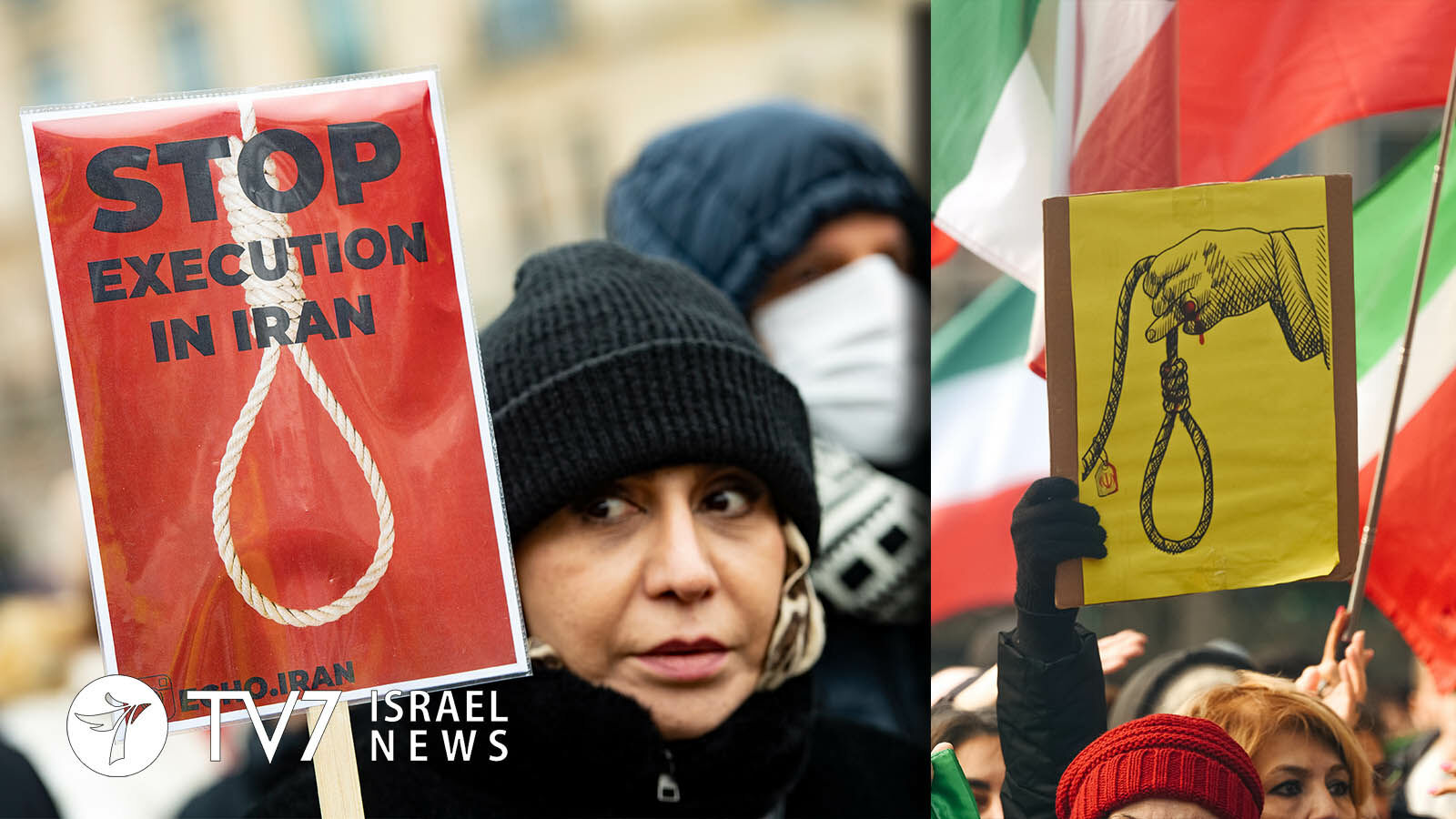
The penalty is not solely used to put to death people who have committed serious crime, but is used as a repressive tool. Saudi Arabia (image), and Iran, for example use the penalty to stifle dissent, targeting human rights defenders, protestors, dissidents and political opponents. There is also a disproportionate use of the penalty against minorities particularly religious minorities. Iran, which executed no less than 972 individuals last year, uses the penalty to execute those who challenge, or who are perceived to challenge, the Islamic Republic. It is also noted that these regimes have poor levels of justice. Defendants are often tortured to secure confessions and are denied access to lawyers. It is highly likely, not to say probable, that many wholly innocent people lose their lives.

Another trend is the use of the penalty as part of drugs programmes against dealers and users.

There is little sign, and very little evidence, that the penalty is some kind of deterrent, an argument frequently put forward for its retention or return. The leader of UK’s Reform party for example recently called for its reintroduction following the dreadful murder of three little girls which took place in Southport*. YouGov surveys show mixed views among Britons about the penalty. Generally, people are opposed but there is more support for its use among Conservative voters. The strongest support comes from the 65+ age group. Attitudes do change however, following a particularly unpleasant murder of a child, a policeman or as a result of terrorist activity. It was last used in 1964, suspended in 1965, abolished in 1969 and completely abolished in 1998 when treason was removed (different dates in Northern Ireland).

The group publishes a report on its use each month and last month’s report is available here.

*Town in northern England

Nazanin talk at Cathedral


Talk by Nazanin Zaghari-Ratcliffe inspiring for those who heard it

March 2025

Nazanin Zaghari-Ratcliffe was interviewed in Salisbury Cathedral by the Rt Revd Bishop of Sherborne, Karen Gorham, about her experiences of being imprisoned in Iran and life after her release. Unfortunately, the sound system was such that many could not hear large chunks of what was said, some claiming only being able to hear a quarter of the discussion.

The local group was pleased that the Bishop, Nazanin and her husband all mentioned the role played by Amnesty and the introducer mentioned the local group in particular.

The event was a sell-out with nearly 1,000 people in attendance. It took place on International Women’s Day.

Nazanin made the point that there was a difference between being political prisoner and a hostage.

Being a hostage brought with it a different set of rules since what the legal case was did not matter. She also said you only appreciate freedom when you don’t have it for a long time. After release she found ‘adjustment quite difficult’. For a long time she said ‘my body was free but my mind was in prison’. Even meals were difficult because she found the rush of having to eat in prison was difficult to shake off.

She discussed the Boris Johnson affair. Johnson blurted out that Nazanin was in Iran to ‘train journalists’ which was untrue: she was there on holiday. This was used by the Iranian authorities against her. It took a long time for Johnson to meet her and he failed explicitly to apologise for his error despite the effect it had on her confinement. Both have been extremely critical of the British government during her ordeal.

Richard, her husband spoke about the ‘of the kindness of strangers’ . He also spoke of the role of Amnesty and of the symbolic nature of the Amnesty logo of a candle in a coil of barbed wire.

We apologise for the partial nature of this post for reasons outside our control. Image, Amnesty International.

BlueSky

Talk at Cathedral


Nazanin Zaghari-Ratcliffe in conversation at the Cathedral

February 2025

Nazanin will be in conversation with the Bishop of Sherborne on Saturday 8th March in the Cathedral. This is a free event. Details and booking are on the Cathedral site. Members of the Salisbury group and other Amnesty groups around the country campaigned on behalf of Nazanin over a long period of time. We were delighted when she secured her released from prison in Iran. Members of the local group were a little disappointed therefore not to be invited to play a part in the event.

Letter to the Salisbury Journal in 2017

Good news!


Toomaj Salehi has been released

December 2024

Members of the Salisbury group took part in a campaign for the release of an Iranian rapper and he has been released. The joint voices of nearly 27,000 people —Toomaj, an Iranian rapper, activist, and advocate for justice, has been finally released. Iran is an operates an oppressive state with many basic freedoms denied to its citizens.

Together, we sent a clear message to Iranian authorities: The world is watching, and we won’t stay silent when freedom and human rights are at stake.

Toomaj has been a powerful supporter of the Woman, Life, Freedom movement, sparked by the death of Mahsa Zhina Amini, a young woman who died in police custody for defying abusive forced veiling laws in Iran. Through his music, Toomaj called for justice, equality, and an end to the violent crackdown on protests in Iran. His release is proof that when we unite for what’s right, we can create change

Image: Tribune on line


Iran: death penalty overturned


Toomaj Salehi’s death penalty overturned. Rare good news from Iran

June 2024

The Iranian rapper Toomaj Salehi has been spared the death penalty it was reported by Reuters this morning. A number of celebrities have called for his release including Sting. He is not totally out of the woods however since he will be retried and is likely to be sentenced to a long term of imprisonment. His crime was to sing songs in favour of the many protests which have taken place in the country.

Death penalty report


February 2023

We are pleased to attach our latest death penalty report for the period Mid January/February thanks to group member Lesley for the work in compiling it. It features the orgy of executions in Iran following the uprisings as well as reports from Saudi where the range of offences leading to executions has increased, and USA. Note as always that there is no mention of China which is believed to execute more of its citizens than the rest of the world combined but the details of which are a state secret.

Iran: urgent action


October 2022

Iran is appearing in the news in the last week or so as a result of the death of a woman, Mahsa Amini, who was allegedly beaten by Iran’s Morality Police for not covering her hair properly. Riots have broken out all round the country and have continued for many days. According to Hrana, the Iranian human rights organisation, the family was told she would be released after attending a session on re-education. Yesterday, schoolgirls were reported to be shouting ‘get lost’ to a spokesman from the Morality Police.

This urgent action concerns two women under risk of execution for their real or perceived sexual orientation. If you are able to sign, that would be greatly appreciated. See the link below:

Good News From Iran: Death Sentence Overturned


A man sentenced to death for an offence when he was a child has had his sentence overturned by the Iranian Supreme Court after 18 years on death row. Mohammad Reza Haddadi was 15 years old when he was arrested in 2002 on charges of committing murder while stealing a car. Although he initially pleaded guilty he later explained that his two co-defendants had coerced him by promising him money to take the rap for the murder telling him that he would not receive the death penalty as he was underage. Iran is one of the few countries in the world that still uses the death sentence against minors even though it is a signatory to the International Covenant on Civil and Political Rights which prohibits the use of the death sentence for crimes committed by anyone under the age of 18. However, in Sharia law, the “age of criminal responsibility” for children is defined as the age of maturity, which means that females over 9 lunar years of age and boys over 15 lunar years of age are both eligible for execution if convicted of “crimes against God” (such as apostasy) or “retribution crimes” (such as murder).

The law grants judges the discretion to replace the death penalty with an alternative sentence if they find that there are doubts about the individual’s comprehension of the nature of the crime or consequences, or their full “mental growth and maturity” at the time of the crime. International human rights organizations say Iran is responsible for more than 70% of all juveniles executed in the last 30 years with at least 63 in the last decade, including at least six in 2018 and four in 2019. Given the security state, suppression of civil society activists, and limited interaction with detainees, the number of juvenile executions is likely to be significantly greater than reported.

In 2020 Iran carried out at least 246 executions with 194 were for murder; 23 for drug-related offences; 12 for rape; four for “armed insurrection against the state”; five for “enmity against God”; two for espionage; one for “spreading corruption on earth” and one for drinking alcohol. One execution was carried out in public and nine women were executed. Hanging and shooting were the methods of execution. The Islamic Penal Code continued to provide for execution by stoning, for some consensual same-sex sexual conduct and extramarital sexual relations. The death penalty was increasingly used as a weapon of political repression against dissidents, protesters and members of ethnic minority groups.

Repost from Amnesty

Blog at WordPress.com.

Up ↑