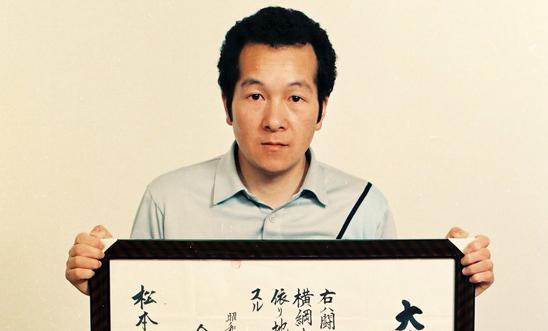
Japanese man released after 46 years


Hakamada Iwao released after serving 46 years on death row

March 2025

Hakamada Iwao has been released after spending a record 46 years on death row which is believed to be the longest such case in the world. He has been given $1.4m in compensation which hardly compensates for a lifetime of privation. He is now 89.

It has to be remembered that the Japanese system is particularly barbaric since there is no warning when the execution will actually take place. It means he has spent those years in prison awaiting an execution which could have happened at any moment.

Another factor is that he was never guilty. It is yet another example of police interrogation methods at the time. He was intensively interrogated and abused over a period of 20 days with no lawyer present. He was coerced into signing a confession – later withdrawn – and other documents were forged by the police. It is also probable that bloodstained clothing was tampered with by them as well.

People who argue for the death penalty have to face the fact of mistakes which cannot be rectified. People sometimes argue that why would someone sign a confession if they weren’t guilty? They forget that isolation, bad treatment, psychological pressure and constant interrogation can break most people.

It is disappointing to note that 83% of Japanese still support the penalty and increase of 2.3 percentage points from the last survey according to an article in the Asahi Shimbun. It does point out however that many people are unaware of the facts surrounding the penalty.

Amnesty opposes the death penalty in all circumstances.

Sources: Asahi Shimbun, Guardian, Amnesty International

[Some spellings are Hakamata]

Celebration – of sorts


Hakamada Iwao acquitted after 56 years in prison

September 2024

We tend to think of Japan as a modern democracy and a sophisticated society having cast off the problems of its warlike past. It is a G7 nation and enjoyed a post war boom leading to considerable commercial success. But there are elements of the society which have not changed one of which is the legal system.

Japan still has the death penalty a particular cruel feature of which is that prisoners do not know of their execution until a few hours before it takes place.

The news that the Appeal court in Japan has declared Hakamada Iwao as innocent has been a long time in coming – 56 years in fact. Hakamada was convicted of murdering his boss in 1966. He spent a staggering 46 years on death row. Much of it was in solitary. The only problem was that he is almost certainly innocent. Key evidence was fabricated. He was forced to sign a confession after 20 days of intense interrogation and beatings by the police. He was not allowed a lawyer.

Bloodstained clothing – a key element in the prosecution’s case – turned out not to be Hakamada’s blood. It may have been planted. There are many things wrong with the whole process and further details can be found on the background provided by Amnesty. The role of the police was a key part of the miscarriage of justice. This led to probably the longest death sentence ever. Historically, this was a familiar story in the UK with forced confessions after long hours of interrogation. It led to the introduction of PACE which has led to improvements in police practice here.

One of the problems is the attitude of the Japanese public. It is reported that 80% of the Japanese are in support of the penalty. It is unlikely therefore that change will happen quickly.

Although it is encouraging to see Hakamada exonerated from this crime, the case raises several concerns. The use of the death penalty which, had he been executed, would have resulted in the state killing an innocent man. As in all these cases of police coercion, the real killer(s) have never been found or prosecuted. It also reveals a legal system which seems amazingly slow both to act and ultimately acquit. It also seems reluctant to admit mistakes. Finally, his treatment in prison with years spent in solitary confinement are unreasonably cruel. Altogether, this does not reflect well on the Japanese state.

The local group has campaigned for many years and it is gratifying to see some kind of justice at last for this man.

Sources: Amnesty, Guardian, BBC

Action: Japanese Embassy


Action at the Japanese Embassy in relation to the World Day Against the Death Penalty

October 2023

A planned action will be taking place outside the Japanese Embassy, London on Tuesday 10th October 2023 to mark World Anti-Death Penalty Day. Japan has long been criticised for retaining the death penalty and concerns have been expressed by human rights defenders about death-row inmates only being notified of their execution on the day it takes place. 

In November, Japan’s Minister of Justice Yasuhiro Hanashi resigned after making a joke about the death penalty, in which he stated that the justice minister can only make the news headlines by signing off execution warrants.  

Amnesty International opposes the death penalty in all cases without exception, regardless of the nature or circumstances of the crime, guilt, innocence or other characteristics of the individual, or the method used by the state to carry out the execution. We want to demonstrate that we are serious about ending the Death Penalty in Japan. 

If you are interested in finding out more about this planned action and understand how to get involved please email Rebecca.patterson@amnesty.org.uk 

Death penalty report: July


We are pleased to attach our latest monthly death penalty report with thanks to group member Lesley for preparing it. Note that it does not contain any details from China which is the world’s largest executioner of its citizens because details are a state secret. However, a report of the Chinese execution practices was printed in the Sun newspaper in the UK (warning – contains disturbing images).

Tree of Life: Japan


Tree of Life signing against death penalty in Japan

Tree of Life. Pic: Salisbury Amnesty

We held our tree of life signing in Library passage this morning (1 September 2018) and collected over 40 signatures.  People were asked to sign small labels which we attached to a small tree to mimic the Japanese custom.  There were several people who were surprised that the methods the Japanese employ – solitary confinement, decades of incarceration and no notice of the execution itself – were still employed by a supposedly civilised country.

All the labels will be gathered up and sent to Amnesty for a combined presentation to the embassy in October.  Our thanks to all those who signed and to group members who spent time on the stand.


If you would like to join the local group, keep and eye on this site or on Twitter or Facebook (accessed on the left) and make yourself known at one of our activities.

Every month, the group publishes a brief report on the death penalty around the world.  See the latest edition here.

Tree of Life signing


[Event now over]

Signing in Salisbury on Saturday 1st

On Saturday, members of the group will be taking part in the national Amnesty campaign to persuade the Japanese to end the death penalty in their country.  We will be asking people to sign labels which are then attached to a small tree.  Amnesty will be collecting these up from around the country and delivering them to the Japanese Embassy on 10 October, the World Day Against the Death Penalty.

This action is inspired by a long standing Japanese tradition.  In the summer, people across Japan write their wishes for the year on small strips of paper (called tanzaku 短冊) and tie them to bamboo branches.  Tanabata 七夕, or the ‘Star Festival’, is believed to be a 2,000-year old tradition to celebrate the day when Orihime and Hikoboshi, two lovers driven apart, are able to be together.

At the same time, people sit in solitary confinement on Japan’s notoriously secretive death row.  At the end of 2016, at least 141 people were under the sentence of death by hanging.  As a family member, you’re unlikely to find out your loved one has been executed until afterwards.  One of Amnesty’s long term cases, Matsumoto Kenji, has been on death row for 25 years and suffers from a delusional disorder as a result of his prolonged detention.

If you can spare a moment to sign, it would be appreciated.  We shall be in the Library passage or the cheese market outside depending on conditions.


If you are interested in joining the group please come along and make yourself known.

Death penalty report


We are pleased to attach the latest death penalty report thanks to group member Lesley for the work in putting it together.  Note that China executes more of its citizens than the rest of the world put together but details are a state secret.

There is an action taking place in Salisbury on 1 September between 9:00 and noon.  It will be in the Cheese market or in the Library passage.  Details are in the above report.

Potential new members are invited to come along and make themselves known during this event.

July – August report (pdf)


Sixteen years on death row in Japan


Facebook

Making a Murderer and Matsumoto Kenji: The truth can be stranger than fiction
Matsumoto Kenji Matsumoto Kenji © Private
  • A man from a poor background, with an IQ below 70; a score so low that he has difficulty comprehending what is happening to him.
  • His implication in a serious crime, in which a dominant older relative was the prime suspect.
  • A confession extracted by police after hours of intense interrogation, a confession which was subsequently described as ‘coercive’ by the man’s lawyers.

Well, if you’ve been watching the Netflix documentary ‘Making a Murderer’ you may be thinking of the case of Brendan Dassey who, at the age of 16, confessed to assisting his uncle in a rape and murder after hours of intense police questioning.  No lawyer was present during the interrogation, nor was his mother, despite the fact that he was a minor.

Dassey later recanted his confession and one Wisconsin lawyer who assisted on the case on seeing the video of the ‘confession’, described “feeling physically sick as I watched it (sic), he just didn’t understand what was going on”.  No physical evidence linked him to the crime and jurors have stated that his conviction was heavily influenced by the confession.

Brendan Dassey is not the only young man spending a very long time in prison after being convicted of a crime following a confession extracted in contentious circumstances.

In 1993 Matsumoto Kenji – along with his older brother – was arrested and charged with a double murder in Japan. Kenji has an IQ of between 60 and 70, allegedly caused by Minamata disease (mercury poisoning) which was common in the prefecture in which he was born, around the time he was born. As a result of the condition Kenji suffered from seriously hampered cognitive function.

Amnesty has serious concerns about Kenji’s treatment at the hands of the police.  His interrogation has been described at coercive, as officers offered him food if he talked and told him to “be a man” during the interrogation.

Upon learning of a warrant being issued for his arrest, his brother killed himself and Kenji was left to face trial alone.  During his trial it was accepted by the court that he was totally dependent upon his brother and was unable to stand up to him.  Following his conviction he was sentenced to death, a sentence which has been repeatedly upheld in subsequent appeals.

In Japan, death row patients are held in solitary confinement and are not allowed to speak to other inmates, only receiving occasional visits from family or lawyers.  When they are in their cells they are forbidden from moving, being punished severely if they do.  They are also given no prior warning before they are executed, leaving death row patients suspended in an endless state of anxiety.

Unfortunately, Kenji’s mental health has deteriorated significantly on death row, to the point that he has developed a delusional disorder.  His lawyers have argued that he is currently unable to communicate or understand information pertinent to his case and they further believe that his isolation has contributed significantly to his deteriorating mental health condition.

No to the death penaltyThese two cases, so similar, illustrate the vulnerability of individuals with serious learning difficulties in the face of major criminal charges, and the difficulty they face in ensuring their right to fair treatment at the hands of authorities in the criminal justice system.

Under international laws around use of the death penalty, it is illegal to execute someone with serious mental or intellectual disabilities.  At Amnesty, we continue to oppose the death penalty in all instances and in all cases as it’s a violation of the right to life and to be free from torture.

Call for justice for Kenji on his birthday

Today is Kenji’s 65th birthday. It’s the 16th birthday he has spent on death row.Kenji’s case is currently under review for appeal and the Minister of Justice will be the key decision-maker. If you have a moment, please write to him and call for him not to execute Kenji.

What to say

Please write to Justice Minister Matsuhide Iawki, urging him:

  • Not to execute Matsumoto Kenji and to introduce a moratorium on executions in Japan;
  • To commute Matsumoto Kenji and all other prisoners’ death sentences;
  • To Improve the treatment of death row inmates, including an end to solitary confinement;
  • To promote debate on the abolition of the death penalty in Japan.

You can also write to Health Minister Yasuhisa Shiozaki and ask him to:

  • Ensure that Matsumoto Kenji’s health is regularly assessed and he is provided with any necessary treatment.

Whom to contact

Minister of Justice, Matsuhide Iawki
Ministry of Justice
1-1-1 Kasumigaseki
Chiyoda-KU
Tokyo 100-8977
Japan

Twitter: @MOJ_HOUMU

Minister of Health, Yasuhisa Shiozaki
1-2-2 Kasumigaseki
Chiyoda-ku
Tokyo, 100-8916
Japan

Follow us on Twitter and on Facebook

 

Death penalty report


No to the death penaltyHere is the monthly death penalty report thanks to Lesley.

July 2014

Death penalty


DEATH PENALTY SUMMARY – JUNE 2014

No to the death penaltyGeneral 

  • USA
    • Tennessee – are reported to be considering bringing back the electric chair in the light of the recent difficulties with the use of lethal injections
    • Wyoming – are reported to be considering using a firing squad
    • New Hampshire – disappointingly, the second attempt at the repeal of the death penalty was defeated in the Senate on 22nd May. The death sentence remains.
    • Missouri – a stay of execution was granted for Russell Bucklew on 22nd May following his claim that a congenital illness would probably cause additional suffering under the current regime of lethal injection
    • A report appeared on Google that the US Supreme Court has said states must look beyond an intelligence test score in borderline cases of mental disability to determine whether a death row inmate is eligible to be executed

Urgent Actions 

  • – Meriam Ibrahim – a Christian woman has been sentenced to hang (and to a flogging) for the ‘apostasy’ of marrying a non-muslim, and for refusing to renounce her Christian faith.  An AI email UA was circulated to the DPLWG on 26th May.  Information in media on 31.5.14 that she was to be released but there are doubts as to the truth of this.  Note – Nesrine Malik expressed concern in the Guardian (4.6.14) that western media are harming Meriam’s chances of release.  Initial local opposition had been having an effect, and Government pride is an issue.  She criticised David Cameron’s approach.  Latest news – Meriam gave birth in chains. She is to be hanged in 2 years.


  • USA – Florida – Michael Duane Zak – UA 140/14 – has exhausted his ordinary court appeals and is seeking executive commutation of his death sentence of life imprisonment. Circulated to DPLWG 28.5.14 (this month’s Urgent Action)


  • UA 151/13 – Osama Jamal ‘Abdullah Mahdi’s files are now with the office of the President for review. If his death sentence is ratified, he could be executed at any time. Circulated to DPLWG 30.5.14


 Campaigning 

  • Hakamada Iwao – information has been received from Caroline Butler that the Devizes Group have been in contact with AI in Japan in order to send cards and messages to Hakamada. Would the Salisbury Group like to do so?


  • a response has now been received from SCT with contact details of Barry Hay for seeking further advice – an email was sent on 10th June. Note: 


Belarus is the last UN member state in Europe to have retained the death penalty.  In 2013 there were no reported executions, but the death penalty was reinstated this year, and to date two men are believed to have been executed. Death row prisoners receive no advance notice and are executed by a bullet through the back of the head. This month the UN Human Rights Council will be focusing on the human rights situation in Belarus – making it a particularly appropriate time for action by Amnesty.


Blog at WordPress.com.

Up ↑